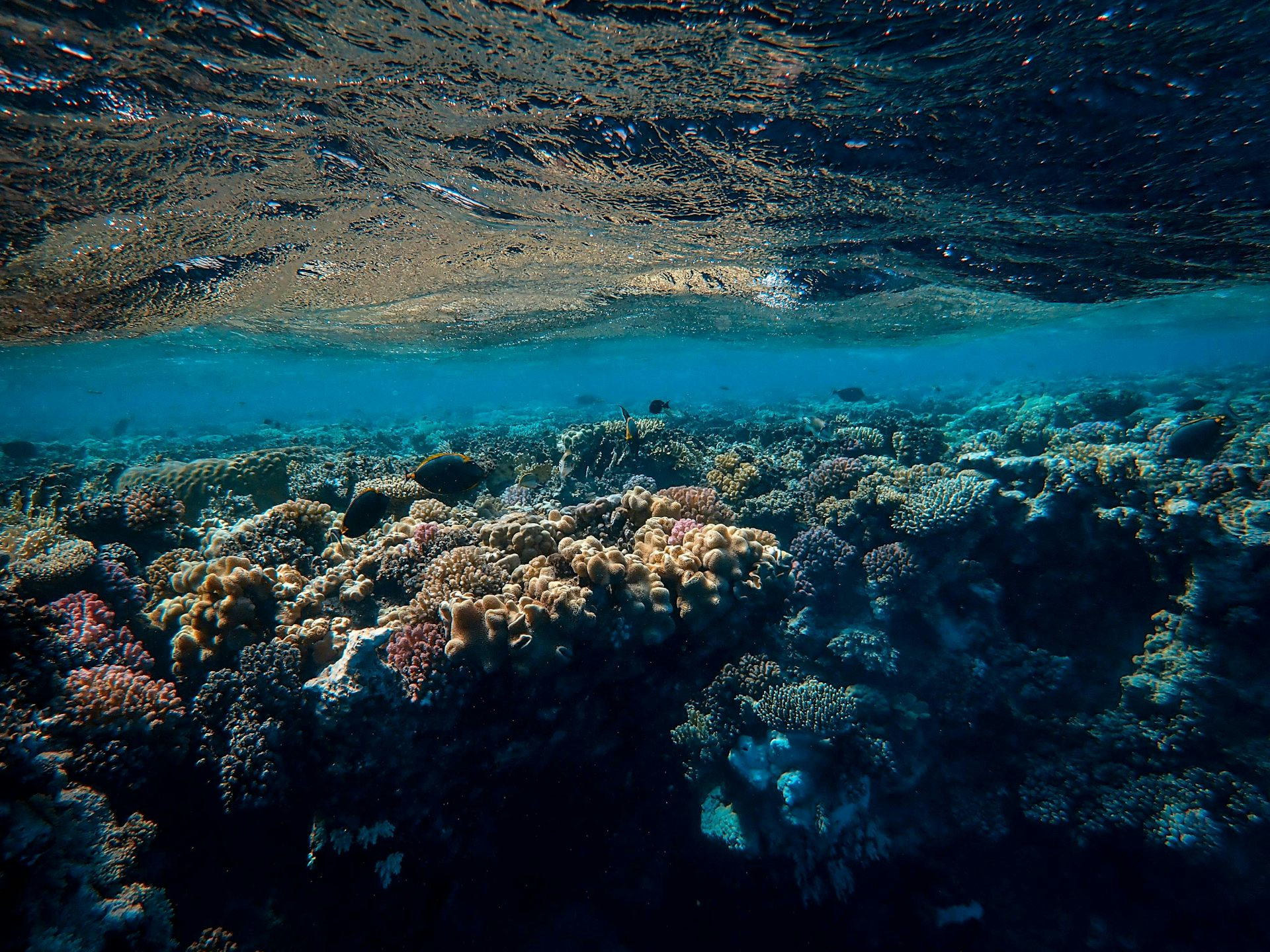
Los arrecifes de coral están conectados en secreto a través de vastos océanos, y eso es crucial para su supervivencia
Coral reefs are secretly connected across vast oceans – and that’s crucial for their survival
Connectivity isn’t a nice-to-have for coral reefs – it’s their lifeline. And now scientists know which reefs serve as vital ‘stepping stones’ for coral larvae.
La conectividad no es un lujo para los arrecifes de coral; es su línea de vida. Y ahora los científicos saben qué arrecifes sirven como vitales ‘escalones’ para las larvas de coral.
Lord Howe Island lies in the middle of the ocean, about 700 kilometres northeast of Sydney. It’s covered in lush forest and fringed by the world’s most southerly coral reef ecosystem.
La Isla Lord Howe se encuentra en medio del océano, a unos 700 kilómetros al noreste de Sídney. Está cubierta de un bosque exuberante y bordeada por el ecosistema de arrecife de coral más austral del mundo.
This reef system isn’t as famous as its northern neighbour, the Great Barrier Reef. Our new research in the Journal of Applied Ecology, shows it plays an outsized role in keeping vast coral regions across the Pacific connected – and alive.
Este sistema de arrecifes no es tan famoso como su vecino septentrional, la Gran Barrera de Coral. Nuestra nueva investigación en el Journal of Applied Ecology muestra que desempeña un papel desproporcionado en mantener conectadas —y vivas— vastas regiones de coral a lo largo del Pacífico.
A small number of other reefs in the region serve a similar function. Knowing which reefs matter most for recovery and adaptation to ocean warming – and protecting them now – could make the difference between regional reef collapse and long-term resilience.
Un pequeño número de otros arrecifes en la región cumplen una función similar. Saber qué arrecifes son más importantes para la recuperación y la adaptación al calentamiento oceánico —y protegerlos ahora— podría marcar la diferencia entre el colapso regional del arrecife y la resiliencia a largo plazo.
Tiny coral babies in a vast ocean
Pequeños bebés de coral en un vasto océano
Coral reefs are in global decline, but this loss is not just about dying corals – it’s about breaking the natural connections that allow reefs to recover after marine heatwaves, cyclones and other threats.
Los arrecifes de coral están en declive global, pero esta pérdida no se trata solo de corales que mueren; se trata de romper las conexiones naturales que permiten que los arrecifes se recuperen después de olas de calor marinas, ciclones y otras amenazas.
Right now, climate change is rapidly reducing the ability of coral larvae to travel between reefs, shrinking their chances of survival by undercutting recovery.
Actualmente, el cambio climático está reduciendo rápidamente la capacidad de las larvas de coral para viajar entre arrecifes, disminuyendo sus posibilidades de supervivencia al obstaculizar la recuperación.
These tiny coral babies can sometimes spend many weeks in the surface waters of the open ocean, carried by currents across hundreds or even thousands of kilometres before settling and beginning to grow.
Estos pequeños bebés de coral a veces pueden pasar muchas semanas en las aguas superficiales del océano abierto, transportados por corrientes a través de cientos o incluso miles de kilómetros antes de asentarse y comenzar a crecer.
The movement of larvae provides a constant source of replenishment for reefs, both near and far away, which is especially important when reefs are damaged.
El movimiento de las larvas proporciona una fuente constante de reabastecimiento para los arrecifes, tanto cercanos como lejanos, lo cual es especialmente importante cuando los arrecifes están dañados.
Without this constant replenishment, some damaged reefs simply cannot recover. Connectivity isn’t a nice-to-have for coral reefs. It’s their lifeline.
Sin este reabastecimiento constante, algunos arrecifes dañados simplemente no pueden recuperarse. La conectividad no es un lujo para los arrecifes de coral. Es su línea de vida.
Tracking dispersal across 850 reefs
Seguimiento de la dispersión en 850 arrecifes
Our study used ocean circulation models to simulate the trajectories of coral larvae across the southwestern Pacific Ocean from 2011 to 2024, tracking the movement of larvae across 850 reefs.
Nuestro estudio utilizó modelos de circulación oceánica para simular las trayectorias de larvas de coral a través del Océano Pacífico suroeste desde 2011 hasta 2024, rastreando el movimiento de las larvas en 850 arrecifes.
These reefs spanned the Great Barrier Reef, New Caledonia, the Coral Sea and Lord Howe Island.
Estos arrecifes abarcaron la Gran Barrera de Coral, Nueva Caledonia, el Mar de Coral y la Isla Lord Howe.
We traced how two key coral growth forms (fast-growing branching corals and slower-growing massive corals) move between reefs under current conditions and under projected global climate warming scenarios of 1°C, 2.5°C and 4°C above pre-industrial temperatures.
Trazamos cómo dos formas clave de crecimiento de coral (corales ramificados de rápido crecimiento y corales masivos de crecimiento más lento) se mueven entre arrecifes bajo las condiciones actuales y bajo escenarios proyectados de calentamiento climático global de 1 °C, 2.5 °C y 4 °C por encima de las temperaturas preindustriales.
We then examined how corals moved between different types of reef, including reefs that were naturally resistant to heat stress, those that recover quickly after disturbance, and those that stay cooler because of local water currents and upwelling that naturally reduce water temperature around the reef.
Luego examinamos cómo los corales se movían entre diferentes tipos de arrecifes, incluidos arrecifes que eran naturalmente resistentes al estrés por calor, aquellos que se recuperan rápidamente después de una perturbación y aquellos que se mantienen más frescos debido a las corrientes de agua locales y la surgencia que reducen naturalmente la temperatura del agua alrededor del arrecife.
This allowed us to ask not just which reefs are connected, but which kinds of reefs are sending and receiving different types of larvae.
Esto nos permitió preguntar no solo qué arrecifes están conectados, sino qué tipos de arrecifes están enviando y recibiendo diferentes tipos de larvas.
A fragile network
Una red frágil
We found that only a handful of reefs act as genuine hubs — places where larvae both arrive from distant sources and depart to “seed” reefs far away. Lose these stepping stones, and the entire network begins to fragment.
Descubrimos que solo un puñado de arrecifes actúan como verdaderos centros, lugares donde las larvas llegan de fuentes distantes y parten para «sembrar» arrecifes lejanos. Si se pierden estos peldaños, toda la red comienza a fragmentarse.
The Coral Sea reefs emerged as crucial bridges in this network, linking the southern Great Barrier Reef with New Caledonia and beyond. But perhaps the most striking finding involves Lord Howe Island.
Los arrecifes del Mar de Coral surgieron como puentes cruciales en esta red, conectando la Gran Barrera de Coral del sur con Nueva Caledonia y más allá. Pero quizás el hallazgo más sorprendente involucra la Isla Lord Howe.
Our modelling identified Lord Howe as a potential refugium: a place where corals may be able to persist even as warming intensifies, potentially owing to its more temperate, southerly position.
Nuestro modelado identificó a Lord Howe como un posible refugio: un lugar donde los corales podrían persistir incluso a medida que se intensifica el calentamiento, potencialmente debido a su posición más templada y meridional.
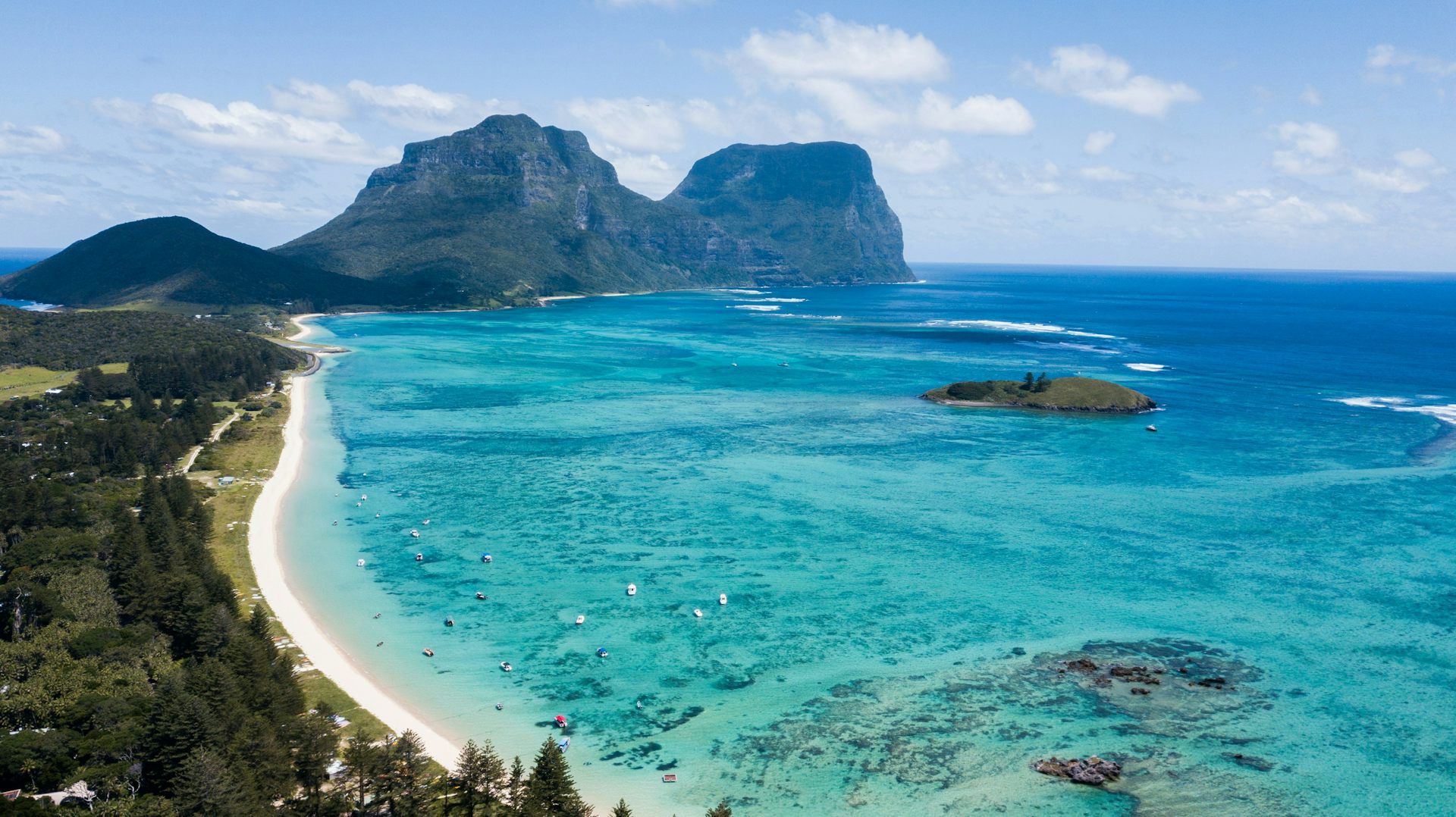
Yet its very isolation – what makes it a likely survivor – also means it has limited natural connectivity with surrounding reefs.
Sin embargo, su propio aislamiento —lo que lo convierte en un posible superviviente— también significa que tiene una conectividad natural limitada con los arrecifes circundantes.
This situation therefore cuts both ways: while isolation helps protect its coral from extreme heat stress, it also means the reef relies less on new larvae that others could need for recovery. It therefore also means Lord Howe needs protection – not just for itself, but for the entire regional reef system that may one day depend on it.
Esta situación, por lo tanto, es de doble filo: si bien el aislamiento ayuda a proteger sus corales del estrés extremo por calor, también significa que el arrecife depende menos de larvas nuevas que otros podrían necesitar para recuperarse. Por lo tanto, también significa que Lord Howe necesita protección, no solo para sí mismo, sino para todo el sistema de arrecifes regional que un día podría depender de él.
Another important finding is that the reefs most resistant to heat stress (those classified as naturally resistant) tended to export larvae to a relatively smaller number of reefs within the wider network.
Otro hallazgo importante es que los arrecifes más resistentes al estrés por calor (aquellos clasificados como naturalmente resistentes) tendían a exportar larvas a un número relativamente menor de arrecifes dentro de la red más amplia.
But there are techniques that enable the intentional movement of larvae from heat-tolerant reefs to more vulnerable locations. These include assisted gene flow, in which scientists deliberately move warm-adapted adult corals or their offspring to reefs that are more vulnerable to heat stress, helping to spread heat-tolerant genes more quickly across reef networks.
Pero existen técnicas que permiten el movimiento intencional de larvas de arrecifes tolerantes al calor a ubicaciones más vulnerables. Estos incluyen el flujo genético asistido, en el que los científicos trasladan deliberadamente corales adultos adaptados al calor o su descendencia a arrecifes más vulnerables al estrés por calor, ayudando a propagar genes tolerantes al calor más rápidamente a través de las redes de arrecifes.
Protecting our marine superhighways
Protegiendo nuestras superautopistas marinas
Our results make clear that marine protected areas should not be managed as isolated reserves but as an interconnected network, with transboundary cooperation between Australia and Pacific Island nations.
Nuestros resultados dejan claro que las áreas marinas protegidas no deben gestionarse como reservas aisladas, sino como una red interconectada, con cooperación transfronteriza entre Australia y las naciones de las Islas del Pacífico.
The larval corridors linking the southern Great Barrier Reef, New Caledonia and Lord Howe Island do not fall within national boundaries. Neither can our conservation response.
Los corredores larvales que conectan la Gran Barrera de Coral del sur, Nueva Caledonia y la Isla Lord Howe no caen dentro de las fronteras nacionales. Nuestra respuesta de conservación tampoco puede hacerlo.
Reefs are already fighting against warming oceans. The waters of the Lord Howe Rise and South Tasman Sea, the vast oceanic region between Australia and New Zealand through which these larval corridors flow, are under threat from industrial fishing.
Los arrecifes ya están luchando contra el calentamiento de los océanos. Las aguas del Elevación de Lord Howe y el Mar de Tasman Austral, la vasta región oceánica entre Australia y Nueva Zelanda por donde fluyen estos corredores larvales, están amenazadas por la pesca industrial.
Industrial fishing, pollution and climate change are pushing these ecosystems to the brink, with longlines intersecting surface waters. This cumulative pressure across these newly identified larval transport superhighways adds yet another layer of pressure onto these already stressed ecosystems.
La pesca industrial, la contaminación y el cambio climático están llevando estos ecosistemas al límite, con líneas de pesca largas que intersectan las aguas superficiales. Esta presión acumulativa a través de estas superautopistas de transporte larval recién identificadas añade otra capa de presión a estos ecosistemas ya estresados.
Our research adds a new and crucial dimension to high seas protection. Our region sits directly across the larval corridors that connect and sustain coral reef systems. Protecting this ocean is not just about what lives here. It is about what passes through – fundamental for migratory and connected populations.
Nuestra investigación añade una dimensión nueva y crucial a la protección de alta mar. Nuestra región se sitúa directamente sobre los corredores larvales que conectan y sostienen los sistemas de arrecifes de coral. Proteger este océano no se trata solo de lo que vive aquí. Se trata de lo que pasa a través – fundamental para las poblaciones migratorias y conectadas.
The least we can do is protect the superhighways through which their future flows – invisibly, at the ocean surface, some larvae no bigger than a grain of rice, carrying the genetic potential to rebuild what we stand to lose.
Lo mínimo que podemos hacer es proteger las superautopistas por donde fluye su futuro – invisiblemente, en la superficie del océano, algunas larvas no más grandes que un grano de arroz, que llevan el potencial genético para reconstruir lo que corremos el riesgo de perder.
Kate Quigley receives funding from the Australian Research Council and Minderoo Foundation. She is also Principal Research Scientist at Minderoo Founation.
Kate Quigley recibe financiación del Consejo Australiano de Investigación y la Fundación Minderoo. También es Científica Principal de Investigación en la Fundación Minderoo.
Elise Thérèse Gisèle Dehont does not work for, consult, own shares in or receive funding from any company or organisation that would benefit from this article, and has disclosed no relevant affiliations beyond their academic appointment.
Elise Thérèse Gisèle Dehont no trabaja, asesora, posee acciones ni recibe financiación de ninguna empresa u organización que se beneficiaría de este artículo, y no ha revelado afiliaciones relevantes más allá de su nombramiento académico.
Read more
-

¿Podemos considerar el ‘juego’ como una religión? Bluey ciertamente lo piensa
Can we consider ‘play’ to be a religion? Bluey certainly thinks so
-
Dentro de los complejos de estafas del sudeste asiático: Una trabajadora traficada habla de fraude, coerción y tortura
Inside Southeast Asia’s scam compounds: A trafficked worker tells of fraud, coercion and torture