Ensaio de sexta-feira: Bollywood ajudou a moldar-me – agora, projeta o nacionalismo indiano de Modi
Friday essay: Bollywood helped make me – now, it projects Modi’s Indian nationalism
Vijay Mishra changed forever when a cinema opened in his Fijian town, in 1951. He traces Bollywood’s shift from multicultural fantasy to Hindu nationalism.
Vijay Mishra mudou para sempre quando um cinema abriu em sua cidade nas Fiji, em 1951. Ele traça a mudança de Bollywood de fantasia multicultural para nacionalismo hindu.
My earliest memories are of Methodist Mission quarters in the diocese of Dilkusha, Fiji. Dilkusha, the name of a minor Indian principality, was mentioned in E.M. Forster’s classic novel A Passage to India: its name literally means “Heart’s Delight” in Hindi–Urdu.
As minhas memórias mais antigas são dos quartéis da Missão Metodista no diocèse de Dilkusha, Fiji. Dilkusha, o nome de uma pequena principado indiano, foi mencionado no clássico romance de E.M. Forster, A Passage to India: seu nome significa literalmente “Delícia do Coração” em Hindi-Urdu.
Dilkusha was the Indian wing of the much larger Fijian diocese of Davuilevu (in Fiji’s Rewa province) , site of the famous Baker Hall – named after Reverend Thomas Baker, an Australian Methodist evangelist who ended up in the pot of a disgruntled Fijian chief on July 20 1867.
Dilkusha era o braço indiano do muito maior diocèse fijiano de Davuilevu (na província de Rewa, Fiji) , local do famoso Baker Hall – nomeado em homenagem ao Reverendo Thomas Baker, um evangelista metodista australiano que acabou na panela de um chefe fijiano descontente em 20 de julho de 1867.
We were told the reverend had humiliated the high chief in front of his people by touching his hair: a clear affront to Fijian aristocratic protocol. His spare boots, however, survived. They may be seen in the Fiji Museum.
Diz-nos-se que o reverendo havia humilhado o chefe de alto escalão na frente do seu povo ao tocar no seu cabelo: um claro afrontamento ao protocolo aristocrático fijiano. As suas botas de reserva, no entanto, sobreviveram. Podem ser vistas no Museu de Fiji.
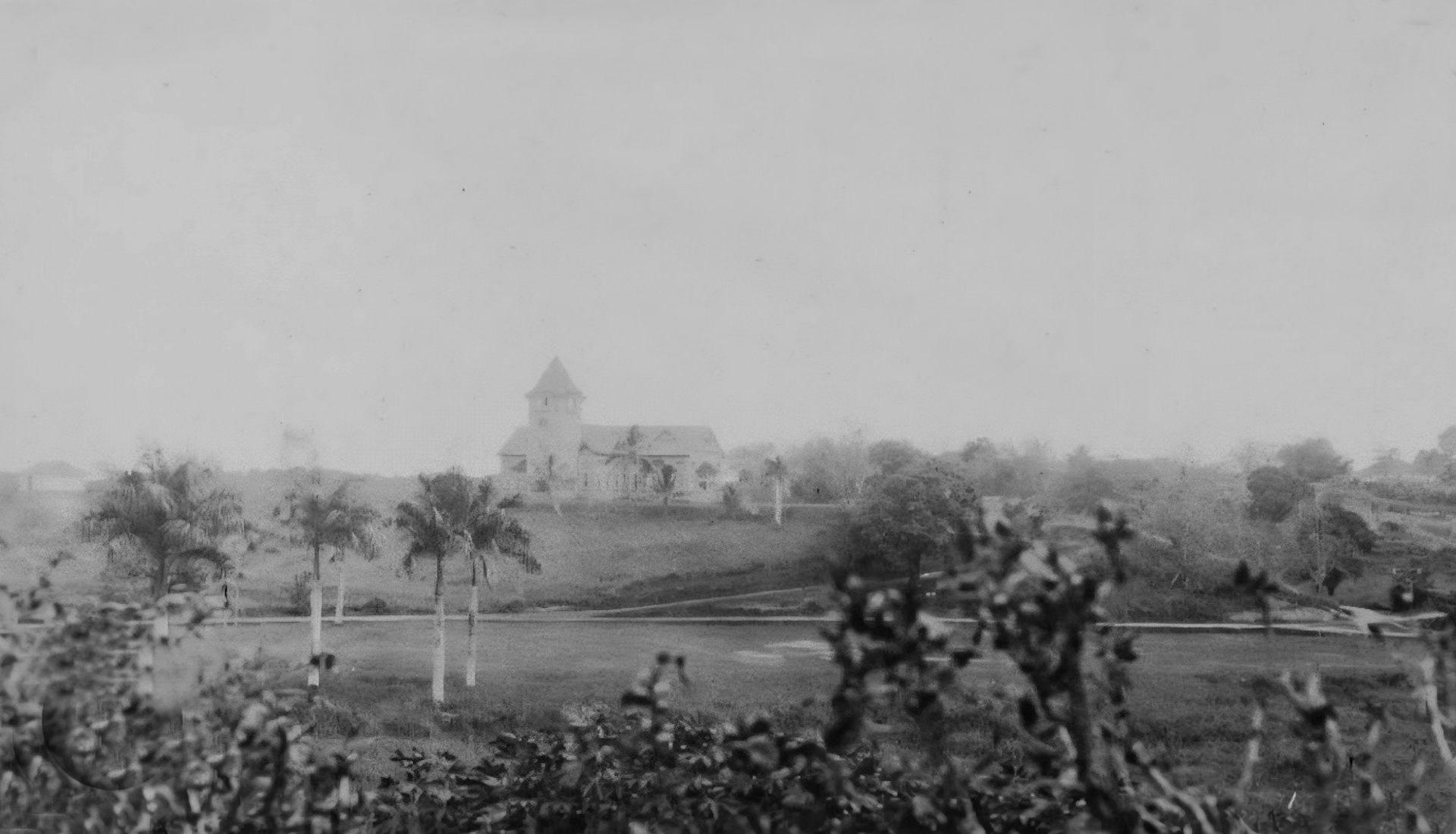
Dilkusha, the lesser sister diocese, had no such epic tale. But it quickly became a vibrant centre for Australian Christian evangelists, eager to convert Indian heathens. My father, grandson of an indentured labourer on his mother’s side, came here in the mid-1940s as a primary school teacher.
Dilkusha, a diocese irmã menor, não tinha um conto épico assim. Mas rapidamente se tornou um centro vibrante para evangelistas cristãos australianos, ansiosos por converter pagãos indianos. Meu pai, neto de um trabalhador contratado por sua mãe, veio para cá em meados da década de 1940 como professor de escola primária.
In the end my father, like Mr Biswas in V.S. Naipaul’s great novel on the plantation Indian diaspora, built a house of his own in the adjoining village of Waila (Realm of Floods) . But when I remember my homeland, it is through the decade I spent in Dilkusha Methodist quarters, in the 1950s and early 1960s.
No final, meu pai, como Mr Biswas no grande romance de V.S. Naipaul sobre a diáspora indiana nas plantações, construiu uma casa própria na vila vizinha de Waila (Reino das Inundações) . Mas quando me lembro da minha terra natal, é através da década que passei nos quartéis metodistas de Dilkusha, nas décadas de 1950 e início de 1960.
We were part of an enclosed community run by successive Methodist priests. Our joys were few: fishing or canoeing in the great Rewa River below, attending Sunday church services or walking across the paddock to the Boys’ Hostel.
Éramos parte de uma comunidade fechada administrada por sucessivos padres metodistas. Nossas alegrias eram poucas: pescar ou canoar no grande Rio Rewa abaixo, assistir aos cultos de domingo ou caminhar pelo pátio até o Alojamento dos Rapazes.
Dilkusha’s history was rich – but for me, it was a drab world. And then magic occurred: we discovered Aladdin’s cave.
A história de Dilkusha era rica – mas para mim, era um mundo monótono. E então a magia aconteceu: descobrimos a caverna de Aladdin.
Across the river from us, in Nausori Town, a Gujarati Muslim entrepreneur built a cinema hall – Empire Theatre – and my life changed.
Do outro lado do rio, na cidade de Nausori, um empreendedor muçulmano gujarati construiu um cinema – o Empire Theatre – e minha vida mudou.

Cinema was my world
Cinema foi o meu mundo
I was five years old in 1950, a year short of six, when you could enter school and would be considered mature. Then, in 1951, Raj Kapoor’s film Awaara (The Vagabond) , about geneticism and social determinism, came to Empire Theatre. Aged six, my life began to change.
Eu tinha cinco anos em 1950, um ano antes dos seis, idade em que se podia entrar na escola e ser considerado maduro. Então, em 1951, o filme Awaara (O Vagabundo) , de Raj Kapoor, sobre geneticismo e determinismo social, chegou ao Empire Theatre. Com seis anos, a minha vida começou a mudar.
I was never good at reading, unlike my Dilkusha mate Sarwesh (“Tomato”) Thakur, who was an exceptional reader. At school, we learned to read in English, but we spoke in Fiji Hindi at home. My father’s side of the family, however, were more comfortable with Fijian, or iTaukei – the language of the country’s First Nation peoples.
Eu nunca fui bom em ler, ao contrário da minha colega de Dilkusha, Sarwesh (“Tomate”) Thakur, que era uma leitora excepcional. Na escola, aprendíamos a ler em inglês, mas falávamos Fiji Hindi em casa. A família do lado do meu pai, no entanto, estava mais confortável com o Fijiano, ou iTaukei – a língua dos povos Nativos da nação.
It mattered little that I wasn’t a good reader (or a reader at all) . On Saturdays, I entered a world of my own. Over a period of time, I had a repertoire of films in me, thanks to the weekly allowance of a shilling from my parents and another shilling from my Dādī (grandmother) , Nausori market’s foremost coconut-oil seller. (I have yet to work out why she did it for me alone when she had some 20 other grandchildren!)
Não importava muito que eu não fosse uma boa leitora (ou leitora nenhuma) . Aos sábados, eu entrava num mundo próprio. Com o tempo, eu tinha um repertório de filmes em mim, graças ao semanário de um shilling dos meus pais e outro shilling da minha Dādī (avó) , a principal vendedora de óleo de coco do mercado de Nausori. (Ainda não entendi por que ela fez isso só para mim quando tinha uns 20 outros netos!)
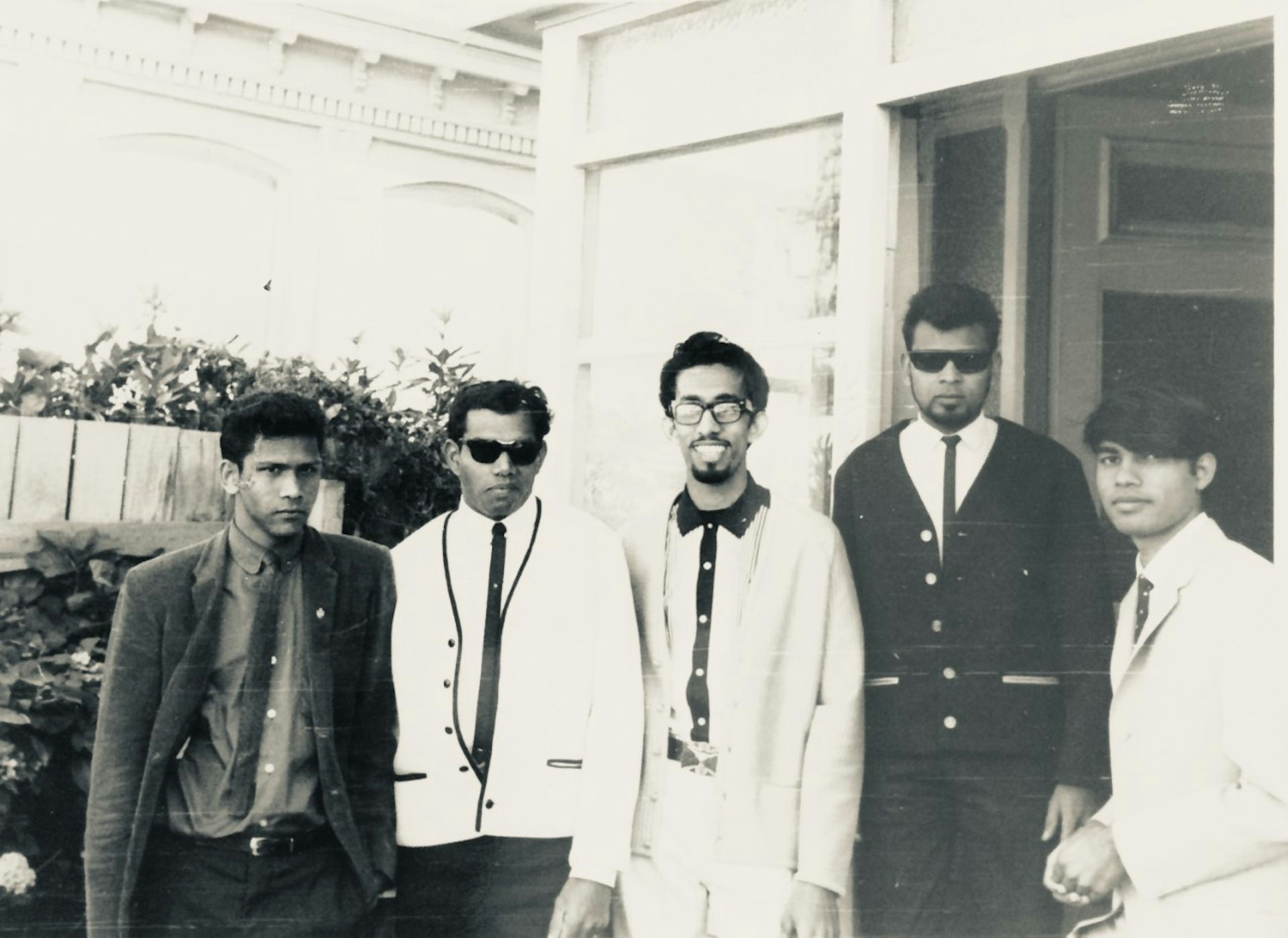
So cinema – and Empire Theatre – became my world. It was my literature, my culture, my dream world. It was my escape from failure to compete with my peers, and my school of drama – indeed, my language too. I look back and ask myself how I could have lived without the Saturday matinees – the 10am Hindi film and the 2.30pm Hollywood film.
Assim, o cinema – e o Empire Theatre – tornaram-se o meu mundo. Era a minha literatura, a minha cultura, o meu mundo dos sonhos. Era a minha fuga do fracasso em competir com os meus pares, e a minha escola de drama – de fato, a minha língua também. Olho para trás e pergunto-me como poderia ter vivido sem as sessões matinais de sábado – o filme em Hindi das 10h e o filme de Hollywood das 14h30.
I lived for Saturdays until I left Fiji aged 18, in 1964. In the Empire Theatre’s downstairs, one shilling (ten cents) seats, infested with khaṭmal (bed bugs) , my fantasies were created.
Eu vivi para os sábados até sair de Fiji aos 18 anos, em 1964. No andar de baixo do Empire Theatre, nos assentos de um shilling (dez cêntimos) , infestados de khaṭmal (ácaros) , foram criadas as minhas fantasias.
While the films I watched there would connect me with the India I had never physically inhabited, the worlds they opened to me were like temples of desire: elusive and mysterious, as well as enchanting. This would change – but long after I had left Fiji, after I had become a film scholar, writing from distant, sometimes cold lands.
Enquanto os filmes que eu via lá me conectavam à Índia que eu nunca havia habitado fisicamente, os mundos que eles me abriam eram como templos de desejo: evasivos e misteriosos, e ao mesmo tempo encantadores. Isso mudaria – mas muito depois de eu ter saído de Fiji, depois de eu ter me tornado uma acadêmica de cinema, escrevendo de terras distantes, às vezes frias.

Years later, writing from Perth, Australia, I watched Bollywood fantasies shift from their roots in melodrama to an endorsement of a nation ideologically defined as Hindu. This often involved demonising India’s non-Hindus, especially its age-old Muslim inhabitants. Under Prime Minister Narendra Modi, elected in 2014, this is also the nation’s political agenda.
Anos mais tarde, escrevendo de Perth, Austrália, observei as fantasias de Bollywood mudarem suas raízes do melodrama para um endosso de uma nação ideologicamente definida como hindu. Isso frequentemente envolvia demonizar os não-hindus da Índia, especialmente seus habitantes muçulmanos de longa data. Sob o Primeiro-Ministro Narendra Modi, eleito em 2014, este é também o programa político da nação.
It is strikingly displayed in the jingoistic espionage thrillers Dhurandhar I (The Stalwart, 2025) and Durandhar II (The Revenge, 2026) – the latter currently screening in Perth. These films, based on the adventures of an Indian spy in Karachi, Pakistan, define an Indian nation obsessed by the spectres of an enemy that is both another nation (Pakistan) and a “nation”, the Muslim minority within India.
Isso é exibido de forma impressionante nos thrillers de espionagem jingoístas Dhurandhar I (The Stalwart, 2025) e Durandhar II (The Revenge, 2026) – este último atualmente em exibição em Perth. Estes filmes, baseados nas aventuras de um espião indiano em Karachi, Paquistão, definem uma nação indiana obcecada pelos espectros de um inimigo que é tanto outra nação (Paquistão) quanto uma “nação”, a minoria muçulmana dentro da Índia.
Fantasies on film
Fantasias no cinema
Back in 1950s Dilkusha, my Empire Theatre fantasies were of a different order. They began with the Arabian Nights. The defining film in that genre, Homi Wadia’s Alibaba and the Forty Thieves (1954) , was properly introduced to me when my father’s friend, the cook at Dilkusha Boys’ Hostel, took me to watch it one Wednesday night in 1955.
Em 1950, as minhas fantasias de Empire Theatre eram de uma ordem diferente. Começavam com As Mil e Uma Noites. O filme definidor desse gênero, Alibaba e os Quarenta Ladrões de Homi Wadia (1954) , foi devidamente apresentado a mim quando o amigo do meu pai, o cozinheiro no Alojamento Juvenil Dilkusha, levou-me para assistir a ele numa noite de quarta-feira em 1955.
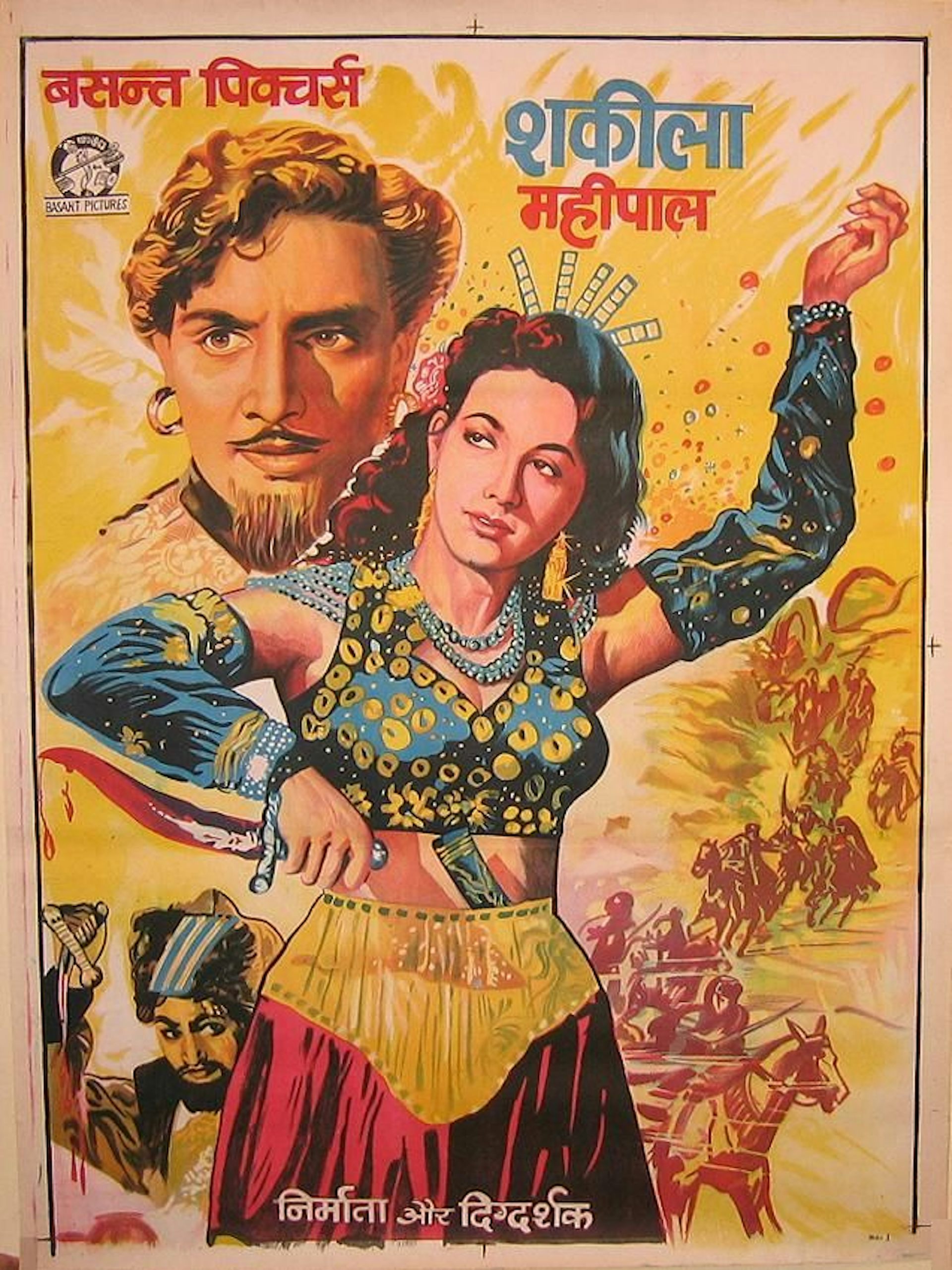
I knew the Alibaba tale, but Wadia’s rendition is a great piece of cinema. It captured Oriental fantasies way better than his Hollywood counterparts. I have seen it more than any other film – and consider it the finest version of an Arabian Nights tale ever.
Eu conhecia o conto do Alibaba, mas a interpretação de Wadia é uma grande obra de cinema. Capturou as fantasias orientais muito melhor do que seus equivalentes de Hollywood. Eu vi mais do que qualquer outro filme – e considero-a a melhor versão de um conto das Noites Árabes de todos os tempos.
I also loved sentimental songs from the films of Bollywood’s Golden Age, roughly spanning the films made between Deedar (Sight, 1951) and Gumrah (Infidelity, 1963) – and often marked by a final shot of the lonely hero walking away towards the horizon.
Eu também amava as canções sentimentais dos filmes da Era de Ouro de Bollywood, abrangendo aproximadamente os filmes feitos entre Deedar (Visão, 1951) e Gumrah (Infidelidade, 1963) – e frequentemente marcados por um plano final do herói solitário caminhando em direção ao horizonte.
It was in Empire Theatre that I saw the original version of Aah (Sighs, 1953) , actor and director Raj Kapoor’s homage to P.C. Barua’s foundational 1935 Bollywood film Devdas (based on a Bengali novel by Saratchandra Chatterjee) . Sadly, soon after its initial release, the tragic ending of Aah was changed and the original is no longer available.
Foi no Empire Theatre que vi a versão original de Aah (Suspiros, 1953) , a homenagem de Raj Kapoor a P.C. Barua ao filme fundamental de Bollywood de 1935, Devdas (baseado em um romance bengali de Saratchandra Chatterjee) . Infelizmente, pouco depois de seu lançamento inicial, o final trágico de Aah foi alterado e o original não está mais disponível.
Barua’s film had celebrated the entry of the English melodramatic “Man of Feeling” – for whom sentiment and sensibility were allied with true virtue – into the Indian film aesthetic for the first time. (The concept goes back to 18th-century English writer Henry Mackenzie, whose novel The Man of Feeling named it.) The sentimental hero, unable to declare his love, takes to drinking and dies a lonely man.
O filme de Barua havia celebrado a entrada do “Homem de Sentimento” melodramático inglês – para quem o sentimento e a sensibilidade estavam aliados à verdadeira virtude – na estética cinematográfica indiana pela primeira vez. (O conceito remonta ao escritor inglês do século XVIII Henry Mackenzie, cujo romance The Man of Feeling deu nome a ele.) O herói sentimental, incapaz de declarar seu amor, recorre ao álcool e morre como um homem solitário.
Raj Kapoor’s Shree 420 (1955) transformed the Man of Feeling into a picaro figure around whom the tensions of tradition and modernity in capitalist India unfold. It also holds a special place, with its appealing cosmopolitanism noted as well in Salman Rushdie’s The Satanic Verses.
O Shree 420 de Raj Kapoor (1955) transformou o Homem de Sentimento em uma figura pícara em torno da qual se desenrolam as tensões entre tradição e modernidade na Índia capitalista. Ele também ocupa um lugar especial, com seu cosmopolitismo atraente notado também em The Satanic Verses de Salman Rushdie.
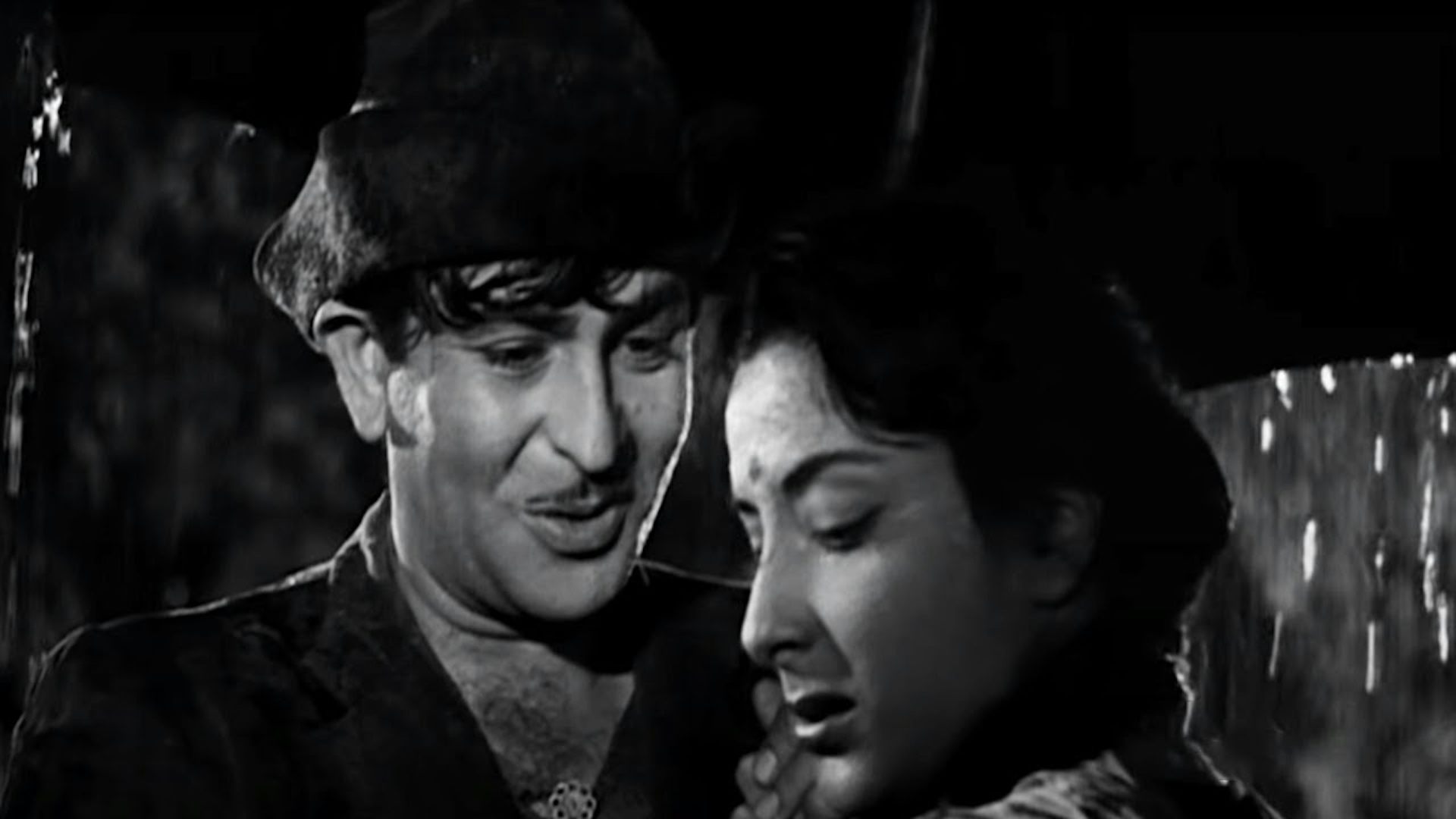
In spite of Shree 420’s political message, melodrama remained the overarching genre of Bollywood films. Melodramatic sentimentality found its consummate expression in the films of Dilip Kumar, Bollywood’s finest actor. We sang our own songs of love and longing through films such as Deedar (Sight, 1951) , Daag (Blemish, 1952) and Madhumati (1958) .
Apesar da mensagem política de Shree 420, o melodrama permaneceu o gênero dominante dos filmes de Bollywood. O sentimentalismo melodramático encontrou sua expressão máxima nos filmes de Dilip Kumar, o melhor ator de Bollywood. Cantamos nossas próprias canções de amor e saudade através de filmes como Deedar (Visão, 1951) , Daag (Mancha, 1952) e Madhumati (1958) .
But we also felt at home in his phenomenal banditry drama of peasant rebellion, Gunga Jamna (1961) , because of Dilip Kumar’s extraordinary mastery of Avadhi, a Hindi dialect very close to Fiji Hindi. Although the film’s theme of agrarian rebelliousness against the landed gentry was not uncommon, we were attracted to its use of a language that returned the one repressed in us.
Mas também nos sentimos em casa em seu fenomenal drama de bandidagem de rebelião camponesa, Gunga Jamna (1961) , por causa do domínio extraordinário de Dilip Kumar de Avadhi, um dialeto hindi muito próximo ao Fiji Hindi. Embora o tema do filme sobre a rebelião agrária contra a aristocracia fundiária não fosse incomum, fomos atraídos pelo uso de uma língua que devolvia aquela que estava reprimida em nós.
Bollywood and Indian nationalism
Bollywood e o nacionalismo indiano
When I left for New Zealand in February 1964, my relationship with Empire Theatre came to an end. I never returned to that theatre, but it had already made me.
Quando parti para a Nova Zelândia em fevereiro de 1964, meu relacionamento com o Empire Theatre chegou ao fim. Nunca voltei naquele teatro, mas ele já havia feito de mim.
Some 35 years later, quite suddenly, in the subzero temperatures of Edmonton, Canada, where I was a professor of English at the University of Alberta, Wordsworth’s sense of place and spots of time resurfaced as the repressed “aching joys” of times past. The second millennium, too, was coming to an end.
Cerca de 35 anos depois, de forma bastante repentina, nas temperaturas subzero de Edmonton, Canadá, onde eu era professor de inglês na Universidade de Alberta, o senso de lugar e os momentos de Wordsworth ressurgiram como as “alegrias dolorosas” reprimidas de tempos passados. O segundo milênio também estava chegando ao fim.
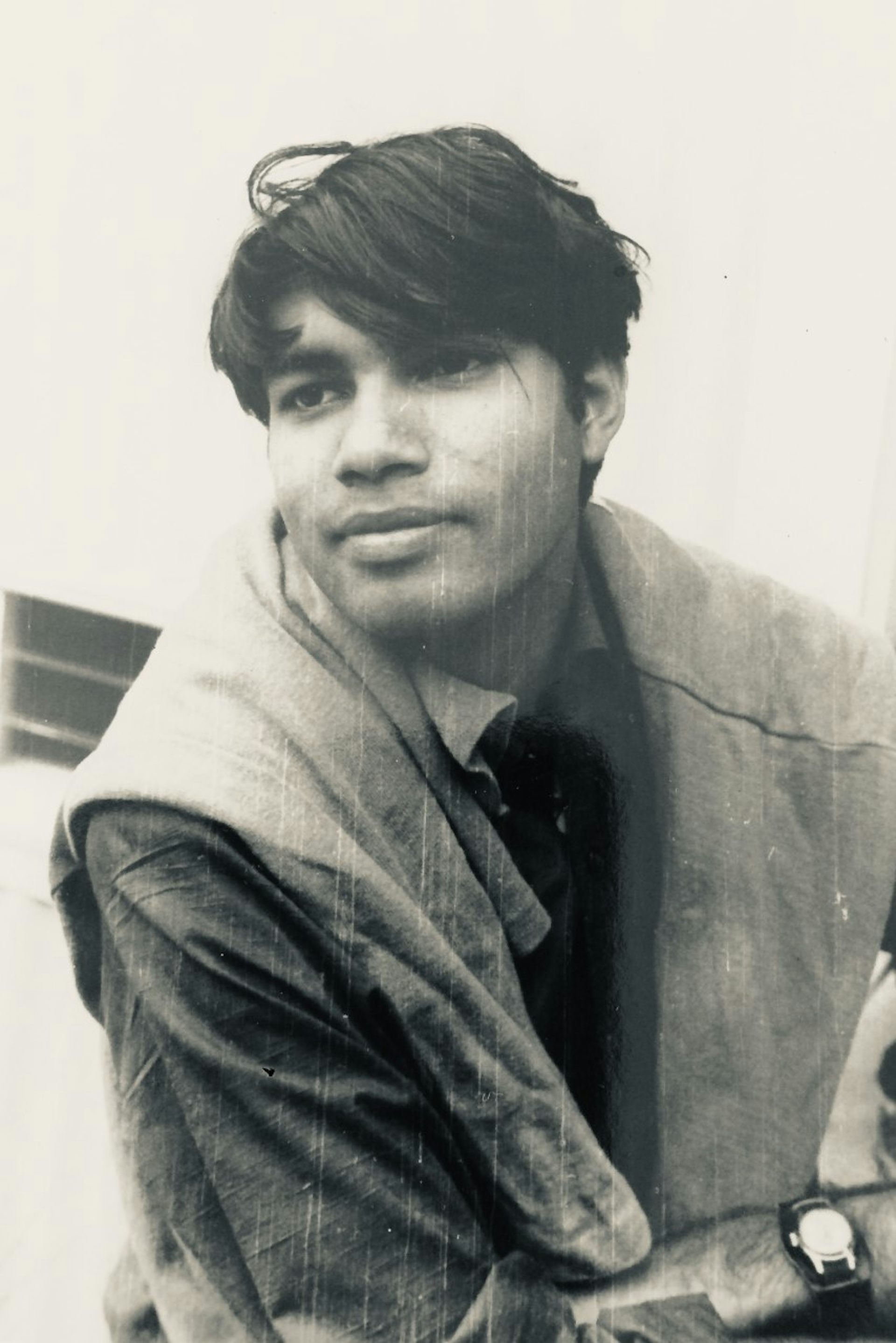
Sitting at my desk in an office overlooking the Saskatchewan River, I took out my Waterman fountain pen to write the first sentence of what would grow into a book, Bollywood Cinema: Temples of Desire (2002) .
Sentado em minha mesa em um escritório com vista para o Rio Saskatchewan, peguei minha caneta-tinteiro Waterman para escrever a primeira frase do que se tornaria um livro, Bollywood Cinema: Temples of Desire (2002) .
In that first sentence, written in longhand, I described cinemas, recalling films seen in Empire Theatre as “the temples of modern India”. While in the book I wrote the films remained temples of desire, Bollywood cinema this century embodies a different kind of desire: a desire where the nation itself is at the centre.
Nessa primeira frase, escrita à mão, descrevi cinemas, recordando filmes vistos no Empire Theatre como “os templos da Índia moderna”. Enquanto no livro escrevi que os filmes permaneceram templos de desejo, o cinema de Bollywood neste século incorpora um tipo diferente de desejo: um desejo onde a própria nação está no centro.
The founding fathers of independent India (notably Mahatma Gandhi and Jawaharlal Nehru, India’s first prime minister) established a multicultural India within a secular state. But under Modi and his Bhartiya Janata Party (the BJP) , India has been discarding these credentials in favour of a religiously sanctioned nation state.
Os pais fundadores da Índia independente (notavelmente Mahatma Gandhi e Jawaharlal Nehru, primeiro primeiro-ministro da Índia) estabeleceram uma Índia multicultural dentro de um estado secular. Mas sob Modi e seu Bhartiya Janata Party (o BJP) , a Índia tem descartado essas credenciais em favor de um estado-nação sancionado religiosamente.
Bollywood’s new nationalism is a radical refashioning of Gandhi’s idea of the nation, which was based on the principle of denial. He promoted fasting, vegetarianism and non-violence as ways of “renouncing” the self – and hence, the nation.
O novo nacionalismo de Bollywood é uma reformulação radical da ideia de nação de Gandhi, que era baseada no princípio da negação. Ele promoveu o jejum, o vegetarianismo e a não violência como formas de “renunciar” ao eu – e, portanto, à nação.
Naturally, that idea produced cinema such as Guru Dutt’s classic Pyaasa (The Thirsty One, 1957) and Kaagaz Ke Phool (Paper Flowers, 1959) , which positioned the hero as renouncer: the melodramatic sentimentalist whose life was one of sacrifice. The songs the hero sang embodied mourning and melancholy.
Naturalmente, essa ideia produziu cinema como o clássico Pyaasa de Guru Dutt (O Sedento, 1957) e Kaagaz Ke Phool (Flores de Papel, 1959) , que posicionaram o herói como renunciador: o sentimentalista melodramático cuja vida era de sacrifício. As canções que o herói cantava incorporavam o luto e a melancolia.
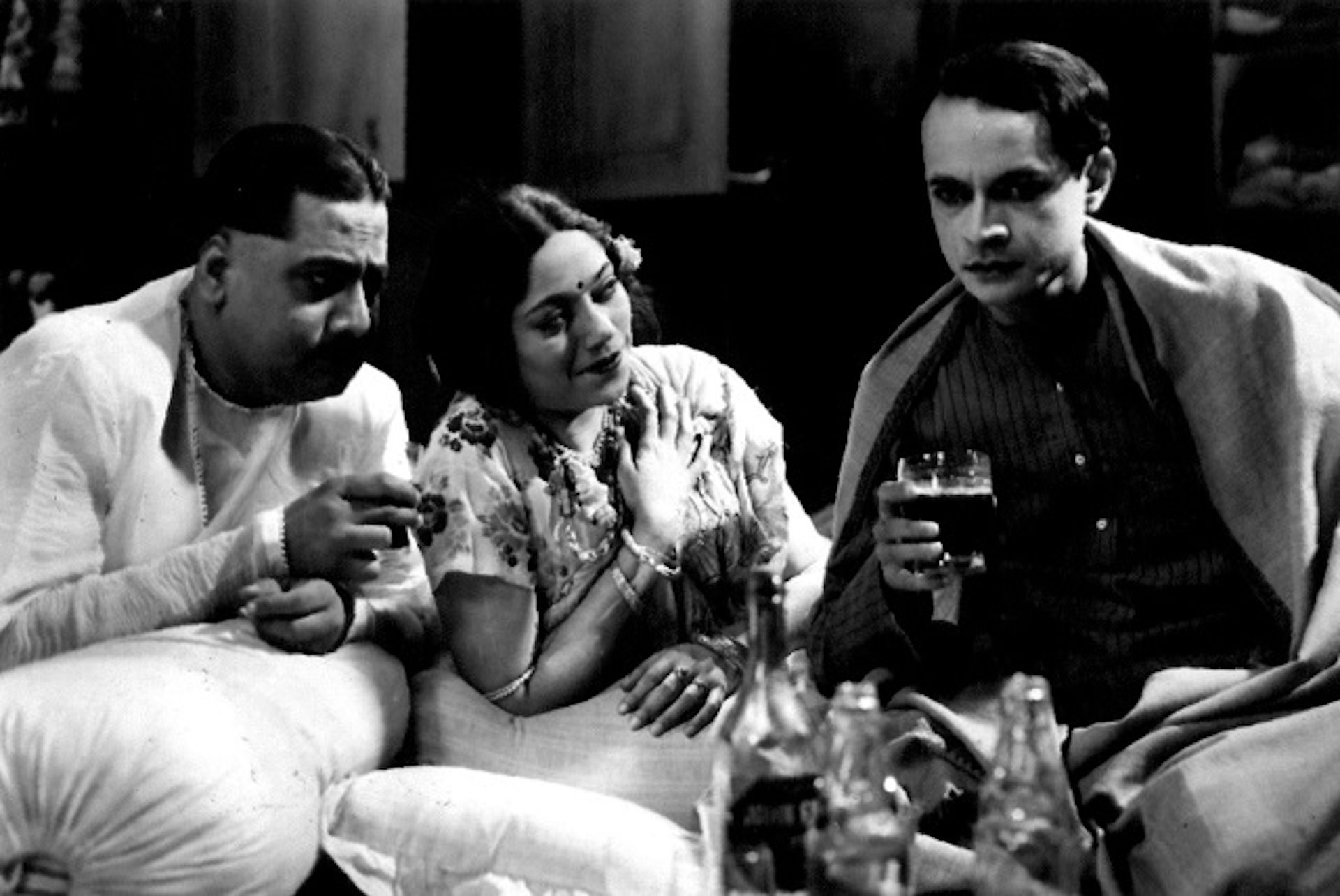
No foundational film captured that renouncer ideal better than the 1935 version of Devdas, in both Bengali and Hindi, about two lovers – Debdas and Parbati – divided by class. Essentially, it is a film about a Man of Feeling, for whom abjection and denial define love, with death the redemptive act.
Nenhum filme fundamental capturou esse ideal de renunciador melhor do que a versão de 1935 de Devdas, em bengali e hindi, sobre dois amantes – Debdas e Parbati – divididos pela classe. Essencialmente, é um filme sobre um Homem de Sentimentos, para quem a abjeção e a negação definem o amor, com a morte como ato redentor.
Bollywood cinema endlessly reprised the narrative – finding in it, precisely if absurdly, the ideal of renouncement. The better known 1955 Bimal Roy version endorses this reading.
O cinema de Bollywood repetidamente reviu a narrativa – encontrando nela, precisamente se absurdo, o ideal de renúncia. A versão de Bimal Roy de 1955, mais conhecida, endossa essa leitura.
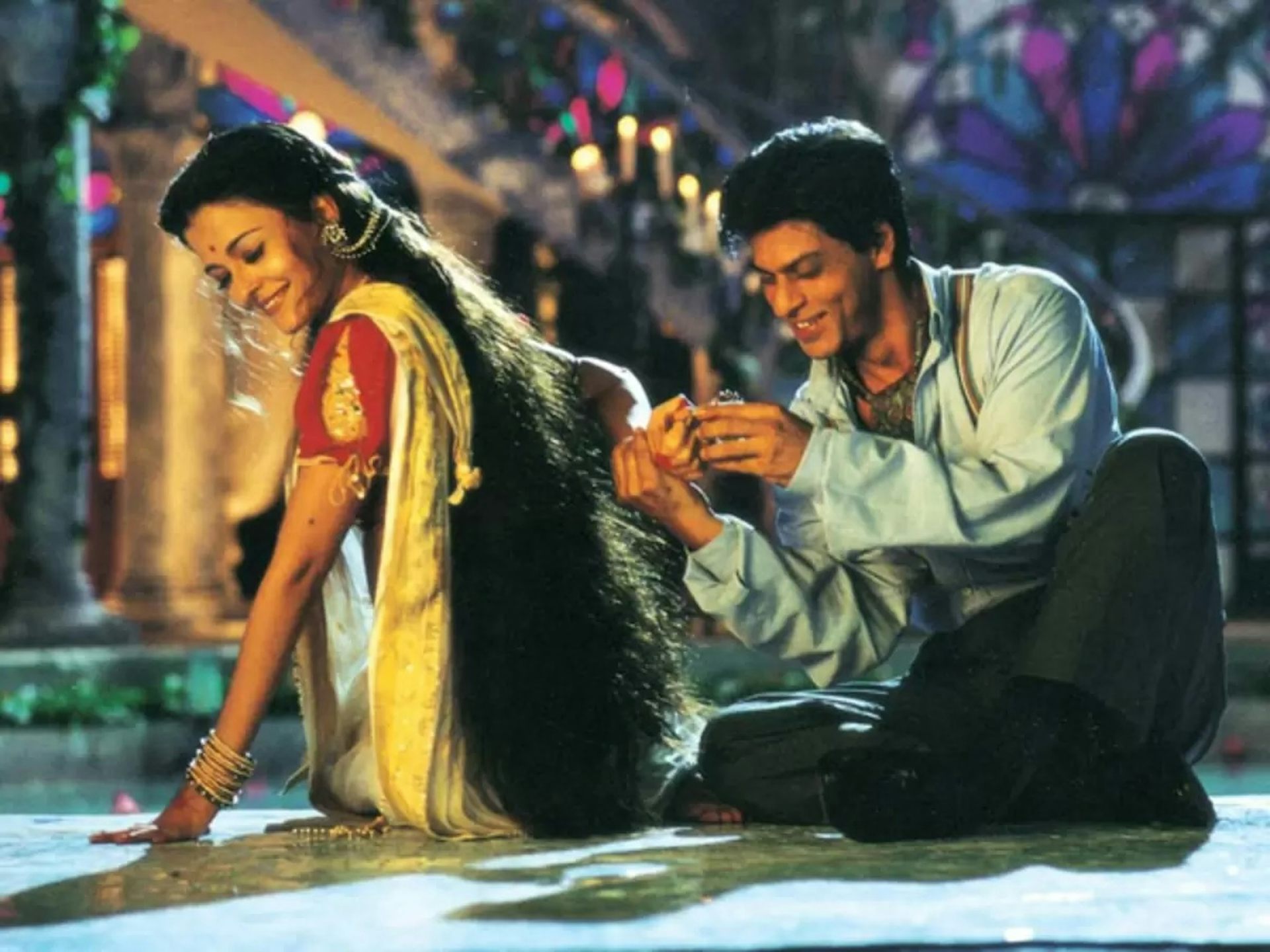
But in the 21st century, the Man of Feeling’s sentimentality has been repackaged as glossy spectacle.
Mas no século 21, o sentimentalismo do Homem de Sentimentos foi reembalado como espetáculo brilhante.
Sanjay Leela Bhansali’s 2002 remake of Devdas was the most expensive production in Indian film history at the time. Its extravagance pushes the old sentiments of the Man of Feeling aside, presenting the historical past as bold, eye-catching performance.
O remake de Devdas de 2002 de Sanjay Leela Bhansali foi a produção mais cara da história do cinema indiano na época. Sua extravagância afasta os velhos sentimentos do Homem de Sentimentos, apresentando o passado histórico como uma performance ousada e chamativa.
The operatic form of Bhansali’s Devdas, with its elaborate sets and costumes, and its overwhelming “item numbers” (where the song is carefully choreographed) , emphasises a new Indian modernity and self-assuredness. The renouncement theme of earlier versions is less important.
A forma operística de Devdas de Bhansali, com seus elaborados cenários e figurinos, e seus avassaladores “item numbers” (onde a canção é cuidadosamente coreografada) , enfatiza uma nova modernidade e autoconfiança indianas. O tema da renúncia das versões anteriores é menos importante.
It is as if, in the new tech-savvy India, one lives with the sentimental past only as spectacle. A decade later, under Modi, this would become a national mantra.
É como se, na nova Índia tecnológica, se vivesse com o passado sentimental apenas como espetáculo. Uma década depois, sob Modi, isso se tornaria um mantra nacional.
Shammi Kapoor and desire
Shammi Kapoor e desejo
The cinema of desire and spectacle had existed last century, too (a point, regrettably, not made in the book I wrote) – but with a difference. In the 1960s, Bollywood superstar Shammi Kapoor began to redefine the Bollywood hero by embracing, through bodily gestures, the nation itself as the object of desire.
O cinema do desejo e do espetáculo existira no século passado também (um ponto, lamentavelmente, não abordado no livro que escrevi) – mas com uma diferença. Nos anos 60, a superestrela de Bollywood Shammi Kapoor começou a redefinir o herói de Bollywood ao abraçar, através de gestos corporais, a nação em si como objeto de desejo.
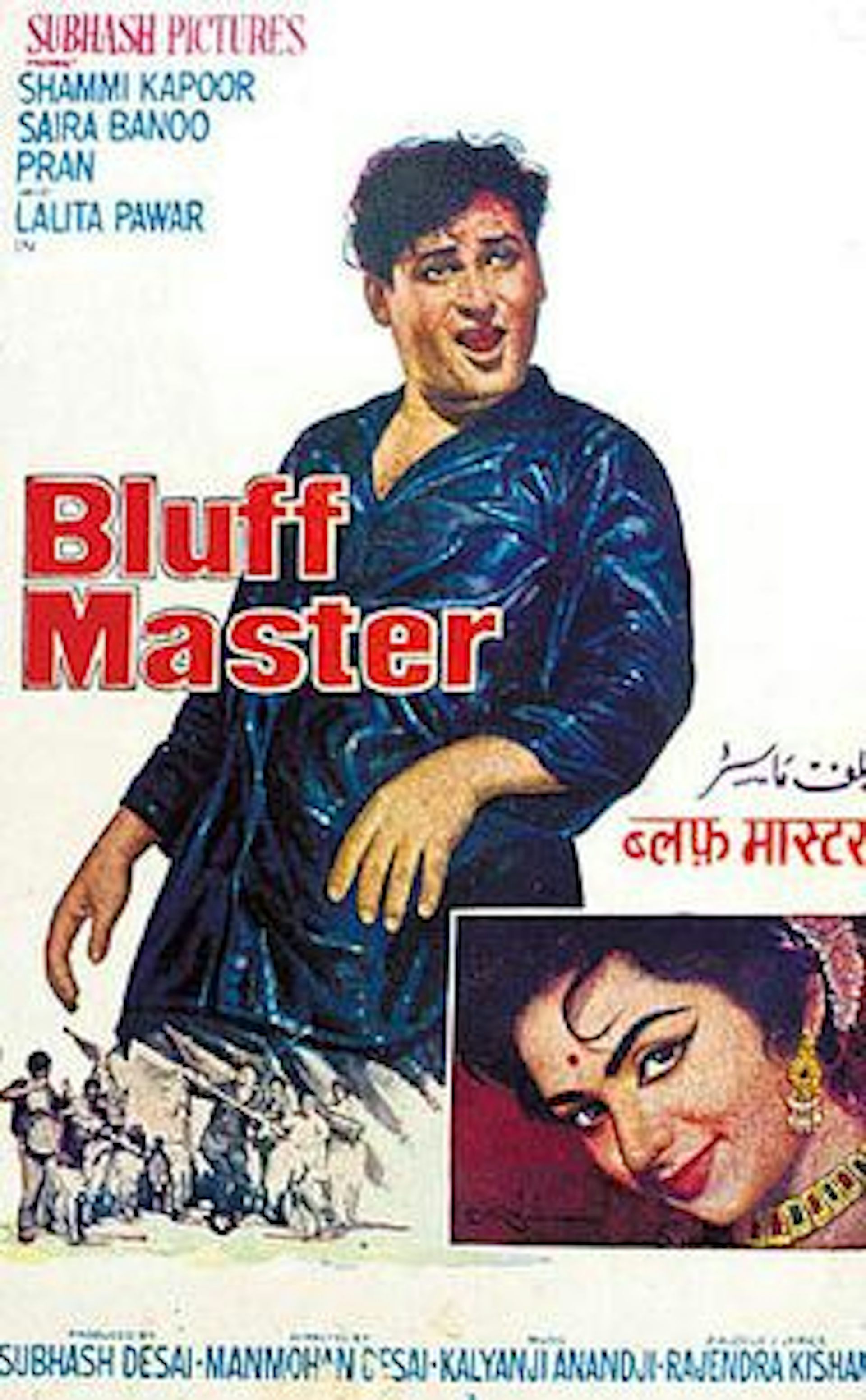
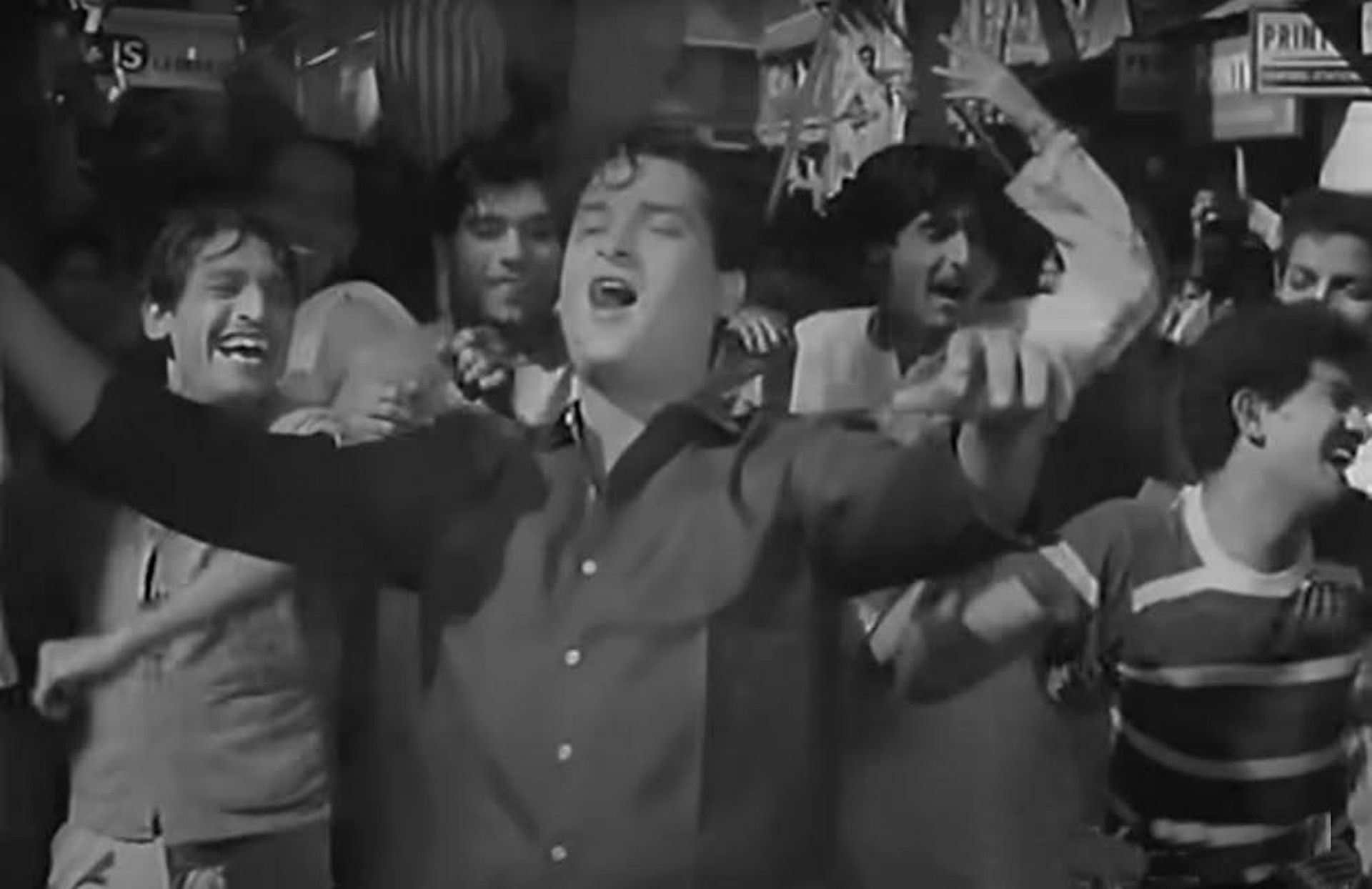
His homoerotic moves, with Elvis Presley-inspired pelvic gyrations and gestures, marked his signature style – notably in Junglee (1961) , Bluff Master (or Wild, 1963) and Laat Saheb (Leisured Dandy, 1967) .
Seus movimentos homoeróticos, com giros pélvicos e gestos inspirados em Elvis Presley, marcaram seu estilo característico – notavelmente em Junglee (1961) , Bluff Master (ou Wild, 1963) e Laat Saheb (Leisured Dandy, 1967) .
In films such as these, the Indian nation suddenly came alive. Here was an actor who would show us how to enjoy a nation, to embrace it. He spoke through his body – and unlike the dominant sentimental heroes of melodrama, there were no songs of loss and love-longing. Desire had to be grasped and experienced.
Em filmes como estes, a nação indiana de repente ganhou vida. Aqui havia um ator que nos mostraria como desfrutar de uma nação, como abraçá-la. Ele falava através do corpo – e, ao contrário dos heróis sentimentais dominantes do melodrama, não havia canções de perda e saudade de amor. O desejo tinha que ser apreendido e experimentado.
Kapoor also made me and my Empire Theatre friends enjoy the Fijian nation state – which we felt was ours, as much as the First Nation people’s – after some 80 years of longing for a faraway nation, as descendants of indentured labourers.
Kapoor também fez comigo e com meus amigos do Empire Theatre desfrutarmos do estado-nação Fiji – que sentimos ser nosso, tanto quanto o dos povos das Primeiras Nações – após cerca de 80 anos de anseio por uma nação distante, como descendentes de trabalhadores contratados.
Our forefathers and mothers had come to Fiji as the answer to its dwindling supply of labour. From May 1879 until 1917, 87 shiploads of Indians travelled to Fiji to work out their five years of indentured slavery – the girmit (from the word agreement) . The first ship brought 463 immigrants. Conditions on the cane plantations were miserable and the Indians called that part of their lives narak (hell) . Once the five years of servitude were over, the Indians were given a certificate of residence.
Nossos antepassados e mães vieram para Fiji como resposta à sua diminuindo oferta de mão de obra. De maio de 1879 até 1917, 87 navios cheios de indianos viajaram para Fiji para cumprir seus cinco anos de escravidão contratada – o girmit (da palavra acordo) . O primeiro navio trouxe 463 imigrantes. As condições nas plantações de cana-de-açúcar eram miseráveis e os indianos chamavam essa parte de suas vidas de narak (inferno) . Assim que os cinco anos de servidão terminaram, os indianos recebiam um certificado de residência.
Only after another five years would they become eligible for a paid ticket back to India. But few returned.
Somente após mais cinco anos eles seriam elegíveis para uma passagem paga de volta para a Índia. Mas poucos retornaram.
After all those years, Shammi Kapoor, in a strange sort of a way – and belatedly – reminded us the Fijian nation state was ours too, and that we too could enjoy it, which we did as we guzzled large quantities of Fiji’s national drink, yaqona (kava) .
Após todos aqueles anos, Shammi Kapoor, de uma maneira estranha – e tardiamente – nos lembrou que o estado-nação Fiji também era nosso, e que nós também poderíamos desfrutá-lo, o que fizemos enquanto engolíamos grandes quantidades de bebida nacional de Fiji, o yaqona (kava) .
In spite of this, we Fiji Indians – who had no other homeland – lost our nation in 1987, because we forgot the First Nation people (who also guzzled huge amounts of yaqona) enjoyed the same nation differently. That difference led to a military coup that pitted two incommensurable readings of the nation against one another: one ancestral or “nativist” and culturally rooted, the other a reading of the nation as an abstract democratic polity with equal rights.
Apesar disso, nós indianos de Fiji – que não tínhamos outra pátria – perdemos nossa nação em 1987, porque esquecemos que os povos das Primeiras Nações (que também engoliam grandes quantidades de yaqona) desfrutavam da mesma nação de maneira diferente. Essa diferença levou a um golpe militar que colocou em confronto duas leituras incomensuráveis da nação: uma ancestral ou “nativista” e culturalmente enraizada, a outra uma leitura da nação como uma política democrática abstrata com direitos iguais.
Hindu superheroes and spectacle
Super-heróis e espetáculo hindus
Indian cinema now is unabashedly – even uncritically – celebratory. The nation state itself functions as its revisionist historical backdrop. In many ways, Bollywood films now are a propagandist instrument of Modi’s Hindu India, as it repackages and reformulates its narratives into an Indian version of Marvel Comics.
O cinema indiano é agora descaradamente – e até acriticamente – celebratório. O próprio estado-nação funciona como seu pano de fundo histórico revisionista. De muitas maneiras, os filmes de Bollywood são agora um instrumento propagandístico do Hindu Índia de Modi, pois empacotam e reformulam suas narrativas em uma versão indiana dos Quadrinhos Marvel.
The superheroes re-enact the roles of Hindu gods – notably the great epic god Rama, whose life combines heroism with the possibilities of a new, paradise-like nation state. This is promised by Hindutva politics.
Os super-heróis reencenam os papéis dos deuses hindus – notavelmente o grande épico deus Rama, cuja vida combina heroísmo com as possibilidades de um novo estado-nação paradisíaco. Isso é prometido pela política Hindutva.
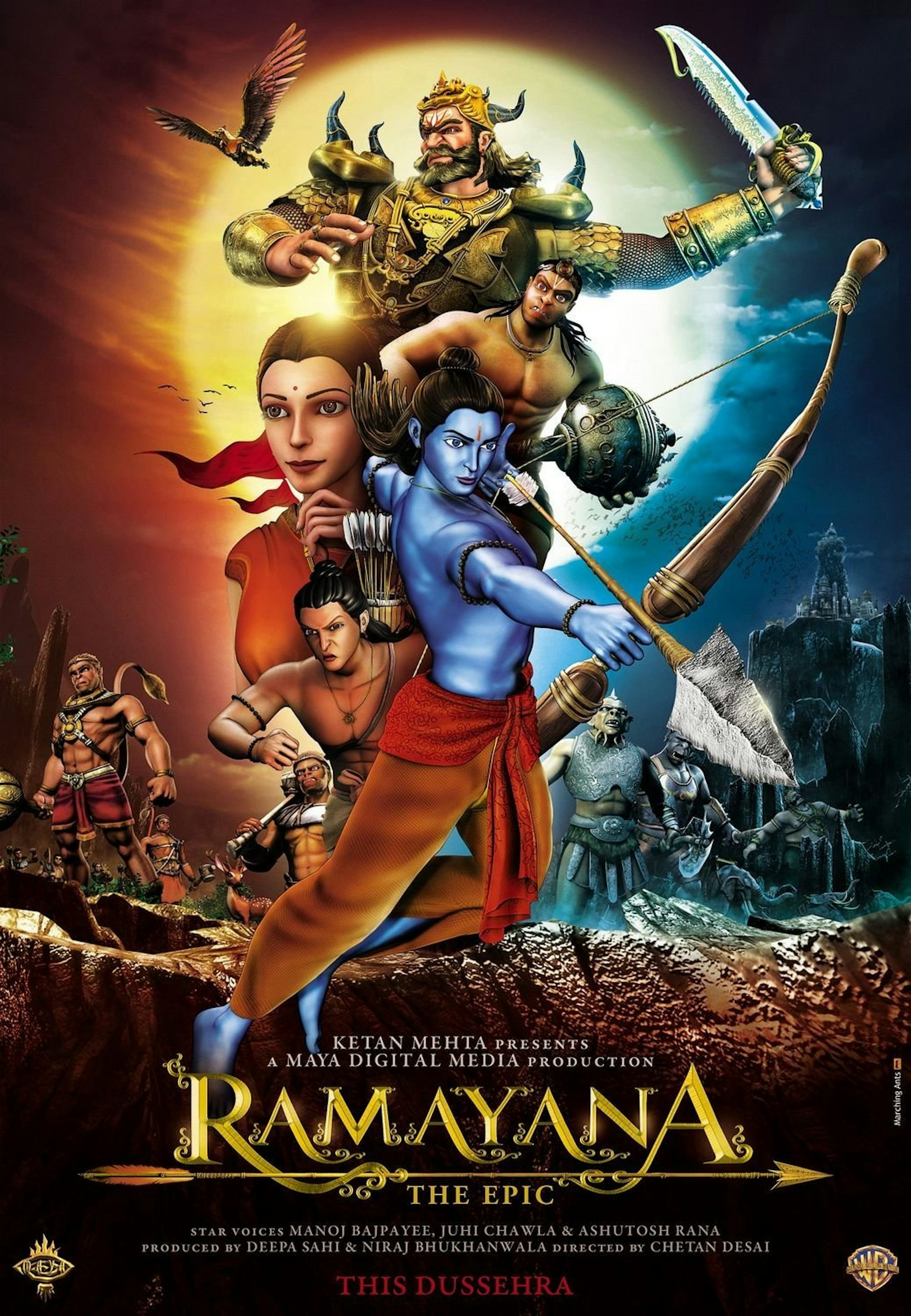
Indeed, a new Bollywood film, Ramyana (2026) , following Rama’s life story and clash with a demon king that will “determine the fate of gods and mortals”, will be released this year, directed by Nitesh Tiwari.
De fato, um novo filme de Bollywood, Ramyana (2026) , que segue a história de vida de Rama e seu confronto com um rei demônio que “determinará o destino dos deuses e mortais”, será lançado este ano, dirigido por Nitesh Tiwari.
Hinduism does not have a unified system of personal and common law – and for almost two millennia, Hindus have not had an empire comparable to the Ottomans or the Mughals. In the absence of a sophisticated technology of writing and reproduction, historical documentation and its preservation of Hindu empires did not carry the same weight. Dates and detailed references to governance are simply not readily available.
O Hinduísmo não possui um sistema unificado de direito pessoal e comum – e por quase dois milênios, os hindus não tiveram um império comparável aos Otomanos ou aos Mogóis. Na ausência de uma tecnologia sofisticada de escrita e reprodução, a documentação histórica e sua preservação dos impérios hindus não tinham o mesmo peso. Datas e referências detalhadas de governança simplesmente não estão prontamente disponíveis.
Indian history, based on documentary evidence and accounts of witnesses, was thus principally written by the Muslim Mughals or British colonials. Bollywood steps in to fill the void, turning once again to fantasy linked to a revisionist version of Indian history.
A história indiana, baseada em evidências documentais e relatos de testemunhas, foi assim principalmente escrita pelos Mogóis muçulmanos ou pelos coloniais britânicos. Bollywood entra em cena para preencher o vazio, voltando mais uma vez para a fantasia ligada a uma versão revisionista da história indiana.
Bhansali’s body of work traces Bollywood’s shift from last century’s mournful detachment from the nation – and, in the case of Shammi Kapoor, a subdued libidinal desire for it – to today’s nationalism. In Saawariya (The Beloved, 2007) , Bhansali’s first major work after Devdas, the familiar theme of love-in-estrangement (key to Bollywood’s old sentimental melodramas) is depicted with a new colour and excitement.
O corpo de trabalho de Bhansali traça a mudança de Bollywood do desapego melancólico da nação do século passado – e, no caso de Shammi Kapoor, um desejo libidinal contido por ela – para o nacionalismo de hoje. Em Saawariya (The Beloved, 2007) , o primeiro grande trabalho de Bhansali após Devdas, o tema familiar do amor no estranhamento (chave para os antigos melodramas sentimentais de Bollywood) é retratado com uma nova cor e entusiasmo.
Bhansali self-assuredly confronts Luchino Visconti’s 1957 Italian romantic melodrama Le Notti Bianche (White Nights) – based on Dostoevsky’s 1848 short story. Visconti’s manifestly fake scenery functioned like “stilled” photographs. Bhansali takes this up to create a dream scenario, its scenes dominated by blue and red colour palettes. The new India does not just imitate, but transforms the borrowed text.
Bhansali confronta com confiança o melodrama romântico italiano de Luchino Visconti de 1957, Le Notti Bianche (Noites Brancas) – baseado no conto de 1848 de Dostoiévski. O cenário manifestamente falso de Visconti funcionava como fotografias “paradas”. Bhansali leva isso adiante para criar um cenário de sonho, cujas cenas são dominadas por paletas de cores azul e vermelho. O novo Índia não apenas imita, mas transforma o texto emprestado.
Bhansali’s films also transform the sentimental Bollywood song – traditionally the cornerstone of Indian popular cinema – into a choreographed item number.
Os filmes de Bhansali também transformam a canção sentimental de Bollywood – tradicionalmente a pedra angular do cinema popular indiano – em um número coreografado.
Song-in-performance once made concessions to Indian Muslim culture, through chaste Urdu poetry and the qawwali, or the dance of the courtesan – marks of cultural incorporation for a multicultural society. But as early as 1999, in films such as Hum Dil De Chuke Sanam (I Gave My Heart Away, My Love) , that concession is gone, and the display of the body elicits a collective erotic or libidinal desire in viewers.
A canção em performance já fez concessões à cultura muçulmana indiana, através da poesia urdu casta e do qawwali, ou da dança da cortesã – marcas de incorporação cultural para uma sociedade multicultural. Mas já em 1999, em filmes como Hum Dil De Chuke Sanam (Eu Dei Meu Coração, Meu Amor) , essa concessão desapareceu, e a exibição do corpo evoca um desejo erótico ou libidinal coletivo nos espectadores.
Now, Bollywood cinema characteristically doubles as both digital spectacle and sociopolitical statement.
Agora, o cinema de Bollywood atua caracteristicamente como espetáculo digital e declaração sociopolítica.
Celebration and protests
Celebração e protestos
This self-assuredness made its way into Bhansali’s other work, too. Goliyon Ki Raaslila: Ram-Leela (A Dance of Gunshots: Ram-Leela, 2013) , set among two warring families in Bhansali’s home state of Gujarat, takes Shakespeare’s Romeo and Juliet as its source.
Essa autoconfiança fez seu caminho para outros trabalhos de Bhansali também. Goliyon Ki Raaslila: Ram-Leela (Uma Dança de Tiros: Ram-Leela, 2013) , ambientado em duas famílias em guerra no estado natal de Bhansali, Gujarat, usa como fonte Romeo e Julieta de Shakespeare.
The tragic ending is maintained, but the spectacle is what truly impresses the viewer, with its lavish, computer-generated arrangements of props, scenery and backgrounds.
O final trágico é mantido, mas é o espetáculo que realmente impressiona o espectador, com seus luxuosos arranjos de adereços, cenários e fundos gerados por computador.
The film was originally titled Ram Leela. But in this new India, Hindu sensitivities dictate culture. Critics petitioned a Delhi court, saying “the movie hurt the religious sentiments of Hindus as it contains sex, violence and vulgarity”, according to the Times of India. There was also unease about the film’s depiction of Hindu history.
O filme foi originalmente intitulado Ram Leela. Mas neste novo Índia, as sensibilidades hindus ditam a cultura. Críticos peticionaram um tribunal de Delhi, dizendo que “o filme feriu os sentimentos religiosos dos hindus por conter sexo, violência e vulgaridade”, de acordo com o Times of India. Houve também apreensão sobre a representação do hinduísmo na história do filme.
The staged performance of the final episode of the Rāmāyaṇa (the Ram-Leela) – which marks the triumph of Lord Rama over the demon kind Ravana – is presented as a grand spectacle without its redemptive religious meaning.
A performance encenada do episódio final do Rāmāyaṇa (a Ram-Leela) – que marca o triunfo de Lord Rama sobre o demônio Ravana – é apresentada como um grande espetáculo sem seu significado religioso redentor.
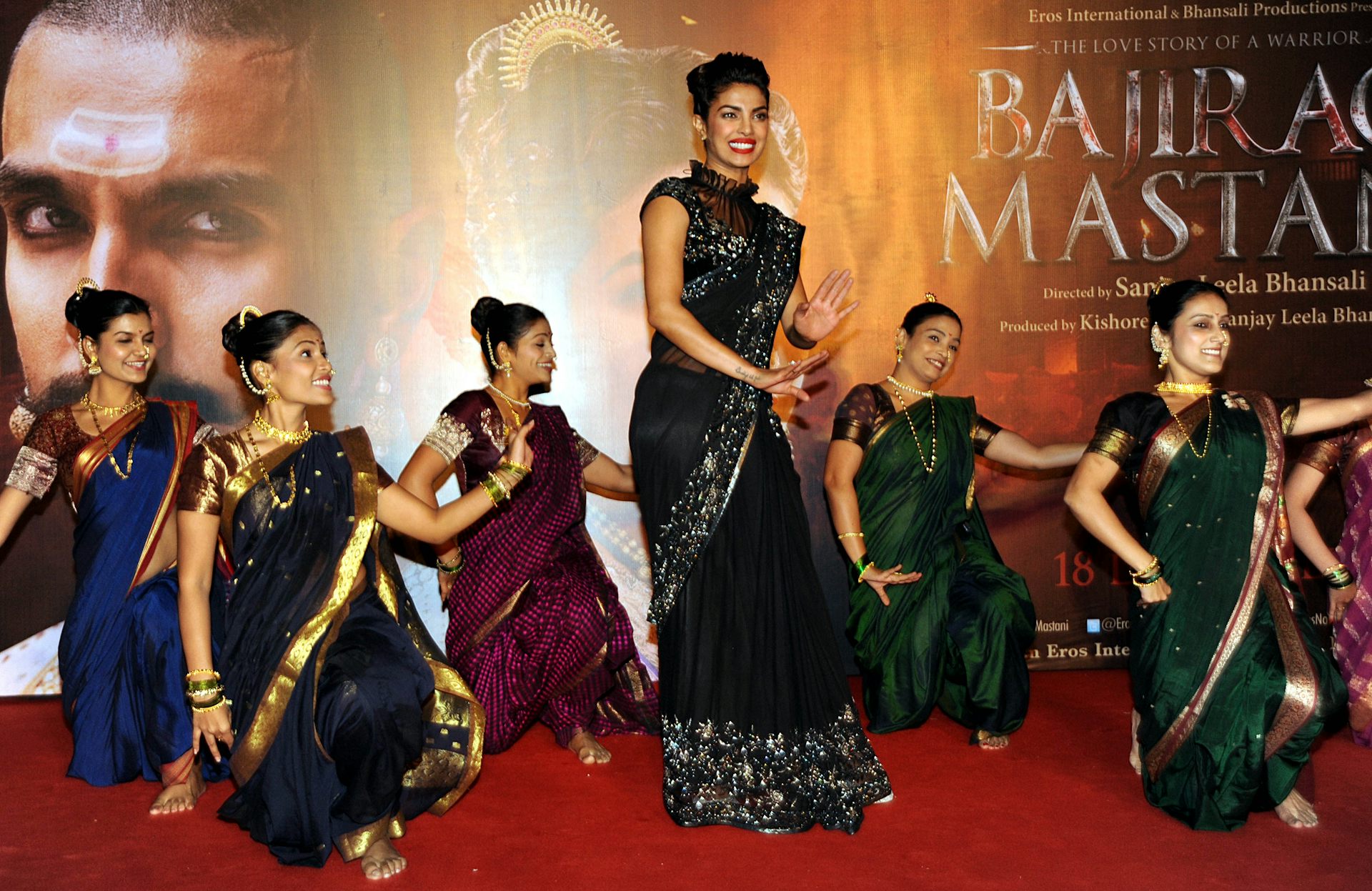
This cinematic style is maintained in Bajirao Mastani (2015) , another tale of doomed love, this time set during the Maratha Empire’s ascendancy.
Este estilo cinematográfico é mantido em Bajirao Mastani (2015) , outro conto de amor fadado ao fracasso, desta vez ambientado durante a ascensão do Império Maratha.
This empire (1674–1818) , which originated with a Hindu warrior, is revered by Hindu nationalists today. The film follows the life and career of Bajirao Ballal, the peshwa, or chief minister, of the Maratha Empire from 1720 to 1740. His conquests contributed to the decay of the Muslim Mughal Empire.
Este império (1674–1818) , que se originou com um guerreiro hindu, é reverenciado pelos nacionalistas hindus hoje. O filme acompanha a vida e a carreira de Bajirao Ballal, o peshwa, ou ministro-chefe, do Império Maratha entre 1720 e 1740. Suas conquistas contribuíram para o declínio do Império Mughal muçulmano.
Ram-Leela had a unified narrative, while Bajirao Mastani functions as a series of set pieces with item numbers. Yet in both films, a Hindutva cultural unity of the nation is endorsed.
Ram-Leela tinha uma narrativa unificada, enquanto Bajirao Mastani funciona como uma série de cenas montadas com números musicais. No entanto, em ambos os filmes, é endossada uma unidade cultural hindutva da nação.
This is true, too, when the source text is pure fantasy. Bhansali’s Padmavaat (2018) tells the story of a 14th-century Muslim emperor’s attack on a kingdom after forcefully abducting Hindu queen, Padmavati. Bhansali transformed 16th-century poet Malik Muhammad Jayasi’s epic poem Padmaavat (written in the Hindi dialect of Avadhi, as a grand Hindu epic of love) into a heroic romance in which the queen and other aristocratic Hindu woman would rather commit sati (self-immolation) than succumb to rape.
Isso é verdade também quando o texto fonte é pura fantasia. Padmavaat de Bhansali (2018) conta a história do ataque de um imperador muçulmano do século XIV a um reino após sequestrar à força a rainha hindu, Padmavati. Bhansali transformou o poema épico Padmaavat, do poeta do século XVI Malik Muhammad Jayasi (escrito no dialeto hindi de Avadhi, como uma grande epopeia hindu de amor) , em um romance heroico no qual a rainha e outras mulheres aristocráticas hindus prefeririam cometer sati (autoimolação) a sucumbir ao estupro.
In 2018, this film too – essentially a romance – sparked controversy. There were months of protest across India, as well as a physical attack on the director and threats of violence against the lead actress. Again, fantasy is read as real, lived history.
Em 2018, este filme também – essencialmente um romance – causou controvérsia. Houve meses de protestos por toda a Índia, bem como um ataque físico ao diretor e ameaças de violência contra a atriz principal. Novamente, a fantasia é lida como história real e vivida.
For Bhansali, however, fealty to history (authentic or otherwise) is not the aim. His fealty is to the power of the moving image, which is then consumed uncritically as either Hindu triumphalism or Muslim depravity.
Para Bhansali, no entanto, a lealdade à história (autêntica ou não) não é o objetivo. Sua lealdade é ao poder da imagem em movimento, que é então consumido acriticamente como triunfo hindu ou depravação muçulmana.
Hindu propaganda on film
Propaganda hindu no cinema
In some films, Bollywood nationalism has taken the form of uncompromised Hindu propaganda, including the outright demonisation of Muslims. Chhaava (The Lion Cub, 2025) is based on the despised Mughal emperor Aurangzeb, who ruled from 1658 to 1707 – and under him, the Mughal empire reached its greatest extent. In the film, he is depicted as nothing but a tyrannical ruler.
Em alguns filmes, o nacionalismo de Bollywood assumiu a forma de propaganda hindu irrestrita, incluindo a demonização aberta dos muçulmanos. Chhaava (O Filhote do Leão, 2025) é baseado no desprezado imperador Mughal Aurangzeb, que reinou de 1658 a 1707 – e sob ele, o império Mughal atingiu sua maior extensão. No filme, ele é retratado como nada mais do que um governante tirânico.
Director Vivek Agnihotri’s The Kashmir Files (2022) and The Bengal Files (2025) ostensibly deal with the ethnic cleansing of Hindus on the part of Muslims, but that history – and its portrayal – is contested. In Singapore, The Kashmir Files was banned for its “provocative and one-sided portrayal” of Muslims. In India, Modi praised it as reflecting the “truth”.
Os filmes The Kashmir Files (2022) e The Bengal Files (2025) do diretor Vivek Agnihotri tratam ostensivamente da limpeza étnica de hindus por parte dos muçulmanos, mas essa história – e sua representação – é contestada. Em Singapura, The Kashmir Files foi banido por sua “representação provocativa e unilateral” dos muçulmanos. Na Índia, Modi elogiou-o por refletir a “verdade”.
The exceptionally popular Dhurandhar franchise (The Stalwart, 2025, and The Revenge, 2026) “paints Pakistan as a lawless, almost barbaric land that’s pathologically hostile towards India”, according to critic Uday Battia. These films have been criticised for their “hyper-nationalist tone”, as well as historical inaccuracies.
A franquia Dhurandhar, excepcionalmente popular (The Stalwart, 2025, e The Revenge, 2026) , “retrata o Paquistão como uma terra sem lei, quase bárbara e patologicamente hostil à Índia”, segundo o crítico Uday Battia. Estes filmes foram criticados por seu “tom hipernacionalista”, bem como por imprecisões históricas.

It’s not uncommon for Bollywood films to be criticised for historical inaccuracy.
Não é incomum que os filmes de Bollywood sejam criticados por imprecisão histórica.
Bollywood often chooses fantasy over history. It embraces the nation anew – but within its own conventions of an imagined world.
Bollywood frequentemente escolhe a fantasia em detrimento da história. Abraça a nação de novo – mas dentro de suas próprias convenções de um mundo imaginário.
International Bollywood
Bollywood Internacional
Originally, Bollywood mostly meant Hindi–Urdu cinema produced in Bombay/Mumbai. Now, Indian commercial cinema in all its languages (especially Hindi, Tamil, Telugu and Punjabi) are effectively Bollywood.
Originalmente, Bollywood significava principalmente cinema Hindi-Urdu produzido em Bombay/Mumbai. Agora, o cinema comercial indiano em todas as suas línguas (especialmente Hindi, Tamil, Telegu e Punjabi) é efetivamente Bollywood.
Two remarkable examples explain the emergence of Bollywood as an international home of Indian popular cinema.
Dois exemplos notáveis explicam o surgimento de Bollywood como um lar internacional do cinema popular indiano.
The Bahubali films, directed by S.S. Rajamouli, were made in Telugu and Tamil, and dubbed in Hindi and Malayalam. Together, Baahubali: The Beginning and (2015) and Baahubali 2: The Conclusion were the highest grossing film franchise in India until this year, collecting some US$376 million in total.
Os filmes Bahubali, dirigidos por S.S. Rajamouli, foram feitos em Telegu e Tamil, e dublados em Hindi e Malayalam. Juntos, Baahubali: The Beginning e (2015) e Baahubali 2: The Conclusion foram as franquias de filmes de maior bilheteria na Índia até este ano, arrecadando um total de US$ 376 milhões.
In the past, films made in Dravidian languages (non-Sanskrit or Prakrit based languages) were markedly different from the Hindi (Bollywood) films. Different cultural nuances were often highlighted, especially in their song and dance sequences. The generally Shaivite religious ideology (where the worship of Lord Shiva takes pride of place) gave them a different cultural complexion.
No passado, os filmes feitos em línguas Dravidianas (línguas não baseadas em Sânscrito ou Prákrito) eram marcadamente diferentes dos filmes Hindi (Bollywood) . Diferentes nuances culturais eram frequentemente destacadas, especialmente em suas sequências de canto e dança. A ideologia religiosa geralmente Shaivita (onde a adoração de Lord Shiva ocupa um lugar de destaque) lhes conferia uma complexidade cultural diferente.
In the Bahubali films, however, a pan-Indian world view took over as they internalised Bollywood. The dubbed Hindi version was read as a Bollywood film in both India and the Indian diaspora.
Nos filmes Bahubali, no entanto, uma visão de mundo pan-indiana assumiu à medida que internalizaram Bollywood. A versão dublada em Hindi foi vista como um filme Bollywood tanto na Índia quanto na diáspora indiana.
The narrative of the films may have been pure fiction, but they were styled in the great pan-Indian epic tradition of the Mahābhārata, one of two Sanskrit epic poems of ancient India.
A narrativa dos filmes pode ter sido pura ficção, mas eles foram estilizados na grande tradição épica pan-indiana do Mahābhārata, um dos dois poemas épicos em sânscrito da antiga Índia.
Rajamouli’s next film, RRR (2022) , won the Oscar for Best Original Song in 2023. The song, Naatu Naatu, was performed (albeit with some non-Indian dancers) on the Oscars stage, to great aplomb.
O próximo filme de Rajamouli, RRR (2022) , ganhou o Oscar de Melhor Canção Original em 2023. A música, Naatu Naatu, foi apresentada (embora com algumas dançarinas não indianas) no palco do Oscar, com grande aplomb.
For RRR, the song was filmed at Mariinskyi Palace, the official residence of the president of Ukraine, before war broke out. The song’s item number has received around 69 million views on YouTube to date. Many commentators have referred to the song, the Oscar performance and the item number in the film itself, as “Bollywood”. In fact, the film originated in “Tollywood” – the name given to films in the Telugu language.
Para RRR, a música foi filmada no Palácio Mariinskyi, a residência oficial do presidente da Ucrânia, antes do início da guerra. O número de dança da música recebeu cerca de 69 milhões de visualizações no YouTube até hoje. Muitos comentaristas se referiram à música, à performance no Oscar e ao número de dança no próprio filme como “Bollywood.” De fato, o filme se originou em “Tollywood” – o nome dado aos filmes na língua Telegu.
RRR, like Bahubali before it, is structured on the cinematic principles that define the “new” Bollywood. Thematically, it works on the desire of the nation as a Hindu entity to be embraced uncritically.
RRR, assim como Bahubali antes dele, é estruturado nos princípios cinematográficos que definem o Bollywood “novo.” Tematicamente, ele trabalha o desejo da nação como uma entidade hindu de ser abraçada sem críticas.
Rajamouli’s films, like many of Bhansali’s, have a militaristic temper, whether through a version of Bahubali’s reworking of the old myths, where gods enter the spirit of humans, or through RRR’s political rebellion, where revolutionaries against the British Empire are recast as modern-day Lord Ramas.
Os filmes de Rajamouli, como muitos de Bhansali, têm um temperamento militarista, seja através de uma versão do retrabalho dos antigos mitos de Bahubali, onde os deuses entram no espírito dos humanos, ou através da rebelião política de RRR, onde os revolucionários contra o Império Britânico são retratados como Lord Ramas modernos.
In extending and embracing a new Hindutva triumphalism, and internalising it, the new hegemony of Bollywood is complete. The joys of Empire Theatre are now no more than a receding memory.
Ao estender e abraçar um novo triunfalismo Hindutva, e internalizá-lo, a nova hegemonia de Bollywood está completa. As alegrias do Empire Theatre não são mais nada além de uma memória em desvanecimento.
Vijay Mishra has received funding from Australian Research Council in the past.
Vijay Mishra recebeu financiamento do Australian Research Council no passado.
Read more
-

A Copa do Mundo de 1994 ajudou a resgatar ‘o belo jogo’ da mediocridade. No seu retorno aos EUA, espere mais dessa beleza.
The 1994 World Cup helped rescue ‘the beautiful game’ from mediocrity. On its return to the US, expect more of that beauty
-

Se a Europa quiser ‘agir sozinha’ em segurança, os países precisam aprender a cantar da mesma partitura
If Europe wants to ‘go it alone’ on security, countries need to learn to sing from the same songsheet