Como teria sido experimentar o armagedom do asteroide que matou os dinossauros: um relato passo a passo
What it would have been like to experience the dinosaur-killing asteroid armageddon: a blow-by-blow account
A week after the asteroid impact, rotting vegetation, smoke and sulphur create a stinky planet. Plant and animal survivors succumb to the corrosive acid rain.
Uma semana após o impacto do asteroide, vegetação em decomposição, fumaça e enxofre criam um planeta fedorento. Os sobreviventes de plantas e animais sucumbem à chuva ácida corrosiva.
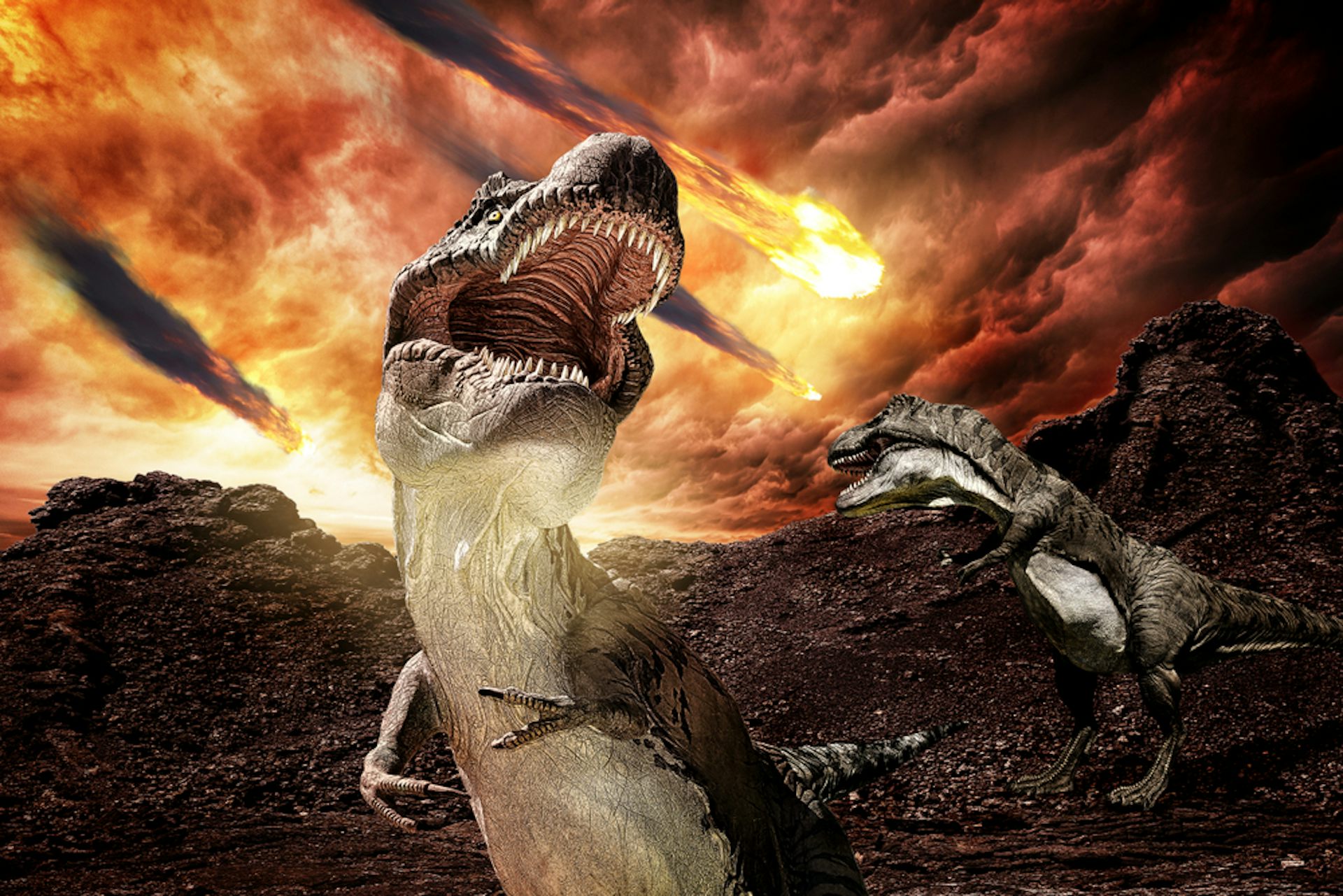
A great Tyrannosaurus rex strides through the conifer trees of her territory, sniffing the air. She picks up the scent from the carcass of a dead horned dinosaur, Triceratops, that she was feeding on yesterday. She walks over and strips off some more shreds of meat, but the smell is foul even for her.
Um grande Tyrannosaurus rex atravessa as árvores coníferas de seu território, farejando o ar. Ela capta o cheiro da carcaça de um dinossauro com chifres morto, Triceratops, que estava comendo ontem. Ela anda e arranca mais alguns pedaços de carne, mas o cheiro é fétido mesmo para ela.
She goes down to the lake to drink and small crocodiles and turtles scuttle into the water. But she hardly sees them. Of more interest is an armoured dinosaur, Ankylosaurus, lurking nearby. However, she knows this dinosaur won’t be an easy kill and she isn’t desperate enough for food to risk a fight. Little does she know there are bigger dangers ahead. She looks up and sees a bright light racing downwards accompanied by faint crackling and sizzling noises.
Ela desce até o lago para beber e pequenos crocodilos e tartarugas se esgueiram na água. Mas ela mal os vê. De maior interesse é um dinossauro blindado, Ankylosaurus, à espreita por perto. No entanto, ela sabe que este dinossauro não será uma caça fácil e ela não está desesperada o suficiente por comida para arriscar uma luta. Ela não sabe que há perigos maiores à frente. Ela olha para cima e vê uma luz brilhante correndo para baixo, acompanhada de ruídos fracos de estalo e chiado.
Our T. rex has excellent hearing for low frequency sounds and she is disturbed by the vibrations she can feel. But her upset only lasts for a moment. In a flash, she has been burnt to a crisp and her world changed forever.
Nosso T. rex tem excelente audição para sons de baixa frequência e ela é perturbada pelas vibrações que pode sentir. Mas seu desconforto dura apenas um momento. Em um instante, ela foi queimada até virar cinzas e seu mundo mudou para sempre.
This all happened 66 million years ago, when a huge asteroid famously hit the Earth in the area of what is now the Caribbean. At the end of the Cretaceous period, sea levels were 100–200 metres higher than today, so the shores of the Caribbean lay far inland over eastern Mexico and the southern United States. The impact happened entirely within these waters.
Tudo isso aconteceu há 66 milhões de anos, quando um enorme asteroide atingiu a Terra na área do que hoje é o Caribe. No final do período Cretáceo, os níveis do mar estavam 100–200 metros mais altos do que hoje, de modo que as margens do Caribe ficavam muito no interior sobre o leste do México e o sul dos Estados Unidos. O impacto ocorreu inteiramente nessas águas.
The event triggered instant changes to our planet and its atmosphere and led to the extinction of the dinosaurs and about half Earth’s other species. But what would it have been like to experience such a gargantuan impact? What would you have seen, heard or smelled? And how would you have died – or survived?
O evento desencadeou mudanças instantâneas em nosso planeta e sua atmosfera e levou à extinção dos dinossauros e de cerca de metade das outras espécies da Terra. Mas como teria sido experimentar um impacto tão gigantesco? O que você teria visto, ouvido ou cheirado? E como você teria morrido – ou sobrevivido?
The Insights section is committed to high-quality longform journalism. Our editors work with academics from many different backgrounds who are tackling a wide range of societal and scientific challenges.
A seção Insights é dedicada ao jornalismo de alta qualidade e de longa forma. Nossos editores trabalham com acadêmicos de muitos diferentes backgrounds que estão enfrentando uma ampla gama de desafios sociais e científicos.
As experts on meteoritics and palaeontology, respectively, we’ve created a detailed timeline, based on decades of research, to take you right there. So let’s start by travelling back in time to the very last day of the Cretaceous.
Como especialistas em meteoritologia e paleontologia, respectivamente, criamos uma linha do tempo detalhada, baseada em décadas de pesquisa, para levá-lo diretamente para lá. Então, vamos começar viajando no tempo até o último dia do Cretáceo.
T-minus one day
T-menos um dia
All is calm and the Cretaceous day proceeds as usual. In what will soon be ground zero, it is pleasantly warm, about 26°C, and wet. It often is. For about a week, the asteroid has been visible only at night. Because the giant rock is heading straight towards Earth, it looks like a motionless star. There is no dramatic tail; this is a rocky asteroid rather than a comet.
Tudo está calmo e o dia Cretáceo prossegue como de costume. No que logo será o zero, está agradavelmente quente, cerca de 26°C, e úmido. É frequentemente. Por cerca de uma semana, o asteroide esteve visível apenas à noite. Como a rocha gigante está indo direto para a Terra, ele parece uma estrela imóvel. Não há uma cauda dramática; este é um asteroide rochoso, e não um cometa.
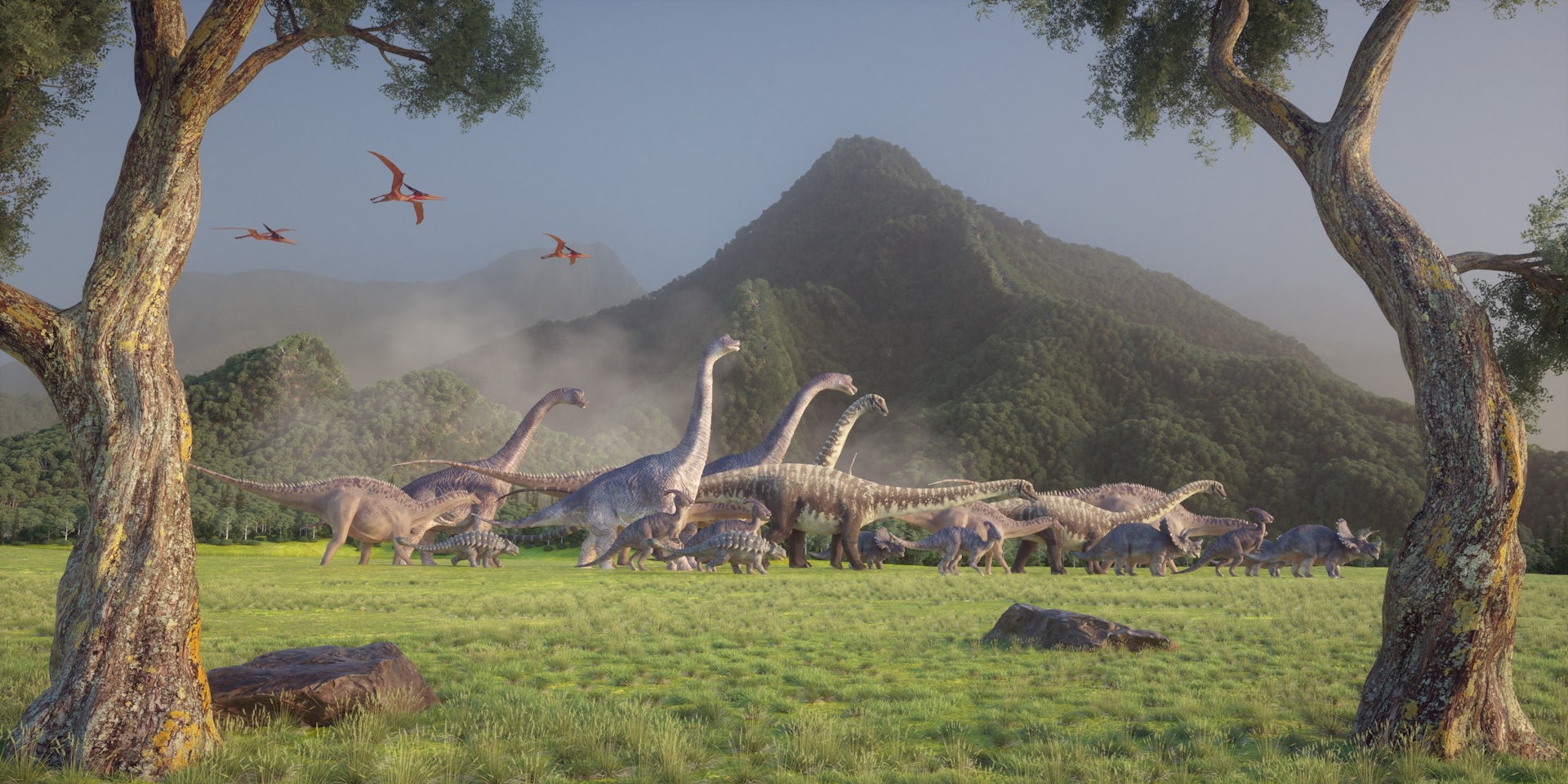
In the last 24 hours, the light becomes visible during the daytime. But it still looks like a star or planet, getting brighter in the final few hours before impact.
Nas últimas 24 horas, a luz se torna visível durante o dia. Mas ainda parece uma estrela ou planeta, ficando mais brilhante nas últimas horas antes do impacto.
T equals 0: the impact
T igual a 0: o impacto
If you were close by, you would first have experienced a brief light and sound show. Minutes to seconds before the impact, you’d have seen the bright fireball, and its accompanying crackling or fizzing noises. This sizzling sound is a result of the photo-acoustic effect: the intense light of the fireball warms the ground, which then heats the air above it, causing pressure waves, or sound.
Se você estivesse por perto, você experimentaria primeiro um breve show de luz e som. Minutos ou segundos antes do impacto, você teria visto a bola de fogo brilhante e os ruídos de estalo ou chiado que a acompanhavam. Esse som de chiado é resultado do efeito fotoacústico: a luz intensa da bola de fogo aquece o solo, que então aquece o ar acima dele, causando ondas de pressão, ou som.
Next, a deafening sonic boom, which occurs because the asteroid is travelling faster than the speed of sound. But the asteroid is so huge, perhaps 10km in diameter, that it almost certainly hits the ground before any living creature near the impact zone has time to run for cover.
Em seguida, um estrondo sônico ensurdecedor, que ocorre porque o asteroide está viajando mais rápido que a velocidade do som. Mas o asteroide é tão enorme, talvez de 10 km de diâmetro, que quase certamente atinge o solo antes que qualquer criatura viva perto da zona de impacto tenha tempo de correr para se proteger.
The asteroid’s enormous energy forms a crater through a series of processes that together take only a few seconds. As the asteroid collides with the surface, its kinetic (movement) energy is instantly transferred to the surface as a combination of kinetic, thermal (heat) and seismic energy (released during earthquakes) . This results in a series of shock waves that heat and compress both the asteroid and its target.
A enorme energia do asteroide forma um cratera através de uma série de processos que levam apenas alguns segundos. À medida que o asteroide colide com a superfície, sua energia cinética (movimento) é instantaneamente transferida para a superfície como uma combinação de energia cinética, térmica (calor) e sísmica (liberada durante terremotos) . Isso resulta em uma série de ondas de choque que aquecem e comprimem tanto o asteroide quanto seu alvo.
As the shock waves propagate, rocks fracture, break up and are ejected, producing a bowl-shaped depression, or transient cavity, about ten seconds after impact. The heat and compression also melt and vaporise large volumes of material, including the asteroid itself, releasing a fountain of incandescent vapour (its temperature is more than 10,000 K, or 9726.85°C) .
À medida que as ondas de choque se propagam, as rochas se fraturam, se desfazem e são ejetadas, produzindo uma depressão em forma de tigela, ou cavidade transitória, cerca de dez segundos após o impacto. O calor e a compressão também derretem e vaporizam grandes volumes de material, incluindo o próprio asteroide, liberando uma fonte de vapor incandescente (sua temperatura é mais de 10.000 K, ou 9726,85°C) .
Over the next few seconds, the cavity increases in size to many times the diameter of the original asteroid. Simulations suggest that around 20 seconds after impact, the transient cavity is at least 30km deep – deeper than the deepest depth currently known on Earth, the 11km Challenger Deep valley, part of the Pacific Ocean’s Marianas Trench. The rim of the crater is over 20km high – more than twice the height of 8,900m Mount Everest.
Nas próximas poucas segundos, a cavidade aumenta de tamanho para muitas vezes o diâmetro do asteroide original. Simulações sugerem que cerca de 20 segundos após o impacto, a cavidade transitória tem pelo menos 30 km de profundidade – mais profunda do que a profundidade mais profunda atualmente conhecida na Terra, o vale Challenger Deep de 11 km, parte da Fossa das Marianas do Oceano Pacífico. A borda do cratera tem mais de 20 km de altura – mais do que o dobro da altura do Monte Everest, com 8.900 m.
But this enormous feature lasts for less than a minute before it starts to collapse. Within three minutes of the impact, the centre of the crater has rebounded to form a peak several kilometres high. The peak only lasts about two minutes before collapsing back into the crater.
Mas essa enorme característica dura menos de um minuto antes de começar a colapsar. Dentro de três minutos do impacto, o centro do cratera reverteu para formar um pico com vários quilômetros de altura. O pico dura apenas cerca de dois minutos antes de colapsar de volta na cratera.
Whether a dinosaur or a dung beetle, if you were near the transient cavity you would have been incinerated instantly by the blast. But even if you were up to 2,000km from the epicentre, you’d likely have been killed quickly by the thermal radiation and supersonic winds now spreading out from the impact site.
Seja um dinossauro ou um besouro de fezes, se você estivesse perto da cavidade transitória, você teria sido incinerado instantaneamente pela explosão. Mas mesmo que você estivesse a 2.000 km do epicentro, você provavelmente teria sido morto rapidamente pela radiação térmica e pelos ventos supersônicos que agora se espalham do local do impacto.
T-plus 5 minutes
T-plus 5 minutos
Five minutes after the impact, the winds have “eased” to those of a category 5 hurricane, flattening everything within about 1,500km of the impact. Destroying everything, that is, which has not already been burnt. Atmospheric temperatures in the region rise to over 500K (226.85°C) . This would feel like being inside an oven – causing burns, heatstroke and death. Wood and plant matter ignite, creating fires everywhere.
Cinco minutos após o impacto, os ventos “cederam” para os de um furacão de categoria 5, achatando tudo a uma distância de cerca de 1.500 km do impacto. Destruindo tudo, ou seja, aquilo que ainda não queimou. As temperaturas atmosféricas na região sobem para mais de 500K (226,85°C) . Isso seria como estar dentro de um forno – causando queimaduras, insolação e morte. Madeira e matéria vegetal pegam fogo, criando incêndios em todos os lugares.
Because the asteroid struck the sea, the atmosphere is also filled with super-heated steam, making the hurricane-force winds even deadlier.
Como o asteroide atingiu o mar, a atmosfera também está cheia de vapor superaquecido, tornando os ventos de força de furacão ainda mais mortais.
Next come the tidal waves, triggered by the vast quantities of displaced rock and water. These 100-metre megatsunamis first strike the shores of what is now the Gulf of Mexico, engulfing the land before depositing huge amounts of debris as they retreat.
Em seguida vêm as ondas de maré, desencadeadas pelas vastas quantidades de rocha e água deslocadas. Esses megtsunamis de 100 metros atingem primeiro as margens do que agora é o Golfo do México, engolindo a terra antes de depositar grandes quantidades de detritos ao recuarem.
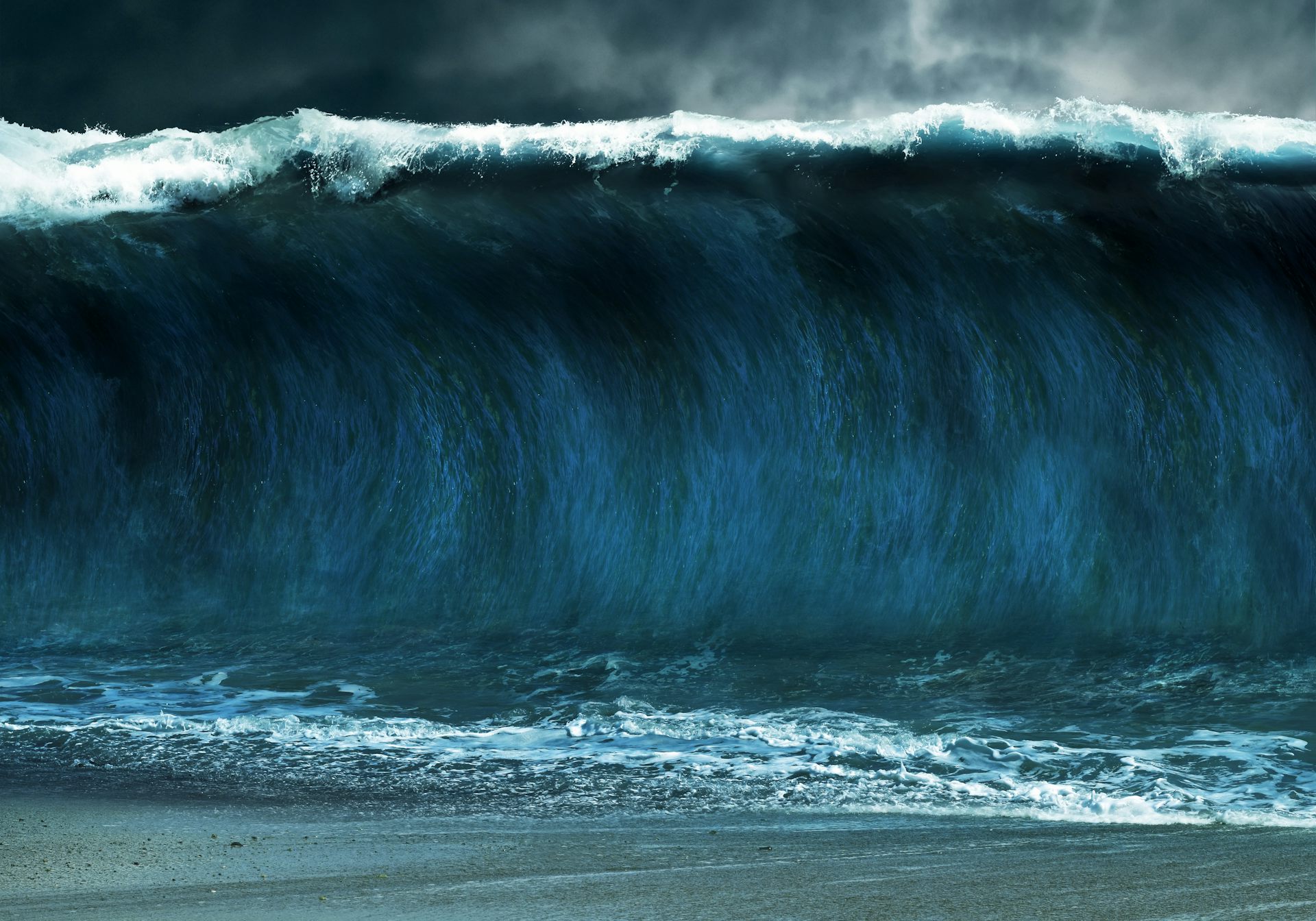
By now, the crater has almost reached its final dimensions – 180km across and 20km deep. But making an enormous hole in the ground isn’t the only outcome of the impact. All the rock and vapour displaced during the collision has to go somewhere. Several locations in Northern America show that metre-sized blocks of debris from the impact were thrown distances of hundreds of kilometres.
Neste momento, o cráter quase atingiu suas dimensões finais – 180 km de largura e 20 km de profundidade. Mas fazer um buraco enorme no chão não é o único resultado do impacto. Toda a rocha e vapor deslocados durante a colisão precisam ir para algum lugar. Vários locais na América do Norte mostram que blocos de detritos do impacto, do tamanho de metros, foram lançados a distâncias de centenas de quilômetros.
So if you were 2,000km to 3,000km from the epicentre and survived the first few seconds, you’d most likely die from overheating, earthquakes, hurricanes, fires, tsunami-driven floods or being hit by impact melt.
Então, se você estivesse a 2.000 km a 3.000 km do epicentro e sobrevivesse aos primeiros segundos, você provavelmente morreria por superaquecimento, terremotos, furacões, incêndios, inundações causadas por tsunami ou por ser atingido pelo derretimento do impacto.
But what is happening much further away? In the first five minutes after impact, dinosaurs roaming the Cretaceous forests of what are now China or New Zealand are so far undisturbed.
Mas o que está acontecendo muito mais longe? Nos primeiros cinco minutos após o impacto, os dinossauros que vagavam pelas florestas do Cretáceo do que agora são a China ou a Nova Zelândia estão tão inalterados.
But it won’t be long before that changes.
Mas não vai demorar muito para que isso mude.
T-plus one hour
T-mais uma hora
Shockwaves on land and sea are only minor inconveniences compared with the fire that is still radiating down from the sky. Some of the impact energy has been transferred into the atmosphere, heating the air and dust to incandescence.
As ondas de choque na terra e no mar são apenas inconvenientes menores em comparação com o fogo que ainda irradia do céu. Parte da energia do impacto foi transferida para a atmosfera, aquecendo o ar e a poeira até a incandescência.
An hour after impact, a belt of dust has circled the globe. Deposits of solidified molten droplets (impact spherules) and mineral grains have been found in numerous locations from New Zealand in the south to Denmark in the north. In these locations, you would not have been aware of the tsunamis around the Americas or the wildfires, but the skies would certainly have begun to darken.
Uma hora após o impacto, uma faixa de poeira circulou o globo. Depósitos de gotículas derretidas solidificadas (esferulitas de impacto) e grãos minerais foram encontrados em inúmeros locais, do sul da Nova Zelândia ao norte da Dinamarca. Nesses locais, você não teria tido conhecimento dos tsunamis ao redor das Américas ou dos incêndios florestais, mas os céus certamente teriam começado a escurecer.
T-plus one day
T-mais um dia
By now, huge tsunamis are moving east across the Atlantic and west across the Pacific, entering the Indian Ocean from both sides.
Até agora, tsunamis enormes estão se movendo para leste pelo Atlântico e para oeste pelo Pacífico, entrando no Oceano Índico de ambos os lados.
They are still around 50m high – causing death and destruction across many coasts around the world. By comparison, the 2004 Boxing Day tsunami reached heights of up to 30 metres. Tsunamis kill fishes and marine life that are washed high on the shore and then dumped, just as they kill coastal trees and drown land animals. But the tsunamis gradually fade away and probably don’t wipe out any entire species – at least on their own.
Eles ainda têm cerca de 50m de altura – causando morte e destruição em muitas costas ao redor do mundo. Em comparação, o tsunami de Boxing Day de 2004 atingiu alturas de até 30 metros. Tsunamis matam peixes e vida marinha que são arrastados para a costa e depois descartados, assim como matam árvores costeiras e afogam animais terrestres. Mas os tsunamis desaparecem gradualmente e provavelmente não aniquilam nenhuma espécie inteira – pelo menos por si mesmos.
The hurricane force winds have also died down, but tropical storm strength winds are whipping up debris and causing further chaos and destruction across the tsunami-affected areas. The burning sky is also triggering wildfires across the globe – which, in turn, carry ever more soot into the atmosphere. The sooty signature of these wildfires has been found deposited as carbon particles in sediments from the K-Pg boundary – a 66-million-year-old thin clay layer.
As ventos de força de furacão também diminuíram, mas os ventos de força de tempestade tropical estão levantando detritos e causando mais caos e destruição nas áreas afetadas pelo tsunami. O céu em chamas também está desencadeando incêndios florestais em todo o globo – que, por sua vez, carregam cada vez mais fuligem para a atmosfera. A assinatura fuliginosa desses incêndios florestais foi encontrada depositada como partículas de carbono em sedimentos da fronteira K-Pg – uma fina camada de argila de 66 milhões de anos.
Further away, in what is modern Europe and Asia, the skies continue to fill up with dust and soot, as they do everywhere. Temperatures start to drop as sunlight is blocked. Trees and plants in general, including phytoplankton, close down as if for winter, unable to photosynthesise. Any animals that rely on warm conditions ultimately hunker down and die.
Mais longe, no que é a Europa e a Ásia modernas, os céus continuam a se encher de poeira e fuligem, como em todos os lugares. As temperaturas começam a cair à medida que a luz do sol é bloqueada. Árvores e plantas em geral, incluindo o fitoplâncton, fecham como se fosse o inverno, incapazes de realizar fotossíntese. Quaisquer animais que dependem de condições quentes acabam se encolhendo e morrendo.
T-plus one week
T-mais uma semana
It’s getting darker and darker. Simulations of solar radiation reaching the Earth’s surface following the impact indicate that, after about a week, the solar flux (the amount of heat and light per a certain area) is just one thousandth of that prior to the impact. This is caused by particles of dust and soot in the atmosphere.
Está ficando mais escuro e mais escuro. Simulações da radiação solar atingindo a superfície da Terra após o impacto indicam que, após cerca de uma semana, o fluxo solar (a quantidade de calor e luz por uma determinada área) é apenas milésimo daquele anterior ao impacto. Isso é causado por partículas de poeira e fuligem na atmosfera.
The continued decrease in light levels is accompanied by a global drop in surface temperatures of at least 5°C. This means that most of the dinosaurs and other large flying and swimming reptiles probably die from freezing within the course of this first week (smaller reptiles with slower metabolisms or more flexible diets could survive longer) . Cooling temperatures and cloud cover also lead to rain. But not just any rain. Storms of acid rain fall across the Earth.
A diminuição contínua dos níveis de luz é acompanhada por uma queda global nas temperaturas da superfície de pelo menos 5°C. Isso significa que a maioria dos dinossauros e outros grandes répteis voadores e nadadores provavelmente morrem por congelamento durante esta primeira semana (répteis menores com metabolismos mais lentos ou dietas mais flexíveis poderiam sobreviver por mais tempo) . As temperaturas mais frias e a cobertura de nuvens também levam à chuva. Mas não qualquer chuva. Tempestades de chuva ácida caem sobre a Terra.
Two separate mechanisms generate acid rain. The first is down to the geology of the impact region. The asteroid happened to hit an area of sediments rich in sulphur, which vaporised and caused sulphur oxides (acidic and pungent gas compounds composed of sulphur and oxygen) to be part of the plume of plasma blasted into the atmosphere. Second, the energy of the collision was sufficient to turn nitrogen and oxygen into nitrogen oxides – highly reactive gases that can form smog.
Dois mecanismos separados geram chuva ácida. O primeiro se deve à geologia da região do impacto. O asteroide aconteceu de atingir uma área de sedimentos rica em enxofre, que vaporizou e causou que os óxidos de enxofre (compostos gasosos ácidos e pungentes compostos de enxofre e oxigênio) fizessem parte do penacho de plasma disparado na atmosfera. Segundo, a energia da colisão foi suficiente para transformar nitrogênio e oxigênio em óxidos de nitrogênio – gases altamente reativos que podem formar fumaça.
The dropping temperature ultimately allows water vapour to condense into drops, and the sulphur and nitrogen oxides dissolve to form sulphuric and nitric acids. This is sufficient to generate a rapid drop in pH. Early models suggest that the pH of the rain might be as low as 1 – the same acidity as battery acid.
A queda de temperatura permite, em última análise, que o vapor d’água se condense em gotas, e os óxidos de enxofre e nitrogênio se dissolvem para formar ácidos sulfúrico e nítrico. Isso é suficiente para gerar uma queda rápida no pH. Modelos iniciais sugerem que o pH da chuva pode ser tão baixo quanto 1 – a mesma acidez do ácido de bateria.
At this point, Earth is not a great place to be. Rotting vegetation, choking smoke and sulphur aerosols combine to make the planet stink. Plants and animals on land and in shallow seas that have survived the darkness and cold succumb to the corrosive acid rain and ocean acidification. Acid rain also kills trees by leaching nutrients such as calcium, magnesium and potassium from the soil. Shallow marine shellfish, crustaceans and corals also die as acid seawater destroys their skeletons.
Neste ponto, a Terra não é um ótimo lugar para se estar. Vegetação em decomposição, fumaça sufocante e aerossóis de enxofre se combinam para fazer o planeta cheirar mal. Plantas e animais na terra e em mares rasos que sobreviveram à escuridão e ao frio sucumbem à chuva ácida corrosiva e à acidificação dos oceanos. A chuva ácida também mata árvores ao lixiviar nutrientes como cálcio, magnésio e potássio do solo. Os moluscos, crustáceos e corais marinhos rasos também morrem à medida que a água do mar ácida destrói seus esqueletos.
T-plus one year
T-mais um ano
Winds die down, wildfires are extinguished and the oceans are once again calm. It might appear that the asteroid collision is just a scar on the ocean floor. But its effects are still destructive. The atmosphere is still filled with dust and the Sun hasn’t shone for a year. Temperatures have continued to drop, with the average surface temperature now 15°C lower than before the impact. Winter has come.
Os ventos diminuem, os incêndios florestais são extintos e os oceanos estão novamente calmos. Pode parecer que a colisão do asteroide é apenas uma cicatriz no fundo do oceano. Mas seus efeitos ainda são destrutivos. A atmosfera ainda está cheia de poeira e o Sol não brilhou por um ano. As temperaturas continuaram a cair, com a temperatura média da superfície agora 15°C abaixo daquela que existia antes do impacto. O inverno chegou.
Any dinosaurs or marine reptiles that survived the first week of freezing conditions would have died very soon after. A year after the impact, only rotted skeletons of these behemoths remain. Here and there, smaller animals like mammals the size of rats and insects would be nestling in crevices, barely surviving on their reserves and decaying plants.
Qualquer dinossauro ou réptil marinho que sobrevivesse à primeira semana de condições de congelamento teria morrido muito em seguida. Um ano após o impacto, restam apenas esqueletos apodrecidos desses behemoths. Aqui e ali, animais menores como mamíferos do tamanho de ratos e insetos se aninhavam em fendas, sobrevivendo com dificuldade em suas reservas e plantas em decomposição.
Indeed, it has not been a good year for life on Earth: over 50% of plants have died out because of the cold and lack of sunlight. And similar losses have occurred among terrestrial animals and species in the acidified, shallow sea waters.
De fato, não foi um bom ano para a vida na Terra: mais de 50% das plantas morreram por causa do frio e da falta de luz solar. E perdas semelhantes ocorreram entre animais e espécies terrestres nas águas marinhas levemente ácidas.
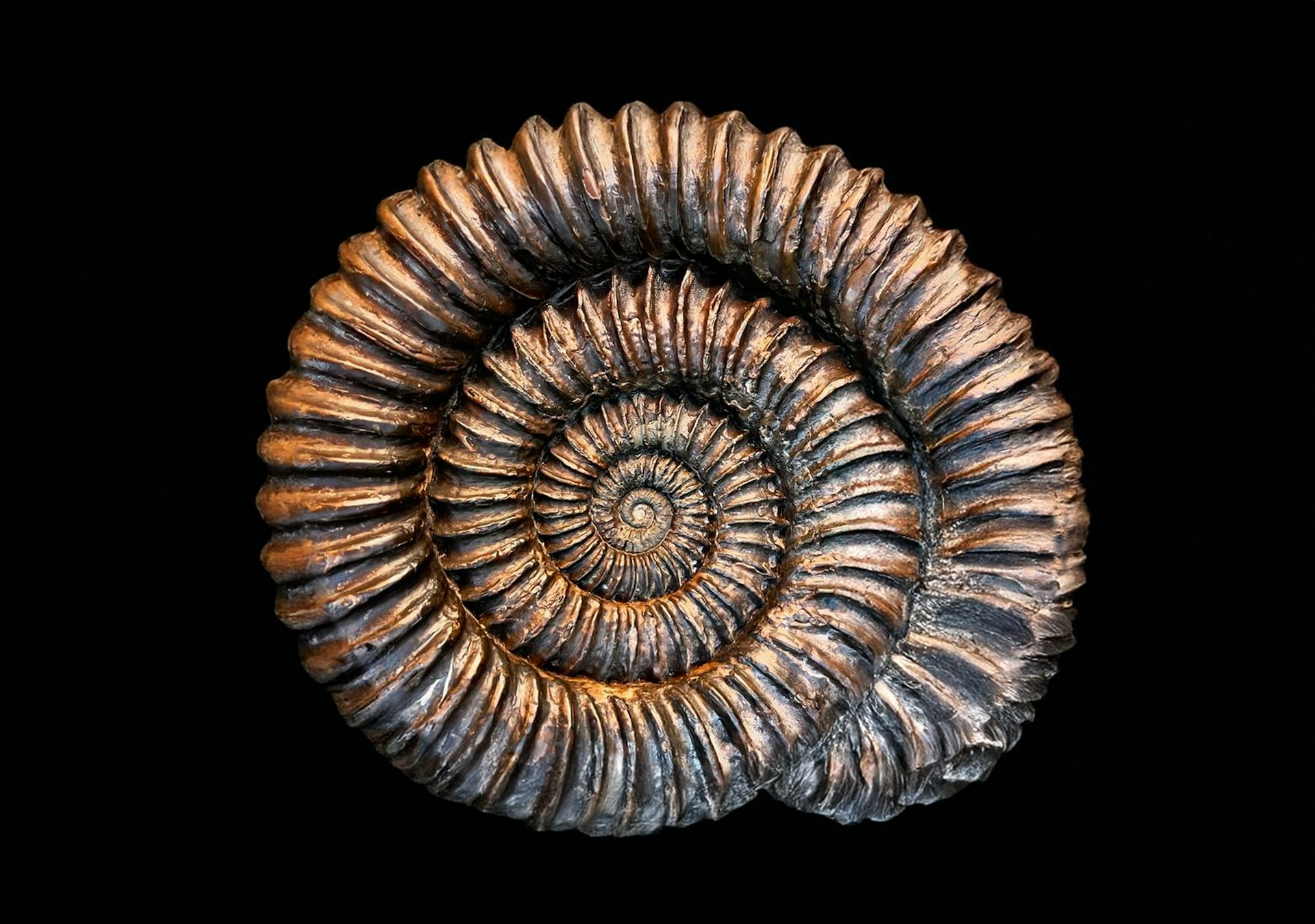
While most plant groups and many of the modern groups of insects, fishes, reptiles, birds and mammals recover reasonably rapidly, things don’t look great for other species. Dinosaurs and pterosaurs living on land are extinct, as are many marine reptiles, ammonites, belemnites and rudist bivalves in the oceans. Ammonites and belemnites are high in their food chains, and so suffer not only from the cold and acidification but also from the loss of abundant food resources, such as smaller marine organisms.
Embora a maioria dos grupos de plantas e muitos dos grupos modernos de insetos, peixes, répteis, aves e mamíferos se recuperem relativamente rapidamente, as coisas não estão boas para outras espécies. Dinossauros e pterossauros que viviam na terra estão extintos, assim como muitos répteis marinhos, amonites, belemnites e bivalves rudistas nos oceanos. As amonites e belemnites estão no topo das cadeias alimentares, e por isso sofrem não apenas com o frio e a acidificação, mas também com a perda de recursos alimentares abundantes, como organismos marinhos menores.
T-plus ten years
T-mais dez anos
The Earth is still in the grip of a fierce winter. Although most of the sulphur has rained out of the atmosphere, dust and soot particles remain. The average surface temperature is still about 5°C lower than before the impact. The main oceans have not frozen, but inland lakes and rivers around the world are iced over.
A Terra ainda está sob o domínio de um inverno feroz. Embora a maior parte do enxofre tenha caído da atmosfera, partículas de poeira e fuligem permanecem. A temperatura média da superfície ainda está cerca de 5°C abaixo daquela que existia antes do impacto. Os oceanos principais não congelaram, mas lagos e rios interiores ao redor do mundo estão cobertos de gelo.
Clearly, there were no humans about at this time – there weren’t even any larger mammals. But given the only species that survived were those that could burrow or live below water, it is unlikely that you could have survived this long.
Claramente, não havia humanos por perto naquele momento – nem mesmo mamíferos maiores. Mas dado que as únicas espécies que sobreviveram foram aquelas que podiam se enterrar ou viver debaixo d’água, é improvável que você tenha sobrevivido por tanto tempo.
Surviving plant and animal groups such as turtles, smaller crocodiles, lizards, snakes, some ground-dwelling birds and small mammals repopulate the Earth at this point. But they are forced back to limited areas of relative safety a long way from the impact site. These areas are now receiving sufficient sunlight for plants and phytoplankton to photosynthesise again. As leaves and seeds provide the basis for the food chains on land and in the sea, life begins to rebuild.
Grupos de plantas e animais sobreviventes, como tartarugas, crocodilos menores, lagartos, cobras, algumas aves terrestres e pequenos mamíferos, repopulam a Terra neste ponto. Mas eles são forçados a retornar a áreas limitadas de relativa segurança, longe do local do impacto. Essas áreas estão agora recebendo luz solar suficiente para que as plantas e o fitoplâncton possam fotossintetizar novamente. Como as folhas e as sementes fornecem a base para as cadeias alimentares na terra e no mar, a vida começa a se reconstruir.
Eventually, life returns to the devastated landscapes, but ecosystems are very different and the dinosaurs are no more.
Eventualmente, a vida retorna às paisagens devastadas, mas os ecossistemas são muito diferentes e os dinossauros não estão mais.
T-plus 66 million years
T-mais 66 milhões de anos
Today, 66 million years after the impact, the scars of the collision are hidden within geological strata – and scientists have started deciphering them. It was in 1980 that researchers first reported evidence of the impact. In their classic paper, Luis Alvarez, a Nobel-prize-winning physicist, and co-authors, described a sudden enrichment in the element iridium in a specific clay layer in Denmark and in Italy.
Hoje, 66 milhões de anos após o impacto, as cicatrizes da colisão estão escondidas nas camadas geológicas – e os cientistas começaram a decifrá-las. Foi em 1980 que os pesquisadores relataram pela primeira vez evidências do impacto. Em seu artigo clássico, Luis Alvarez, um físico vencedor do Prêmio Nobel, e seus coautores, descreveram um enriquecimento repentino do elemento irídio em uma camada específica de argila no Dinamarca e na Itália.
Iridium is rare in surface rocks because most of it was sequestered in Earth’s core when the planet first formed. However, iridium is found in meteorites, and Alvarez and colleagues inferred that the rate of accumulation of the metal in the sediments was so high that it could only have been produced by impact of a gigantic meteorite.
O irídio é raro nas rochas superficiais porque a maior parte dele foi sequestrada no núcleo da Terra quando o planeta se formou. No entanto, o irídio é encontrado em meteoritos, e Alvarez e colegas inferiram que a taxa de acumulação do metal nos sedimentos era tão alta que só poderia ter sido produzida pelo impacto de um meteoro gigantesco.
Because the scientists had only observed the iridium spike in two locations, the impact hypothesis was rejected by many scientists at the time. However, through the 1980s, iridium spikes were identified in clay layers at more and more locations – in muds laid down on land, in lakes, in the sea.
Como os cientistas haviam observado apenas o pico de irídio em duas localizações, a hipótese do impacto foi rejeitada por muitos cientistas na época. No entanto, ao longo dos anos 1980, picos de irídio foram identificados em camadas de argila em mais e mais locais – em lama depositada na terra, em lagos, no mar.
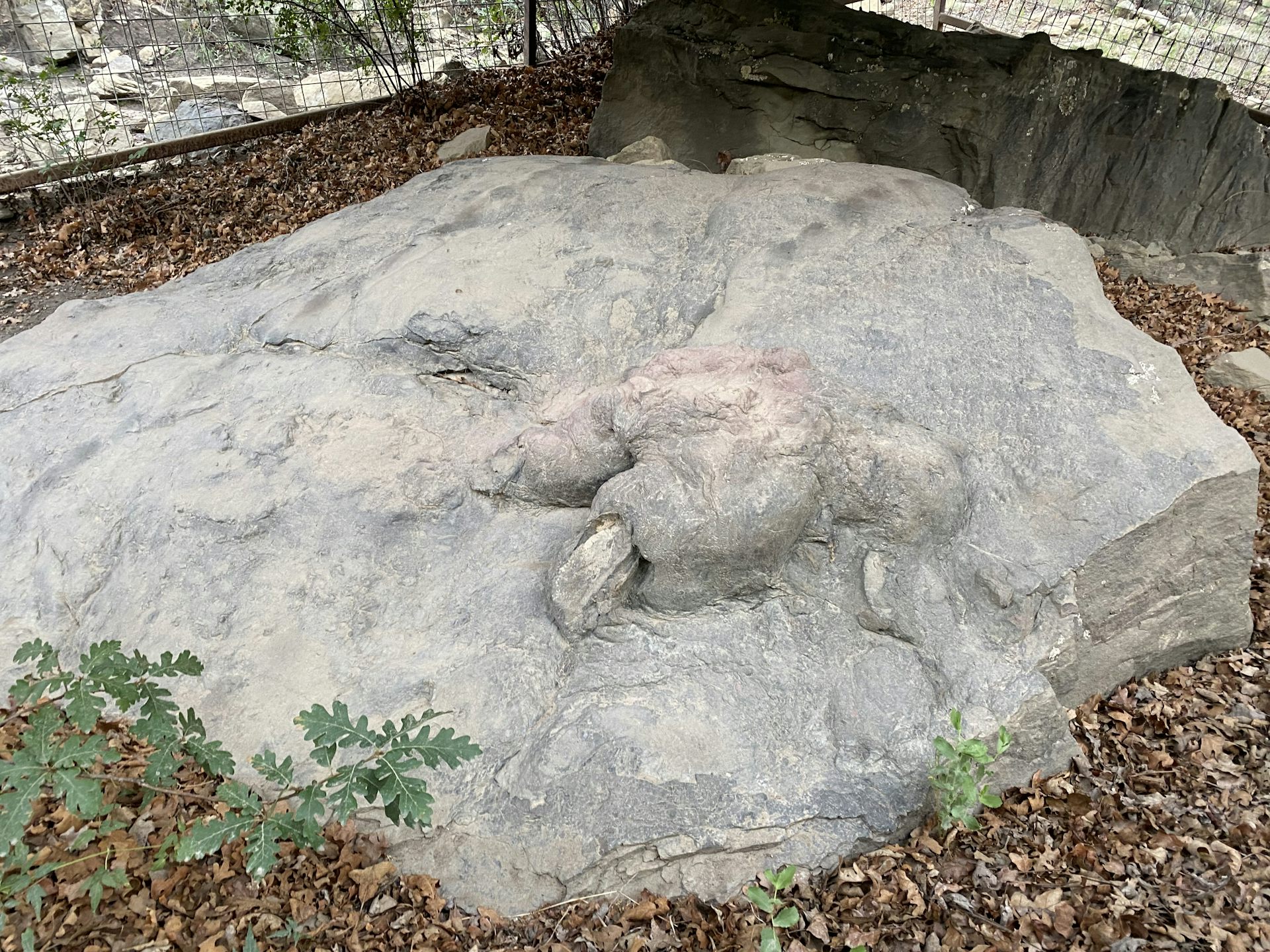
Support for an impact hypothesis strengthened when a crater of the correct age was found in 1991. The crater is buried beneath younger rocks, but clearly visible in geophysical surveys, lying half on land in the Yucatán Peninsula of Mexico, and half offshore. Since 1990, evidence for the impact has increased, not least when scientists discovered that there was indeed a sharp cooling event at the end of the Cretaceous.
O apoio à hipótese de impacto se fortaleceu quando um cratera da idade correta foi encontrado em 1991. O cratera está enterrado sob rochas mais jovens, mas é claramente visível em levantamentos geofísicos, estendendo-se metade na terra na Península de Yucatán, no México, e metade no mar. Desde 1990, a evidência do impacto aumentou, não menos quando os cientistas descobriram que houve de fato um evento de resfriamento acentuado no final do Cretáceo.
In total, it is estimated that half the species of plants and animals alive at the end of the Cretaceous disappeared. It was once thought that surviving groups such as many plants, insects, molluscs, lizards, birds and mammals somehow escaped unscathed. But detailed study shows that this is not the case – they were all hit hard.
No total, estima-se que metade das espécies de plantas e animais vivas no final do Cretáceo desapareceram. Uma vez se pensou que grupos sobreviventes, como muitas plantas, insetos, moluscos, lagartos, pássaros e mamíferos, haviam escapado ilesos. Mas o estudo detalhado mostra que este não é o caso – todos foram atingidos com força.
But, by chance or luck, enough individuals and species were able to survive the cold and absence of food, or were in parts of the world where the effects were less extreme. As the world returned to normal, they had the opportunity to expand rapidly into their old niches, but also to occupy the space vacated by extinct groups. In fact, one important consequence of the extinction of the dinosaurs, apex predators in their heyday, was the successful spread and evolution of mammals.
Mas, por acaso ou sorte, foram capazes de sobreviver ao frio e à ausência de comida, ou estavam em partes do mundo onde os efeitos foram menos extremos. À medida que o mundo retornou ao normal, eles tiveram a oportunidade de se expandir rapidamente para seus nichos antigos, mas também de ocupar o espaço deixado por grupos extintos. De fato, uma consequência importante da extinção dos dinossauros, predadores de topo em seu auge, foi a disseminação e evolução bem-sucedida dos mamíferos.
When Alvarez and colleagues first described the drop in temperature following the impact, they called it a “nuclear winter”, reflecting the political climate of the early 1980s. Now we might be more inclined to describe the effects as a global climate change – similar events are currently resulting from increased carbon dioxide in the atmosphere (flooding, temperature fluctuations) .
Quando Alvarez e colegas descreveram pela primeira vez a queda de temperatura após o impacto, eles a chamaram de “inverno nuclear”, refletindo o clima político do início dos anos 1980. Agora podemos estar mais inclinados a descrever os efeitos como uma mudança climática global – eventos semelhantes estão atualmente resultando do aumento do dióxido de carbono na atmosfera (inundações, flutuações de temperatura) .
It is salutary to think that without the asteroid collision, primates might never have reached the level we are at today. But it is equally salutary to consider that modern humans are causing some of the same changes to the atmosphere that ultimately killed our reptilian forbears and may one day also lead to our own demise.
É saudável pensar que sem a colisão do asteroide, os primatas nunca teriam alcançado o nível em que estamos hoje. Mas é igualmente saudável considerar que os humanos modernos estão causando algumas das mesmas mudanças na atmosfera que acabaram por matar nossos ancestrais reptilianos e podem, um dia, levar à nossa própria aniquilação.
For you: more from our Insights series:
Para você: mais da nossa série Insights:
‘It ain’t no unicorn’: meet the researchers who’ve interviewed 130 Bigfoot hunters
‘Não é unicórnio’: conheça os pesquisadores que entrevistaram 130 caçadores de Bigfoot
The truth about child IQ: research shows it fluctuates and may be an unreliable predictor of future success
A verdade sobre o QI infantil: pesquisas mostram que ele flutua e pode ser um preditor pouco confiável de sucesso futuro
Is time a fundamental part of reality? A quiet revolution in physics suggests not
O tempo é uma parte fundamental da realidade? Uma revolução silenciosa na física sugere não
Underground data fortresses: the nuclear bunkers, mines and mountains being transformed to protect our ‘new gold’ from attack
Fortalezas de dados subterrâneos: os bunkers nucleares, minas e montanhas sendo transformados para proteger nosso ‘novo ouro’ do ataque
Inside Porton Down: what I learned during three years at the UK’s most secretive chemical weapons laboratory
Dentro de Porton Down: o que aprendi durante três anos no laboratório mais secreto de armas químicas do Reino Unido
To hear about new Insights articles, join the hundreds of thousands of people who value The Conversation’s evidence-based news. Subscribe to our newsletter.
Para saber sobre novos artigos Insights, junte-se às centenas de milhares de pessoas que valorizam as notícias baseadas em evidências da The Conversation. Assine nossa newsletter.
Monica Grady receives funding from the Leverhulme Trust for an Emeritus Fellowship and from the STFC. She is affiliated with The Open University, Liverpool Hope University and the Natural History Museum, London.
Monica Grady recebe financiamento do Leverhulme Trust para um Fellowship de Emérito e do STFC. Ela é afiliada à The Open University, Liverpool Hope University e ao Museu de História Natural, Londres.
Michael J. Benton does not work for, consult, own shares in or receive funding from any company or organisation that would benefit from this article, and has disclosed no relevant affiliations beyond their academic appointment.
Michael J. Benton não trabalha para, consulta, possui ações em, ou recebe financiamento de qualquer empresa ou organização que se beneficiaria deste artigo, e não divulgou quaisquer afiliações relevantes além de seu cargo acadêmico.
Read more
-
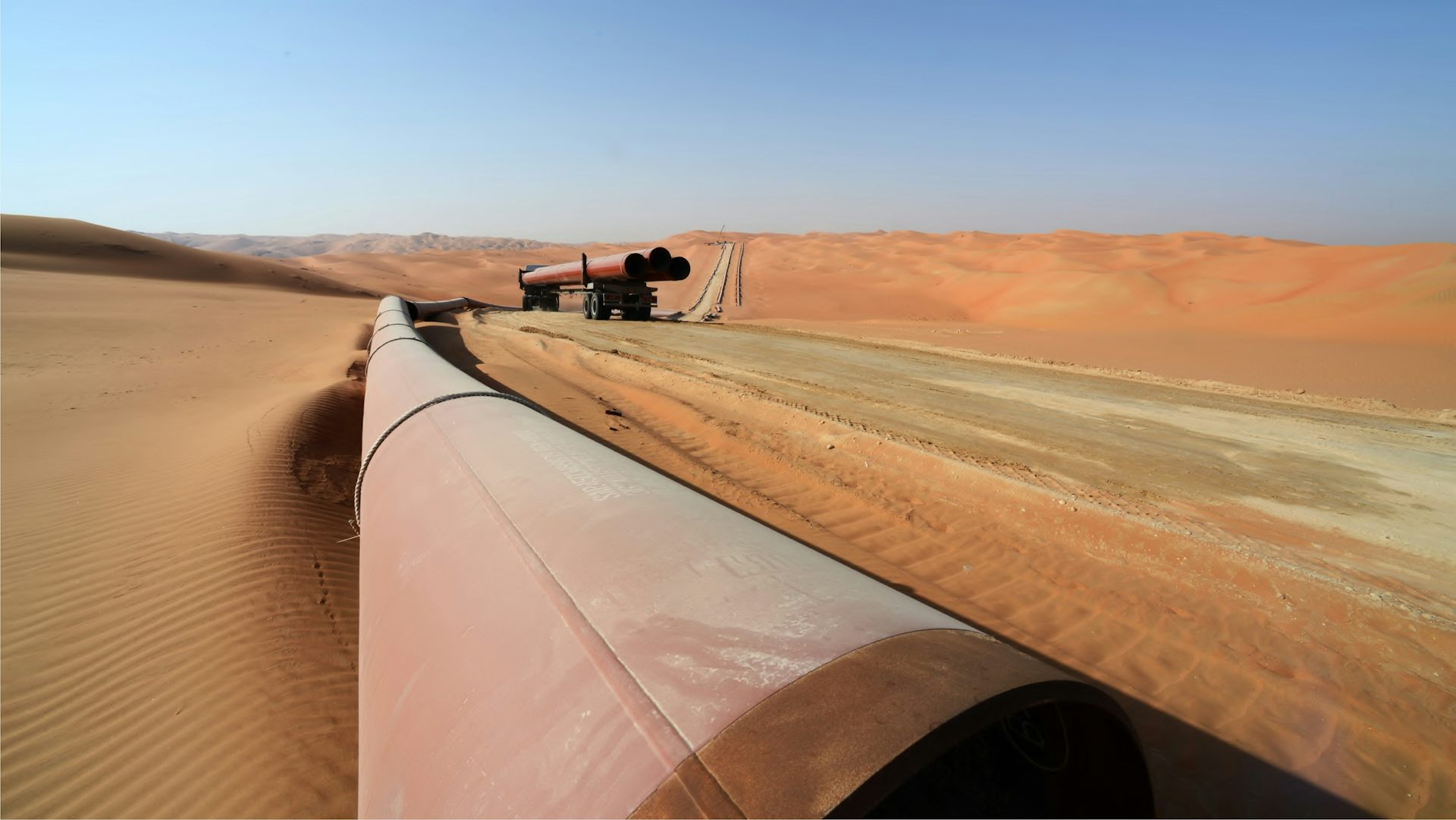
Que alternativas os estados do Golfo têm para o Estreito de Ormuz?
What alternatives do Gulf states have to the Strait of Hormuz?
-

As conversações de Islamabad estavam condenadas ao fracasso – e o bloqueio de Ormuz lançou outro obstáculo a qualquer acordo Irã-EUA.
The Islamabad talks were doomed to failure – and Hormuz blockade has thrown another obstacle to any Iran-US deal