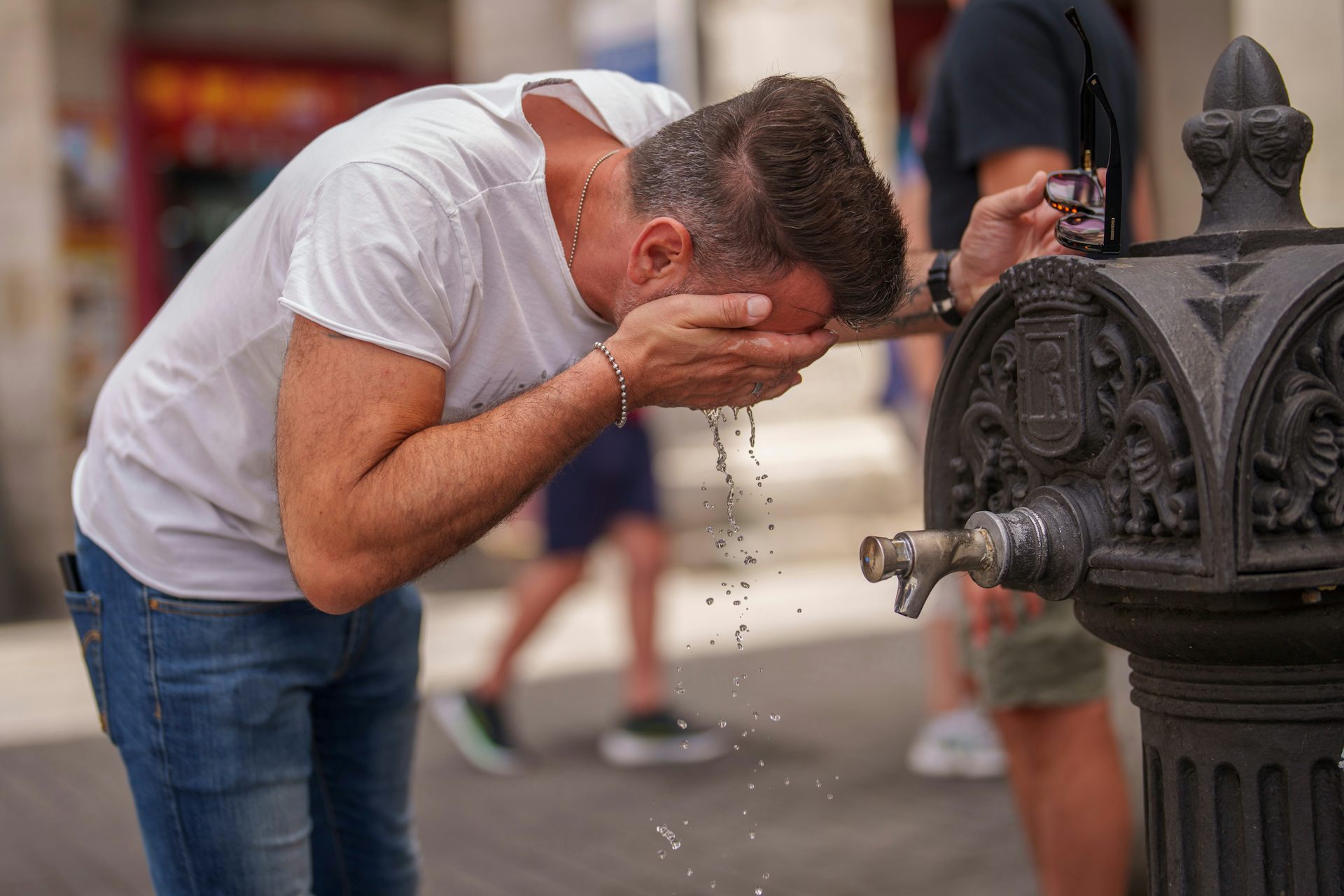
A Europa está enfrentando uma onda de calor recorde. O que a torna tão severa?
Europe is battling a record-breaking heatwave. What’s making it so severe?
A climate expert unpacks the potential causes and risks of extreme heat.
Um especialista climático desvenda as possíveis causas e os riscos do calor extremo.
Sweltering temperatures are shattering records across Europe, as the continent battles a deadly heatwave.
Temperaturas escaldantes estão quebrando recordes em toda a Europa, enquanto o continente luta contra uma onda de calor fatal.
On Tuesday and Wednesday, France endured its hottest days in history, with western regions reaching highs of between 39°C and 43°C. Wednesday was the United Kingdom’s warmest June day on record, with the mercury climbing to 36.1°C. And according to early data, Spain, Germany, Austria, the Netherlands and Switzerland have all broken June temperature records at several sites. And the event is not over yet.
Na terça e quarta-feira, a França passou pelos dias mais quentes de sua história, com regiões ocidentais atingindo máximas entre 39°C e 43°C. Quarta-feira foi o dia de junho mais quente registrado no Reino Unido, com o mercúrio subindo para 36,1°C. E, segundo dados preliminares, Espanha, Alemanha, Áustria, Holanda e Suíça quebraram recordes de temperatura em junho em vários locais. E o evento ainda não acabou.
Tragically, lives have already been lost, including dozens of people who have drowned in France in the past week, while trying to cool down in the punishing heat.
Tragicamente, vidas já foram perdidas, incluindo dezenas de pessoas que se afogaram na França na última semana, enquanto tentavam se refrescar do calor implacável.
But this historic heatwave is not happening in isolation. It comes days after the global sea surface temperature again reached record levels. Meanwhile, Australia’s weather bureau has declared El Niño active, making a hotter, drier year in Australia, Asia and the South Pacific much more likely. And since April, India and Pakistan have been battling a sustained and ultimately deadly heatwave.
Mas esta onda de calor histórica não está acontecendo isoladamente. Ela chega dias depois que a temperatura superficial global do mar atingiu novamente níveis recordes. Enquanto isso, o órgão meteorológico da Austrália declarou El Niño ativo, tornando muito mais provável um ano mais quente e seco na Austrália, Ásia e no Pacífico Sul. E desde abril, Índia e Paquistão lutam contra uma onda de calor sustentada e, por fim, fatal.
So what’s driving this latest heatwave? And why is it so severe?
Então, o que está impulsionando esta última onda de calor? E por que ela é tão severa?
An unusual heatwave
Uma onda de calor incomum
A heatwave occurs when the average temperature is unusually hot for three or more days in a row. That’s compared to past weather data taken from the same location.
Uma onda de calor ocorre quando a temperatura média está anormalmente alta por três ou mais dias consecutivos. Isso é comparado aos dados climáticos passados coletados no mesmo local.
But scientists are losing sleep over the current European heatwave, for two main reasons.
Mas os cientistas estão perdendo o sono com a atual onda de calor europeia, por dois motivos principais.
1. Timing
1. Tempo
In Europe, the hottest time of year comes in mid- to late July, about a month after the summer solstice. However, recent research suggests days of intense heat stress are now starting to arrive in June. Since 1950, only one other major heatwave has arrived earlier than the current heatwave, which is unfolding weeks before the peak of the European summer.
Na Europa, o período mais quente do ano ocorre em meados a final de julho, cerca de um mês após o solstício de verão. No entanto, pesquisas recentes sugerem que dias de intenso estresse térmico estão começando a chegar em junho. Desde 1950, apenas outra onda de calor importante chegou antes da atual, que está se desenrolando semanas antes do auge do verão europeu.
Current evidence shows climate change is making heatwaves more frequent and intense. One study examined the heatwave that hit southeast England in June 2025. It found that without the effect of human-made greenhouse gas emissions, such a heatwave would only happen once every 50 years. But when the researchers accounted for the temperature increase of 1.3°C caused by human-induced climate change, this became at least once every five years.
Evidências atuais mostram que as mudanças climáticas estão tornando as ondas de calor mais frequentes e intensas. Um estudo examinou a onda de calor que atingiu o sudeste da Inglaterra em junho de 2025. Ele descobriu que, sem o efeito das emissões de gases de efeito estufa feitas pelo homem, tal onda de calor ocorreria apenas uma vez a cada 50 anos. Mas quando os pesquisadores levaram em conta o aumento de temperatura de 1,3°C causado pelas mudanças climáticas induzidas pelo homem, isso passou a ser de pelo menos uma vez a cada cinco anos.
2. Severity
2. Severidade
In a world without climate change, this extreme heatwave would rarely if ever happen so early in the year. And it also would not be toppling temperature records, and by such staggering amounts.
Em um mundo sem mudanças climáticas, esta onda de calor extrema raramente ou nunca aconteceria tão cedo no ano. E também não estaria quebrando recordes de temperatura, e em quantidades tão impressionantes.
Tuesday and Wednesday were France’s hottest days since records began in 1947, with an average temperature of 29.9°C across the country. On Tuesday, 147 French towns hit all-time highs for June, with 41 local weather stations recording figures above 43°C.
Terça e quarta-feira foram os dias mais quentes da França desde o início dos registros em 1947, com uma temperatura média de 29,9°C em todo o país. Na terça-feira, 147 cidades francesas atingiram recordes históricos para junho, com 41 estações meteorológicas locais registrando números acima de 43°C.
France also slept through its warmest night ever from Tuesday into Wednesday, with a national average temperature of 21.6°C. The overnight heat was enough to make some rivers so warm they could not be safely used to cool nuclear power plants.
A França também passou por sua noite mais quente já registrada na transição de terça para quarta-feira, com uma temperatura média nacional de 21,6°C. O calor noturno foi suficiente para deixar alguns rios tão quentes que não poderiam ser usados com segurança para resfriar usinas nucleares.
In the same week, Spain also set multiple daytime and nighttime records, with one location enduring three consecutive nights of 30°C or above. Parts of Spain have seen temperatures surpass 45°C.
Na mesma semana, a Espanha também estabeleceu vários recordes diurnos e noturnos, com um local suportando três noites consecutivas de 30°C ou mais. Partes da Espanha registraram temperaturas ultrapassando os 45°C.
In western Europe, the heatwave is expected to peak in the middle of this week before shifting east, with forecasts suggesting Poland and Germany will bear the brunt over the weekend.
Na Europa ocidental, espera-se que a onda de calor atinja o pico em meados desta semana antes de se deslocar para leste, com previsões sugerindo que Polônia e Alemanha serão as áreas mais afetadas durante o fim de semana.
What caused it?
O que causou isso?
At the local scale, heatwaves occur when a high-pressure system settles over a region. These systems act as “lids” that trap heat and push it closer to the surface. They also disperse clouds to allow more sunlight to stream in.
Em escala local, as ondas de calor ocorrem quando um sistema de alta pressão se instala sobre uma região. Esses sistemas atuam como “tampões” que aprisionam o calor e o empurram para mais perto da superfície. Eles também dispersam nuvens para permitir que mais luz solar chegue.
On a broader scale, climate change from the burning of oil, coal and gas is reshaping how and when heatwaves form. This is because the additional heat trapped in the atmosphere also changes large-scale weather patterns, which typically move east to west, allowing more slow-moving high-pressure systems to form. This in turn increases the risk of heatwaves.
Em uma escala mais ampla, as mudanças climáticas causadas pela queima de petróleo, carvão e gás estão remodelando como e quando ocorrem as ondas de calor. Isso ocorre porque o calor adicional aprisionado na atmosfera também altera padrões climáticos em larga escala, que tipicamente se movem de leste para oeste, permitindo a formação de mais sistemas de alta pressão de movimento lento. Isso, por sua vez, aumenta o risco de ondas de calor.
Research shows in the five decades between 1950 and 1999, Europe endured five intense heatwaves. Between 2000 and 2021, there were 18 such heatwaves. Add to that the extreme heatwaves of 2022, 2023 and 2025, and this figure rises to more than 20 severe heatwaves in just 25 years. So the evidence is clear – European heatwaves are happening far more often.
Pesquisas mostram que nas cinco décadas entre 1950 e 1999, a Europa sofreu cinco ondas de calor intensas. Entre 2000 e 2021, houve 18 ondas desse tipo. Somando as ondas de calor extremas de 2022, 2023 e 2025, esse número sobe para mais de 20 ondas de calor severas em apenas 25 anos. Portanto, a evidência é clara – as ondas de calor europeias estão ocorrendo muito mais frequentemente.
How are people coping?
Como as pessoas estão lidando?
This heatwave has already tragically claimed dozens of lives in France, where people have drowned.
Esta onda de calor já ceifou tragicamente dezenas de vidas na França, onde pessoas se afogaram.
According to the European Climate Risk Assessment, heatwaves already pose a critical health risk to people across southern Europe. And in coming years, communities in southern and western-central Europe will be most at risk of heat-related illness and death.
De acordo com a Avaliação de Risco Climático Europeu, ondas de calor já representam um risco crítico à saúde para as pessoas em toda o sul da Europa. E nos próximos anos, comunidades no sul e oeste-centro da Europa serão mais vulneráveis a doenças e mortes relacionadas ao calor.
What makes this heatwave so severe is the combination of extreme temperatures and high humidity, which is completely unlike the typical dry summers experienced in southern Australia.
O que torna esta onda de calor tão severa é a combinação de temperaturas extremas e alta umidade, o que é completamente diferente dos típicos verões secos vivenciados no sul da Austrália.
Children and the elderly are most at risk of heat-related illness. Their bodies are less able to evaporate sweat and regulate their internal temperature. For these populations, extreme heat coupled with humidity can be life-threatening.
Crianças e idosos são os mais vulneráveis a doenças relacionadas ao calor. Seus corpos têm menos capacidade de evaporar suor e regular sua temperatura interna. Para essas populações, o calor extremo combinado com umidade pode ser fatal.
What about the next southern hemisphere summer?
E quanto ao próximo verão do hemisfério sul?
Historically, heatwaves in Europe aren’t related to heatwaves in the following southern hemisphere summer.
Historicamente, as ondas de calor na Europa não estão relacionadas às ondas de calor no verão seguinte do hemisfério sul.
However, climate change is increasing the risk of extreme heat in any given year. Combine this with the effects of El Niño, and global average temperatures will be at near-record levels for both 2026 and 2027.
No entanto, as mudanças climáticas estão aumentando o risco de calor extremo em qualquer ano. Combinado com os efeitos do El Niño, as temperaturas médias globais estarão em níveis próximos aos recordes tanto para 2026 quanto para 2027.
In our changing climate, the risk of extreme heat – Australia’s deadliest natural hazard – is now a global reality.
Em nosso clima em mudança, o risco de calor extremo – o perigo natural mais letal da Austrália – é agora uma realidade global.
Andrew B. Watkins is a Climate Councillor with the Climate Council.
Andrew B. Watkins é um Conselheiro Climático do Conselho Climático.
Read more
-
A capacidade da China de resistir à guerra comercial de Trump foi construída ao longo de duas décadas
China’s ability to weather Trump’s trade war was two decades in the making
-
Dois cientistas em sua corrida para criar uma nova vacina contra Ebola
Two scientists on their race to make a new Ebola vaccine