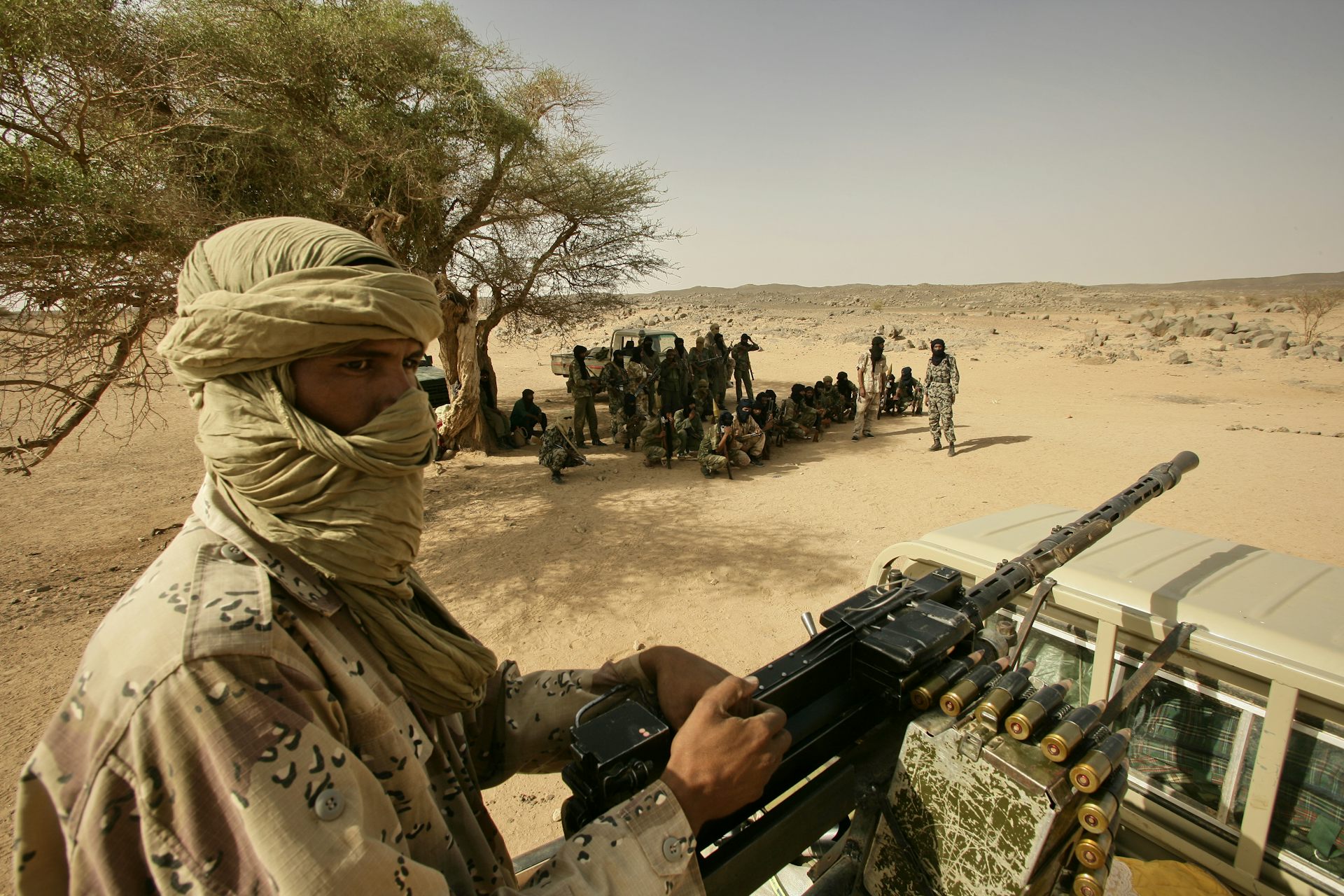
माली हमले: तुअरेग की शिकायतों का समाधान शांति की कुंजी है।
Mali attacks: Tuareg grievances hold the key to peace
Mali’s security situation requires resolution of Tuareg grievances, restoration of trust in the state, and political inclusion.
माली की सुरक्षा स्थिति के लिए तुअरेग की शिकायतों का समाधान, राज्य में विश्वास की बहाली और राजनीतिक समावेशन आवश्यक है।
The precarious security situation in Mali took a turn for the worse in late April 2026. Well coordinated attacks targeted several cities and claimed the lives of the defence minister, Sadio Camara, and several Malian soldiers.
माली में अस्थिर सुरक्षा स्थिति अप्रैल 2026 के अंत में और बिगड़ गई। सुनियोजित हमलों ने कई शहरों को निशाना बनाया और रक्षा मंत्री, साडियो कामारा, और कई माली सैनिकों की जान ले ली।
The events are a culmination of increased attacks over the past few years on the military and state institutions in Mali.
ये घटनाएँ पिछले कुछ वर्षों में माली में सैन्य और राज्य संस्थानों पर बढ़ते हमलों का परिणाम हैं।
We have been researching insecurity and politics in west Africa and the Sahel for over a decade. We believe the recent attacks trace back to grievances expressed by Tuaregs that the current military regime has not addressed. The Tuaregs are nomadic Berber communities in northern Mali.
हम एक दशक से अधिक समय से पश्चिम अफ्रीका और साहेल में असुरक्षा और राजनीति पर शोध कर रहे हैं। हमारा मानना है कि हालिया हमले तुआरेगों द्वारा व्यक्त की गई उन शिकायतों से जुड़े हैं जिन्हें वर्तमान सैन्य शासन ने संबोधित नहीं किया है। तुआरेग उत्तरी माली के खानाबदोश बर्बर समुदाय हैं।
First is the inability or unwillingness to address Tuareg discontent. Their grievances centre on political autonomy, marginalisation, cultural recognition, resource control, security and perceived state neglect.
पहला है तुआरेग असंतोष को संबोधित करने में असमर्थता या अनिच्छा। उनकी शिकायतें राजनीतिक स्वायत्तता, हाशिए पर धकेलने, सांस्कृतिक पहचान, संसाधन नियंत्रण, सुरक्षा और कथित राज्य उपेक्षा पर केंद्रित हैं।
Second, the continuous use of force by the military against rebels in the northern regions without regard for the collateral damage. The Tuaregs have long contested the militarisation policies of successive Malian governments.
दूसरा, उत्तरी क्षेत्रों में विद्रोहियों के खिलाफ सैन्य द्वारा बल का निरंतर उपयोग, जिसमें जान-माल के नुकसान की कोई परवाह नहीं की जाती। तुआरेग लंबे समय से लगातार माली सरकारों की सैन्यीकरण नीतियों को चुनौती देते रहे हैं।
Third, the uneven distribution of resources, which keeps the northern region marginalised. These include northern Mali’s resources such as gold deposits, salt mines, grazing lands, and strategic trade corridors. Revenues from these sources remain controlled by the state’s centre based in the south.
तीसरा, संसाधनों का असमान वितरण, जो उत्तरी क्षेत्र को हाशिए पर रखता है। इनमें सोने के भंडार, नमक की खानें, चरागाह भूमि और रणनीतिक व्यापार गलियारों जैसे उत्तरी माली के संसाधन शामिल हैं। इन स्रोतों से राजस्व का नियंत्रण दक्षिण में स्थित राज्य के केंद्र के पास ही रहता है।
Addressing resource marginalisation could have a number of benefits. It could temper Tuareg grievances, restore trust in the Malian state, and shift conflict incentives away from rebellion towards political inclusion, stability, and sustainable peace in northern Mali.
संसाधन हाशिए पर धकेलने को संबोधित करने से कई लाभ हो सकते हैं। यह तुआरेग शिकायतों को शांत कर सकता है, माली राज्य में विश्वास बहाल कर सकता है, और उत्तरी माली में विद्रोह से दूर राजनीतिक समावेशन, स्थिरता और स्थायी शांति की ओर संघर्ष के प्रोत्साहन को स्थानांतरित कर सकता है।
The breakdown
ब्रेकडाउन
In April 2026 the jihadist group Jama’at Nusrat al-Islam wal-Muslimin (JNIM) joined forces with ethnic Tuareg rebels from the northern Azawad Liberation Front (FLA) to attack several cities in the country recently.
अप्रैल 2026 में जिहादी समूह जमात नुसरत अल-इस्लाम वल-मुस्लिमिन (JNIM) ने हाल ही में देश के कई शहरों पर हमला करने के लिए उत्तरी अज़ावाद मुक्ति मोर्चा (FLA) के जातीय तुआरेग विद्रोहियों के साथ गठबंधन किया।
This mirrors a similar attack in 2012 when the Tuareg and al-Qaeda-affiliated militants launched an offensive against the state. The Tuareg-dominated National Movement for the Liberation of Azawad (MNLA) attempted to secede and initiated a rebellion.
यह 2012 में हुए एक समान हमले की याद दिलाता है जब तुआरेग और अल-कायदा से जुड़े मिलिशिया ने राज्य के खिलाफ एक आक्रमण किया था। तुआरेग-प्रभुत्व वाले अज़ावाद मुक्ति के लिए राष्ट्रीय आंदोलन (MNLA) ने अलग होने की कोशिश की और एक विद्रोह शुरू किया।
The MNLA is a Tuareg‑dominated separatist movement. Founded in 2011, it is mainly composed of ex-Libyan war returnees and northern Malian Tuaregs. The organisation had about 10,000 fighters at its peak in 2012.
MNLA एक तुआरेग-प्रभुत्व वाला अलगाववादी आंदोलन है। इसकी स्थापना 2011 में हुई थी, और यह मुख्य रूप से पूर्व-लीबियाई युद्ध वापसीकर्ताओं और उत्तरी माली के तुआरेग से बना है। इस संगठन के पास 2012 में अपने चरम पर लगभग 10,000 लड़ाके थे।
Despite their numbers, they lacked the military power to hold the territory. As a result they aligned with Islamists Ansar Dine, al-Qaeda in the Islamic Maghreb (AQIM) , and the Movement for Unity and Jihad in West Africa (MUJAO) . Shortly after pushing back Malian forces in late 2012, the alliance disintegrated.
अपनी संख्या के बावजूद, उनके पास क्षेत्र को बनाए रखने के लिए सैन्य शक्ति की कमी थी। नतीजतन, उन्होंने इस्लामवादी अंसार दीन, अल-कायदा इन द इस्लामिक मगरेब (AQIM) , और पश्चिम अफ्रीका में एकता और जिहाद के लिए आंदोलन (MUJAO) के साथ गठबंधन किया। 2012 के अंत में माली बलों को पीछे धकेलने के तुरंत बाद, यह गठबंधन बिखर गया।
The Islamist groups were better armed and funded. They forced the secular separatists out of major towns like Gao, Timbuktu and Kidal. The intervention of French forces in 2013 helped the Malian government regain most of the lost territories.
इस्लामी समूह बेहतर सशस्त्र और वित्तपोषित थे। उन्होंने गाओ, टिम्बकटू और किदाल जैसे प्रमुख कस्बों से धर्मनिरपेक्ष अलगाववादियों को बाहर कर दिया। 2013 में फ्रांसीसी बलों के हस्तक्षेप ने माली सरकार को अधिकांश खोए हुए क्षेत्रों को वापस पाने में मदद की।
AQIM and its allies then moved into the mountains and surrounding desert areas. They shifted to guerrilla tactics, including suicide bombings and landmines.
इसके बाद AQIM और उसके सहयोगियों ने पहाड़ों और आसपास के रेगिस्तानी क्षेत्रों में कदम रखा। वे आत्मघाती बमबारी और भूमिगत खानों सहित छापामार रणनीति पर स्थानांतरित हो गए।
The withdrawal of French forces in 2022 seems to have emboldened the Islamist militants. It removed counter‑terrorism pressure, disrupted intelligence and logistics and created a security vacuum amid weak Malian state capacity. This allowed Islamist groups to expand operations, recruit locally and regain territorial influence.
2022 में फ्रांसीसी बलों की वापसी ने इस्लामी मिलिशिया को बढ़ावा दिया प्रतीत होता है। इसने आतंकवाद विरोधी दबाव को हटा दिया, खुफिया और रसद को बाधित किया और कमजोर माली राज्य क्षमता के बीच एक सुरक्षा शून्य पैदा कर दिया। इससे इस्लामी समूहों को संचालन का विस्तार करने, स्थानीय स्तर पर भर्ती करने और क्षेत्रीय प्रभाव वापस पाने की अनुमति मिली।
Lessons unlearnt
अनसीखे सबक
The largely popular military regime of Assimi Goita has failed to address the demands of Tuareg separatists. The Tuaregs have historically complained about exclusion from power by the southern dominated Malian state. Since the country’s independence in 1960, Tuareg leaders have argued that the structure of the Malian state does not reflect their political identity, economic interests and governance traditions. The demand for self-rule or autonomy has been suppressed, often by force.
असिमी गोइता के बड़े पैमाने पर लोकप्रिय सैन्य शासन ने तुआरेग अलगाववादियों की मांगों को पूरा करने में विफलता दिखाई है। तुआरेग ऐतिहासिक रूप से दक्षिण-प्रधान माली राज्य द्वारा सत्ता से बहिष्कार किए जाने की शिकायत करते रहे हैं। 1960 में देश की स्वतंत्रता के बाद से, तुआरेग नेताओं ने तर्क दिया है कि माली राज्य की संरचना उनकी राजनीतिक पहचान, आर्थिक हितों और शासन की परंपराओं को प्रतिबिंबित नहीं करती है। स्वशासन या स्वायत्तता की मांग को अक्सर बलपूर्वक दबा दिया गया है।
More recently, increased drought, desertification and climate variability has devastated Tuareg pastoral livelihoods. These grievances pre-date Islamic insurgency and are fundamental in understanding the approach of the group.
हाल ही में, सूखे, मरुस्थलीकरण और जलवायु परिवर्तनशीलता में वृद्धि ने तुआरेग पशुपालक आजीविका को तबाह कर दिया है। ये शिकायतें इस्लामी विद्रोह से पहले की हैं और समूह के दृष्टिकोण को समझने के लिए मौलिक हैं।
The second unaddressed issue is that counterterrorism operations use force which creates collateral damage. Recent analysis shows that counterterrorism operations in northern and central Mali have resulted in large scale civilian harm, displacement and collective punishments. These have included arbitrary arrests and mass killings.
दूसरा अनसुलझा मुद्दा यह है कि आतंकवाद विरोधी अभियानों में बल का उपयोग किया जाता है, जिससे गौण क्षति होती है। हालिया विश्लेषण से पता चलता है कि उत्तरी और मध्य माली में आतंकवाद विरोधी अभियानों के परिणामस्वरूप बड़े पैमाने पर नागरिक क्षति, विस्थापन और सामूहिक दंड हुआ है। इनमें मनमाना गिरफ्तारियां और सामूहिक हत्याएं शामिल हैं।
These factors have created conditions which Islamist groups have exploited for recruitment, territorial control and legitimacy.
इन कारकों ने ऐसी परिस्थितियां पैदा की हैं जिनका शोषण इस्लामी समूहों ने भर्ती, क्षेत्रीय नियंत्रण और वैधता के लिए किया है।
The blame for this has been put on successive Malian regimes and previous French operations. This has been a key reason for France’s interventions being labelled as failures.
इसकी जिम्मेदारी लगातार माली शासनों और पिछले फ्रांसीसी अभियानों पर डाली गई है। यह एक प्रमुख कारण रहा है कि फ्रांस के हस्तक्षेपों को विफलताओं के रूप में लेबल किया गया है।
The third major driver of violence in Mali relates to the uneven distribution of resources. Since independence, public investment, infrastructure, social services and political attention have been heavily concentrated in the southern parts of the country.
माली में हिंसा का तीसरा प्रमुख कारण संसाधनों का असमान वितरण है। स्वतंत्रता के बाद से, सार्वजनिक निवेश, बुनियादी ढांचा, सामाजिक सेवाएं और राजनीतिक ध्यान देश के दक्षिणी हिस्सों में भारी रूप से केंद्रित रहा है।
Previous peace agreements have promised decentralisation, funding and integration of northern elites and ex-combatants. But implementation have been slow or nonexistent.
पिछले शांति समझौतों ने उत्तरी कुलीन वर्ग और पूर्व-लड़ाकों के विकेंद्रीकरण, वित्तपोषण और एकीकरण का वादा किया है। लेकिन कार्यान्वयन धीमा या गैर-मौजूद रहा है।
Is there a way forward?
क्या कोई रास्ता है?
The Tuareg question must be answered to reduce the tension between the regions of the country. It can be argued that Tuareg actors have twice miscalculated by entering arrangements with jihadist groups. But this does not diminish the need to address the structural inequalities and long-standing grievances underpinning Tuareg demands.
देश के विभिन्न क्षेत्रों के बीच तनाव कम करने के लिए तुआरेग प्रश्न का उत्तर दिया जाना चाहिए। यह तर्क दिया जा सकता है कि जिहादी समूहों के साथ समझौते करके तुआरेग तत्वों ने दो बार गलत गणना की है। लेकिन यह तुआरेग की मांगों के मूल में निहित संरचनात्मक असमानताओं और लंबे समय से चली आ रही शिकायतों को दूर करने की आवश्यकता को कम नहीं करता है।
To achieve this, the Malian regime can copy the blueprint of former president Mahamadou Issoufou of Niger. Prior to his presidency, the Nigerien Tuaregs were similarly aggrieved. When he became president in 2011, he:
इसे प्राप्त करने के लिए, माली शासन नाइजर के पूर्व राष्ट्रपति महामादू इस्सूफू का खाका अपना सकता है। उनके राष्ट्रपति बनने से पहले, नाइजीरियाई तुआरेग भी इसी तरह पीड़ित थे। जब वह 2011 में राष्ट्रपति बने, तो उन्होंने:
integrated Tuareg elites and former rebels into state institutions
* तुआरेग अभिजात वर्ग और पूर्व विद्रोहियों को राज्य संस्थानों में एकीकृत किया।
decentralised state authority by allowing administrative and budgetary control at the regional level
* क्षेत्रीय स्तर पर प्रशासनिक और बजटीय नियंत्रण की अनुमति देकर राज्य के अधिकार को विकेंद्रीकृत किया।
introduced disarmament, demobilisation and reintegration programmes.
* निशस्त्रीकरण, विसशस्त्रकरण और पुन: एकीकरण कार्यक्रम शुरू किए।
Issoufou also invested in infrastructural development in the areas that directly affected the Tuaregs. This included pastoralism, education and livelihood support. Water access in arid pastoral areas was improved. And connectivity and road safety was expanded.
इस्सूफू ने उन क्षेत्रों में बुनियादी ढांचा विकास में भी निवेश किया जो सीधे तौर पर तुआरेगों को प्रभावित करते थे। इसमें पशुपालन, शिक्षा और आजीविका सहायता शामिल थी। शुष्क पशुपालन क्षेत्रों में पानी की पहुंच में सुधार किया गया। और कनेक्टिविटी तथा सड़क सुरक्षा का विस्तार किया गया।
Addressing the Tuareg agitations would reduce tensions in Mali.
तुआरेग उथल-पुथल को संबोधित करने से माली में तनाव कम होगा।
The authors do not work for, consult, own shares in or receive funding from any company or organisation that would benefit from this article, and have disclosed no relevant affiliations beyond their academic appointment.
लेखक किसी भी कंपनी या संगठन के लिए काम नहीं करते हैं, उनसे परामर्श नहीं लेते हैं, उनमें हिस्सेदारी नहीं रखते हैं या उनसे धन प्राप्त नहीं करते हैं जिससे इस लेख को लाभ होगा, और उन्होंने अपनी शैक्षणिक नियुक्ति से परे कोई प्रासंगिक संबद्धता का खुलासा नहीं किया है।
Read more
-
गैंडे का सींग: दक्षिण अफ्रीका अंतर्राष्ट्रीय व्यापार को फिर से क्यों शुरू करना चाहता है, और आलोचकों को इसके परिणामों से क्यों डर है
Rhino horn: why South Africa wants to revive the international trade, and why critics fear the consequences
-
‘रणनीतिक स्वायत्तता’ क्या है – और हर कोई अचानक इसके लिए क्यों प्रयास कर रहा है?
What is ‘strategic autonomy’ – and why is everyone suddenly reaching for it?