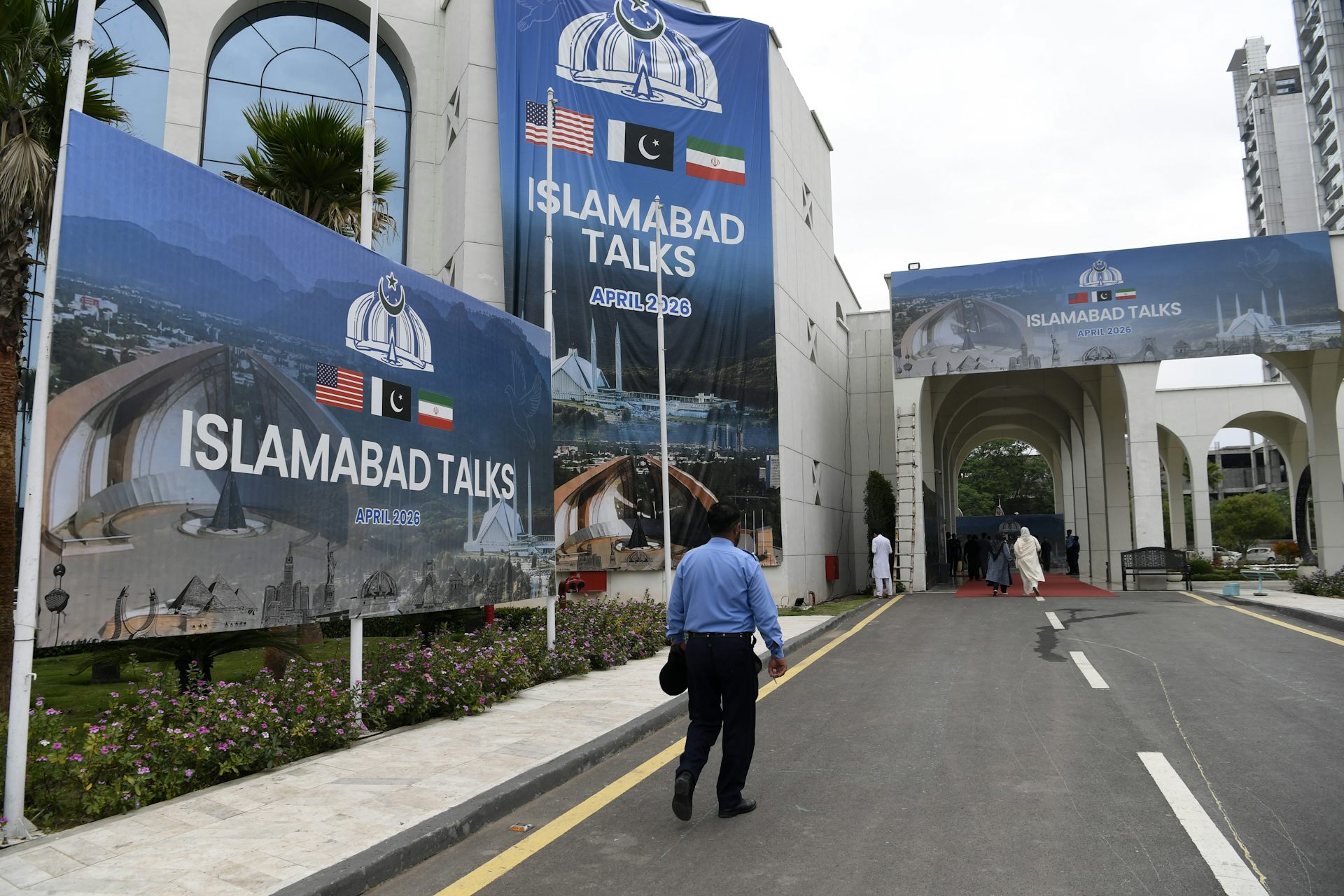
Comment le Pakistan est devenu le médiateur principal entre les États-Unis et l’Iran
How Pakistan became the primary mediator between the US and Iran
Pakistan’s relationships with the US and Iran put it in a strong position to intervene – not to mention a need to stabilise its borders and protect its own economy.
Les relations du Pakistan avec les États-Unis et l’Iran l’ont placé dans une position forte pour intervenir – sans parler du besoin de stabiliser ses frontières et de protéger sa propre économie.
Pakistan has emerged as a central diplomatic broker in the conflict between the US and Iran. When announcing a pause to the US operation to guide stranded vessels through the Strait of Hormuz on May 6, Donald Trump said he had made the decision “based on the request of Pakistan”.
Le Pakistan s’est imposé comme un médiateur diplomatique central dans le conflit entre les États-Unis et l’Iran. Lors de l’annonce d’une suspension de l’opération américaine pour guider des navires bloqués à travers le détroit d’Ormuz le 6 mai, Donald Trump a déclaré avoir pris cette décision « sur la base de la demande du Pakistan ».
The Pakistani prime minister, Shehbaz Sharif, subsequently expressed hope “that the current momentum will lead to a lasting agreement that secures durable peace and stability for the region and beyond”. This latest intervention comes a month after Pakistan secured its biggest diplomatic win in years by brokering a ceasefire in Iran.
Le Premier ministre pakistanais, Shehbaz Sharif, a par la suite exprimé son espoir « qu’l’élan actuel conduise à un accord durable qui assure une paix et une stabilité durables pour la région et au-delà ». Cette dernière intervention intervient un mois après que le Pakistan ait remporté sa plus grande victoire diplomatique depuis des années en négociant un cessez-le-feu en Iran.
But how did Pakistan emerge as the most trustworthy mediator in this conflict, and what drove Islamabad to involve itself? Pakistan’s biggest advantage is that it enjoys relationships with both the US and Iran, which has helped it be seen as a neutral party by each side.
Mais comment le Pakistan est-il devenu le médiateur le plus digne de confiance dans ce conflit, et qu’est-ce qui a poussé Islamabad à s’impliquer? Le plus grand avantage du Pakistan est qu’il entretient des relations tant avec les États-Unis qu’avec l’Iran, ce qui lui a permis d’être perçu comme une partie neutre par les deux camps.
Pakistan has worked with the US in dealing with Iran for decades. Since 1981, two years after the US and Iran severed diplomatic ties following the Islamic revolution, a dedicated section of the Pakistani embassy in Washington has handled Iranian diplomatic affairs in the US.
Le Pakistan a travaillé avec les États-Unis pour gérer les relations avec l’Iran depuis des décennies. Depuis 1981, deux ans après que les États-Unis et l’Iran aient rompu leurs liens diplomatiques suite à la révolution islamique, une section dédiée de l’ambassade pakistanaise à Washington s’est chargée des affaires diplomatiques iraniennes aux États-Unis.
Pakistan has also worked with the US in mediation efforts elsewhere. Most notably, it facilitated former US secretary of state Henry Kissinger’s secret visit to China in 1971. This paved the way for the normalisation of relations between the US and China later that decade.
Le Pakistan a également travaillé avec les États-Unis dans des efforts de médiation ailleurs. Plus notablement, il a facilité la visite secrète du secrétaire d’État américain de l’époque, Henry Kissinger, en Chine en 1971. Cela a ouvert la voie à la normalisation des relations entre les États-Unis et la Chine plus tard dans la décennie.
Relations between the US and Pakistan have not always been smooth. In 2011, a decade after the 9/11 terrorist attacks, the Atlantic magazine in the US referred to Pakistan as the “ally from hell”. Whether or not it did so knowingly, Pakistan hosted al-Qaeda mastermind Osama bin Laden following the attack.
Les relations entre les États-Unis et le Pakistan n’ont pas toujours été faciles. En 2011, une décennie après les attentats du 11 septembre, le magazine Atlantic américain a qualifié le Pakistan d’« allié de l’enfer ». Qu’il le fasse sciemment ou non, le Pakistan a accueilli Osama bin Laden, le cerveau d’Al-Qaïda, après l’attaque.
Trump himself also denied Pakistan military aid during his first term as president, saying it was not doing enough to combat terrorism. And Pakistan’s human rights record, particularly concerning democratic backsliding and restrictions on civil liberties, have at times led to tension with the US government.
Trump lui-même a également nié l’aide militaire pakistanaise pendant son premier mandat de président, affirmant qu’elle ne faisait pas assez pour combattre le terrorisme. Et le bilan du Pakistan en matière de droits de l’homme, en particulier concernant le recul démocratique et les restrictions sur les libertés civiles, a parfois engendré des tensions avec le gouvernement américain.
However, Pakistan’s relationship with the US has improved markedly in Trump’s second term. Trump, who often uses personal ties to guide US foreign policy, has developed a strong relationship with Sharif and the chief of Pakistan’s army, Asim Munir. In June 2025, Munir was even invited to the White House for a private lunch. This was the first time a US president had hosted a non-head of state military leader at this level.
Cependant, les relations du Pakistan avec les États-Unis se sont nettement améliorées au cours du second mandat de Trump. Trump, qui utilise souvent des liens personnels pour guider la politique étrangère américaine, a développé une relation solide avec Sharif et le chef de l’armée pakistanaise, Asim Munir. En juin 2025, Munir a même été invité à la Maison Blanche pour un déjeuner privé. C’était la première fois qu’un président américain recevait un militaire non chef d’État à ce niveau.
Pakistan’s recent efforts to court Trump have played a key role in building these ties. Over the past year Pakistan has nominated Trump for the Nobel Peace Prize, joined his Board of Peace and launched a collaboration with his World Liberty Financial crypto platform.
Les récents efforts du Pakistan pour courtiser Trump ont joué un rôle clé dans le renforcement de ces liens. Au cours de l’année écoulée, le Pakistan a proposé Trump pour le prix Nobel de la paix, adhéré à son Conseil de la paix et lancé une collaboration avec sa plateforme crypto World Liberty Financial.
And in July, Islamabad signed a deal with the US to allow Washington to help develop Pakistan’s largely untapped oil reserves. “We read him [Trump] right,” said the former chairman of the Pakistani Senate’s Defense Committee, Mushahid Hussain Syed, in an interview with the Washington Post on April 20.
Et en juillet, Islamabad a signé un accord avec les États-Unis permettant à Washington d’aider au développement des réserves pétrolières largement inexploitées du Pakistan. « Nous l’avons bien lu [Trump] », a déclaré le président de l’ancien Comité de défense du Sénat pakistanais, Mushahid Hussain Syed, dans une interview avec le Washington Post le 20 avril.
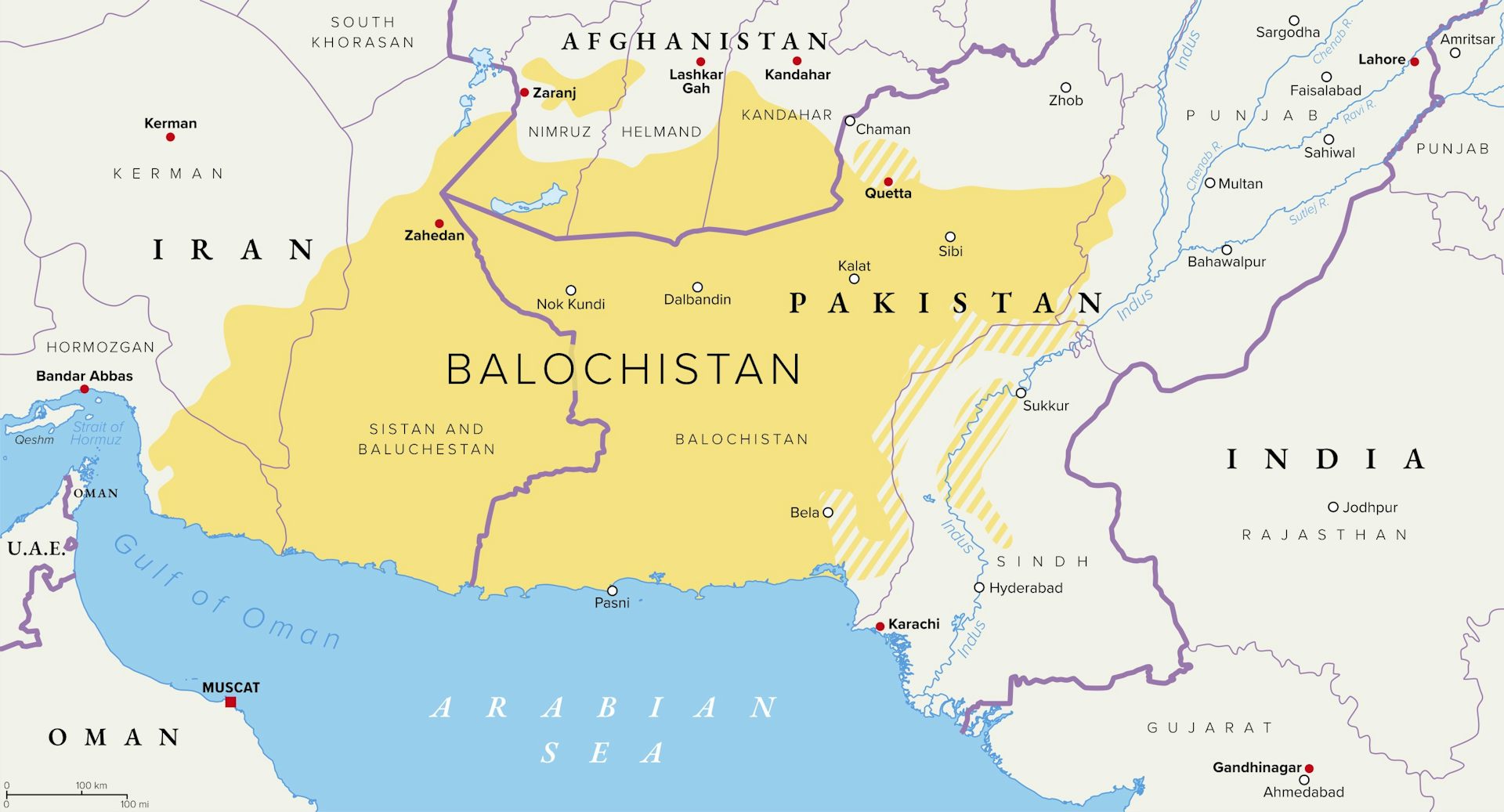
The relationship between Pakistan and Iran has also been characterised by ups and downs. While Iran was the first country to recognise Pakistan’s independence in 1947, their relationship has often been fraught with tension. This largely stems from Iran’s territorial claim to the Balochistan province of Pakistan, as well as from Pakistan’s ties with Iranian rivals.
Les relations entre le Pakistan et l’Iran ont également été caractérisées par des hauts et des bas. Alors que l’Iran fut le premier pays à reconnaître l’indépendance du Pakistan en 1947, leurs relations ont souvent été empreintes de tensions. Cela provient en grande partie de la revendication territoriale de l’Iran sur la province du Baloutchistan au Pakistan, ainsi que des liens du Pakistan avec les rivaux de l’Iran.
As recently as January 2024, tensions between the two countries appeared to be escalating again over Balochistan. However, hostilities soon receded and both countries formally resumed their bilateral ties. They subsequently expanded their security cooperation and invited each other’s ambassadors and foreign ministers for a formal reconciliation ceremony.
Jusqu’en janvier 2024, les tensions entre les deux pays semblaient de nouveau en train de s’intensifier au sujet du Baloutchistan. Cependant, les hostilités se sont rapidement apaisées et les deux pays ont formellement repris leurs liens bilatéraux. Ils ont ensuite étendu leur coopération en matière de sécurité et ont invité les ambassadeurs et les ministres des Affaires étrangères de l’autre pays pour une cérémonie de réconciliation formelle.
Strategic necessity
Nécessité stratégique
Some commentators argue that Pakistan’s decision to step in as the primary mediator in Iran has been driven by strategic necessity. Its Balochistan province is currently grappling with an insurgency. Islamabad will thus want to avoid a situation where the Iran war spills into Pakistan, as this could destabilise its border regions even further.
Certains commentateurs soutiennent que la décision du Pakistan d’intervenir en tant que médiateur principal en Iran est motivée par une nécessité stratégique. Sa province du Baloutchistan est actuellement confrontée à une insurrection. Islamabad souhaite donc éviter une situation où la guerre en Iran se répandrait au Pakistan, car cela pourrait déstabiliser davantage ses régions frontalières.
There are also economic reasons explaining Pakistan’s involvement. Pakistan has been severely affected by the disruption to Gulf shipping. It imports between 85% and 90% of its crude oil from Saudi Arabia and the United Arab Emirates (UAE) and almost 99% of its liquified gas from the UAE and Qatar.
Il existe également des raisons économiques expliquant l’implication du Pakistan. Le pays a été gravement affecté par la perturbation du transport maritime dans le Golfe. Il importe entre 85 % et 90 % de son pétrole brut d’Arabie saoudite et des Émirats arabes unis (EAU) , et près de 99 % de son gaz liquéfié des EAU et du Qatar.
Before the war broke out, Pakistan’s economy had been starting to gain momentum. But higher oil prices are now affecting government revenues, increasing its fuel import bill from US$300 million (£220 million) before the conflict to US$800 million now. Pakistan’s authorities have been forced to raise consumer fuel prices by more than 50%.
Avant le déclenchement de la guerre, l’économie du Pakistan commençait à prendre de l’élan. Mais la hausse des prix du pétrole affecte désormais les recettes gouvernementales, faisant passer sa facture d’importation de carburant de 300 millions de dollars américains (220 millions de livres sterling) avant le conflit à 800 millions de dollars américains aujourd’hui. Les autorités pakistanaises ont été contraintes d’augmenter les prix des carburants pour les consommateurs de plus de 50 %.
Pakistan’s agricultural sector, which employs around 40% of the country’s population, is also vulnerable to the conflict due to its reliance on fertiliser imported through the Strait of Hormuz. Prices of urea fertiliser have surged by 50% since the war broke out. Prolonged disruption to the agriculture sector risks plunging some of the most vulnerable people in Pakistan further into poverty.
Le secteur agricole du Pakistan, qui emploie environ 40 % de la population du pays, est également vulnérable au conflit en raison de sa dépendance aux engrais importés par le détroit d’Ormuz. Les prix des engrais urée ont grimpé de 50 % depuis le début de la guerre. Une perturbation prolongée du secteur agricole risque de plonger de nombreuses personnes les plus vulnérables du Pakistan dans une pauvreté accrue.
Remittances are another area that could be affected by a protracted conflict, with as many as five million Pakistani people living in the Gulf region. Pakistan received roughly US$30 billion in remittances between 2025 and 2026, 54% of which came from the Gulf.
Les transferts de fonds sont un autre domaine qui pourrait être affecté par un conflit prolongé, avec jusqu’à cinq millions de Pakistanais vivant dans la région du Golfe. Le Pakistan a reçu environ 30 milliards de dollars américains de transferts de fonds entre 2025 et 2026, dont 54 % provenaient du Golfe.
If the war continues to affect Gulf economies, many Pakistani workers may be forced to return home. This will cause remittance revenues to fall, depriving Pakistan of a vital source of foreign exchange, while simultaneously pushing up domestic unemployment.
Si la guerre continue d’affecter les économies du Golfe, de nombreux travailleurs pakistanais pourraient être contraints de rentrer chez eux. Cela entraînerait une baisse des recettes de transferts de fonds, privant le Pakistan d’une source vitale de devises étrangères, tout en augmentant simultanément le chômage intérieur.
Pakistan’s relationships with the US and Iran put it in a strong position to intervene in the conflict diplomatically. But its mediation has also been a calculated effort to stabilise its borders and protect its economy.
Les relations du Pakistan avec les États-Unis et l’Iran le placent dans une position solide pour intervenir dans le conflit sur le plan diplomatique. Mais sa médiation a également été un effort calculé pour stabiliser ses frontières et protéger son économie.
Natasha Lindstaedt does not work for, consult, own shares in or receive funding from any company or organisation that would benefit from this article, and has disclosed no relevant affiliations beyond their academic appointment.
Natasha Lindstaedt ne travaille pour, ne consulte pas, ne détient pas d’actions ni ne reçoit de financement de quelque entreprise ou organisation que ce soit qui bénéficierait de cet article, et n’a divulgué aucune affiliation pertinente au-delà de sa nomination universitaire.
Read more
-
Le hantavirus est très différent de la COVID. Voici pourquoi le « virus des Andes » ne causera pas la prochaine pandémie.
Hantavirus is very different to COVID. Here’s why the ‘Andes virus’ won’t cause the next pandemic
-
Les six meilleures adaptations de Shakespeare qui ne sont pas en anglais
The six best Shakespeare adaptations that aren’t in English