Trump da la bienvenida a Colón a la Casa Blanca y reaviva las guerras históricas de Estados Unidos
Trump welcomes Columbus to the White House – and reignites America’s history wars
By resurrecting statues toppled in protests during his first term, Donald Trump wants to reverse attempts to ‘erase history’. But history is never that simple.
Al resucitar estatuas derribadas en protestas durante su primer mandato, Donald Trump quiere revertir los intentos de ‘borrar la historia’. Pero la historia nunca es tan simple.
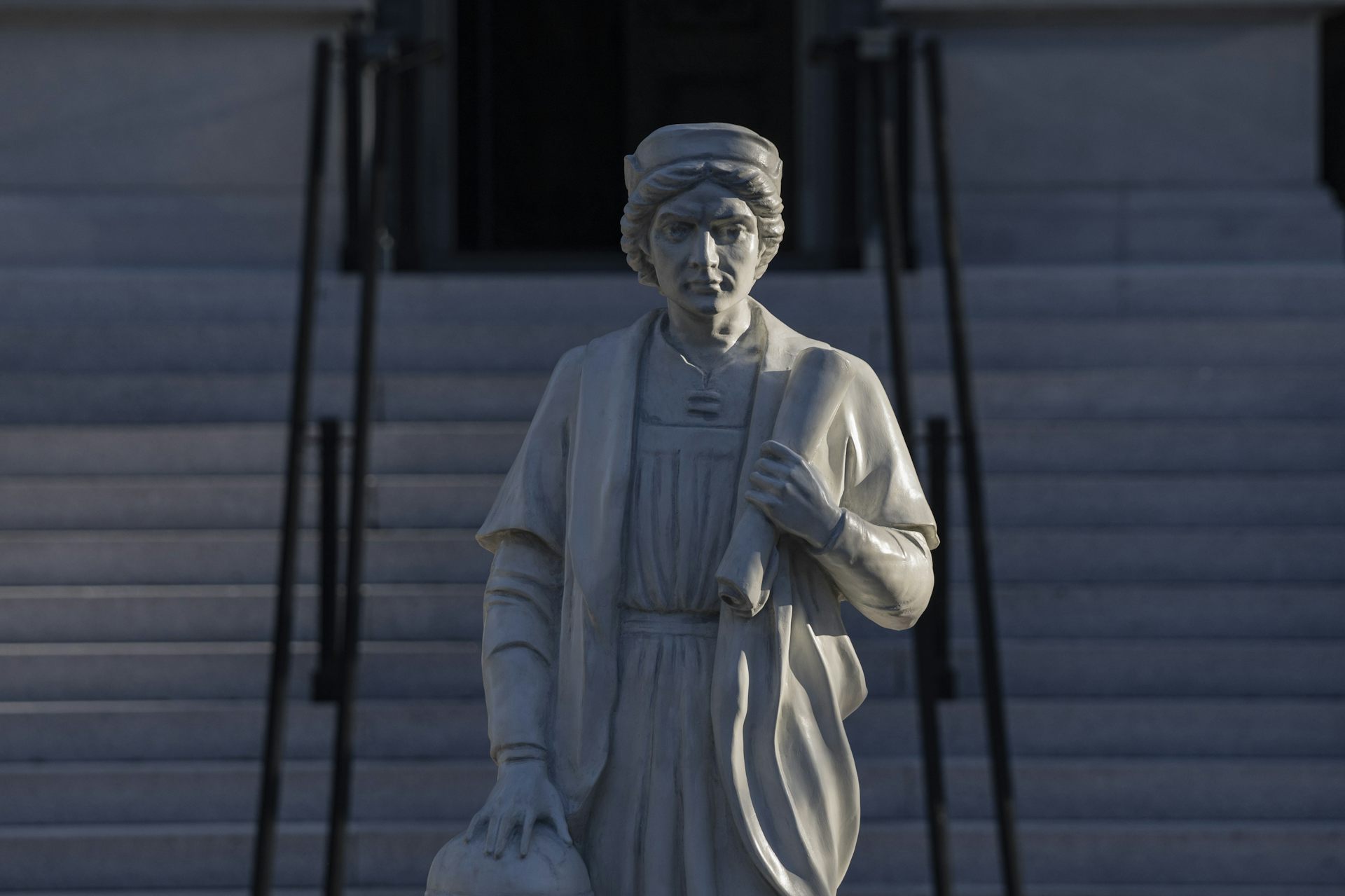
Christopher Columbus is back. At least, a statue of him is back, reinstalled by US President Donald Trump on the White House grounds in late March – part of the president’s stated mission to cancel “cancel culture”.
Cristóbal Colón ha vuelto. Al menos, una estatua de él ha vuelto, reinstalada por el presidente de EE. UU., Donald Trump, en los terrenos de la Casa Blanca a finales de marzo, como parte de la misión declarada del presidente de cancelar la «cultura de la cancelación».
The resurrection of Columbus made good on Trump’s 2025 executive order, “Restoring Truth and Sanity to American History”.
La resurrección de Colón se llevó a cabo gracias a la orden ejecutiva de Trump de 2025, «Restaurando la Verdad y la Cordura a la Historia Estadounidense.»
The statue is in fact a replica of the original thrown into Baltimore Harbor by protesters on Independence Day 2020 during the Black Lives Matter upheavals of the first Trump presidency.
La estatua es en realidad una réplica del original que fue arrojado al puerto de Baltimore por manifestantes el Día de la Independencia de 2020 durante los disturbios de Black Lives Matter del primer mandato de Trump.
The protests targeted monuments “honoring white supremacists, owners of enslaved people, perpetrators of genocide, and colonizers”. But damaged pieces of the Columbus statue were later salvaged and became a model for the copy.
Las protestas se dirigieron a monumentos «que honran a los supremacistas blancos, dueños de esclavos, perpetradores de genocidio y colonizadores.» Pero piezas dañadas de la estatua de Colón fueron recuperadas más tarde y sirvieron de modelo para la copia.
Trump has since championed Columbus as “the original American hero, a giant of Western civilization, and one of the most gallant and visionary men to ever walk the face of the earth”.
Desde entonces, Trump ha defendido a Colón como «el héroe estadounidense original, un gigante de la civilización occidental y uno de los hombres más galantes y visionarios que jamás hayan pisado la Tierra.»
He might have chosen any statue of the explorer and navigator from Genoa who pioneered European colonisation of the Americas. But clearly reinstating one removed by his opponents sends a more powerful message.
Podría haber elegido cualquier estatua del explorador y navegante de Génova que fue pionero de la colonización europea de las Américas. Pero reinstalar claramente una retirada por sus oponentes envía un mensaje más poderoso.
‘Improper partisan ideology’
‘Ideología partidista inapropiada’
Restoring statues to their original location isn’t simply about undoing their previous removal. It’s designed to reverse what some see as attempts to “erase history”.
Restaurar estatuas a su ubicación original no se trata simplemente de deshacer su retirada anterior. Está diseñado para revertir lo que algunos ven como intentos de “borrar la historia”.
And it has a long history of its own. Roman emperors once feared being condemned to obscurity through “damnatio memoriae” – having their statues destroyed, coins melted down and names chiselled from the facades of buildings.
Y tiene una larga historia propia. Los emperadores romanos temieron alguna vez ser condenados al olvido mediante la “damnatio memoriae”: que sus estatuas fueran destruidas, sus monedas fundidas y sus nombres cincelados de las fachadas de los edificios.
Trump’s executive order was very much about retaliating against those who want to “perpetuate a false reconstruction of American history, inappropriately minimize the value of certain historical events or figures, or include any other improper partisan ideology”.
La orden ejecutiva de Trump se trataba mucho de tomar represalias contra aquellos que quieren “perpetuar una falsa reconstrucción de la historia estadounidense, minimizar inapropiadamente el valor de ciertos eventos o figuras históricas, o incluir cualquier otra ideología partidista inapropiada”.
Relocating a memorial to a more prominent location – from Baltimore to the White House, for instance – goes one step further. It amplifies the significance of the historical figure and the symbolic restoration of their reputation.
Reubicar un monumento a una ubicación más prominente – de Baltimore a la Casa Blanca, por ejemplo – va un paso más allá. Amplifica la importancia de la figura histórica y la restauración simbólica de su reputación.
But sometimes just restoring a statue to its original site is symbolism enough.
Pero a veces, simplemente restaurar una estatua a su sitio original es simbolismo suficiente.
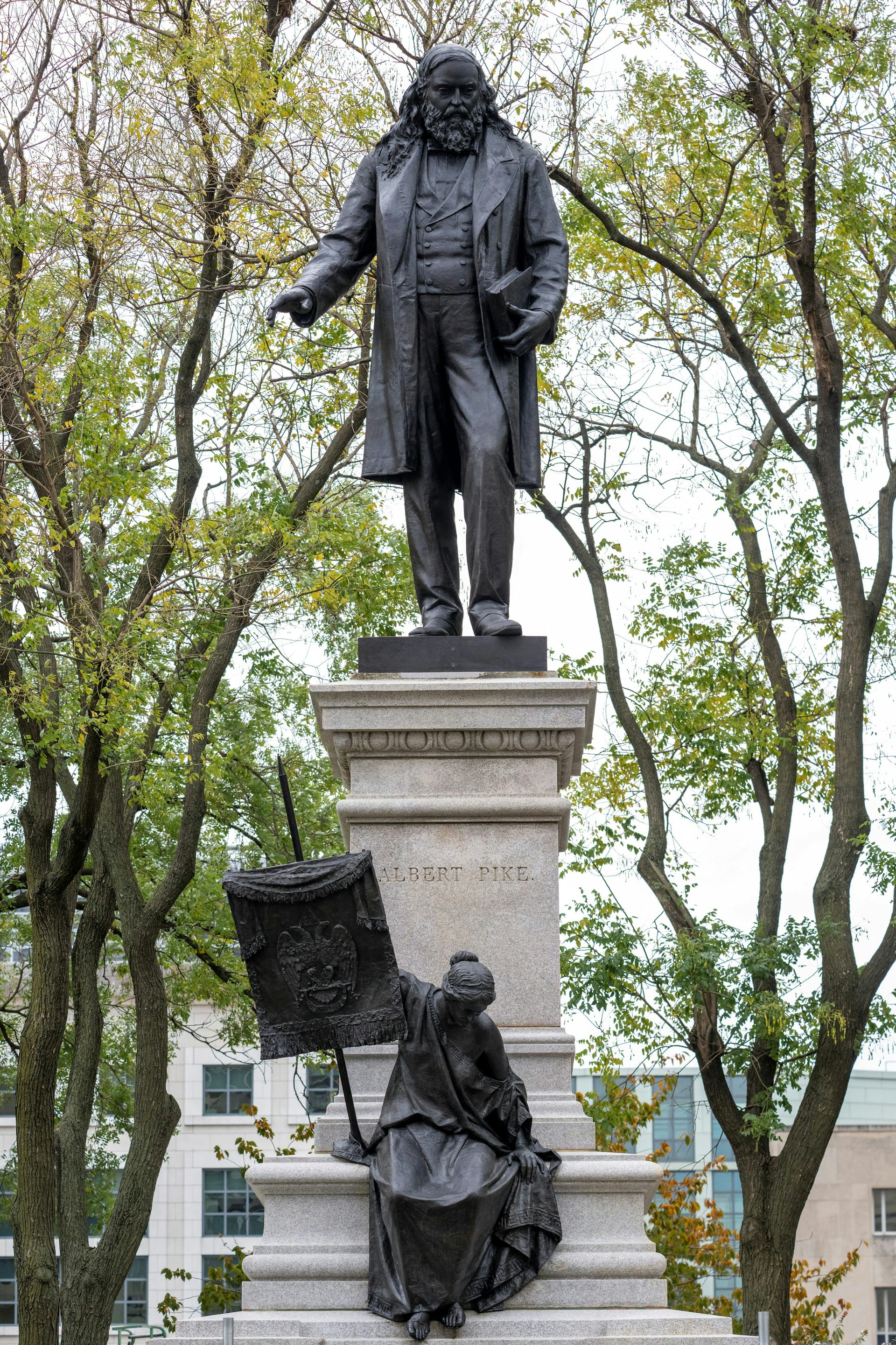
The memorial to Albert Pike, for example, was and is the only outdoor statue of a Confederate general in Washington DC. Pulled down by protesters in 2020 and returned in 2025, its merits have long been debated.
El monumento a Albert Pike, por ejemplo, fue y es la única estatua al aire libre de un general confederado en Washington DC. Retirada por manifestantes en 2020 y devuelta en 2025, sus méritos han sido objeto de debate durante mucho tiempo.
Pike was a disgraced figure, accused of misappropriating funds and allowing his troops to desecrate the bodies of Union soldiers. There are also alleged ties to an early version of the Ku Klux Klan.
Pike fue una figura desacreditada, acusado de malversar fondos y permitir que sus tropas profanaran los cuerpos de soldados de la Unión. También hay vínculos alegados con una versión temprana de la Ku Klux Klan.
In the words of congressional delegate Eleanor Holmes Norton, “Pike represents the worst of the Confederacy and has no claim to be memorialized in the Nation’s capital.”
En palabras de la delegada congresional Eleanor Holmes Norton: “Pike representa lo peor de la Confederación y no tiene derecho a ser conmemorado en la capital de la Nación”.
Advocates for the statue’s retention note there is no mention of the Confederacy or depiction of a military uniform, only Pike’s contribution to the American Freemasons.
Los defensores de la retención de la estatua señalan que no hay mención de la Confederación ni representación de un uniforme militar, solo la contribución de Pike a los masones estadounidenses.
But when the statue was pulled down in 2020, Trump certainly took sides: “The DC police are not doing their job as they watched a statue be ripped down and burn. These people should be immediately arrested. A disgrace to our country.”
Pero cuando la estatua fue retirada en 2020, Trump ciertamente tomó partido: “La policía de DC no está haciendo su trabajo al ver cómo una estatua era arrancada y quemada. Estas personas deberían ser arrestadas inmediatamente. Una deshonra para nuestro país”.
‘Woke lemmings’
‘Lemmings “woke”’
Of course, history isn’t always simple, as memorialising the American Civil War shows.
Por supuesto, la historia no siempre es simple, como lo demuestra el monumento a la Guerra Civil estadounidense.
Arlington National Cemetery in Virginia was established in 1864 as a national military cemetery, with a Confederate section dedicated in 1900 as part of the effort to promote reconciliation between the North and South.
El Cementerio Nacional de Arlington en Virginia fue establecido en 1864 como cementerio militar nacional, con una sección confederada dedicada en 1900 como parte del esfuerzo por promover la reconciliación entre el Norte y el Sur.
Its Confederate Memorial (designed by a Confederate veteran) features a female figure representing the South holding symbols of peace. A bronze relief below depicts sanitised images of slavery: a woman caring for white children, and a man following his owner into battle as his servant.
Su Monumento Confederado (diseñado por un veterano confederado) presenta una figura femenina que representa al Sur sosteniendo símbolos de paz. Un relieve de bronce más abajo muestra imágenes higienizadas de la esclavitud: una mujer cuidando de niños blancos y un hombre siguiendo a su dueño en batalla como su sirviente.
A biblical quotation below preaches peace: “They have beat their swords into ploughshares and their spears into pruning hooks.”
Una cita bíblica más abajo predica la paz: “Han desenvainado sus espadas y las han convertido en arados, y sus lanzas en horcas.”
But another quote in Latin – “Victrix causa diis placuit sed victa Caton” – references Julius Caesar’s victory in the Roman civil war and casts the South’s defeat as a noble lost cause.
Pero otra cita en latín – “Victrix causa diis placuit sed victa Caton” – hace referencia a la victoria de Julio César en la guerra civil romana y presenta la derrota del Sur como una noble causa perdida.
The monument was erected in 1914, removed by Congress in 2023, and is scheduled to return in 2027. Secretary of War Pete Hegseth claimed on social media it “never should have been taken down by woke lemmings. Unlike the Left, we don’t believe in erasing American history – we honor it.”
El monumento fue erigido en 1914, retirado por el Congreso en 2023 y está programado para regresar en 2027. El Secretario de Guerra Pete Hegseth afirmó en las redes sociales que “nunca debió haber sido retirado por lemmings ‘woke’. A diferencia de la Izquierda, no creemos en borrar la historia estadounidense: la honramos”.
Defiant choices
Elecciones desafiantes
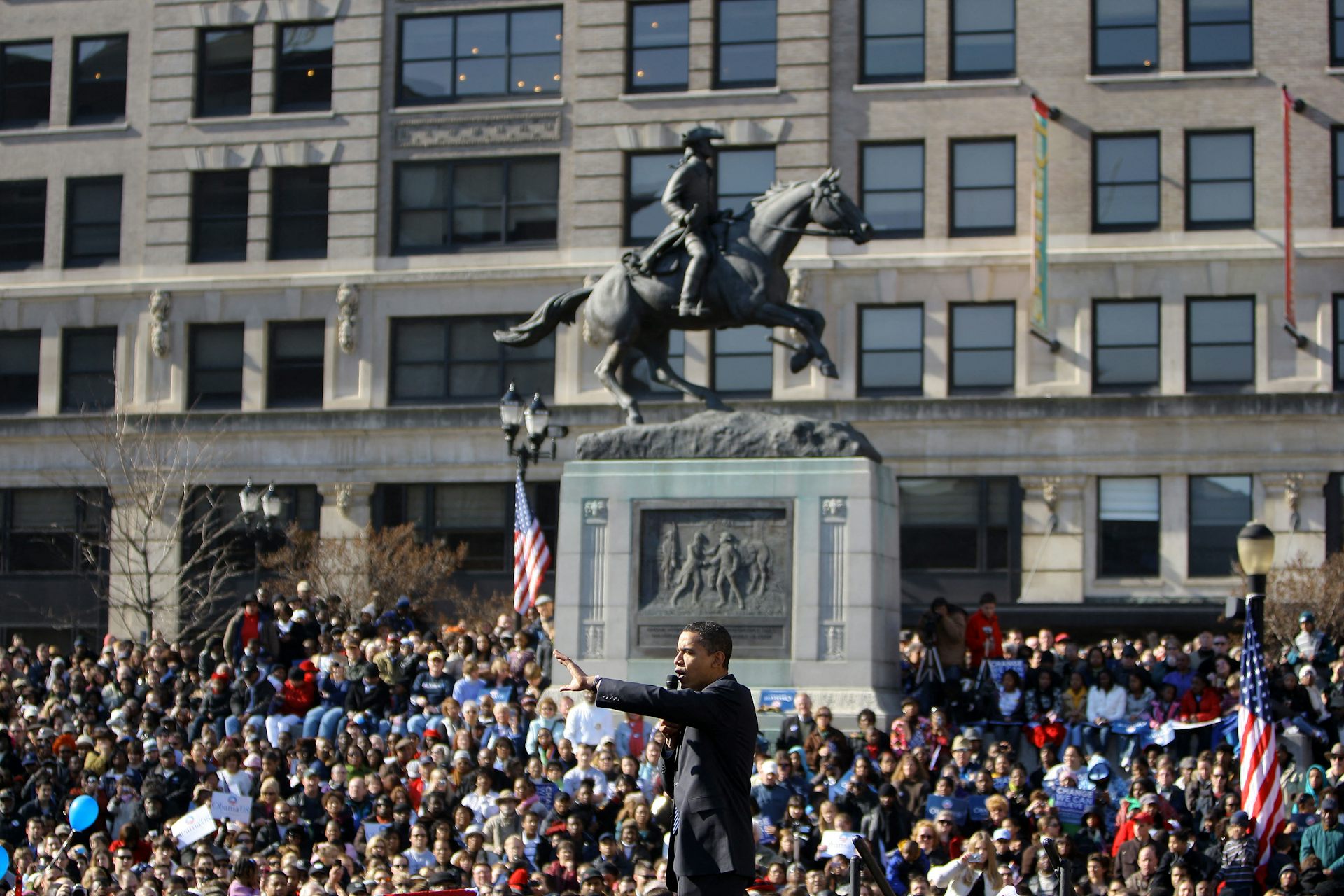
Similarly, an equestrian statue of Founding Father Caesar Rodney – installed in Wilmington, Delaware, in 1923 and removed in 2020 to prevent damage by protesters – highlights these contested readings of history.
De manera similar, una estatua ecuestre del Padre Fundador Caesar Rodney – instalada en Wilmington, Delaware, en 1923 y retirada en 2020 para evitar daños por parte de manifestantes – resalta estas lecturas contestadas de la historia.
Rodney is famous for riding all night from Delaware to Philadelphia, through a thunderstorm, to break a deadlock and cast the deciding vote in favour of American independence in 1776.
Rodney es famoso por cabalgar toda la noche desde Delaware hasta Filadelfia, a través de una tormenta eléctrica, para romper un estancamiento y emitir el voto decisivo a favor de la independencia estadounidense en 1776.
But as well as being a brigadier general and signatory to the Declaration of Independence, he owned 200 slaves on his family’s plantation.
Pero además de ser un brigadier general y signatario de la Declaración de Independencia, poseía 200 esclavos en la plantación de su familia.
The statue is now scheduled to reappear for six months, this time in Washington DC, to celebrate America’s 250th anniversary on July 4. It will be installed in Freedom Plaza, named in honour of Martin Luther King Junior.
La estatua está programada ahora para reaparecer durante seis meses, esta vez en Washington D.C., para celebrar el 250 aniversario de América el 4 de julio. Se instalará en Freedom Plaza, nombrada en honor a Martin Luther King Jr.
Placing the contested statue of a famous slave owner in a space dedicated to a Black civil rights leader is a provocative, if not defiant, choice. And it shows again how powerful symbols and symbolic actions can be.
Colocar la controvertida estatua de un famoso dueño de esclavos en un espacio dedicado a un líder afroamericano de derechos civiles es una elección provocadora, si no desafiante. Y muestra de nuevo cuán poderosos pueden ser los símbolos y las acciones simbólicas.
The argument that removing statues also erases history doesn’t hold up to scrutiny. It conflates public visibility and symbolic placement with actual knowledge of the past.
El argumento de que retirar estatuas también borra la historia no resiste el escrutinio. Confunde la visibilidad pública y la ubicación simbólica con el conocimiento real del pasado.
In that sense, reinstalling controversial memorials is, in itself, an attempt to rewrite history by erasing a more recent past and returning to an old, disputed status quo.
En ese sentido, reinstalar monumentos controvertidos es, en sí mismo, un intento de reescribir la historia al borrar un pasado más reciente y volver a un antiguo status quo disputado.
Garritt C. Van Dyk has received funding from the Getty Research Institute.
Garritt C. Van Dyk ha recibido financiación del Getty Research Institute.
Read more
-
Los defectos en el corazón del acuerdo de alto el fuego con Irán de Donald Trump
The flaws at the heart of Donald Trump’s Iran ceasefire deal
-
Eurovisión 2026: una victoria para Bulgaria, cuarta para Australia y continua controversia para las emisoras
Eurovision 2026: a win for Bulgaria, fourth for Australia, and continued controversy for broadcasters