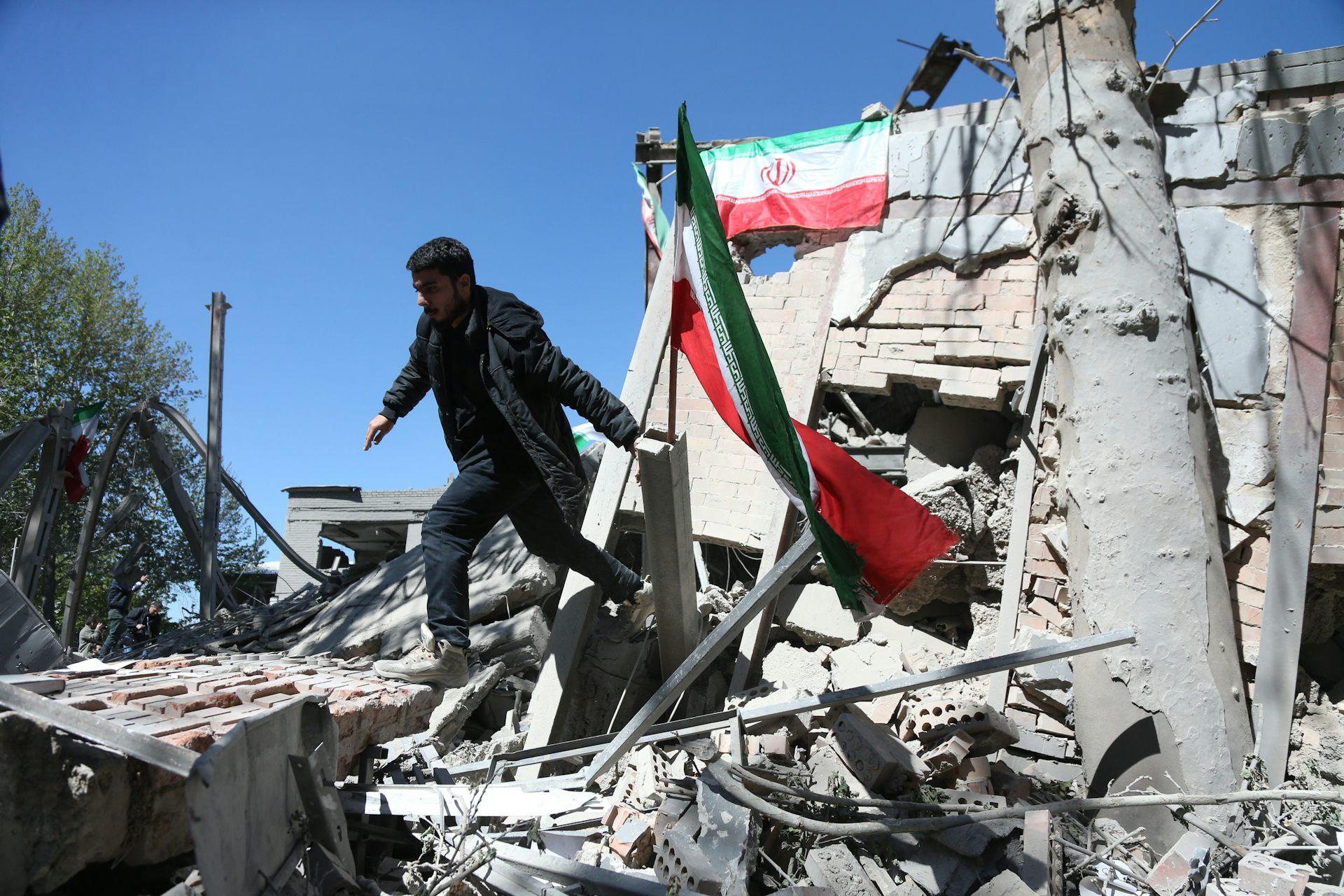
Después de un alto el fuego, negociar un acuerdo duradero con Irán requeriría superar rivalidades regionales e incoherencia estratégica
After ceasefire, negotiating a lasting deal with Iran would require overcoming regional rivalries and strategic incoherence
A decade of shifting regional alliances, continuous conflict and outside interventions have narrowed the path for diplomacy.
Una década de alianzas regionales cambiantes, conflicto continuo e intervenciones externas han estrechado el camino para la diplomacia.
President Donald Trump’s rapid and dramatic turn from threatening to kill “an entire civilization” in Iran on the morning of April 7, 2026, to announcing a two-week ceasefire later that day left many observers with a sense of whiplash.
El rápido y dramático cambio del presidente Donald Trump, de amenazar con matar «a una civilización entera» en Irán la mañana del 7 de abril de 2026, a anunciar un alto el fuego de dos semanas más tarde ese día, dejó a muchos observadores con una sensación de desorientación.
While it is difficult to predict whether the ceasefire between the U.S. and Iran will hold or how events will unfold, the dynamics of the conflict so far reveal multiple vulnerabilities in the short term and numerous detrimental effects on the region in the medium to long term.
Si bien es difícil predecir si el alto el fuego entre EE. UU. e Irán se mantendrá o cómo se desarrollarán los acontecimientos, la dinámica del conflicto hasta ahora revela múltiples vulnerabilidades a corto plazo y numerosos efectos perjudiciales en la región a medio y largo plazo.
Already, the truce has shown signs of strain. Iran and the U.S. almost immediately offered dueling narratives about the agreement, including whether it would cover the war in Lebanon. Iran and Pakistan, the primary mediator, asserted that it would, while the U.S. and Israel, which pledged to honor the U.S. agreement, said it would not. Indeed, a day after the ceasefire came into force, Israel conducted some of its most intense bombing in Lebanon to date.
Ya, la tregua ha mostrado signos de tensión. Irán y EE. UU. ofrecieron casi de inmediato narrativas contradictorias sobre el acuerdo, incluido si cubriría la guerra en Líbano. Irán y Pakistán, el principal mediador, afirmaron que sí lo haría, mientras que EE. UU. e Israel, que prometieron respetar el acuerdo estadounidense, dijeron que no lo haría. De hecho, un día después de que entrara en vigor el alto el fuego, Israel llevó a cabo algunos de sus bombardeos más intensos en Líbano hasta la fecha.
As an expert in Middle East politics, I believe that the involvement of so many governments and militant groups – in both the negotiation process and in terms of the regional effects of the conflict – make it more difficult to uphold a ceasefire.
Como experto en política de Oriente Medio, creo que la participación de tantos gobiernos y grupos militantes —tanto en el proceso de negociación como en términos de los efectos regionales del conflicto— dificulta mantener un alto el fuego.
Over the past decade, there has been a shift in regional alliances in the Middle East, leading to increasingly assertive foreign policies by many countries and a deepening rivalry between Iran and Saudi Arabia. The current war only fuels these dynamics, incentivizing competition and offering governments and militant groups new opportunities to exert leverage over opponents.
Durante la última década ha habido un cambio en las alianzas regionales de Oriente Medio, lo que ha llevado a políticas exteriores cada vez más asertivas por parte de muchos países y a una creciente rivalidad entre Irán y Arabia Saudita. La guerra actual solo alimenta estas dinámicas, incentivando la competencia y ofreciendo a gobiernos y grupos militantes nuevas oportunidades para ejercer influencia sobre sus oponentes.
The current reality also underlines the idea that external intervention and privileging war over diplomacy has made conflict resolution ever more difficult in a region with a long history of imperial expansion, great power competition and bitter political divides.
La realidad actual también subraya la idea de que la intervención externa y la preferencia por la guerra sobre la diplomacia han hecho que la resolución de conflictos sea cada vez más difícil en una región con una larga historia de expansión imperial, competencia de grandes potencias y profundas divisiones políticas.
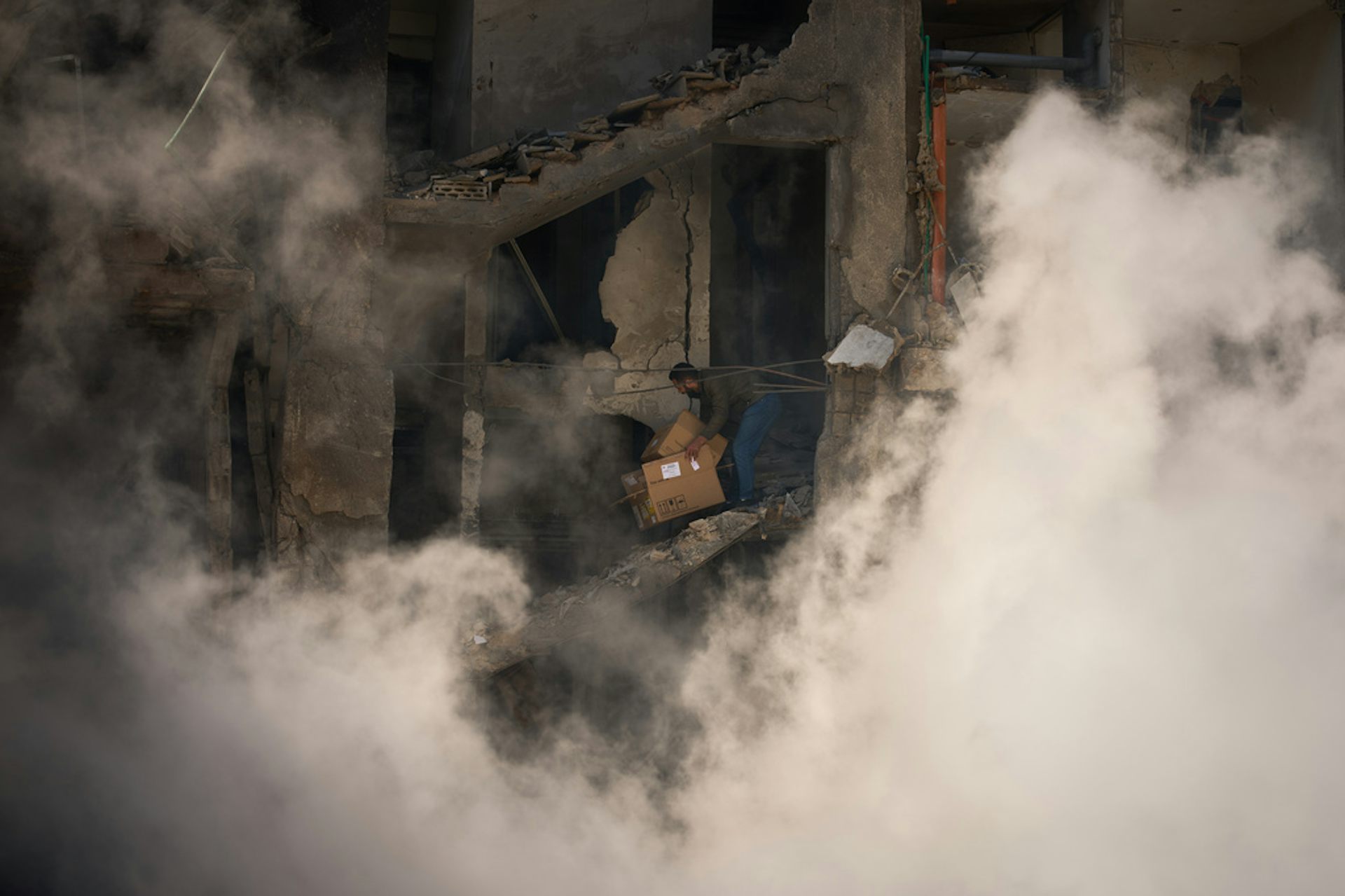
Regional fault lines
Grietas regionales
One of the more remarkable aspects of the war in Iran that began on Feb. 28 was how quickly it escalated in terms of geographic scope and the actors pulled into it.
Uno de los aspectos más notables de la guerra en Irán que comenzó el 28 de febrero fue lo rápido que escaló en términos de alcance geográfico y los actores arrastrados a ella.
The three key countries involved – Israel, the U.S and Iran – are all facing internal political tensions, polarization and legitimacy crises.
Los tres países clave involucrados —Israel, EE. UU. e Irán— se enfrentan a tensiones políticas internas, polarización y crisis de legitimidad.
Outside countries such as China, Russia and Pakistan have deployed their own strategic interests and diplomatic tools in the conflict in indirectly getting involved.
Países externos como China, Rusia y Pakistán han desplegado sus propios intereses estratégicos y herramientas diplomáticas en el conflicto, involucrándose indirectamente.
The conflict has also drawn in a variety of regional governments and other groups, from [Saudi Arabia and the Gulf states] to Hezbollah in Lebanon and the Houthis in Yemen.
El conflicto también ha atraído a una variedad de gobiernos regionales y otros grupos, desde [Arabia Saudita y los estados del Golfo] hasta Hezbolá en Líbano y los hutíes en Yemen.
All of that is bound to deepen the fault lines that make regional tensions and sectarian conflict more likely in the long run.
Todo esto está destinado a profundizar las grietas que hacen más probable la tensión regional y el conflicto sectario a largo plazo.
Meanwhile, public opinion in the Arab world shows profound damage to the United States’ reputation in the region and a loss of credibility in the international legal and humanitarian system.
Mientras tanto, la opinión pública en el mundo árabe muestra un profundo daño a la reputación de Estados Unidos en la región y una pérdida de credibilidad en el sistema legal y humanitario internacional.
I think these developments are also deeply troubling for the long term.
Creo que estos desarrollos también son profundamente preocupantes a largo plazo.
Events since the war began have been bad enough. The war has led to over 1,200 Iranian civilian deaths, over 3.2 million Iranians temporarily displaced and significant damage to Iranian infrastructure. Thirteen American soldiers have also died in the course of the conflict, as have more than two dozen in Israel and the Gulf states.
Los acontecimientos desde que comenzó la guerra han sido más que suficientes. La guerra ha provocado más de 1,200 muertes de civiles iraníes, más de 3.2 millones de iranios desplazados temporalmente y daños significativos a la infraestructura iraní. También han muerto trece soldados estadounidenses en el curso del conflicto, al igual que más de dos docenas en Israel y los estados del Golfo.
That’s to say nothing of the toll in Lebanon, where more than 1,500 people have died and more than 1 million displaced since the beginning of March.
Sin mencionar el coste en Líbano, donde más de 1,500 personas han muerto y más de 1 millón han sido desplazadas desde principios de marzo.
The Houthis and the politics of regional instability
Los hutíes y la política de la inestabilidad regional
The Houthis in Yemen, one of the conflict participants that remained surprisingly silent at the outbreak of the war, are instructive for understanding the region’s complicated and fractured dynamics.
Los hutíes en Yemen, uno de los participantes en el conflicto que permaneció sorprendentemente en silencio al estallar la guerra, son instructivos para comprender la dinámica complicada y fracturada de la región.
As a religious rebel movement that follows the Zaydi branch of Shia Islam, the Houthis, who took over Yemen’s capital in 2014, have been the target of sustained military operations by Saudi Arabia and the United Arab Emirates since 2015. This has only pushed them closer to Tehran.
Como movimiento rebelde religioso que sigue la rama zaydi del islam chií, los hutíes, que tomaron la capital de Yemen en 2014, han sido objetivo de operaciones militares sostenidas por parte de Arabia Saudita y los Emiratos Árabes Unidos desde 2015. Esto solo los ha acercado a Teherán.
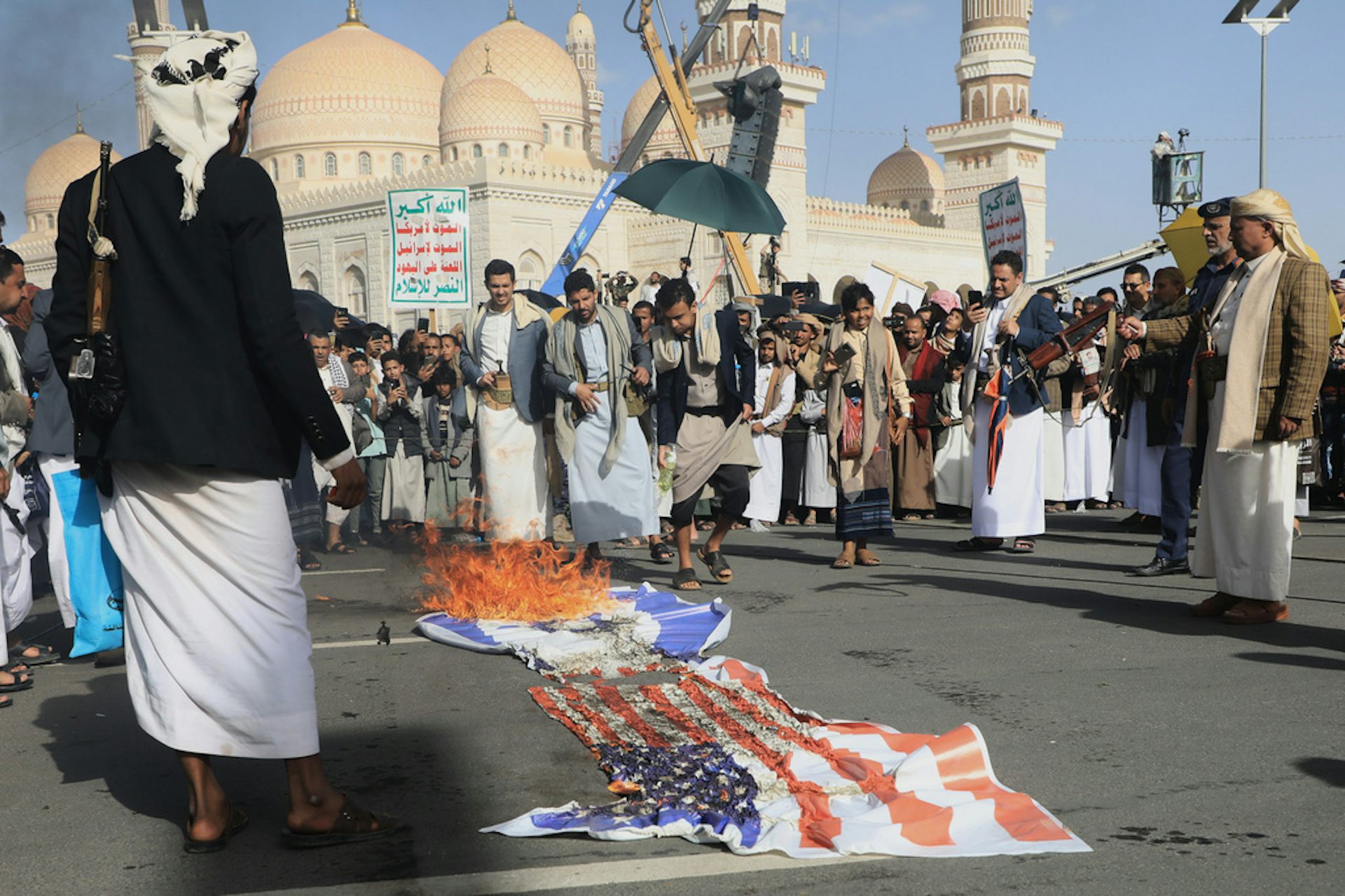
Avowed opponents of Israel, the Houthis declared war against the country following the Hamas attacks of Oct. 7, 2023, and Israel’s subsequent war in Gaza.
Declarados oponentes de Israel, los hutíes declararon la guerra al país tras los ataques de Hamás el 7 de octubre de 2023 y la subsiguiente guerra de Israel en Gaza.
In 2024, the Houthis attacked maritime shipping in the Red Sea near the Bab el-Mandeb Strait, a key maritime choke point. That prefigured, in a much smaller and less consequential way, Iran’s own actions in blocking the Strait of Hormuz during the current crisis.
En 2024, los hutíes atacaron el transporte marítimo en el Mar Rojo cerca del Estrecho de Bab el-Mandeb, un punto de estrangulamiento marítimo clave. Esto prefiguró, de una manera mucho más pequeña y menos trascendental, las propias acciones de Irán al bloquear el Estrecho de Ormuz durante la crisis actual.
That Houthi campaign to block maritime shipping resulted in a U.S.-led international coalition and significant military strikes against the insurgent group, their redesignation as a foreign terrorist organization, and ultimately a ceasefire deal between the U.S. and the Houthi movement in May 2025.
Esa campaña hutí para bloquear el transporte marítimo resultó en una coalición internacional liderada por EE. UU. y importantes ataques militares contra el grupo insurgente, su reclasificación como organización terrorista extranjera y, finalmente, un acuerdo de alto el fuego entre EE. UU. y el movimiento hutí en mayo de 2025.
Yet the underlying regional disputes and domestic fractures that the Houthis were part of were never resolved.
Sin embargo, las disputas regionales subyacentes y las fracturas internas de las que formaban parte los hutíes nunca se resolvieron.
Eventually, the Houthis reentered the fight against Israel amid the latest war in Iran, attacking Israel on March 28.
Finalmente, los hutíes reingresaron a la lucha contra Israel en medio de la última guerra en Irán, atacando a Israel el 28 de marzo.
They refrained from attacks in the Red Sea and currently are observing the ceasefire. But entering the war enabled a weakened Houthi movement to signal resolve, military capacity and commitment to its alliance with Iran, just as Yemen continues to face an economic and severe humanitarian crisis. The Houthis now also have added leverage to play the role of spoiler amid ongoing diplomacy.
Se abstuvieron de ataques en el Mar Rojo y actualmente están observando el alto el fuego. Pero entrar en la guerra permitió a un movimiento hutí debilitado señalar determinación, capacidad militar y compromiso con su alianza con Irán, justo cuando Yemen sigue enfrentando una crisis económica y humanitaria grave. Los hutíes ahora también tienen una palanca adicional para desempeñar el papel de saboteador en medio de la diplomacia en curso.
The costs of diplomacy avoidance
Los costos de evitar la diplomacia
Of course, the Houthis are not the only movement that will perceive the war on Iran as an opportunity to exert regional influence.
Por supuesto, los hutíes no son el único movimiento que percibirá la guerra contra Irán como una oportunidad para ejercer influencia regional.
Just as the Houthis and their enemies are using regional conflicts to boost their domestic legitimacy and strategic advantages, so too are the more salient participants − Iran, Israel and the U.S. − relitigating their own past conflicts on the battlefield.
Así como los hutíes y sus enemigos están utilizando los conflictos regionales para impulsar su legitimidad interna y sus ventajas estratégicas, los participantes más destacados —Irán, Israel y EE. UU.— también están relitigando sus propios conflictos pasados en el campo de batalla.
Amid all of these current regional trends of crises and contestation, the United States’ own strategic goals have remained remarkably unclear. The Trump administration has vacillated from a focus on regime change to preventing Iran from developing nuclear capabilities.
En medio de todas estas tendencias regionales actuales de crisis y contienda, los propios objetivos estratégicos de Estados Unidos han permanecido notablemente poco claros. La administración Trump ha vacilado entre un enfoque en el cambio de régimen y la prevención de que Irán desarrolle capacidades nucleares.
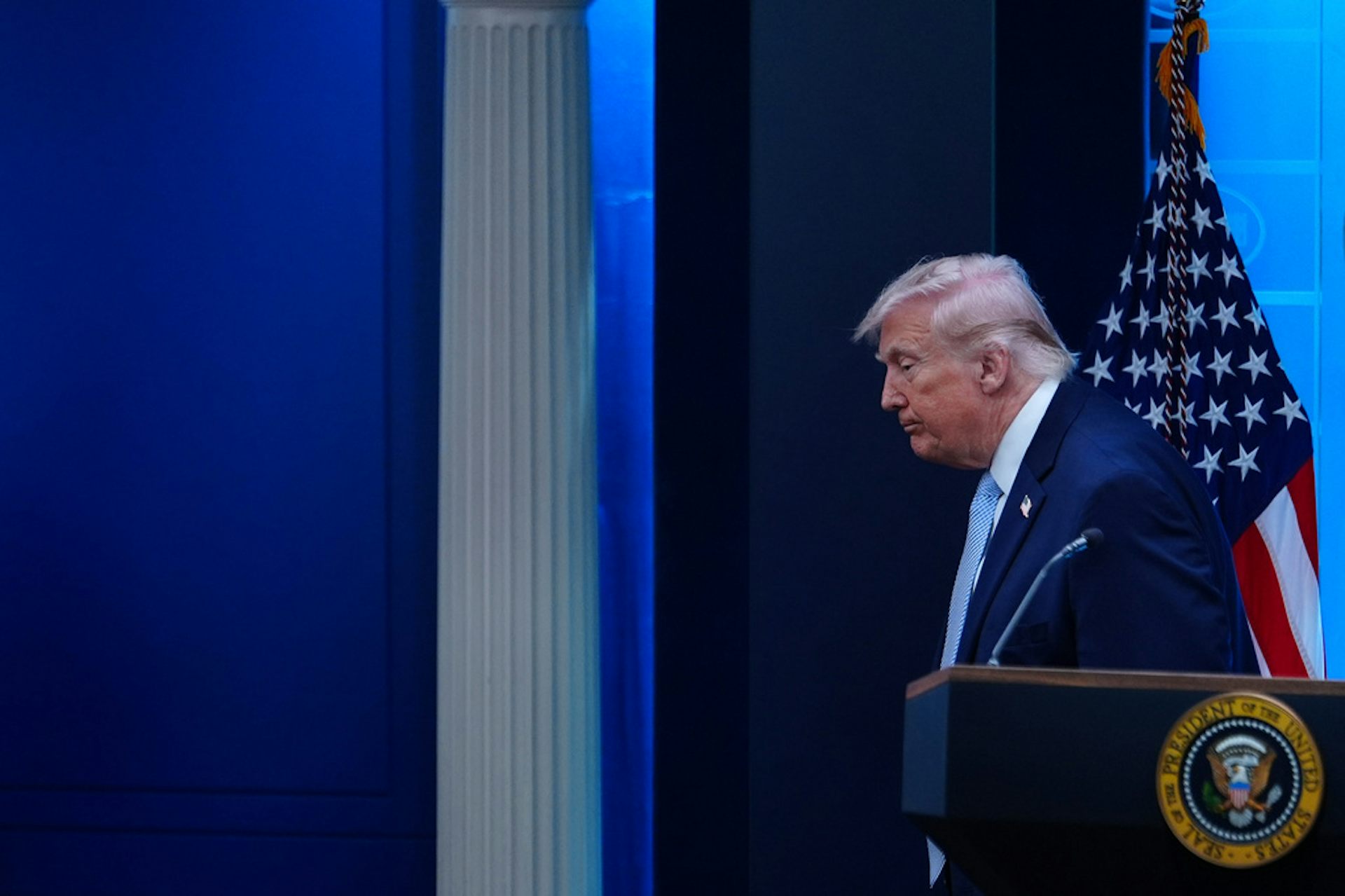
So far, there are no indications that talks with Iran to extend the ceasefire into a full diplomatic agreement will successfully prevent Iran from pursuing uranium enrichment. Indeed, one of the contested points of the framework for talks with Iran is the apparent acceptance of Iran’s right to nuclear enrichment.
Hasta ahora, no hay indicios de que las conversaciones con Irán para extender el alto el fuego a un acuerdo diplomático completo evitarán con éxito que Irán persiga el enriquecimiento de uranio. De hecho, uno de los puntos en disputa del marco de las conversaciones con Irán es la aparente aceptación del derecho de Irán al enriquecimiento nuclear.
In 2018, Trump abandoned the Joint Comprehensive Plan of Action, or so-called Iran deal. In it, Iran agreed to terms, including limiting uranium enrichment, that would block its path to a nuclear weapon, should it have desired one.
En 2018, Trump abandonó el Plan de Acción Integral Conjunto, o llamado acuerdo con Irán. En él, Irán acordó términos, incluido el límite del enriquecimiento de uranio, que bloquearían su camino hacia un arma nuclear, si lo hubiera deseado.
Under the Iran deal, Tehran had also complied with inspections by the International Atomic Energy Agency. It was not until much after American withdrawal from the agreement that Iran once again started stockpiling uranium and pursuing enrichment.
Bajo el acuerdo con Irán, Teherán también había cumplido con las inspecciones del Organismo Internacional de Energía Atómica. No fue hasta mucho después de la retirada estadounidense del acuerdo que Irán volvió a acumular uranio y a buscar el enriquecimiento.
In her 2020 book on the tenuous 22-month diplomatic process leading to the Iran deal, aptly titled “Not for the Faint of Heart,” Ambassador Wendy Sherman wrote how complex, challenging and delicate such multiparty negotiations can be.
En su libro de 2020 sobre el tenue proceso diplomático de 22 meses que condujo al acuerdo con Irán, titulado apropiadamente “No para los débiles de corazón”, la embajadora Wendy Sherman escribió lo complejo, desafiante y delicado que pueden ser tales negociaciones multipartitas.
But the recent war on Iran suggests that the current machine-gun politics approach toward Tehran and the Middle East favored by the U.S. and Israel comes with serious costs and risks.
Pero la reciente guerra contra Irán sugiere que el actual enfoque de «política de ametralladora» hacia Teherán y Oriente Medio, favorecido por EE. UU. e Israel, conlleva serios costos y riesgos.
In the course of a war with unclear targets, vague strategic objectives and high human costs, the region is far less stable than it was when the conflict began. That has made the path to long-term durable peace all the more difficult now that diplomacy is back on the table.
En el curso de una guerra con objetivos poco claros, objetivos estratégicos vagos y altos costos humanos, la región es mucho menos estable de lo que lo era cuando comenzó el conflicto. Esto ha hecho que el camino hacia una paz duradera a largo plazo sea aún más difícil ahora que la diplomacia ha vuelto a la mesa.
Ioana Emy Matesan does not work for, consult, own shares in or receive funding from any company or organization that would benefit from this article, and has disclosed no relevant affiliations beyond their academic appointment.
Ioana Emy Matesan no trabaja, asesora, posee acciones ni recibe financiación de ninguna empresa u organización que se beneficie de este artículo, y no ha revelado afiliaciones relevantes más allá de su cargo académico.
Read more
-
Famesick: Lena Dunham nos hace reír sobre un trabajo soñado convertido en pesadilla brutal
Famesick: Lena Dunham makes us laugh about a dream job turned brutal nightmare
-
El intercambio de ataques entre EE. UU. e Irán muestra cuán cambiada está la diplomacia
US and Iran’s exchange of strikes shows how far diplomacy has changed