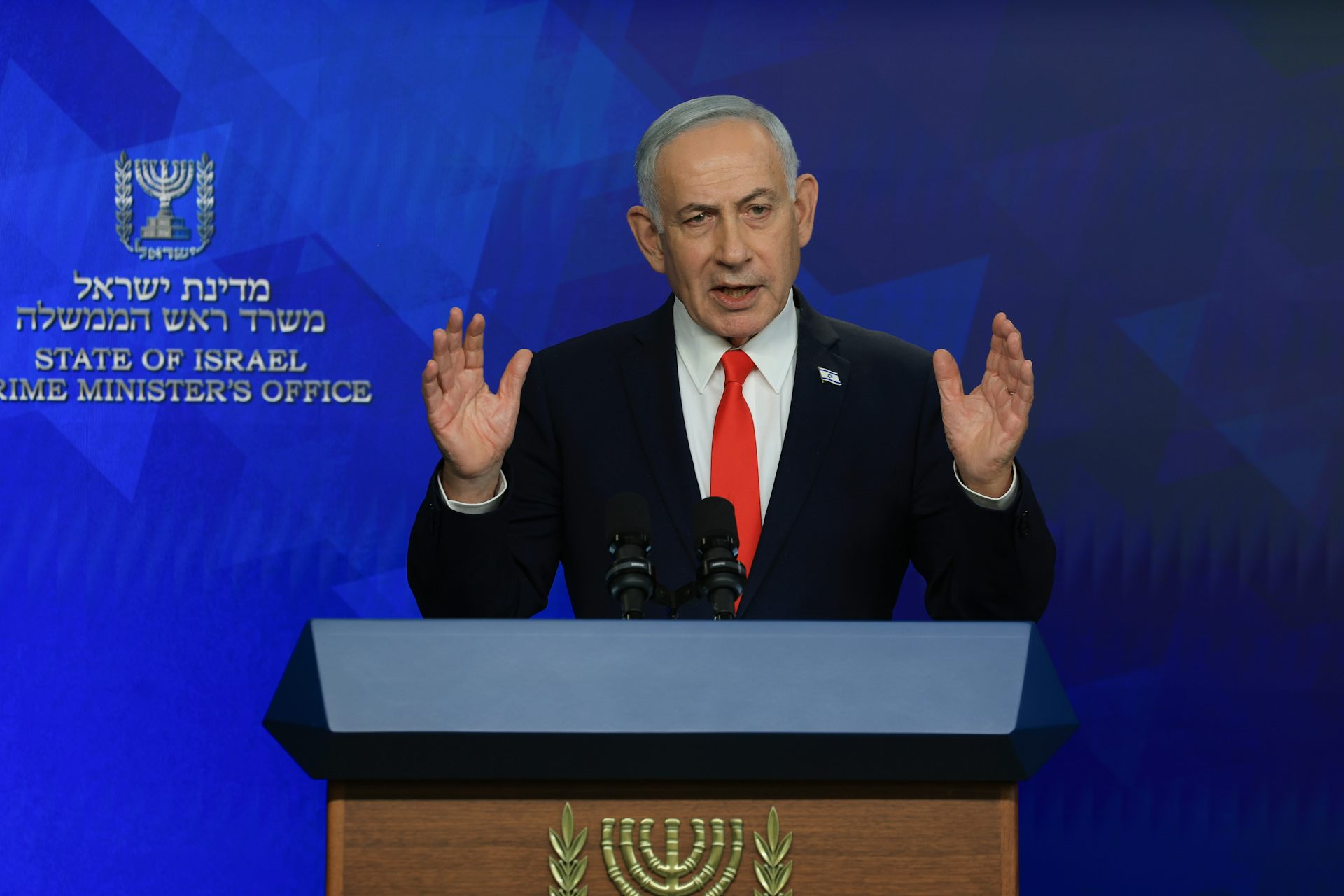
Con Irán y EE. UU. firmando un acuerdo de paz, ¿qué queda para Benjamín Netanyahu?
With Iran and the US signing a peace deal, where does that leave Benjamin Netanyahu?
The Israeli prime minister faces an invidious choice in an election year: kowtow to a powerful ally, or risk displeasure at home by ending the war with Hezbollah.
El primer ministro israelí se enfrenta a una difícil elección en un año electoral: someterse a un poderoso aliado o arriesgarse al descontento interno al terminar la guerra con Hezbolá.
The peace deal between the US and Iran calls not just for the cessation of hostilities between the two countries, but also between Israel and Hezbollah. It also calls for Lebanese territorial integrity and sovereignty to be respected.
El acuerdo de paz entre EE. UU. e Irán exige no solo el cese de hostilidades entre los dos países, sino también entre Israel y Hezbolá. También exige que se respete la integridad territorial y la soberanía libanesas.
This places Israeli Prime Minister Benjamin Netanyahu in a political conundrum, because ceasing hostilities against Hezbollah runs contrary to his government’s determination to finally crush its nemesis.
Esto sitúa al primer ministro israelí Benjamin Netanyahu en un dilema político, porque cesar las hostilidades contra Hezbolá va en contra de la determinación de su gobierno de aplastar finalmente a su némesis.
Netanyahu now faces difficult decisions. Does he kowtow to the US, Israel’s longstanding ally and security guarantor, in an election year? Or does he defy the US and continue Israel’s military onslaught against Hezbollah?
Netanyahu ahora se enfrenta a decisiones difíciles. ¿Se doblega ante EE. UU., aliado histórico e garante de seguridad de Israel, en un año electoral? ¿O desafía a EE. UU. y continúa el asalto militar de Israel contra Hezbolá?
An answer to these questions seemed to come in part on June 19, when Israel and Hezbollah agreed on yet another ceasefire. However, the next day Israel bombed Lebanon, and Iran once again closed the Strait of Hormuz.
Una respuesta a estas preguntas pareció llegar en parte el 19 de junio, cuando Israel y Hezbolá acordaron otro alto el fuego. Sin embargo, al día siguiente Israel bombardeó Líbano, e Irán volvió a cerrar el Estrecho de Ormuz.
Elections at home
Elecciones en casa
Since the beginning of Israel’s current war against Hezbollah in March 2026, the Israeli Defence Force (IDF) has advanced into southern and eastern Lebanon. In the process, the IDF has pushed Hezbollah out of its traditional strongholds and bombed targets in southern Beirut.
Desde el comienzo de la guerra actual de Israel contra Hezbolá en marzo de 2026, las Fuerzas de Defensa de Israel (FDI) han avanzado hacia el sur y el este del Líbano. En el proceso, las FDI han expulsado a Hezbolá de sus bastiones tradicionales y han bombardeado objetivos en el sur de Beirut.
To date, the war has killed more than 4,000 Lebanese people and forced another 1 million to flee their homes. On June 1, IDF units captured the strategically important Beaufort Castle, allowing the IDF to control most of southern Lebanon, including Hezbollah strongholds in the Bekaa Valley in eastern Lebanon.
Hasta la fecha, la guerra ha matado a más de 4.000 libaneses y ha obligado a otro millón a huir de sus hogares. El 1 de junio, unidades de las FDI capturaron el estratégicamente importante Castillo Beaufort, lo que permitió a las FDI controlar la mayor parte del sur del Líbano, incluidos los bastiones de Hezbolá en el Valle de Bekaa, en el este del Líbano.
Within the areas it now occupies, the IDF has issued “don’t come back” orders, forcibly displacing thousands of Lebanese residents from their homes. On June 15, Israeli Defence Minister Israel Katz stated, “Israeli forces will remain in the security zones in Lebanon, Syria, and Gaza without any time limit” and the zones “would be cleared of local residents and all terror infrastructure including the houses”.
Dentro de las áreas que ahora ocupa, las FDI han emitido órdenes de «no volver», desplazando forzosamente a miles de residentes libaneses de sus hogares. El 15 de junio, el ministro de Defensa israelí, Israel Katz, declaró: «Las fuerzas israelíes permanecerán en las zonas de seguridad del Líbano, Siria y Gaza sin límite de tiempo» y que las zonas «serían despejadas de residentes locales y toda infraestructura terrorista, incluidas las casas.»
The war is immensely popular in Israel. An April 2026 poll revealed 80% of respondents favoured continuing the war against Hezbollah, even if that created friction with the US. The war’s popularity is crucial for Netanyahu, with national elections due to be held by October. He is desperate to win another term as prime minister to forestall his long-running corruption trial and stifle debates over his culpability for the intelligence failures that lead to Hamas’s devastating October 7 attacks.
La guerra es inmensamente popular en Israel. Una encuesta de abril de 2026 reveló que el 80% de los encuestados favorecía continuar la guerra contra Hezbolá, incluso si eso creaba fricciones con EE. UU. La popularidad de la guerra es crucial para Netanyahu, ya que las elecciones nacionales están programadas para octubre. Está desesperado por ganar otro mandato como primer ministro para evitar su juicio prolongado por corrupción y sofocar los debates sobre su culpabilidad por los fallos de inteligencia que llevaron a los devastadores ataques de Hamás el 7 de octubre.
In their aftermath, Netanyahu vowed to dramatically change the political landscape of the Middle East. He did this with wars on Hamas, Iran, and Hezbollah.
En sus secuelas, Netanyahu prometió cambiar drásticamente el panorama político de Oriente Medio. Lo hizo con guerras contra Hamás, Irán y Hezbolá.
But while these wars have significantly degraded the ability of his nemeses to threaten Israel, they have not been defeated as promised. This means while Netanyahu has indeed changed the political landscape of the Middle East, his wars have arguably made Israel less, rather than more, secure.
Pero si bien estas guerras han degradado significativamente la capacidad de sus enemigos para amenazar a Israel, no han sido derrotados como se prometió. Esto significa que, aunque Netanyahu ha cambiado realmente el panorama político de Oriente Medio, sus guerras han hecho que Israel sea, posiblemente, menos seguro, en lugar de más.
Criticism of Netanyahu’s handling of these wars has been growing, with Opposition politician Yair Golan declaring:
La crítica por parte del manejo de estas guerras por parte de Netanyahu ha crecido, con el político de la Oposición Yair Golan declarando:
Netanyahu lied. He promised a historic victory and security for generations, and in practice, we got one of the most severe strategic failures Israel has ever known.
Netanyahu mintió. Prometió una victoria histórica y seguridad para generaciones, y en la práctica, obtuvimos uno de los fracasos estratégicos más graves que Israel haya conocido jamás.
Netanyahu needs continuing military successes in Lebanon to sustain his narrative that he is making Israel safer by defeating its enemies.
Netanyahu necesita éxitos militares continuos en el Líbano para mantener su narrativa de que está haciendo a Israel más seguro al derrotar a sus enemigos.
Elections abroad
Elecciones en el extranjero
However, US President Donald Trump is also facing an unfavourable domestic political environment in the lead up to US mid-term elections. Trump needs an end to an unpopular war to try to create a positive political narrative to stave off potentially losing control of the House and the Senate.
Sin embargo, el presidente estadounidense Donald Trump también se enfrenta a un entorno político interno desfavorable en vísperas de las elecciones de mitad de mandato en EE. UU. Trump necesita poner fin a una guerra impopular para intentar crear una narrativa política positiva y evitar perder potencialmente el control de la Cámara y del Senado.
He does not want Israeli truculence to make already tense negotiations with Iran harder. For their part, the Iranians have made the cessation of Israel’s war on Hezbollah and its withdrawal from southern Lebanon the central issue in deciding whether to continue negotiating with the US. This is why Iran again closed the vital Strait of Hormuz after Israel bombed Lebanon on the weekend.
No quiere que la truculencia israelí dificulte aún más negociaciones ya tensas con Irán. Por su parte, los iraníes han convertido el cese de la guerra de Israel contra Hezbolá y su retirada del sur de Líbano en el tema central para decidir si continúan negociando con EE. UU. Por esto, Irán volvió a cerrar el vital Estrecho de Ormuz después de que Israel bombardeara Líbano durante el fin de semana.
So while Israel and the US may be allies, it is not an equal relationship. The geopolitical needs and desires of the US as the great power will always eclipse those of Israel as the middle power.
Así que, aunque Israel y EE. UU. puedan ser aliados, no es una relación igualitaria. Las necesidades y deseos geopolíticos de EE. UU. como gran potencia siempre eclipsarán los de Israel como potencia mediana.
Therefore, as prime ministerial aspirant Yair Lapid, puts it, Netanyahu faces “either a direct and destructive confrontation with our greatest ally or a submissive surrender of Israeli interests”.
Por lo tanto, como señala Yair Lapid, aspirante a primer ministro, Netanyahu se enfrenta “o a un enfrentamiento directo y destructivo con nuestro mayor aliado o a una rendición sumisa de los intereses israelíes”.
Evidence of how strained the relationship between Trump and Netanyahu is came just before the president signed the Memorandum of Understanding (MoU) with Iran. Trump castigated Netanyahu for ordering the bombing of Hezbollah targets in southern Beirut. He later suggested Syria would do a better job at fighting Hezbollah stating:
La evidencia de cuán tensa es la relación entre Trump y Netanyahu surgió justo antes de que el presidente firmara el Memorando de Entendimiento (MoU) con Irán. Trump censuró a Netanyahu por ordenar el bombardeo de objetivos de Hezbolá en el sur de Beirut. Más tarde sugirió que Siria haría un mejor trabajo luchando contra Hezbolá, afirmando:
I’m not happy with the way Israel has handled themselves with Lebanon and with Hezbollah. It just goes on forever and it throws a negative light on the big deal, and that’s the deal with Iran.
No estoy contento con la forma en que Israel se ha manejado con Líbano y con Hezbolá. Simplemente sigue para siempre y arroja una luz negativa sobre este gran asunto, y ese es el trato con Irán.
Despite the president’s frustrations there has been push-back from senior Israeli ministers. National Security Minister Ben Gvir said:
A pesar de las frustraciones del presidente, ha habido resistencia por parte de altos ministros israelíes. El ministro de Seguridad Nacional Ben Gvir dijo:
The prime minister should have told President Trump: We appreciate you, but Israel is a sovereign and independent state that cannot accept the strengthening, or even the existence, of a terrorist organisation on its borders.
El primer ministro debería haber dicho al presidente Trump: Le agradecemos, pero Israel es un estado soberano e independiente que no puede aceptar el fortalecimiento, o incluso la existencia, de una organización terrorista en sus fronteras.
In response US Vice President JD Vance stated bluntly that Israeli critics of the US-Iran deal, “need to wake up and smell the reality of the situation that country is in”.
En respuesta, el vicepresidente estadounidense JD Vance declaró sin rodeos que los críticos israelíes del acuerdo entre EE. UU. e Irán “necesitan despertar y oler la realidad de la situación en la que se encuentra ese país”.
In other words, Israel needs the US more than the US needs Israel. Israel relies on US financial and military support for its security, with the two allies recently signing their own MoU that guarantees the US giving Israel US$3.8 billion per year, including US$500 million for missile defence.
En otras palabras, Israel necesita más a EE. UU. de lo que EE. UU. necesita a Israel. Israel depende del apoyo financiero y militar estadounidense para su seguridad, y los dos aliados firmaron recientemente su propio MoU que garantiza que EE. UU. entregará a Israel 3.800 millones de dólares al año, incluidos 500 millones de dólares para defensa antimisiles.
Israel also needs ongoing US diplomatic support to shield it from any future United Nations Security Council (UNSC) sanctions. These may come from the concurrent investigations by the International Court of Justice (ICJ) and International Criminal Court (ICC) into allegations of Israel committing genocide, war crimes, and crimes against humanity in its wars against Hamas and Hezbollah.
Israel también necesita el continuo apoyo diplomático de EE. UU. para protegerlo de cualquier futura sanción del Consejo de Seguridad de las Naciones Unidas (CSNU) . Estas pueden provenir de las investigaciones simultáneas de la Corte Internacional de Justicia (CIJ) y la Corte Penal Internacional (CPI) sobre alegaciones de que Israel comete genocidio, crímenes de guerra y crímenes contra la humanidad en sus guerras contra Hamás y Hezbolá.
The situation in Lebanon remains highly volatile, the Israeli people are due to cast their votes before October, and the US is finalising a deal with Iran that will likely run contrary to Israel’s interests. The question now is what Israel is going to do about it.
La situación en Líbano sigue siendo muy volátil, el pueblo israelí debe emitir su voto antes de octubre, y EE. UU. está finalizando un acuerdo con Irán que probablemente irá en contra de los intereses de Israel. La pregunta ahora es qué hará Israel al respecto.
Martin Kear does not work for, consult, own shares in or receive funding from any company or organisation that would benefit from this article, and has disclosed no relevant affiliations beyond their academic appointment.
Martin Kear no trabaja para, asesora, posee acciones ni recibe financiación de ninguna empresa u organización que se beneficie de este artículo, y no ha revelado afiliaciones relevantes más allá de su cargo académico.
Read more
-
¿Te está manipulando tu chatbot de IA? ¿Remodelando sutilmente tus opiniones?
Is your AI chatbot manipulating you? Subtly reshaping your opinions?
-
Cómo el debate sobre la identidad de género podría socavar los esfuerzos globales para proteger a las víctimas de la violencia
How debate about gender identity could undermine global efforts to protect victims of violence