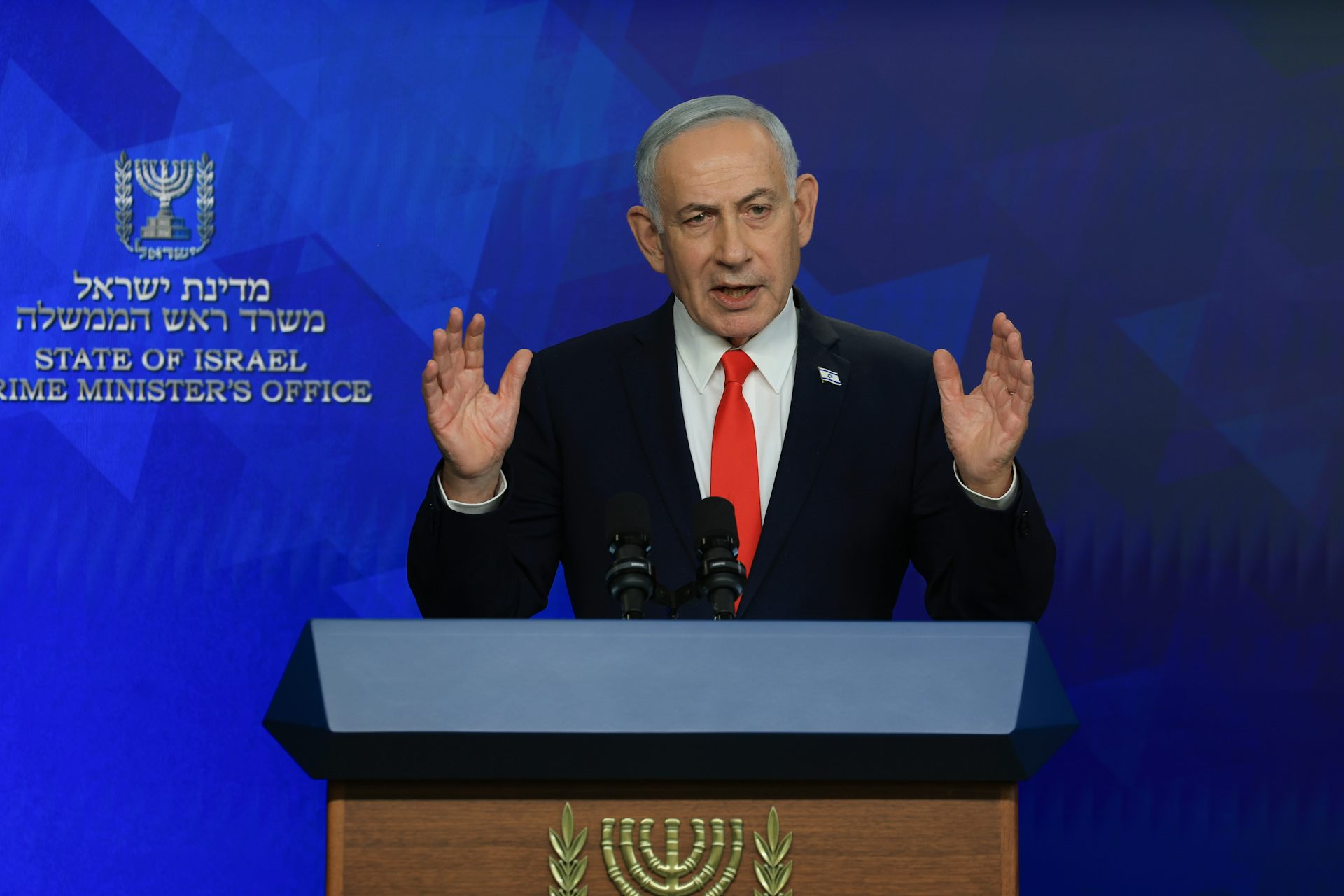
Suite à la signature d’un accord de paix entre l’Iran et les États-Unis, quelle est la position de Benjamin Netanyahu ?
With Iran and the US signing a peace deal, where does that leave Benjamin Netanyahu?
The Israeli prime minister faces an invidious choice in an election year: kowtow to a powerful ally, or risk displeasure at home by ending the war with Hezbollah.
Le premier ministre israélien est confronté à un choix délicat en cette année électorale : se soumettre à un allié puissant, ou risquer le mécontentement au pays en mettant fin à la guerre avec le Hezbollah.
The peace deal between the US and Iran calls not just for the cessation of hostilities between the two countries, but also between Israel and Hezbollah. It also calls for Lebanese territorial integrity and sovereignty to be respected.
L’accord de paix entre les États-Unis et l’Iran appelle non seulement à la cessation des hostilités entre les deux pays, mais aussi entre Israël et le Hezbollah. Il exige également que l’intégrité territoriale et la souveraineté du Liban soient respectées.
This places Israeli Prime Minister Benjamin Netanyahu in a political conundrum, because ceasing hostilities against Hezbollah runs contrary to his government’s determination to finally crush its nemesis.
Cela place le Premier ministre israélien Benjamin Netanyahu dans un dilemme politique, car cesser les hostilités contre le Hezbollah va à l’encontre de la détermination de son gouvernement à finalement écraser son ennemi juré.
Netanyahu now faces difficult decisions. Does he kowtow to the US, Israel’s longstanding ally and security guarantor, in an election year? Or does he defy the US and continue Israel’s military onslaught against Hezbollah?
Netanyahu est maintenant confronté à des décisions difficiles. Doit-il se soumettre aux États-Unis, allié et garant de sécurité historique d’Israël, en pleine année électorale? Ou doit-il défier les États-Unis et poursuivre l’offensive militaire israélienne contre le Hezbollah?
An answer to these questions seemed to come in part on June 19, when Israel and Hezbollah agreed on yet another ceasefire. However, the next day Israel bombed Lebanon, and Iran once again closed the Strait of Hormuz.
Une réponse à ces questions a semblé arriver en partie le 19 juin, lorsque Israël et le Hezbollah ont convenu d’un autre cessez-le-feu. Cependant, le lendemain, Israël a bombardé le Liban, et l’Iran a de nouveau fermé le détroit d’Ormuz.
Elections at home
Élections à la maison
Since the beginning of Israel’s current war against Hezbollah in March 2026, the Israeli Defence Force (IDF) has advanced into southern and eastern Lebanon. In the process, the IDF has pushed Hezbollah out of its traditional strongholds and bombed targets in southern Beirut.
Depuis le début de la guerre actuelle d’Israël contre le Hezbollah en mars 2026, les Forces de défense israéliennes (FDI) ont avancé dans le sud et l’est du Liban. Dans ce processus, les FDI ont repoussé le Hezbollah hors de ses bastions traditionnels et bombardé des cibles dans le sud de Beyrouth.
To date, the war has killed more than 4,000 Lebanese people and forced another 1 million to flee their homes. On June 1, IDF units captured the strategically important Beaufort Castle, allowing the IDF to control most of southern Lebanon, including Hezbollah strongholds in the Bekaa Valley in eastern Lebanon.
À ce jour, la guerre a tué plus de 4 000 Libanais et forcé un autre million à fuir leurs foyers. Le 1er juin, des unités des FDI ont capturé le château stratégiquement important de Beaufort, permettant aux FDI de contrôler la majeure partie du sud du Liban, y compris les bastions du Hezbollah dans la vallée de Bekaa, dans l’est du Liban.
Within the areas it now occupies, the IDF has issued “don’t come back” orders, forcibly displacing thousands of Lebanese residents from their homes. On June 15, Israeli Defence Minister Israel Katz stated, “Israeli forces will remain in the security zones in Lebanon, Syria, and Gaza without any time limit” and the zones “would be cleared of local residents and all terror infrastructure including the houses”.
Dans les zones qu’il occupe désormais, les FDI ont émis des ordres « ne pas revenir », déplaçant de force des milliers de résidents libanais de leurs foyers. Le 15 juin, le ministre israélien de la Défense, Israel Katz, a déclaré: « Les forces israéliennes resteront dans les zones sécurisées au Liban, en Syrie et à Gaza sans limite de temps » et que ces zones « seraient débarrassées des résidents locaux et de toute infrastructure terroriste y compris les maisons ».
The war is immensely popular in Israel. An April 2026 poll revealed 80% of respondents favoured continuing the war against Hezbollah, even if that created friction with the US. The war’s popularity is crucial for Netanyahu, with national elections due to be held by October. He is desperate to win another term as prime minister to forestall his long-running corruption trial and stifle debates over his culpability for the intelligence failures that lead to Hamas’s devastating October 7 attacks.
La guerre est immensément populaire en Israël. Un sondage d’avril 2026 a révélé que 80 % des personnes interrogées étaient favorables à la poursuite de la guerre contre le Hezbollah, même si cela créait des frictions avec les États-Unis. La popularité de la guerre est cruciale pour Netanyahou, alors que des élections nationales sont prévues avant octobre. Il est désespéré de remporter un nouveau mandat de Premier ministre pour éviter son procès prolongé pour corruption et étouffer les débats sur sa culpabilité concernant les défaillances de renseignement qui ont mené aux attaques dévastatrices du Hamas le 7 octobre.
In their aftermath, Netanyahu vowed to dramatically change the political landscape of the Middle East. He did this with wars on Hamas, Iran, and Hezbollah.
Dans leur sillage, Netanyahou a promis de changer radicalement le paysage politique du Moyen-Orient. Il y est par des guerres contre le Hamas, l’Iran et le Hezbollah.
But while these wars have significantly degraded the ability of his nemeses to threaten Israel, they have not been defeated as promised. This means while Netanyahu has indeed changed the political landscape of the Middle East, his wars have arguably made Israel less, rather than more, secure.
Mais alors que ces guerres ont considérablement diminué la capacité de ses ennemis à menacer Israël, ils n’ont pas été vaincus comme promis. Cela signifie que si Netanyahou a effectivement changé le paysage politique du Moyen-Orient, ses guerres ont rendu Israël moins, plutôt que plus, sûr.
Criticism of Netanyahu’s handling of these wars has been growing, with Opposition politician Yair Golan declaring:
La critique de la gestion de ces guerres par Netanyahou ne cesse de croître, l’homme politique d’opposition Yair Golan déclarant:
Netanyahu lied. He promised a historic victory and security for generations, and in practice, we got one of the most severe strategic failures Israel has ever known.
Netanyahou a menti. Il avait promis une victoire historique et une sécurité pour les générations, et en pratique, nous avons obtenu l’un des échecs stratégiques les plus graves qu’Israël ait jamais connu.
Netanyahu needs continuing military successes in Lebanon to sustain his narrative that he is making Israel safer by defeating its enemies.
Netanyahou a besoin de succès militaires continus au Liban pour soutenir son récit selon lequel il rend Israël plus sûr en battant ses ennemis.
Elections abroad
Élections à l’étranger
However, US President Donald Trump is also facing an unfavourable domestic political environment in the lead up to US mid-term elections. Trump needs an end to an unpopular war to try to create a positive political narrative to stave off potentially losing control of the House and the Senate.
Cependant, le président américain Donald Trump est également confronté à un environnement politique intérieur défavorable avant les élections de mi mandat américaines. Trump a besoin qu’une guerre impopulaire prenne fin pour tenter de créer un récit politique positif et d’éviter de perdre le contrôle de la Chambre des représentants et du Sénat.
He does not want Israeli truculence to make already tense negotiations with Iran harder. For their part, the Iranians have made the cessation of Israel’s war on Hezbollah and its withdrawal from southern Lebanon the central issue in deciding whether to continue negotiating with the US. This is why Iran again closed the vital Strait of Hormuz after Israel bombed Lebanon on the weekend.
Il ne veut pas que la truculence israélienne rende plus difficiles des négociations déjà tendues avec l’Iran. Pour leur part, les Iraniens ont fait de la cessation de la guerre d’Israël contre le Hezbollah et de son retrait du sud du Liban la question centrale pour décider s’ils doivent continuer à négocier avec les États-Unis. C’est pourquoi l’Iran a de nouveau fermé le détroit vital d’Ormuz après qu’Israël ait bombardé le Liban ce week-end.
So while Israel and the US may be allies, it is not an equal relationship. The geopolitical needs and desires of the US as the great power will always eclipse those of Israel as the middle power.
Ainsi, même si Israël et les États-Unis peuvent être des alliés, il ne s’agit pas d’une relation égale. Les besoins et désirs géopolitiques des États-Unis en tant que grande puissance éclipseront toujours ceux d’Israël en tant que puissance moyenne.
Therefore, as prime ministerial aspirant Yair Lapid, puts it, Netanyahu faces “either a direct and destructive confrontation with our greatest ally or a submissive surrender of Israeli interests”.
Par conséquent, comme le souligne l’aspirant Premier ministre Yair Lapid, Netanyahou est confronté « soit à une confrontation directe et destructrice avec notre plus grand allié, soit à un abandon soumis des intérêts israéliens ».
Evidence of how strained the relationship between Trump and Netanyahu is came just before the president signed the Memorandum of Understanding (MoU) with Iran. Trump castigated Netanyahu for ordering the bombing of Hezbollah targets in southern Beirut. He later suggested Syria would do a better job at fighting Hezbollah stating:
La preuve de la tension dans les relations entre Trump et Netanyahou est survenue juste avant que le président ne signe le Protocole d’accord (MoU) avec l’Iran. Trump a blâmé Netanyahou pour avoir ordonné le bombardement de cibles du Hezbollah au sud de Beyrouth. Il a ensuite suggéré que la Syrie ferait un meilleur travail pour combattre le Hezbollah en déclarant:
I’m not happy with the way Israel has handled themselves with Lebanon and with Hezbollah. It just goes on forever and it throws a negative light on the big deal, and that’s the deal with Iran.
Je ne suis pas satisfait de la manière dont Israël s’est comporté avec le Liban et avec le Hezbollah. Cela continue sans fin et cela jette une lumière négative sur le grand accord, et c’est là qu’intervient l’Iran.
Despite the president’s frustrations there has been push-back from senior Israeli ministers. National Security Minister Ben Gvir said:
Malgré les frustrations du président, il y a eu des résistances de la part de hauts ministres israéliens. Le ministre de la Sécurité nationale Ben Gvir a déclaré:
The prime minister should have told President Trump: We appreciate you, but Israel is a sovereign and independent state that cannot accept the strengthening, or even the existence, of a terrorist organisation on its borders.
Le Premier ministre aurait dû dire au Président Trump: Nous vous apprécions, mais Israël est un État souverain et indépendant qui ne peut accepter le renforcement, ni même l’existence, d’une organisation terroriste sur ses frontières.
In response US Vice President JD Vance stated bluntly that Israeli critics of the US-Iran deal, “need to wake up and smell the reality of the situation that country is in”.
En réponse, le vice-président américain JD Vance a déclaré sans détour que les critiques israéliennes de l’accord américano-iranien « doivent se réveiller et sentir la réalité de la situation dans laquelle ce pays se trouve ».
In other words, Israel needs the US more than the US needs Israel. Israel relies on US financial and military support for its security, with the two allies recently signing their own MoU that guarantees the US giving Israel US$3.8 billion per year, including US$500 million for missile defence.
En d’autres termes, Israël a plus besoin des États-Unis que les États-Unis n’ont besoin d’Israël. Israël dépend du soutien financier et militaire américain pour sa sécurité, les deux alliés ayant récemment signé leur propre MoU qui garantit aux États-Unis de donner à Israël 3,8 milliards de dollars US par an, dont 500 millions de dollars US pour la défense antimissile.
Israel also needs ongoing US diplomatic support to shield it from any future United Nations Security Council (UNSC) sanctions. These may come from the concurrent investigations by the International Court of Justice (ICJ) and International Criminal Court (ICC) into allegations of Israel committing genocide, war crimes, and crimes against humanity in its wars against Hamas and Hezbollah.
Israël a également besoin d’un soutien diplomatique américain continu pour le protéger de toute future sanction du Conseil de sécurité des Nations Unies (CSNU) . Ces sanctions pourraient provenir des enquêtes simultanées de la Cour internationale de justice (CIJ) et de la Cour pénale internationale (CPI) sur les allégations qu’Israël commettrait des génocides, crimes de guerre et crimes contre l’humanité dans ses guerres contre le Hamas et le Hezbollah.
The situation in Lebanon remains highly volatile, the Israeli people are due to cast their votes before October, and the US is finalising a deal with Iran that will likely run contrary to Israel’s interests. The question now is what Israel is going to do about it.
La situation au Liban reste très volatile, le peuple israélien doit voter avant octobre, et les États-Unis finalisent un accord avec l’Iran qui est susceptible d’aller à l’encontre des intérêts d’Israël. La question est maintenant de savoir ce qu’Israël va faire.
Martin Kear does not work for, consult, own shares in or receive funding from any company or organisation that would benefit from this article, and has disclosed no relevant affiliations beyond their academic appointment.
Martin Kear ne travaille pour, ne consulte pas, ne détient pas d’actions ni ne reçoit de financement de toute entreprise ou organisation qui bénéficierait de cet article, et n’a divulgué aucune affiliation pertinente au-delà de sa nomination universitaire.
Read more
-
Les dossiers Epstein : le podcast IA qui ressemble au journalisme mais ne l’est pas
The Epstein Files: the AI podcast that sounds like journalism but isn’t
-
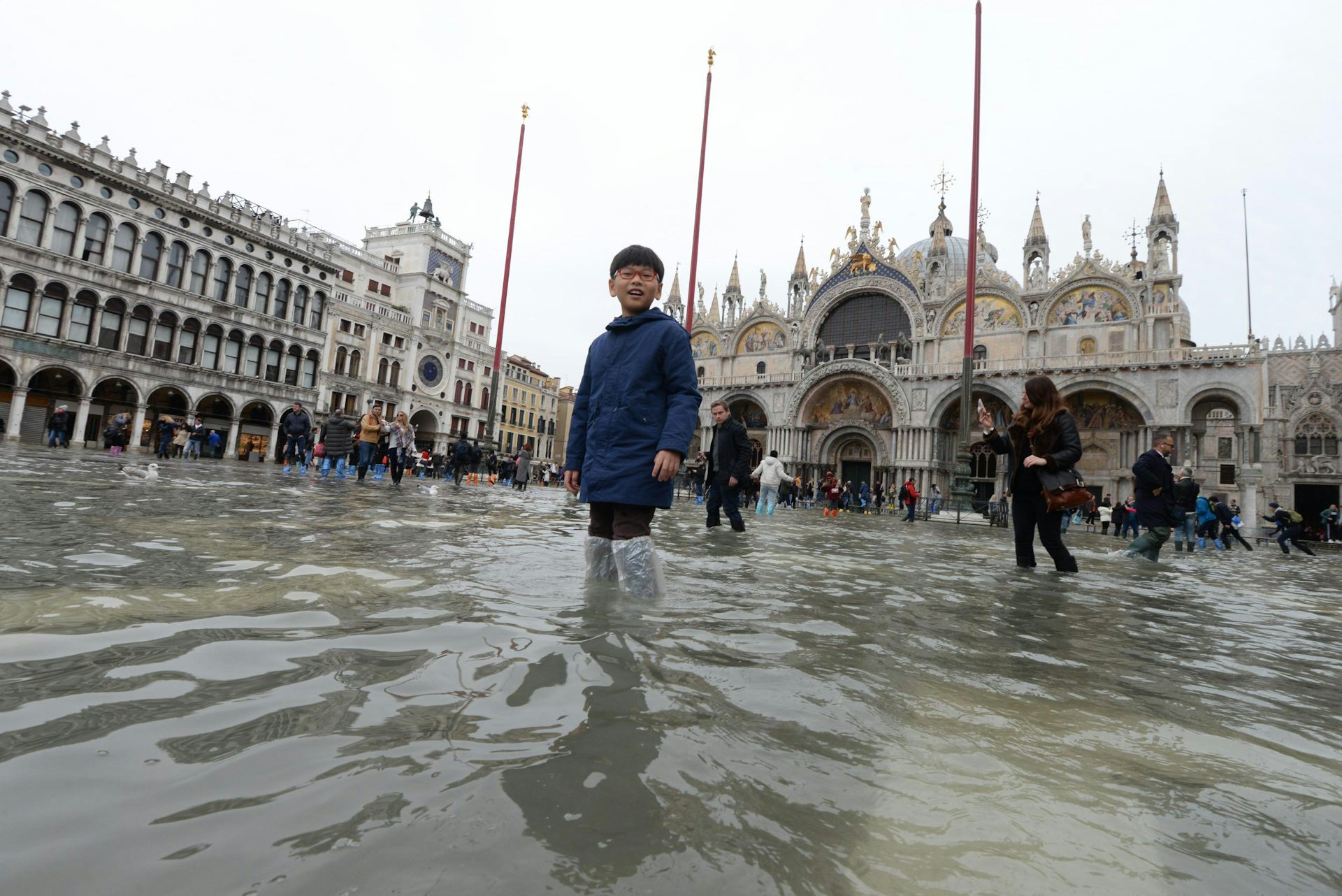
Venise coule – nous avons analysé tous les plans pour la sauver, et aucun ne préserverait la ville telle que nous la connaissons
Venice is sinking – we analysed every plan to save it, and none would preserve the city as we know it