Ataque a la mezquita de San Diego: interpretaciones racistas de la historia europea están inspirando a extremistas
San Diego mosque attack: racist interpretations of European history are inspiring extremists
The imagery of Europe’s history is often invoked to justify white supremacist violence around the world.
La imaginería de la historia de Europa a menudo se invoca para justificar la violencia de supremacistas blancos en todo el mundo.
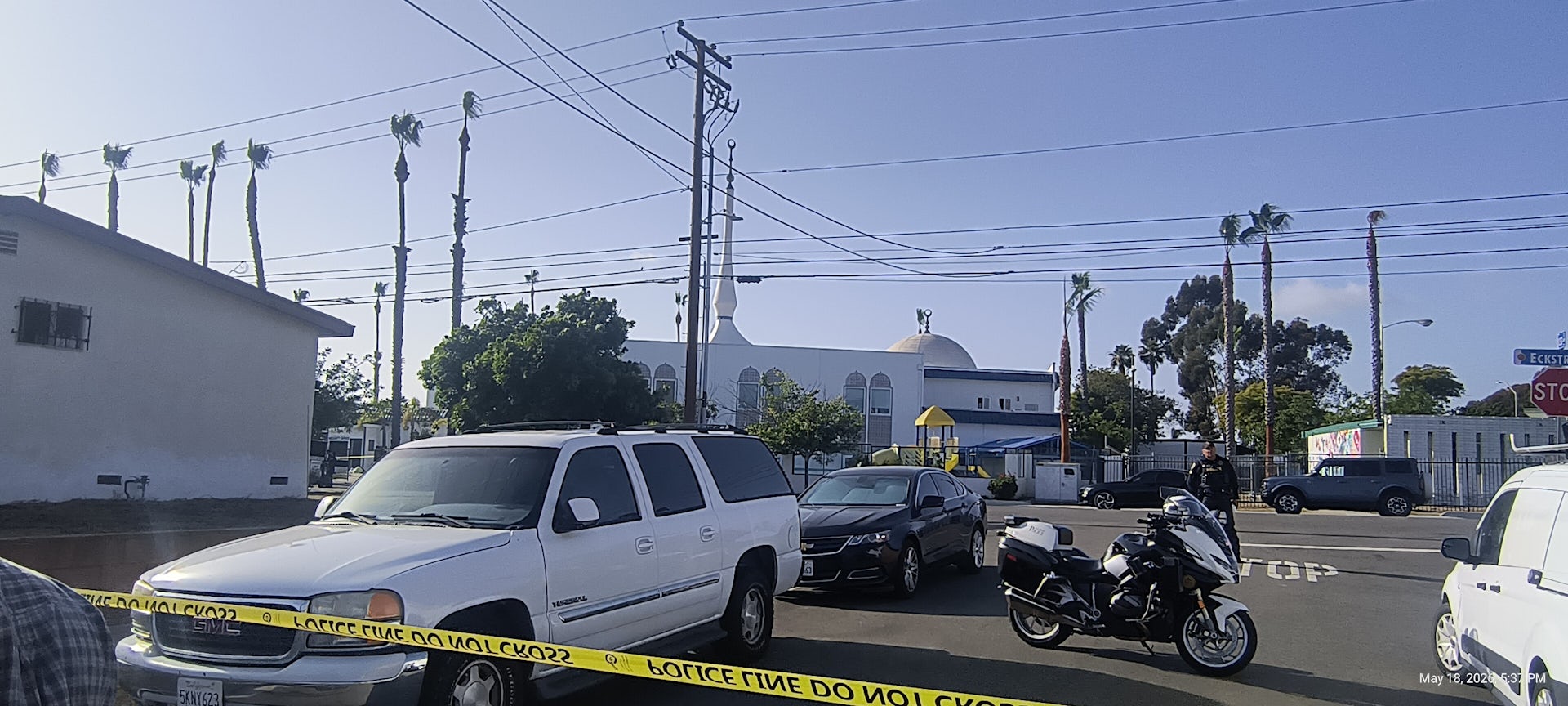
On Monday, May 18, two assailants, a 17 and an 18 year old, attacked the Islamic Center of San Diego, the site of both a mosque and school, killing three adults. The assailants were wearing Nazi SS insignia, and had the words “race war” written on their weapons.
El lunes 18 de mayo, dos agresores, de 17 y 18 años, atacaron el Centro Islámico de San Diego, el sitio de una mezquita y una escuela, matando a tres adultos. Los agresores llevaban insignias de las SS nazis y tenían escritas en sus armas las palabras «guerra racial.»
The attack underscores European history’s centrality to the global far right’s discourse and ideology. It was the latest deadly manifestation of the weaponisation of European history to justify violence in America in the present.
El ataque subraya la centralidad de la historia europea en el discurso y la ideología de la extrema derecha global. Fue la última manifestación mortal de la instrumentalización de la historia europea para justificar la violencia en América en el presente.
But this is not just a US problem. Europe’s history was also explicitly referenced in the manifesto of the 2019 Christchurch shooter in New Zealand. The Christchurch attack was itself inspired by Anders Breivek’s 2011 attack in Norway, which was primarily motivated by a violent white nationalist worldview.
Pero esto no es solo un problema estadounidense. La historia de Europa también fue referenciada explícitamente en el manifiesto del tirador de Christchurch en Nueva Zelanda en 2019. El ataque de Christchurch fue, a su vez, inspirado por el ataque de Anders Breivik en Noruega en 2011, el cual estuvo motivado principalmente por una visión de mundo violenta de nacionalismo blanco.
These attackers all drew inspiration from Adolf Hitler and the SS to justify both antisemitic and Islamophobic violence. But within the white nationalist imaginary, European history begins much earlier. It extends to visions of a pure white race in the Greek and Roman eras, and to idolisation of historical figures such as Charles Martel, the Frankish leader who defeated a Muslim army in Tours in 732.
Todos estos atacantes se inspiraron en Adolf Hitler y las SS para justificar la violencia tanto antisemita como islamófica. Pero dentro del imaginario de nacionalismo blanco, la historia europea comienza mucho antes. Se extiende a visiones de una raza blanca pura en las épocas griega y romana, y a la idolatría de figuras históricas como Carlos Martel, el líder franco que derrotó a un ejército musulmán en Tours en 732.
Leer más: The enduring legacy of medieval Christian depictions of Islam in today’s political discourse
Leer más: El legado perdurable de las representaciones cristianas medievales del Islam en el discurso político actual
It also leans heavily on the imagery of the European Crusades to retake the Holy Land, which began in the 12th century. The Knights Templar – the Crusade-era order of Christian warrior monks – has captured far-right popular imagination in Europe and the US, especially among the alt-right.
También se apoya mucho en la imaginería de las Cruzadas europeas para reconquistar Tierra Santa, que comenzó en el siglo XII. Los Caballeros Templarios —la orden de monjes guerreros cristianos de la era de las Cruzadas— han capturado la imaginación popular de la extrema derecha en Europa y EE. UU., especialmente entre la alt-right.
Political actors across the spectrum invoke the past to grant legitimacy in the present and suggest inevitability in the future. But for far-right leaders, European history is especially easy to weaponise. It provides a ready-made set of memes, metaphors, images and tropes that legitimise hate speech – and hate crimes – in the name of protecting Christian Europeans from the perceived threat of Jewish and Muslim invaders.
Los actores políticos de todo el espectro invocan el pasado para otorgar legitimidad en el presente y sugerir inevitabilidad en el futuro. Pero para los líderes de extrema derecha, la historia europea es especialmente fácil de instrumentalizar. Proporciona un conjunto listo de memes, metáforas, imágenes y tropos que legitiman el discurso de odio —y los crímenes de odio— en nombre de proteger a los europeos cristianos de la amenaza percibida de invasores judíos y musulmanes.
Warning signs
Señales de advertencia
In 1992, I set foot in the Islamic Center of San Diego for the first time. As an undergraduate student at UC San Diego, I was there to announce that our Muslim Student Association was fundraising for the very first Bosnian Muslim refugees who were arriving in our county. We had to have this meeting because most of the congregation at the mosque had no idea there were even Muslims in the former Yugoslavia.
En 1992, puse pie por primera vez en el Centro Islámico de San Diego. Como estudiante de pregrado en la UC San Diego, estaba allí para anunciar que nuestra Asociación Estudiantil Musulmana estaba recaudando fondos para los primeros refugiados musulmanes bosnios que llegaban a nuestro condado. Tuvimos que hacer esta reunión porque la mayoría de los feligreses de la mezquita no tenían idea de que había musulmanes en la antigua Yugoslavia.
Track forward to May 2026, two assailants used a camera to record their massacre in the Center and broadcast it on Discord, with the words “race war” etched onto their pistols. The practice of writing on firearms is not an isolated incident in the history of Islamophobic attacks, nor is recording them on video.
Avanzando hasta mayo de 2026, dos asaltantes usaron una cámara para grabar su masacre en el Centro y transmitirla en Discord, con las palabras «guerra racial» grabadas en sus pistolas. La práctica de escribir en armas de fuego no es un incidente aislado en la historia de los ataques islamófobos, ni tampoco grabarlos en video.
In March 2019, an Australian-born man attacked two mosques in Christchurch, New Zealand. He killed 51 people and filmed his attack, broadcasting it on Facebook. The video is still in circulation on the internet today.
En marzo de 2019, un hombre de origen australiano atacó dos mezquitas en Christchurch, Nueva Zelanda. Mató a 51 personas y filmó su ataque, transmitiéndolo en Facebook. El video todavía está en circulación en internet hoy.
The Christchurch attacker used five guns inscribed with the names of various European historical figures and battles against Muslims, as well as the racial slur “kebab remover”, a sinister euphemism for ethnic cleansing that is linked to the 1991-1995 Bosnian civil war.
El atacante de Christchurch usó cinco armas grabadas con los nombres de varias figuras históricas europeas y batallas contra los musulmanes, así como el insulto racial «remover kebab», un eufemismo siniestro para la limpieza étnica que está vinculado a la guerra civil bosnia de 1991 a 1995.
The phrase is an homage to Bosnian Serb leader Radovan Karadžić, the very warlord whose crimes against humanity led so many Bosniak refugees to flee the country – and many of those who reached the US settled in San Diego. It was Karadžić who conflated “kebabs” with the Bosniak Muslims, and “remove kebab” is still an Islamophobic meme among the European far right, where the continent’s ubiquitous kebab shops are often equated with Muslim immigration.
La frase es un homenaje al líder serbio bosnio Radovan Karadžić, el mismo señor de la guerra cuyos crímenes contra la humanidad llevaron a tantos refugiados bosníacos a huir del país, y muchos de los que llegaron a EE. UU. se establecieron en San Diego. Fue Karadžić quien confundió «kebabs» con los musulmanes bosníacos, y «remover kebab» sigue siendo un meme islamófobo entre la extrema derecha europea, donde las omnipresentes tiendas de kebab del continente a menudo se equiparan con la inmigración musulmana.
Leer más: How Islamophobic rhetoric leaves an impact on the mental health of Muslim Americans
Leer más: Cómo la retórica islamófoba afecta la salud mental de los estadounidenses musulmanes
The New Zealand attacker also etched battles from the Crusades on his weapons, and his online manifesto named Anders Breivik as his hero. Breivik detonated a bomb in central Oslo in 2011, killing 8 people before massacring 69 more. Breivik was obsessed with the medieval Crusades, dressing up as a Knight Templar in his own manifesto.
El atacante de Nueva Zelanda también grabó batallas de las Cruzadas en sus armas, y su manifiesto en línea nombró a Anders Breivik como su héroe. Breivik detonó una bomba en Oslo central en 2011, matando a 8 personas antes de masacrar a 69 más. Breivik estaba obsesionado con las Cruzadas medievales, disfrazándose de Caballero Templario en su propio manifiesto.
The New Zealand neo-Crusader attack inspired two attacks in the US the following month. In April 2019, three members of a Kansas militia calling itself the Crusaders were arrested before they could carry out a plot to bomb an apartment complex housing Somali Muslim families and a mosque.
El ataque neo-cruzado de Nueva Zelanda inspiró dos ataques en EE. UU. el mes siguiente. En abril de 2019, tres miembros de una milicia de Kansas que se autodenominaba los Cruzados fueron arrestados antes de que pudieran llevar a cabo un complot para volar un complejo de apartamentos que albergaba familias musulmanas somalíes y una mezquita.
In the same month, a 19-year-old student walked into a synagogue in northern San Diego County and opened fire on the congregation that was commemorating the last day of Passover, killing a 60 year old woman and injuring three others. This same attacker had previously tried to burn down a local mosque, inspired by the Christchurch shooting.
En el mismo mes, una estudiante de 19 años entró en una sinagoga en el norte del condado de San Diego y abrió fuego contra la congregación que conmemoraba el último día de la Pascua, matando a una mujer de 60 años e hiriendo a otras tres. Este mismo atacante había intentado previamente incendiar una mezquita local, inspirado por la masacre de Christchurch.
This assailant was a nursing student at Cal State University San Marcos where I teach, and was studying in a building just across from my history department. He told students he admired Hitler, and his colleagues reported it to our administration, which failed to act on the warnings of his weaponisation of history.
Este agresor era estudiante de enfermería en la Cal State University San Marcos, donde yo enseño, y estudiaba en un edificio justo enfrente de mi departamento de historia. Les dijo a los estudiantes que admiraba a Hitler, y sus colegas se lo reportaron a nuestra administración, la cual no actuó sobre las advertencias de su uso de la historia para la violencia.
Leer más: San Diego mosque shooting reflects how online rhetoric, media depictions and political discourse contribute to increased Islamophobia
Leer más: El tiroteo en la mezquita de San Diego refleja cómo la retórica en línea, las representaciones mediáticas y el discurso político contribuyen al aumento de la islamofobia
Weaponised history legitimises violence
La historia utilizada como arma legitima la violencia
Following in the footsteps of the New Zealand shooter and the Cal State San Marcos shooter, both of the San Diego mosque shooters engaged in their deadly assault to motivate future copycat attacks.
Siguiendo los pasos del tirador de Nueva Zelanda y del tirador de Cal State San Marcos, ambos tiradores de la mezquita de San Diego se embarcaron en su ataque mortal para motivar futuros ataques imitadores.
Their manifestos reportedly envision their shooting as inspiring a “crusade”. They even called themselves the “Sons” of the New Zealand attacker.
Se informa que sus manifiestos conciben su tiroteo como la inspiración de una “cruzada”. Incluso se llamaron los “Hijos” del atacante de Nueva Zelanda.
On April 24 2026, I returned to the Islamic Center, not as a student, but as a history professor giving a community lecture. And as a historian, I was uniquely qualified to warn them that, based on my study of the history of past Islamophobia in our area and globally, there was an increased risk of violent attacks, including on the Center itself. Tragically, my fear became manifest just a few weeks later.
El 24 de abril de 2026, regresé al Centro Islámico, no como estudiante, sino como profesor de historia dando una conferencia comunitaria. Y como historiador, estaba en condiciones únicas de advertirles que, basándome en mi estudio de la historia de la islamofobia pasada en nuestra área y a nivel mundial, había un mayor riesgo de ataques violentos, incluso en el propio Centro. Trágicamente, mi temor se hizo evidente solo unas semanas después.
In that lecture, I lamented that while Crusader history is ubiquitous, neither on my campus nor in the entire San Diego area is there a single class or program devoted to the history of both Muslim Americans and Arab Americans. This is a class I have been pushing and fighting for since 2012, when I permanently moved to the area.
En esa conferencia, lamenté que si bien la historia de los cruzados es omnipresente, ni en mi campus ni en toda el área de San Diego hay una sola clase o programa dedicado a la historia tanto de los estadounidenses musulmanes como de los estadounidenses árabes. Esta es una clase que he estado impulsando y por la que he luchado desde 2012, cuando me mudé permanentemente a la zona.
We can combat the radicalisation that stems from a racist, fantasised version of European history. We can do this by not just teaching classes on Europe’s military conquests and crusades, but also the rich, lengthy history of ordinary Muslims and Arabs coming to both the US and Europe, trying to make a better future for both their children and their newly adopted countries.
Podemos combatir la radicalización que surge de una versión racista y fantasiosa de la historia europea. Podemos hacerlo no solo enseñando clases sobre las conquistas militares y las cruzadas de Europa, sino también la rica y extensa historia de los musulmanes y árabes comunes que vinieron tanto a EE. UU. como a Europa, tratando de forjar un futuro mejor tanto para sus hijos como para sus países recién adoptados.

A weekly e-mail in English featuring expertise from scholars and researchers. It provides an introduction to the diversity of research coming out of the continent and considers some of the key issues facing European countries. Get the newsletter!
Un correo electrónico semanal en inglés con la experiencia de académicos e investigadores. Proporciona una introducción a la diversidad de investigaciones que surgen del continente y considera algunos de los problemas clave que enfrentan los países europeos. ¡Suscríbete al boletín!
Ibrahim Al-Marashi no recibe salario, ni ejerce labores de consultoría, ni posee acciones, ni recibe financiación de ninguna compañía u organización que pueda obtener beneficio de este artículo, y ha declarado carecer de vínculos relevantes más allá del cargo académico citado.
Ibrahim Al-Marashi no recibe salario, ni ejerce labores de consultoría, ni posee acciones, ni recibe financiación de ninguna compañía u organización que pueda obtener beneficio de este artículo, y ha declarado carecer de vínculos relevantes más allá del cargo académico citado.
Read more
-

Del prejuicio al daño: las políticas actuales dirigidas a personas trans siguen un claro patrón de escalada
From prejudice to harm – current policies targeting trans people follow a clear pattern of escalation
-

Los anuncios en línea son cada vez más difíciles de detectar, pero no estamos indefensos para detenerlo
Online ads are becoming harder to spot – but we’re not powerless to stop it