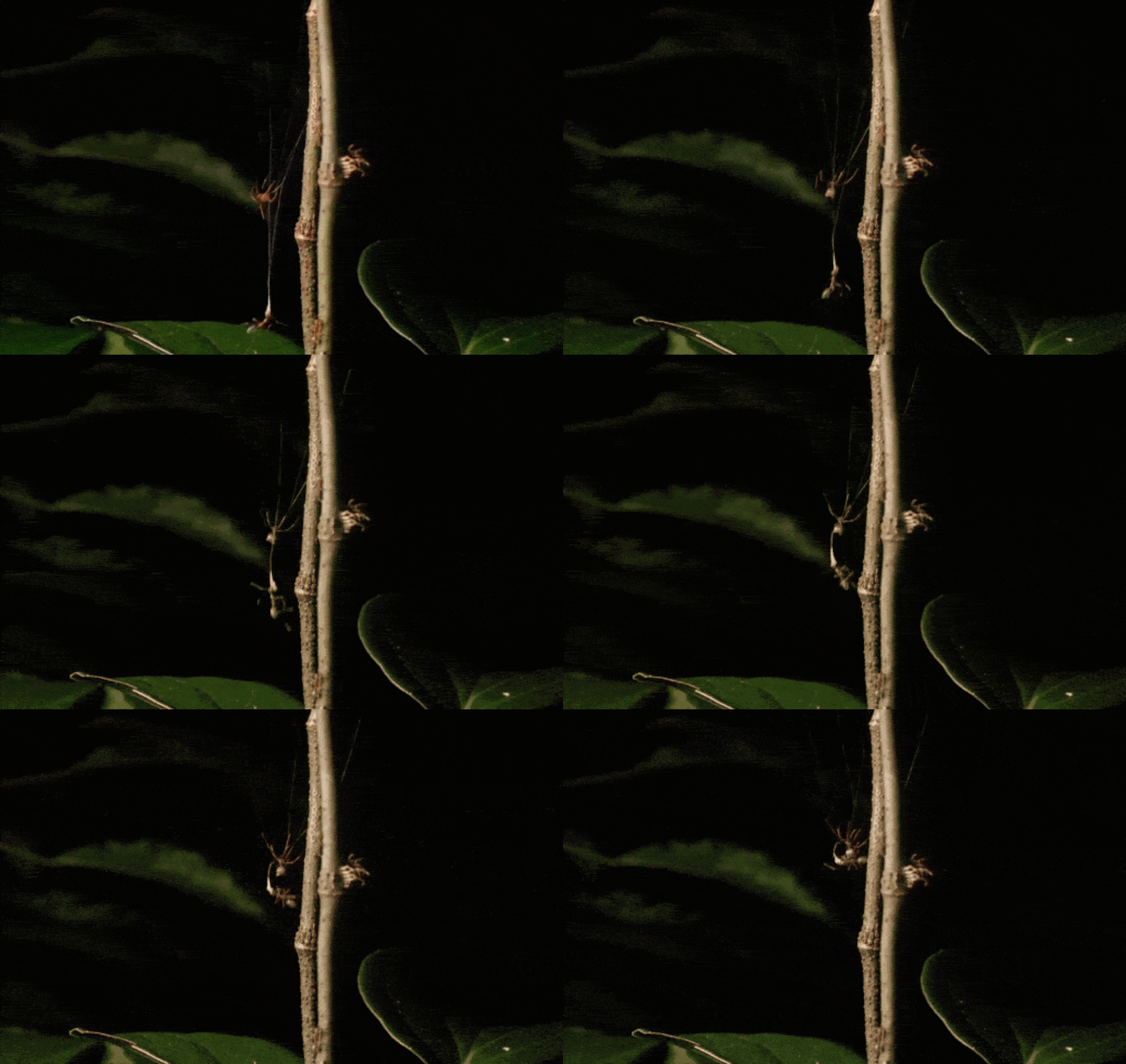
يستخدم هذا العنكبوت الأسترالي الصغير منجنيقاً شبكياً عالي الطاقة لاصطياد النمل العدواني وأكله.
This tiny Australian spider uses a high-powered web catapult to trap and eat aggressive ants
The ballista spider only feeds on extremely fierce green tree ants – so it has evolved sophisticated tools to safely catch its prey.
يتغذى عنكبوت الباليستا فقط على النمل الشجري الأخضر شديد القوة، ولذلك فقد طوّر أدوات متطورة للإمساك بفريسته بأمان.
There’s more than one way a spider can spin its web. Some construct large vertical orb webs, while others build horizontal sheet webs or tangled cobwebs that ensnare crawling insects.
هناك أكثر من طريقة يمكن للعنكبوت أن ينسج بها شبكته. يبني بعضها شباكًا كروية عمودية كبيرة، بينما تبني أنواع أخرى شباكًا أفقية أو خيوط عنكبوت متشابكة تصطاد الحشرات الزاحفة.
There’s also more than one way a spider can catch its dinner. Net-casting spiders throw small silk nets over unsuspecting prey, while slingshot spiders use their conical webs like catapults, launching both themselves and the web toward nearby prey.
هناك أيضًا أكثر من طريقة يمكن للعنكبوت أن يصطاد بها عشاءه. ترمي عناكب صب الشباك شبكات حرير صغيرة فوق الفرائس غير المتوقعة، بينما تستخدم عناكب المقلاع شباكها المخروطية مثل المنجنيق، مطلقةً نفسها والشبكة نحو الفرائس القريبة على حد سواء.
In the tropical rainforests of the Cape York Peninsula in Queensland, we discovered a spider with a new hunting strategy: a small nocturnal animal of the genus Propostira which we call the ballista spider.
في الغابات المطيرة الاستوائية في شبه جزيرة كيب يورك بولاية كوينزلاند، اكتشفنا عنكبوتاً بأسلوب صيد جديد: حيوان ليلي صغير من جنس Propostira نطلق عليه اسم عنكبوت المنجنيق (ballista spider) .
As we describe in a paper published today in Current Biology, it constructs a unique spring-loaded snare triggered only by a single kind of prey: the highly territorial and aggressive green tree ant (Oecophylla smaragdina) .
كما نصف في ورقة بحثية نُشرت اليوم في مجلة “Current Biology”، فإنه يبني مصيدة فريدة مشحونة بالنابض، لا يتم تفعيلها إلا بواسطة نوع واحد من الفرائس: النمل الشجري الأخضر العدواني والمناطقّي (Oecophylla smaragdina) .
How the ballista spider catches ants
كيف تصطاد عنكبوت الباليستا النمل
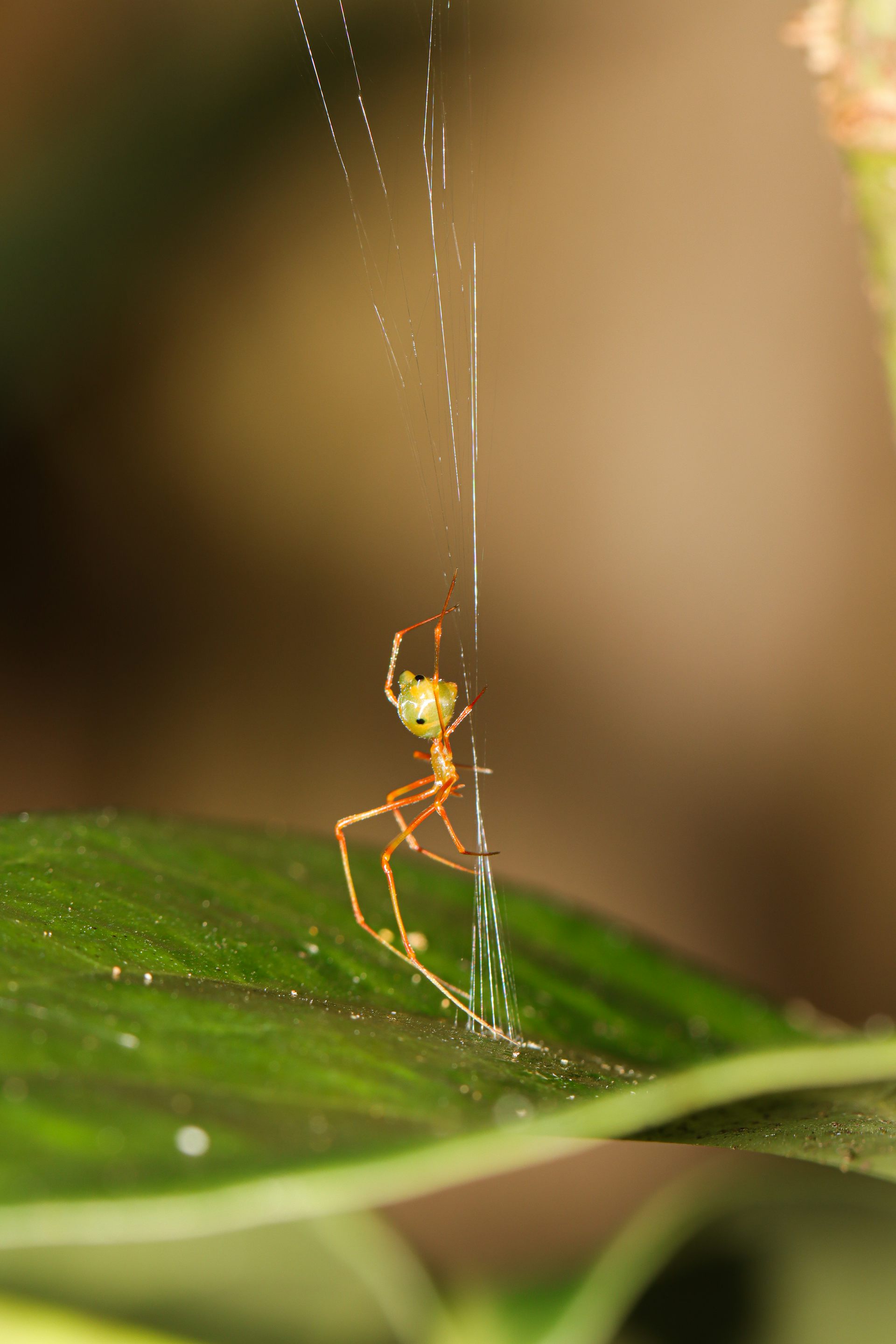
During the day, this spider rests within a silken retreat on the underside of leaves. As the night unfolds, the spider slowly descends on a silk line until it finds a suitable structure on which to lay an anchor point.
خلال النهار، يستريح هذا العنكبوت داخل مأوى حريري على الجانب السفلي من الأوراق. ومع حلول الليل، ينزل العنكبوت ببطء على خيط حرير حتى يجد بنية مناسبة لترك نقطة تثبيت.
Next it returns to the core web, leaving a “tension line” behind it, and repeats the process with incredible precision to build a fan-shaped web of silk tension lines. This gradually leads to the formation of a small conical scaffold which the spider then wraps in a thinner kind of silk before retreating to the core web.
بعد ذلك، يعود إلى الشبكة الأساسية، تاركاً وراءه “خط شد”، ويكرر العملية بدقة مذهلة لبناء شبكة مقوسة من خطوط الشد الحريري. يؤدي هذا تدريجياً إلى تشكيل سقالة مخروطية صغيرة يغلفها العنكبوت بعد ذلك بنوع أرق من الحرير قبل أن يتراجع إلى الشبكة الأساسية.
The thinner silk seems to attract ants and provoke an attack response, possibly by means of pheromones. After the thinner silk is laid, worker green tree ants appear in moments. The ants react aggressively, biting the cone.
يبدو أن الحرير الأرفع يجذب النمل ويحفز استجابة هجوم، ربما عن طريق الفيرومونات. بعد وضع الحرير الأرفع، تظهر نملة الشجرة الخضراء العاملة في لحظات. تتفاعل النملة بعنف، وتقضم المخروط.
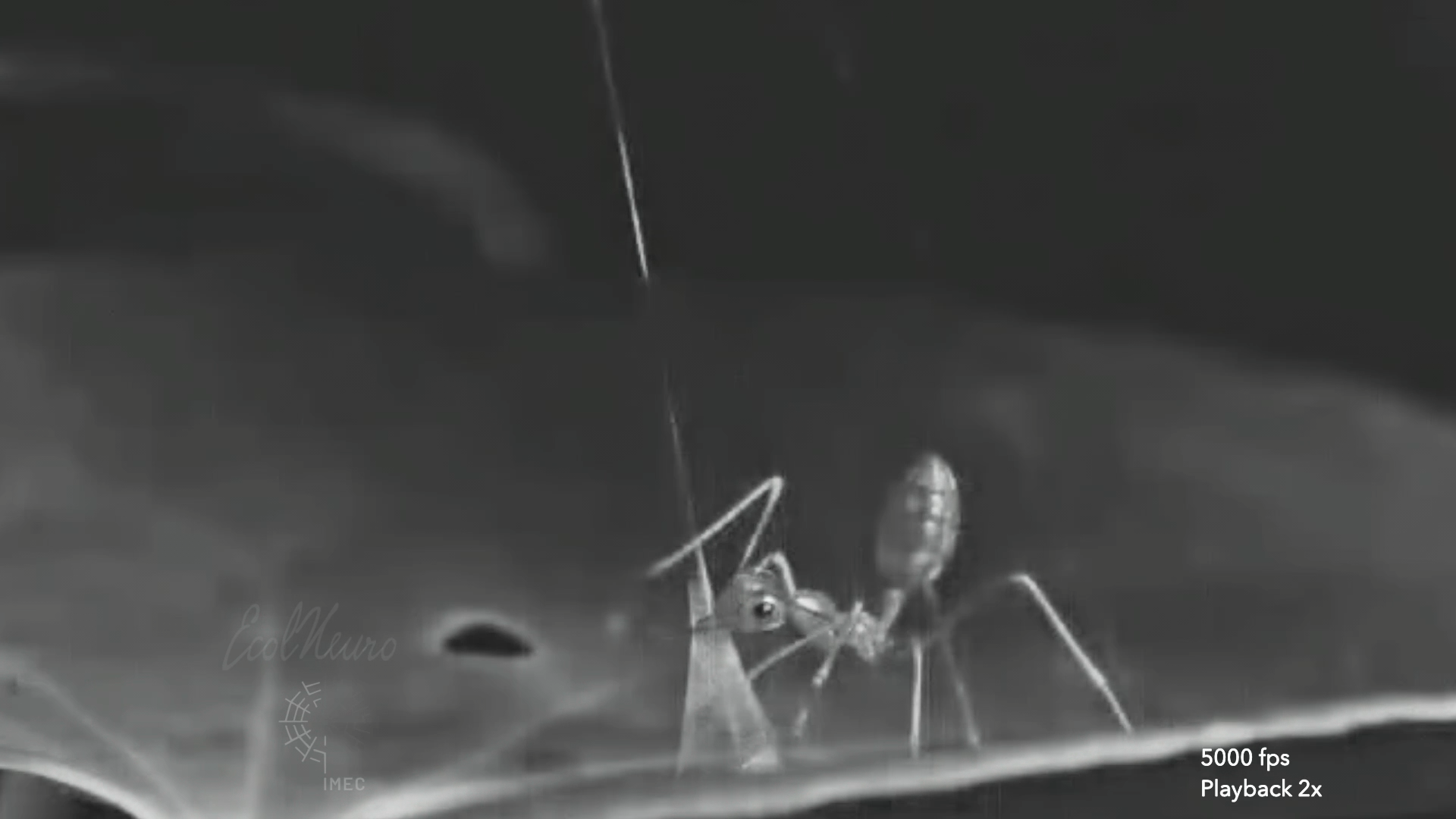
The bite detaches the cone from the surface, and the ant is pulled up and propelled into the core web in a fraction of a second. The ant is hauled off at accelerations of up to 1,367 metres per second squared – that’s roughly 140 times the acceleration due to gravity, or 15 times the most extreme g-forces experienced by jet pilots.
يفصل العض المخروط عن السطح، ويُسحب النمل ويُقذف إلى الشبكة الأساسية في جزء من الثانية. يُجرف النمل بتسارعات تصل إلى 1,367 مترًا في الثانية المربعة – وهو ما يعادل تقريباً 140 ضعفاً لتسارع الجاذبية، أو 15 ضعفاً لأقصى قوى الجاذبية التي يواجهها طيارو الطائرات النفاثة.
The spider waits for the ant to be fully entangled in its web. When it’s safe to approach, the spider wraps the ant in silk until it is ready to eat.
ينتظر العنكبوت حتى تتشابك النملة بالكامل في شبكته. عندما يصبح من الآمن الاقتراب، يلف العنكبوت النملة بالحرير حتى تكون جاهزة للأكل.
A superior system
نظام متفوق
The ballista spider’s snare exhibits superior energy performance compared with other silk-based catapult systems.
يُظهر فخ عنكبوت الباليستا أداءً طاقيًا متفوقًا مقارنة بأنظمة المقلاع الأخرى المعتمدة على الحرير.
Gram for gram, the webs store more energy and exert more power than any known biological catapult. A kilogram of the web would store 78.17 kilojoules of kinetic energy and very briefly exert 11.73 megawatts of power.
من حيث الكيلوغرام، تخزن الشباك طاقة أكبر وتطلق قوة أكبر من أي مقلاع بيولوجي معروف. سيتخزن كيلوغرام واحد من الشبكة 78.17 كيلو جول من الطاقة الحركية ويُطلق لفترة وجيزة جدًا قدرة تبلغ 11.73 ميجاوات.
The exceptionally high power of the ballista spider’s snare has likely evolved to rapidly yank ants away from the vicinity of their nests and trail, where fellow ants might come to their defence.
من المحتمل أن تكون القوة العالية الاستثنائية لفخ عنكبوت الباليستا قد تطورت لسحب النمل بسرعة بعيداً عن محيط أعشاشه ومساره، حيث قد يأتي النمل الرفيق للدفاع عنه.
Extreme specialisation
التخصص الشديد
There are two more unusual things about the ballista spider.
هناك شيئان غريبان آخران حول عنكبوت الباليستا.
First is its extreme specialisation to a single prey species. This suggests the spiders may add specific pheromones to the thin wrapping silk on their snares to attract green tree ants.
الأول هو تخصصه الشديد بنوع واحد من الفرائس. يشير هذا إلى أن العناكب قد تضيف فيرومونات محددة إلى خيوط الحرير الرقيقة على مصائدها لجذب نمل أشجار الخضرة.
Second is that the snare is triggered by the prey itself, rather than the more common situation in which the predator senses the prey and triggers the snare.
الثاني هو أن المصيدة يتم تشغيلها بواسطة الفريسة نفسها، بدلاً من الحالة الأكثر شيوعاً التي يستشعر فيها المفترس الفريسة ويقوم بتشغيل المصيدة.
The ballista spider demonstrates how extreme prey specialisation can drive the evolution of exceptional biomechanical performance.
يُظهر عنكبوت الباليستا كيف يمكن للتخصص الشديد في الفرائس أن يدفع تطور الأداء الميكانيكي الحيوي الاستثنائي.
Ajay Narendra receives funding from Australian Research Council and Herman Slade Foundation.
يتلقى أجاي ناريندرا تمويلاً من مجلس البحوث الأسترالي ومؤسسة هيرمان سْليد.
Read more
-
مضيق هرمز: لماذا تبحر الولايات المتحدة وإيران في مياه قانونية مختلفة جداً
Strait of Hormuz: Why the US and Iran are sailing in very different legal waters
-

هل ضربت فنزويلا بـ “ازدواج” زلزالي؟ إليك ما نعرفه حتى الآن
Was Venezuela struck by an earthquake ‘doublet’? Here’s what we know so far