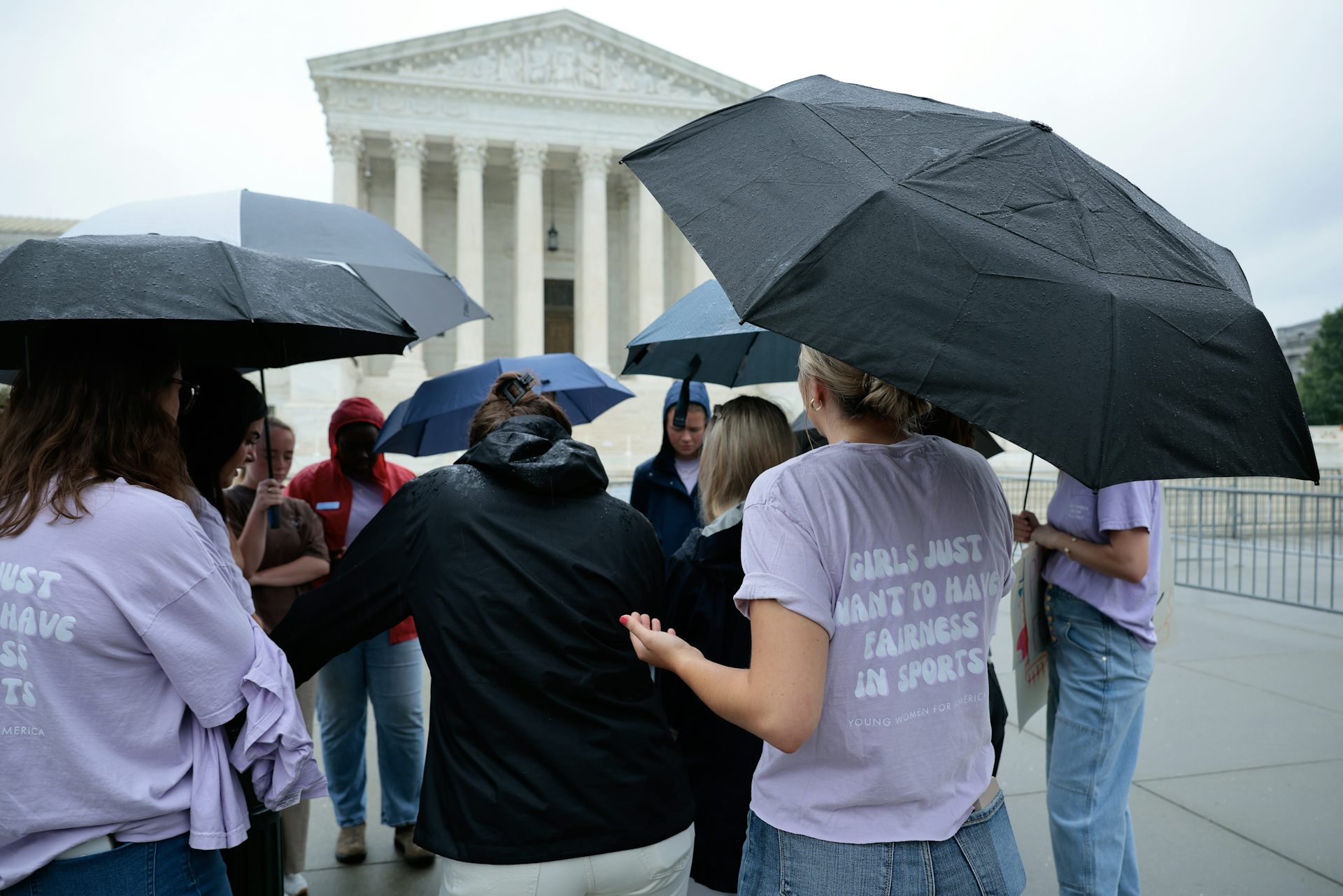
Bagaimana Mahkamah Agung AS memutuskan kasusnya – panduan langkah demi langkah
How the US Supreme Court decides its cases – a step-by-step guide
Grasping how the nation’s highest court makes policy requires stepping into an exceptionally regulated and sometimes hidden routine.
Memahami bagaimana pengadilan tertinggi negara membuat kebijakan memerlukan masuk ke dalam rutinitas yang diatur secara luar biasa dan terkadang tersembunyi.
Each June, the nation turns its attention to the U.S. Supreme Court as it hands down some of its most consequential decisions.
Setiap bulan Juni, bangsa ini memfokuskan perhatiannya pada Mahkamah Agung AS saat mahkamah tersebut mengeluarkan beberapa keputusan paling berdampak.
Long before a landmark Supreme Court ruling dominates the headlines, it is shaped by a highly structured legal process, much of which takes place out of public view. This procedure involves strict gatekeeping rules, a series of private conferences, written briefs, oral arguments and, finally, the announcement of an opinion.
Jauh sebelum putusan Mahkamah Agung yang bersejarah mendominasi berita utama, putusan itu dibentuk oleh proses hukum yang sangat terstruktur, sebagian besar di antaranya terjadi di luar pandangan publik. Prosedur ini melibatkan aturan pengawasan ketat, serangkaian konferensi pribadi, ringkasan tertulis, argumen lisan, dan akhirnya, pengumuman pendapat.
As a legal and Supreme Court scholar, I know that understanding how the nation’s highest court actually makes policy requires stepping into this exceptionally regulated, sometimes hidden routine. It is through this process that the court evaluates, and eventually decides, increasingly high-stakes cultural and political battles.
Sebagai cendekiawan hukum dan Mahkamah Agung, saya tahu bahwa memahami bagaimana pengadilan tertinggi negara ini benar-benar membuat kebijakan memerlukan pemahaman tentang rutinitas yang sangat diatur, terkadang tersembunyi. Melalui proses inilah pengadilan mengevaluasi, dan akhirnya memutuskan, pertempuran budaya dan politik dengan taruhan yang semakin tinggi.
Here’s how it all unfolds:
Inilah cara semuanya berlangsung:
The agenda-setting process
Proses penetapan agenda
The Supreme Court is a reactive institution. This means that it must wait for individuals, businesses, governments and the like to bring cases to the court before it can issue a ruling.
Mahkamah Agung adalah institusi reaktif. Ini berarti bahwa mahkamah harus menunggu individu, bisnis, pemerintah, dan sejenisnya mengajukan kasus ke pengadilan sebelum dapat mengeluarkan putusan.
The way this most commonly works is that the party who loses in a lower court files a writ of certiorari to the Supreme Court. This is a legal document that outlines why the court should review the case. The party who won in the lower court can file a brief in opposition, arguing that the lower court made the right decision and therefore the case does not warrant Supreme Court review.
Cara ini paling umum bekerja adalah pihak yang kalah di pengadilan tingkat rendah mengajukan writ of certiorari kepada Mahkamah Agung. Ini adalah dokumen hukum yang menguraikan mengapa pengadilan harus meninjau kasus tersebut. Pihak yang menang di pengadilan tingkat rendah dapat mengajukan pembelaan tandingan, berargumen bahwa pengadilan tingkat rendah telah membuat keputusan yang benar dan oleh karena itu kasus tersebut tidak memerlukan peninjauan Mahkamah Agung.
Sometimes, interest groups weigh in by filing amicus curiae, or “friend of the court” briefs. Amicus briefs help signal that a case has broad national importance. The court is more likely to review cases accompanied by amicus briefs.
Terkadang, kelompok kepentingan ikut serta dengan mengajukan amicus curiae, atau pembela “teman pengadilan.” Pembela amicus membantu memberi sinyal bahwa suatu kasus memiliki kepentingan nasional yang luas. Mahkamah lebih mungkin meninjau kasus yang disertai dengan pembela amicus.
In recent years, the high court has received about 4,000 of these petitions per term, and it decides less than 80 cases. This means the odds of getting the court to hear any given case are quite small – about 2%.
Dalam beberapa tahun terakhir, mahkamah tinggi telah menerima sekitar 4.000 petisi semacam ini per masa jabatan, dan hanya memutuskan kurang dari 80 kasus. Ini berarti peluang agar pengadilan mendengarkan kasus tertentu cukup kecil – sekitar 2%.
To handle the large volume of petitions, the justices rely heavily on their law clerks. These are young lawyers – typically only a few years out of law school – who write short memos for the justices recommending that they grant or deny each petition.
Untuk menangani volume petisi yang besar, para hakim sangat bergantung pada staf hukum mereka. Mereka adalah pengacara muda – biasanya baru beberapa tahun lulus dari sekolah hukum – yang menulis memo singkat untuk para hakim merekomendasikan apakah setiap petisi harus dikabulkan atau ditolak.
On most Fridays throughout their term, the justices meet to discuss these petitions. This is a private conference with only the nine justices in attendance. Here, the court employs a rule of four: It takes the votes of four out of the nine justices to agree to review a case.
Pada sebagian besar hari Jumat selama masa jabatan mereka, para hakim bertemu untuk membahas petisi-petisi ini. Ini adalah konferensi pribadi dengan hanya sembilan hakim yang hadir. Di sini, pengadilan menerapkan aturan empat suara: Dibutuhkan suara dari empat dari sembilan hakim untuk menyetujui peninjauan kasus.
Following the conference, the court releases its list of cases granted and denied certiorari, known as the orders of the court. For cases denied certiorari, the lower court decision stands. Cases granted certiorari move onto the merits stage.
Setelah konferensi, pengadilan merilis daftar kasus yang dikabulkan dan ditolak certiorari, yang dikenal sebagai perintah pengadilan. Untuk kasus yang ditolak certiorari, keputusan pengadilan tingkat rendah tetap berlaku. Kasus yang dikabulkan certiorari akan bergerak ke tahap pokok perkara (merits stage) .
Legal briefs and oral arguments
Ringkasan Hukum dan Argumen Lisan
The primary way the parties to a case try to persuade the justices is through their legal briefs. The petitioner, who lost in the lower court, tries to convince the justices that the lower court made some sort of legal error that should be reversed. The respondent, the lower court winner, argues that the lower court decision was correct and should be affirmed.
Cara utama pihak-pihak dalam suatu kasus mencoba meyakinkan para hakim agung adalah melalui ringkasan hukum mereka. Pemohon (petitioner) , yang kalah di pengadilan tingkat bawah, berusaha meyakinkan para hakim agung bahwa pengadilan tingkat bawah telah membuat semacam kesalahan hukum yang harus dibatalkan. Termohon (respondent) , pemenang di pengadilan tingkat bawah, berargumen bahwa keputusan pengadilan tingkat bawah sudah benar dan harus dikuatkan.
Interest groups, businesses and other interested entities that aren’t parties to the case can weigh in through a second type of amicus curiae brief. These briefs often highlight the public policy implications of a case, and they provide a way for these groups to pursue their ideological goals.
Kelompok kepentingan, bisnis, dan entitas berkepentingan lain yang bukan pihak dalam kasus dapat memberikan masukan melalui jenis ringkasan amicus curiae kedua. Ringkasan ini sering menyoroti implikasi kebijakan publik dari suatu kasus, dan mereka menyediakan cara bagi kelompok-kelompok ini untuk mengejar tujuan ideologis mereka.
In recent terms, there has been an average of about 16 amicus briefs per case. And some cases see more than 100 amicus briefs, such as in Obergefell v. Hodges, the court’s 2015 same-sex marriage case, which had 148 briefs.
Dalam beberapa waktu terakhir, rata-rata terdapat sekitar 16 ringkasan amicus curiae per kasus. Dan beberapa kasus melihat lebih dari 100 ringkasan amicus curiae, seperti dalam Obergefell v. Hodges, kasus pernikahan sesama jenis pengadilan tahun 2015, yang memiliki 148 ringkasan.
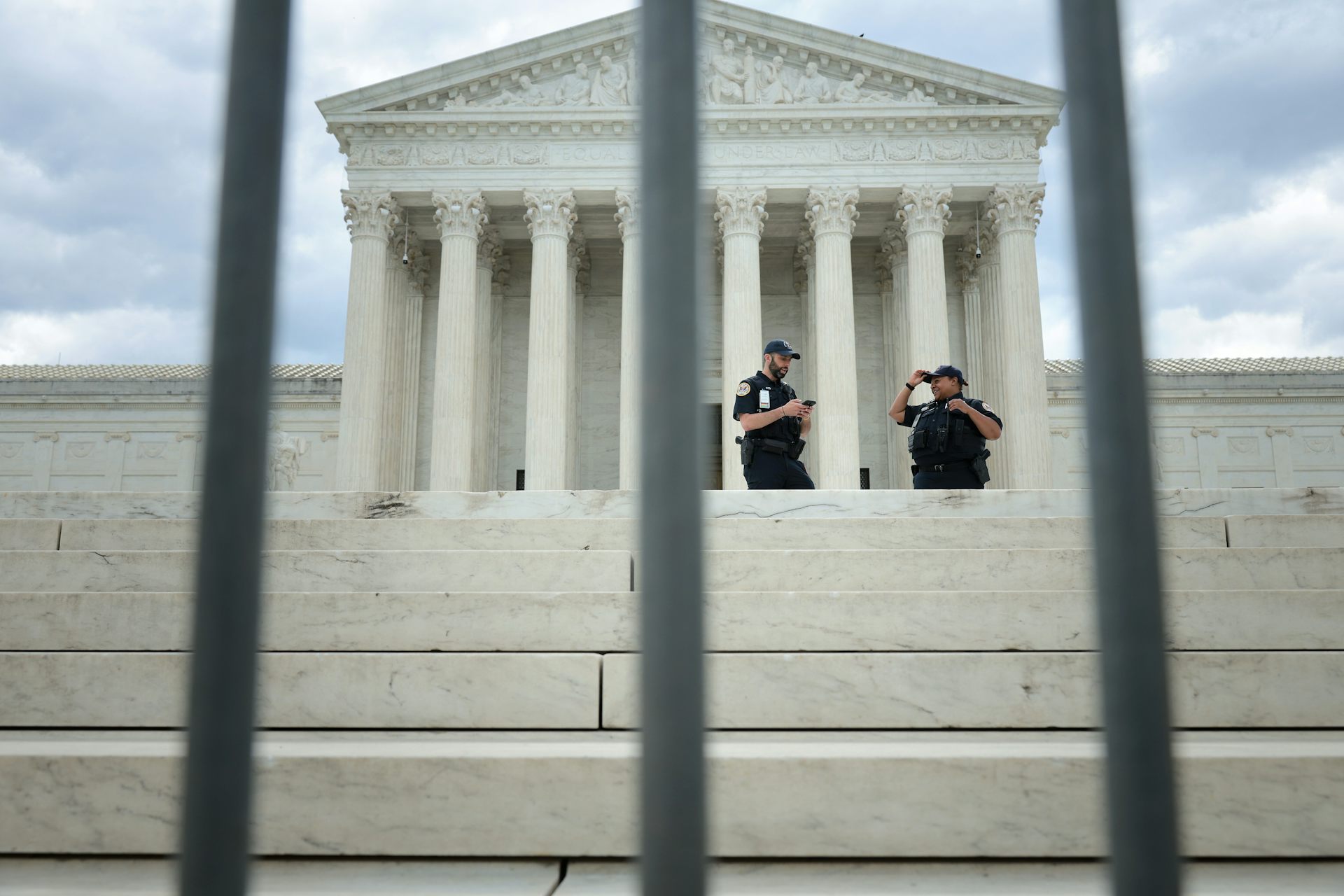
After briefing, oral arguments take place. Most oral arguments take an hour, with the time divided evenly between the petitioner and respondent. During oral arguments, the justices pepper the attorneys with questions and frequently preview how they might vote in the case.
Setelah pemberian ringkasan, argumen lisan berlangsung. Sebagian besar argumen lisan memakan waktu satu jam, dengan waktu yang dibagi rata antara pemohon dan termohon. Selama argumen lisan, para hakim agung mengajukan banyak pertanyaan kepada pengacara dan sering kali memberikan pratinjau bagaimana mereka mungkin akan memilih dalam kasus tersebut.
Conference and votes
Konferensi dan pemungutan suara
A few days after oral arguments, the justices meet again in a private conference to discuss cases and cast preliminary votes. The chief justice speaks first, followed by the rest of the court in order of seniority.
Beberapa hari setelah argumen lisan, para hakim bertemu lagi dalam konferensi pribadi untuk membahas kasus dan memberikan suara awal. Kepala hakim berbicara pertama, diikuti oleh anggota pengadilan lainnya sesuai urutan senioritas.
A majority forms in this conference, although the justices are free to change their votes until the opinion is announced, and occasionally do so.
Mayoritas terbentuk dalam konferensi ini, meskipun para hakim bebas mengubah suara mereka sampai pendapat diumumkan, dan kadang-kadang melakukannya.
Perhaps most importantly, a justice in the majority is assigned to draft the majority opinion. If the chief justice is in the court’s majority, the chief makes the opinion assignment. The chief justice can assign the opinion to another justice in the majority or to himself. If the chief justice is in the minority, the most senior justice in the majority makes the opinion assignment.
Yang mungkin paling penting, seorang hakim di mayoritas ditugaskan untuk menyusun pendapat mayoritas. Jika kepala hakim berada dalam mayoritas pengadilan, kepala hakim yang membuat penugasan pendapat tersebut. Kepala hakim dapat menugaskan pendapat kepada hakim lain di mayoritas atau kepada dirinya sendiri. Jika kepala hakim berada di minoritas, hakim paling senior di mayoritas yang membuat penugasan pendapat tersebut.
Majority opinions typically go through a series of revisions, as justices bargain and negotiate over its content. They do this by providing written feedback to the majority opinion author. If a justice in the court’s initial majority grows unhappy with the content of the draft opinion, they can defect by joining the minority.
Pendapat mayoritas biasanya melalui serangkaian revisi, karena para hakim bernegosiasi dan tawar-menawar mengenai isinya. Mereka melakukan ini dengan memberikan umpan balik tertulis kepada penulis pendapat mayoritas. Jika seorang hakim dalam mayoritas awal pengadilan merasa tidak puas dengan isi draf pendapat, mereka dapat membelot dengan bergabung ke minoritas.
In addition to the majority opinion, justices may write concurring and dissenting opinions. Concurring opinions are written by justices in the majority and are often used to highlight a different legal basis for the court’s decision. Dissenting opinions are written by justices who are in the minority and disagree with the outcome of the case and the majority’s reasoning.
Selain pendapat mayoritas, para hakim dapat menulis pendapat yang setuju dan pendapat yang berbeda. Pendapat yang setuju ditulis oleh hakim di mayoritas dan sering digunakan untuk menyoroti dasar hukum yang berbeda atas keputusan pengadilan. Pendapat yang berbeda ditulis oleh hakim yang berada di minoritas dan tidak setuju dengan hasil kasus serta penalaran mayoritas.
Releasing opinions
Merilis Opini
The final step is the public release and announcement of the court’s opinions. This occurs on a rolling basis throughout the court’s term – from October to late June or early July – but the most important cases usually come down in June.
Langkah terakhir adalah rilis dan pengumuman publik opini dari pengadilan. Hal ini terjadi secara bertahap sepanjang masa jabatan pengadilan – dari Oktober hingga akhir Juni atau awal Juli – tetapi kasus yang paling penting biasanya diputuskan pada bulan Juni.
During opinion announcement, the majority opinion author usually reads a summary of the court’s opinion. On rare occasions, dissenting justices may read from their opinions. Reading a dissent from the bench signals that a justice is particularly unhappy with the majority’s decision.
Selama pengumuman opini, penulis opini mayoritas biasanya membacakan ringkasan opini pengadilan. Pada kesempatan langka, hakim minoritas mungkin membaca pendapat mereka sendiri. Membaca perbedaan pendapat dari bangku hakim menandakan bahwa seorang hakim sangat tidak puas dengan keputusan mayoritas.
For instance, on June 29, 2023, Justice Sonia Sotomayor read from her fiery dissent in Students for Fair Admissions v. Harvard College. In that opinion, Sotomayor criticized the court’s majority for effectively ending affirmative action in college admissions. According to Sotomayor, affirmative action programs are constitutional because they help to achieve the 14th Amendment’s guarantee of racial equality by mitigating the enduring effects of racial discrimination.
Misalnya, pada 29 Juni 2023, Hakim Sonia Sotomayor membacakan perbedaan pendapatnya yang tajam dalam kasus Students for Fair Admissions v. Harvard College. Dalam opini tersebut, Sotomayor mengkritik mayoritas pengadilan karena secara efektif mengakhiri aksi afirmatif dalam penerimaan perguruan tinggi. Menurut Sotomayor, program aksi afirmatif adalah konstitusional karena membantu mencapai jaminan kesetaraan rasial Amandemen ke-14 dengan mengurangi dampak abadi dari diskriminasi rasial.
The blockbuster rulings that dominate the news cycle each June are not sudden flashes of judicial willpower. They are the product of a lengthy and carefully structured process in which thousands of petitions are screened, less than 80 cases are argued, and draft opinions are negotiated and refined behind closed doors. By the time a decision is announced from the bench, it reflects months of legal argument, deliberation and compromise.
Putusan besar yang mendominasi siklus berita setiap bulan Juni bukanlah kilatan tiba-tiba dari kehendak yudisial. Putusan tersebut adalah produk dari proses yang panjang dan terstruktur dengan hati-hati di mana ribuan petisi disaring, kurang dari 80 kasus diperdebatkan, dan draf opini dinegosiasikan serta disempurnakan di balik pintu tertutup. Pada saat keputusan diumumkan dari bangku hakim, itu mencerminkan bulan-bulan argumen hukum, deliberasi, dan kompromi.
Understanding that process helps demystify the court and reveals how nine unelected justices can shape the meaning of the Constitution and, in turn, influence the everyday lives of millions of Americans.
Memahami proses tersebut membantu mendemistifikasi pengadilan dan mengungkapkan bagaimana sembilan hakim yang tidak terpilih dapat membentuk makna Konstitusi dan, pada gilirannya, memengaruhi kehidupan sehari-hari jutaan warga Amerika.
Paul M. Collins Jr. does not work for, consult, own shares in or receive funding from any company or organization that would benefit from this article, and has disclosed no relevant affiliations beyond their academic appointment.
Paul M. Collins Jr. tidak bekerja untuk, berkonsultasi dengan, memiliki saham di, atau menerima pendanaan dari perusahaan atau organisasi mana pun yang akan mendapat manfaat dari artikel ini, dan belum mengungkapkan afiliasi relevan selain jabatan akademiknya.
Read more
-

Piala Dunia dan perdagangan manusia: Apa yang diungkap penelitian tentang risiko nyata di acara olahraga besar
The World Cup and human trafficking: What the research reveals about the real risks at major sporting events