Le premier cas de grippe aviaire H5N1 en Australie a été confirmé. Qu’est-ce que cela signifie ?
The first case of H5N1 bird flu in Australia has been confirmed. What does this mean?
This is not the moment to call defeat. There is a chance we can stop this infectious virus, this time at least.
Ce n’est pas le moment de déclarer la défaite. Il y a une chance que nous puissions arrêter ce virus infectieux, du moins cette fois.
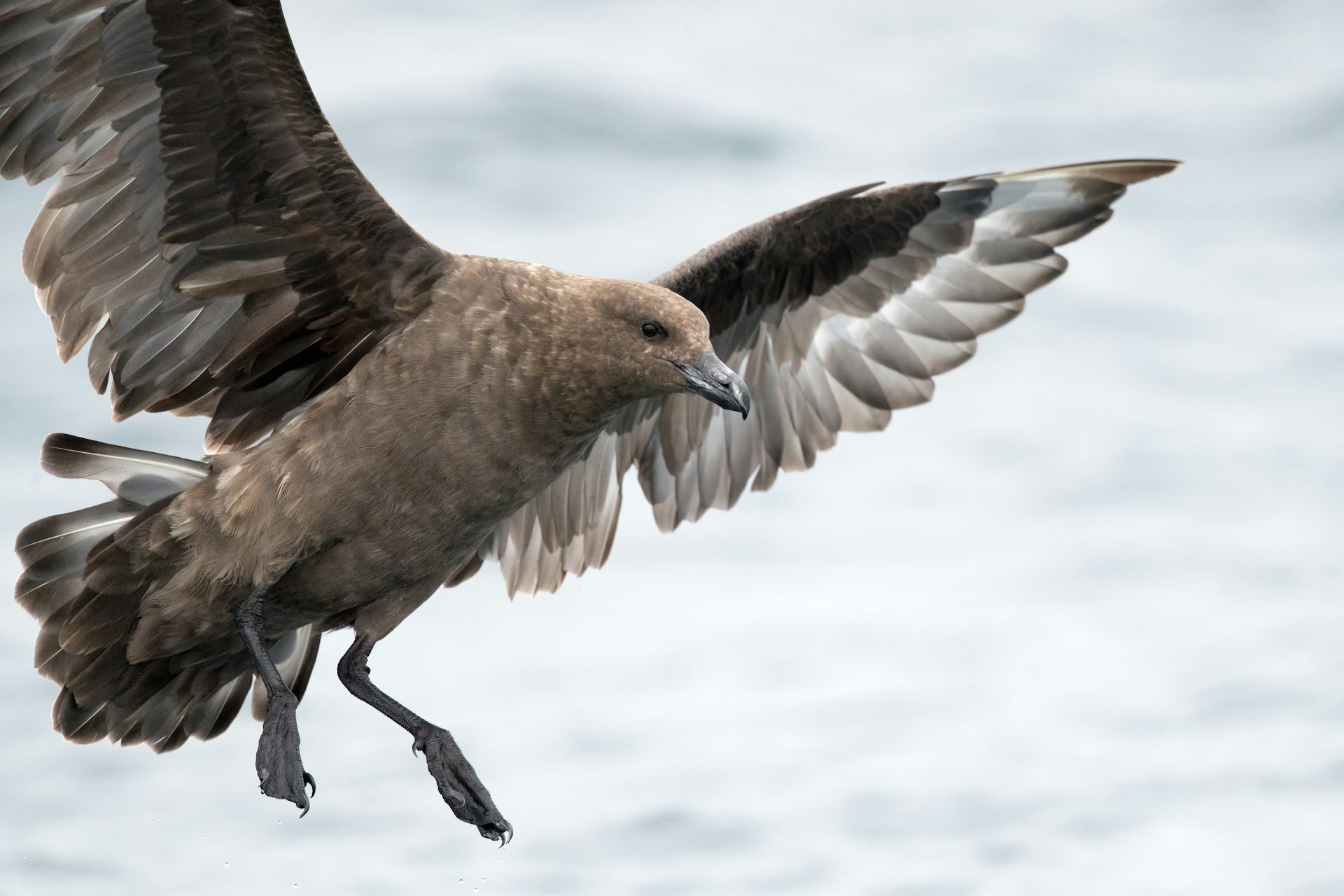
On Saturday, a suspected case of deadly H5 bird flu, also known as high pathogenicity avian influenza (HPAI) H5N1, was confirmed in a brown skua.
Samedi, un cas suspecté de grippe aviaire H5 mortelle, également connue sous le nom d’influenza aviaire à haute pathogénicité (IAPHP) H5N1, a été confirmé chez un skua brun.
This large seabird was found in Cape Le Grand National Park near Esperance, about 700 kilometres south-east of Perth in Western Australia.
Ce grand oiseau marin a été trouvé dans le parc national de Cape Le Grand, près d’Esperance, à environ 700 kilomètres au sud-est de Perth, en Australie Occidentale.
The virus is also suspected to have affected another seabird, a southern giant petrel, found at the same area.
Le virus est également soupçonné d’avoir affecté un autre oiseau marin, un pétrel géant du sud, trouvé dans la même zone.
Following the initial testing, samples collected from these birds were sent to the CSIRO to confirm the first Australian cases of H5N1, specifically the clade 2.3.4.4b H5N1 lineage. Avian influenza viruses are categorised by subtype (creating the H and N number combination, here H5N1) and specific clades within the H5 subtype.
Après les tests initiaux, des échantillons prélevés sur ces oiseaux ont été envoyés au CSIRO pour confirmer les premiers cas australiens de H5N1, spécifiquement la lignée du clade 2.3.4.4b H5N1. Les virus de grippe aviaire sont classés par sous-type (créant la combinaison de numéros H et N, ici H5N1) et des clades spécifiques au sein du sous-type H5.
This virus has devastated wildlife populations in other continents, and this could be the start of a long push to protect Australian birds and wildlife in Australia.
Ce virus a dévasté les populations de faune sauvage sur d’autres continents, et cela pourrait être le début d’un long effort pour protéger les oiseaux et la faune australiens en Australie.
Where did this virus come from?
D’où vient ce virus?
Avian influenza viruses, of which HPAI H5N1 is just one kind, have been around for millenia. In the vast majority of cases they cause no disease in birds. These strains are referred to as low pathogenicity avian influenza viruses.
Les virus de la grippe aviaire, dont le HPAI H5N1 n’est qu’un type, existent depuis des millénaires. Dans l’immense majorité des cas, ils ne provoquent aucune maladie chez les oiseaux. Ces souches sont appelées virus de la grippe aviaire à faible pathogénicité.
However, in 1996 one of these viruses evolved to become disease causing, and since then, this HPAI H5N1 has caused severe disease in poultry, and has become endemic in poultry. With chickens now forming about 70% of all birds worldwide, this is a critical reservoir where the virus continues to evolve.
Cependant, en 1996, l’un de ces virus a évolué pour devenir pathogène, et depuis lors, ce HPAI H5N1 a provoqué des maladies graves chez la volaille, et est devenu endémique dans cette population. Étant donné que les poulets représentent aujourd’hui environ 70 % de tous les oiseaux dans le monde, il s’agit d’un réservoir critique où le virus continue d’évoluer.
The devastating effect of HPAI H5N1 is unfortunately not limited to poultry. Since 2021, HPAI H5N1 has caused a global animal pandemic, with enormous consequences for wildlife in all continents. It has killed millions of wild birds and caused significant drops in the global population of some species. It has also spread into wild and domestic mammals, with various species of seals particularly affected.
L’effet dévastateur du HPAI H5N1 n’est malheureusement pas limité à la volaille. Depuis 2021, le HPAI H5N1 a provoqué une pandémie animale mondiale, avec des conséquences énormes pour la faune de tous les continents. Il a tué des millions d’oiseaux sauvages et causé des déclins significatifs dans la population mondiale de certaines espèces. Il s’est également propagé aux mammifères sauvages et domestiques, diverses espèces de phoques étant particulièrement touchées.
How it spreads
Comment il se propage
Part of the challenge in controlling HPAI H5N1 is that it can spread through a wide range of transmission pathways. For example, the virus typically spreads through faeces, especially when in water. Imagine infected ducks in a pond, where the pond water acts as a conduit to infecting other ducks which are feeding or cleaning themselves.
Une partie du défi dans le contrôle de l’HPAI H5N1 est qu’il peut se propager par un large éventail de voies de transmission. Par exemple, le virus se propage généralement par les fèces, surtout lorsqu’il est dans l’eau. Imaginez des canards infectés dans un étang, où l’eau de l’étang agit comme un conduit pour infecter d’autres canards qui se nourrissent ou se nettoient.
It can also be spread through direct contact and aerosol transmission, particularly in poultry farms. And it is spread through predation and scavenging, where animals like foxes maybe eat the carcasses of infected birds they find.
Il peut également se propager par contact direct et par transmission aéroportée, en particulier dans les fermes avicoles. Et il se propage par prédation et charognage, où des animaux comme les renards peuvent manger les carcasses d’oiseaux infectés qu’ils trouvent.
While it has so far been found in more than 400 different bird species, the spread of HPAI H5N1 in the northern hemisphere is facilitated by freshwater dabbling ducks. Dabbling duck species feed predominantly at the surface of the water, sometimes even grazing on land.
Bien qu’il ait été trouvé jusqu’à présent chez plus de 400 espèces d’oiseaux, la propagation de l’HPAI H5N1 dans l’hémisphère nord est facilitée par les canards plongeurs d’eau douce. Les espèces de canards plongeurs se nourrissent principalement à la surface de l’eau, et parfois même en broutant sur terre.
Importantly, ducks have very limited signs of disease when infected with HPAI H5N1, and appear to be able to continue to migrate while infected, allowing them to potentially spread the virus long distances.
Il est important de noter que les canards présentent des signes de maladie très limités lorsqu’ils sont infectés par l’HPAI H5N1, et semblent être capables de continuer à migrer tout en étant infectés, ce qui leur permet potentiellement de propager le virus sur de longues distances.
Overall, this virus has been devastating for wild birds. For example, 33–47% of all adult northern gannets died in 2022 due to HPAI H5N1. On subantarctic Heard Island, 13,000 baby southern elephant seals died due to HPAI during the 2025–26 summer.
Dans l’ensemble, ce virus a été dévastateur pour les oiseaux sauvages. Par exemple, 33 à 47 % de tous les grands guillemots du Nord sont morts en 2022 en raison de l’HPAI H5N1. Sur l’île Heard subantarctique, 13 000 bébé éléphants de mer du Sud sont morts en raison de l’HPAI pendant l’été 2025-26.
Why has it taken so long to reach Australia?
Pourquoi a-t-il fallu si longtemps pour atteindre l’Australie?
Despite being in Asia since the 1990s, and in Antarctica since 2024, HPAI H5N1 has not been detected in Australia until now. This is likely because there are no duck species which routinely migrate between Australia and Asia, nor are there ducks that migrate through Antarctica.
Bien qu’il soit présent en Asie depuis les années 1990 et en Antarctique depuis 2024, le HPAI H5N1 n’a pas été détecté en Australie jusqu’à présent. Cela est probablement dû au fait qu’il n’existe aucune espèce de canard qui migre régulièrement entre l’Australie et l’Asie, ni aucun canard qui migre à travers l’Antarctique.
Despite the lack of ducks in Antarctica, the virus did arrive there in the summer of 2023–24, and subsequently spread thousands of kilometres through the subantarctic in the summer of 2024–25. Available evidence suggests birds like gulls, skuas and giant petrels may have taken on the role of long distance virus carriers in the Antarctic and subantarctic.
Malgré l’absence de canards en Antarctique, le virus y est arrivé pendant l’été 2023-24, et s’est ensuite propagé sur des milliers de kilomètres à travers le subantarctique durant l’été 2024-25. Les preuves disponibles suggèrent que des oiseaux comme les goélands, les skuas et les pétrels géants ont pu assumer le rôle de vecteurs de virus sur de longues distances en Antarctique et dans le subantarctique.
The various species of skuas and giant petrels that breed in Antarctic waters go on to roam the Southern Ocean, also venturing into the Atlantic, Indian and Pacific Oceans during the southern hemisphere winter. While rarely seen on our shores, these species are not too far offshore, looking for food and occasionally gathering in large groups.
Les différentes espèces de skuas et de pétrels géants qui nichent dans les eaux antarctiques continuent de parcourir l’océan Austral, s’aventurant également dans l’Atlantique, l’océan Indien et le Pacifique pendant l’hiver de l’hémisphère sud. Bien que rarement aperçues sur nos côtes, ces espèces ne sont pas trop loin au large, à la recherche de nourriture et se rassemblant occasionnellement en grands groupes.
Now that HPAI H5N1 has been found on mainland Australia, it will not necessarily establish itself and spread across the continent into other birds and mammals, including livestock.
Maintenant que le HPAI H5N1 a été trouvé sur le continent australien, il ne s’établira pas nécessairement et ne se propagera pas à travers le continent à d’autres oiseaux et mammifères, y compris le bétail.
Given that skuas and giant petrels are marine rather than freshwater species, and do not occur on land in large numbers outside the breeding season, there is still a chance that it may not spread further.
Étant donné que les skuas et les pétrels géants sont des espèces marines plutôt que d’eau douce, et qu’ils ne se trouvent pas en grand nombre sur terre en dehors de la saison de reproduction, il y a encore une chance qu’il ne se propage pas davantage.
The biggest risk is that infected, sick birds are eaten or scavenged by native birds and mammals, which could transmit the virus to ducks.
Le plus grand risque est que des oiseaux malades et infectés soient mangés ou dévorés par des oiseaux et des mammifères indigènes, ce qui pourrait transmettre le virus aux canards.
Try to stop the spread
Tenter d’arrêter la propagation
Once in ducks, the likely spread of the virus increases dramatically, and the outlook would be grim.
Une fois chez les canards, la propagation probable du virus augmente considérablement et les perspectives seraient sombres.
But for now, we are a few critical steps away from that happening. Continued surveillance and testing, being led by Western Australia, is critical to reveal the extent of the virus and whether it has spread to local animals.
Mais pour l’instant, nous sommes à quelques étapes critiques de cette situation. Une surveillance et des tests continus, menés par Western Australia, sont essentiels pour déterminer l’étendue du virus et savoir s’il s’est propagé aux animaux locaux.
Vigilance is key – do not touch or take sick animals into your care. Rather, report suspected cases immediately to the Emergency Animal Disease Hotline on 1800 675 888.
La vigilance est essentielle – ne touchez pas ni n’accueillez d’animaux malades. Au lieu de cela, signalez immédiatement les cas suspects à la Ligne d’urgence des maladies animales au 1800 675 888.
For farmers or people who own chooks, its critical to follow guidelines provided by government departments and report any suspicious mortality.
Pour les agriculteurs ou les personnes qui possèdent des poulets, il est crucial de suivre les directives fournies par les départements gouvernementaux et de signaler toute mortalité suspecte.
Marcel Klaassen receives funding from Wildlife Health Australia, Game Management Authority Victoria, Department of Health WA, Glenelg- Hopkins Catchment Management Authority, National Environmental Science Program (DCCEEW) , Department of Agriculture, Fisheries & Forestry
Marcel Klaassen reçoit un financement de Wildlife Health Australia, Game Management Authority Victoria, Department of Health WA, Glenelg- Hopkins Catchment Management Authority, National Environmental Science Program (DCCEEW) , Department of Agriculture, Fisheries & Forestry.
Meagan Dewar has received funding from Department of the Environment and Energy and the International Association of Antarctica Tour Operators.
Meagan Dewar a reçu un financement du Department of the Environment and Energy et de l’International Association of Antarctica Tour Operators.
Michelle Wille receives funding from the Australian Research Council, Department of Agriculture, Fisheries and Forestry, Wildlife Health Australia, and the CSIRO. In addition to the University of Melbourne, Michelle Wille is also employed at the WHO Collaborating Centre for Reference and Research on Influenza.
Michelle Wille reçoit un financement du Australian Research Council, Department of Agriculture, Fisheries and Forestry, Wildlife Health Australia, et du CSIRO. En plus de l’University of Melbourne, Michelle Wille est également employée au WHO Collaborating Centre for Reference and Research on Influenza.
Read more
-
Les expéditions de l’« île dans le ciel » au Mozambique ont découvert 4 nouvelles espèces de caméléons – déjà menacées par la perte de forêt.
Mozambique ‘sky island’ expeditions found 4 new species of chameleon – already at risk from forest loss
-
Une société de dé-extinction affirme avoir créé un œuf artificiel – si c’est vrai, cela pourrait aider à sauver des espèces vivantes.
De-extinction company says it’s made an artificial egg – if true, it could help save living species