Se ha confirmado el primer caso de gripe aviar H5N1 en Australia. ¿Qué significa esto?
The first case of H5N1 bird flu in Australia has been confirmed. What does this mean?
This is not the moment to call defeat. There is a chance we can stop this infectious virus, this time at least.
Este no es el momento de declarar la derrota. Hay una oportunidad de que podamos detener este virus infeccioso, al menos esta vez.
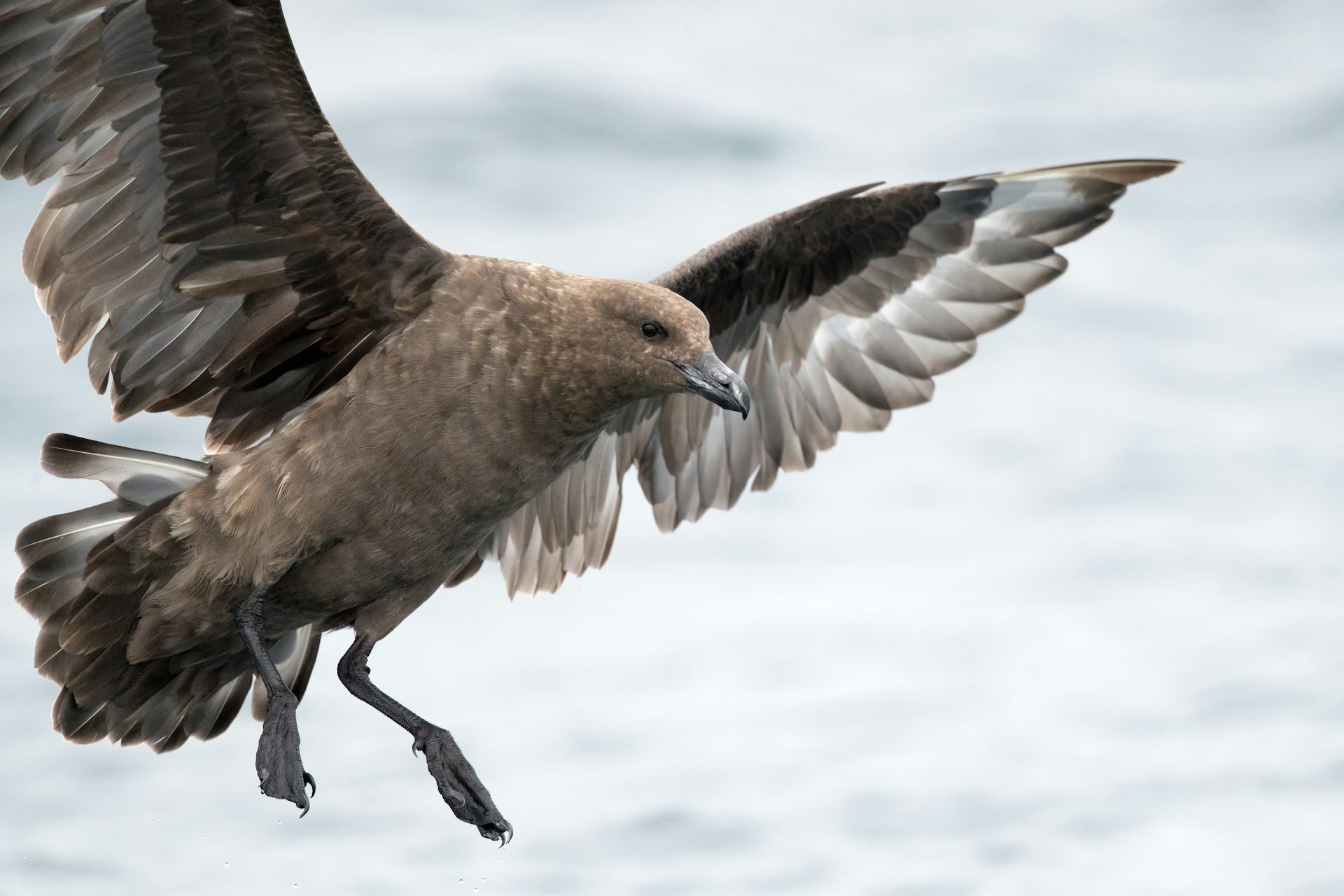
On Saturday, a suspected case of deadly H5 bird flu, also known as high pathogenicity avian influenza (HPAI) H5N1, was confirmed in a brown skua.
El sábado, se confirmó un caso sospechoso de gripe aviar H5 mortal, también conocida como influenza aviar de alta patogenicidad (HPAI) H5N1, en un skua pardo.
This large seabird was found in Cape Le Grand National Park near Esperance, about 700 kilometres south-east of Perth in Western Australia.
Esta gran ave marina fue encontrada en el Parque Nacional Cape Le Grand, cerca de Esperance, a unos 700 kilómetros al sureste de Perth, en Australia Occidental.
The virus is also suspected to have affected another seabird, a southern giant petrel, found at the same area.
También se sospecha que el virus haya afectado a otra ave marina, un petrel gigante austral, encontrada en la misma área.
Following the initial testing, samples collected from these birds were sent to the CSIRO to confirm the first Australian cases of H5N1, specifically the clade 2.3.4.4b H5N1 lineage. Avian influenza viruses are categorised by subtype (creating the H and N number combination, here H5N1) and specific clades within the H5 subtype.
Tras las pruebas iniciales, muestras recolectadas de estas aves fueron enviadas al CSIRO para confirmar los primeros casos australianos de H5N1, específicamente el linaje clado 2.3.4.4b H5N1. Los virus de la gripe aviar se clasifican por subtipo (creando la combinación numérica H y N, aquí H5N1) y clados específicos dentro del subtipo H5.
This virus has devastated wildlife populations in other continents, and this could be the start of a long push to protect Australian birds and wildlife in Australia.
Este virus ha devastado las poblaciones de vida silvestre en otros continentes, y esto podría ser el comienzo de un largo esfuerzo para proteger a las aves y la vida silvestre australianas en Australia.
Where did this virus come from?
¿De dónde vino este virus?
Avian influenza viruses, of which HPAI H5N1 is just one kind, have been around for millenia. In the vast majority of cases they cause no disease in birds. These strains are referred to as low pathogenicity avian influenza viruses.
Los virus de la gripe aviar, de los cuales el HPAI H5N1 es solo uno, han existido durante milenios. En la gran mayoría de los casos no causan enfermedades en las aves. Estas cepas se denominan virus de la gripe aviar de baja patogenicidad.
However, in 1996 one of these viruses evolved to become disease causing, and since then, this HPAI H5N1 has caused severe disease in poultry, and has become endemic in poultry. With chickens now forming about 70% of all birds worldwide, this is a critical reservoir where the virus continues to evolve.
Sin embargo, en 1996 uno de estos virus evolucionó para volverse causante de enfermedades, y desde entonces, este HPAI H5N1 ha causado enfermedades graves en la avicultura, y se ha vuelto endémico en ella. Dado que las gallinas representan ahora alrededor del 70% de todas las aves a nivel mundial, este es un reservorio crítico donde el virus continúa evolucionando.
The devastating effect of HPAI H5N1 is unfortunately not limited to poultry. Since 2021, HPAI H5N1 has caused a global animal pandemic, with enormous consequences for wildlife in all continents. It has killed millions of wild birds and caused significant drops in the global population of some species. It has also spread into wild and domestic mammals, with various species of seals particularly affected.
Desafortunadamente, el efecto devastador del HPAI H5N1 no se limita a la avicultura. Desde 2021, el HPAI H5N1 ha causado una pandemia animal global, con enormes consecuencias para la vida silvestre en todos los continentes. Ha matado a millones de aves silvestres y ha provocado descensos significativos en la población mundial de algunas especies. También se ha propagado a mamíferos salvajes y domésticos, afectando particularmente a varias especies de focas.
How it spreads
Cómo se propaga
Part of the challenge in controlling HPAI H5N1 is that it can spread through a wide range of transmission pathways. For example, the virus typically spreads through faeces, especially when in water. Imagine infected ducks in a pond, where the pond water acts as a conduit to infecting other ducks which are feeding or cleaning themselves.
Parte del desafío para controlar el HPAI H5N1 es que puede propagarse a través de una amplia gama de vías de transmisión. Por ejemplo, el virus típicamente se transmite a través de las heces, especialmente cuando está en el agua. Imagina patos infectados en un estanque, donde el agua del estanque actúa como conducto para infectar a otros patos que están alimentándose o limpiándose.
It can also be spread through direct contact and aerosol transmission, particularly in poultry farms. And it is spread through predation and scavenging, where animals like foxes maybe eat the carcasses of infected birds they find.
También puede propagarse por contacto directo y transmisión por aerosoles, particularmente en granjas avícolas. Y se propaga mediante la depredación y el carroñeo, donde animales como los zorros pueden comer las carcasas de aves infectadas que encuentran.
While it has so far been found in more than 400 different bird species, the spread of HPAI H5N1 in the northern hemisphere is facilitated by freshwater dabbling ducks. Dabbling duck species feed predominantly at the surface of the water, sometimes even grazing on land.
Aunque hasta ahora se ha encontrado en más de 400 especies diferentes de aves, la propagación del HPAI H5N1 en el hemisferio norte es facilitada por patos de superficie de agua dulce. Las especies de patos de superficie se alimentan predominantemente en la superficie del agua, a veces incluso pastando en tierra.
Importantly, ducks have very limited signs of disease when infected with HPAI H5N1, and appear to be able to continue to migrate while infected, allowing them to potentially spread the virus long distances.
Es importante destacar que los patos presentan signos muy limitados de enfermedad cuando están infectados con HPAI H5N1, y parecen ser capaces de seguir migrando mientras están infectados, lo que les permite potencialmente propagar el virus largas distancias.
Overall, this virus has been devastating for wild birds. For example, 33–47% of all adult northern gannets died in 2022 due to HPAI H5N1. On subantarctic Heard Island, 13,000 baby southern elephant seals died due to HPAI during the 2025–26 summer.
En general, este virus ha sido devastador para las aves silvestres. Por ejemplo, entre el 33% y el 47% de todas las gaviotas del norte murieron en 2022 debido al HPAI H5N1. En la isla Heard subantártica, 13.000 crías de elefantes marinos australes murieron debido al HPAI durante el verano de 2025-26.
Why has it taken so long to reach Australia?
¿Por qué ha tardado tanto en llegar a Australia?
Despite being in Asia since the 1990s, and in Antarctica since 2024, HPAI H5N1 has not been detected in Australia until now. This is likely because there are no duck species which routinely migrate between Australia and Asia, nor are there ducks that migrate through Antarctica.
A pesar de estar en Asia desde la década de 1990 y en la Antártida desde 2024, el HPAI H5N1 no se ha detectado en Australia hasta ahora. Esto es probable porque no hay especies de patos que migren rutinariamente entre Australia y Asia, ni tampoco patos que migren a través de la Antártida.
Despite the lack of ducks in Antarctica, the virus did arrive there in the summer of 2023–24, and subsequently spread thousands of kilometres through the subantarctic in the summer of 2024–25. Available evidence suggests birds like gulls, skuas and giant petrels may have taken on the role of long distance virus carriers in the Antarctic and subantarctic.
A pesar de la falta de patos en la Antártida, el virus llegó allí en el verano de 2023-24 y posteriormente se extendió miles de kilómetros a través del subantártico en el verano de 2024-25. La evidencia disponible sugiere que aves como gaviotas, skuas y petreles gigantes pueden haber asumido el papel de portadores de virus de larga distancia en la Antártida y el subantártico.
The various species of skuas and giant petrels that breed in Antarctic waters go on to roam the Southern Ocean, also venturing into the Atlantic, Indian and Pacific Oceans during the southern hemisphere winter. While rarely seen on our shores, these species are not too far offshore, looking for food and occasionally gathering in large groups.
Las diversas especies de skuas y petreles gigantes que se reproducen en aguas antárticas continúan vagando por el Océano Austral, aventurándose también en los océanos Atlántico, Índico y Pacífico durante el invierno del hemisferio sur. Aunque rara vez se ven en nuestras costas, estas especies no están demasiado lejos de la costa, buscando alimento y reuniéndose ocasionalmente en grandes grupos.
Now that HPAI H5N1 has been found on mainland Australia, it will not necessarily establish itself and spread across the continent into other birds and mammals, including livestock.
Ahora que se ha encontrado el HPAI H5N1 en la Australia continental, no necesariamente se establecerá y se propagará por todo el continente a otras aves y mamíferos, incluido el ganado.
Given that skuas and giant petrels are marine rather than freshwater species, and do not occur on land in large numbers outside the breeding season, there is still a chance that it may not spread further.
Dado que las skuas y los petreles gigantes son especies marinas más que de agua dulce, y no aparecen en tierra en grandes números fuera de la temporada de cría, todavía existe la posibilidad de que no se propague más.
The biggest risk is that infected, sick birds are eaten or scavenged by native birds and mammals, which could transmit the virus to ducks.
El mayor riesgo es que las aves enfermas e infectadas sean comidas o carroñeadas por aves y mamíferos nativos, lo que podría transmitir el virus a los patos.
Try to stop the spread
Intentar detener la propagación
Once in ducks, the likely spread of the virus increases dramatically, and the outlook would be grim.
Una vez en los patos, la propagación probable del virus aumenta drásticamente y el panorama sería sombrío.
But for now, we are a few critical steps away from that happening. Continued surveillance and testing, being led by Western Australia, is critical to reveal the extent of the virus and whether it has spread to local animals.
Pero por ahora, estamos a unos pasos críticos de que esto suceda. La vigilancia y las pruebas continuas, lideradas por Australia Occidental, son fundamentales para revelar la extensión del virus y si se ha propagado a animales locales.
Vigilance is key – do not touch or take sick animals into your care. Rather, report suspected cases immediately to the Emergency Animal Disease Hotline on 1800 675 888.
La vigilancia es clave: no toque ni lleve animales enfermos bajo su cuidado. En cambio, informe inmediatamente de casos sospechosos a la Línea Directa de Enfermedades Animales de Emergencia al 1800 675 888.
For farmers or people who own chooks, its critical to follow guidelines provided by government departments and report any suspicious mortality.
Para los agricultores o personas que tienen gallinas, es fundamental seguir las pautas proporcionadas por los departamentos gubernamentales e informar cualquier mortalidad sospechosa.
Marcel Klaassen receives funding from Wildlife Health Australia, Game Management Authority Victoria, Department of Health WA, Glenelg- Hopkins Catchment Management Authority, National Environmental Science Program (DCCEEW) , Department of Agriculture, Fisheries & Forestry
Marcel Klaassen recibe financiación de Wildlife Health Australia, Game Management Authority Victoria, Department of Health WA, Glenelg- Hopkins Catchment Management Authority, National Environmental Science Program (DCCEEW) , Department of Agriculture, Fisheries & Forestry
Meagan Dewar has received funding from Department of the Environment and Energy and the International Association of Antarctica Tour Operators.
Meagan Dewar ha recibido financiación del Departamento de Medio Ambiente y Energía y la Asociación Internacional de Operadores Turísticos de la Antártida.
Michelle Wille receives funding from the Australian Research Council, Department of Agriculture, Fisheries and Forestry, Wildlife Health Australia, and the CSIRO. In addition to the University of Melbourne, Michelle Wille is also employed at the WHO Collaborating Centre for Reference and Research on Influenza.
Michelle Wille recibe financiación del Consejo Australiano de Investigación, el Departamento de Agricultura, Pesca y Silvicultura, Wildlife Health Australia y el CSIRO. Además de la Universidad de Melbourne, Michelle Wille también está empleada en el Centro Colaborador de la OMS para Referencia e Investigación sobre Influenza.
Read more
-

¿Para qué sirve la educación? Por qué el nuevo drama coreano Teach You a Lesson está en lo más alto de las listas
What is education for? Why new Korean drama Teach You a Lesson is topping the charts