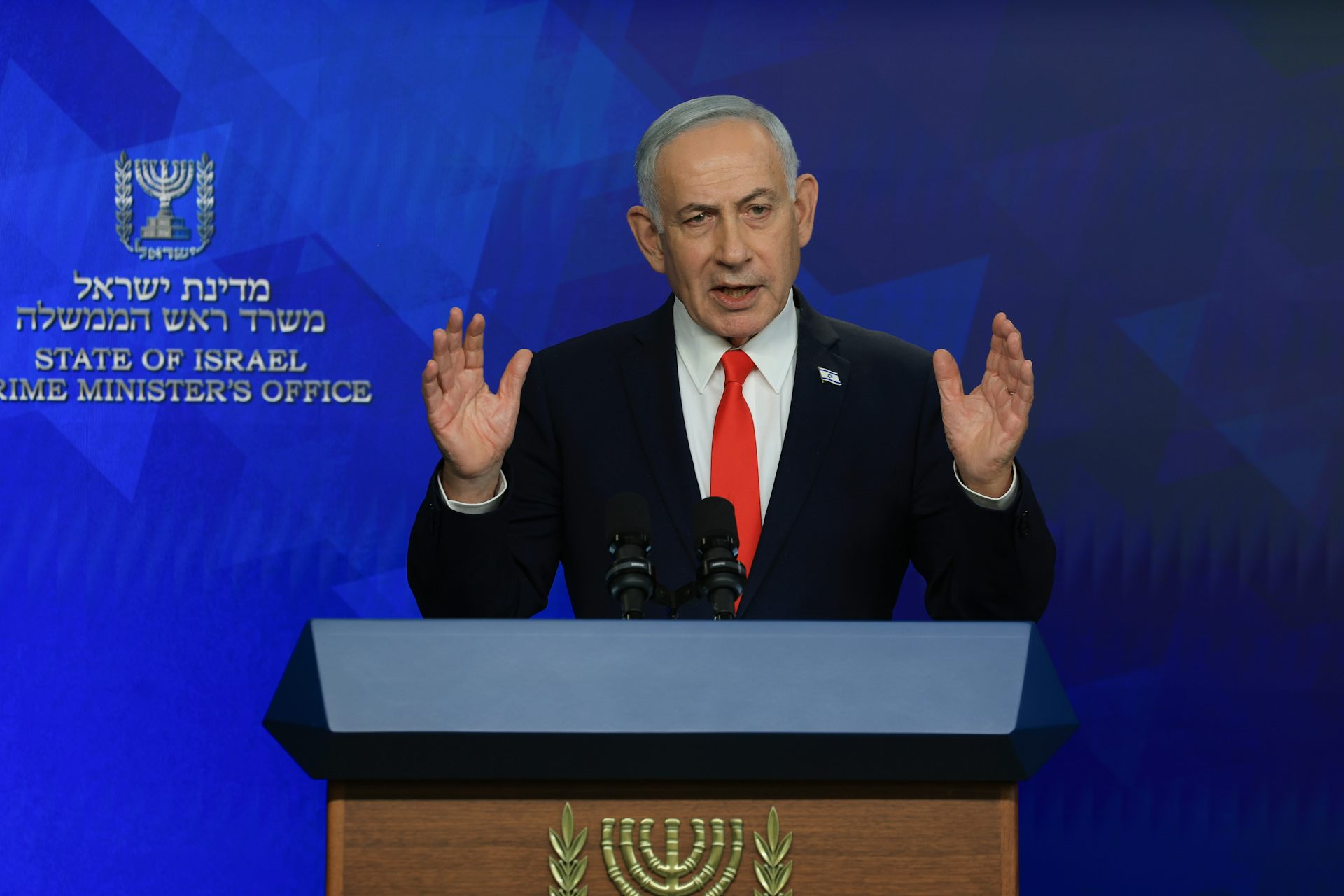
Com o Irã e os EUA assinando um acordo de paz, em que situação fica Benjamin Netanyahu?
With Iran and the US signing a peace deal, where does that leave Benjamin Netanyahu?
The Israeli prime minister faces an invidious choice in an election year: kowtow to a powerful ally, or risk displeasure at home by ending the war with Hezbollah.
O primeiro-ministro israelense enfrenta um dilema em um ano eleitoral: curvar-se a um aliado poderoso ou arriscar o descontentamento interno ao acabar com a guerra contra o Hezbollah.
The peace deal between the US and Iran calls not just for the cessation of hostilities between the two countries, but also between Israel and Hezbollah. It also calls for Lebanese territorial integrity and sovereignty to be respected.
O acordo de paz entre os EUA e o Irã pede não apenas a cessação das hostilidades entre os dois países, mas também entre Israel e o Hezbollah. Ele também exige que a integridade e a soberania do Líbano sejam respeitadas.
This places Israeli Prime Minister Benjamin Netanyahu in a political conundrum, because ceasing hostilities against Hezbollah runs contrary to his government’s determination to finally crush its nemesis.
Isso coloca o Primeiro-Ministro israelense Benjamin Netanyahu em um dilema político, porque cessar as hostilidades contra o Hezbollah contraria a determinação de seu governo de finalmente esmagar seu adversário.
Netanyahu now faces difficult decisions. Does he kowtow to the US, Israel’s longstanding ally and security guarantor, in an election year? Or does he defy the US and continue Israel’s military onslaught against Hezbollah?
Netanyahu agora enfrenta decisões difíceis. Ele deve se curvar aos EUA, aliado e garantidor de segurança de longa data de Israel, em um ano eleitoral? Ou ele desafia os EUA e continua a ofensiva militar de Israel contra o Hezbollah?
An answer to these questions seemed to come in part on June 19, when Israel and Hezbollah agreed on yet another ceasefire. However, the next day Israel bombed Lebanon, and Iran once again closed the Strait of Hormuz.
Uma resposta a essas perguntas parece ter surgido em parte em 19 de junho, quando Israel e o Hezbollah concordaram com mais um cessar-fogo. No entanto, no dia seguinte, Israel bombardeou o Líbano, e o Irã fechou novamente o Estreito de Ormuz.
Elections at home
Eleições em casa
Since the beginning of Israel’s current war against Hezbollah in March 2026, the Israeli Defence Force (IDF) has advanced into southern and eastern Lebanon. In the process, the IDF has pushed Hezbollah out of its traditional strongholds and bombed targets in southern Beirut.
Desde o início da guerra atual de Israel contra o Hezbollah em março de 2026, as Forças de Defesa de Israel (FDI) avançaram para o sul e leste do Líbano. Nesse processo, as FDI expulsaram o Hezbollah de seus redutos tradicionais e bombardearam alvos no sul de Beirute.
To date, the war has killed more than 4,000 Lebanese people and forced another 1 million to flee their homes. On June 1, IDF units captured the strategically important Beaufort Castle, allowing the IDF to control most of southern Lebanon, including Hezbollah strongholds in the Bekaa Valley in eastern Lebanon.
Até o momento, a guerra matou mais de 4.000 libaneses e forçou mais 1 milhão a fugir de suas casas. Em 1º de junho, unidades das FDI capturaram o estrategicamente importante Castelo Beaufort, permitindo que as FDI controlassem a maior parte do sul do Líbano, incluindo os redutos do Hezbollah no Vale do Bekaa, no leste do Líbano.
Within the areas it now occupies, the IDF has issued “don’t come back” orders, forcibly displacing thousands of Lebanese residents from their homes. On June 15, Israeli Defence Minister Israel Katz stated, “Israeli forces will remain in the security zones in Lebanon, Syria, and Gaza without any time limit” and the zones “would be cleared of local residents and all terror infrastructure including the houses”.
Dentro das áreas que agora ocupa, as FDI emitiram ordens de “não retornar”, deslocando à força milhares de residentes libaneses de suas casas. Em 15 de junho, o Ministro da Defesa de Israel, Israel Katz, declarou: “As forças israelenses permanecerão nas zonas de segurança no Líbano, Síria e Gaza sem limite de tempo” e que as zonas “seriam desocupadas por residentes locais e toda a infraestrutura terrorista, incluindo casas”.
The war is immensely popular in Israel. An April 2026 poll revealed 80% of respondents favoured continuing the war against Hezbollah, even if that created friction with the US. The war’s popularity is crucial for Netanyahu, with national elections due to be held by October. He is desperate to win another term as prime minister to forestall his long-running corruption trial and stifle debates over his culpability for the intelligence failures that lead to Hamas’s devastating October 7 attacks.
A guerra é imensamente popular em Israel. Uma pesquisa de abril de 2026 revelou que 80% dos entrevistados favoreciam continuar a guerra contra o Hezbollah, mesmo que isso criasse atrito com os EUA. A popularidade da guerra é crucial para Netanyahu, com eleições nacionais previstas para outubro. Ele está desesperado para vencer mais um mandato como primeiro-ministro para evitar seu longo processo de corrupção e sufocar debates sobre sua culpa pelos fracassos de inteligência que levaram aos devastadores ataques do Hamas em 7 de outubro.
In their aftermath, Netanyahu vowed to dramatically change the political landscape of the Middle East. He did this with wars on Hamas, Iran, and Hezbollah.
Após esses eventos, Netanyahu prometeu mudar drasticamente o cenário político do Oriente Médio. Ele fez isso com guerras contra o Hamas, Irã e Hezbollah.
But while these wars have significantly degraded the ability of his nemeses to threaten Israel, they have not been defeated as promised. This means while Netanyahu has indeed changed the political landscape of the Middle East, his wars have arguably made Israel less, rather than more, secure.
Mas embora essas guerras tenham degradado significativamente a capacidade de seus nemeses de ameaçar Israel, eles não foram derrotados como prometido. Isso significa que, embora Netanyahu tenha realmente mudado o cenário político do Oriente Médio, suas guerras tornaram Israel menos, em vez de mais, seguro.
Criticism of Netanyahu’s handling of these wars has been growing, with Opposition politician Yair Golan declaring:
A crítica ao manejo dessas guerras por parte de Netanyahu tem crescido, com o político da Oposição Yair Golan declarando:
Netanyahu lied. He promised a historic victory and security for generations, and in practice, we got one of the most severe strategic failures Israel has ever known.
Netanyahu mentiu. Ele prometeu uma vitória histórica e segurança para gerações, e na prática, recebemos um dos fracassos estratégicos mais graves que Israel já conheceu.
Netanyahu needs continuing military successes in Lebanon to sustain his narrative that he is making Israel safer by defeating its enemies.
Netanyahu precisa de sucessos militares contínuos no Líbano para sustentar sua narrativa de que está tornando Israel mais seguro ao derrotar seus inimigos.
Elections abroad
Eleições no exterior
However, US President Donald Trump is also facing an unfavourable domestic political environment in the lead up to US mid-term elections. Trump needs an end to an unpopular war to try to create a positive political narrative to stave off potentially losing control of the House and the Senate.
No entanto, o presidente dos EUA, Donald Trump, também enfrenta um ambiente político doméstico desfavorável na reta final das eleições de meio de mandato nos EUA. Trump precisa do fim de uma guerra impopular para tentar criar uma narrativa política positiva e evitar potencialmente perder o controle da Câmara e do Senado.
He does not want Israeli truculence to make already tense negotiations with Iran harder. For their part, the Iranians have made the cessation of Israel’s war on Hezbollah and its withdrawal from southern Lebanon the central issue in deciding whether to continue negotiating with the US. This is why Iran again closed the vital Strait of Hormuz after Israel bombed Lebanon on the weekend.
Ele não quer que a truculência israelense dificulte negociações já tensas com o Irã. Por sua vez, os iranianos tornaram o cessar-fogo da guerra de Israel contra o Hezbollah e seu retirada do sul do Líbano a questão central para decidir se continuarão negociando com os EUA. É por isso que o Irã fechou novamente o vital Estreito de Ormuz depois que Israel bombardeou o Líbano no fim de semana.
So while Israel and the US may be allies, it is not an equal relationship. The geopolitical needs and desires of the US as the great power will always eclipse those of Israel as the middle power.
Assim, embora Israel e os EUA possam ser aliados, não é um relacionamento igualitário. As necessidades e desejos geopolíticos dos EUA como grande potência sempre ofuscarão aqueles de Israel como potência média.
Therefore, as prime ministerial aspirant Yair Lapid, puts it, Netanyahu faces “either a direct and destructive confrontation with our greatest ally or a submissive surrender of Israeli interests”.
Portanto, como o aspirante a primeiro-ministro Yair Lapid afirma, Netanyahu enfrenta “ou um confronto direto e destrutivo com nosso maior aliado ou uma rendição submissa dos interesses israelenses.”
Evidence of how strained the relationship between Trump and Netanyahu is came just before the president signed the Memorandum of Understanding (MoU) with Iran. Trump castigated Netanyahu for ordering the bombing of Hezbollah targets in southern Beirut. He later suggested Syria would do a better job at fighting Hezbollah stating:
Evidências de quão tensa é a relação entre Trump e Netanyahu surgiram pouco antes de o presidente assinar o Memorando de Entendimento (MoU) com o Irã. Trump censurou Netanyahu por ordenar o bombardeio de alvos do Hezbollah no sul de Beirute. Mais tarde, ele sugeriu que a Síria faria um trabalho melhor ao lutar contra o Hezbollah, afirmando:
I’m not happy with the way Israel has handled themselves with Lebanon and with Hezbollah. It just goes on forever and it throws a negative light on the big deal, and that’s the deal with Iran.
“Não estou satisfeito com a maneira como Israel se comportou com o Líbano e com o Hezbollah. Isso continua para sempre e lança uma luz negativa no grande negócio, e esse é o acordo com o Irã.”
Despite the president’s frustrations there has been push-back from senior Israeli ministers. National Security Minister Ben Gvir said:
Apesar das frustrações do presidente, houve resistência de ministros israelenses sêniores. O Ministro da Segurança Nacional, Ben Gvir, disse:
The prime minister should have told President Trump: We appreciate you, but Israel is a sovereign and independent state that cannot accept the strengthening, or even the existence, of a terrorist organisation on its borders.
“O primeiro-ministro deveria ter dito ao presidente Trump: Nós o apreciamos, mas Israel é um estado soberano e independente que não pode aceitar o fortalecimento, ou mesmo a existência, de uma organização terrorista em suas fronteiras.”
In response US Vice President JD Vance stated bluntly that Israeli critics of the US-Iran deal, “need to wake up and smell the reality of the situation that country is in”.
Em resposta, o vice-presidente dos EUA, J.D. Vance, declarou sem rodeios que os críticos israelenses do acordo EUA-Irã “precisam acordar e sentir a realidade da situação em que o país se encontra”.
In other words, Israel needs the US more than the US needs Israel. Israel relies on US financial and military support for its security, with the two allies recently signing their own MoU that guarantees the US giving Israel US$3.8 billion per year, including US$500 million for missile defence.
Em outras palavras, Israel precisa dos EUA mais do que os EUA precisam de Israel. Israel depende do apoio financeiro e militar dos EUA para sua segurança, com os dois aliados tendo assinado recentemente seu próprio MoU que garante que os EUA fornecerão a Israel US$ 3,8 bilhões por ano, incluindo US$ 500 milhões para defesa antimísseis.
Israel also needs ongoing US diplomatic support to shield it from any future United Nations Security Council (UNSC) sanctions. These may come from the concurrent investigations by the International Court of Justice (ICJ) and International Criminal Court (ICC) into allegations of Israel committing genocide, war crimes, and crimes against humanity in its wars against Hamas and Hezbollah.
Israel também precisa do apoio diplomático contínuo dos EUA para protegê-lo de quaisquer futuras sanções do Conselho de Segurança das Nações Unidas (CSNU) . Estas podem vir das investigações simultâneas do Tribunal Internacional de Justiça (TIJ) e do Tribunal Penal Internacional (TPI) sobre alegações de Israel cometer genocídio, crimes de guerra e crimes contra a humanidade em suas guerras contra o Hamas e o Hezbollah.
The situation in Lebanon remains highly volatile, the Israeli people are due to cast their votes before October, and the US is finalising a deal with Iran that will likely run contrary to Israel’s interests. The question now is what Israel is going to do about it.
A situação no Líbano permanece altamente volátil, o povo israelense deve votar antes de outubro, e os EUA estão finalizando um acordo com o Irã que provavelmente irá contrariar os interesses de Israel. A questão agora é o que Israel fará a respeito.
Martin Kear does not work for, consult, own shares in or receive funding from any company or organisation that would benefit from this article, and has disclosed no relevant affiliations beyond their academic appointment.
Martin Kear não trabalha para, não consulta, não possui ações em ou recebe financiamento de nenhuma empresa ou organização que se beneficiaria deste artigo, e não divulgou afiliações relevantes além do seu cargo acadêmico.
Read more
-
Desesperado com o estado do mundo? Os antigos gregos e romanos conheciam esse sentimento
Despairing at the state of the world? The ancient Greeks and Romans knew the feeling
-
Jeremy Clarkson tem câncer de próstata agressivo. Mas o que torna alguns cânceres mais agressivos do que outros?
Jeremy Clarkson has aggressive prostate cancer. But what makes some cancers more aggressive than others?