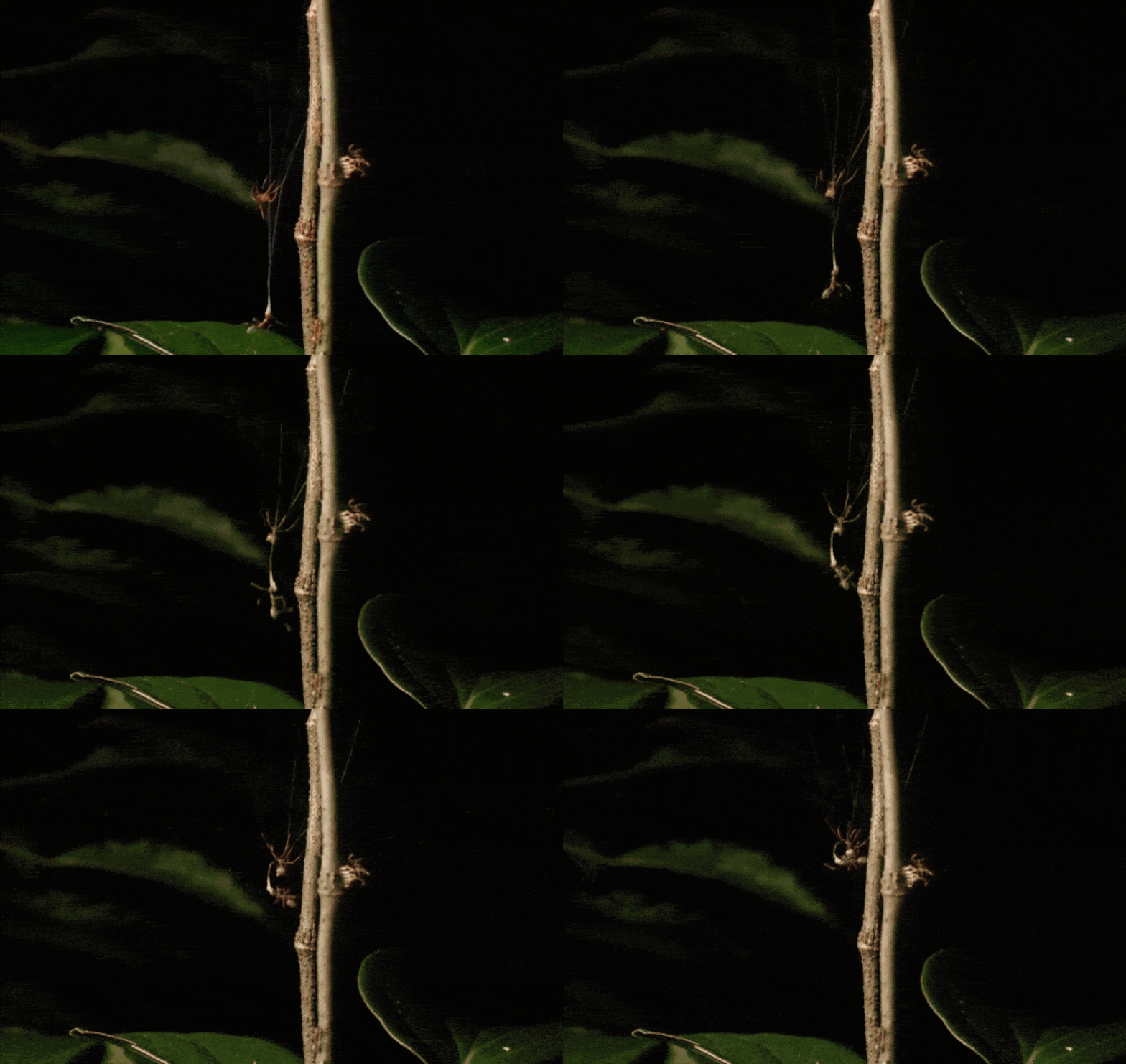
Laba-laba Australia kecil ini menggunakan katapel jaring bertenaga tinggi untuk menjebak dan memakan semut agresif
This tiny Australian spider uses a high-powered web catapult to trap and eat aggressive ants
The ballista spider only feeds on extremely fierce green tree ants – so it has evolved sophisticated tools to safely catch its prey.
Laba-laba ballista hanya makan semut pohon hijau yang sangat ganas – jadi ia telah mengembangkan alat canggih untuk menangkap mangsanya dengan aman.
There’s more than one way a spider can spin its web. Some construct large vertical orb webs, while others build horizontal sheet webs or tangled cobwebs that ensnare crawling insects.
Ada lebih dari satu cara seekor laba-laba dapat menenun jaringnya. Beberapa membangun jaring bola vertikal besar, sementara yang lain membuat jaring lembaran horizontal atau sarang laba-laba kusut yang menjerat serangga merayap.
There’s also more than one way a spider can catch its dinner. Net-casting spiders throw small silk nets over unsuspecting prey, while slingshot spiders use their conical webs like catapults, launching both themselves and the web toward nearby prey.
Ada juga lebih dari satu cara seekor laba-laba dapat menangkap makanannya. Laba-laba penembak jaring melemparkan jaring sutra kecil di atas mangsa yang tidak curiga, sementara laba-laba ketapel menggunakan jaring kerucut mereka seperti katapel, meluncurkan diri mereka sendiri dan jaring ke arah mangsa terdekat.
In the tropical rainforests of the Cape York Peninsula in Queensland, we discovered a spider with a new hunting strategy: a small nocturnal animal of the genus Propostira which we call the ballista spider.
Di hutan hujan tropis Semenanjung Cape York di Queensland, kami menemukan laba-laba dengan strategi berburu baru: hewan nokturnal kecil dari genus Propostira yang kami sebut laba-laba ballista.
As we describe in a paper published today in Current Biology, it constructs a unique spring-loaded snare triggered only by a single kind of prey: the highly territorial and aggressive green tree ant (Oecophylla smaragdina) .
Seperti yang kami jelaskan dalam makalah yang diterbitkan hari ini di Current Biology, laba-laba ini membangun perangkap pegas unik yang hanya dipicu oleh satu jenis mangsa: semut pohon hijau (Oecophylla smaragdina) yang sangat teritorial dan agresif.
How the ballista spider catches ants
Bagaimana laba-laba ballista menangkap semut
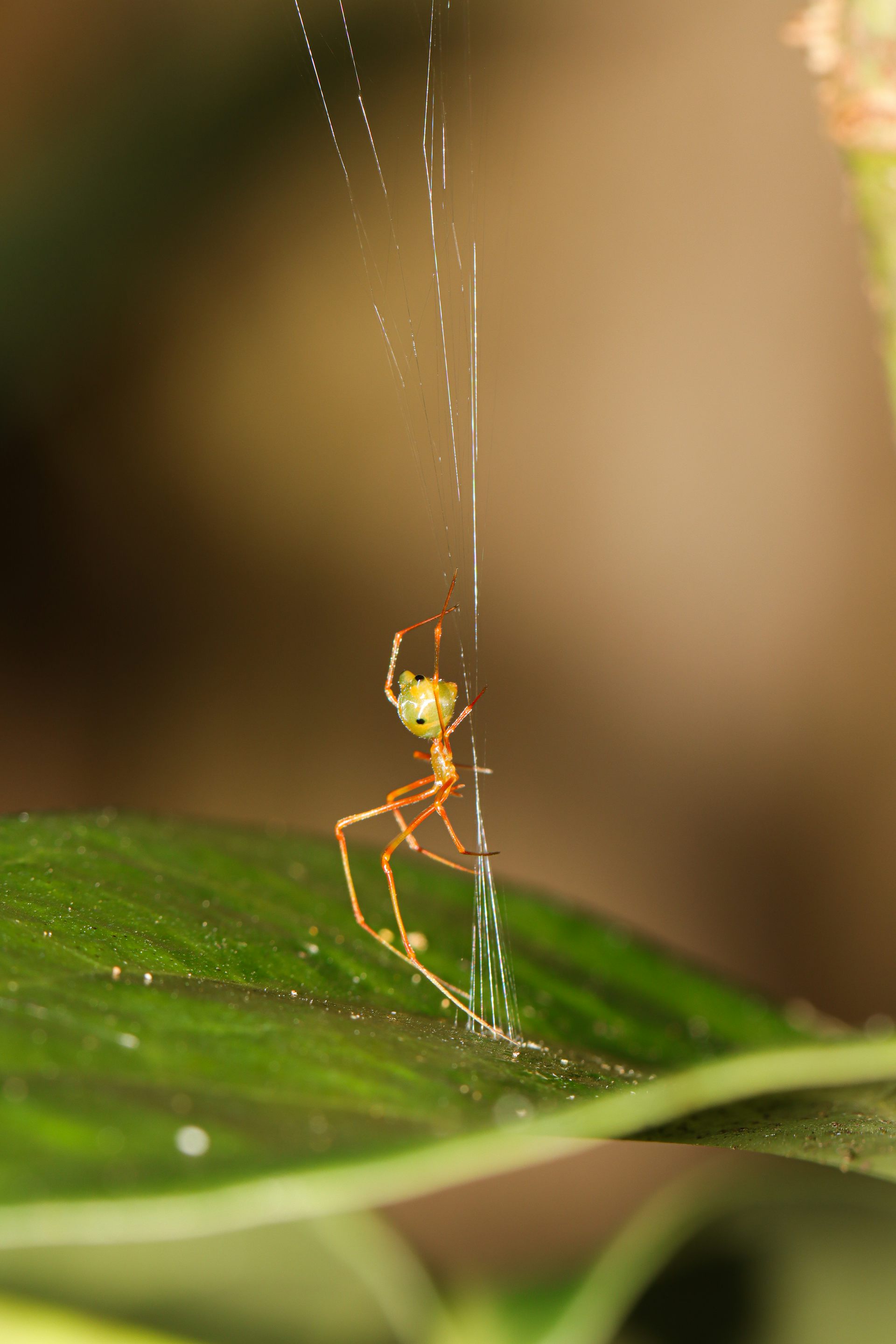
During the day, this spider rests within a silken retreat on the underside of leaves. As the night unfolds, the spider slowly descends on a silk line until it finds a suitable structure on which to lay an anchor point.
Pada siang hari, laba-laba ini beristirahat di dalam tempat persembunyian sutra di bagian bawah daun. Saat malam tiba, laba-laba perlahan turun menggunakan benang sutra hingga menemukan struktur yang cocok untuk meletakkan titik jangkar.
Next it returns to the core web, leaving a “tension line” behind it, and repeats the process with incredible precision to build a fan-shaped web of silk tension lines. This gradually leads to the formation of a small conical scaffold which the spider then wraps in a thinner kind of silk before retreating to the core web.
Selanjutnya, ia kembali ke jaring inti, meninggalkan “garis tegangan” di belakangnya, dan mengulangi proses tersebut dengan presisi luar biasa untuk membangun jaring berbentuk kipas dari garis-garis tegangan sutra. Hal ini secara bertahap menghasilkan pembentukan perancah kerucut kecil yang kemudian dibungkus oleh laba-laba dengan jenis sutra yang lebih tipis sebelum kembali ke jaring inti.
The thinner silk seems to attract ants and provoke an attack response, possibly by means of pheromones. After the thinner silk is laid, worker green tree ants appear in moments. The ants react aggressively, biting the cone.
Sutra yang lebih tipis tampaknya menarik semut dan memprovokasi respons serangan, mungkin melalui feromon. Setelah sutra tipis diletakkan, semut pohon hijau pekerja muncul dalam sekejap. Semut bereaksi secara agresif, menggigit kerucut tersebut.
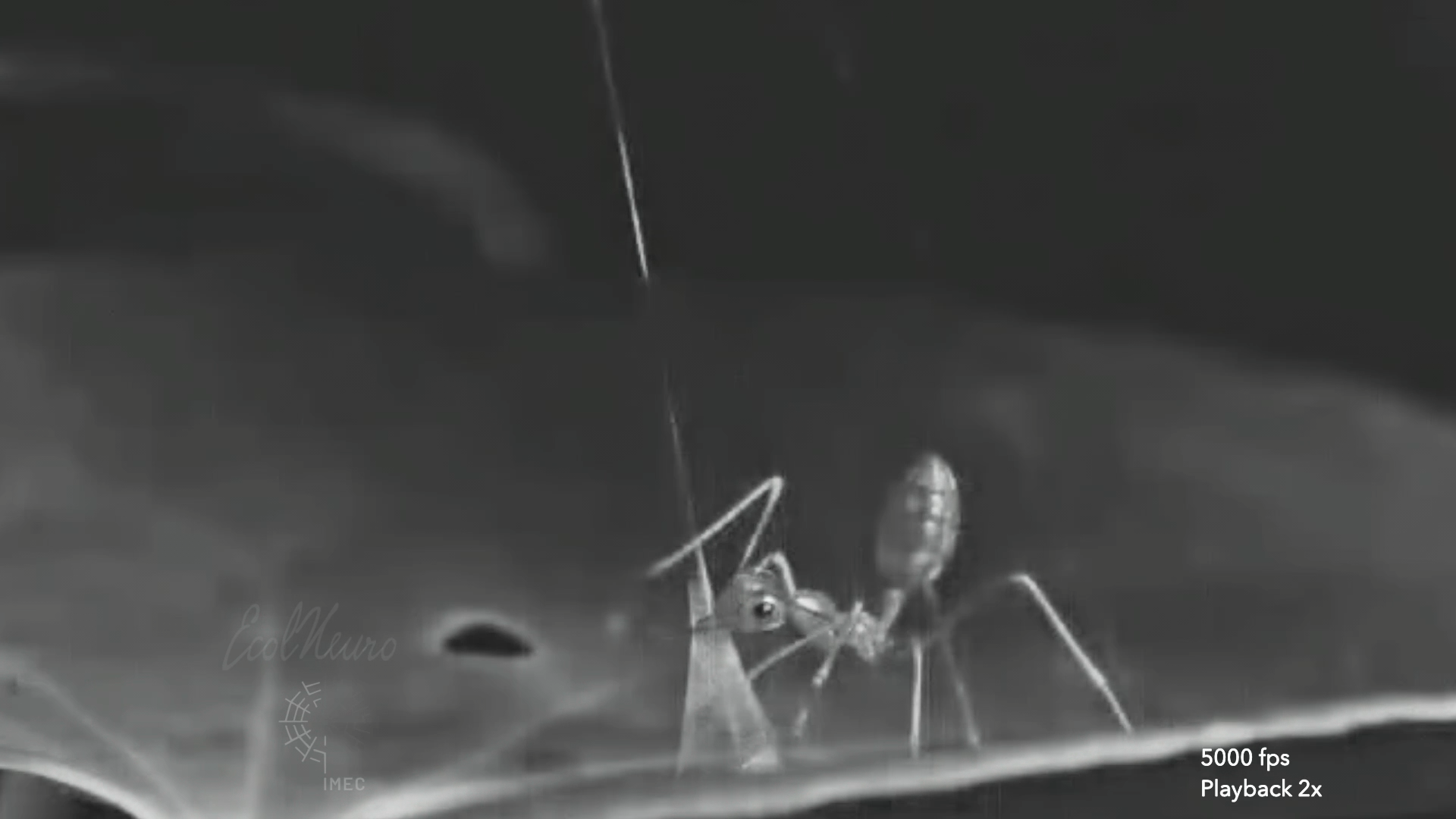
The bite detaches the cone from the surface, and the ant is pulled up and propelled into the core web in a fraction of a second. The ant is hauled off at accelerations of up to 1,367 metres per second squared – that’s roughly 140 times the acceleration due to gravity, or 15 times the most extreme g-forces experienced by jet pilots.
Gigitan itu melepaskan kerucut dari permukaan, dan semut diangkat serta dilontarkan ke jaring inti dalam sepersekian detik. Semut itu dibawa dengan percepatan hingga 1.367 meter per detik kuadrat – itu kira-kira 140 kali percepatan gravitasi, atau 15 kali gaya g paling ekstrem yang dialami pilot jet.
The spider waits for the ant to be fully entangled in its web. When it’s safe to approach, the spider wraps the ant in silk until it is ready to eat.
Laba-laba menunggu semut benar-benar terjerat dalam jaringnya. Ketika aman untuk mendekat, laba-laba membungkus semut itu dengan sutra sampai siap dimakan.
A superior system
Sistem yang unggul
The ballista spider’s snare exhibits superior energy performance compared with other silk-based catapult systems.
Perangkap laba-laba balista menunjukkan kinerja energi superior dibandingkan dengan sistem katapel berbasis sutra lainnya.
Gram for gram, the webs store more energy and exert more power than any known biological catapult. A kilogram of the web would store 78.17 kilojoules of kinetic energy and very briefly exert 11.73 megawatts of power.
Secara gram demi gram, jaring-jaring tersebut menyimpan lebih banyak energi dan menghasilkan daya yang lebih besar daripada katapel biologis manapun yang diketahui. Satu kilogram jaring akan menyimpan 78,17 kilojoule energi kinetik dan sesaat menghasilkan daya 11,73 megawatt.
The exceptionally high power of the ballista spider’s snare has likely evolved to rapidly yank ants away from the vicinity of their nests and trail, where fellow ants might come to their defence.
Daya yang sangat tinggi dari perangkap laba-laba balista kemungkinan berevolusi untuk menarik semut menjauh dengan cepat dari sekitar sarang dan jalur mereka, tempat semut lain mungkin datang untuk membela diri.
Extreme specialisation
Spesialisasi ekstrem
There are two more unusual things about the ballista spider.
Ada dua hal aneh lainnya tentang laba-laba ballista.
First is its extreme specialisation to a single prey species. This suggests the spiders may add specific pheromones to the thin wrapping silk on their snares to attract green tree ants.
Yang pertama adalah spesialisasi ekstremnya pada satu spesies mangsa. Ini menunjukkan bahwa laba-laba tersebut mungkin menambahkan feromon tertentu ke sutra pembungkus tipis pada jerat mereka untuk menarik semut pohon hijau.
Second is that the snare is triggered by the prey itself, rather than the more common situation in which the predator senses the prey and triggers the snare.
Yang kedua adalah bahwa jerat itu dipicu oleh mangsa itu sendiri, bukan dalam situasi yang lebih umum di mana predator merasakan mangsa dan memicu jerat tersebut.
The ballista spider demonstrates how extreme prey specialisation can drive the evolution of exceptional biomechanical performance.
Laba-laba ballista menunjukkan bagaimana spesialisasi mangsa yang ekstrem dapat mendorong evolusi kinerja biomekanik yang luar biasa.
Ajay Narendra receives funding from Australian Research Council and Herman Slade Foundation.
Ajay Narendra menerima pendanaan dari Dewan Riset Australia dan Yayasan Herman Slade.
Read more
-

Bagaimana para pemimpin politik menggunakan tontonan pertempuran untuk melambangkan kekuatan dan tujuan nasional
How political leaders use combat spectacles to symbolize national power and purpose
-

Siapakah Péter Magyar dari Hungaria dan bagaimana ia menggulingkan demokrasi illiberal Viktor Orbán
Who is Hungary’s Péter Magyar and how he overturned Viktor Orbán’s illiberal democracy