这只微小的澳大利亚蜘蛛使用高功率的网弹射器来捕获和吃侵略性的蚂蚁
This tiny Australian spider uses a high-powered web cat…
The ballista spider only feeds on extremely fierce green tree ants – so it has evolved sophisticated tools to safely catch its prey.
这种弹射蜘蛛只以极其凶猛的绿树蚂蚁为食——因此它进化出了复杂的工具来安全地捕获猎物。
There’s more than one way a spider can spin its web. Some construct large vertical orb webs, while others build horizontal sheet webs or tangled cobwebs that ensnare crawling insects.
蜘蛛织网的方式不止一种。有些构造大型垂直圆形蛛网,而其他则构建水平片状网或纠缠的蛛网来困住爬行昆虫。
There’s also more than one way a spider can catch its dinner. Net-casting spiders throw small silk nets over unsuspecting prey, while slingshot spiders use their conical webs like catapults, launching both themselves and the web toward nearby prey.
蜘蛛捕食猎物的方式也多种多样。抛网蜘蛛会向毫无戒心的猎物投掷小型丝网,而弹弓蜘蛛则利用其锥形蛛网像弹射器一样,将自己和蛛网一起射向附近的猎物。
In the tropical rainforests of the Cape York Peninsula in Queensland, we discovered a spider with a new hunting strategy: a small nocturnal animal of the genus Propostira which we call the ballista spider.
在昆士兰州的凯普约克半岛热带雨林中,我们发现了一种具有全新捕猎策略的蜘蛛:一种属于 Propostira 属的小型夜行动物,我们称之为弹射蜘蛛。
As we describe in a paper published today in Current Biology, it constructs a unique spring-loaded snare triggered only by a single kind of prey: the highly territorial and aggressive green tree ant (Oecophylla smaragdina) .
正如我们在今天发表于《Current Biology》的论文中所描述的,它构造了一种独特的弹簧陷阱,该陷阱仅由一种特定的猎物触发:高度领地性且具攻击性的绿树蚁(Oecophylla smaragdina)。
How the ballista spider catches ants
弹道蜘蛛如何捕食蚂蚁
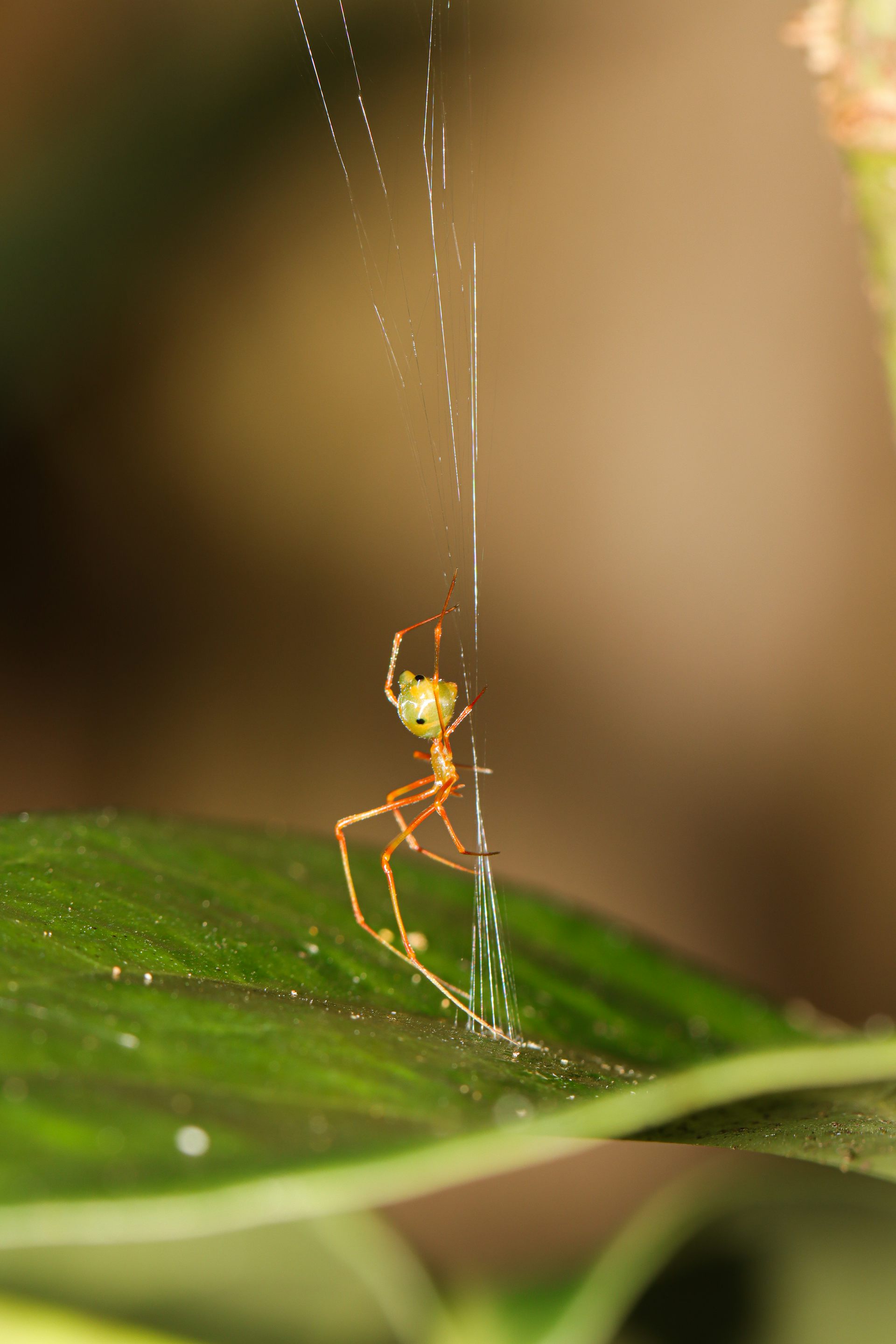
During the day, this spider rests within a silken retreat on the underside of leaves. As the night unfolds, the spider slowly descends on a silk line until it finds a suitable structure on which to lay an anchor point.
白天,这种蜘蛛会在叶子底部用丝线搭建一个庇护所休息。夜幕降临后,蜘蛛沿着丝线缓慢下降,直到找到合适的结构来设置锚点。
Next it returns to the core web, leaving a “tension line” behind it, and repeats the process with incredible precision to build a fan-shaped web of silk tension lines. This gradually leads to the formation of a small conical scaffold which the spider then wraps in a thinner kind of silk before retreating to the core web.
接着,它返回到核心网,留下一条“张力线”,并以惊人的精度重复这个过程,构建出由丝线张力线组成的扇形网。这逐渐形成了一个小型的圆锥形支架,蜘蛛随后用更细的丝线将该支架包裹起来,然后退回到核心网。
The thinner silk seems to attract ants and provoke an attack response, possibly by means of pheromones. After the thinner silk is laid, worker green tree ants appear in moments. The ants react aggressively, biting the cone.
这种较细的丝线似乎能吸引蚂蚁并引发攻击反应,可能是通过信息素实现的。在较细的丝线铺设之后,工兵绿树蚁很快出现了。这些蚂蚁反应激烈,咬住了这个圆锥体。
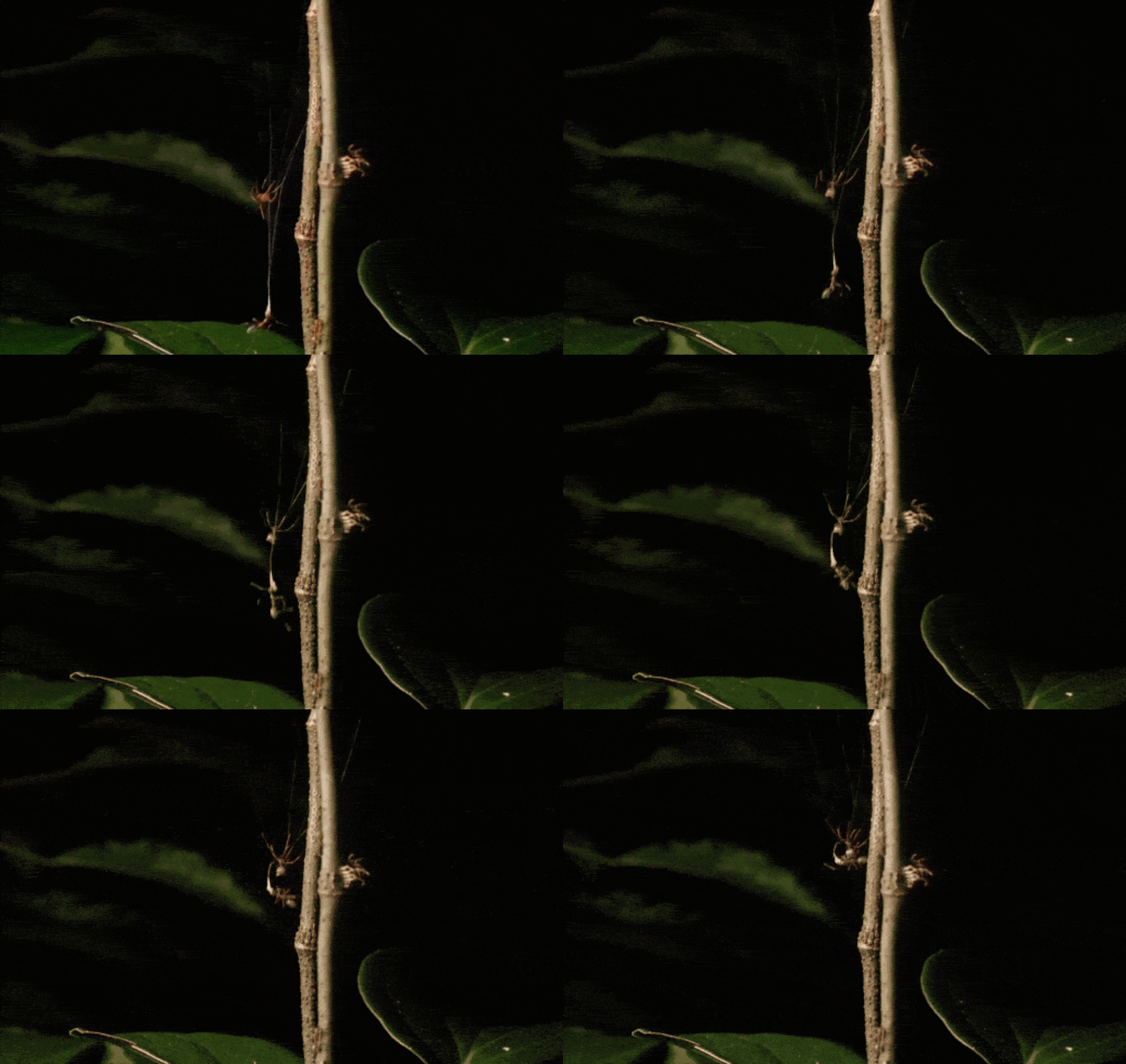
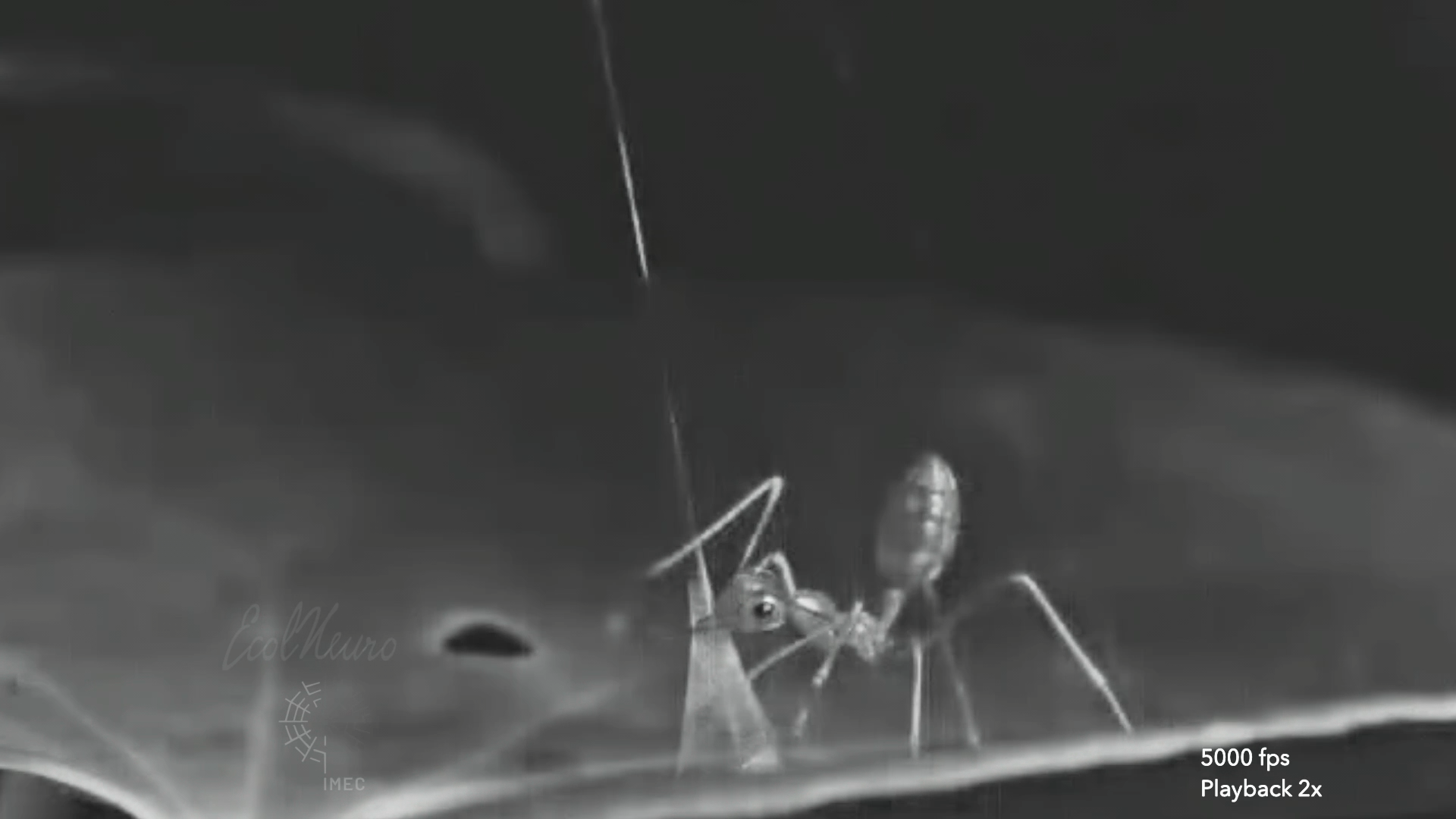
The bite detaches the cone from the surface, and the ant is pulled up and propelled into the core web in a fraction of a second. The ant is hauled off at accelerations of up to 1,367 metres per second squared – that’s roughly 140 times the acceleration due to gravity, or 15 times the most extreme g-forces experienced by jet pilots.
这次啃咬将圆锥体从表面剥离,蚂蚁在一瞬间被拉起并射入核心网中。这只蚂蚁被带走的加速度高达每秒1367米平方——这大约是重力加速度的140倍,相当于喷气式飞机飞行员经历的最极端g力的15倍。
The spider waits for the ant to be fully entangled in its web. When it’s safe to approach, the spider wraps the ant in silk until it is ready to eat.
蜘蛛等待着蚂蚁完全被其网缠绕。当它确定安全接近时,蜘蛛会用丝线将蚂蚁包裹起来,直到可以进食为止。
A superior system
一个卓越的系统
The ballista spider’s snare exhibits superior energy performance compared with other silk-based catapult systems.
球弹蛛的陷阱展现出比其他基于丝线的投射系统更优越的能量性能。
Gram for gram, the webs store more energy and exert more power than any known biological catapult. A kilogram of the web would store 78.17 kilojoules of kinetic energy and very briefly exert 11.73 megawatts of power.
从克到克,这些网能储存的能量和发挥的功率都超过了任何已知的生物投射装置。一公斤的蛛网可以储存 78.17 千焦的动能,并在极短时间内发挥出 11.73 兆瓦的功率。
The exceptionally high power of the ballista spider’s snare has likely evolved to rapidly yank ants away from the vicinity of their nests and trail, where fellow ants might come to their defence.
球弹蛛陷阱异常高的功率,很可能是为了快速将蚂蚁从其巢穴和行进路线附近拽开,以防止其他蚂蚁前来保护。
Extreme specialisation
极度特化
There are two more unusual things about the ballista spider.
关于弹弓蜘蛛,还有两点不寻常。
First is its extreme specialisation to a single prey species. This suggests the spiders may add specific pheromones to the thin wrapping silk on their snares to attract green tree ants.
第一是它对单一猎物物种的极度特化。这表明这些蜘蛛可能在陷阱上薄薄的包裹丝网上添加特定的信息素,以吸引绿树蚁。
Second is that the snare is triggered by the prey itself, rather than the more common situation in which the predator senses the prey and triggers the snare.
第二是,陷阱是由猎物自身触发的,而不是在捕食者感知到猎物并触发陷阱的更常见情况下。
The ballista spider demonstrates how extreme prey specialisation can drive the evolution of exceptional biomechanical performance.
弹弓蜘蛛展示了极端的猎物特化如何驱动卓越的生物力学性能的进化。
Ajay Narendra receives funding from Australian Research Council and Herman Slade Foundation.
Ajay Narendra 的研究资金来自澳大利亚研究理事会和赫尔曼·斯莱德基金会。