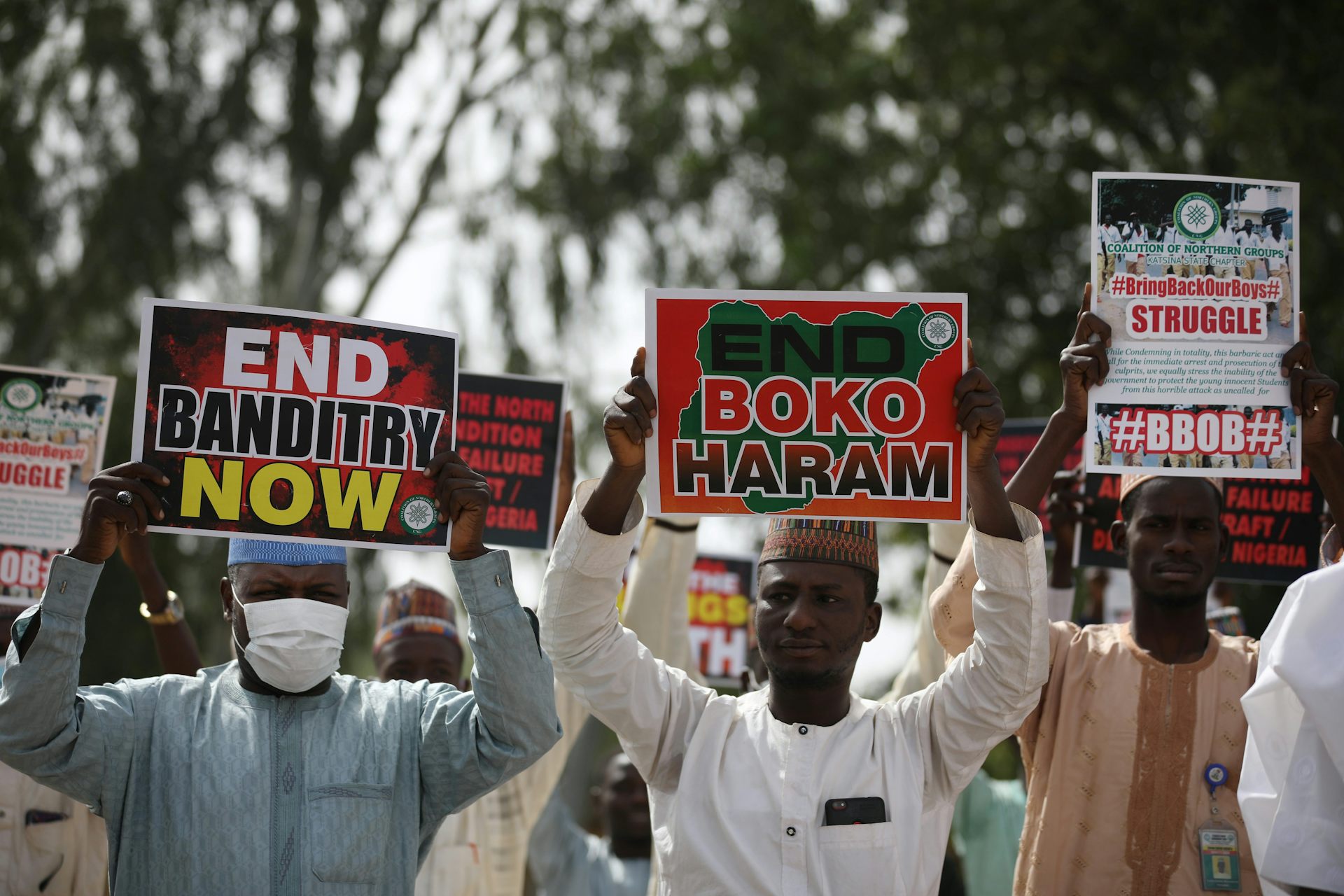
يروي النيجيريون قصصهم عن قطاع الطرق. “لن يمر شهر دون مقتل شخص ما في هذه القرية.”
Nigerians tell their stories of banditry. ‘A month will not go by without someone being killed in this village.’
Banditry is widespread in Nigeria but knowledge about its character and nature is limited.
ينتشر الإجرام المسلح في نيجيريا، لكن المعرفة بطبيعته وخصائصه محدودة.
Banditry is widespread in Nigeria. It has been defined as “a loose collection of various criminal groups involved in kidnap-for-ransom, armed robbery, cattle rustling, rape and sexual violence, pillage and attacks on traders, farmers and travellers, particularly in Nigeria’s northwest region”.
تُعدّ أعمال قطاع الطرق واسعة الانتشار في نيجيريا. وقد عُرِّفت بأنها “تجمع غير منسق لمجموعات إجرامية مختلفة تشارك في الاختطاف مقابل فدية، والسرقة المسلحة، وسرقة الماشية، والاغتصاب والعنف الجنسي، والنهب، والهجمات على التجار والمزارعين والمسافرين، وخاصة في المنطقة الشمالية الغربية من نيجيريا.”
This criminal activity has caused deaths, displacement, destruction of property and widespread fear. In 2025 alone, 599 attacks were reported, with 2,742 casualties. This was a sharp increase from 2024, when 256 attacks and 1,585 deaths were recorded. Banditry has also extended its reach to the northwest and southwest of Nigeria.
تسببت هذه الأنشطة الإجرامية في وفيات، ونزوح، وتدمير للممتلكات، وخوف واسع النطاق. ففي عام 2025 وحده، تم الإبلاغ عن 599 هجومًا، مع 2,742 ضحية. وكانت هذه زيادة حادة مقارنة بعام 2024، الذي سُجِّل فيه 256 هجومًا و1,585 حالة وفاة. كما وسع قطاع الطرق نطاق عمله ليشمل شمال غرب وجنوب غرب نيجيريا.
Studies have examined its costs and implications, and possible mechanisms for addressing it. Still, knowledge about the nature and character of banditry remains limited.
وقد درست الأبحاث تكاليف وتداعيات هذه الأعمال وآليات محتملة لمعالجتها. ومع ذلك، لا يزال المعرفة بطبيعة وسمات أعمال قطاع الطرق محدودة.
As a sociologist, I investigated this national security threat with a view to understanding how the victims experienced it.
بصفتي عالم اجتماع، فقد حققت في هذا التهديد للأمن القومي بهدف فهم كيفية تعرض الضحايا له.
The study unpacks the method and timing of attacks and identities of the bandits, providing insights that can inform security planning. Knowing more about how bandits operate can help government and vulnerable communities to design preventive measures and adopt safety behaviours.
تفكك الدراسة طريقة وتوقيت الهجمات وهويات قطاع الطرق، مقدمةً رؤى يمكن أن تثري التخطيط الأمني. ومعرفة المزيد حول كيفية عمل قطاع الطرق يمكن أن يساعد الحكومة والمجتمعات الضعيفة في تصميم تدابير وقائية وتبني سلوكيات آمنة.
Rural banditry in Nigeria
النهب الريفي في نيجيريا
The study used data collected through in-depth interviews with focus group discussions in four of the six geopolitical zones where the problem of banditry is most widespread and prevalent: North-Central, North-West, South-West and South-East. The sample included 48 communities. Two key informant interviews were conducted in each local area: one with a state security official (police, military, paramilitary, or community vigilante) and one with traditional or community leader.
استخدمت الدراسة بيانات جُمعت من خلال مقابلات معمقة ومناقشات مجموعات بتركيز في أربع مناطق جغرافية سياسية من أصل ست، حيث تنتشر مشكلة قطاع الطرق وتنتشر بشكل كبير: الشمال المركزي، والشمال الغربي، والجنوب الغربي، والجنوب الشرقي. وشملت العينة 48 مجتمعاً. وأُجريت مقابلتان لمصادر رئيسية في كل منطقة محلية: واحدة مع مسؤول أمني حكومي (شرطة، عسكري، شبه عسكري، أو حارس مجتمعي) وواحدة مع زعيم تقليدي أو مجتمعي.
All the participants reported that their communities had experienced violent attacks by bandits, although at different times and in different ways and to varying degrees. They also emphasised the brutal nature of bandit violence.
أفاد جميع المشاركين بأن مجتمعاتهم تعرضت لهجمات عنيفة من قبل قطاع الطرق، وإن كان ذلك في أوقات وطرق ومستويات متفاوتة. كما أكدوا على الطبيعة الوحشية لعنف اللصوص.
Experiences ranged from farm invasion and destruction to animal theft, killing and kidnapping, gang rape and sexual violence, displacement of people and the pillaging of communities.
تراوحت التجارب من غزو المزارع وتدميرها إلى سرقة الحيوانات، والقتل والاختطاف، واغتصاب الجماعات والعنف الجنسي، ونزوح السكان ونهب المجتمعات.
Responses highlighted that:
أبرزت الاستجابات ما يلي:
the timing was typically late at night or early in the morning
* كان التوقيت عادة في وقت متأخر من الليل أو في الصباح الباكر
men were more frequently killed than women
* كان الرجال يُقتلون بشكل أكثر تكراراً من النساء
women were more likely to be abducted and forced into marriages with bandits instead of being killed
* كنت النساء أكثر عرضة للاختطاف وإجبارهن على الزواج من اللصوص بدلاً من القتل
although bandits were often strangers to the locations of attacks, insiders often helped them carry out attacks
* على الرغم من أن قطاع الطرق كانوا غالباً غرباء عن مواقع الهجمات، إلا أن السكان المحليين ساعدوهم في تنفيذها
bandit groups imposed levies on some communities
* فرضت مجموعات اللصوص ضرائب (أتاوات) على بعض المجتمعات
bandits often carries out operations on market days or Sundays.
* غالباً ما يقوم اللصوص بعملياتهم في أيام السوق أو يوم الأحد.
Alluding to the brutality of bandit attacks, a participant noted:
وفي إشارة إلى وحشية هجمات قطاع الطرق، لاحظ أحد المشاركين:
There was an attack by bandits where we lost over 20 people. We had the mass burial in a single day.
“كان هناك هجوم من قبل لصوص حيث فقدنا أكثر من 20 شخصاً. أجرينا الدفن الجماعي في يوم واحد.”
Participants, especially from rural communities in the North-Central and North-West regions, reported how frequent violent attacks forced many residents to vacate their villages, becoming internally displaced, suffer trauma, and live in perpetual fear.
أفاد المشاركون، وخاصة من المجتمعات الريفية في منطقتي الشمال المركزي والشمال الغربي، كيف أن الهجمات العنيفة المتكررة أجبرت العديد من السكان على إخلاء قراهم، ليصبحوا نازحين داخلياً، ويعانون من الصدمات النفسية، ويعيشون في خوف دائم.
According to a survivor of bandit attacks in Plateau State:
ووفقاً لناجٍ من هجمات قطاع الطرق في ولاية بلاتو:
A month will not go by without someone being killed in this village by bandits. That is how bad and frequent it is.
“لن يمر شهر دون أن يُقتل شخص ما في هذه القرية على يد اللصوص. هذا هو مدى سوء وتكرار الأمر.”
How bandit attacks happen
كيف تحدث هجمات قطاع الطرق
Data showed consistent patterns of attack across all four selected regions in Nigeria. Typically, participants reported that bandits come armed with knives, daggers, sticks, guns, machetes and cutlasses. When they launch an attack, they shoot their victims; afterwards, they may slaughter them with knives to ensure death.
أظهرت البيانات أنماطًا متسقة للهجوم عبر جميع المناطق الأربع المختارة في نيجيريا. عادةً ما أفاد المشاركون بأن اللصوص يأتون مسلحين بالسكاكين والخناجر والعصي والبنادق والمناشير والسيوف القصيرة. وعندما يشنون هجومًا، فإنهم يطلقون النار على ضحاياهم؛ وبعد ذلك، قد يذبحونهم بالسكاكين لضمان الموت.
At other times, to destroy entire communities, bandits reportedly bring gas to burn villages. Participants also identified the weapons associated with bandits as AK-47, G3S and K2 rifles, swords and pump-action guns, among others.
في أوقات أخرى، ولتدمير مجتمعات بأكملها، يُقال إن اللصوص يحضرون الغاز لحرق القرى. وحدد المشاركون أيضًا الأسلحة المرتبطة باللصوص بأنها بنادق AK-47 وG3S وK2، والسيوف، والبنادق الآلية (التي تعمل بالضخ) ، من بين غيرها.
Bandits ensure that their victims are attacked at times when people are off guard. A traditional leader said:
يضمن اللصوص أن يتم مهاجمة ضحاياهم في أوقات يكون فيها الناس غير حذرين. وقد قال زعيم تقليدي:
they come even twice or even thrice in a week. I think their plan is to stop us from going to the farm. Whenever we go, they either kill us or others on the farm, or they wait until people are returning home then attack them on the road, snatch their machines, and either kill or injure them.
“إنهم يأتون مرتين أو حتى ثلاث مرات في الأسبوع. أعتقد أن خطتهم هي منعنا من الذهاب إلى المزرعة. كلما ذهبنا، فإنهم إما يقتلوننا أو الآخرين في المزرعة، أو ينتظرون حتى يعود الناس إلى منازلهم ثم يهاجمونهم في الطريق، ويسرقون آلاتهم، ويقتلونه أو يجرحونه.”
Victim targeting
استهداف الضحايا
Participants explained that everyone in any community affected is a potential victim. They might be farmers, when farms are destroyed. When villages are destroyed, everybody, young and old, male and female, becomes a victim, as houses are burnt, property stolen and lives endangered. In cases of kidnapping, the bandits sometimes have specific targets, which vary depending on their mission.
أوضح المشاركون أن كل فرد في أي مجتمع متضرر هو ضحية محتملة. قد يكونون مزارعين عندما تُدمر المزارع. وعندما تدمر القرى، يصبح الجميع، صغاراً وكباراً، ذكوراً وإناثاً، ضحايا، حيث يتم حرق المنازل وسرقة الممتلكات وتعريض الأرواح للخطر. وفي حالات الخطف، يكون لدى اللصوص أهداف محددة في بعض الأحيان، وتختلف هذه الأهداف اعتماداً على مهمتهم.
Most victims of kidnapping are wealthy and highly placed individuals in society, especially those whose families are believed to be able to raise the ransom.
معظم ضحايا الخطف هم الأفراد الأثرياء وذوي المناصب الرفيعة في المجتمع، وخاصة أولئك الذين يُعتقد أن عائلاتهم قادرة على دفع الفدية.
Men are the main victims of rural banditry, as they can challenge the attackers. But as men are killed, women became widows and children are left fatherless. Participants said the bandits often abducted women. One stated:
الرجال هم الضحايا الرئيسيون للغارات الريفية، لأنهم يمكنهم تحدي المهاجمين. ولكن مع مقتل الرجال، تصبح النساء أرامل ويُترك الأطفال بلا آباء. قال المشاركون إن اللصوص كانوا يختطفون النساء في كثير من الأحيان. وقد ذكر أحدهم:
Whenever they come, they say ‘men come out’ but they only take women they find attractive and take them away, and make them their wives.
“كلما أتوا، يقولون ‘ليخرج الرجال’ لكنهم يأخذون فقط النساء اللاتي يرينهن جذابات ويأخذونهن بعيداً، ويجعلهن زوجات لهم.”
In some other areas, women fell victim to rape, theft, and in some cases, murder. After the death of their parents, children became destabilised and some were withdrawn from school. During attacks, men sometimes fled for their safety, leaving their families behind, whereas mothers could not abandon their children.
في مناطق أخرى، وقعت النساء ضحايا للاغتصاب والسرقة وفي بعض الحالات القتل. وبعد وفاة آبائهن، أصبح الأطفال غير مستقرين وانسحب البعض منهم من المدرسة. أثناء الهجمات، كان الرجال يفرون أحياناً لسلامتهم، تاركين عائلاتهم خلفهم، في حين أنه لم تستطع الأمهات التخلي عن أطفالهن.
Moving forward
مستقبلاً
The study found the character and nature of banditry to be violent and associated with specific times and spaces. Banditry manifested in the activities carried out by organised armed groups, including cattle rustling, farm destruction, kidnapping, looting and killings. These activities have heightened insecurity, led to deaths and displacement, and disrupted the livelihoods of households and farming communities.
وجدت الدراسة أن طبيعة وسلوك قطاع الطرق عنيفة ومرتبطة بأوقات وأماكن محددة. وتجلى عمل قطاع الطرق في الأنشطة التي تقوم بها مجموعات مسلحة منظمة، بما في ذلك سرقة الماشية، وتدمير المزارع، والخطف، والنهب، والقتل. وقد أدت هذه الأنشطة إلى تفاقم انعدام الأمن، وأسفرت عن وفيات ونزوح، وعطلت سبل عيش الأسر والمجتمعات الزراعية.
Rural communities need to know how to detect and report security threats in time to prevent them. Informal security organisations in such communities should align with the formal state security. Federal and state governments should also collaborate to find bandits where they hide.
تحتاج المجتمعات الريفية إلى معرفة كيفية اكتشاف التهديدات الأمنية والإبلاغ عنها في الوقت المناسب لمنعها. ويجب أن تتواءم المنظمات الأمنية غير الرسمية في مثل هذه المجتمعات مع أمن الدولة الرسمي. كما يجب على الحكومات الفيدرالية وحكومات الولايات التعاون للعثور على قطاع الطرق حيث يختبئون.
Oludayo Tade receives funding from the Tertiary Education Trust Fund TETFUND/National Research Fund NRF TETF/DR&D/CE/NRF2020/HSS/03/VOL.1.
يتلقى أولودايو تادي التمويل من صندوق التعليم العالي TETFUND/صندوق البحوث الوطني NRF TETF/DR&D/CE/NRF2020/HSS/03/VOL.1.
Read more
-

هل ريتشارد دوكنز محق بشأن كلود؟ لا. لكن ليس من المستغرب أن تشعرنا روبوتات الدردشة بالذكاء الاصطناعي بأنها واعية.
Is Richard Dawkins right about Claude? No. But it’s not surprising AI chatbots feel conscious to us
-

الشبكة التي تراقب محيطات العالم تتعرض لضغوط – تحديداً عندما تكون في أمس الحاجة إليها.
The network watching the world’s oceans is under pressure – just when it’s needed most