银河系在数十亿年前经历了一次灾难性的碰撞,其结构因此被重塑。现在它正朝着另一次……
The Milky Way was rewired by a cataclysmic collision bi…
As a galactic archaeologist, my job is to reconstruct the past of our galaxy – and read the signs of its future.
作为一名星系考古学家,我的工作是重建我们银河系的过去——并解读它的未来迹象。
Vasily Belokurov is one of three winners of the 2026 Kavli Prize in Astrophysics. The award is for uncovering fossil evidence of past galactic mergers that prove how the Milky Way evolved.
瓦西里·别洛库罗夫是2026年天体物理学卡夫利奖的三位获奖者之一。该奖项旨在揭示过去星系合并的化石证据,从而证明银河系的演变过程。
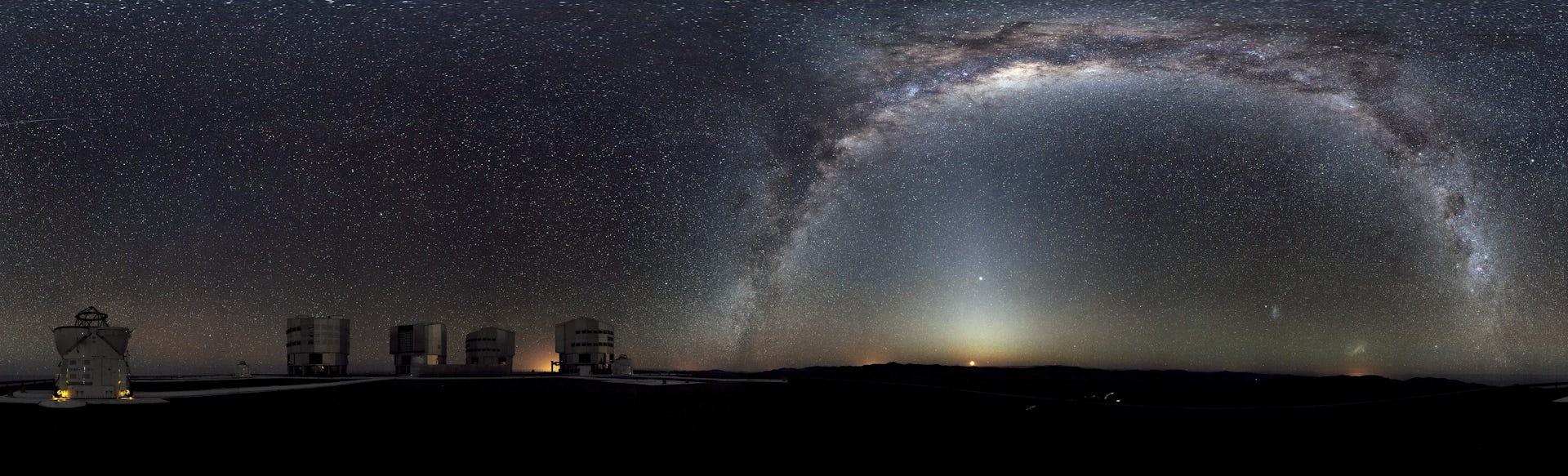
No matter the time or vantage point, from a pre-Neolithic cave to a post-lockdown London high-rise, the predictability of the night sky has always been humanity’s symbol of permanence and reassuring stability.
无论时间还是视角如何变化,从前新石器时代的洞穴到疫情封锁后的伦敦高层建筑,夜空的可预测性始终是人类永恒和令人安心稳定的象征。
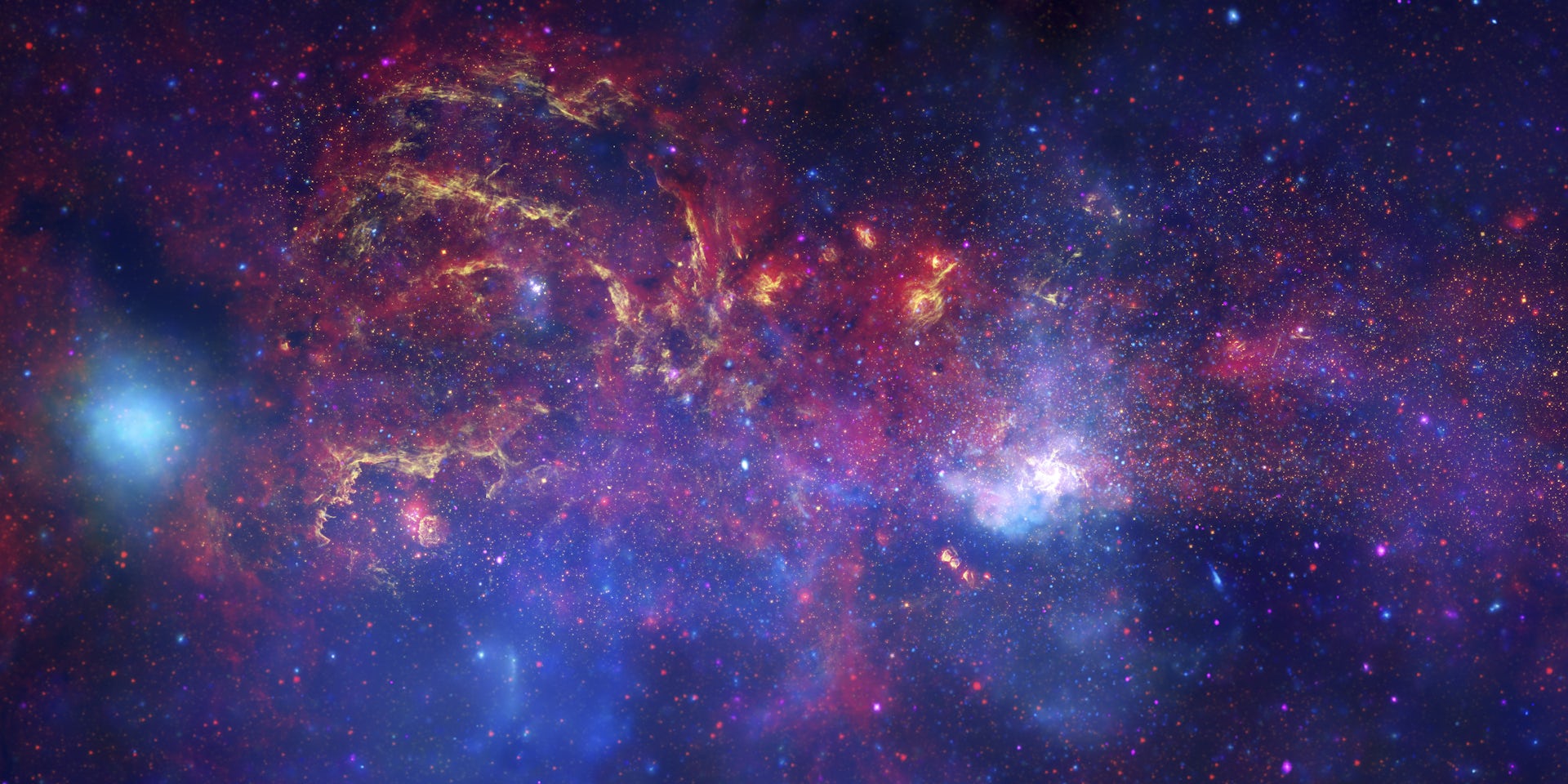
Yet this apparent calm is deceptive. Our galaxy, the Milky Way, emerged from chaos and turbulence, and its constellations are full of migrants, exiles and survivors. Right now, it has begun to stretch and distort again, pulled by a massive companion and heading for an inevitable collision.
然而,这种表面的平静是具有欺骗性的。我们的银河系起源于混乱和湍流之中,其星座充满了移民、流亡者和幸存者。现在,它再次开始拉伸和扭曲,受到一个巨大的伴星的牵引,正走向一场不可避免的碰撞。
How can I be so sure? As a galactic archaeologist, my job is to reconstruct the past of our galaxy and read the signs of its future.
我如何能如此确定呢?作为一名星系考古学家,我的工作就是重建我们银河系的过去,并解读其未来的迹象。
Instead of digging through soil, I use the laws of dynamics and stellar evolution to sift through hundreds of millions of stars – searching for the most ancient and chemically peculiar among them, interpreting their orbits and piecing together the events that shaped the Milky Way. One ancient encounter left scars so deep that, billions of years later, they still define the galaxy around us.
我不是通过挖掘土壤来工作的,而是利用动力学和恒星演化的定律,筛选数亿颗恒星——寻找其中最古老、化学性质最奇特的恒星,解读它们的轨道,拼凑出塑造了银河系的事件。一次古代的遭遇留下的伤痕如此深刻,以至于在数十亿年后,它们仍然定义着我们周围的银河系。
I want to understand what governs the lives of these massive cosmic systems: which changes are nature – the slow internal evolution of a galaxy disc – and which are nurture, imposed by collisions and mergers.
我想了解控制这些巨大宇宙系统生命周期的是什么:哪些变化是天性——即星盘缓慢的内部演化——哪些是后天习得的,由碰撞和合并所施加。
Questions about the source of dark matter underpin it all. This is the invisible substance whose gravity holds galaxies together, but whose true identity remains one of the greatest unsolved puzzles in astrophysics.
关于暗物质来源的问题贯穿了这一切。它是一种看不见的物质,其引力将星系维系在一起,但其真实身份仍然是天体物理学领域最大的未解之谜之一。
The Milky Way is the one galaxy where stellar motions can be measured in extraordinary detail. This allows cosmologists including myself to construct our most precise map yet of dark matter: how far it reaches, how dense it is around the Sun, what shape it has and how smooth or lumpy it may be. If we can build this map in enough detail, we may begin to understand not just where dark matter is, but what it is.
银河系是唯一可以测量恒星运动细节的星系。这使得包括我在内的宇宙学家能够构建出迄今为止最精确的暗物质地图:它延伸多远、在太阳周围有多密集、具有什么形状,以及它是多么平滑或多么不均匀。如果我们能将这张地图建构得足够详细,我们或许就能开始理解的不仅仅是暗物质在哪里,而是它到底是什么。
A cataclysmic collision
一场灾难性的碰撞
Our work has been transformed by a revolution in open sky surveys. From 2000, the Sloan Digital Sky Survey showed what becomes possible when vast astronomical datasets are made public, enabling discoveries far beyond the goals for which the survey was first built.
我们的工作因开放天空巡天领域的革命而发生了转变。自2000年以来,斯隆数字天空巡天(SDSS)展示了当庞大的天文数据集公开时能实现什么,它使得发现的能力远远超出了该巡天最初设定的目标。
And since 2014, Gaia, the European space telescope, has taken this transformation to another level by mapping the positions and motions of nearly 2 billion stars, turning the galaxy into a vast archaeological record. No ruins, no shards and no bones – only stars that hold the clues.
自2014年以来,欧洲空间望远镜盖亚(Gaia)通过绘制近20亿颗恒星的位置和运动轨迹,将银河系变成了一份巨大的考古记录。没有废墟,没有碎片,也没有骨骼——只有承载着线索的恒星。
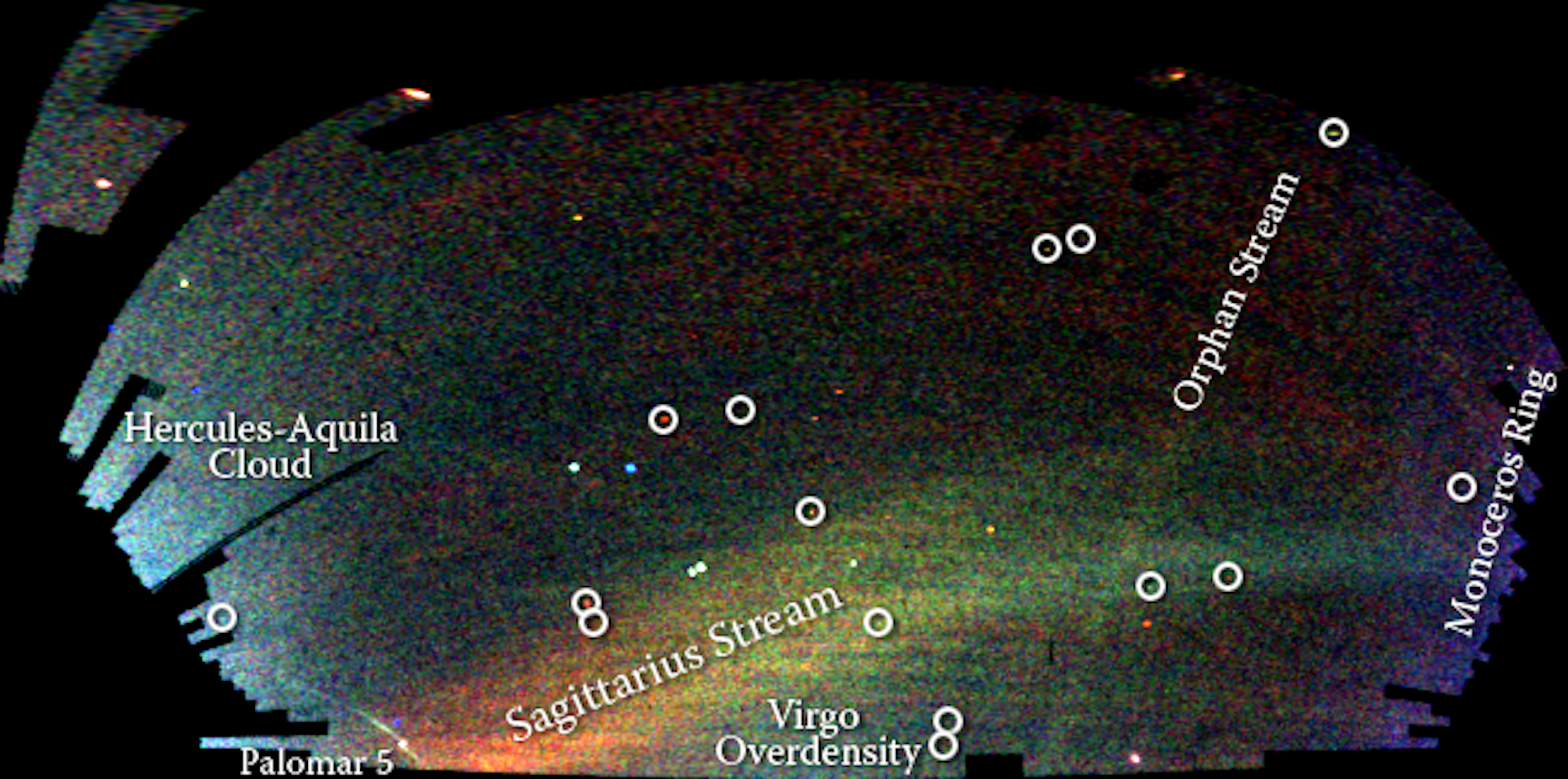
The clearest giveaway that something cataclysmic took place long ago in our galaxy is the migrants we observe: stars that were not born in the Milky Way.
我们银河系很久以前发生过灾难性事件的最清晰证据,就是我们观察到的“移民”:那些并非在银河系内诞生的恒星。
While native stars mostly travel together, circling the galactic centre in the great rotating flow of the disc, migrants cut across that order. They slide past the locals, plunge into the inner galaxy, then fly back out to its outskirts, again and again.
虽然本地恒星大多一起运动,围绕着银河中心在大盘的巨大旋转流中运行,但这些移民却打破了这种秩序。它们掠过本地恒星,深入到银河内部,然后又一次又一次地飞回到外围区域。
These unusual orbits go hand-in-hand with unusual chemistry. Most of the migrant stars are less enriched in heavier elements than the locally born population. Their chemical composition is a sign of a slower rate of evolution that is typical of a dwarf galaxy.
这些不寻常的轨道伴随着不寻常的化学特征。大多数移民恒星比本地诞生的群体在重元素上富集程度低。它们的化学成分表明了典型的矮星系演化速率较慢。
This makes the migrants doubly valuable. They are both fossils of the Milky Way’s violent past, and probes of its outer regions, travelling where the local stars rarely go.
这使得移民具有双重价值。它们既是银河系暴力过往的化石,也是探测其外围区域的探针,能够前往本地恒星很少到达的地方。
How the Milky Way was rewired
银河系如何重塑
One of the central ideas in the theory of cosmic structure formation is that galaxies grow hierarchically. Smaller galaxies fall into larger ones and are torn apart, leaving their stars behind as migrants.
宇宙结构形成理论的核心思想之一是,星系是分层级生长的。较小的星系会落入较大的星系中并被撕裂,留下它们的恒星作为移民。
In the Milky Way, the largest ancient structure of this kind is known as Gaia-Sausage-Enceladus. It is the remains of a vanished galaxy that collided with our own between 8 and 11 billion years ago (the “sausage” refers to a pattern in its stars’ motions) .
在银河系中,这类最大的古代结构被称为盖亚-奶酪-恩克拉多斯(Gaia-Sausage-Enceladus)。它是一颗消失的星系残骸,它在80亿到110亿年前与我们的银河系发生碰撞(“奶酪”指的是其恒星运动中的一种模式)。
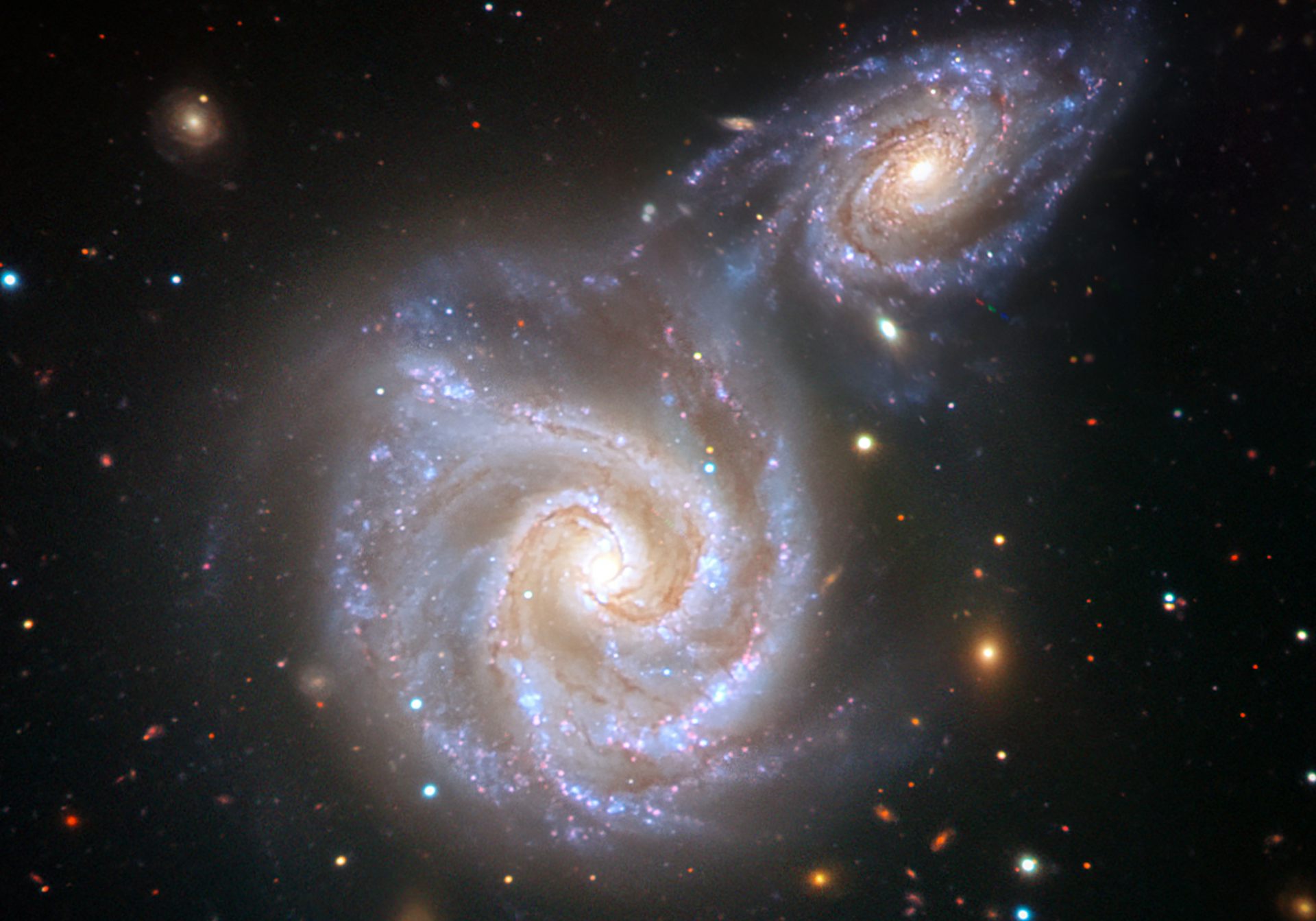
The Milky Way also did not go through that crash unscathed. The collision rewired and reshaped it.
银河系也并未从那次撞击中幸免。这次碰撞重塑并改变了它的结构。
Some of these changes are easily visible in the data. Stars from the old disc were splashed into our galaxy’s halo, becoming exiles in the place where they were born. A new posse of star clusters were also acquired.
这些变化中的一些在数据中很容易观察到。来自旧盘的恒星被溅射到了我们银河系的晕(halo)中,成为了它们诞生之地之外的流浪者。此外,还获得了一批新的星团。
At the same time, we think something even more momentous was taking place. The encounter changed the orientation of the Milky Way’s disc, and its alignment with the dark matter halo.
与此同时,我们认为发生了一些更重大的事情。这次遭遇改变了银河系盘面的方向,以及它与暗物质晕的排列方式。
While dark matter is too diffuse to dominate our Solar System, in the outer galaxy it is the main gravitating mass – moving, streaming and, in the standard picture, clumping into a hierarchy of lumps.
虽然暗物质对于主星系来说过于弥散,无法主导我们的太阳系,但在外围的星系中,它是主要的引力质量——它在移动、流动并在标准模型中聚集成一个层级状的团块。
Around the Milky Way, this dark matter forms a vast halo, much larger than the luminous part of our galaxy. We often imagine this halo as a sparse, round cloud, but Gaia has helped show this picture is too simple.
围绕银河系的暗物质形成了一个巨大的晕,其大小远大于我们银河系的可见部分。我们经常想象这个晕是一个稀疏的圆形云,但盖亚(Gaia)的数据帮助证明了这种图景过于简单。
The dark halo can be stretched out of shape by a major encounter. Like a ship beginning to list, the Milky Way started to lean – not suddenly, not visibly, but over billions of years.
主要的遭遇可以将暗晕拉伸变形。就像一艘开始倾斜的船一样,银河系开始倾斜——不是突然地,不是明显地,而是经过数十亿年。
A new galactic dance
一场新的银河之舞
Unusually compared with many galaxies of similar mass, the Milky Way was allowed ample time to recover from the shock of the “sausage merger”. No other cosmic cataclysm appears to have shaken our Galaxy since, letting it settle into a quiet, uneventful life. That is, until now.
与许多质量相似的星系相比,银河系有充足的时间从“香肠并合”的冲击中恢复过来。自那以后,没有任何其他宇宙大灾变摇动过我们的银河系,让它平静地度过了无事发生的一生。直到现在。
The Large Magellanic Cloud (LMC) , currently our galaxy’s most massive companion, is already pulling at the Milky Way, disturbing its halo again. In an echo of what happened some 10 billion years ago, the Milky Way is being drawn into an accelerating dance with this neighbouring dwarf galaxy, recoiling in response to the LMC’s approach.
大型麦哲伦星系(LMC)目前是我们银河系质量最大的伴星,它已经开始拉扯着银河系,再次扰乱了其光晕。如同大约十亿年前所发生的那样,银河系正被吸入一场加速的共舞中,与这颗邻近的矮星系相互作用,做出反应。
This is a dance that only one galaxy is likely to survive intact. A new chapter of migration, survival and adaptation has begun.
这场舞蹈很可能只有一个星系能够完好无损地幸存下来。一段关于迁徙、生存和适应的新篇章已经开始。
None of this spoils the beauty of the night sky – it deepens it. The calm band of light above us is not a symbol of permanence, but the visible reminder of a long survival.
这一切并没有破坏夜空的壮丽——反而使其更加深邃。头顶那条平静的光带并非永恒的象征,而是漫长生存留下的可见印记。
The Milky Way has been broken, rebuilt and is now being disturbed again. Its stars remember the past; their motions reveal the future. What looks eternal is, in truth, a moment in a much longer story.
银河系曾破碎,重建,如今又一次受到扰动。它的恒星铭记着过去;它们的运动揭示着未来。看似永恒的事物,实际上只是一个更宏大故事中的瞬间。
Vasily Belokurov has received funding from the European Research Council, the Leverhulme Trust, and the Science and Technology Facilities Council.
瓦西里·别洛库罗夫获得了欧洲研究理事会、莱弗赫姆信托基金和科学技术设施委员会的资助。