L’accusation américaine contre Raúl Castro intervient dans un contexte de longue histoire d’agression américaine contre Cuba
US indictment of Raúl Castro comes amid a long history of American aggression against Cuba
Recent military and economic pressure on Cuba, including Trump’s threats of a ‘friendly takeover’ of the island, follow a long pattern of US hostility toward its southern neighbor.
La récente pression militaire et économique exercée sur Cuba, y compris les menaces de Trump d’une « prise de contrôle amicale » de l’île, suit un long schéma d’hostilité américaine envers son voisin du sud.
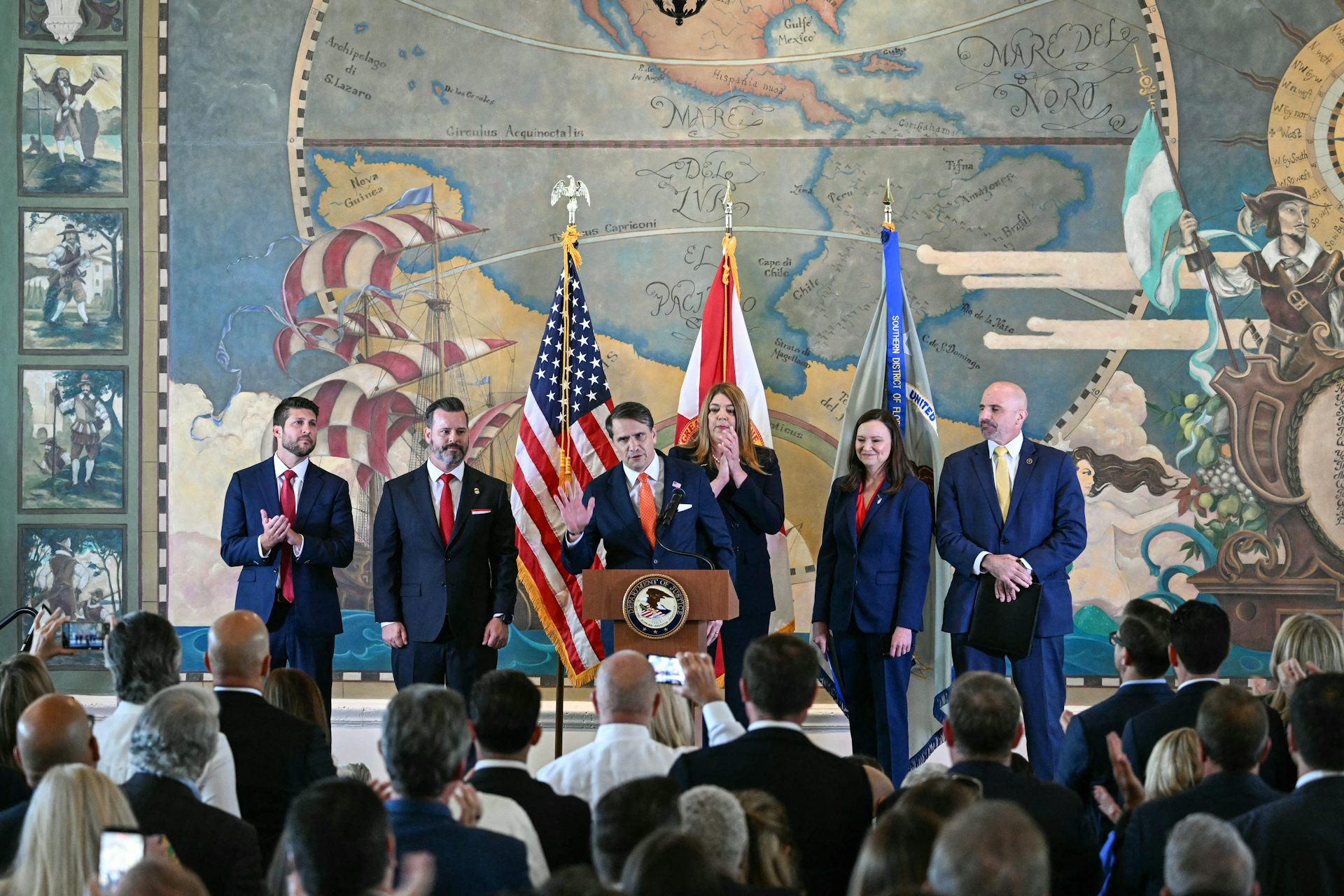
The Trump administration on May 20, 2026, indicted former Cuban President Raúl Castro for murder, based on the downing of two planes near the Cuban coastline in 1996 that killed four people.
L’administration Trump a inculpé l’ancien président cubain Raúl Castro le 20 mai 2026 d’accusations de meurtre, suite à l’abattage de deux avions près des côtes cubaines en 1996 qui avait tué quatre personnes.
As a historian of Latin America and U.S. foreign policy, I believe the indictment may be the prelude to direct U.S. military action against Cuba.
En tant qu’historien d’Amérique latine et de la politique étrangère américaine, je crois que cette inculpation pourrait être le prélude à une action militaire directe des États-Unis contre Cuba.
Before Castro, the last U.S. indictment of a Latin American leader occurred in January 2026, when a U.S. attorney appointed by President Donald Trump charged Venezuela’s Nicolás Maduro with narco-terrorism. Those charges were promptly followed by U.S. military strikes on Venezuela and the abduction of Maduro.
Avant Castro, la dernière accusation américaine contre un leader latino-américain a eu lieu en janvier 2026, lorsqu’un procureur américain nommé par le président Donald Trump a accusé Nicolás Maduro du Venezuela de narco-terrorisme. Ces accusations ont été rapidement suivies de frappes militaires américaines au Venezuela et de l’enlèvement de Maduro.
Since January, the U.S. has ended the flow of Venezuelan oil to Cuba and has used economic and military pressure to prevent other nations from trading with the island. And Trump recently threatened a “friendly takeover” of Cuba.
Depuis janvier, les États-Unis ont interrompu le flux de pétrole vénézuélien vers Cuba et ont utilisé la pression économique et militaire pour empêcher d’autres nations de commercer avec l’île. Et Trump a récemment menacé une « prise de contrôle amicale » de Cuba.
I believe that what’s missing from most recent analysis of this situation is the history of U.S. aggression against Cuba. This is essential context for understanding the Trump administration’s recent escalations.
Je crois que ce qui manque dans les analyses les plus récentes de cette situation est l’histoire des agressions américaines contre Cuba. C’est un contexte essentiel pour comprendre les récentes escalades de l’administration Trump.
‘Striking at Cuba constantly’
«Attaquer constamment Cuba»
In 1823, U.S. Secretary of State John Quincy Adams identified Cuba as “an object of transcendent importance to the political and commercial interests of our Union.” The 1959 Cuban Revolution that overthrew U.S.-backed dictator Fulgencio Batista and replaced him with Fidel Castro, brother of Raúl, directly challenged those interests by asserting political autonomy and expropriating private property.
En 1823, le secrétaire d’État américain John Quincy Adams identifiait Cuba comme «un objet d’importance transcendante pour les intérêts politiques et commerciaux de notre Union». La Révolution cubaine de 1959 qui renversa le dictateur soutenu par les États-Unis, Fulgencio Batista, et le remplaça par Fidel Castro, frère de Raúl, défia directement ces intérêts en affirmant son autonomie politique et en expropriant des biens privés.
State Department officials observed that “the majority of Cubans support Castro” because of the government’s redistributive measures and its “real honesty, courtesy, and idealism.” One official warned “that if the Cuban revolution is successful other countries in Latin America and perhaps elsewhere will use it as a model and we should decide whether or not we wish to have the Cuban revolution succeed.”
Des fonctionnaires du Département d’État observèrent que «la majorité des Cubains soutiennent Castro» en raison des mesures redistributives du gouvernement et de son «honnêteté, sa courtoisie et son idéalisme réels». Un fonctionnaire prévint «que si la révolution cubaine réussissait, d’autres pays d’Amérique latine et peut-être ailleurs l’utiliseraient comme modèle et que nous devrions décider si nous souhaitons ou non le succès de la révolution cubaine».
They decided quickly. By December 1959, President Dwight Eisenhower’s CIA director had approved plans to overthrow the Castro government. U.S. policy thereafter included direct sponsorship and safe haven for Cuban paramilitary groups.
Ils décidèrent rapidement. En décembre 1959, le directeur de la CIA du président Dwight Eisenhower avait approuvé des plans pour renverser le gouvernement Castro. La politique américaine inclut par la suite un soutien direct et un refuge pour les groupes paramilitaires cubains.
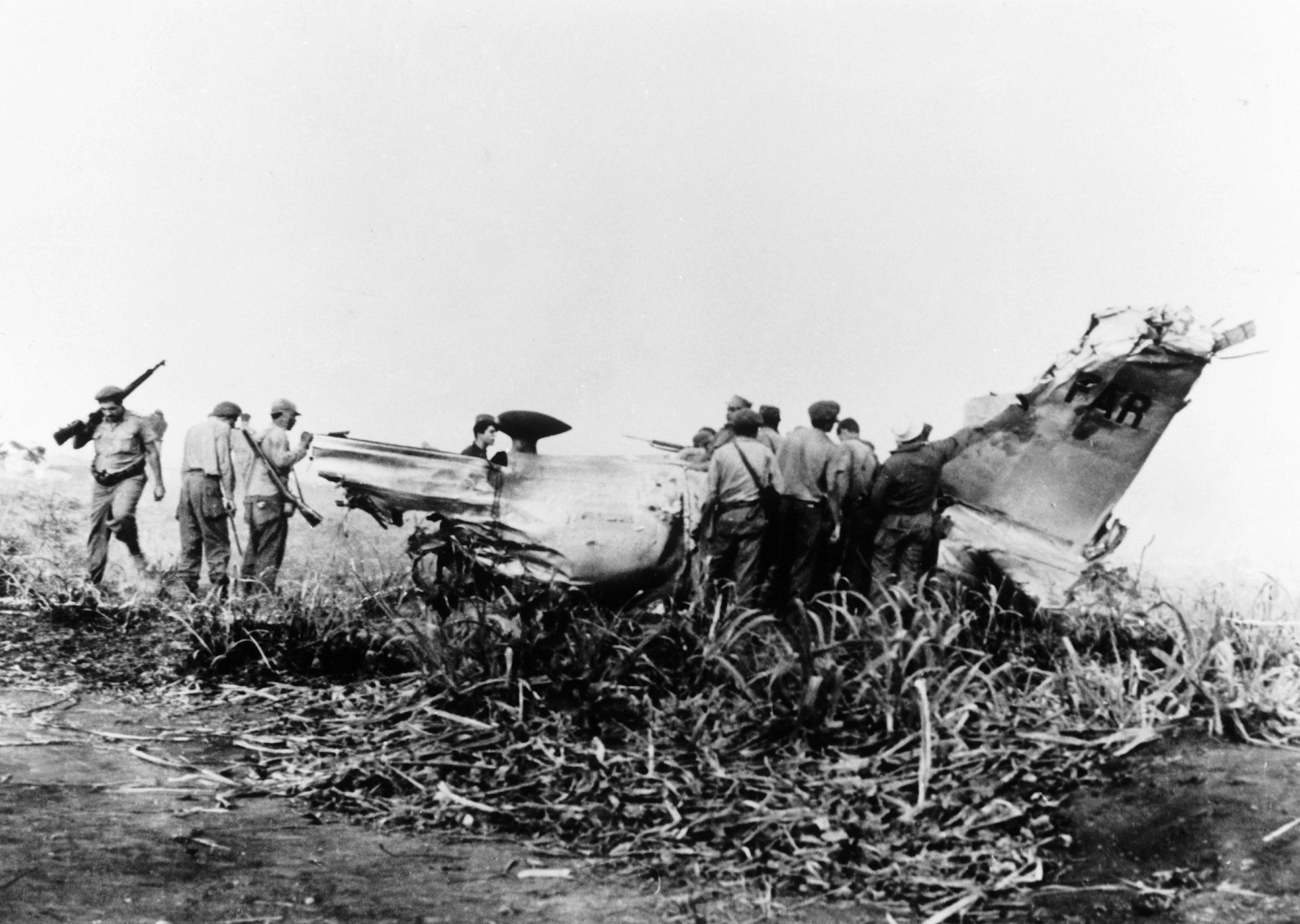
The CIA-led Bay of Pigs invasion in April 1961 is only the most famous episode. The U.S. trained 1,400 Cuban exiles to invade Cuba, hoping to ignite a nationwide rebellion. Instead, Cubans rallied behind the government.
L’invasion de la Baie des Cochons, menée par la CIA en avril 1961, n’est que l’épisode le plus célèbre. Les États-Unis formèrent 1 400 exilés cubains pour envahir Cuba, dans l’espoir d’allumer une rébellion nationale. Au lieu de cela, les Cubains se sont ralliés au gouvernement.
Though U.S. analysts often criticize the invasion because it failed, it was also a major crime under international law. Several hundred Cubans were killed.
Bien que les analystes américains critiquent souvent cette invasion car elle a échoué, il s’agissait également d’un crime majeur en droit international. Plusieurs centaines de Cubains ont été tués.
Fear of a repeat invasion also led Soviet premier Nikita Khrushchev to send nuclear missiles to Cuba, precipitating the Cuban missile crisis of October 1962 that nearly led to nuclear war.
La crainte d’une nouvelle invasion mena également le Premier soviétique Nikita Khrouchtchev à envoyer des missiles nucléaires à Cuba, précipitant la crise des missiles de Cuba en octobre 1962 qui a failli mener à une guerre nucléaire.
Longtime CIA official Richard Helms later testified that in the early 1960s, “We had task forces that were striking at Cuba constantly. We were attempting to blow up power plants, we were attempting to ruin sugar mills, we were attempting to do all kinds of things during this period. This was a matter of American Government policy.”
Le fonctionnaire de longue date de la CIA, Richard Helms, témoigna plus tard qu’au début des années 1960, «nous avions des groupes de travail qui attaquaient constamment Cuba. Nous tentions d’exploser des centrales électriques, nous tentions de détruire des usines à sucre, nous essayions de faire toutes sortes de choses pendant cette période. C’était une question de politique du gouvernement américain».
In 1976, Luis Posada Carriles and Orlando Bosch, two Cuban exiles, planned the bombing of a Cuban civilian airliner near Barbados that killed all 73 people aboard.
En 1976, Luis Posada Carriles et Orlando Bosch, deux exilés cubains, planifièrent le bombardement d’un avion civil cubain près des Caraïbes qui tua les 73 personnes à bord.
“The C.I.A. taught us everything,” Posada Carriles said later. “They taught us explosives, how to kill, bomb, trained us in acts of sabotage.”
«La CIA nous a tout appris», déclara plus tard Posada Carriles. «Ils nous ont appris l’explosif, comment tuer, bomber, nous ont formé aux actes de sabotage».
Both men were given refuge in the United States for the rest of their lives.
Les deux hommes reçurent refuge aux États-Unis pour le reste de leur vie.
The Bay of Pigs invasion and the airline bombing violate the core principles of international law, including prohibitions on the unprovoked “threat or use of force” and collective punishment. The U.S. government itself defines “international terrorism” as “violent acts” intended “to influence the policy of a government by intimidation or coercion” or to “intimidate or coerce a civilian population.”
L’invasion de la Baie des Cochons et le bombardement de l’avion violent les principes fondamentaux du droit international, y compris les interdictions de «menace ou d’usage de la force» non provoqués et de châtiment collectif. Le gouvernement américain lui-même définit le «terrorisme international» comme des «actes violents» destinés «à influencer la politique d’un gouvernement par intimidation ou coercition» ou à «intimider ou contraindre une population civile».
By that definition, its Cuba policy qualifies.
Selon cette définition, sa politique envers Cuba y correspond.
By ‘every possible means’
Par « tous les moyens possibles »
Another U.S. method of striking at Cuba was through economic sanctions, first imposed on the country in 1960. That year, a State Department official wrote that “every possible means should be undertaken promptly to weaken the economic life of Cuba” so as “to bring about hunger, desperation and overthrow of government.” The logic of collective punishment was clear: make Cubans suffer enough that they rebel against Castro.
Une autre méthode américaine pour frapper Cuba était par des sanctions économiques, imposées au pays en 1960. Cette année-là, un fonctionnaire du Département d’État a écrit que « tous les moyens possibles devaient être déployés rapidement pour affaiblir la vie économique de Cuba » afin de « provoquer la faim, le désespoir et le renversement du gouvernement ». La logique de la punition collective était claire: faire souffrir suffisamment les Cubains pour qu’ils se rebellent contre Castro.
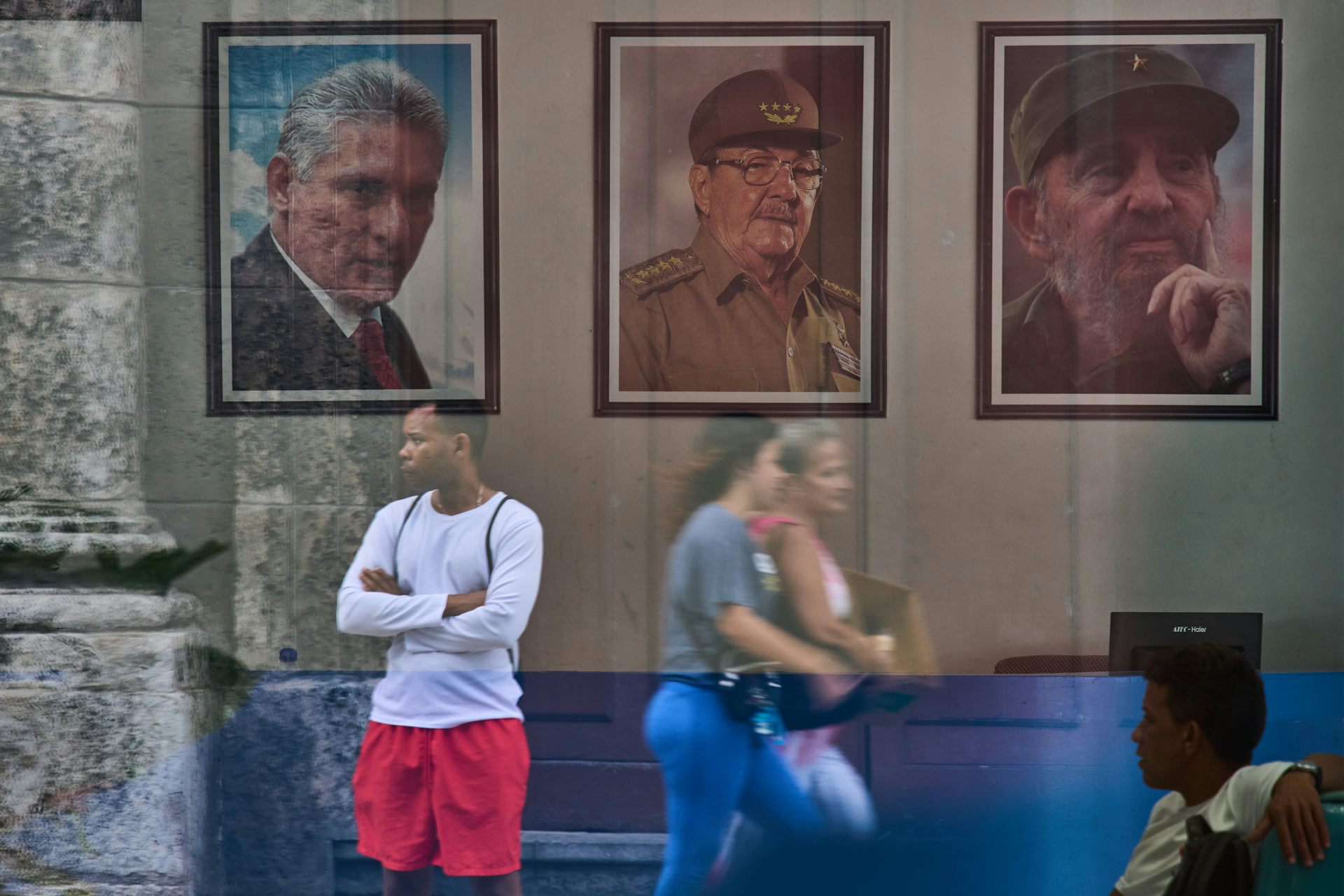
This policy is now more aggressive than ever. The tightening of U.S. sanctions since Trump’s first term has reduced Cuba’s income from tourism, remittances and overseas medical missions. Now, by choking off the supply of fuel, the U.S. has critically weakened the healthcare and sanitation systems that depend on electricity.
Cette politique est aujourd’hui plus agressive que jamais. Le resserrement des sanctions américaines depuis le premier mandat de Trump a réduit les revenus de Cuba provenant du tourisme, des transferts de fonds et des missions médicales à l’étranger. Maintenant, en coupant l’approvisionnement en carburant, les États-Unis ont gravement affaibli les systèmes de santé et d’assainissement qui dépendent de l’électricité.
Medical professionals and United Nations observers have described scenes of ventilators and incubators left without power, pharmacies empty and healthcare workers forced into “horrible decisions” about who lives and dies. A recent medical study reported a 148% increase in infant mortality between 2018 and 2025, meaning that about 1,800 infants died who otherwise would have lived.
Les professionnels de la santé et les observateurs des Nations Unies ont décrit des scènes de ventilateurs et d’incubateurs laissés sans électricité, des pharmacies vides et le personnel soignant forcé de prendre des « décisions horribles » concernant qui vit et qui meurt. Une étude médicale récente a signalé une augmentation de 148 % de la mortalité infantile entre 2018 et 2025, ce qui signifie qu’environ 1 800 nourrissons sont morts alors qu’ils auraient pu vivre.
‘I was trained as a terrorist by the United States’
« J’ai été formé comme terroriste par les États-Unis »
The focus of the recent U.S. indictment against Raúl Castro was the incident on Feb. 24, 1996, when the Cuban military, which was headed by Castro, shot down those two planes.
L’objet de la récente mise en accusation américaine contre Raúl Castro était l’incident du 24 février 1996, lorsque l’armée cubaine, dirigée par Castro, a abattu ces deux avions.
The planes were operated by Brothers to the Rescue, an anti-Castro group of Cuban exiles who said they were aiding Cuban emigres trying to reach Florida. The group’s head, and one of the surviving pilots that day, was José Basulto, a veteran CIA asset and participant in the Bay of Pigs invasion.
Les avions étaient opérés par Brothers to the Rescue, un groupe d’exilés anti-Castro qui affirmait aider les émigrés cubains tentant d’atteindre la Floride. Le chef du groupe, et l’un des pilotes survivants ce jour-là, était José Basulto, un ancien actif de la CIA et participant à l’invasion de la baie des Cochons.
In 1962, Basulto fired a cannon and machine gun “16 times” at a Cuban hotel, he later recounted. “I was trained as a terrorist by the United States,” Basulto once told an interviewer.
En 1962, Basulto avait tiré un canon et une mitrailleuse « 16 fois » sur un hôtel cubain, a-t-il raconté plus tard. « J’ai été formé comme terroriste par les États-Unis », avait dit Basulto à un journaliste.
Basulto’s plane had entered Cuban airspace on Feb. 24, as a U.S. customs service specialist later testified. Correspondence from the day shows that Basulto did so knowingly. The previous July, he had told a TV audience, “We want confrontation.”
L’avion de Basulto était entré dans l’espace aérien cubain le 24 février, comme en témoigna plus tard un spécialiste des douanes américaines. La correspondance de cette journée montre que Basulto a agi en connaissance de cause. Le mois précédent, il avait déclaré à une audience télévisée: « Nous voulons la confrontation. »
While the Cuban military could have deescalated the situation more carefully that day, Cuba had been trying for months to stop the violations of its airspace.
Bien que l’armée cubaine aurait pu désamorcer la situation plus prudemment ce jour-là, Cuba tentait depuis des mois d’arrêter les violations de son espace aérien.
I believe indicting Cuban officials over the incident is disingenuous, given the provocations by Brothers to the Rescue and U.S. actions against Cuba, which are in direct violation of international and U.S. laws that prohibit threats, nondefensive violence and collective punishment.
Je crois que mettre en accusation des fonctionnaires cubains pour cet incident est fallacieux, compte tenu des provocations de Brothers to the Rescue et des actions américaines contre Cuba, qui constituent une violation directe du droit international et américain interdisant les menaces, la violence non défensive et la punition collective.
Kevin A. Young does not work for, consult, own shares in or receive funding from any company or organization that would benefit from this article, and has disclosed no relevant affiliations beyond their academic appointment.
Kevin A. Young ne travaille pour, ne consulte pas, ne détient pas d’actions ni ne reçoit de financement de la part d’aucune entreprise ou organisation qui bénéficierait de cet article, et n’a divulgué aucune affiliation pertinente au-delà de sa nomination universitaire.
Read more
-
La plus grande étude mondiale sur les auteurs d’abus sexuels sur mineurs révèle pourquoi ils abusent
World’s largest study of child sexual abuse perpetrators reveals why they abuse
-
Comment la migration est devenue une clé du succès en Coupe du Monde
How migration became a key to World Cup success