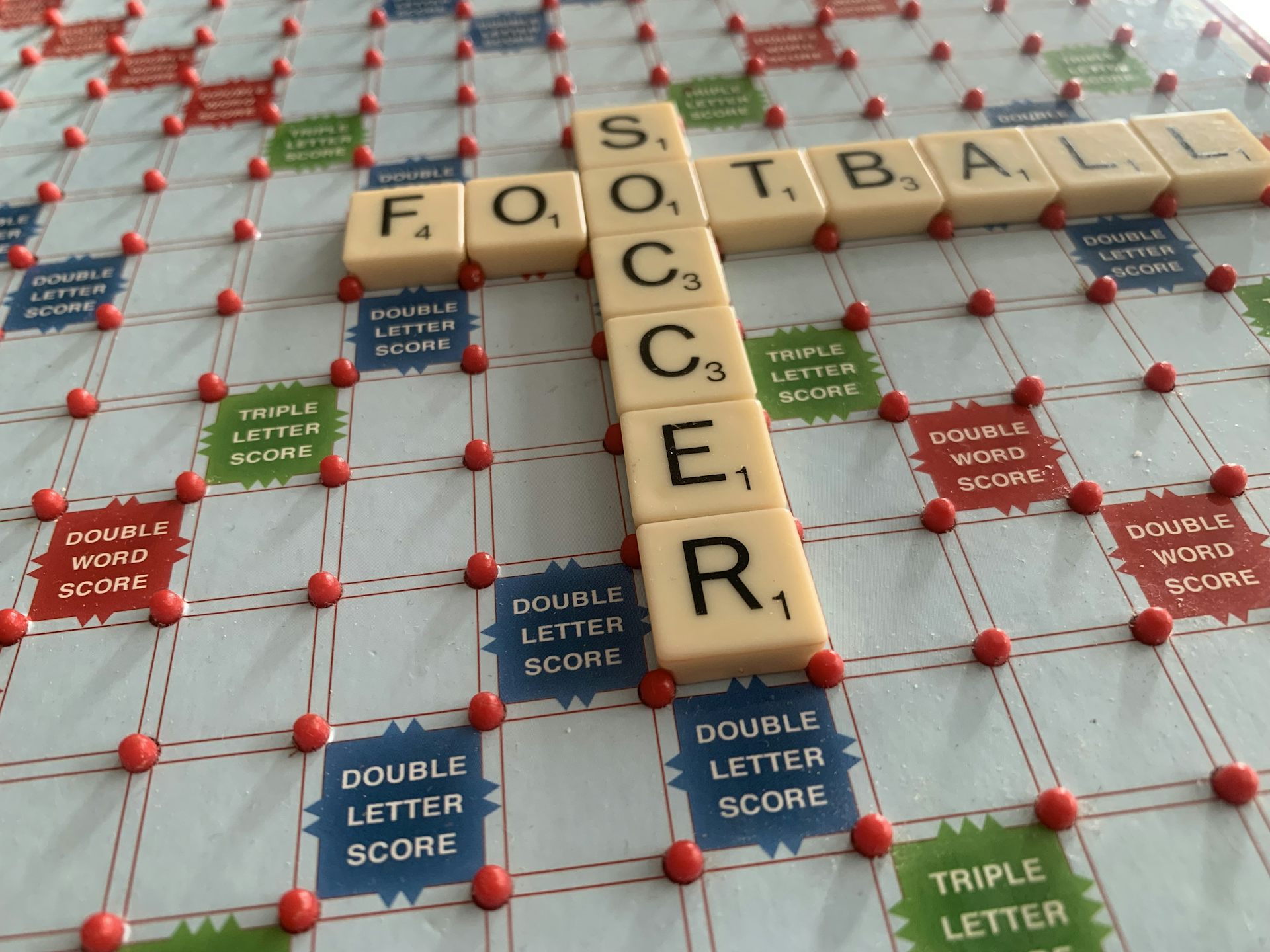
« Soccer » est un terme parfait pour le beau jeu – ne laissez aucun snob du « football » ou président vous dire le contraire lors de cette Coupe du Monde.
‘Soccer’ is a fine term for the beautiful game – don’t let any ‘football’ snob or president tell you otherwise this World Cup
‘Soccer’ originated as a slang term in the 1880s and continues to be used around the world today. So why are some people squeamish about the term?
« Soccer » est originaire d’un terme d’argot dans les années 1880 et continue d’être utilisé dans le monde entier aujourd’hui. Alors, pourquoi certaines personnes sont mal à l’aise avec ce terme ?
At the 2026 World Cup draw, FIFA Peace Prize recipient and U.S. President Donald Trump announced that the game should really be called “football.”
Lors du tirage au sort de la Coupe du Monde 2026, le lauréat du Prix de la paix de la FIFA et président des États-Unis, Donald Trump, a annoncé que le jeu devrait vraiment s’appeler « football ».
“There’s no question about it. We have to come up with another name for the NFL. It really doesn’t make any sense,” said Trump, an apparently new convert to the round-ball game.
« Il n’y a pas de question. Nous devons trouver un autre nom pour la NFL. Cela n’a vraiment aucun sens », a déclaré Trump, apparemment un nouveau converti au jeu de ballon rond.
He isn’t alone. The word “soccer” is, in some parts of the world, shunned by some fans.
Il n’est pas seul. Le mot « soccer » est, dans certaines régions du monde, dédaigné par certains fans.
Indeed, as a scholar of the sport who teaches a course called Soccer and Global Politics, I am bombarded with comments that the word “soccer” does not make any sense, and that people who use that term obviously know nothing about the beautiful game.
En effet, en tant qu’universitaire du sport qui enseigne un cours intitulé « Soccer and Global Politics », je suis inondé de commentaires selon lesquels le mot « soccer » n’a aucun sens, et que les personnes qui utilisent ce terme ne savent évidemment rien du beau jeu.
To me, this disparagement of the word “soccer” is not only petty and tiresome – it is also incorrect. It ignores the roots of the sport and the development of the language of the game.
Pour moi, ce dénigrement du mot « soccer » n’est pas seulement mesquin et lassant – il est également incorrect. Il ignore les racines du sport et le développement du langage du jeu.
Rather than making the word taboo, the football ecosystem should embrace it. To understand why, let’s go back to the beginning.
Plutôt que de rendre le mot tabou, l’écosystème du football devrait l’embrasser. Pour comprendre pourquoi, revenons au début.
Associated to ‘assoc’ and then ‘soccer’
Associé à « assoc », puis à « soccer »
The game has been around in various forms for centuries, but it began to be codified in the mid-19th century.
Le jeu existe sous diverses formes depuis des siècles, mais il a commencé à être codifié au milieu du XIXe siècle.
“Association Football” was coined in 1863 to distinguish the game from rugby football, which, somewhat ironically, is played largely with the ball in hand.
« Association Football » a été inventé en 1863 pour distinguer ce jeu du rugby, qui, ironiquement, se joue en grande partie avec le ballon en main.
British university students created their own slang at the time by abbreviating words and adding “-er” to them. Thus, “rugby” became “rugger” and “association football” was shortened to “assoc” and slanged to “soccer.”
Les étudiants des universités britanniques ont créé leur propre argot à l’époque en abrégé des mots et en leur ajoutant «-er ». Ainsi, « rugby » est devenu « rugger » et « association football » a été raccourci en « assoc » puis en argot « soccer ».
And this term “soccer” was freely and proudly used in the British press and in public for nearly a century, until the 1980s.
Et ce terme « soccer » a été utilisé librement et avec fierté dans la presse britannique et en public pendant près d’un siècle, jusqu’aux années 1980.
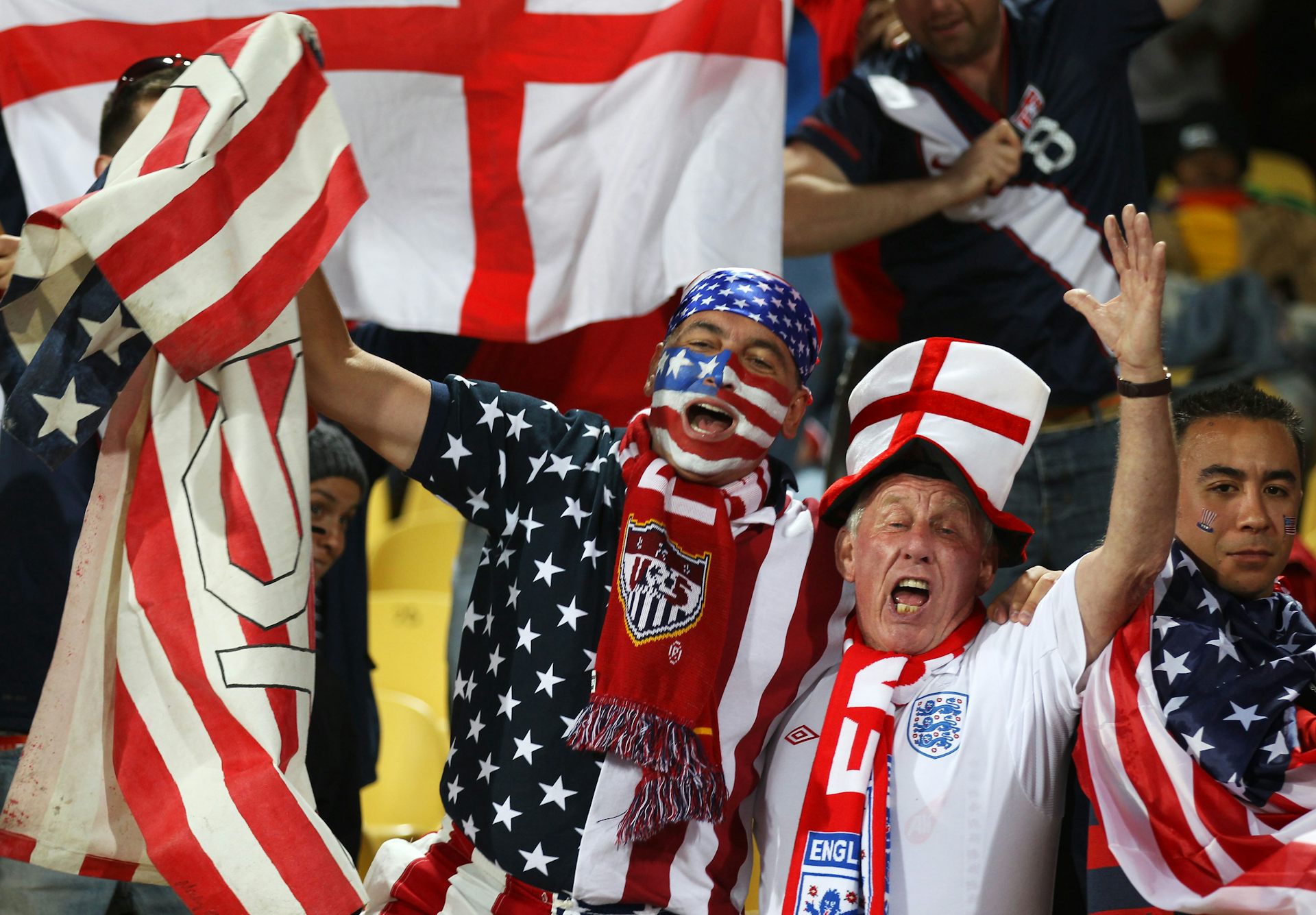
In countries with other established codes of football – American football, Australian rules football and Gaelic football in Ireland – “soccer” became the dominant term. But British fans began abandoning the word in the 1980s, largely as a response to the embrace of the term in the States. And now, in the U.K. especially – but also among fans in the U.S. and Canada who present as “true” fans of the game – there are attempts to shame those who use the very term that the British invented and proudly used.
Dans les pays disposant d’autres codes de football établis – le football américain, le football australien et le football gaélique en Irlande – « soccer » est devenu le terme dominant. Mais les fans britanniques ont commencé à abandonner ce mot dans les années 1980, en grande partie en réaction à l’adoption du terme aux États-Unis. Et maintenant, au Royaume-Uni en particulier – mais aussi parmi les fans aux États-Unis et au Canada qui se présentent comme de « vrais » passionnés de ce jeu – il y a des tentatives pour faire honte à ceux qui utilisent le terme même que les Britanniques ont inventé et utilisé avec fierté.
And that’s a pity. After all, using the word “soccer” has benefits. The British press continues to use “soccer” and “football” interchangeably to avoid repetitive writing. The shorter word is useful for tabloid editors when creating tight headlines. And using both words does not reveal that a person is ignorant but rather cosmopolitan.
Et c’est dommage. Après tout, utiliser le mot « soccer » présente des avantages. La presse britannique continue d’utiliser « soccer » et « football » de manière interchangeable pour éviter les répétitions. Le mot plus court est utile pour les rédacteurs de tabloïds lorsqu’ils créent des titres concis. Et utiliser les deux mots ne révèle pas qu’une personne est ignorante, mais plutôt cosmopolite.
The widespread use of “soccer” in Britain is still evident in the ongoing success of authoritative magazine World Soccer, founded in London in 1960; the TV show “Soccer AM,” which ran every Saturday from 1994 to 2023; the annual British charity match Soccer Aid; and Sky Sports’ “Soccer Saturday.” All document the enduring legacy of the term in Britain, despite the naysayers.
L’utilisation généralisée de « soccer » en Grande-Bretagne est encore évidente dans le succès continu du magazine de référence World Soccer, fondé à Londres en 1960; de l’émission de télévision « Soccer AM », qui a été diffusée chaque samedi de 1994 à 2023; du match caritatif britannique annuel Soccer Aid; et de « Soccer Saturday » de Sky Sports. Tous documentent l’héritage durable du terme en Grande-Bretagne, malgré les détracteurs.
A shared vernacular
Un vernaculaire commun
The beautiful game is also a universal one with a language shared by some 4 billion people.
Le beau jeu est également un jeu universel avec un langage partagé par environ 4 milliards de personnes.
Language evolves, and fans today equally understand “football,” “soccer,” “calcio,” “futebol” or “fútbol.”
Le langage évolue, et les fans d’aujourd’hui comprennent tout aussi bien « football », « soccer », « calcio », « futebol » ou « fútbol ».
Embracing all the variations of the beautiful game enriches the conversation. It illustrates the sport’s globalization and universal language, a shared vernacular that cuts across identities.
Adopter toutes les variations du beau jeu enrichit la conversation. Cela illustre la mondialisation du sport et son langage universel, un vernaculaire commun qui transcende les identités.
And besides, nobody wants the war that would ensue if American football fans were forced to find another name!
Et en plus, personne ne veut la guerre qui éclaterait si les fans de football américain étaient forcés de trouver un autre nom!
Kirk Bowman does not work for, consult, own shares in or receive funding from any company or organization that would benefit from this article, and has disclosed no relevant affiliations beyond their academic appointment.
Kirk Bowman ne travaille pour, ne consulte pas, ne détient pas de parts ni ne reçoit de financement de quelque entreprise ou organisation que ce soit qui pourrait bénéficier de cet article, et n’a divulgué aucune affiliation pertinente au-delà de sa nomination universitaire.
Read more
-

Comment le Venezuela a – et n’a pas – changé depuis la capture de Maduro
How Venezuela has – and hasn’t – changed since Maduro’s capture
-
Des fissures sur la Station spatiale internationale provoquent des fuites d’air – combien de temps encore peut-elle rester habitable ?
Cracks in the International Space Station are causing air leaks – how much longer can it remain habitable?