
La obra maestra de Marjane Satrapi, Persepolis, transformó la comprensión mundial de Irán
Marjane Satrapi’s masterpiece Persepolis transformed the world’s understanding of Iran
First published in 2000, Persepolis created a transformative shift in comics, memoir and political storytelling. Its Iranian–French creator has died, aged 56.
Publicada por primera vez en 2000, Persepolis creó un cambio transformador en los cómics, la memoria y la narrativa política. Su creadora iraní-francesa ha fallecido, con 56 años.
Marjane Satrapi, best known for her memoir and film Persepolis, has died, aged 56. The death of this much loved Iranian–French artist, graphic novelist, film-maker and activist has been met with widespread celebration of her life – and its dedication to resistance, freedom and humanity. French president Emmanuel Macron paid tribute to “a great artist who transformed an Iranian childhood into a universal fable”.
Marjane Satrapi, mejor conocida por su memoria y la película Persepolis, ha fallecido a la edad de 56 años. La muerte de esta querida artista iraní-francesa, novelista gráfica, cineasta y activista, fue recibida con una celebración general de su vida y de su dedicación a la resistencia, la libertad y la humanidad. El presidente francés Emmanuel Macron rindió homenaje a “una gran artista que transformó una infancia iraní en una fábula universal”.
Satrapi was born in Rasht (like my own mother) in 1969, then raised in Tehran. She came of age during the Iranian Revolution and the turbulent years that followed. As political repression intensified, members of her family and wider social circle were arrested, persecuted – and in some cases, executed, like her uncle Anoosh, a former political prisoner and exile, executed by the Islamic Republic.
Satrapi nació en Rasht (como mi propia madre) en 1969 y luego creció en Teherán. Alcanzó la edad adulta durante la Revolución Iraní y los turbulentos años que siguieron. A medida que la represión política se intensificaba, miembros de su familia y su círculo social más amplio fueron arrestados, perseguidos —y en algunos casos, ejecutados—, como su tío Anoosh, un ex prisionero político y exiliado, ejecutado por la República Islámica.
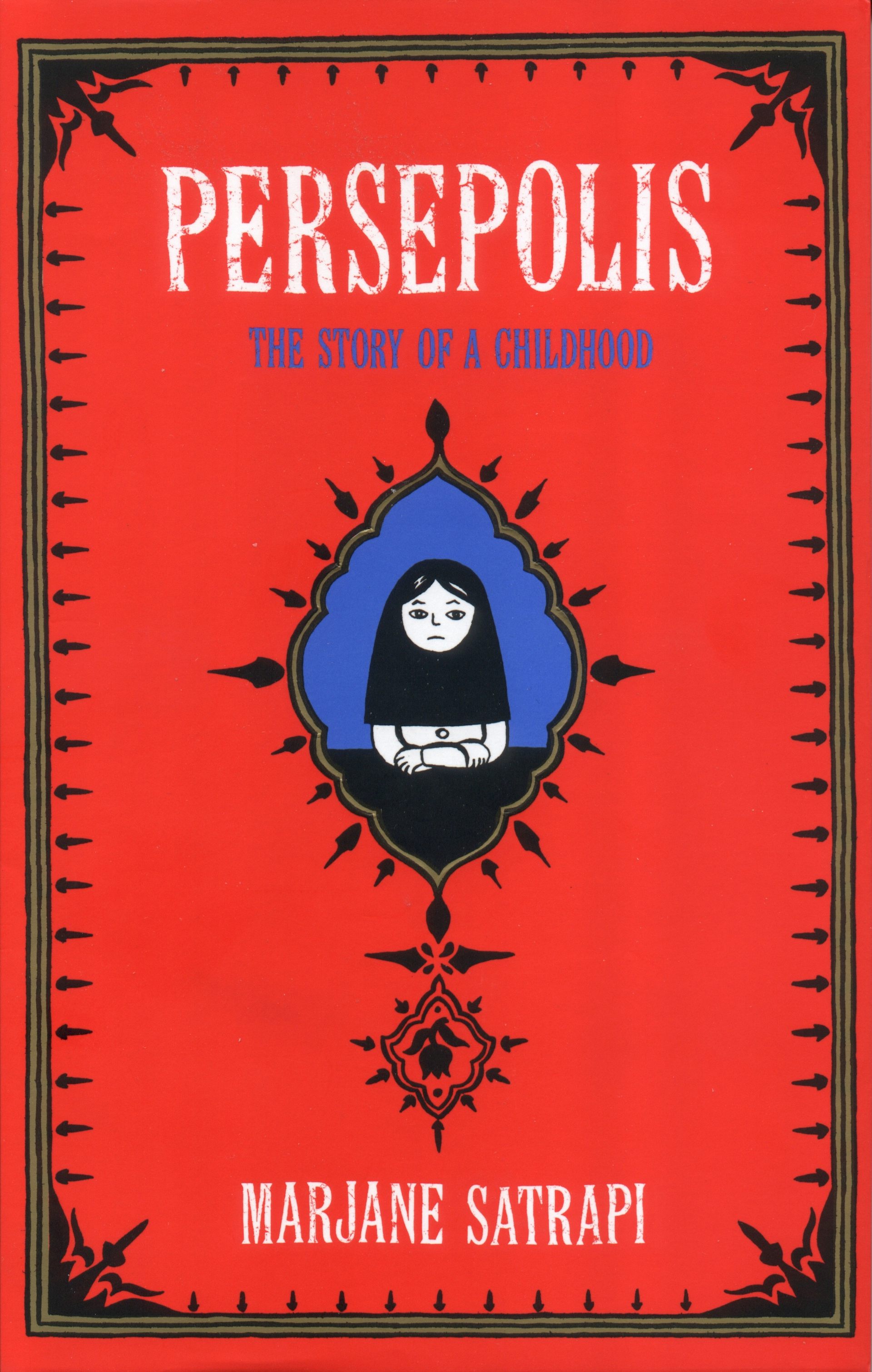
First published in 2000, Persepolis created a transformative shift in comics, memoir and political storytelling. Eventually extended into four volumes, it follows Satrapi’s childhood, her adolescence in Vienna (where her parents sent her to study in 1983) and her later struggle to navigate belonging between Iran and Europe. Satrapi returned to Tehran to attend university in 1989. In 1994, she moved back to Europe.
Publicado por primera vez en 2000, Persepolis creó un cambio transformador en los cómics, la memoria y la narrativa política. Eventualmente extendido a cuatro volúmenes, sigue la infancia de Satrapi, su adolescencia en Viena (donde sus padres la enviaron a estudiar en 1983) y su posterior lucha por navegar la pertenencia entre Irán y Europa. Satrapi regresó a Teherán para asistir a la universidad en 1989. En 1994, se mudó de nuevo a Europa.
Satrapi finished her studies in France, where she settled, gaining French nationality in 2006. Last year, she refused France’s prestigious legion d’honneur, over its “hypocrisy” in its dealings with Iran.
Satrapi terminó sus estudios en Francia, donde se estableció, obteniendo la nacionalidad francesa en 2006. El año pasado, se negó la prestigiosa Legión de Honor de Francia, debido a su “hipocresía” en sus tratos con Irán.
Satrapi illustrated the dislocations of revolution, migration, adolescence and return in such a way that her memoir travelled far beyond her home country. Through its deceptively simple black-and-white illustrations, Persepolis became globally influential because it offered an intimate account of revolutionary Iran and exile that challenged dominant stereotypes.
Satrapi ilustró las dislocaciones de la revolución, la migración, la adolescencia y el regreso de tal manera que su memoria viajó mucho más allá de su país de origen. A través de sus ilustraciones en blanco y negro, aparentemente sencillas, Persepolis se volvió de influencia global porque ofreció un relato íntimo de la revolución iraní y el exilio que desafió los estereotipos dominantes.
For many readers, Satrapi is still the woman who explained Iran in the simplest, yet most powerful way.
Para muchos lectores, Satrapi sigue siendo la mujer que explicó Irán de la manera más simple y, sin embargo, más poderosa.
Growing up between worlds with Marjane
Crecer entre mundos con Marjane
Today, reading Persepolis with a cup of tea and a candle lit in Satrapi’s memory, I am struck by how little my reaction has changed since first watching the film at a university screening in France in 2019.
Hoy, al leer Persepolis con una taza de té y una vela encendida en memoria de Satrapi, me sorprende lo poco que ha cambiado mi reacción desde que vi la película por primera vez en una proyección universitaria en Francia en 2019.
Like Marjane, I grew up between worlds: the child of returnees in the early days of the revolution, a girl who wore the compulsory hijab, listened to Western music, argued with authority, fell in love, had her heart broken and dreamed of lives beyond the horizon. Later, I welcomed political activism, harassment, migration and multiple exiles into my life. Yet what made Persepolis so powerful was not that it reflected my experiences of repression, but that it captured everything beyond.
Como Marjane, crecí entre mundos: la hija de retornados en los primeros días de la revolución, una chica que llevaba el hiyab obligatorio, escuchaba música occidental, discutía con la autoridad, se enamoró, sufrió desengaños y soñó con vidas más allá del horizonte. Más tarde, incorporé al torbellino de mi vida el activismo político, el acoso, la migración y múltiples exilios. Sin embargo, lo que hizo que Persepolis fuera tan poderosa no fue que reflejara mis experiencias de represión, sino que capturó todo lo que estaba más allá.
Satrapi reminded the world that Iranians are not merely subjects of geopolitics or victims of authoritarianism. We have families, friendships, humour, terrible fashion choices, impossible romances and complicated identities.
Satrapi recordó al mundo que los iraníes no son meros sujetos de la geopolítica ni víctimas del autoritarismo. Tenemos familias, amistades, humor, terribles elecciones de moda, romances imposibles e identidades complicadas.
Like all great memoirs, Persepolis made the particular universal. It allowed readers to see themselves in an Iranian girl from Tehran. In doing so, it made it harder to deny our shared humanity. Her art has the kind of charm that allows everyone to see themselves in one corner of it or another.
Como todos los grandes memorias, Persepolis hizo lo particular universal. Permitió a los lectores verse reflejados en una chica iraní de Teherán. Al hacerlo, fue más difícil negar nuestra humanidad compartida. Su arte tiene el tipo de encanto que permite a todos verse en un rincón o en otro.
In Satrapi’s hands, exile was neither heroic nor tragic. It was disorienting, lonely, creative and politically productive. Her enduring legacy, however, lies not simply in what she told the world about the country she left behind, but in what she revealed about the experience of living between worlds as a human being.
En manos de Satrapi, el exilio no fue ni heroico ni trágico. Fue desorientador, solitario, creativo y políticamente productivo. Sin embargo, su legado perdurable no reside simplemente en lo que le dijo al mundo sobre el país que dejó atrás, sino en lo que reveló sobre la experiencia de vivir entre mundos como ser humano.
“I was a Westerner in Iran, an Iranian in the West. I had no identity.” Few lines from Persepolis capture the condition of exile more powerfully than this one.
“Fui una occidental en Irán, una iraní en Occidente. No tenía identidad.” Pocas líneas de Persepolis capturan la condición de exilio con más fuerza que esta.
Reading Persepolis at different times of one’s life offers a language for contradictions that often feel impossible to explain: loving one’s country while criticising it, belonging to multiple places while feeling fully accepted by none, and carrying memories across borders that others struggle to understand.
Leer Persepolis en diferentes momentos de la vida ofrece un lenguaje para contradicciones que a menudo parecen imposibles de explicar: amar a su país mientras se lo critica, pertenecer a múltiples lugares sin sentirse completamente aceptado en ninguno, y llevar recuerdos a través de fronteras que otros luchan por entender.
In telling her own story, Satrapi captured something far larger than herself. In her 56 years of life, she stayed true to herself and never forgot where she came from.
Al contar su propia historia, Satrapi capturó algo mucho más grande que ella misma. En sus 56 años de vida, se mantuvo fiel a sí misma y nunca olvidó de dónde venía.
Iran: misunderstood and dehumanised
Irán: malentendido y deshumanizado
After the Islamic Revolution, the hostage crisis in the United States, the wars with Iraq and the emergence of a new world order after 9/11, Iran became a misunderstood country, its population dehumanised. Satrapi’s memoir restored its complexities and nuances to the imaginations of readers from different backgrounds.
Después de la Revolución Islámica, la crisis de rehenes en los Estados Unidos, las guerras con Irak y la emergencia de un nuevo orden mundial tras el 11 de septiembre, Irán se convirtió en un país malentendido, y su población fue deshumanizada. Las memorias de Satrapi restauraron sus complejidades y matices en la imaginación de lectores de diferentes orígenes.
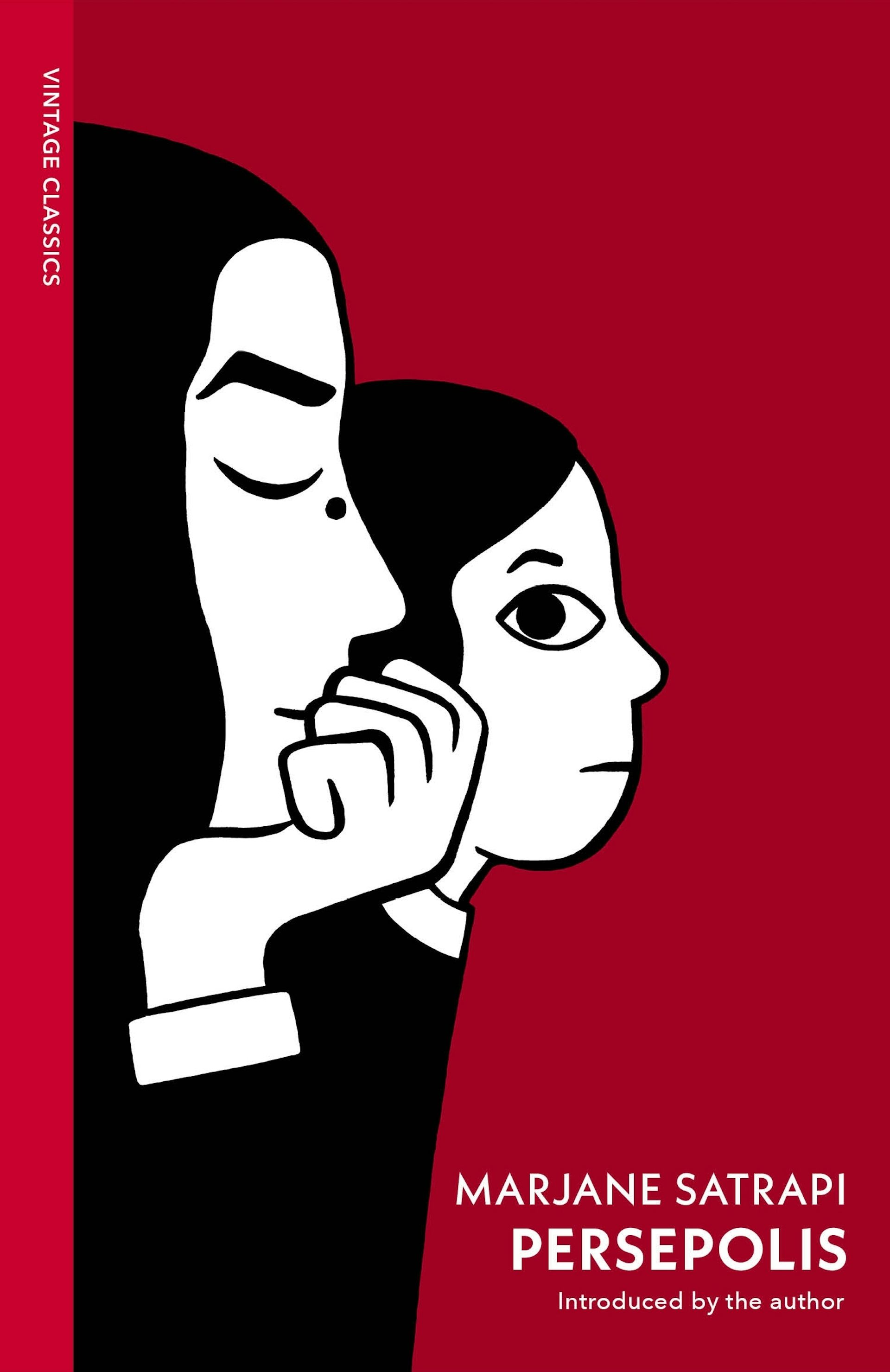
The power of Persepolis comes precisely from its ordinariness. Readers follow the life of a rebellious teenager. They learn about her family, grandparents, friends, teenage crushes, a failed marriage and the arguments that liven up any dinner table. Marjane’s story – garnished with music, humour and grief – reveals how extraordinary historical events are experienced through the mundane rhythms of everyday life.
El poder de Persepolis proviene precisamente de su ordinariedad. Los lectores siguen la vida de una adolescente rebelde. Aprenden sobre su familia, abuelos, amigos, enamoramientos de la adolescencia, un matrimonio fallido y las discusiones que animan cualquier mesa de la cena. La historia de Marjane, adornada con música, humor y dolor, revela cómo los eventos históricos extraordinarios se experimentan a través de los ritmos mundanos de la vida cotidiana.
Yet Persepolis is equally about leaving behind familiarity and home. Throughout, family becomes both refuge and history.
Sin embargo, Persepolis trata igualmente de dejar atrás la familiaridad y el hogar. A lo largo de la obra, la familia se convierte tanto en refugio como en historia.
In one of the book’s most moving sections, Satrapi’s beloved Uncle Anoosh tells her, “Our family memory must not be lost.” Decades later, those words resonate for me. Reading them, I often think of my own uncle, Kambiz, whom I lost long before my birth, when he was executed by the Islamic Republic aged 23.
En una de las secciones más conmovedoras del libro, el querido tío Anoosh de Satrapi le dice: «Nuestra memoria familiar no debe perderse». Décadas después, esas palabras resuenan para mí. Al leerlas, a menudo pienso en mi propio tío, Kambiz, a quien perdí mucho antes de mi nacimiento, cuando fue ejecutado por la República Islámica a la edad de 23 años.
But the significance of this moment extends beyond the boundaries of any single household. In authoritarian contexts, where states often seek to monopolise history and memory, families become custodians of alternative narratives. In stories passed down by parents, grandparents and relatives, Satrapi preserves memories of political imprisonment, resistance – and hope that official accounts might prefer to erase.
Pero la importancia de este momento se extiende más allá de los límites de cualquier hogar. En contextos autoritarios, donde los estados a menudo buscan monopolizar la historia y la memoria, las familias se convierten en custodios de narrativas alternativas. En las historias transmitidas por padres, abuelos y parientes, Satrapi preserva recuerdos de encarcelamiento político, resistencia y esperanza que los relatos oficiales podrían preferir borrar.
Nominated for an Oscar
Nominada para un Oscar
Satrapi returned to Iran before eventually settling in France, where she built the artistic career that would make her one of the most influential voices of the Iranian diaspora. She created several graphic storytelling books.
Satrapi regresó a Irán antes de establecerse finalmente en Francia, donde construyó la carrera artística que la convertiría en una de las voces más influyentes de la diáspora iraní. Creó varios libros de narrativa gráfica.
She co-wrote and co-directed the animated 2007 film adaptation of Persepolis, and was nominated for an Oscar, becoming the first woman nominated in the category of best animated feature. She went on to direct feature films.
Coescribió y codirigió la adaptación animada de Persepolis de 2007, y fue nominada a un Oscar, convirtiéndose en la primera mujer nominada en la categoría de mejor película animada. Posteriormente, dirigió largometrajes.
Satrapi’s alternative view of Iran is so compelling because she refuses to romanticise her own country, or to idealise Europe or the West. She rejects both nostalgic nationalism and complete assimilation. Instead, she inhabits the uncomfortable space in between.
La visión alternativa de Satrapi sobre Irán es tan convincente porque se niega a romantizar su propio país, ni a idealizar Europa o Occidente. Rechaza tanto el nacionalismo nostálgico como la asimilación completa. En cambio, habita el incómodo espacio intermedio.
For many Iranian migrants and exiles who came after her, this condition feels deeply familiar. Loving a country while criticising it. Belonging to multiple places while feeling fully accepted by none. Carrying memories that others cannot quite understand. Satrapi transformed these contradictions into a language that could be shared.
Para muchos migrantes y exiliados iraníes que llegaron después de ella, esta condición resulta profundamente familiar. Amar un país mientras se critica. Pertenecer a múltiples lugares sin sentirse completamente aceptado en ninguno. Llevar recuerdos que otros no pueden comprender del todo. Satrapi transformó estas contradicciones en un lenguaje que podía compartirse.
She critiqued the repression of the Islamic Republic while remaining critical of Western hypocrisy. She condemned fanaticism without embracing cultural superiority. “Between one’s fanaticism and the other’s disdain, it’s hard to know which side to choose,” she wrote in Persepolis.
Criticó la represión de la República Islámica mientras se mantenía crítica con la hipocresía occidental. Condenó el fanatismo sin abrazar la superioridad cultural. «Entre el fanatismo de uno y el desdén del otro, es difícil saber qué bando elegir», escribió en Persepolis.
Importantly, Satrapi never positioned herself as the sole voice of Iran. Rather, she understood her work as a form of translation. As Iran enters yet another period of uncertainty, marked by regional conflict, repression and deepening social fractures at home and in the diaspora, Satrapi continued to insist on the humanity and complexity of Iranian lives.
Es importante destacar que Satrapi nunca se posicionó como la única voz de Irán. Más bien, entendió su trabajo como una forma de traducción. A medida que Irán entra en otro período de incertidumbre, marcado por el conflicto regional, la represión y las profundas fracturas sociales en casa y en la diáspora, Satrapi continuó insistiendo en la humanidad y la complejidad de las vidas iraníes.
Her activism included supporting the Woman, Life, Freedom movement, following the death of Mahsa Jina Amini: a 22-year-old Kurdish-Iranian woman detained for allegedly not properly wearing the Islamic headscarf in 2022.
Su activismo incluyó el apoyo al movimiento Mujer, Vida, Libertad, tras la muerte de Mahsa Jina Amini: una mujer kurdo-iraní de 22 años detenida por supuestamente no llevar el hiyab islámico correctamente en 2022.
Her final years were spent challenging both the authoritarianism of the Iranian state and what she saw as the West’s persistent tendency to reduce Iranians to geopolitical abstractions, rather than people with histories, aspirations and agency.
Sus últimos años transcurrieron desafiando tanto el autoritarismo del estado iraní como lo que ella veía como la persistente tendencia de Occidente a reducir a los iraníes a abstracciones geopolíticas, en lugar de personas con historias, aspiraciones y agencia.
A gift for generations of exiles
Un regalo para generaciones de exiliados
For many Iranian exiles, Persepolis remains more than a memoir. It is a map. A guide to memory, identity, belonging and survival. It reminds me that exile is not simply a matter of geography, but of consciousness. It has taught me that dignity can be an act of resistance and that memory itself can become a political act in times of political amnesia.
Para muchos exiliados iraníes, Persepolis es más que una memoria. Es un mapa. Una guía de la memoria, la identidad, la pertenencia y la supervivencia. Me recuerda que el exilio no es simplemente una cuestión de geografía, sino de conciencia. Me ha enseñado que la dignidad puede ser un acto de resistencia y que la memoria misma puede convertirse en un acto político en tiempos de amnesia política.
Her characters rarely find liberation through departure alone; instead, they grapple with loneliness, reinvention and the persistent question of belonging. Yet Satrapi approached these themes with humour, tenderness and an insistence on complexity.
Los personajes rara vez encuentran la liberación solo con la partida; en cambio, lidian con la soledad, la reinvención y la persistente pregunta de la pertenencia. Sin embargo, Satrapi abordó estos temas con humor, ternura y una insistencia en la complejidad.
Marjane Satrapi spent her life ensuring that humanity, resistance and the memory of Iran is never forgotten. In doing so, she gave generations of readers – and generations of exiles – a more sophisticated language for understanding home, freedom and what it means to remain human between worlds.
Marjane Satrapi dedicó su vida a asegurar que la humanidad, la resistencia y la memoria de Irán nunca fueran olvidados. Al hacerlo, dio a generaciones de lectores – y a generaciones de exiliados – un lenguaje más sofisticado para comprender el hogar, la libertad y lo que significa seguir siendo humanos entre mundos.
Shadi Rouhshahbaz does not work for, consult, own shares in or receive funding from any company or organisation that would benefit from this article, and has disclosed no relevant affiliations beyond their academic appointment.
Shadi Rouhshahbaz no trabaja para, no asesora, no posee acciones en, ni recibe financiación de ninguna empresa u organización que se beneficie de este artículo, y no ha revelado afiliaciones relevantes más allá de su nombramiento académico.
Read more
-

La respuesta resuelta del Papa Leo al ataque de Trump revela a un hombre de Dios, no de política
Pope Leo’s resolute response to Trump attack reveals a man of God, not politics
-

¿Qué se necesitará para que los barcos vuelvan a pasar por el Estrecho de Ormuz?
What will it take to get ships going through the Strait of Hormuz again?