12.9万年的鳄鱼:我们了解的澳大拉西亚古代顶级掠食者
129,000 years of crocodiles: what we know about Austral…
A host of unique crocodylian species ruled the roost in Australia and surrounds for millions of years – until humans came along.
许多独特的鳄鱼类物种在澳大利亚及其周边地区统治了数百万年——直到人类到来。
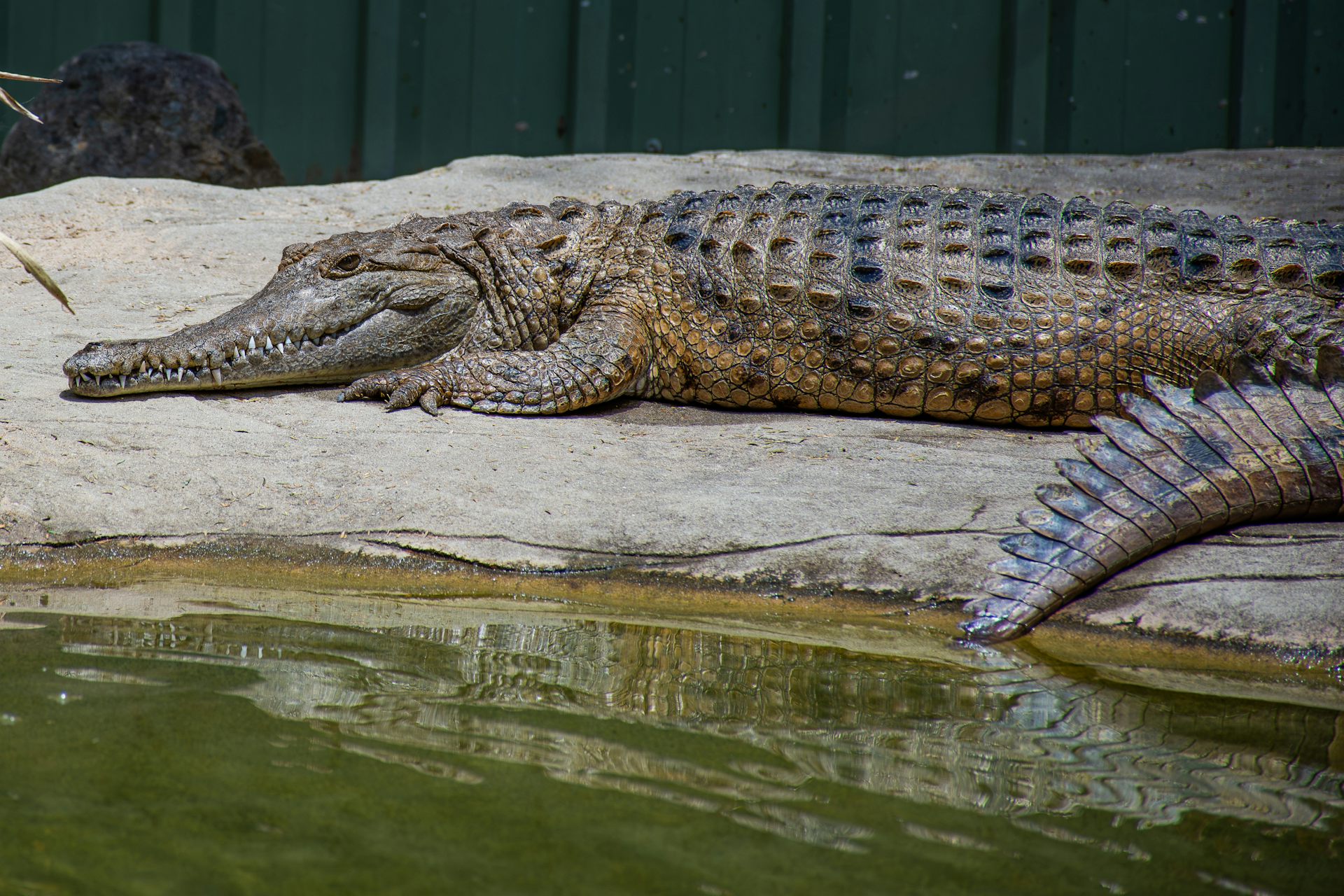
The sight of a saltwater crocodile basking on a mudbank is one of the most iconic and intimidating images of northern Australia. Yet the crocodiles that inhabit the region today are just the survivors of a much richer and stranger lost world.
看到咸水鳄在泥滩上晒太阳,是澳大利亚北部最具代表性且令人畏惧的景象之一。然而,如今栖息在该地区的鳄鱼,不过是更丰富、更奇特失落世界中的幸存者。
Until recently, Australasia was home not just to the familiar crocodiles found in tropical waterways, but also to a unique cast of crocs unlike any living species.
直到最近,澳大拉西亚不仅是热带水道中熟悉的鳄鱼的家园,也曾是各种不同于任何现存物种的独特鳄鱼群的栖息地。
Our recent review of evidence from the past 129,000 years reveals a dramatic story of extinctions, human encounters, and survival against the odds.
我们最近对过去129,000年证据的综述,揭示了一个关于灭绝、人类接触和逆境生存的戏剧性故事。
Mekosuchines – the lost rulers of Australasia
巨鳄科(Mekosuchines)——澳洲大陆失落的统治者
Modern crocodiles are members of the genus Crocodyls, but an entirely different group of crocodylians known as mekosuchines once dominated the region.
现代鳄鱼属于鳄科(Crocodyls),但一个完全不同的鳄鱼类群,被称为巨鳄科(mekosuchines),曾一度主宰该地区。
For more than 50 million years, mekosuchines were the apex predators of Australasia. Some even survived to meet humans.
在超过五千万年的时间里,巨鳄科是澳洲大陆的顶级掠食者。有些甚至一直存活到与人类相遇。
These remarkable animals came in an astonishing variety of shapes and sizes, inhabiting many different environments.
这些非凡的动物拥有令人惊叹的各种形状和大小,栖息在许多不同的环境中。
Some were giant semi-aquatic ambush predators, much like the saltwater crocodiles that still patrol northern rivers today. Others were much smaller “dwarf” species that inhabited islands such as New Caledonia. Most terrifyingly, some species possessed blade-like serrated teeth and probably hunted their prey on land.
有些是巨大的半水生伏击捕食者,非常类似于今天仍在巡逻北部河流的咸水鳄。其他则是一些栖息在新喀里多尼亚等岛屿的体型小得多的“侏儒”物种。最令人恐惧的是,一些物种拥有刀片状的锯齿牙,并且可能是在陆地上捕猎它们的猎物。
A fragmentary puzzle
一块零碎的谜题
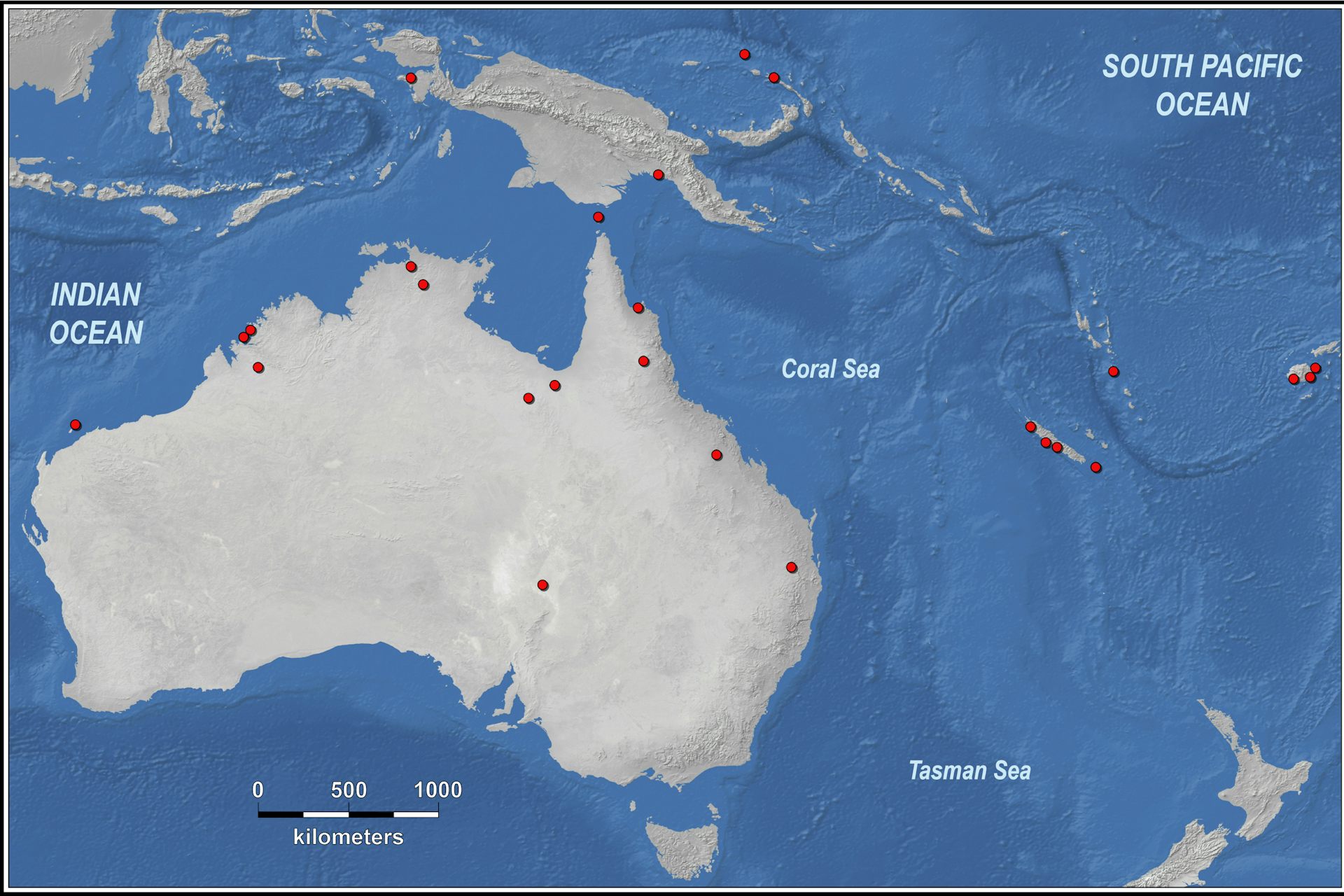
We pieced together a record of crocodylians over the past 129,000 years from scattered and highly fragmentary remains recovered from more than 20 archaeological and palaeontological sites.
我们从超过20个考古和古生物学遗址出土的零散且高度碎片化的残骸中,拼凑出了鳄鱼过去129,000年的记录。
Most are located in Australia, though some are found in New Guinea, and a handful more across the southwest Pacific. At archaeological sites on the Australian mainland, as well as in the Torres Strait and New Guinea, researchers have uncovered the broken bones and teeth of modern crocodile species, showing that these formidable reptiles have shared landscapes with people for thousands of years.
大部分位于澳大利亚,但也有一些在新几内亚发现,另有少量分布在西南太平洋地区。在澳大利亚大陆、托雷斯海峡和新几内亚的考古遗址,研究人员发现了现代鳄鱼物种的骨骼和牙齿,表明这些凶猛的爬行动物与人类共存了数千年。
Ancient rock art, some dating back around 20,000 years, reveals that Indigenous Australians were closely observing and depicting these animals for millennia. The distribution of archaeological remains and rock art closely mirrors the modern ranges of crocodiles today. This points to a long and relatively stable coexistence between humans and these powerful predators.
某些可追溯到约2万年前的古代岩画显示,原住民澳大利亚人几个千年来一直密切观察和描绘这些动物。考古遗骸和岩画的分布与现代鳄鱼的活动范围高度吻合。这表明人类与这些强大的掠食者之间存在着长期且相对稳定的共存关系。
Archaeological evidence shows that humans did occasionally eat crocodiles, and sometimes even crafted pendants from their teeth. Yet such discoveries are quite rare. When ancient archaeological sites do yield crocodile bones, there are usually only a handful of them.
考古证据显示,人类偶尔会食用鳄鱼,有时甚至会用它们的牙齿制作吊坠。然而,此类发现相当罕见。当古代考古遗址出土鳄鱼骨骼时,通常也只有寥寥几件。
The evidence suggests crocodiles were hunted only rarely. This is not surprising.
证据表明,捕猎鳄鱼的情况非常罕见。这并不令人意外。
Adult saltwater crocodiles are enormous, immensely powerful, and highly lethal to humans. For ancient communities, engaging with these apex predators would have been a hazardous undertaking, and something mostly avoided.
成年咸水鳄体型巨大,力量惊人,对人类具有极高的致命性。对于古代社区而言,与这些顶级掠食者接触将是一项危险的活动,因此大多会避免。
But modern crocodiles weren’t alone in these ancient landscapes. Fossils show they shared them with the mekosuchines.
但这些古代景观中,现代鳄鱼并非孤军奋战。化石显示它们曾与美科苏科(mekosuchines)共存于此。
On mainland Australia, mekosuchines are currently only known from fossils. Most remains date from more than 40,000 years ago. We currently have no evidence of these extinct crocs from archaeological sites or in ancient rock art.
在澳大利亚大陆,美科苏科目前仅凭化石存在。大多数遗骸可追溯到超过4万年前。目前,我们没有从考古遗址或古代岩画中找到这些已灭绝鳄鱼的证据。
We don’t know if humans and mekosuchines ever directly interacted in Australia. Their disappearance occurred around the same time as the extinction of other Australian megafauna, potentially after a long period of coexistence with humans. The exact cause of their demise in Australia remains a mystery.
我们不知道人类和美科苏科是否曾在澳大利亚直接互动。它们的消失时间与澳大利亚其他巨型动物群的灭绝时间大致相同,可能是在与人类长期共存之后。它们在澳大利亚灭绝的确切原因仍然是个谜。
Island extinctions
岛屿物种灭绝
However, the story is different on the islands of New Caledonia, Vanuatu and Fiji. There, some mekosuchine species managed to survive into much more recent times. And humans almost certainly encountered them directly.
然而,在所罗门群岛、瓦努阿图和斐济这些岛屿上,情况却有所不同。那里的一些美科苏科(mekosuchine)物种成功地存活到了更近的时期。而且人类几乎肯定曾与它们直接接触过。
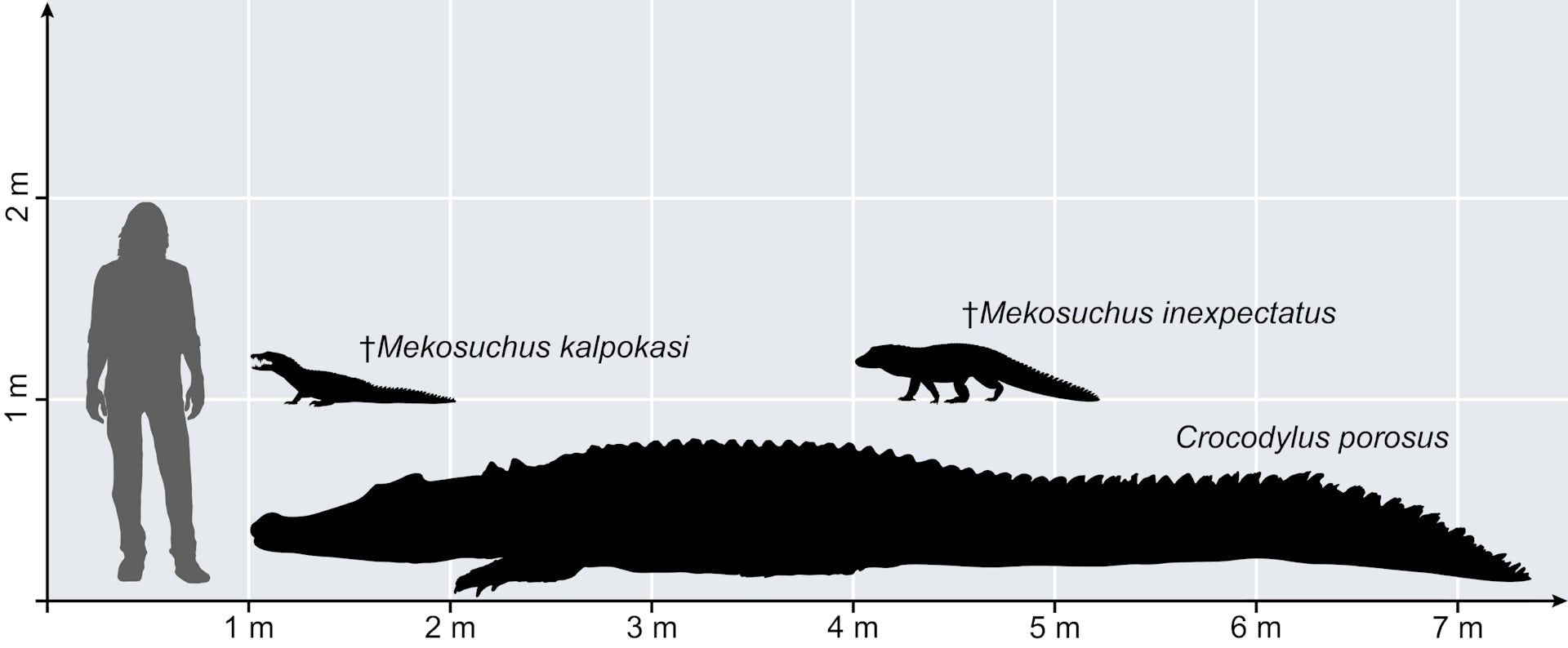
The extinct crocs of New Caledonia and Vanuatu were small, reaching less than two metres in length as adults. They also likely lived more on land than today’s semi-aquatic crocodiles. Their small statures and terrestrial lives would have made them far more accessible for human hunters.
新喀里多尼亚和瓦努阿图的已灭绝鳄鱼体型较小,成年后长度不到两米。它们可能生活在陆地上更多,而非像今天半水生的鳄鱼那样。它们体型小、生活在陆地,使得人类猎人更容易捕获。
Tragically, the known record of these island mekosuchines ends within a few centuries of human settlement. In several cases, their remains were found in association with human artefacts and middens.
悲剧的是,这些岛屿美科苏科的已知记录在人类定居的几个世纪内就结束了。在一些案例中,它们的遗骸与人类文物和垃圾堆(middens)一起被发现。
In one example from Vanuatu, a mekosuchine limb bone appears to bear the gnaw marks of a rat, an invasive species introduced to the island by humans. While definitive proof is elusive, it seems likely that direct or indirect human involvement may be the reason for the disappearance of these “dwarf” island crocodylians.
在瓦努阿图的一个例子中,一块美科苏科的肢骨上似乎带有老鼠啃咬的痕迹,老鼠是人类引入该岛的入侵物种。虽然确凿的证据难以找到,但很可能直接或间接的人类参与是这些“侏儒”岛屿鳄鱼消失的原因。
Lessons for the Anthropocene
人类世的教训
We are now living through the Anthropocene, an age when humans are profoundly influencing the planet and extinctions are accelerating, as is particularly evident in Australia.
我们正生活在人类世,这是一个人类深刻影响地球、物种灭绝加速的时代,这在澳大利亚尤为明显。
The prehistoric past is not just a record of vanished worlds, but a warning for the future. Understanding how apex predators like crocodiles responded to past climatic changes, environmental upheaval, and human impacts provides important clues for their conservation in the future.
史前过去不仅仅是消失世界的记录,更是对未来的警示。了解像鳄鱼这样的顶级捕食者如何应对过去的气候变化、环境剧变和人类影响,为它们未来的保护提供了重要的线索。
To truly unravel these questions will take the combined work of palaeontologists, archaeologists, ecologists and conservationists. Just as crucial will be deep engagement with Indigenous knowledges and land managers, whose long histories of observing and living alongside these animals offer clues for protecting the world’s remaining crocodiles, and the threatened ecosystems they inhabit.
要真正解开这些问题,需要古生物学家、考古学家、生态学家和保护主义者共同努力。与此同样关键的是深入了解原住民知识和土地管理者,他们长期观察和与这些动物共存的历史,为保护世界上剩余的鳄鱼及其栖息的受威胁生态系统提供了线索。
The authors do not work for, consult, own shares in or receive funding from any company or organisation that would benefit from this article, and have disclosed no relevant affiliations beyond their academic appointment.
作者不为任何可能从本文中受益的公司或组织工作、提供咨询、拥有股份或获得资金支持,并且除了其学术任职之外,未披露任何相关的隶属关系。