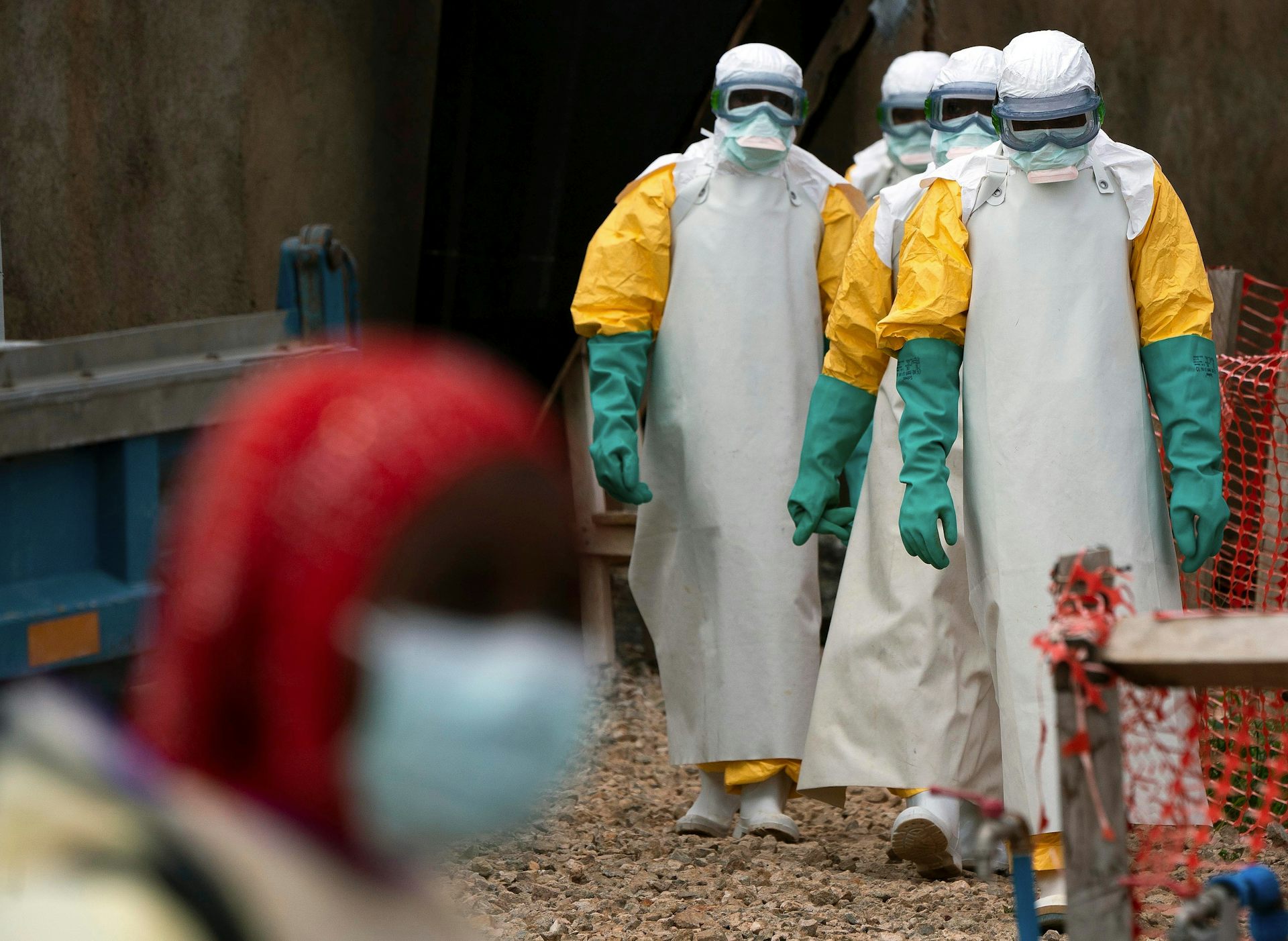
ما تحتاج لمعرفته حول تفشي إيبولا الذي أثار قلق منظمة الصحة العالمية
What you need to know about the Ebola outbreak that has the WHO concerned
While other forms of Ebola can be prevented with a vaccine, none are currently available to prevent this rare strain.
في حين أنه يمكن الوقاية من أشكال أخرى من إيبولا بلقاح، لا يتوفر حاليًا أي لقاح لمنع هذا السلالة النادرة.
The World Health Organization has declared the Ebola outbreak in Africa a public health emergency of international concern.
أعلنت منظمة الصحة العالمية عن تفشي الإيبولا في أفريقيا كحالة طوارئ صحية عامة تثير قلقاً دولياً.
So far, 336 people have been infected in the central African and East African countries of Uganda and the Democratic Republic of Congo. At least 88 people have died.
حتى الآن، أصيب 336 شخصاً في البلدين الأفريقيين المركزي والشرقي، أوغندا وجمهورية الكونغو الديمقراطية. وتوفي ما لا يقل عن 88 شخصاً.
Ebola is caused by a group of viruses called Orthoebolaviruses. The strain of the virus responsible for the outbreak, Bundibugyo, is rare. There is no vaccine to protect the public from its spread, making it particularly dangerous.
يسببه الإيبولا مجموعة من الفيروسات تسمى فيروسات أورثوإيبولا (Orthoebolaviruses) . السلالة من الفيروس المسؤولة عن التفشي، وهي “بونديبيغيو” (Bundibugyo) ، نادرة. ولا يوجد لقاح لحماية الجمهور من انتشاره، مما يجعله خطيراً بشكل خاص.
The WHO declares a public health emergency of international concern when there is a serious, sudden, unusual or unexpected outbreak that requires an international response to reduce its spread.
تعلن منظمة الصحة العالمية حالة طوارئ صحية عامة تثير قلقاً دولياً عندما يكون هناك تفشي خطير أو مفاجئ أو غير عادي أو غير متوقع يتطلب استجابة دولية للحد من انتشاره.
It has previously declared public health emergencies during outbreaks of mpox, COVID, Ebola, Zika, polio and swine flu.
وقد أعلنت سابقاً عن حالات طوارئ صحية عامة خلال تفشيات مرض القردة (mpox) ، وكوفيد-19 (COVID) ، والإيبولا، وفيروس زيكا، وشلل الأطفال، وإنفلونزا الخنازير.
When did this outbreak start?
متى بدأ هذا التفشي؟
The virus was first detected on May 5 in the Democratic Republic of the Congo (DRC) and was confirmed as the Bundibugyo strain on May 15.
تم اكتشاف الفيروس لأول مرة في 5 مايو في جمهورية الكونغو الديمقراطية (DRC) ، وتم تأكيده كسلالة بونديبيغيو في 15 مايو.
The disease had spread to Uganda, with two cases detected in the nation’s capital, Kampala.
انتشر المرض إلى أوغندا، حيث تم اكتشاف حالتين في عاصمة البلاد، كمبالا.
A recent suspected case in the DRC’s most populous city, Kinshasa, did not test positive but it seems likely that the outbreak could arrive in this city.
لم يظهرت حالة مشتبه بها مؤخراً في مدينة كينشاسا، الأكثر كثافة سكانية في جمهورية الكونغو الديمقراطية، نتيجة إيجابية، ولكن يبدو من المحتمل أن يصل التفشي إلى هذه المدينة.
The WHO has warned the true scale of the outbreak is likely larger than current figures suggest.
حذرت منظمة الصحة العالمية من أن الحجم الحقيقي للتفشي من المحتمل أن يكون أكبر مما تشير إليه الأرقام الحالية.
How does it spread?
كيف ينتشر؟
African fruit bats appear to be the natural hosts of the virus. Monkeys, apes and antelope can catch the infection from bats.
يبدو أن الخفافيش الفاكهية الأفريقية هي العائل الطبيعي للفيروس. يمكن للقردة والشمبانزي والظباء التقاط العدوى من الخفافيش.
The first human case was identified in the DRC in 1976. This is the 17th outbreak. The worst outbreak was the 2014–16 West Africa epidemic, which was caused by the Zaire strain and killed more than 11,000 people.
تم تحديد أول حالة بشرية في جمهورية الكونغو الديمقراطية عام 1976. وهذه هي تفشّي الوباء السابع عشر. وكان أسوأ تفشٍ هو وباء غرب أفريقيا 2014-2016، الذي تسبب بسلالة زائير وقتل أكثر من 11,000 شخص.
The virus spreads from human to human through direct contact with the bodily fluids of an infected person, such as blood, faeces or vomit, including after they’ve died.
ينتقل الفيروس من إنسان إلى إنسان من خلال التلامس المباشر مع سوائل الجسم لشخص مصاب، مثل الدم أو البراز أو القيء، بما في ذلك بعد وفاته.
Health-care workers and caregivers face the highest risk of infection.
يواجه العاملون في مجال الرعاية الصحية ومقدمو الرعاية أعلى خطر للإصابة بالعدوى.
What are the symptoms?
ما هي الأعراض؟
The symptoms of Ebola disease can be sudden and include a fever, fatigue, malaise, muscle pain, headache and sore throat.
يمكن أن تكون أعراض مرض الإيبولا مفاجئة وتشمل الحمى، والتعب، والشعور بالمرض، وآلام العضلات، والصداع، والتهاب الحلق.
These are followed by vomiting, diarrhoea, abdominal pain rash, and symptoms of impaired kidney and liver functions, leading to organ failure. In some cases, there is bleeding and haemorrhaging.
تليها القيء، والإسهال، وآلام البطن، والطفح الجلدي، وأعراض ضعف وظائف الكلى والكبد، مما يؤدي إلى فشل الأعضاء. وفي بعض الحالات، يحدث النزيف والنزيف الداخلي.
Overall, around 50% of people who contract Ebola die from it. The mortality rate of previous outbreaks ranges from 25–90%, depending on the strain and access to health care.
بشكل عام، يموت حوالي 50% من الأشخاص الذين يصابون بالإيبولا منه. يتراوح معدل الوفيات في تفشي الأمراض السابقة بين 25-90%، اعتماداً على السلالة وإمكانية الوصول إلى الرعاية الصحية.
The current strain has a lower death rate of around 40%. However it’s considered more dangerous as there is no vaccine.
السلالة الحالية لديها معدل وفيات أقل يبلغ حوالي 40%. ومع ذلك، تعتبر أكثر خطورة لأنه لا يوجد لقاح.
Why isn’t there a vaccine?
لماذا لا يوجد لقاح؟
There are two approved vaccines for Ebola.
هناك لقاحان معتمدان لفيروس الإيبولا.
One, Ervebo, was released in 2015 and was provided to 345,000 people during the 2018–2020 outbreaks in the DRC. This works by using a protein from the Ebola virus to train our immune system to recognise and respond to the virus, without using a live strain.
أحدهما، إيرفيبو (Ervebo) ، أُطلق في عام 2015 وقُدم لـ 345,000 شخص خلال تفشيات عامي 2018-2020 في جمهورية الكونغو الديمقراطية. يعمل هذا اللقاح باستخدام بروتين من فيروس الإيبولا لتدريب جهازنا المناعي على التعرف على الفيروس والاستجابة له، دون استخدام سلالة حية.
The other vaccine, Zabdeno, has undergone clinical trials. It is mainly provided to primary contacts and health-care workers. This is because it requires two doses, several weeks apart, making it less suited to an emergency response.
أما اللقاح الآخر، زابدينو (Zabdeno) ، فقد خضع لتجارب سريرية. ويُقدم بشكل أساسي لجهات الاتصال الأولية والعاملين في مجال الرعاية الصحية. ويرجع ذلك إلى أنه يتطلب جرعتين، تفصل بينهما عدة أسابيع، مما يجعله أقل ملاءمة للاستجابة لحالات الطوارئ.
Vaccines for the current Bundibugyo strain are sill in the research stage, having undergone pre-clinical trials in animal models.
لا تزال اللقاحات الخاصة بسلالة بونديبيغيو (Bundibugyo) الحالية في مرحلة البحث، حيث خضعت لتجارب ما قبل السريرية على نماذج حيوانية.
How is it treated and managed?
كيف يتم علاجه وإدارته؟
There are no specific treatments for the Bundibugyo strain. Treatment focuses on managing the symptoms such as maintaining blood pressure, reducing vomiting and diarrhoea, maintaining hydration, and managing fever and pain.
لا توجد علاجات محددة لسلالة بونديبوغيو. يركز العلاج على إدارة الأعراض مثل الحفاظ على ضغط الدم، وتقليل القيء والإسهال، والحفاظ على الترطيب، وإدارة الحمى والألم.
Public health responses are overseen by the WHO’s Ebola surveillance strategy. The response combines community communication, rapid diagnosis, isolation, contact tracing and safe burials to stop transmission.
تشرف على الاستجابات الصحية العامة استراتيجية منظمة الصحة العالمية لمراقبة الإيبولا. يجمع هذا الاستجابة بين التواصل المجتمعي، والتشخيص السريع، والعزل، وتتبع المخالطين، والدفن الآمن لوقف انتقال العدوى.
Contact tracing involves identifying everyone who had direct physical contact with a symptomatic case, monitoring them daily for 21 days, and isolating and testing anyone who develops symptoms.
يتضمن تتبع المخالطين تحديد كل شخص كان على اتصال جسدي مباشر بحالة مصابة، ومراقبتهم يوميًا لمدة 21 يومًا، وعزل واختبار أي شخص تظهر عليه الأعراض.
Testing uses real-time PCR and rapid antigen tests (RATs) to detect viral particles in a similar way to COVID.
يستخدم الاختبار تفاعل البوليميراز المتسلسل في الوقت الحقيقي (PCR) واختبارات المستضدات السريعة (RATs) للكشف عن الجسيمات الفيروسية بطريقة مماثلة لكوفيد.
However, local conflict, poverty and difficult terrain combine to make field management challenging.
ومع ذلك، يجمع الصراع المحلي والفقر والتضاريس الصعبة معًا مما يجعل إدارة الحقل أمرًا صعبًا.
Should we be concerned?
هل يجب أن نقلق؟
The epicentre of the outbreak, Ituri province, is a conflict-affected, high-traffic mining region. Workers regularly move across health zones and borders, increasing the risk of spread.
تُعدّ مقاطعة إيتوري، التي تُعدّ بؤرة التفشي، منطقة تعدين ذات حركة مرور عالية ومتأثرة بالصراع. يتحرك العمال بانتظام عبر المناطق الصحية والحدود، مما يزيد من خطر الانتشار.
At least four health-care workers have died, suggesting gaps in infection prevention at health-care facilities.
توفي ما لا يقل عن أربعة عاملين في مجال الرعاية الصحية، مما يشير إلى وجود ثغرات في الوقاية من العدوى في مرافق الرعاية الصحية.
There is no current need for border closures but authorities have recommended the DRC and Uganda enhance contact tracing and scale-up laboratory testing.
لا توجد حاليًا حاجة لإغلاق الحدود، لكن السلطات أوصت جمهورية الكونغو الديمقراطية وأوغندا بتعزيز تتبع المخالطين وتوسيع نطاق الاختبارات المعملية.
Australia’s direct risk remains low, and the WHO has advised against travel restrictions. Australian border authorities require those returning from Ebola-affected regions to report this.
يظل الخطر المباشر على أستراليا منخفضًا، ونصحت منظمة الصحة العالمية بالامتناع عن فرض قيود السفر. وتطلب سلطات الحدود الأسترالية من العائدين من المناطق المتأثرة بالإيبولا الإبلاغ عن ذلك.
As this is a rapidly evolving situation, it’s important to remain up-to-date with current restrictions and quarantine guidelines.
نظرًا لأن هذا وضع سريع التطور، فمن المهم البقاء على اطلاع بالقيود الحالية وإرشادات الحجر الصحي.
Thomas Jeffries does not work for, consult, own shares in or receive funding from any company or organisation that would benefit from this article, and has disclosed no relevant affiliations beyond their academic appointment.
لا يعمل توماس جيفريز لدى أو يستشير أو يمتلك حصصًا في أو يتلقى تمويلاً من أي شركة أو منظمة قد تستفيد من هذه المقالة، ولم يفصح عن أي انتماءات ذات صلة تتجاوز منصبه الأكاديمي.
Read more
-

الحياة الأسطورية للميغالودون تكشفها إعادة اكتشاف الأحافير
Megalodon’s legendary life revealed by fossil rediscovery
-

تناولت دراستنا سلوك المراهقين على وسائل التواصل الاجتماعي في 43 دولة – حيث يواجه الأفراد من الخلفيات المحرومة أضراراً أكبر.
Our study looked at teens’ social media behaviour in 43 countries – those from disadvantaged backgrounds face greater harms