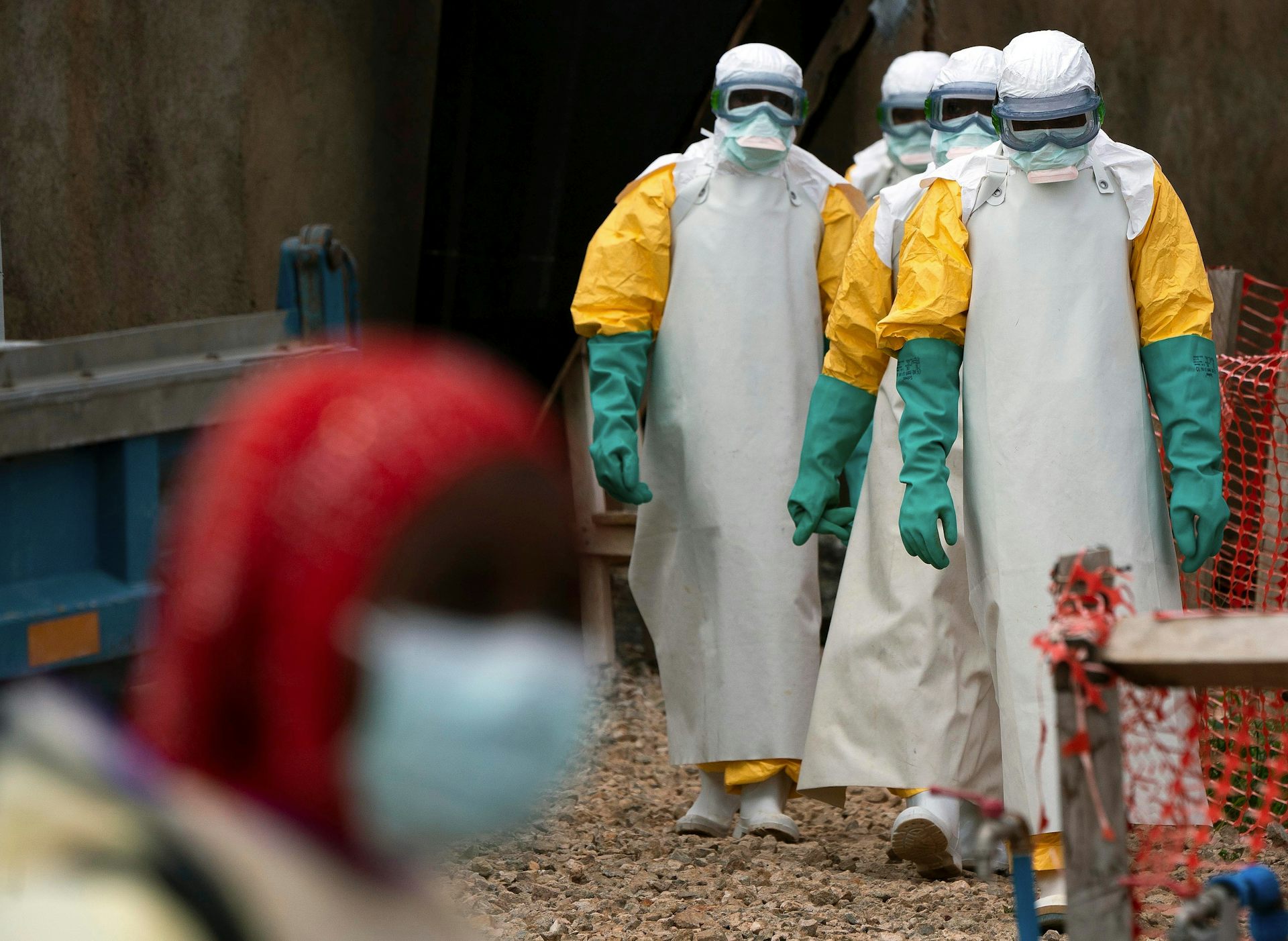
डब्ल्यूएचओ को चिंतित करने वाले इबोला प्रकोप के बारे में आपको क्या जानना चाहिए
What you need to know about the Ebola outbreak that has the WHO concerned
While other forms of Ebola can be prevented with a vaccine, none are currently available to prevent this rare strain.
जबकि इबोला के अन्य रूपों को टीके से रोका जा सकता है, इस दुर्लभ स्ट्रेन को रोकने के लिए वर्तमान में कोई टीका उपलब्ध नहीं है।
The World Health Organization has declared the Ebola outbreak in Africa a public health emergency of international concern.
विश्व स्वास्थ्य संगठन ने अफ्रीका में इबोला के प्रकोप को अंतर्राष्ट्रीय चिंता का एक सार्वजनिक स्वास्थ्य आपातकाल घोषित किया है।
So far, 336 people have been infected in the central African and East African countries of Uganda and the Democratic Republic of Congo. At least 88 people have died.
अब तक, युगांडा और कांगो लोकतांत्रिक गणराज्य के मध्य अफ्रीकी और पूर्वी अफ्रीकी देशों में 336 लोग संक्रमित हो चुके हैं। कम से कम 88 लोग मारे गए हैं।
Ebola is caused by a group of viruses called Orthoebolaviruses. The strain of the virus responsible for the outbreak, Bundibugyo, is rare. There is no vaccine to protect the public from its spread, making it particularly dangerous.
इबोला एक प्रकार के वायरस से होता है जिन्हें ऑर्थोइबोलावायरस कहा जाता है। प्रकोप के लिए जिम्मेदार वायरस का स्ट्रेन, बंडिबुग्यो, दुर्लभ है। इसके प्रसार से जनता की रक्षा के लिए कोई टीका नहीं है, जो इसे विशेष रूप से खतरनाक बनाता है।
The WHO declares a public health emergency of international concern when there is a serious, sudden, unusual or unexpected outbreak that requires an international response to reduce its spread.
डब्ल्यूएचओ अंतर्राष्ट्रीय चिंता का सार्वजनिक स्वास्थ्य आपातकाल तब घोषित करता है जब कोई गंभीर, अचानक, असामान्य या अप्रत्याशित प्रकोप होता है जिसके प्रसार को कम करने के लिए अंतर्राष्ट्रीय प्रतिक्रिया की आवश्यकता होती है।
It has previously declared public health emergencies during outbreaks of mpox, COVID, Ebola, Zika, polio and swine flu.
इसने पहले भी मपोक्स, कोविड, इबोला, ज़ीका, पोलियो और स्वाइन फ्लू के प्रकोप के दौरान सार्वजनिक स्वास्थ्य आपातकाल घोषित किया है।
When did this outbreak start?
यह प्रकोप कब शुरू हुआ?
The virus was first detected on May 5 in the Democratic Republic of the Congo (DRC) and was confirmed as the Bundibugyo strain on May 15.
यह वायरस सबसे पहले 5 मई को कांगो लोकतांत्रिक गणराज्य (DRC) में पाया गया था और 15 मई को इसे बंडिबुग्यो स्ट्रेन के रूप में पुष्टि की गई थी।
The disease had spread to Uganda, with two cases detected in the nation’s capital, Kampala.
यह बीमारी युगांडा तक फैल चुकी है, जहाँ देश की राजधानी कंपाला में दो मामले पाए गए हैं।
A recent suspected case in the DRC’s most populous city, Kinshasa, did not test positive but it seems likely that the outbreak could arrive in this city.
DRC के सबसे अधिक आबादी वाले शहर, किंशासा में हाल ही में एक संदिग्ध मामला सामने आया था, जिसका परीक्षण सकारात्मक नहीं आया, लेकिन यह संभावना है कि यह प्रकोप इस शहर में पहुँच सकता है।
The WHO has warned the true scale of the outbreak is likely larger than current figures suggest.
WHO ने चेतावनी दी है कि प्रकोप का वास्तविक पैमाना वर्तमान आंकड़ों से कहीं अधिक होने की संभावना है।
How does it spread?
यह कैसे फैलता है?
African fruit bats appear to be the natural hosts of the virus. Monkeys, apes and antelope can catch the infection from bats.
अफ्रीकी फल चमगादड़ वायरस के प्राकृतिक वाहक (होस्ट) प्रतीत होते हैं। बंदर, वानर और मृग चमगादड़ों से संक्रमण पकड़ सकते हैं।
The first human case was identified in the DRC in 1976. This is the 17th outbreak. The worst outbreak was the 2014–16 West Africa epidemic, which was caused by the Zaire strain and killed more than 11,000 people.
पहला मानव मामला 1976 में डीआरसी में पहचाना गया था। यह 17वां प्रकोप है। सबसे बुरा प्रकोप 2014-16 का पश्चिम अफ्रीका महामारी था, जो ज़ायर स्ट्रेन के कारण हुआ था और जिसमें 11,000 से अधिक लोग मारे गए थे।
The virus spreads from human to human through direct contact with the bodily fluids of an infected person, such as blood, faeces or vomit, including after they’ve died.
यह वायरस संक्रमित व्यक्ति के शारीरिक तरल पदार्थों, जैसे रक्त, मल या उल्टी, के सीधे संपर्क से एक इंसान से दूसरे इंसान में फैलता है, जिसमें उनकी मृत्यु के बाद भी शामिल है।
Health-care workers and caregivers face the highest risk of infection.
स्वास्थ्य सेवा कार्यकर्ता और देखभाल करने वाले संक्रमण के उच्चतम जोखिम का सामना करते हैं।
What are the symptoms?
लक्षण क्या हैं?
The symptoms of Ebola disease can be sudden and include a fever, fatigue, malaise, muscle pain, headache and sore throat.
इबोला रोग के लक्षण अचानक हो सकते हैं और इनमें बुखार, थकान, बेचैनी, मांसपेशियों में दर्द, सिरदर्द और गले में खराश शामिल है।
These are followed by vomiting, diarrhoea, abdominal pain rash, and symptoms of impaired kidney and liver functions, leading to organ failure. In some cases, there is bleeding and haemorrhaging.
इसके बाद उल्टी, दस्त, पेट दर्द, चकत्ते (rash) , और गुर्दे तथा यकृत (liver) के कार्य बिगड़ने के लक्षण दिखाई देते हैं, जिससे अंग विफलता हो सकती है। कुछ मामलों में रक्तस्राव और रक्तस्राव (haemorrhaging) होता है।
Overall, around 50% of people who contract Ebola die from it. The mortality rate of previous outbreaks ranges from 25–90%, depending on the strain and access to health care.
कुल मिलाकर, इबोला से संक्रमित होने वाले लगभग 50% लोग इससे मर जाते हैं। पिछले प्रकोपों की मृत्यु दर 25-90% के बीच रही है, जो स्ट्रेन और स्वास्थ्य सेवा तक पहुंच पर निर्भर करता है।
The current strain has a lower death rate of around 40%. However it’s considered more dangerous as there is no vaccine.
वर्तमान स्ट्रेन की मृत्यु दर लगभग 40% है। हालांकि, इसे अधिक खतरनाक माना जाता है क्योंकि इसका कोई टीका (vaccine) नहीं है।
Why isn’t there a vaccine?
क्या कोई टीका क्यों नहीं है?
There are two approved vaccines for Ebola.
इबोला के लिए दो टीके अनुमोदित हैं।
One, Ervebo, was released in 2015 and was provided to 345,000 people during the 2018–2020 outbreaks in the DRC. This works by using a protein from the Ebola virus to train our immune system to recognise and respond to the virus, without using a live strain.
पहला, एर्वोबो (Ervebo) , 2015 में जारी किया गया था और इसे डीआरसी में 2018-2020 के प्रकोपों के दौरान 3,45,000 लोगों को प्रदान किया गया था। यह इबोला वायरस के एक प्रोटीन का उपयोग करके हमारी प्रतिरक्षा प्रणाली को वायरस को पहचानने और प्रतिक्रिया देने के लिए प्रशिक्षित करता है, बिना किसी जीवित स्ट्रेन का उपयोग किए।
The other vaccine, Zabdeno, has undergone clinical trials. It is mainly provided to primary contacts and health-care workers. This is because it requires two doses, several weeks apart, making it less suited to an emergency response.
दूसरा टीका, ज़ाबडेनो (Zabdeno) , नैदानिक परीक्षणों से गुज़रा है। इसे मुख्य रूप से प्राथमिक संपर्कों और स्वास्थ्य कर्मियों को प्रदान किया जाता है। ऐसा इसलिए है क्योंकि इसके लिए कई हफ्तों के अंतराल पर दो खुराक की आवश्यकता होती है, जो इसे आपातकालीन प्रतिक्रिया के लिए कम उपयुक्त बनाती है।
Vaccines for the current Bundibugyo strain are sill in the research stage, having undergone pre-clinical trials in animal models.
वर्तमान बंडिबुग्यो (Bundibugyo) स्ट्रेन के टीके अभी भी शोध चरण में हैं, और उन्होंने पशु मॉडल में प्री-क्लिनिकल परीक्षण किए हैं।
How is it treated and managed?
इसका इलाज और प्रबंधन कैसे किया जाता है?
There are no specific treatments for the Bundibugyo strain. Treatment focuses on managing the symptoms such as maintaining blood pressure, reducing vomiting and diarrhoea, maintaining hydration, and managing fever and pain.
बंडिबुग्यो स्ट्रेन के लिए कोई विशिष्ट उपचार नहीं है। उपचार लक्षणों के प्रबंधन पर केंद्रित होता है, जैसे रक्तचाप बनाए रखना, उल्टी और दस्त को कम करना, जलयोजन बनाए रखना, और बुखार तथा दर्द का प्रबंधन करना।
Public health responses are overseen by the WHO’s Ebola surveillance strategy. The response combines community communication, rapid diagnosis, isolation, contact tracing and safe burials to stop transmission.
सार्वजनिक स्वास्थ्य प्रतिक्रियाओं की निगरानी WHO की इबोला निगरानी रणनीति द्वारा की जाती है। यह प्रतिक्रिया संचरण को रोकने के लिए सामुदायिक संचार, त्वरित निदान, अलगाव, संपर्क ट्रेसिंग और सुरक्षित दफन को जोड़ती है।
Contact tracing involves identifying everyone who had direct physical contact with a symptomatic case, monitoring them daily for 21 days, and isolating and testing anyone who develops symptoms.
संपर्क ट्रेसिंग में हर किसी की पहचान करना शामिल है जिसका लक्षणग्रस्त मामले के साथ सीधा शारीरिक संपर्क था, उन्हें 21 दिनों तक दैनिक रूप से निगरानी करना, और किसी भी ऐसे व्यक्ति को अलग-थलग करना और परीक्षण करना जो लक्षण विकसित करता है।
Testing uses real-time PCR and rapid antigen tests (RATs) to detect viral particles in a similar way to COVID.
परीक्षण में वायरल कणों का पता लगाने के लिए रियल-टाइम पीसीआर और रैपिड एंटीजन टेस्ट (RATs) का उपयोग किया जाता है, जो COVID के समान तरीके से होता है।
However, local conflict, poverty and difficult terrain combine to make field management challenging.
हालांकि, स्थानीय संघर्ष, गरीबी और कठिन भूभाग मिलकर क्षेत्र प्रबंधन को चुनौतीपूर्ण बना देते हैं।
Should we be concerned?
क्या हमें चिंतित होना चाहिए?
The epicentre of the outbreak, Ituri province, is a conflict-affected, high-traffic mining region. Workers regularly move across health zones and borders, increasing the risk of spread.
प्रकोप का केंद्र, इटुरी प्रांत, एक संघर्ष-प्रभावित, उच्च आवाजाही वाला खनन क्षेत्र है। श्रमिक नियमित रूप से स्वास्थ्य क्षेत्रों और सीमाओं के पार घूमते हैं, जिससे प्रसार का खतरा बढ़ रहा है।
At least four health-care workers have died, suggesting gaps in infection prevention at health-care facilities.
कम से कम चार स्वास्थ्यकर्मियों की मौत हो चुकी है, जो स्वास्थ्य सुविधाओं में संक्रमण की रोकथाम में कमियों का संकेत देता है।
There is no current need for border closures but authorities have recommended the DRC and Uganda enhance contact tracing and scale-up laboratory testing.
सीमा बंद करने की वर्तमान आवश्यकता नहीं है, लेकिन अधिकारियों ने डीआरसी और युगांडा को संपर्क ट्रेसिंग बढ़ाने और प्रयोगशाला परीक्षण का विस्तार करने की सिफारिश की है।
Australia’s direct risk remains low, and the WHO has advised against travel restrictions. Australian border authorities require those returning from Ebola-affected regions to report this.
ऑस्ट्रेलिया का सीधा खतरा कम बना हुआ है, और WHO ने यात्रा प्रतिबंधों के खिलाफ सलाह दी है। ऑस्ट्रेलियाई सीमा अधिकारियों को इबोला प्रभावित क्षेत्रों से लौटने वालों से यह रिपोर्ट करवाना आवश्यक है।
As this is a rapidly evolving situation, it’s important to remain up-to-date with current restrictions and quarantine guidelines.
चूंकि यह एक तेजी से विकसित हो रही स्थिति है, इसलिए वर्तमान प्रतिबंधों और क्वारंटाइन दिशानिर्देशों के साथ अपडेट रहना महत्वपूर्ण है।
Thomas Jeffries does not work for, consult, own shares in or receive funding from any company or organisation that would benefit from this article, and has disclosed no relevant affiliations beyond their academic appointment.
थॉमस जेफ्रीज किसी भी कंपनी या संगठन के लिए काम नहीं करते हैं, उनसे परामर्श नहीं लेते हैं, उनके शेयर स्वामित्व नहीं हैं, या उनसे धन प्राप्त नहीं करते हैं जिससे इस लेख को लाभ होगा, और उन्होंने अपनी शैक्षणिक नियुक्ति से परे कोई प्रासंगिक जुड़ाव नहीं बताया है।
Read more
-

‘मांसपेशी स्मृति’ क्या है और क्या मैं अपनी इसे सुधार सकता हूँ?
What is ‘muscle memory’ and can I improve mine?
-

केप वर्डे की विश्व कप सफलता एक ऐसे राष्ट्र को दर्शाती है जिसने बार-बार विपरीत परिस्थितियों का सामना किया है।
Cape Verde’s World Cup success reflects a nation that has repeatedly defied the odds