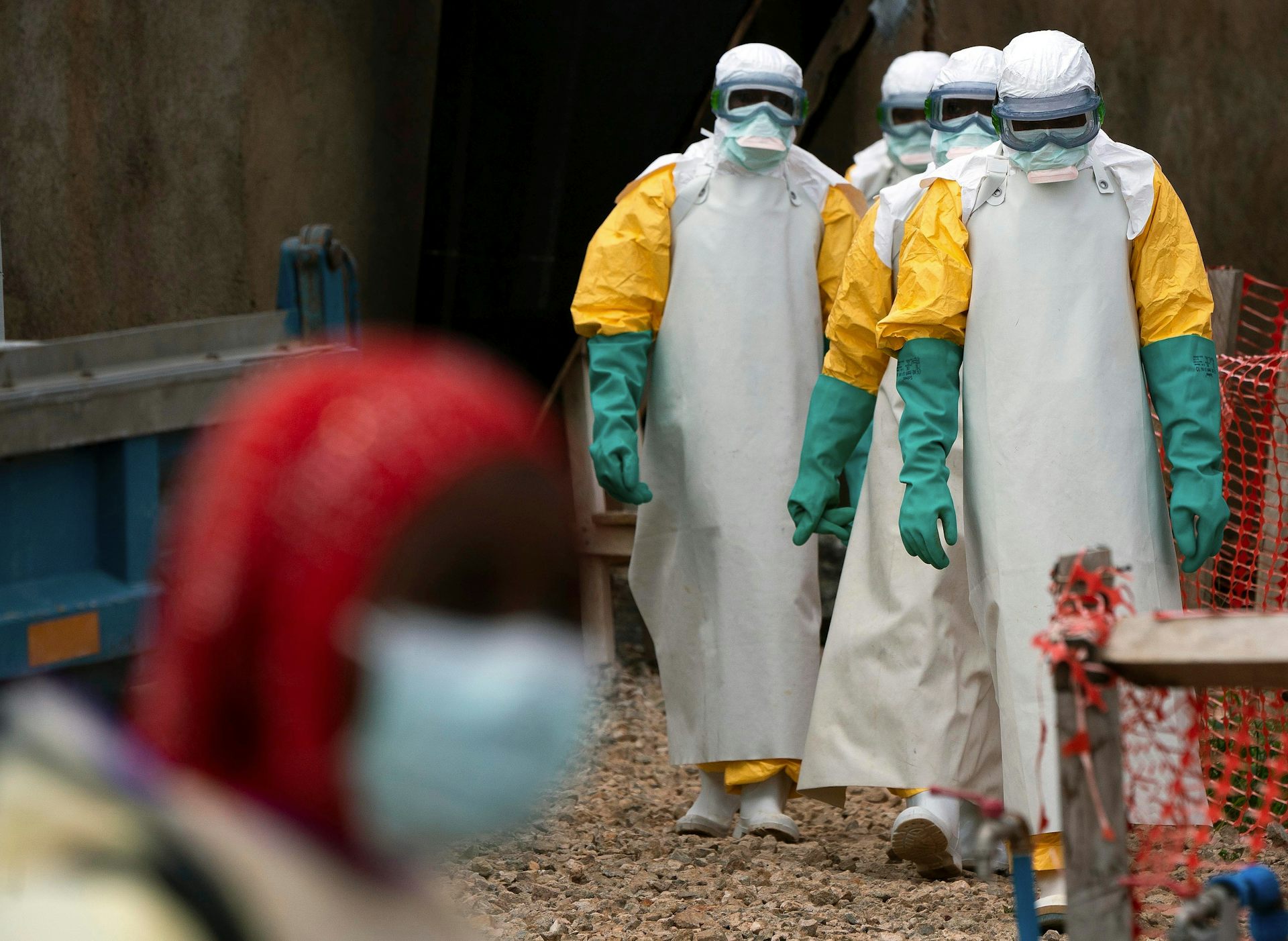
While other forms of Ebola can be prevented with a vaccine, none are currently available to prevent this rare strain.
虽然其他类型的埃博拉可以用疫苗预防,但目前尚无疫苗可预防这种罕见毒株。
The World Health Organization has declared the Ebola outbreak in Africa a public health emergency of international concern.
世界卫生组织已宣布非洲的埃博拉疫情为国际关注的突发公共卫生事件。
So far, 336 people have been infected in the central African and East African countries of Uganda and the Democratic Republic of Congo. At least 88 people have died.
迄今为止,在乌干达和刚果民主共和国这两个中非和东非国家,已有336人感染。至少有88人死亡。
Ebola is caused by a group of viruses called Orthoebolaviruses. The strain of the virus responsible for the outbreak, Bundibugyo, is rare. There is no vaccine to protect the public from its spread, making it particularly dangerous.
埃博拉是由一种被称为正埃博拉病毒的病毒群引起的。导致此次疫情的毒株——邦迪布吉约,是罕见的。目前没有疫苗可以保护公众免受其传播,使其特别危险。
The WHO declares a public health emergency of international concern when there is a serious, sudden, unusual or unexpected outbreak that requires an international response to reduce its spread.
当出现需要国际响应来减少其传播的严重、突发、不寻常或意料之外的疫情时,世卫组织就会宣布其为国际关注的突发公共卫生事件。
It has previously declared public health emergencies during outbreaks of mpox, COVID, Ebola, Zika, polio and swine flu.
此前,世卫组织曾宣布在猴痘、COVID-19、埃博拉、寨卡、小儿麻痹症和猪流感疫情爆发期间宣布过公共卫生紧急状态。
When did this outbreak start?
此次疫情何时开始的?
The virus was first detected on May 5 in the Democratic Republic of the Congo (DRC) and was confirmed as the Bundibugyo strain on May 15.
该病毒于5月5日首次在刚果民主共和国(DRC)检测到,并于5月15日确认是邦迪布吉约株。
The disease had spread to Uganda, with two cases detected in the nation’s capital, Kampala.
该疾病已蔓延至乌干达,并在该国首都坎帕拉检测到两例病例。
A recent suspected case in the DRC’s most populous city, Kinshasa, did not test positive but it seems likely that the outbreak could arrive in this city.
刚果民主共和国人口最多的城市金沙萨最近出现了一个疑似病例,但该病例未检测呈阳性,不过疫情很有可能蔓延到这座城市。
The WHO has warned the true scale of the outbreak is likely larger than current figures suggest.
世界卫生组织警告称,疫情的真实规模可能大于目前的数字所显示的。
How does it spread?
它如何传播?
African fruit bats appear to be the natural hosts of the virus. Monkeys, apes and antelope can catch the infection from bats.
非洲果蝠似乎是该病毒的自然宿主。猴子、猿和羚羊可以从蝙蝠那里感染。
The first human case was identified in the DRC in 1976. This is the 17th outbreak. The worst outbreak was the 2014–16 West Africa epidemic, which was caused by the Zaire strain and killed more than 11,000 people.
第一例人类病例于1976年在刚果民主共和国(DRC)发现。这是第17次疫情爆发。最严重的疫情是2014-16年的西非疫情,该疫情由扎伊尔毒株引起,造成了超过11,000人死亡。
The virus spreads from human to human through direct contact with the bodily fluids of an infected person, such as blood, faeces or vomit, including after they’ve died.
该病毒通过与感染者的体液直接接触传播,例如血液、粪便或呕吐物,包括在他们去世之后。
Health-care workers and caregivers face the highest risk of infection.
医护人员和护理人员面临最高的感染风险。
What are the symptoms?
症状是什么?
The symptoms of Ebola disease can be sudden and include a fever, fatigue, malaise, muscle pain, headache and sore throat.
埃博拉病症状可能突然出现,包括发烧、疲劳、不适、肌肉疼痛、头痛和喉咙痛。
These are followed by vomiting, diarrhoea, abdominal pain rash, and symptoms of impaired kidney and liver functions, leading to organ failure. In some cases, there is bleeding and haemorrhaging.
随后会出现呕吐、腹泻、腹痛、皮疹,以及肾脏和肝脏功能受损的症状,最终导致器官衰竭。在某些情况下,会出现出血和大出血。
Overall, around 50% of people who contract Ebola die from it. The mortality rate of previous outbreaks ranges from 25–90%, depending on the strain and access to health care.
总的来说,约有50%感染埃博拉病的人会因此死亡。以往疫情的死亡率范围在25%至90%之间,具体取决于毒株和医疗资源的获取情况。
The current strain has a lower death rate of around 40%. However it’s considered more dangerous as there is no vaccine.
目前的毒株死亡率约为40%。然而,由于目前尚无疫苗,它仍被认为更危险。
Why isn’t there a vaccine?
为什么还没有疫苗?
There are two approved vaccines for Ebola.
目前有两种获批的埃博拉疫苗。
One, Ervebo, was released in 2015 and was provided to 345,000 people during the 2018–2020 outbreaks in the DRC. This works by using a protein from the Ebola virus to train our immune system to recognise and respond to the virus, without using a live strain.
其中一种是 Ervebo,于2015年发布,并在2018年至2020年刚果民主共和国(DRC)的疫情期间为345,000人提供了疫苗。它通过使用埃博拉病毒的蛋白质来训练我们的免疫系统识别和应对病毒,而无需使用活病毒株。
The other vaccine, Zabdeno, has undergone clinical trials. It is mainly provided to primary contacts and health-care workers. This is because it requires two doses, several weeks apart, making it less suited to an emergency response.
另一种疫苗 Zabdeno 已经完成了临床试验。它主要提供给一级接触者和医护人员。这是因为它需要间隔数周的两剂接种,使其不太适合紧急响应。
Vaccines for the current Bundibugyo strain are sill in the research stage, having undergone pre-clinical trials in animal models.
目前针对邦迪布吉奥(Bundibugyo)毒株的疫苗仍处于研究阶段,仅完成了动物模型上的临床前试验。
How is it treated and managed?
如何治疗和管理?
There are no specific treatments for the Bundibugyo strain. Treatment focuses on managing the symptoms such as maintaining blood pressure, reducing vomiting and diarrhoea, maintaining hydration, and managing fever and pain.
对于邦迪布吉奥毒株,目前没有特定的治疗方法。治疗重点在于管理症状,例如维持血压、减轻呕吐和腹泻、保持水分、以及管理发烧和疼痛。
Public health responses are overseen by the WHO’s Ebola surveillance strategy. The response combines community communication, rapid diagnosis, isolation, contact tracing and safe burials to stop transmission.
公共卫生应对措施由世卫组织的埃博拉监测战略指导。这些应对措施结合了社区沟通、快速诊断、隔离、接触者追踪和安全掩埋,以阻止传播。
Contact tracing involves identifying everyone who had direct physical contact with a symptomatic case, monitoring them daily for 21 days, and isolating and testing anyone who develops symptoms.
接触者追踪涉及识别所有与有症状病例有过直接身体接触的人,对其进行为期 21 天的每日监测,并隔离和检测任何出现症状的人。
Testing uses real-time PCR and rapid antigen tests (RATs) to detect viral particles in a similar way to COVID.
检测使用实时PCR和快速抗原检测(RATs)来检测病毒颗粒,方式类似于检测新冠病毒。
However, local conflict, poverty and difficult terrain combine to make field management challenging.
然而,当地的冲突、贫困和崎岖的地形相结合,使得现场管理充满挑战。
Should we be concerned?
我们是否应该担心?
The epicentre of the outbreak, Ituri province, is a conflict-affected, high-traffic mining region. Workers regularly move across health zones and borders, increasing the risk of spread.
疫情爆发的中心地带——伊图里省,是一个受冲突影响、交通繁忙的采矿区。工作人员经常跨越卫生区和国界流动,增加了传播的风险。
At least four health-care workers have died, suggesting gaps in infection prevention at health-care facilities.
至少有四名医护人员死亡,这表明医疗机构在感染预防方面存在漏洞。
There is no current need for border closures but authorities have recommended the DRC and Uganda enhance contact tracing and scale-up laboratory testing.
目前没有封锁边境的必要,但当局建议刚果民主共和国和乌干达加强接触者追踪和扩大实验室检测规模。
Australia’s direct risk remains low, and the WHO has advised against travel restrictions. Australian border authorities require those returning from Ebola-affected regions to report this.
澳大利亚的直接风险仍然较低,世卫组织已建议不要实施旅行限制。澳大利亚边境当局要求从埃博拉疫区返回的人报告此事。
As this is a rapidly evolving situation, it’s important to remain up-to-date with current restrictions and quarantine guidelines.
鉴于这是一个快速变化的局势,了解当前的限制和检疫指南非常重要。
Thomas Jeffries does not work for, consult, own shares in or receive funding from any company or organisation that would benefit from this article, and has disclosed no relevant affiliations beyond their academic appointment.
Thomas Jeffries 不受任何从本文中受益的公司或组织的雇佣、咨询、拥有股份或获得资金,并且除了其学术任命外,未披露任何相关隶属关系。