教宗利奥对特朗普攻击的坚定回应,展现了一个神人,而非政客
Pope Leo’s resolute response to Trump attack reveals a …
Pope Leo XIV does not claim to direct political outcomes. He claims the right, and the duty, to judge them.
利奥十四世不声称自己能决定政治结果。他声称自己有权,也有责任去评判它们。
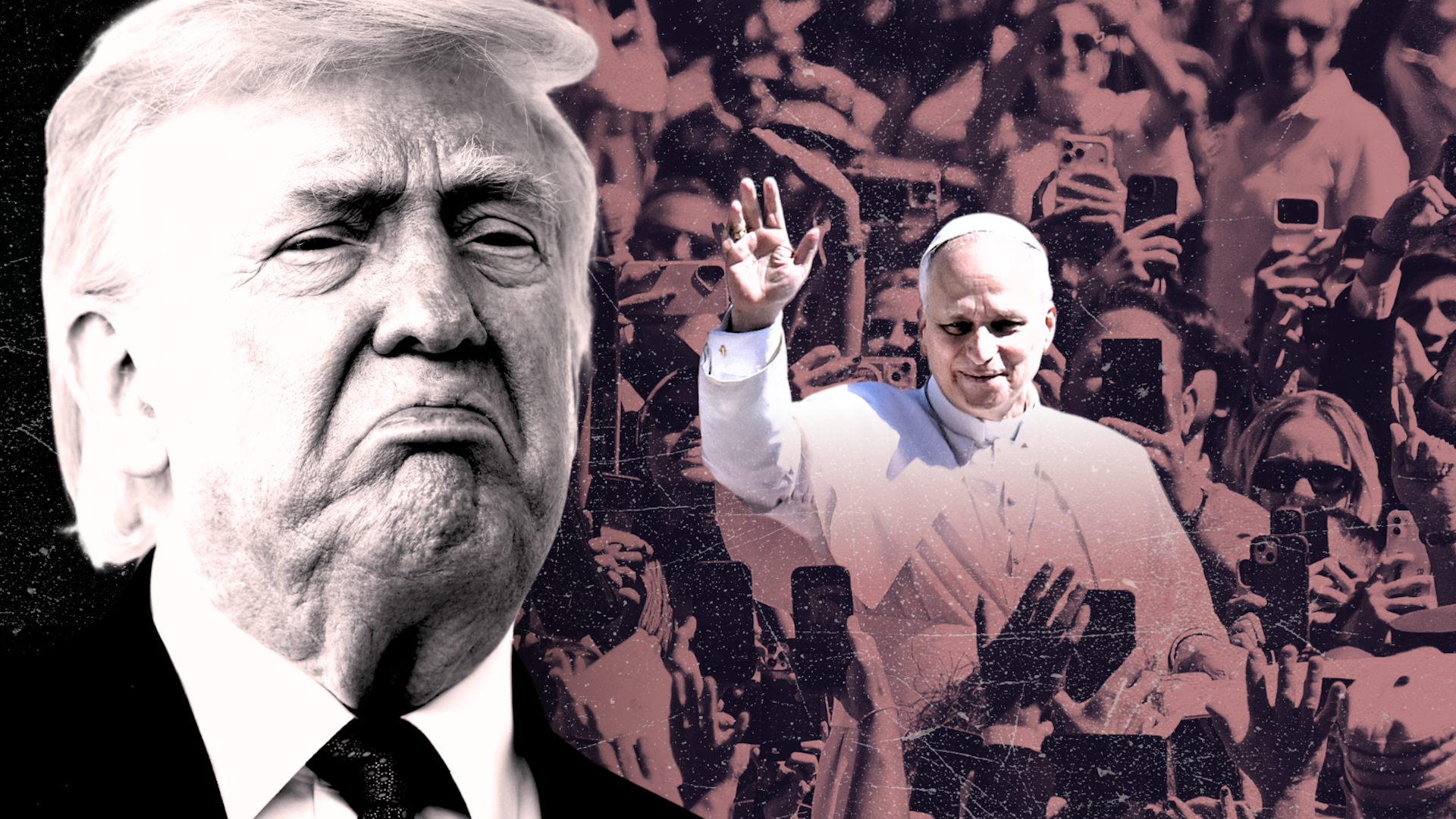
When Pope Leo XIV condemned threats to destroy Iranian civilisation as “truly unacceptable” in April 2026, the backlash was immediate. US President Donald Trump unleashed a tirade against the pope on social media, accusing him of being “weak on crime”, “terrible for foreign policy”, and acting like a politician rather than a religious leader.
当教宗利奥十四谴责伊朗文明面临的威胁是“绝对不可接受的”时,时间是2026年4月,随之而来的反弹是即时的。美国总统唐纳德·特朗普在社交媒体上对教宗发起了一番抨击,指责他“在犯罪问题上软弱”,“对外交政策极差”,并且行为像政客而非宗教领袖。
But the exchange that followed matters more than the accusation. Confronted with criticism from Trump, Leo did not retreat. He made his position explicit: he was not afraid to speak, because his task was to proclaim the gospel.
但随后的交锋比指控本身更重要。面对特朗普的批评,利奥没有退缩。他明确了自己的立场:他不怕说话,因为他的任务是宣扬福音。
Leo said he had “no fear of the Trump administration”, and “I don’t think that the message of the Gospel is meant to be abused in the way that some people are doing”.
利奥说他“不惧怕特朗普政府”,并说“我不认为福音的信息应该像一些人那样被滥用”。
That response clarifies the logic of his pontificate. Leo XIV is not trying to enter politics. He is defining the limits within which politics can operate.
这一回应阐明了其教宗任期的逻辑。利奥十四并非试图涉足政治。他是在界定政治可以运作的范围。
Trump’s attack was heightened when he posted an AI-generated image of himself as Jesus, which caused an outcry even among his supporters. He has since deleted the post.
当他发布了一张自己作为耶稣的AI生成图片时,特朗普的攻击升级了,这甚至引起了其支持者群体的哗然。此后他删除了该帖子。
God, not politics
神,而非政治
Pope Leo’s opposition to the Iran war is not political in origin. It is moral and theological. It rests on a consistent claim: power must be judged, violence must be restrained, and invoking God to justify destruction is a distortion of both religion and public life.
教宗利奥反对伊朗战争的立场并非源于政治考量。它是道德和神学层面的。它建立在一个持续的论断之上:权力必须受到评判,暴力必须受到约束,而以援引神的名义来为破坏辩护,是对宗教和公共生活的双重扭曲。
From the beginning of his pontificate, Leo XIV has made this clear. Elected on May 8 2025, he used his first public address to call for dialogue, unity, and what he described as an “unarmed and disarming peace”. This was not positioning. It was a statement of purpose.
从他当选教宗伊始,利奥十四就一直明确了这一点。他于2025年5月8日当选,并在首次公开讲话中呼吁对话、团结,以及他所描述的“无武力、不威慑的和平”。这并非是一种站队。它是一个目的声明。
Since then, his interventions have followed a clear pattern. In 2025, as conflicts intensified in Ukraine, Gaza, and Sudan, he called repeatedly for ceasefires, humanitarian protection, and renewed diplomacy. He avoided strategic language. Instead, he focused on human dignity and the moral cost of war.
从那时起,他的干预一直遵循着一个清晰的模式。在2025年,随着乌克兰、加沙和苏丹的冲突加剧,他反复呼吁停火、人道主义保护和恢复外交。他避免使用战略性语言。相反,他关注的是人类尊严和战争的道德代价。
The pattern continued into 2026. On March 8, as the Iran conflict escalated, he called for an end to bombing and urged that “weapons may fall silent” to allow dialogue. On April 11, at a prayer vigil in St Peter’s Basilica, he sharpened his language. He warned of a “delusion of omnipotence” driving war and declared: “Enough of war”.
这种模式一直延续到2026年。3月8日,随着伊朗冲突升级,他呼吁停止轰炸,并敦促“武器应保持沉默”,以促成对话。4月11日,在圣彼得大教堂的一次祈祷守夜活动中,他的措辞更加尖锐。他警告说,战争是由一种“全能的错觉”驱动的,并宣称:“战争到此为止”。
These are not policy prescriptions. They do not tell governments how to conduct war. They ask whether such wars can be justified at all.
这些并非政策方针。它们没有告诉政府如何发动战争。它们质疑的是,此类战争是否可以被合理化。
This distinction lies at the centre of the current dispute. Political leaders operate within frameworks of interest, security, and power. Leo XIV operates within a framework of moral judgement. When those frameworks collide, his interventions are labelled political.
这种区别是当前争论的核心。政治领导人是在利益、安全和权力的框架内运作的。而利奥十四是在道德判断的框架内运作的。当这些框架发生冲突时,他的干预就会被贴上“政治性”的标签。
Yet his response to Trump shows he does not accept that framing. He has insisted his role is not to compete with political authority, but to speak from the gospel, even when that provokes criticism.
然而,他对特朗普的回应表明,他并不接受这种定性。他坚持认为,他的角色不是与政治权威竞争,而是从福音的角度发声,即使这会招致批评。
This is not new, but it is unusually explicit. Leo is drawing a line between two forms of authority: one grounded in power, the other in moral responsibility. He does not claim to direct political outcomes. He claims the right, and the duty, to judge them.
这并非新鲜事,但却异常明确。利奥正在区分两种权威:一种植根于权力,另一种植根于道德责任。他没有声称自己可以决定政治结果。他声称的是,对这些结果进行评判的权利和责任。
Beyond war
战争之外
The same logic shapes his interventions beyond war. On migration, he has framed the issue in terms of human dignity, questioning whether harsh treatment of migrants can be reconciled with a consistent ethic of life. On social questions, he has resisted partisan categories, insisting moral coherence matters more than political alignment.
同样的逻辑塑造了他在战争之外的干预。在移民问题上,他从人类尊严的角度构建了议题,质疑对待移民的严酷待遇是否能与一致的生命伦理相调和。在社会问题上,他抵制党派分类,坚持认为道德一致性比政治立场更重要。
His engagement with artificial intelligence follows the same pattern. In December 2025, he warned that technological development must serve the common good, not concentrate power in the hands of a few. The question, again, was not technical but ethical: what does it mean to respect human dignity in a changing world?
他对人工智能的关注遵循了同样的模式。在2025年12月,他警告说,技术发展必须服务于共同利益,而不是将权力集中在少数人手中。问题再次不是技术性的,而是伦理性的:在一个变化的世界中,尊重人类尊严意味着什么?
Across these issues, the method is consistent. Leo XIV begins with principles, not interests. He does not align with factions. He applies moral reasoning to contemporary problems, even when doing so invites political backlash.
在这些问题上,他的方法是始终如一的。利奥十四世从原则出发,而非利益。他不依附于任何派系。他将道德推理应用于当代问题,即使这样做会招致政治反弹。
This approach reflects his formation. Born in Chicago in 1955 and shaped by decades of pastoral work in Peru, he encountered the realities of violence, inequality, and political instability firsthand. Those experiences did not draw him into politics. They reinforced a conviction that power must be accountable to moral limits.
这种方法反映了他的成长经历。他于1955年出生于芝加哥,并在秘鲁进行了数十年的牧灵工作,亲身经历了暴力、不平等和政治不稳定的现实。这些经历并没有将他卷入政治。它们反而强化了一种信念:权力必须对道德界限负责。
His intellectual work supports this view. In his 1987 doctoral thesis, he argued authority is not domination but service, grounded in a moral order rather than human will. That understanding carries into his papacy. When Leo XIV speaks, he does not seek to exercise power. He seeks to define its boundaries.
他的学术著作支持了这一观点。在他的1987年博士论文中,他论证了权威不是统治,而是服务,其基础是一个道德秩序而非人类意志。这种理解延续到了他的教宗时期。当利奥十四世发言时,他不是寻求行使权力。他寻求的是界定权力的边界。
This is why his interventions provoke strong reactions. They do not remain abstract. They challenge real decisions, real policies, and real uses of force. They question the assumptions that underpin them.
这就是为什么他的干预会引发强烈反应。它们不会停留在抽象层面。它们挑战着真实的决策、真实的政策和真实的武力使用。它们质疑着支撑这些决策的假设。
In a political culture that often treats moral claims as secondary, this is disruptive. It exposes a tension that cannot easily be resolved: whether decisions about war, migration, or technology can be separated from questions of right and wrong.
在一个经常将道德主张视为次要的政治文化中,这是具有颠覆性的。它暴露了一个难以轻易解决的张力:战争、移民或技术方面的决策,是否可以与是非对错的问题相分离。
Leo XIV’s answer is clear. They cannot.
利奥十四世的答案是明确的。它们不能。
His exchange with Trump brings that tension into focus. Trump’s criticism reflects a familiar expectation: that religious leaders should avoid direct engagement with political decisions. His response rejects that expectation. He does not present himself as a political actor. He presents himself as a moral voice that cannot be silent.
他与特朗普的交锋将这种张力聚焦了出来。特朗普的批评反映了一种熟悉的期望:即宗教领袖应该避免直接参与政治决策。他的回应拒绝了这种期望。他没有将自己定位为政治行动者。他将自己定位为不能保持沉默的道德之声。
There is also a longer perspective at work. Political leaders operate within electoral cycles. Their decisions are shaped by immediate pressures. The papacy operates across generations. Its interventions are rarely decisive in the moment, but they shape how events are judged over time.
此外,还存在一个更长远的视角。政治领导人是在选举周期内运作的。他们的决策受到即时压力的塑造。教宗职能跨越世代。其干预很少在当下具有决定性,但它们塑造了事件随时间推移的评判方式。
Leo XIV’s stance on the Iran war belongs to that longer horizon. It is not an attempt to determine outcomes. It is an attempt to set limits: on power, on violence, and on the use of religious language to justify either.
利奥十四世关于伊朗战争的立场属于这个更长远的视野。它不是试图决定结果。它试图设定界限:对权力、对暴力,以及对使用宗教语言来为任何一方辩护的界限。
Darius von Guttner Sporzynski does not work for, consult, own shares in or receive funding from any company or organisation that would benefit from this article, and has disclosed no relevant affiliations beyond their academic appointment.
达里乌斯·冯·古特纳·斯波尔津斯基(Darius von Guttner Sporzynski)不为任何受益于本文的公司或组织工作、咨询、拥有股份或接受资金,并且除了其学术任命之外,未披露任何相关隶属关系。
Read more
-
最高法院的“影子议程”带来了仓促的决定,这些决定具有深远的影响,且绕过了其通常审慎的审议过程
Supreme Court’s ‘shadow docket’ brings hasty decisions …