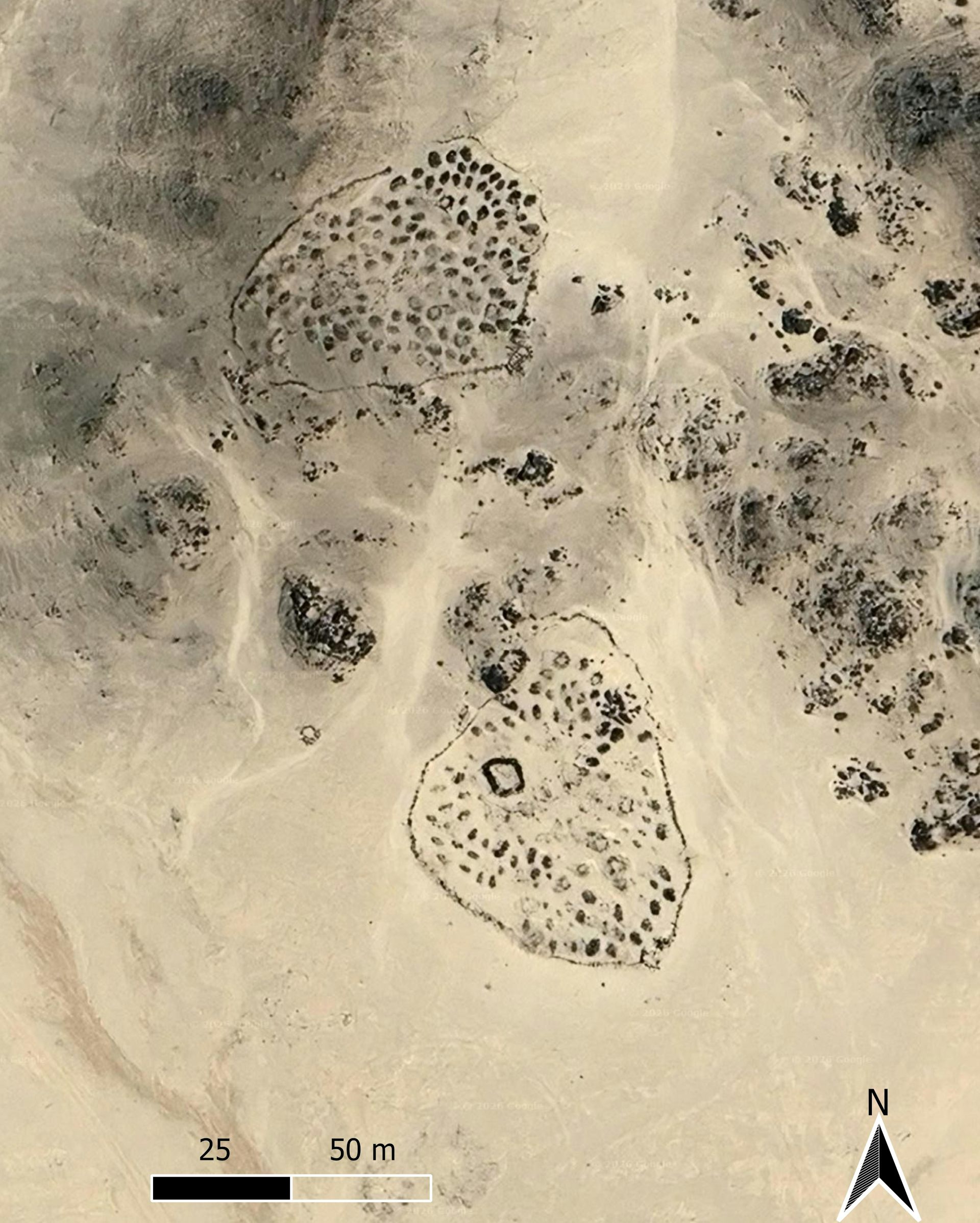
हमने सहारा रेगिस्तान में सैकड़ों विशाल प्राचीन सामूहिक कब्रें पाईं।
We found hundreds of huge ancient mass graves hidden in the Sahara desert
The circular mass graves were filled with the bones of people and animals, often carefully arranged around a key person at the centre.
ये गोलाकार सामूहिक कब्रें लोगों और जानवरों की हड्डियों से भरी हुई थीं, जिन्हें अक्सर केंद्र में एक प्रमुख व्यक्ति के चारों ओर सावधानी से व्यवस्थित किया गया था।
We have been on a years-long campaign of satellite remote sensing of the vast desert landscapes in Eastern Sudan.
हमने पूर्वी सूडान के विशाल रेगिस्तानी परिदृश्यों की उपग्रह रिमोट सेंसिंग का वर्षों लंबा अभियान चलाया है।
This involved using satellite aerial imagery to systematically and painstakingly search for archaeological features in Atbai Desert of Eastern Sudan, a small part of the much larger Sahara.
इसमें पूर्वी सूडान के अतबाई रेगिस्तान में पुरातात्विक विशेषताओं की व्यवस्थित और सावधानीपूर्वक खोज के लिए उपग्रह हवाई इमेजरी का उपयोग करना शामिल था, जो सहारा के बहुत बड़े हिस्से का एक छोटा सा भाग है।
Our team – which includes archaeologists from Macquarie University, France’s HiSoMA research unit, and the Polish Academy of Sciences – wanted to tell the story of this desert region between the Nile and the Red Sea, without having to excavate.
हमारी टीम – जिसमें मैकक्वेरी विश्वविद्यालय, फ्रांस के हिसोमा अनुसंधान इकाई और पोलिश विज्ञान अकादमी के पुरातत्वविद् शामिल हैं – बिना खुदाई किए नील और लाल सागर के बीच इस रेगिस्तानी क्षेत्र की कहानी बताना चाहती थी।
One mysterious archaeological feature stood out. We kept finding large, circular mass graves filled with the bones of people and animals, often carefully arranged around a key person at the centre.
एक रहस्यमय पुरातात्विक विशेषता सामने आई। हमें लोगों और जानवरों की हड्डियों से भरे बड़े, गोलाकार सामूहिक कब्रें लगातार मिलती रहीं, जो अक्सर केंद्र में एक प्रमुख व्यक्ति के चारों ओर सावधानी से व्यवस्थित होती थीं।
Likely built around the fourth and third millennia BCE, all these “enclosure burial” monuments have a large round enclosure wall, some up to 80 metres in diameter, with humans and their cattle, sheep and goats buried inside.
संभवतः चौथी और तीसरी सहस्राब्दी ईसा पूर्व के आसपास बने, इन सभी “घेरेदार दफन” स्मारकों की एक बड़ी गोलाकार घेरे की दीवार होती है, जिसका व्यास कुछ 80 मीटर तक होता है, जिसके अंदर मनुष्य और उनके मवेशी, भेड़ और बकरियाँ दफन थे।
Our new research, published in the journal African Archaeological Review, reveals how we found 260 previously unknown enclosure burials east of the Nile River, across almost 1,000km of desert.
हमारा नया शोध, जो जर्नल अफ्रीकन आर्कियोलॉजिकल रिव्यू में प्रकाशित हुआ है, बताता है कि हमने नील नदी के पूर्व में, लगभग 1,000 किमी के रेगिस्तान में 260 पहले से अज्ञात घेरेदार दफनों को कैसे खोजा।
Who built them?
वे किसने बनाए?
Already known from a few excavated examples in the Egyptian and Sudanese deserts, these large circular burial monuments have long puzzled scholars.
मिस्र और सूडान के रेगिस्तानों में कुछ खोदे गए उदाहरणों से पहले से ही ज्ञात, ये बड़े गोलाकार दफन स्मारक विद्वानों को लंबे समय से उलझन में डाल रहे हैं।
What seemed once isolated examples emerge now as a consistent pattern. It is suggestive of a common nomadic culture stretching across a vast stretch of desert.
जो एक समय अलग-थलग उदाहरण प्रतीत होते थे, अब एक सुसंगत पैटर्न के रूप में उभर रहे हैं। यह रेगिस्तान के एक विशाल विस्तार में फैली एक सामान्य खानाबदोश संस्कृति का संकेत देता है।
Most are within the borders of modern Sudan on the slopes of the Red Sea Hills. Unfortunately, satellite imagery alone cannot communicate the whole story of these enclosure burial builders.
अधिकांश आधुनिक सूडान की सीमाओं के भीतर लाल सागर की पहाड़ियों के ढलानों पर हैं। दुर्भाग्य से, केवल उपग्रह इमेजरी अकेले इन घेरेदार दफन निर्माताओं की पूरी कहानी नहीं बता सकती।
The carbon dates and pottery from the few excavated monuments tell us these people lived roughly 4000–3000 BCE, just before Egyptians formed a territorial kingdom we know of as Pharaonic Egypt.
कुछ खोदे गए स्मारकों से कार्बन तिथियां और मिट्टी के बर्तन हमें बताते हैं कि ये लोग लगभग 4000–3000 ईसा पूर्व में रहते थे, इससे पहले कि मिस्रवासी एक क्षेत्रीय साम्राज्य का गठन करते थे जिसे हम फ़राओनिक मिस्र के रूप में जानते हैं।
But these “enclosure burial” nomads had little to do with urbane and farming Egyptians.
लेकिन ये “घेरेदार दफन” खानाबदोश शहरी और खेती करने वाले मिस्रवासियों से बहुत कम जुड़े थे।
Living in the desert and raising herds, these were Saharan desert nomads through and through.
रेगिस्तान में रहना और झुंड पालना, ये पूरी तरह से सहारा रेगिस्तान के खानाबदोश थे।
A new elite?
एक नया कुलीन वर्ग?
Some enclosures show “secondary” burials arranged around a “primary” burial of a person at the centre – perhaps a chief or other important member of the community.
कुछ घेरे “प्राथमिक” दफन के चारों ओर “द्वितीयक” दफनों को व्यवस्थित दिखाते हैं – शायद समुदाय के एक प्रमुख या अन्य महत्वपूर्ण सदस्य का केंद्र में दफन।
For archaeologists, this is important data for discerning class and hierarchy in prehistoric societies.
पुरातत्वविदों के लिए, यह प्रागैतिहासिक समाजों में वर्ग और पदानुक्रम को समझने के लिए महत्वपूर्ण डेटा है।
The question of when Saharan nomads became less egalitarian has plagued archaeologists for decades, but most agree it was around this time of the fourth millennium BCE that a distinctive “elite” class emerged.
यह सवाल कि सहारा के खानाबदोश कब कम समतावादी (egalitarian) बन गए, दशकों से पुरातत्वविदों को परेशान करता रहा है, लेकिन अधिकांश इस बात से सहमत हैं कि चौथी सहस्राब्दी ईसा पूर्व के आसपास एक विशिष्ट “कुलीन” वर्ग उभरा।
This is still a far cry from the sort of huge divisions between ruler and ruled as seen in societies such as Egypt, with its pharaohs and farmers. However, it ushers in the first traces of inequality.
यह अभी भी मिस्र जैसे समाजों में शासक और शासित के बीच बड़े विभाजनों से बहुत दूर है, जहाँ फिरौन और किसान थे। हालांकि, यह असमानता के पहले संकेतों को जन्म देता है।
Animals held in high esteem
जानवरों का उच्च सम्मान
Cattle seem very important to these prehistoric nomads (a theory also supported by ancient local rock art in the area) .
ये प्रागैतिहासिक खानाबदोश इन जानवरों को बहुत महत्वपूर्ण मानते थे (यह सिद्धांत क्षेत्र की प्राचीन स्थानीय शैल कला द्वारा भी समर्थित है) ।
Burying themselves alongside their herd, these nomads show they held their animals in esteem.
अपने झुंड के साथ खुद को दफनाने से, ये खानाबदोश दिखाते हैं कि वे अपने जानवरों का सम्मान करते थे।
Thousands of years later, local nomads chose to reuse these now “ancient” enclosures for their burial plots – sometimes almost 4,000 years after they were first built.
हजारों साल बाद, स्थानीय खानाबदोश ने अपने दफन स्थलों के लिए इन अब “प्राचीन” बाड़ों का पुन: उपयोग करने का चुनाव किया – कभी-कभी वे पहली बार बनने के लगभग 4,000 साल बाद थे।
In other words, the prehistoric nomads created cemetery spaces that lasted for millennia.
दूसरे शब्दों में, प्रागैतिहासिक खानाबदोशों ने ऐसे कब्रिस्तान स्थान बनाए जो सहस्राब्दियों तक चले।
What happened to these people?
इन लोगों का क्या हुआ?
No one can say for sure.
कोई निश्चित रूप से नहीं कह सकता।
The few dates we have for these monuments cluster between 4000–3000 BCE, nearing the end of a period when the once-greener Sahara was drying, a phase scientists call the “African Humid Period”.
इन स्मारकों के लिए हमारे पास जो कुछ तिथियाँ हैं, वे 4000–3000 ईसा पूर्व के बीच केंद्रित हैं, जो उस दौर के अंत के करीब हैं जब एक समय हरा-भरा सहारा सूख रहा था, जिसे वैज्ञानिक “अफ्रीकी आर्द्र काल” (African Humid Period) कहते हैं।
From north to south, the summer monsoon gradually retreated, reducing rainfall and shrinking pastures. This led nomads to abandon thirsty cattle, increase the mobility of their herds, migrate to the south or flee to the Nile.
उत्तर से दक्षिण तक, ग्रीष्मकालीन मानसून धीरे-धीरे पीछे हट गया, जिससे वर्षा कम हुई और चरागाह सिकुड़ गए। इसके कारण खानाबदोशों ने प्यासे मवेशियों को छोड़ दिया, अपने झुंड की गतिशीलता बढ़ाई, दक्षिण की ओर पलायन किया या नील नदी की ओर भाग गए।
The monuments are overwhelmingly located near what were then favourable watering spots; near rocky pools in valley floors, lakebeds and ephemeral rivers.
ये स्मारक उन अनुकूल जल स्रोतों के पास स्थित हैं जो उस समय मौजूद थे; घाटी के तल में चट्टानी कुंडों, झील के बिस्तरों और क्षणभंगुर नदियों के पास।
This tells us that when the monuments were being built, the desert was already quite challenging and dry.
यह हमें बताता है कि जब इन स्मारकों का निर्माण हो रहा था, तब रेगिस्तान पहले से ही काफी चुनौतीपूर्ण और सूखा था।
At some point, as grass and bush made way for sand and rocks, keeping their prized cattle became unsustainable.
किसी समय, जैसे घास और झाड़ियों की जगह रेत और चट्टानों ने ले ली, अपने प्रिय मवेशियों को पालना अस्थिर हो गया।
Having large herds of cattle in this desert, at this period, may have been a way of showing off an expensive and rare possession – a prehistoric nomad’s equivalent to having a Ferrari. This may help explain why cattle were frequently buried alongside their owners in enclosure burial monuments.
इस रेगिस्तान में इस अवधि के दौरान बड़े मवेशियों के झुंड रखना एक महंगी और दुर्लभ संपत्ति दिखाने का एक तरीका हो सकता है – एक प्रागैतिहासिक खानाबदोश के लिए फेरारी रखने के बराबर। यह इस बात की व्याख्या करने में मदद कर सकता है कि क्यों मवेशियों को अक्सर उनके मालिकों के साथ घेरेदार दफन स्मारकों में दफनाया जाता था।
A bigger story
एक बड़ी कहानी
These enclosure burials are only one part of the greater story of human adaptation to climate change across North Africa.
ये घेरेदार दफन केवल उत्तरी अफ्रीका में जलवायु परिवर्तन के अनुकूलन की बड़ी कहानी का एक हिस्सा हैं।
From the Central Sahara, to Kenya and Arabia, keeping cattle, goats and sheep transformed societies. It changed the food they ate, the way they moved around, and community hierarchies.
मध्य सहारा से लेकर केन्या और अरब तक, मवेशियों, goats और भेड़ को पालने से समाजों में परिवर्तन आया। इसने उनके भोजन, उनके घूमने के तरीके और सामुदायिक पदानुक्रम को बदल दिया।
It’s no coincidence communities changed how they buried their dead at the same time as they adopted herding lifestyles.
यह कोई संयोग नहीं है कि समुदायों ने अपने मृतकों को कैसे दफनाया, यह उसी समय उन्होंने पशुपालन जीवन शैली अपनाई।
These burial enclosures tell us even scattered nomads were extremely well-organised people, and expert adapters.
ये दफन स्थल हमें बताते हैं कि बिखरे हुए खानाबदोश भी अत्यंत सुव्यवस्थित लोग थे, और विशेषज्ञ अनुकूलक थे।
Our discovery reshapes the story of the Sahara deserts and the prehistory of the Nile.
हमारी खोज सहारा रेगिस्तानों और नील के प्रागैतिहासिक काल की कहानी को नया आकार देती है।
They provide a prologue for the monumentalism of the kingdoms of Egypt and Nubia, and an image of this region as more than pharaohs, pyramids and temples.
वे मिस्र और नुबिया के राज्यों की स्मारकीयता के लिए एक प्रस्तावना और इस क्षेत्र की एक ऐसी छवि प्रदान करते हैं जो फिरौन, पिरामिड और मंदिरों से कहीं अधिक है।
Sadly, many of these enclosure monuments are currently being destroyed or vandalised as a result of unregulated mining in the region. These unique burials have survived for millennia, but can disappear in less than a week.
दुख की बात है कि इन घेरेदार स्मारकों में से कई वर्तमान में क्षेत्र में अनियमित खनन के परिणामस्वरूप नष्ट या बर्बरता का शिकार हो रहे हैं। इन अद्वितीय दफनों ने सहस्राब्दियों तक जीवित रहा है, लेकिन एक सप्ताह से भी कम समय में गायब हो सकते हैं।
Maria Gatto (Polish Academy of Sciences) was an author on our paper. We also want to acknowledge Alexander Carter, Tung Cheung, Kahn Emerson, Jessica Larkin, Stuart Hamilton and Ethan Simpson from Macquarie University for their contribution. We are also grateful to the National Corporation of Antiquities and Museums (Sudan) .
मारिया गैटो (पोलिश एकेडमी ऑफ साइंसेज) हमारे पेपर पर एक लेखक थीं। हम योगदान के लिए अलेक्जेंडर कार्टर, टंग चेंग, कान एमर्सन, जेसिका लार्किन, स्टुअर्ट हैमिल्टन और एथन सिम्पसन को मैकक्वेरी विश्वविद्यालय से भी श्रेय देना चाहते हैं। हम राष्ट्रीय पुरातत्व और संग्रहालय निगम (सूदान) के भी आभारी हैं।
Julien Cooper receives funding from the Australian Research Council, (Future Fellowship, FT230100067) .
जूलियन कूपर को ऑस्ट्रेलियाई अनुसंधान परिषद से (फ्यूचर फेलोशिप, FT230100067) धन प्राप्त होता है।
Maël Crépy receives funding from the CNRS (HiSoMA) and the Ifao (NOMADES research program) .
माएल क्रेपी को सीएनआरएस (हिसोमा) और इफाओ (नोमाडेस अनुसंधान कार्यक्रम) से धन प्राप्त होता है।
Marie Bourgeois receives funding from Ifao (NOMADES research program) .
मैरी बूर्जुआ को इफाओ (नोमाडेस अनुसंधान कार्यक्रम) से धन प्राप्त होता है।
Read more
-
ट्रम्प का अमेरिका-ईरान युद्धविराम समझौता युद्धपूर्व की स्थितियों में एक महंगा लौटना है – और परमाणु सवालों को हल करने में ‘अविभाज्यता समस्या’ आएगी।
Trump’s US-Iran ceasefire deal is a costly return to prewar conditions – and resolving nuclear questions will run into the ‘indivisibility problem’
-
मूंगा चट्टानें विशाल महासागरों में गुप्त रूप से जुड़ी हुई हैं – और यह उनके अस्तित्व के लिए महत्वपूर्ण है।
Coral reefs are secretly connected across vast oceans – and that’s crucial for their survival