汉坦病毒与COVID非常不同。这就是“安第斯病毒”不会引发下一次大流行的原因。
Hantavirus is very different to COVID. Here’s why the ‘…
A virus doesn’t become a pandemic simply because it’s deadly.
病毒仅仅因为它致命,并不就成为大流行病。
For many people, news of a virus outbreak on a cruise ship immediately brings back memories of COVID spreading when the Ruby Princess docked in Sydney in March 2020. Of the passengers and crew who disembarked, 575 had COVID. The virus then spread to the community.
对许多人来说,游轮上病毒爆发的消息立刻让人想起2020年3月“Ruby Princess”停靠悉尼时COVID病毒的传播。在下船的乘客和船员中,有575人感染了COVID。病毒随后传播到了社区。
So it’s understandable people are concerned that passengers from the MV Hondius need to be quarantined after potential exposure to Andes virus, a rodent-borne hantavirus.
因此,人们担心MV Hondius的乘客需要被隔离,因为他们可能接触到了安第斯病毒,这是一种由啮齿动物传播的旱病毒。
However, the comparison with COVID only goes so far. Andes virus is serious and authorities are right to respond cautiously. But experts, including from the World Health Organization, note it doesn’t have the characteristics needed to become “the next COVID”.
然而,与COVID的比较只是一个参考。安第斯病毒很严重,当局谨慎回应是正确的。但包括世界卫生组织在内的专家指出,它不具备成为“下一场COVID”所需的特征。
As of May 11, European health authorities have reported nine cases linked to the cruise ship, including seven confirmed and two probable cases. Three deaths have been reported.
截至5月11日,欧洲卫生当局报告称,与该游轮相关的病例有九例,其中包括七例确诊和两例疑似病例。报告了三例死亡。
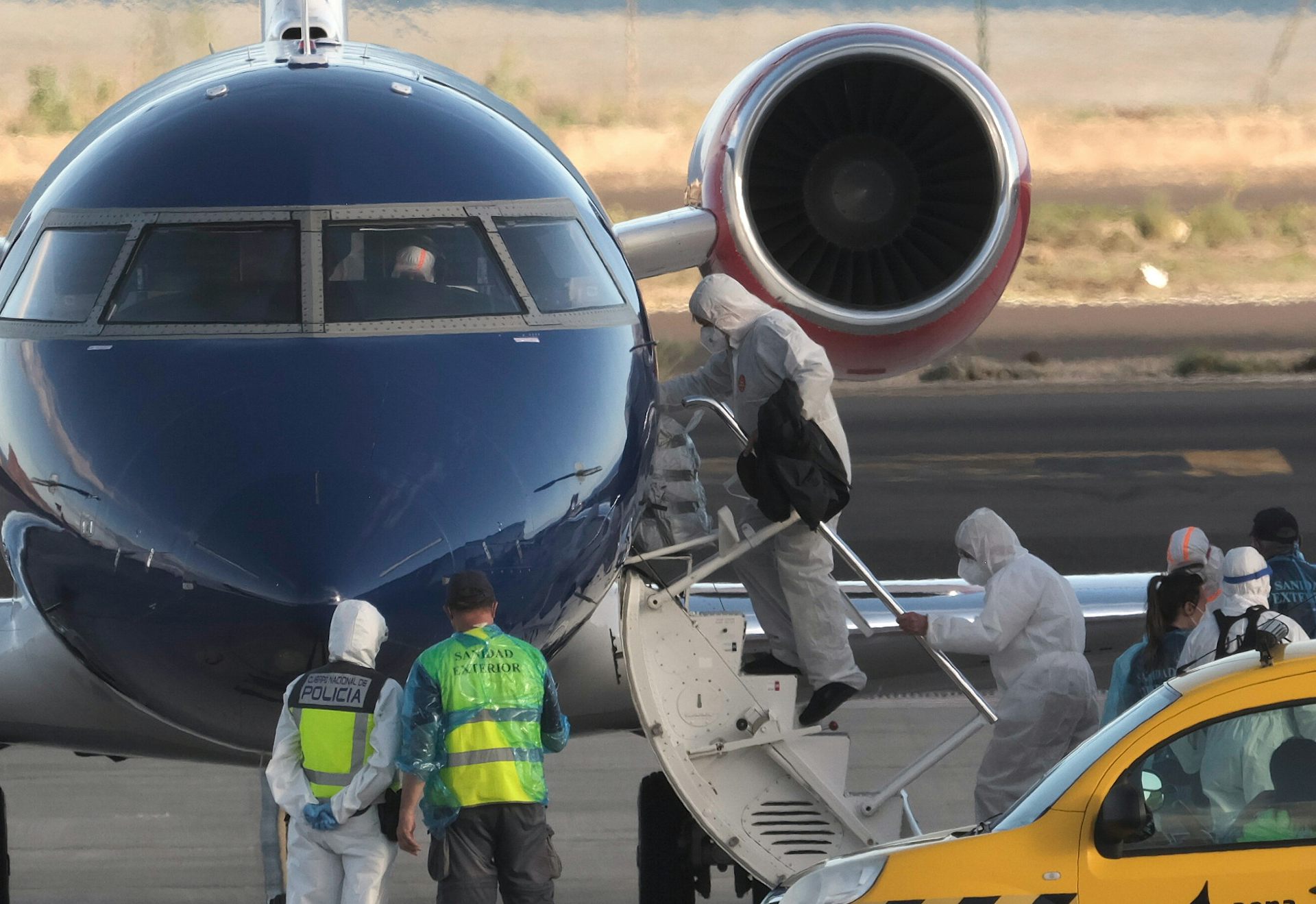
Five Australians and one New Zealander are being repatriated to Australia for quarantine and monitoring. The passengers will initially quarantine at the Centre for National Resilience near RAAF Base Pearce in Western Australia.
五名澳大利亚人和一名新西兰人正在被遣返澳大利亚进行隔离和监测。乘客将首先在西澳大利亚州RAAF Pearce基地附近的国家复原中心进行隔离。
Here’s what you need to know about Andes virus, the risk of transmission, and how it’s different to the virus that caused COVID.
以下是您需要了解的关于安第斯病毒、传播风险以及它与引起COVID病毒的病毒有何不同。
How do hantaviruses spread?
汉坦病毒是如何传播的?
Hantaviruses are a group of viruses usually carried by mice, rats and other rodents. People are most commonly infected after inhaling tiny particles of contaminated rodent urine, droppings or saliva.
汉坦病毒是一类通常由老鼠、大鼠和其他啮齿动物携带的病毒。人们最常见的感染方式是吸入受污染的啮齿动物尿液、粪便或唾液中的微小颗粒。
Most hantaviruses are not known to spread between people. Andes virus is the exception. After the initial spillover from infected rodents, it is the only hantavirus with well-documented person-to-person transmission.
大多数汉坦病毒不被认为可以在人之间传播。安第斯病毒是例外。在从受感染的啮齿动物中最初的溢出后,它是唯一有明确记录的人际传播的汉坦病毒。
But that doesn’t mean it spreads easily between people. Further human-to-human spread is uncommon, but it can occur in close-contact settings such as households, among caregivers, during intimate contact, or after prolonged exposure in crowded or poorly ventilated indoor areas.
但这并不意味着它很容易在人之间传播。人际传播进一步发生的频率不高,但它可以在密切接触的环境中发生,例如家庭、护理人员之间、亲密接触中,或在拥挤或通风不良的室内区域长时间暴露后。
That is very different from SARS-CoV-2, the virus that causes COVID. SARS-CoV-2 spreads very efficiently through the air. People could infect others before they even realised they were sick.
这与引起COVID-19的SARS-CoV-2病毒非常不同。SARS-CoV-2通过空气传播非常高效。人们可能在意识到自己生病之前就感染了他人。
Early estimates suggested each person infected with SARS-CoV-2 passed the virus to roughly two or more others, on average, in populations who had never encountered it before.
早期估计表明,在从未接触过该病毒的人群中,每感染了SARS-CoV-2的人平均会将其病毒传播给大约两个人或更多人。
Andes virus can cause onward human-to-human transmission, but requires a perfect storm of conditions: symptomatic people in crowded, poorly ventilated spaces with close contact over time. This was the case on the MV Hondius.
安第斯病毒可以引起人际传播,但这需要一系列的完美条件:在拥挤、通风不良的空间中,有症状的人之间长时间的密切接触。这在MV Hondius上发生了。
This difference in transmission potential is why SARS-CoV-2 caused a pandemic and Andes virus has only produced contained outbreaks.
这种传播潜力的差异是SARS-CoV-2引发了流行病,而安第斯病毒只产生了受控的疫情的原因。
What are the symptoms of Andes virus?
安第斯病毒的症状是什么?
Early symptoms of Andes virus infection can look like many other illnesses, including fever, headache, muscle aches, nausea and fatigue.
安第斯病毒感染的早期症状可能与许多其他疾病相似,包括发烧、头痛、肌肉酸痛、恶心和疲劳。
In some people, infection can progress to hantavirus pulmonary syndrome, a life-threatening condition in which breathing becomes difficult.
在一些人中,感染可能发展为旱病毒肺综合征,这是一种呼吸困难的危及生命的状况。
How long after contact can you get symptoms?
接触后多久会出现症状?
The WHO recommends people exposed to Andes virus monitor for symptoms for 42 days after their last potential exposure.
世卫组织建议暴露于安第斯病毒的人在最后一次潜在暴露后42天内监测症状。
This reflects the outer limit of the time between infection and symptom onset. It doesn’t mean people are infectious for 42 days.
这反映了感染和症状出现之间时间的外部限制。这并不意味着人们在42天内都是传染性的。
Australian authorities have announced the returning passengers will initially spend three weeks in quarantine, with further monitoring arrangements to follow.
澳大利亚当局已宣布返回的乘客将最初在隔离中度过三周,并将有进一步的监测安排。
Melbourne’s Doherty Institute will undertake the testing using polymerase chain reaction (PCR) , which detects the virus’s genetic material and blood-based antibody testing, known as serology.
墨尔本的道赫蒂研究所将使用聚合酶链式反应(PCR)进行测试,这可以检测病毒的遗传物质以及基于血液的抗体测试,即血清学。
A negative test early after exposure is useful, but not always definitive. If the virus is still incubating, there may not yet be enough viral genetic material or antibody response to detect.
暴露后早期进行的阴性测试是有用的,但并不总是确定的。如果病毒仍在潜伏期,可能还没有足够的病毒遗传物质或抗体反应可以检测到。
How does the virus progress?
病毒如何发展?
The long incubation period reflects how Andes virus progresses, compared to SARS-CoV-2.
较长的潜伏期反映了安第斯病毒与SARS-CoV-2相比的发展过程。
COVID symptoms typically appear within days because the virus replicates rapidly in the respiratory system.
COVID症状通常在几天内出现,因为病毒在呼吸系统中快速复制。
Andes virus progresses differently. Severe disease is linked to blood-vessel dysfunction and inflammatory responses. The breathing problems associated with the complication hantavirus pulmonary syndrome aren’t caused by the virus directly destroying lung tissue, but by the immune system’s delayed response. This causes fluid to leak into the lungs and makes breathing difficult.
安第斯病毒的发展方式不同。严重疾病与血管功能障碍和炎症反应有关。与旱病毒肺综合征并发症相关的呼吸问题并非由病毒直接破坏肺组织引起,而是由免疫系统的延迟反应引起。这导致液体渗入肺部,使呼吸困难。
How deadly is it?
它有多致命?
Fatality rates vary significantly between hantavirus species.
不同หantavirus 物种的死亡率差异很大。
European and Asian hantaviruses typically cause death in less than 1–15% of cases, while hantavirus pulmonary syndrome from American strains, including Andes virus, can reach up to 50%.
欧洲和亚洲的หantavirus 通常导致病例中死亡率低于 1-15%,而来自美洲的หantavirus 肺综合征(包括安第斯病毒)的死亡率可高达 50%。
For context, in 2025, eight countries across the Americas reported 229 hantavirus cases and 59 deaths. These are severe infections, but they remain rare events.
作为背景信息,在 2025 年,美洲的八个国家报告了 229 例หantavirus 病例和 59 例死亡。这些是严重的感染,但它们仍然是罕见事件。
A virus doesn’t become a pandemic simply because it’s deadly.
病毒仅仅因为它致命并不就成为一场大流行病。
Can Andes virus be treated?
安第斯病毒可以治疗吗?
There is no specific antiviral drug for Andes virus. Health care for infected people focuses on close monitoring, supporting their breathing and managing complications to the heart and kidneys.
目前没有针对安第斯病毒的特异性抗病毒药物。对感染者的医疗保健侧重于密切监测,支持他们的呼吸,并管理对心脏和肾脏的并发症。
There is no licensed vaccine to prevent Andes virus.
目前没有用于预防安第斯病毒的许可疫苗。
However, there is also good news in how quickly the scientific response has come together after this outbreak started. Swiss laboratories collaborated quickly to sequence the complete genetic code of the virus from one patient and made it publicly available within days.
然而,科学界在疫情爆发后反应如此迅速也带来了好消息。瑞士的实验室迅速合作,从一名患者那里测序了病毒的完整基因组,并在几天内公之于众。
This gave researchers around the world a reference to compare other cases against. This can support faster confirmation of suspected cases, while helping public health teams identify which cases are linked to the outbreak and who needs monitoring or isolation.
这为世界各地的研究人员提供了一个参考,用于与其他病例进行比较。这可以支持对疑似病例更快地确认,同时帮助公共卫生团队确定哪些病例与疫情有关,以及谁需要接受监测或隔离。
Bottom line
底线
The instinct to see another COVID in every viral outbreak is understandable but, in this case, misleading.
在每一次病毒爆发中看到另一种COVID的本能是可以理解的,但在本案例中,这具有误导性。
The Andes virus is dangerous to those infected, but it isn’t a good candidate for pandemic spread. It incubates slowly, typically spreads through close contact, and transmission appears most efficient when people are symptomatic.
安第斯病毒对感染者是危险的,但它不是大流行传播的良好候选者。它潜伏期较长,通常通过密切接触传播,并且传播在人们出现症状时似乎最为有效。
It’s important to get the Andes virus under control but it’s not a pandemic threat like COVID.
重要的是控制安第斯病毒,但它不像COVID那样是流行病威胁。
Rhys Parry receives funding from the Australian Research Council (ARC) and the National Health and Medical Research Council (NHMRC) .
Rhys Parry 从澳大利亚研究理事会(ARC)和国家卫生及医学研究理事会(NHMRC)获得资金。