Bagaimana rasanya mengalami Armagedon asteroid pembunuh dinosaurus: catatan per langkah demi langkah
What it would have been like to experience the dinosaur-killing asteroid armageddon: a blow-by-blow account
A week after the asteroid impact, rotting vegetation, smoke and sulphur create a stinky planet. Plant and animal survivors succumb to the corrosive acid rain.
Seminggu setelah dampak asteroid, vegetasi membusuk, asap, dan belerang menciptakan planet yang bau. Penyintas tumbuhan dan hewan menyerah pada hujan asam yang korosif.
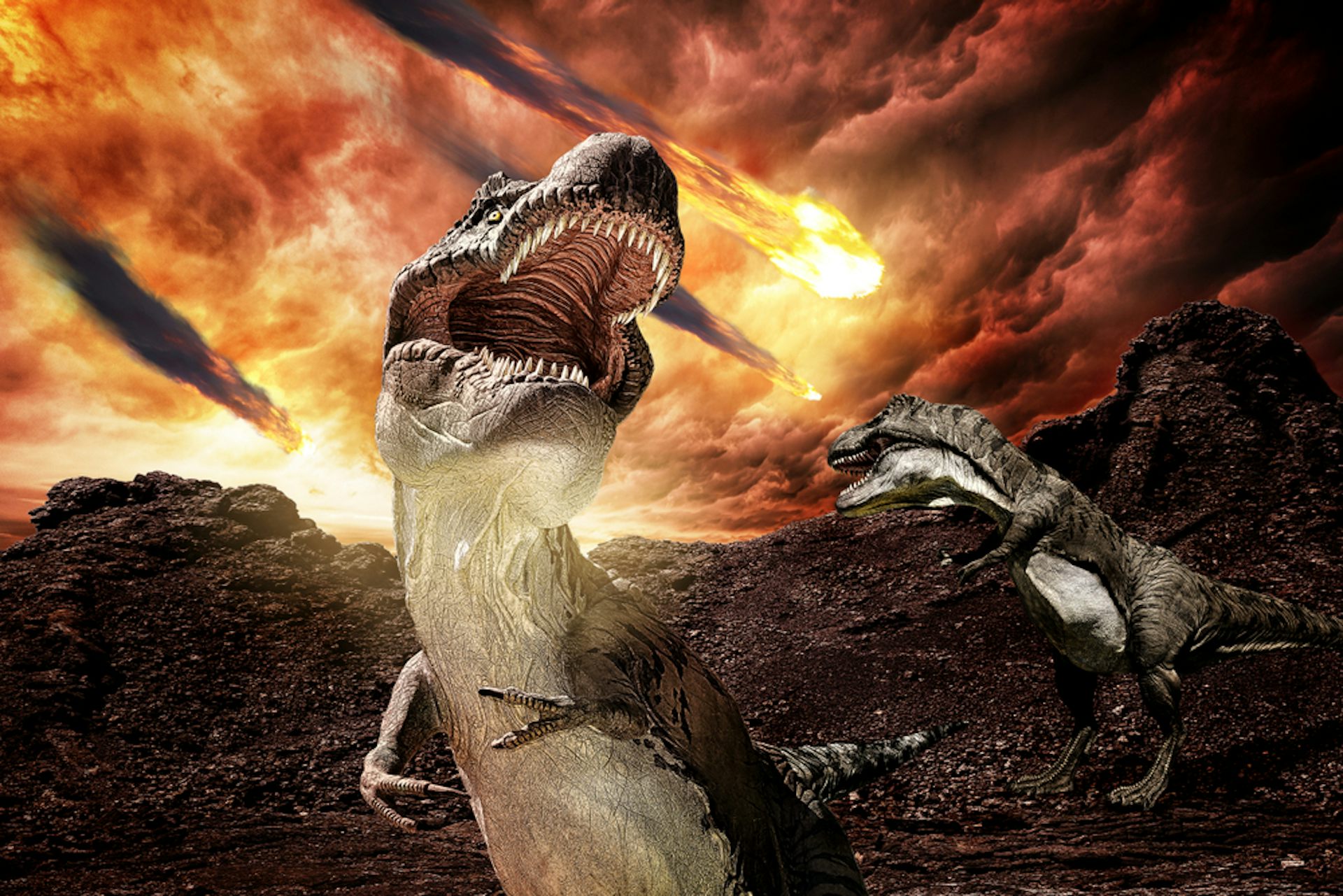
A great Tyrannosaurus rex strides through the conifer trees of her territory, sniffing the air. She picks up the scent from the carcass of a dead horned dinosaur, Triceratops, that she was feeding on yesterday. She walks over and strips off some more shreds of meat, but the smell is foul even for her.
Seekor Tyrannosaurus rex yang hebat melangkah melalui pohon-pohon konifer di wilayahnya, mengendus udara. Dia menangkap aroma dari bangkai dinosaurus bertanduk yang mati, Triceratops, yang dia makan kemarin. Dia berjalan mendekat dan menggaruk beberapa potongan daging lagi, tetapi baunya busuk bahkan baginya.
She goes down to the lake to drink and small crocodiles and turtles scuttle into the water. But she hardly sees them. Of more interest is an armoured dinosaur, Ankylosaurus, lurking nearby. However, she knows this dinosaur won’t be an easy kill and she isn’t desperate enough for food to risk a fight. Little does she know there are bigger dangers ahead. She looks up and sees a bright light racing downwards accompanied by faint crackling and sizzling noises.
Dia turun ke danau untuk minum dan beberapa buaya serta kura-kura kecil berenang ke dalam air. Tetapi dia hampir tidak melihat mereka. Yang lebih menarik adalah seekor dinosaurus berpelindung, Ankylosaurus, yang mengintai di dekatnya. Namun, dia tahu bahwa dinosaurus ini tidak akan mudah dibunuh dan dia tidak cukup putus asa untuk makanan untuk mengambil risiko berkelahi. Dia tidak tahu bahwa ada bahaya yang lebih besar di depan. Dia mendongak dan melihat cahaya terang melesat ke bawah disertai suara gemeretak dan mendesis samar.
Our T. rex has excellent hearing for low frequency sounds and she is disturbed by the vibrations she can feel. But her upset only lasts for a moment. In a flash, she has been burnt to a crisp and her world changed forever.
T. rex kita memiliki pendengaran yang sangat baik untuk suara frekuensi rendah dan dia terganggu oleh getaran yang bisa dia rasakan. Tetapi kegelisahannya hanya berlangsung sesaat. Dalam sekejap, dia terbakar menjadi arang dan dunianya berubah selamanya.
This all happened 66 million years ago, when a huge asteroid famously hit the Earth in the area of what is now the Caribbean. At the end of the Cretaceous period, sea levels were 100–200 metres higher than today, so the shores of the Caribbean lay far inland over eastern Mexico and the southern United States. The impact happened entirely within these waters.
Semua ini terjadi 66 juta tahun yang lalu, ketika sebuah asteroid besar terkenal menghantam Bumi di wilayah yang sekarang adalah Karibia. Pada akhir periode Kretasea, permukaan laut 100–200 meter lebih tinggi dari hari ini, sehingga pantai Karibia terletak jauh di pedalaman atas Meksiko timur dan Amerika Serikat bagian selatan. Dampak itu terjadi sepenuhnya di dalam perairan ini.
The event triggered instant changes to our planet and its atmosphere and led to the extinction of the dinosaurs and about half Earth’s other species. But what would it have been like to experience such a gargantuan impact? What would you have seen, heard or smelled? And how would you have died – or survived?
Peristiwa itu memicu perubahan instan pada planet kita dan atmosfernya dan menyebabkan kepunahan dinosaurus dan sekitar setengah spesies Bumi lainnya. Tetapi bagaimana rasanya mengalami dampak sebesar itu? Apa yang akan kamu lihat, dengar, atau cium? Dan bagaimana kamu akan mati – atau bertahan hidup?
The Insights section is committed to high-quality longform journalism. Our editors work with academics from many different backgrounds who are tackling a wide range of societal and scientific challenges.
Bagian Wawasan didedikasikan untuk jurnalisme panjang berkualitas tinggi. Para editor kami bekerja dengan akademisi dari berbagai latar belakang yang menangani berbagai tantangan sosial dan ilmiah.
As experts on meteoritics and palaeontology, respectively, we’ve created a detailed timeline, based on decades of research, to take you right there. So let’s start by travelling back in time to the very last day of the Cretaceous.
Sebagai ahli meteorit dan paleontologi, masing-masing, kami telah membuat garis waktu terperinci, berdasarkan beberapa dekade penelitian, untuk membawa Anda ke sana. Jadi mari kita mulai dengan kembali ke masa lalu ke hari terakhir Kretasea.
T-minus one day
T-minus satu hari
All is calm and the Cretaceous day proceeds as usual. In what will soon be ground zero, it is pleasantly warm, about 26°C, and wet. It often is. For about a week, the asteroid has been visible only at night. Because the giant rock is heading straight towards Earth, it looks like a motionless star. There is no dramatic tail; this is a rocky asteroid rather than a comet.
Semuanya tenang dan hari Kretasea berjalan seperti biasa. Di mana yang akan segera menjadi titik nol, cuacanya hangat, sekitar 26°C, dan basah. Sering terjadi. Selama sekitar seminggu, asteroid itu hanya terlihat pada malam hari. Karena batu raksasa itu menuju langsung ke Bumi, ia terlihat seperti bintang yang tidak bergerak. Tidak ada ekor yang dramatis; ini adalah asteroid berbatu daripada komet.
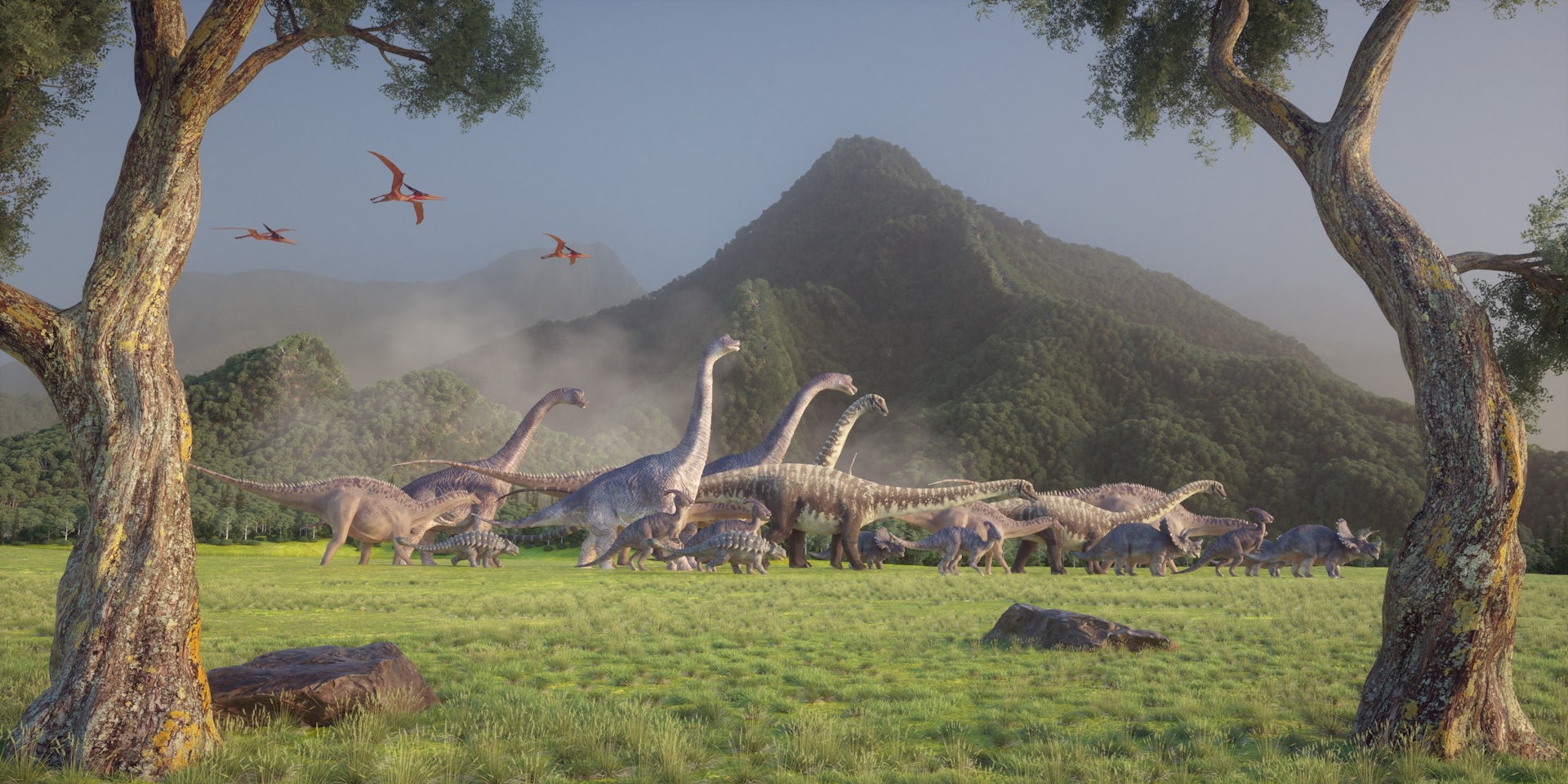
In the last 24 hours, the light becomes visible during the daytime. But it still looks like a star or planet, getting brighter in the final few hours before impact.
Dalam 24 jam terakhir, cahaya menjadi terlihat pada siang hari. Tetapi itu masih terlihat seperti bintang atau planet, semakin terang dalam beberapa jam terakhir sebelum dampak.
T equals 0: the impact
T sama dengan 0: dampak
If you were close by, you would first have experienced a brief light and sound show. Minutes to seconds before the impact, you’d have seen the bright fireball, and its accompanying crackling or fizzing noises. This sizzling sound is a result of the photo-acoustic effect: the intense light of the fireball warms the ground, which then heats the air above it, causing pressure waves, or sound.
Jika Anda berada di dekatnya, Anda akan terlebih dahulu mengalami pertunjukan cahaya dan suara yang singkat. Menit hingga detik sebelum dampak, Anda akan melihat bola api yang terang, dan suara gemeretak atau mendesis yang menyertainya. Suara mendesis ini adalah hasil dari efek foto-akustik: cahaya intens dari bola api menghangatkan tanah, yang kemudian memanaskan udara di atasnya, menyebabkan gelombang tekanan, atau suara.
Next, a deafening sonic boom, which occurs because the asteroid is travelling faster than the speed of sound. But the asteroid is so huge, perhaps 10km in diameter, that it almost certainly hits the ground before any living creature near the impact zone has time to run for cover.
Selanjutnya, gemuruh sonik yang memekakkan telinga, yang terjadi karena asteroid bergerak lebih cepat dari kecepatan suara. Tetapi asteroid itu sangat besar, mungkin berdiameter 10km, sehingga hampir pasti menabrak tanah sebelum makhluk hidup mana pun di zona dampak memiliki waktu untuk berlari mencari perlindungan.
The asteroid’s enormous energy forms a crater through a series of processes that together take only a few seconds. As the asteroid collides with the surface, its kinetic (movement) energy is instantly transferred to the surface as a combination of kinetic, thermal (heat) and seismic energy (released during earthquakes) . This results in a series of shock waves that heat and compress both the asteroid and its target.
Energi asteroid yang sangat besar membentuk kawah melalui serangkaian proses yang hanya memakan waktu beberapa detik. Saat asteroid bertumbukan dengan permukaan, energi kinetiknya (gerakan) secara instan ditransfer ke permukaan sebagai kombinasi energi kinetik, termal (panas) , dan seismik (dilepaskan selama gempa bumi) . Ini menghasilkan serangkaian gelombang kejut yang memanaskan dan memadatkan asteroid dan targetnya.
As the shock waves propagate, rocks fracture, break up and are ejected, producing a bowl-shaped depression, or transient cavity, about ten seconds after impact. The heat and compression also melt and vaporise large volumes of material, including the asteroid itself, releasing a fountain of incandescent vapour (its temperature is more than 10,000 K, or 9726.85°C) .
Saat gelombang kejut menyebar, batuan pecah, hancur, dan terlempar keluar, menghasilkan depresi berbentuk mangkuk, atau rongga sementara, sekitar sepuluh detik setelah dampak. Panas dan pemadatan juga melelehkan dan menguapkan volume besar materi, termasuk asteroid itu sendiri, melepaskan pancaran uap bercahaya (suhunya lebih dari 10.000 K, atau 9726,85°C) .
Over the next few seconds, the cavity increases in size to many times the diameter of the original asteroid. Simulations suggest that around 20 seconds after impact, the transient cavity is at least 30km deep – deeper than the deepest depth currently known on Earth, the 11km Challenger Deep valley, part of the Pacific Ocean’s Marianas Trench. The rim of the crater is over 20km high – more than twice the height of 8,900m Mount Everest.
Selama beberapa detik berikutnya, rongga tersebut membesar menjadi berkali-kali lipat diameter asteroid asli. Simulasi menunjukkan bahwa sekitar 20 detik setelah dampak, rongga sementara tersebut setidaknya sedalam 30km – lebih dalam daripada kedalaman terdalam yang diketahui di Bumi, lembah Challenger Deep 11km, bagian dari Palung Mariana Samudra Pasifik. Tepi kawah setinggi lebih dari 20km – lebih dari dua kali lipat ketinggian Gunung Everest 8.900m.
But this enormous feature lasts for less than a minute before it starts to collapse. Within three minutes of the impact, the centre of the crater has rebounded to form a peak several kilometres high. The peak only lasts about two minutes before collapsing back into the crater.
Tetapi fitur besar ini berlangsung kurang dari satu menit sebelum mulai runtuh. Dalam waktu tiga menit setelah dampak, pusat kawah telah memantul membentuk puncak setinggi beberapa kilometer. Puncak itu hanya bertahan sekitar dua menit sebelum runtuh kembali ke dalam kawah.
Whether a dinosaur or a dung beetle, if you were near the transient cavity you would have been incinerated instantly by the blast. But even if you were up to 2,000km from the epicentre, you’d likely have been killed quickly by the thermal radiation and supersonic winds now spreading out from the impact site.
Baik itu dinosaurus atau kumbang kotoran, jika Anda berada di dekat rongga sementara, Anda akan terbakar seketika oleh ledakan tersebut. Tetapi bahkan jika Anda berada hingga 2.000km dari episentrum, Anda kemungkinan besar akan terbunuh dengan cepat oleh radiasi termal dan angin supersonik yang kini menyebar dari lokasi dampak.
T-plus 5 minutes
T-plus 5 menit
Five minutes after the impact, the winds have “eased” to those of a category 5 hurricane, flattening everything within about 1,500km of the impact. Destroying everything, that is, which has not already been burnt. Atmospheric temperatures in the region rise to over 500K (226.85°C) . This would feel like being inside an oven – causing burns, heatstroke and death. Wood and plant matter ignite, creating fires everywhere.
Lima menit setelah dampak, angin telah “melunak” menjadi angin badai kategori 5, meratakan segala sesuatu dalam jarak sekitar 1.500 km dari dampak. Menghancurkan segalanya, yaitu yang belum terbakar. Suhu atmosfer di wilayah tersebut naik hingga lebih dari 500K (226,85°C) . Ini akan terasa seperti berada di dalam oven – menyebabkan luka bakar, sengatan panas, dan kematian. Kayu dan materi tumbuhan menyala, menciptakan api di mana-mana.
Because the asteroid struck the sea, the atmosphere is also filled with super-heated steam, making the hurricane-force winds even deadlier.
Karena asteroid itu menghantam laut, atmosfer juga dipenuhi dengan uap superpanas, membuat angin badai bahkan lebih mematikan.
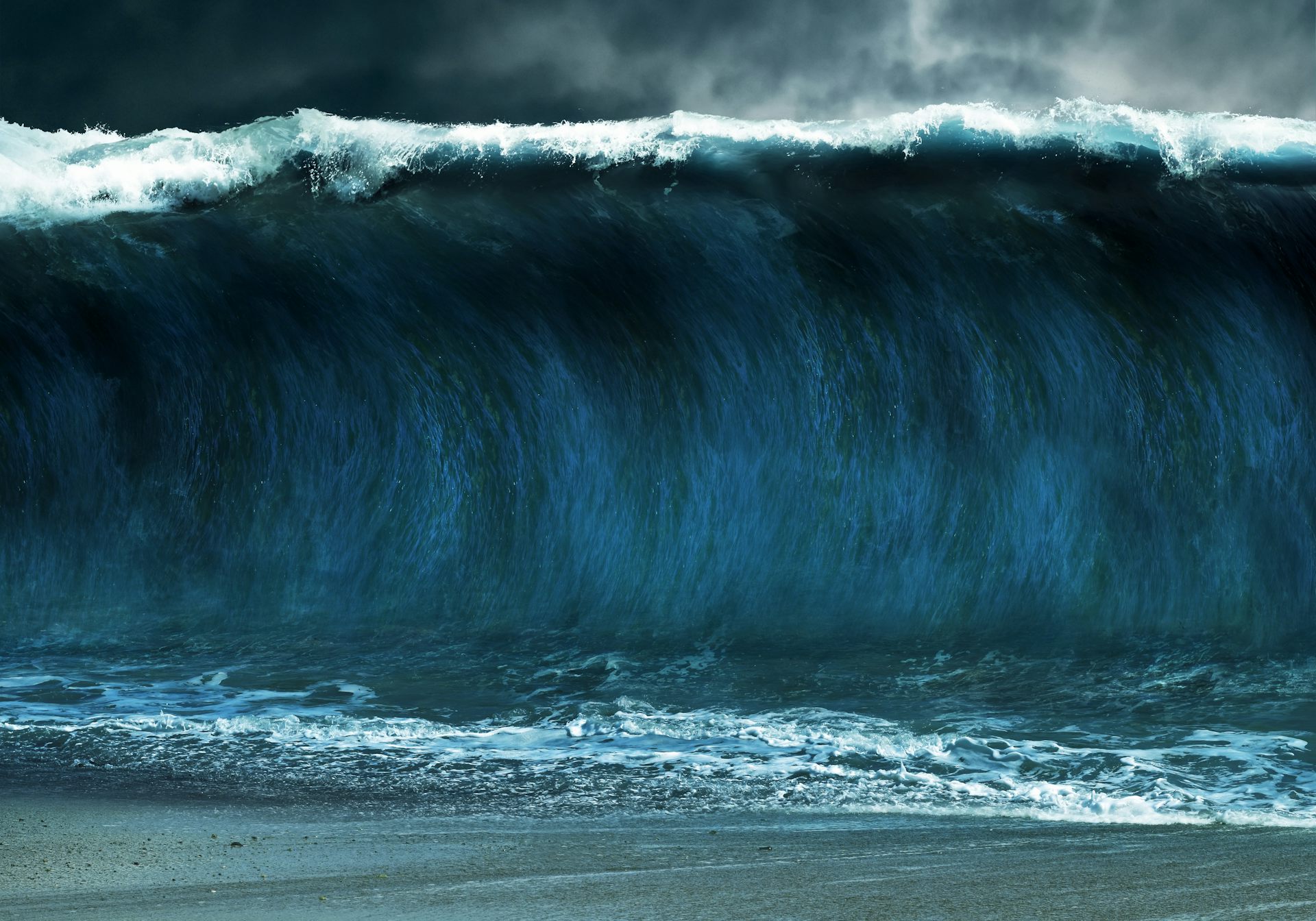
Next come the tidal waves, triggered by the vast quantities of displaced rock and water. These 100-metre megatsunamis first strike the shores of what is now the Gulf of Mexico, engulfing the land before depositing huge amounts of debris as they retreat.
Selanjutnya datang gelombang pasang, dipicu oleh sejumlah besar batuan dan air yang bergeser. Megatsunami setinggi 100 meter ini pertama kali menghantam pantai yang sekarang menjadi Teluk Meksiko, menelan daratan sebelum menumpahkan sejumlah besar puing saat mereka surut.
By now, the crater has almost reached its final dimensions – 180km across and 20km deep. But making an enormous hole in the ground isn’t the only outcome of the impact. All the rock and vapour displaced during the collision has to go somewhere. Several locations in Northern America show that metre-sized blocks of debris from the impact were thrown distances of hundreds of kilometres.
Saat ini, kawah tersebut hampir mencapai dimensi akhirnya – 180 km lebarnya dan 20 km kedalamannya. Tetapi membuat lubang besar di tanah bukanlah satu-satunya hasil dari dampak tersebut. Semua batuan dan uap yang bergeser selama tabrakan harus pergi ke suatu tempat. Beberapa lokasi di Amerika Utara menunjukkan bahwa bongkahan puing berukuran meter dari dampak tersebut terpental sejauh ratusan kilometer.
So if you were 2,000km to 3,000km from the epicentre and survived the first few seconds, you’d most likely die from overheating, earthquakes, hurricanes, fires, tsunami-driven floods or being hit by impact melt.
Jadi jika Anda berada 2.000 hingga 3.000 km dari episentrum dan selamat dari beberapa detik pertama, Anda kemungkinan besar akan mati karena terlalu panas, gempa bumi, badai, kebakaran, banjir yang didorong oleh tsunami, atau terkena lelehan dampak.
But what is happening much further away? In the first five minutes after impact, dinosaurs roaming the Cretaceous forests of what are now China or New Zealand are so far undisturbed.
Tetapi apa yang terjadi jauh lebih jauh? Dalam lima menit pertama setelah dampak, dinosaurus yang berkeliaran di hutan Kretasea di wilayah yang sekarang adalah Tiongkok atau Selandia Baru masih tidak terganggu.
But it won’t be long before that changes.
Tetapi tidak akan lama sebelum itu berubah.
T-plus one hour
T-plus satu jam
Shockwaves on land and sea are only minor inconveniences compared with the fire that is still radiating down from the sky. Some of the impact energy has been transferred into the atmosphere, heating the air and dust to incandescence.
Gelombang kejut di darat dan laut hanyalah ketidaknyamanan kecil dibandingkan dengan api yang masih memancar dari langit. Sebagian energi dampak telah ditransfer ke atmosfer, memanaskan udara dan debu hingga menjadi pijar.
An hour after impact, a belt of dust has circled the globe. Deposits of solidified molten droplets (impact spherules) and mineral grains have been found in numerous locations from New Zealand in the south to Denmark in the north. In these locations, you would not have been aware of the tsunamis around the Americas or the wildfires, but the skies would certainly have begun to darken.
Satu jam setelah dampak, sabuk debu telah mengelilingi globe. Endapan tetesan lelehan yang memadat (sferul dampak) dan butiran mineral telah ditemukan di banyak lokasi dari Selandia Baru di selatan hingga Denmark di utara. Di lokasi-lokasi ini, Anda tidak akan menyadari tsunami di sekitar Amerika atau kebakaran hutan, tetapi langit pasti sudah mulai menggelap.
T-plus one day
T-plus satu hari
By now, huge tsunamis are moving east across the Atlantic and west across the Pacific, entering the Indian Ocean from both sides.
Saat ini, tsunami besar bergerak ke timur melintasi Atlantik dan ke barat melintasi Pasifik, memasuki Samudra Hindia dari kedua sisi.
They are still around 50m high – causing death and destruction across many coasts around the world. By comparison, the 2004 Boxing Day tsunami reached heights of up to 30 metres. Tsunamis kill fishes and marine life that are washed high on the shore and then dumped, just as they kill coastal trees and drown land animals. But the tsunamis gradually fade away and probably don’t wipe out any entire species – at least on their own.
Mereka masih tingginya sekitar 50m – menyebabkan kematian dan kehancuran di banyak pantai di seluruh dunia. Sebagai perbandingan, tsunami Boxing Day 2004 mencapai ketinggian hingga 30 meter. Tsunami membunuh ikan dan kehidupan laut yang terhanyut tinggi di pantai dan kemudian dibuang, sama seperti mereka membunuh pohon pesisir dan menenggelamkan hewan darat. Tetapi tsunami secara bertahap memudar dan mungkin tidak memusnahkan seluruh spesies – setidaknya dengan sendirinya.
The hurricane force winds have also died down, but tropical storm strength winds are whipping up debris and causing further chaos and destruction across the tsunami-affected areas. The burning sky is also triggering wildfires across the globe – which, in turn, carry ever more soot into the atmosphere. The sooty signature of these wildfires has been found deposited as carbon particles in sediments from the K-Pg boundary – a 66-million-year-old thin clay layer.
Angin kekuatan badai juga telah mereda, tetapi angin kekuatan badai tropis mengaduk puing-puing dan menyebabkan kekacauan serta kehancuran lebih lanjut di daerah-daerah yang terkena tsunami. Langit yang terbakar juga memicu kebakaran hutan di seluruh dunia – yang pada gilirannya membawa semakin banyak jelaga ke atmosfer. Tanda jelaga dari kebakaran hutan ini telah ditemukan terdeposisi sebagai partikel karbon dalam sedimen dari batas K-Pg – lapisan lempung tipis berusia 66 juta tahun.
Further away, in what is modern Europe and Asia, the skies continue to fill up with dust and soot, as they do everywhere. Temperatures start to drop as sunlight is blocked. Trees and plants in general, including phytoplankton, close down as if for winter, unable to photosynthesise. Any animals that rely on warm conditions ultimately hunker down and die.
Jauh di sana, di apa yang sekarang adalah Eropa dan Asia modern, langit terus terisi dengan debu dan jelaga, seperti di mana-mana. Suhu mulai turun karena sinar matahari terhalang. Pohon dan tumbuhan secara umum, termasuk fitoplankton, menutup diri seolah-olah untuk musim dingin, tidak mampu berfotosintesis. Hewan apa pun yang bergantung pada kondisi hangat pada akhirnya bersembunyi dan mati.
T-plus one week
T-plus satu minggu
It’s getting darker and darker. Simulations of solar radiation reaching the Earth’s surface following the impact indicate that, after about a week, the solar flux (the amount of heat and light per a certain area) is just one thousandth of that prior to the impact. This is caused by particles of dust and soot in the atmosphere.
Semuanya menjadi semakin gelap. Simulasi radiasi matahari yang mencapai permukaan Bumi setelah dampak menunjukkan bahwa, setelah sekitar satu minggu, fluks surya (jumlah panas dan cahaya per area tertentu) hanya sepersejuta dari sebelum dampak. Hal ini disebabkan oleh partikel debu dan jelaga di atmosfer.
The continued decrease in light levels is accompanied by a global drop in surface temperatures of at least 5°C. This means that most of the dinosaurs and other large flying and swimming reptiles probably die from freezing within the course of this first week (smaller reptiles with slower metabolisms or more flexible diets could survive longer) . Cooling temperatures and cloud cover also lead to rain. But not just any rain. Storms of acid rain fall across the Earth.
Penurunan tingkat cahaya yang berkelanjutan disertai dengan penurunan suhu permukaan global setidaknya 5°C. Ini berarti sebagian besar dinosaurus dan reptil besar lainnya yang terbang dan berenang kemungkinan mati karena pembekuan dalam kurun waktu minggu pertama ini (reptil yang lebih kecil dengan metabolisme yang lebih lambat atau pola makan yang lebih fleksibel mungkin bisa bertahan lebih lama) . Suhu yang mendingin dan tutupan awan juga menyebabkan hujan. Tetapi bukan hujan biasa. Badai hujan asam turun melintasi Bumi.
Two separate mechanisms generate acid rain. The first is down to the geology of the impact region. The asteroid happened to hit an area of sediments rich in sulphur, which vaporised and caused sulphur oxides (acidic and pungent gas compounds composed of sulphur and oxygen) to be part of the plume of plasma blasted into the atmosphere. Second, the energy of the collision was sufficient to turn nitrogen and oxygen into nitrogen oxides – highly reactive gases that can form smog.
Dua mekanisme terpisah menghasilkan hujan asam. Yang pertama adalah karena geologi wilayah dampak. Asteroid tersebut kebetulan menabrak area sedimen yang kaya sulfur, yang menguap dan menyebabkan oksida sulfur (senyawa gas asam dan menyengat yang terdiri dari sulfur dan oksigen) menjadi bagian dari semburan plasma yang dihantam ke atmosfer. Kedua, energi tabrakan tersebut cukup untuk mengubah nitrogen dan oksigen menjadi oksida nitrogen – gas yang sangat reaktif yang dapat membentuk kabut asap.
The dropping temperature ultimately allows water vapour to condense into drops, and the sulphur and nitrogen oxides dissolve to form sulphuric and nitric acids. This is sufficient to generate a rapid drop in pH. Early models suggest that the pH of the rain might be as low as 1 – the same acidity as battery acid.
Penurunan suhu pada akhirnya memungkinkan uap air mengembun menjadi tetesan, dan oksida sulfur serta nitrogen larut membentuk asam sulfat dan asam nitrat. Ini cukup untuk menghasilkan penurunan pH yang cepat. Model awal menunjukkan bahwa pH hujan mungkin serendah 1 – tingkat keasaman seperti asam baterai.
At this point, Earth is not a great place to be. Rotting vegetation, choking smoke and sulphur aerosols combine to make the planet stink. Plants and animals on land and in shallow seas that have survived the darkness and cold succumb to the corrosive acid rain and ocean acidification. Acid rain also kills trees by leaching nutrients such as calcium, magnesium and potassium from the soil. Shallow marine shellfish, crustaceans and corals also die as acid seawater destroys their skeletons.
Pada titik ini, Bumi bukanlah tempat yang baik untuk berada. Vegetasi yang membusuk, asap dan aerosol sulfur yang mencekik bergabung untuk membuat planet ini berbau busuk. Tumbuhan dan hewan di darat dan di laut dangkal yang telah bertahan dari kegelapan dan dingin menyerah pada hujan asam yang korosif dan pengasaman lautan. Hujan asam juga membunuh pohon dengan melarutkan nutrisi seperti kalsium, magnesium, dan kalium dari tanah. Kerang, krustasea, dan terumbu karang laut dangkal juga mati karena air laut asam menghancurkan kerangka mereka.
T-plus one year
T-plus satu tahun
Winds die down, wildfires are extinguished and the oceans are once again calm. It might appear that the asteroid collision is just a scar on the ocean floor. But its effects are still destructive. The atmosphere is still filled with dust and the Sun hasn’t shone for a year. Temperatures have continued to drop, with the average surface temperature now 15°C lower than before the impact. Winter has come.
Angin mereda, kebakaran hutan padam, dan lautan kembali tenang. Mungkin tampak bahwa tabrakan asteroid hanyalah bekas luka di dasar lautan. Tetapi dampaknya masih merusak. Atmosfer masih dipenuhi debu dan Matahari belum bersinar selama setahun. Suhu terus menurun, dengan suhu permukaan rata-rata kini 15°C lebih rendah dari sebelum dampak. Musim dingin telah tiba.
Any dinosaurs or marine reptiles that survived the first week of freezing conditions would have died very soon after. A year after the impact, only rotted skeletons of these behemoths remain. Here and there, smaller animals like mammals the size of rats and insects would be nestling in crevices, barely surviving on their reserves and decaying plants.
Setiap dinosaurus atau reptil laut yang selamat dari minggu pertama kondisi pembekuan akan mati dengan sangat cepat setelahnya. Setahun setelah dampak, hanya kerangka membusuk dari raksasa-raksasa ini yang tersisa. Di sana-sini, hewan yang lebih kecil seperti mamalia seukuran tikus dan serangga akan bersarang di celah-celah, nyaris bertahan hidup dari cadangan mereka dan tanaman yang membusuk.
Indeed, it has not been a good year for life on Earth: over 50% of plants have died out because of the cold and lack of sunlight. And similar losses have occurred among terrestrial animals and species in the acidified, shallow sea waters.
Memang, ini bukanlah tahun yang baik bagi kehidupan di Bumi: lebih dari 50% tanaman telah punah karena dingin dan kurangnya sinar matahari. Dan kerugian serupa telah terjadi di antara hewan dan spesies darat di perairan laut yang asam dan dangkal.
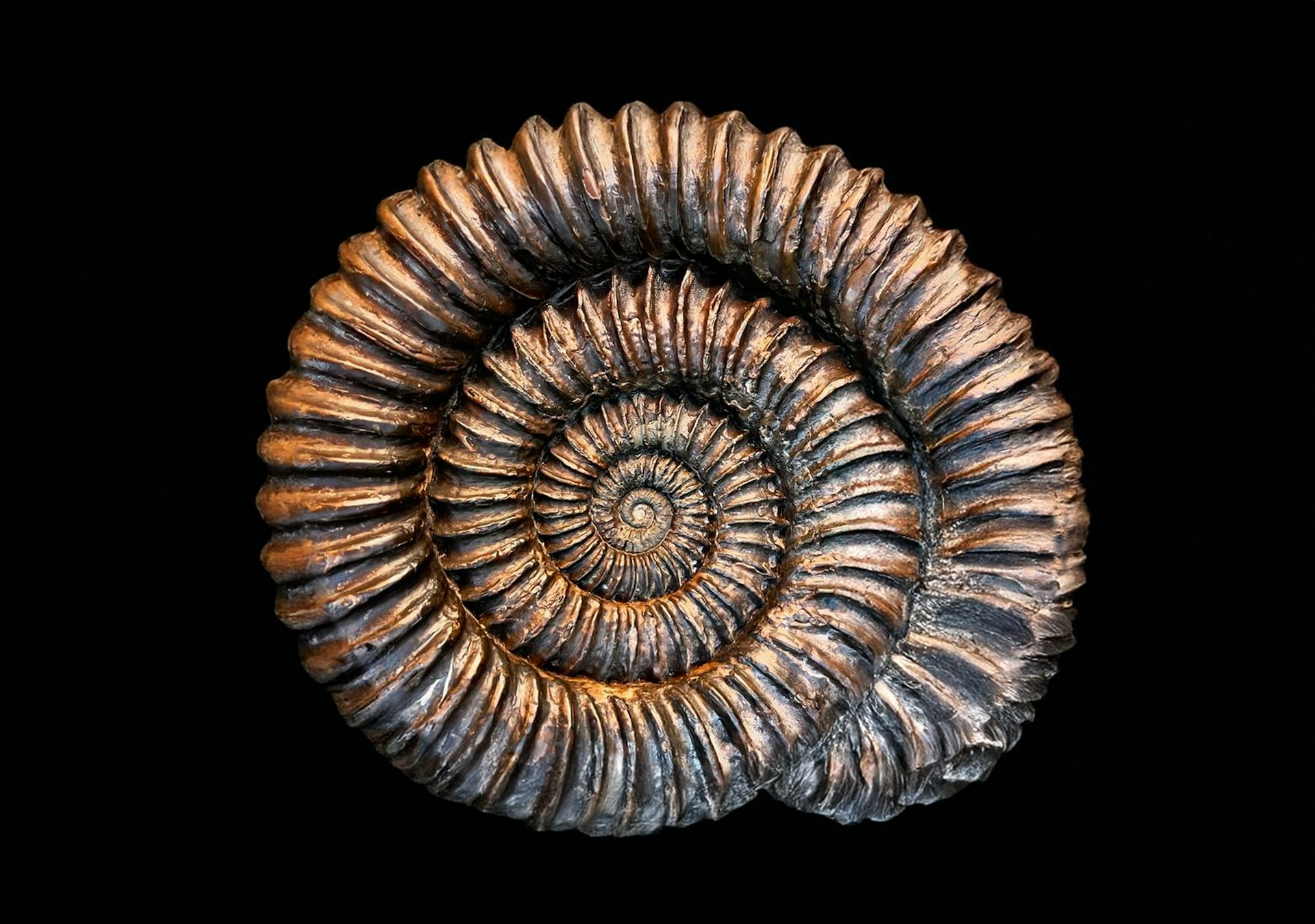
While most plant groups and many of the modern groups of insects, fishes, reptiles, birds and mammals recover reasonably rapidly, things don’t look great for other species. Dinosaurs and pterosaurs living on land are extinct, as are many marine reptiles, ammonites, belemnites and rudist bivalves in the oceans. Ammonites and belemnites are high in their food chains, and so suffer not only from the cold and acidification but also from the loss of abundant food resources, such as smaller marine organisms.
Sementara sebagian besar kelompok tumbuhan dan banyak kelompok modern serangga, ikan, reptil, burung, dan mamalia pulih dengan cukup cepat, keadaan tidak terlihat bagus untuk spesies lainnya. Dinosaurus dan pterosaurus yang hidup di darat punah, begitu juga banyak reptil laut, amonit, belemnit, dan bivalvia rudit di lautan. Amonit dan belemnit berada di puncak rantai makanan mereka, dan oleh karena itu menderita tidak hanya karena dingin dan pengasaman tetapi juga karena hilangnya sumber daya makanan yang melimpah, seperti organisme laut yang lebih kecil.
T-plus ten years
T-plus sepuluh tahun
The Earth is still in the grip of a fierce winter. Although most of the sulphur has rained out of the atmosphere, dust and soot particles remain. The average surface temperature is still about 5°C lower than before the impact. The main oceans have not frozen, but inland lakes and rivers around the world are iced over.
Bumi masih berada di bawah cengkeraman musim dingin yang ganas. Meskipun sebagian besar belerang telah turun dari atmosfer, debu dan jelaga tetap ada. Suhu permukaan rata-rata masih sekitar 5°C lebih rendah dari sebelum dampak. Samudra utama belum membeku, tetapi danau dan sungai di pedalaman di seluruh dunia tertutup es.
Clearly, there were no humans about at this time – there weren’t even any larger mammals. But given the only species that survived were those that could burrow or live below water, it is unlikely that you could have survived this long.
Jelas, tidak ada manusia di sekitar waktu ini – bahkan tidak ada mamalia yang lebih besar. Tetapi mengingat satu-satunya spesies yang selamat adalah mereka yang bisa menggali atau hidup di bawah air, kecil kemungkinannya Anda bisa bertahan selama ini.
Surviving plant and animal groups such as turtles, smaller crocodiles, lizards, snakes, some ground-dwelling birds and small mammals repopulate the Earth at this point. But they are forced back to limited areas of relative safety a long way from the impact site. These areas are now receiving sufficient sunlight for plants and phytoplankton to photosynthesise again. As leaves and seeds provide the basis for the food chains on land and in the sea, life begins to rebuild.
Kelompok tumbuhan dan hewan yang selamat seperti kura-kura, buaya yang lebih kecil, kadal, ular, beberapa burung darat, dan mamalia kecil mempopulasi kembali Bumi pada titik ini. Tetapi mereka dipaksa kembali ke area terbatas yang relatif aman, jauh dari lokasi dampak. Area-area ini sekarang menerima sinar matahari yang cukup bagi tumbuhan dan fitoplankton untuk berfotosintesis lagi. Karena daun dan biji menyediakan dasar bagi rantai makanan di darat dan di laut, kehidupan mulai membangun kembali.
Eventually, life returns to the devastated landscapes, but ecosystems are very different and the dinosaurs are no more.
Pada akhirnya, kehidupan kembali ke lanskap yang hancur, tetapi ekosistemnya sangat berbeda dan dinosaurus sudah tiada.
T-plus 66 million years
T-plus 66 juta tahun
Today, 66 million years after the impact, the scars of the collision are hidden within geological strata – and scientists have started deciphering them. It was in 1980 that researchers first reported evidence of the impact. In their classic paper, Luis Alvarez, a Nobel-prize-winning physicist, and co-authors, described a sudden enrichment in the element iridium in a specific clay layer in Denmark and in Italy.
Hari ini, 66 juta tahun setelah tumbukan itu, bekas luka tabrakan tersembunyi di dalam lapisan geologis – dan para ilmuwan telah mulai memecahkannya. Pada tahun 1980, para peneliti pertama kali melaporkan bukti tumbukan itu. Dalam makalah klasik mereka, Luis Alvarez, seorang fisikawan pemenang Hadiah Nobel, dan rekan penulis, menggambarkan pengayaan mendadak pada unsur iridium di lapisan lempung tertentu di Denmark dan Italia.
Iridium is rare in surface rocks because most of it was sequestered in Earth’s core when the planet first formed. However, iridium is found in meteorites, and Alvarez and colleagues inferred that the rate of accumulation of the metal in the sediments was so high that it could only have been produced by impact of a gigantic meteorite.
Iridium langka dalam batuan permukaan karena sebagian besar unsur itu tersimpan di inti Bumi ketika planet pertama kali terbentuk. Namun, iridium ditemukan di meteorit, dan Alvarez dan rekan-rekannya menyimpulkan bahwa laju akumulasi logam tersebut di sedimen sangat tinggi sehingga hanya dapat dihasilkan oleh tumbukan meteorit raksasa.
Because the scientists had only observed the iridium spike in two locations, the impact hypothesis was rejected by many scientists at the time. However, through the 1980s, iridium spikes were identified in clay layers at more and more locations – in muds laid down on land, in lakes, in the sea.
Karena para ilmuwan hanya mengamati lonjakan iridium di dua lokasi, hipotesis tumbukan ditolak oleh banyak ilmuwan pada saat itu. Namun, melalui tahun 1980-an, lonjakan iridium diidentifikasi di lapisan lempung di lebih banyak lokasi – di lumpur yang terendap di darat, di danau, di laut.
Support for an impact hypothesis strengthened when a crater of the correct age was found in 1991. The crater is buried beneath younger rocks, but clearly visible in geophysical surveys, lying half on land in the Yucatán Peninsula of Mexico, and half offshore. Since 1990, evidence for the impact has increased, not least when scientists discovered that there was indeed a sharp cooling event at the end of the Cretaceous.
Dukungan untuk hipotesis tumbukan menguat ketika sebuah kawah dengan usia yang tepat ditemukan pada tahun 1991. Kawah itu terkubur di bawah batuan yang lebih muda, tetapi terlihat jelas dalam survei geofisika, terletak setengah di darat di Semenanjung Yucatán, Meksiko, dan setengah di laut. Sejak tahun 1990, bukti tumbukan telah meningkat, tidak terkecuali ketika para ilmuwan menemukan bahwa memang ada peristiwa pendinginan tajam di akhir Kreta.
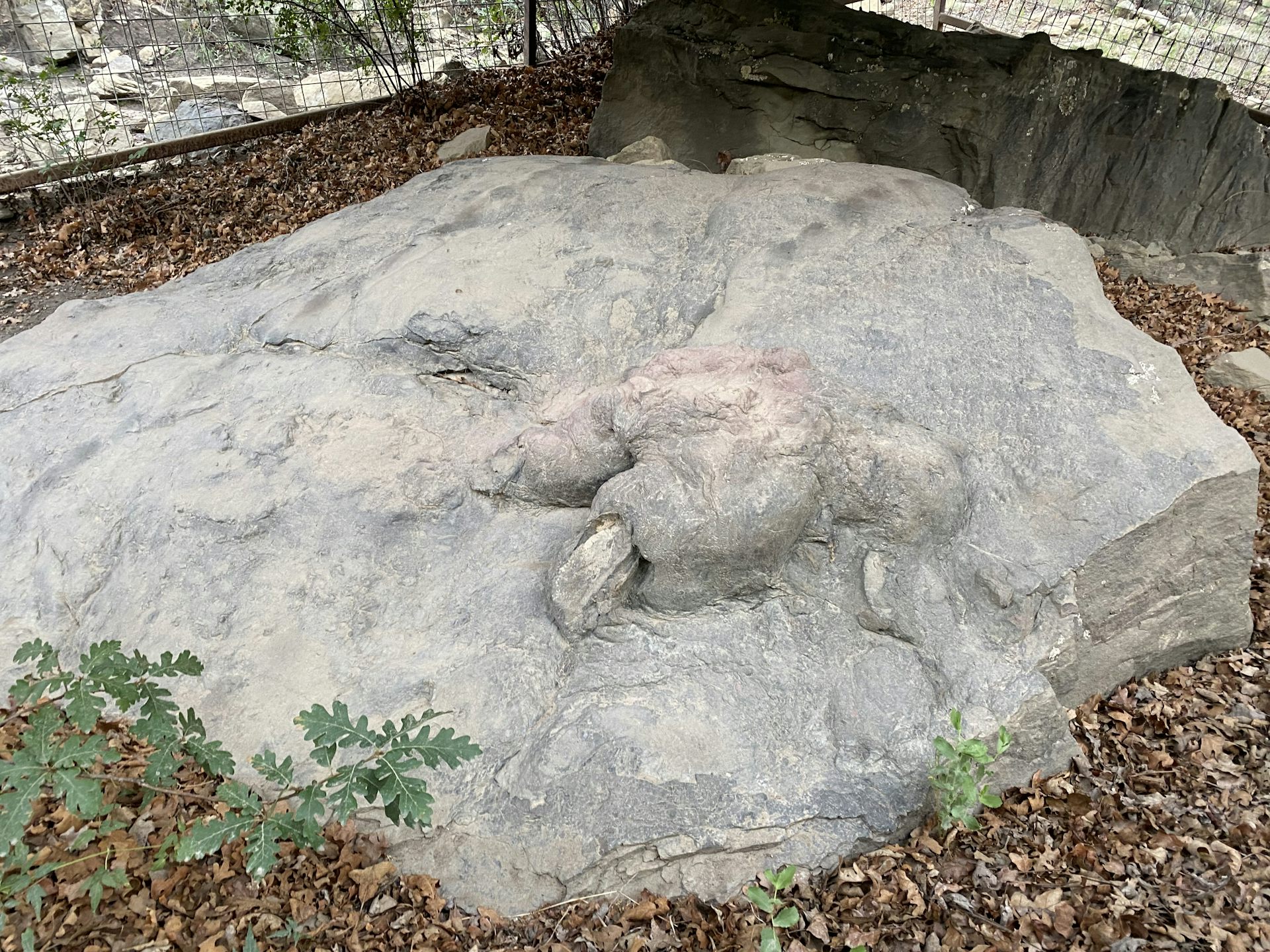
In total, it is estimated that half the species of plants and animals alive at the end of the Cretaceous disappeared. It was once thought that surviving groups such as many plants, insects, molluscs, lizards, birds and mammals somehow escaped unscathed. But detailed study shows that this is not the case – they were all hit hard.
Secara keseluruhan, diperkirakan setengah dari spesies tumbuhan dan hewan yang hidup pada akhir Kreta telah punah. Dulu dipikirkan bahwa kelompok yang selamat seperti banyak tumbuhan, serangga, moluska, kadal, burung, dan mamalia entah bagaimana lolos tanpa cedera. Tetapi studi rinci menunjukkan bahwa ini tidak benar – mereka semua terkena dampak keras.
But, by chance or luck, enough individuals and species were able to survive the cold and absence of food, or were in parts of the world where the effects were less extreme. As the world returned to normal, they had the opportunity to expand rapidly into their old niches, but also to occupy the space vacated by extinct groups. In fact, one important consequence of the extinction of the dinosaurs, apex predators in their heyday, was the successful spread and evolution of mammals.
Namun, karena kebetulan atau keberuntungan, cukup banyak individu dan spesies yang mampu bertahan dari dingin dan ketiadaan makanan, atau berada di sebagian dunia di mana dampaknya tidak terlalu ekstrem. Ketika dunia kembali normal, mereka memiliki kesempatan untuk berkembang pesat ke ceruk lama mereka, tetapi juga untuk menempati ruang yang ditinggalkan oleh kelompok yang punah. Faktanya, salah satu konsekuensi penting dari kepunahan dinosaurus, predator puncak pada masa kejayaannya, adalah penyebaran dan evolusi mamalia yang berhasil.
When Alvarez and colleagues first described the drop in temperature following the impact, they called it a “nuclear winter”, reflecting the political climate of the early 1980s. Now we might be more inclined to describe the effects as a global climate change – similar events are currently resulting from increased carbon dioxide in the atmosphere (flooding, temperature fluctuations) .
Ketika Alvarez dan rekan-rekannya pertama kali menggambarkan penurunan suhu setelah tumbukan itu, mereka menyebutnya “musim dingin nuklir”, yang mencerminkan iklim politik awal 1980-an. Sekarang kita mungkin lebih cenderung menggambarkan dampaknya sebagai perubahan iklim global – peristiwa serupa saat ini dihasilkan dari peningkatan karbon dioksida di atmosfer (banjir, fluktuasi suhu) .
It is salutary to think that without the asteroid collision, primates might never have reached the level we are at today. But it is equally salutary to consider that modern humans are causing some of the same changes to the atmosphere that ultimately killed our reptilian forbears and may one day also lead to our own demise.
Sangat bermanfaat untuk berpikir bahwa tanpa tabrakan asteroid, primata mungkin tidak akan pernah mencapai tingkat yang kita miliki saat ini. Tetapi sama bermanfaatnya untuk mempertimbangkan bahwa manusia modern menyebabkan beberapa perubahan yang sama pada atmosfer yang pada akhirnya membunuh leluhur reptil kita dan mungkin suatu hari juga menyebabkan kehancuran kita sendiri.
For you: more from our Insights series:
Untuk Anda: lebih banyak dari seri Insights kami:
‘It ain’t no unicorn’: meet the researchers who’ve interviewed 130 Bigfoot hunters
‘It ain’t no unicorn’: temui para peneliti yang telah mewawancarai 130 pemburu Bigfoot
The truth about child IQ: research shows it fluctuates and may be an unreliable predictor of future success
Kebenaran tentang IQ anak: penelitian menunjukkan bahwa itu berfluktuasi dan mungkin merupakan prediktor yang tidak dapat diandalkan untuk kesuksesan di masa depan
Is time a fundamental part of reality? A quiet revolution in physics suggests not
Apakah waktu merupakan bagian mendasar dari realitas? Revolusi sunyi dalam fisika menunjukkan tidak
Underground data fortresses: the nuclear bunkers, mines and mountains being transformed to protect our ‘new gold’ from attack
Benteng data bawah tanah: bunker nuklir, tambang, dan gunung yang diubah untuk melindungi ‘emas baru’ kita dari serangan
Inside Porton Down: what I learned during three years at the UK’s most secretive chemical weapons laboratory
Di dalam Porton Down: apa yang saya pelajari selama tiga tahun di laboratorium senjata kimia paling rahasia di Inggris
To hear about new Insights articles, join the hundreds of thousands of people who value The Conversation’s evidence-based news. Subscribe to our newsletter.
Untuk mendengar tentang artikel Insights baru, bergabunglah dengan ratusan ribu orang yang menghargai berita berbasis bukti The Conversation. Berlangganan buletin kami.
Monica Grady receives funding from the Leverhulme Trust for an Emeritus Fellowship and from the STFC. She is affiliated with The Open University, Liverpool Hope University and the Natural History Museum, London.
Monica Grady menerima dana dari Leverhulme Trust untuk Fellowship Emeritus dan dari STFC. Dia berafiliasi dengan The Open University, Liverpool Hope University, dan Museum Sejarah Alam, London.
Michael J. Benton does not work for, consult, own shares in or receive funding from any company or organisation that would benefit from this article, and has disclosed no relevant affiliations beyond their academic appointment.
Michael J. Benton tidak bekerja untuk, berkonsultasi, memiliki saham di, atau menerima dana dari perusahaan atau organisasi apa pun yang akan mendapat manfaat dari artikel ini, dan tidak telah mengungkapkan afiliasi yang relevan selain jabatan akademisnya.
Read more
-
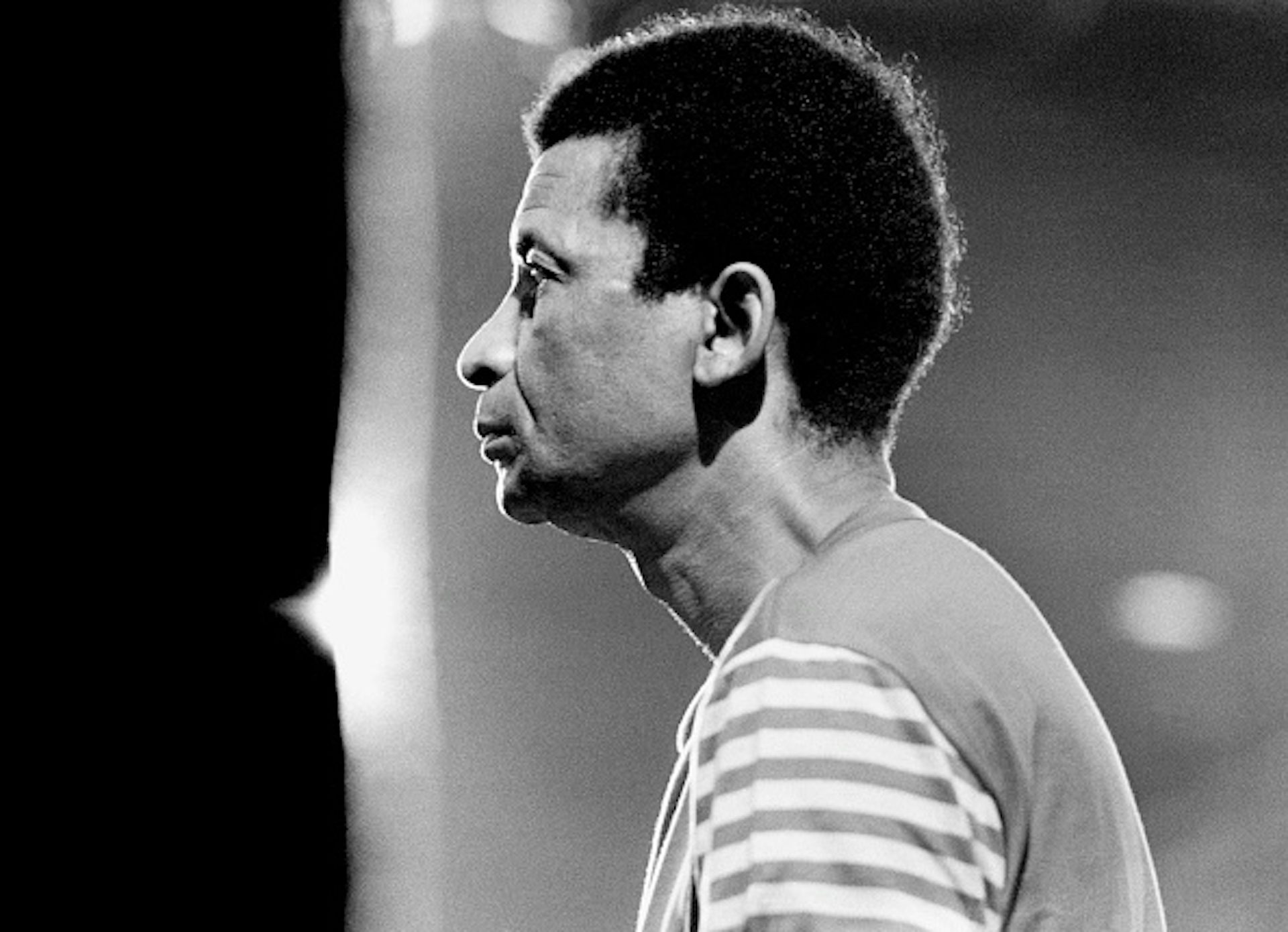
Pianis Abdullah Ibrahim menciptakan budaya baru yang megah bagi Afrika Selatan
Pianist Abdullah Ibrahim crafted a magnificent new culture for South Africa
-

Presiden baru Kolombia, ‘El Tigre’, menjanjikan tangan besi – tetapi itu mungkin tidak menyelesaikan kekerasan yang ia warisi
Colombia’s new president ‘El Tigre’ promises an iron fist – but that may not solve the violence he has inherited