大声点!我听不见你:科氏鲸正在大喊,以便在船只噪音中听到自己的声音。
Squeak up! I can’t hear you: pilot whales are shouting …
A new study highlights how noise pollution in the ocean is changing animals’ behaviour.
一项新的研究强调了海洋噪音污染如何改变动物的行为。
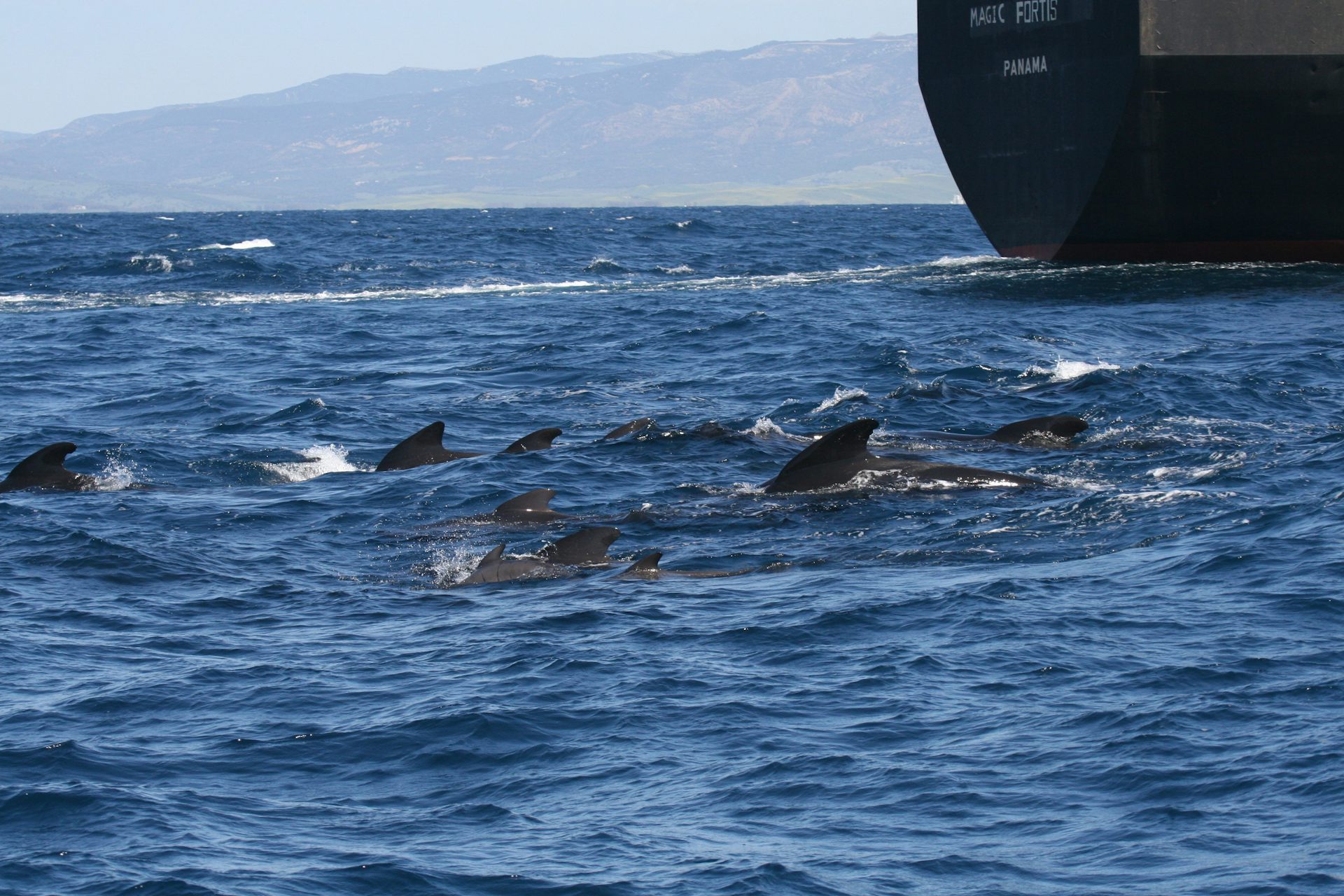
In the Strait of Gibraltar – a famous marine road connecting the Mediterranean and the Atlantic – lives a critically endangered sub-population of a few hundred long-finned pilot whales (Globicephala melas) .
在直布罗陀海峡——一条连接地中海和大西洋的著名海路——生活着一个数量极少、处于极度濒危状态的长鳍信天鲸(Globicephala melas)亚种群。
Despite their name, these dark and blubbery marine mammals aren’t technically whales – they’re large oceanic dolphins which are believed to have a navigator or lead for each pod. Hence the “pilot” part of their name.
尽管名字叫“信天鲸”,这些深色、圆润的海洋哺乳动物在技术上并非鲸鱼——它们是大型的海洋海豚,据信每个群体都有一个导航员或领头鲸。因此,它们的名字中带有“信天”一词。
There are two types of pilot whales – short and long-finned. They’re generally found in deep offshore waters but can appear in coastal areas. And like other dolphins, they use high frequency sounds to talk to each other in their pods. These clicks and squeaks travel shorter distances compared with the melodic songs of humpback whales.
信天鲸有两种类型——短鳍和长鳍。它们通常生活在深海的近海区域,但也可能出现在沿海地区。和许多其他海豚一样,它们利用高频声音在群体中互相交流。这些咔嗒声和尖叫声传播的距离比座头鲸优美的歌声要短得多。
And as a new paper led by Milou Hegeman from Aarhus University in Denmark and published in the Journal of Experimental Biology shows, the pilot whales that live in the Strait of Gibraltar are having to shout at the upper limit of their range in order to hear each other over human noises.
根据丹麦奥胡斯大学 Milou Hegeman 领导并发表在《实验生物学杂志》上的一篇新论文显示,生活在直布罗陀海峡的信天鲸不得不提高到其范围的极限来大声呼喊,才能在人类噪音中听到彼此的声音。
What’s making all that noise?
发出这些噪音的是什么?
The ocean is full of sounds.
海洋充满了各种声音。
Some of these are natural, such as the sounds from fish, seals and waves. Other sounds are produced by human activities, either deliberately (for example seismic and sonar exploration) or unintentionally (for example, the sound of moving ships or other vessels) .
其中一些是自然的,例如鱼类、海豹和海浪发出的声音。其他声音则由人类活动产生,可能是故意的(例如地震勘探和声纳探测),也可能是无意的(例如移动船只或其他船只的声音)。
The ocean continues to get noisier because of human-made sound – even in isolated Arctic regions. And because of its strategic location, the Strait of Gibraltar is especially noisy with the drone of cargo ships.
由于人类制造的声音,海洋持续变得越来越吵闹——即使是在偏远的北极地区也是如此。而且由于其战略位置,直布罗陀海峡因货船的轰鸣声而格外嘈杂。
Shipping noise that the pilot whales experience. CIRCE 587 KB (download)
座头鲸所经历的航运噪音。CIRCE 587 KB(下载)
Spying on pilot whales
观察领航鲸
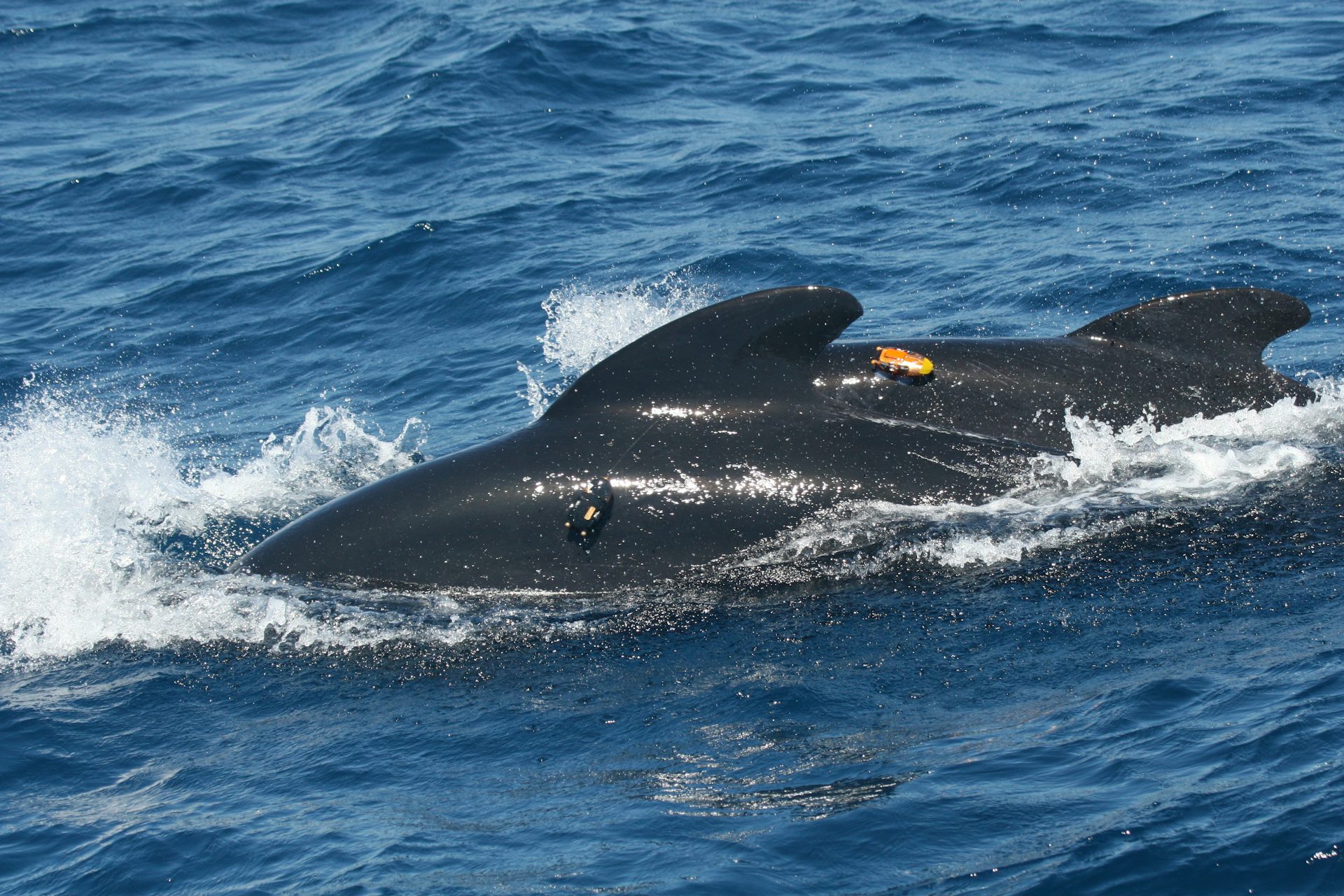
To investigate the communication and behaviour of the population of pilot whales in the Strait of Gibraltar, scientists used 6-metre poles to attach small tags to the creatures (kind of like an Airtag used to track your suitcase) with sterile suction cups positioned between the dorsal fin and blowhole.
为了调查吉브尔塔尔峡湾领航鲸群的交流和行为,科学家使用6米长的杆子,在背鳍和喷气孔之间用无菌吸盘,将小型标签附着到这些生物身上(类似于用于追踪行李箱的AirTag)。
Between 2012 to 2015, the steam attached tags to 23 different long-finned pilot whales who live in the region year-round.
在2012年至2015年间,研究人员给23只生活在该地区全年、长鳍领航鲸附上了标签。
These tags remained on pilot whales for up to 24 hours collecting sounds and tracking individual behaviour. The tags then floated to the surface where scientists could locate them using an antenna and collect the data from their diving activities.
这些标签在领航鲸身上停留了长达24小时,用于收集声音并追踪个体行为。随后,标签漂浮到水面,科学家可以使用天线定位它们,并收集它们潜水活动的数据。
More than 84 hours of recordings were made, with 1,432 pilot whale calls extracted. The tags also recorded ship noise in the area.
记录了超过84小时的录音,并提取了1,432次领航鲸的叫声。标签还记录了该区域的船只噪音。
The researchers found there was a scarcity of pilot whale calls during periods of shipping noise. And the volume of the calls they did make were louder by about half the increase in background noise.
研究人员发现,在船只噪音较大的时期,领航鲸的叫声稀少。而且它们发出的叫声的音量比背景噪音增加的幅度要大大约一半。
This means the animals are adapting to communicate in times when it is noisy – kind of like having a conversation in a crowded place and you having to raise your voice to be heard.
这意味着这些动物正在适应在嘈杂的环境中进行交流——有点像在拥挤的地方交谈,你必须提高声音才能让人听到。
A whale calling out for its group with ship noise in the background. CIRCE 376 KB (download)
一头在船只噪音背景下呼唤族群的鲸鱼。CIRCE 376 KB(下载)
Other noises, other impacts
其他噪音,其他影响
This study focuses on just one location in the ocean. But there’s increasing evidence that human-made noise is also impacting other species in other places.
本研究仅关注海洋的一个地点。但越来越多的证据表明,人为噪音也正在影响其他地方的其他物种。
For example, a 2012 study found that ship noise increases stress in right whales. Another study from 2024 found sea turtles travelling in the Galapagos were more vigilant because of increased ship noise.
例如,一项2012年的研究发现,船只噪音会增加座头鲸的压力。另一项2024年的研究发现,在加拉帕戈斯群岛旅行的海龟,由于船只噪音的增加而变得更加警觉。
But it’s not just ship noise that is impacting the animals that live in the ocean. Sonar disrupts whale diving behaviour and feeding behaviour, sometimes even potentially resulting in strandings.
但影响海洋动物的不仅仅是船只噪音。声纳会干扰鲸鱼的潜水行为和觅食行为,有时甚至可能导致搁浅。
Thankfully, work is being done to reduce noise pollution in the ocean – from building quieter ships to rerouting ship activity, helping ship operators drive more quietly and dialling down the noise from all human activities.
值得庆幸的是,目前正在进行工作以减少海洋噪音污染——从建造更安静的船只到重新规划船只活动路线,帮助船只操作员更安静地驾驶,以及降低所有人类活动的噪音。
This new study is just one of many scientific contributions to learning more about our impact on our blue backyard. We can only protect what we know. And as we celebrate the 100th birthday of Sir David Attenborough, it’s worth remembering one of his many pieces of wisdom: “If we save the sea, we save our world”.
这项新研究只是众多关于了解我们对蓝色后院影响的科学贡献之一。我们只能保护我们了解的。在我们庆祝戴维·阿滕伯勒爵士百岁生日之际,值得铭记他许多智慧中的一条:“如果我们拯救了海洋,我们就拯救了我们的世界”。
Part of this involves being more aware of sound in our sea. Because sometimes, it’s not always the visible impacts such as plastic pollution that need our attention. It might also be the impacts we can only hear.
这部分工作包括提高我们对海洋声音的意识。因为有时,需要我们关注的并非总是塑料污染等可见的影响。它也可能是我们只能听到的影响。
Vanessa Pirotta does not work for, consult, own shares in or receive funding from any company or organisation that would benefit from this article, and has disclosed no relevant affiliations beyond their academic appointment.
Vanessa Pirotta 不受任何公司或组织聘用、咨询、拥有股份或获得资金支持,这些公司或组织不会从本文中受益,并且除了其学术任命外,未披露任何相关隶属关系。