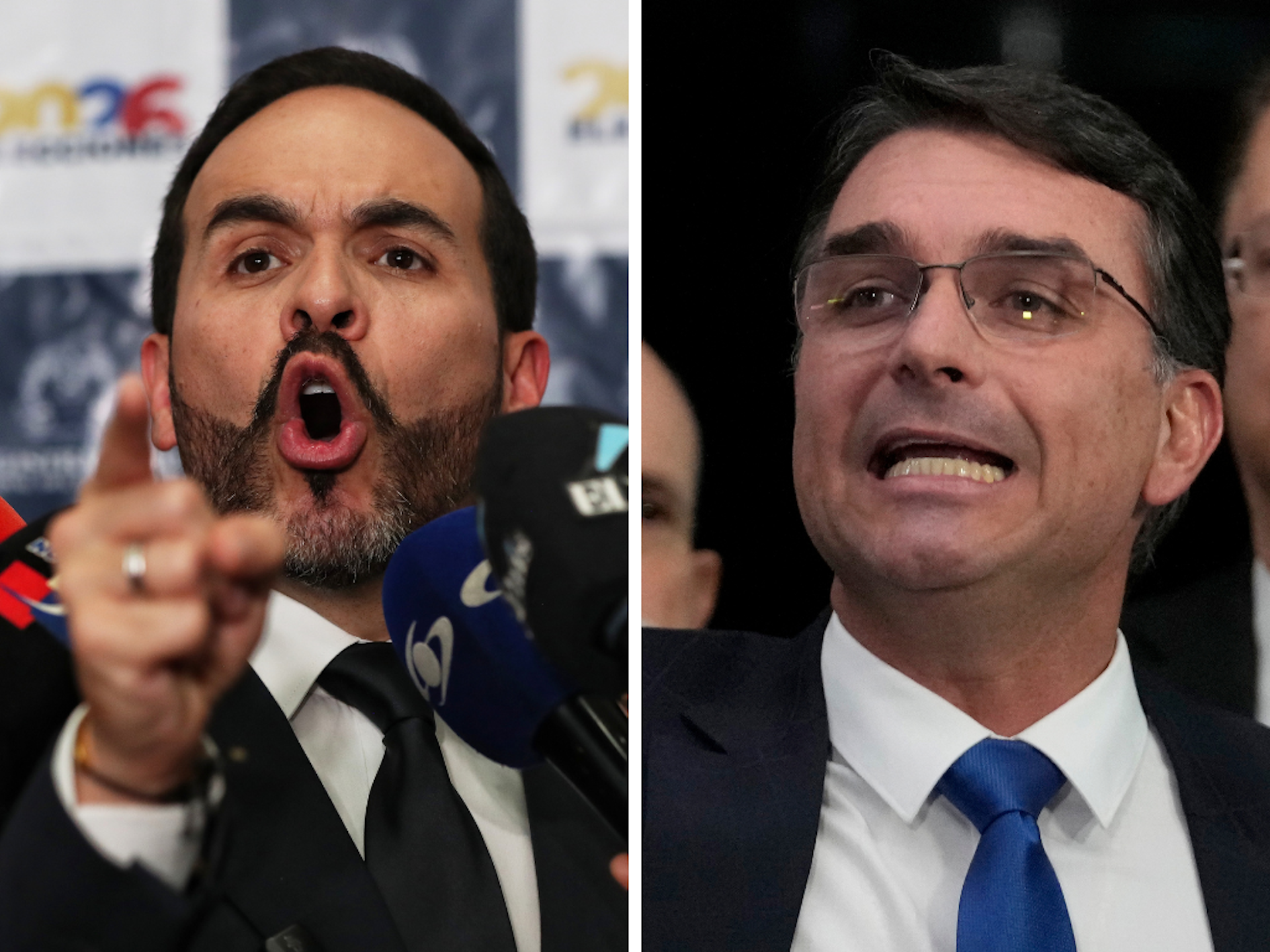
في كولومبيا والبرازيل، يقدم المرشحون الرئاسيون حلولاً قديمة لمشاكل قديمة
In Colombia and Brazil, presidential candidates offer old solutions to old problems
The solutions they offer – economic shock therapy, militarized crackdowns and a lack of agency in foreign policy – are just old responses retooled with new aesthetics and a new international support network.
إن الحلول التي يقدمونها – العلاج الصادم الاقتصادي، والتضييقات العسكرية، والافتقار إلى الفاعلية في السياسة الخارجية – هي مجرد استجابات قديمة أعيد تكييفها بجماليات جديدة وشبكة دعم دولية جديدة.
On May 31st, Colombian voters will go to the polls with Abelardo de la Espriella – criminal lawyer, self-styled outsider, and self-described “Tiger” – securing his place in the runoff against left-wing Iván Cepeda. In Brazil, Senator Flávio Bolsonaro – the son of incarcerated former President Jair Bolsonaro – is also busy, touring Washington, Dallas, and El Salvador, burnishing a “Bolsonaro 2.0” brand ahead of October elections.
في 31 مايو، سيتوجه الناخبون الكولومبيون إلى صناديق الاقتراع مع أبيلاردو دي لا إسبرييلا – المحامي الجنائي، والمستقل المُتظاهر، والمُعرّف نفسه بـ “النمر” – ليؤمّن مكانه في الجولة الثانية ضد إيفان سيبيدا المائل لليسار. وفي البرازيل، ينشغل السيناتور فلافيو بولسونارو – ابن الرئيس السابق السجّن جايير بولسونارو – أيضاً، حيث يقوم بجولة في واشنطن ودالاس وسلفادور، مصقولاً علامة تجارية لـ “بولسونارو 2.0” قبل انتخابات أكتوبر.
The two men have never appeared on the same stage, but they are running similar campaigns, reading from similar scripts, and looking toward the same set of foreign role models. In a familiar recipe, their platforms combine free-market economics, conservative values, and a tough approach to crime.
لم يظهر الرجلان معاً على نفس المنصة قط، لكنهما يقيمان حملات مماثلة، ويقرآن من نصوص متشابهة، ويتطلعان إلى نفس مجموعة من النماذج الأجنبية. وفي وصفة مألوفة، تجمع منصاتهما بين اقتصاد السوق الحرة، والقيم المحافظة، والنهج الصارم لمكافحة الجريمة.
De la Espriella proposes reducing the size of the state by up to 40%, eliminating hundreds of thousands of public contracts and positions, and slashing taxes. He considers himself a major political admirer of Argentina’s President Javier Milei, someone who, in his eyes, has charted the solution to the hemisphere’s economic problems.
يقترح دي لا إسبرييلا خفض حجم الدولة بما يصل إلى 40%، وإلغاء مئات الآلاف من العقود والمناصب العامة، وخفض الضرائب. ويعتبر نفسه معجباً سياسياً كبيراً بالرئيس الأرجنتيني خافيير ميلي، الذي يرى فيه من رسم حل المشاكل الاقتصادية في نصف الكرة الأرضية.
Flávio Bolsonaro has presented his pre-candidacy as a direct continuation of the legacy of his father, who was arrested last year for attempting a coup d’état following his defeat in the 2022 elections. Bolsonaro’s oldest son describes his project as the return to a market-oriented, Pro-Washington, and nationalistic platform.
قدّم فلافيو بولسونارو ترشحه المبدئي باعتباره استمراراً مباشراً لإرث والده، الذي أُلقي القبض عليه العام الماضي لمحاولته انقلاباً بعد هزيمته في انتخابات عام 2022. ويصف الابن الأكبر لبولسونارو مشروعه بأنه عودة إلى منصة موجهة للسوق، ومؤيدة لواشنطن، ووطنية.
Economy, security, and foreign policy
الاقتصاد والأمن والسياسة الخارجية
Although the language varies at times, the ideology that drives both campaigns does not. Both Bolsonaro’s son and De la Espriella embrace a combination of right-wing conservative security stances and the same neoliberal economic doctrine that was tried across Latin America in the 1980s and 1990s, showcasing a repacking of old views to try and solve old problems.
على الرغم من أن اللغة تختلف في بعض الأحيان، فإن الأيديولوجية التي تحرك كلا الحملتين لا تختلف. يتبنى كل من ابن بولسونارو ودي لا إسبرييلا مزيجاً من المواقف الأمنية المحافظة اليمينية والعقيدة الاقتصادية النيوليبرالية ذاتها التي جُربت في جميع أنحاء أمريكا اللاتينية في الثمانينيات والتسعينيات، مما يعرض إعادة تغليف لوجهات النظر القديمة لمحاولة حل المشاكل القديمة.
On security, both candidates have vowed to follow the steps of El Savador’s strongman president Nayib Bukele. Flávio Bolsonaro, after visiting El Salvador’s notorious CECOT mega-prison in person, called Bukele’s approach a “radical transformation” and demanded the construction of “many, many prisons” in Brazil to address a deficit he estimates at 500,000 beds.
على صعيد الأمن، تعهد المرشحان باتباع خطوات الرئيس القوي ناييب بوكيلي في إل سالفادور. ودعا فلافيو بولسونارو، بعد زيارته شخصياً سجن “سيكوت” الضخم والسيئ السمعة في إل سالفادور، إلى نهج بوكيلي ووصفه بأنه “تحول جذري”، وطالب بإنشاء “العديد من السجون” في البرازيل لمعالجة عجز يقدره بـ 500,000 سرير.
De la Espriella is even more explicit: “Against the narcoterrorism that Petro has coddled, an iron fist like Bukele’s,” he has declared, promising to bomb guerrilla encampments and build high-security mega-prisons modeled on El Salvador’s CECOT. He also proposes a new prison corps staffed by military reservists and veterans, administered privately, removing the current penal institute which he describes as “a cancer for Colombia.”
أكثر وضوحاً من ذلك هو دي لا إسبرييلا: فقد أعلن قائلاً: “ضد الإرهاب المخدرات الذي دلّل عليه بترو، قبضة حديدية مثل قبضة بوكيلي”، واعداً بقصف مخيمات حرب العصابات وبناء سجون ضخمة عالية الأمان على غرار سجن “سيكوت” في إل سالفادور. كما يقترح هيئة سجون جديدة يضمها احتياطيو الجيش والمحاربون القدامى، وتدار من القطاع الخاص، لإزالة المعهد العقابي الحالي الذي يصفه بأنه “سرطان لكولومبيا.”
On foreign policy, De la Espriella has declared that any relationship Colombia has with Venezuela must be conducted “through the United States”, essentially ignoring the Venezuelan Government. This is a remarkable formulation that would break tradition with previous Colombian foreign policy towards Caracas, which was marked by acting mostly in an independent fashion of its allies in the region. He wants to strengthen the military alliance with Washington and Tel Aviv, and has called on the Trump Administration to prosecute and extradite incumbent President Gustavo Petro over supposed drug charges.
على صعيد السياسة الخارجية، أعلن دي لا إسبرييلا أن أي علاقة لكولومبيا مع فنزويلا يجب أن تتم “عبر الولايات المتحدة”، متجاهلاً بشكل أساسي الحكومة الفنزويلية. هذه صياغة لافتة من شأنها أن تكسر التقليد في السياسة الخارجية الكولومبية السابقة تجاه كاراكاس، والتي اتسمت بالعمل بشكل مستقل إلى حد كبير عن حلفائها في المنطقة. ويريد تعزيز التحالف العسكري مع واشنطن وتل أبيب، ودعا إدارة ترامب إلى مقاضاة الرئيس الحالي غوستافو بترو وتسليمه بتهم مزعومة تتعلق بالمخدرات.
Flávio Bolsonaro, meanwhile, appeared at CPAC in Dallas, supporting the alliance with President Trump. He openly positioned Brazil as a bulwark in Washington’s geopolitical strategy to reduce Chinese influence in the hemisphere and offered up his country’s strategic resources to this end. Trump’s own political adviser, Jason Miller, declared Flávio the “next president” of Brazil from the conference stage.
في غضون ذلك، ظهر فلافيو بولسونارو في مؤتمر CPAC في دالاس، مؤيداً التحالف مع الرئيس ترامب. ووضع البرازيل علناً كحصن في الاستراتيجية الجيوسياسية لواشنطن لتقليل النفوذ الصيني في نصف الكرة الأرضية، وعرض موارد بلاده الاستراتيجية لهذا الغرض. وأعلن المستشار السياسي لترامب نفسه، جيسون ميلر، أن فلافيو هو “الرئيس التالي” للبرازيل من على منصة المؤتمر.
What is striking about all of this is not just the content of these proposals but their explicitly transnational character. As they aim for the Presidency, De la Espriella and Flávio Bolsonaro are aiming for membership in a global conservative movement, constructing their political identities by association with leaders like Trump, Bukele, and Milei.
ما يثير الدهشة في كل هذا ليس فقط محتوى هذه المقترحات، بل طبيعتها العابرة للحدود بشكل صريح. فبينما يسعون إلى الرئاسة، يسعى دي لا إسبرييلا وفلافيو بولسونارو إلى العضوية في حركة محافظة عالمية، ويشيدون بهوياتهم السياسية بالارتباط بقادة مثل ترامب وبوكيلي وميلي.
How far can their promises go?
إلى أي مدى يمكن أن تصل وعودهم؟
This transnational strategy, however, has already shown some limits. When Eduardo Bolsonaro lobbied Washington to impose tariffs and sanctions on Brazil’s government and economy, 57% of Brazilians disapproved of what he was doing to their country. Instead of strengthening the Bolsonaro brand, this episode handed left-wing president Lula Da Silva a nationalist narrative that the right had monopolized for years. All while presidents Lula and Trump would go on to partially reconcile not that long after.
ومع ذلك، أظهرت هذه الاستراتيجية العابرة للحدود بالفعل بعض القيود. فعندما ضغط إدواردو بولسونارو على واشنطن لفرض تعريفات ورسوم عقوبات على حكومة واقتصاد البرازيل، عارض 57% من البرازيليين ما كان يفعله ببلادهم. فبدلاً من تعزيز علامة بولسونارو التجارية، منحت هذه الحادثة الرئيس اليساري لولا دا سيلفا سردية قومية كانت اليمين قد احتكرتها لسنوات. وكل ذلك بينما سيتصالح الرئيسان لولا وترامب جزئياً بعد فترة ليست ببعيدة.
“Bukelizing” security can also be problematic. Importing the Salvadoran model to much bigger countries, whose public security issues are complex and widespread, would be an invitation to the kind of arbitrary State power that Colombian and Brazilian democracies spent decades trying to contain. By tapping into Bukele’s youthful appeal and increasing popularity, Bolsonaro and De la Espriella vow to promote potentially authoritarian solutions under a veil of efficiency.
كما أن “تأمين نمط بوكيلز” يمكن أن يكون إشكاليًا. إن استيراد النموذج السالافادوراني إلى دول أكبر بكثير، التي تتسم قضايا الأمن العام فيها بالتعقيد والانتشار، سيكون دعوة لنوع من السلطة الحكومية التعسفية التي قضت ديمقراطيات كولومبيا والبرازيل عقوداً من محاولة احتواءها. ومن خلال الاستفادة من جاذبية بوكيلز الشبابية وشعبيته المتزايدة، يتعهد بولسونارو ودي لا إسبرييلا بتعزيز حلول قد تكون استبدادية تحت ستار الكفاءة.
There is a real frustration at the root of these candidacies, and it would be a mistake to dismiss it. Colombia and Brazil are countries where insecurity is existential for millions of people, where inequality persists despite decades of formal progress, where institutional corruption has eroded confidence in the political class.
هناك إحباط حقيقي في جذر هذه الترشحات، وسيكون من الخطأ تجاهله. فكولومبيا والبرازيل هما بلدان حيث يشكل انعدام الأمن وجودياً لملايين الأشخاص، وحيث يستمر التفاوت رغم عقود من التقدم الرسمي، وحيث أدى الفساد المؤسسي إلى تآكل الثقة في الطبقة السياسية.
Even though De la Espriella and Flávio Bolsonaro are tapping into genuine concerns, the solutions they offer are not new responses to old problems. Economic shock therapy in largely unequal societies, militarized crackdowns in countries with a long history of institutional violence, and a lack of inherent agency in terms of foreign policy are just old responses to old problems. This time, retooled with new aesthetics and a new international support network.
على الرغم من أن دي لا إسبرييلا وفلافيو بولسونارو يستغلان مخاوف حقيقية، فإن الحلول التي يقدمونها ليست استجابات جديدة لمشاكل قديمة. فالعلاج الصادم الاقتصادي في المجتمعات غير المتكافئة إلى حد كبير، والتضييقات العسكرية في البلدان ذات التاريخ الطويل من العنف المؤسسي، وغياب الوكالة الجوهرية فيما يتعلق بالسياسة الخارجية، هي مجرد استجابات قديمة لمشاكل قديمة. هذه المرة، أعيد تجهيزها بجماليات جديدة وشبكة دعم دولية جديدة.
Os autores não prestam consultoria, trabalham, possuem ações ou recebem financiamento de qualquer empresa ou organização que se beneficiaria deste artigo e não revelaram qualquer vínculo relevante além de seus cargos acadêmicos.
لا يقدم المؤلفون استشارات، ولا يعملون، ولا يمتلكون أسهمًا أو يتلقون تمويلاً من أي شركة أو منظمة تستفيد من هذا المقال، ولم يفصحوا عن أي ارتباط ذي صلة بخلاف مناصبهم الأكاديمية.
Read more
-

يروي استعراض يوم النصر المُقلَّص لروسيا قصة: بعيداً عن البهرجة، فإن الحرب في أوكرانيا لا تسير وفق خطة بوتين.
Russia’s pared-down Victory Day parade tells a story: Away from the pomp, war in Ukraine is not going to Putin’s plan
-
بيدرو سانشيز: كيف يمكن لسلسلة من اتهامات الفساد أن تجعل الحزب الاشتراكي الإسباني تهديداً لتحالفه الخاص
Pedro Sánchez: how a string of corruption allegations could make Spain’s Socialist party a threat to its own coalition