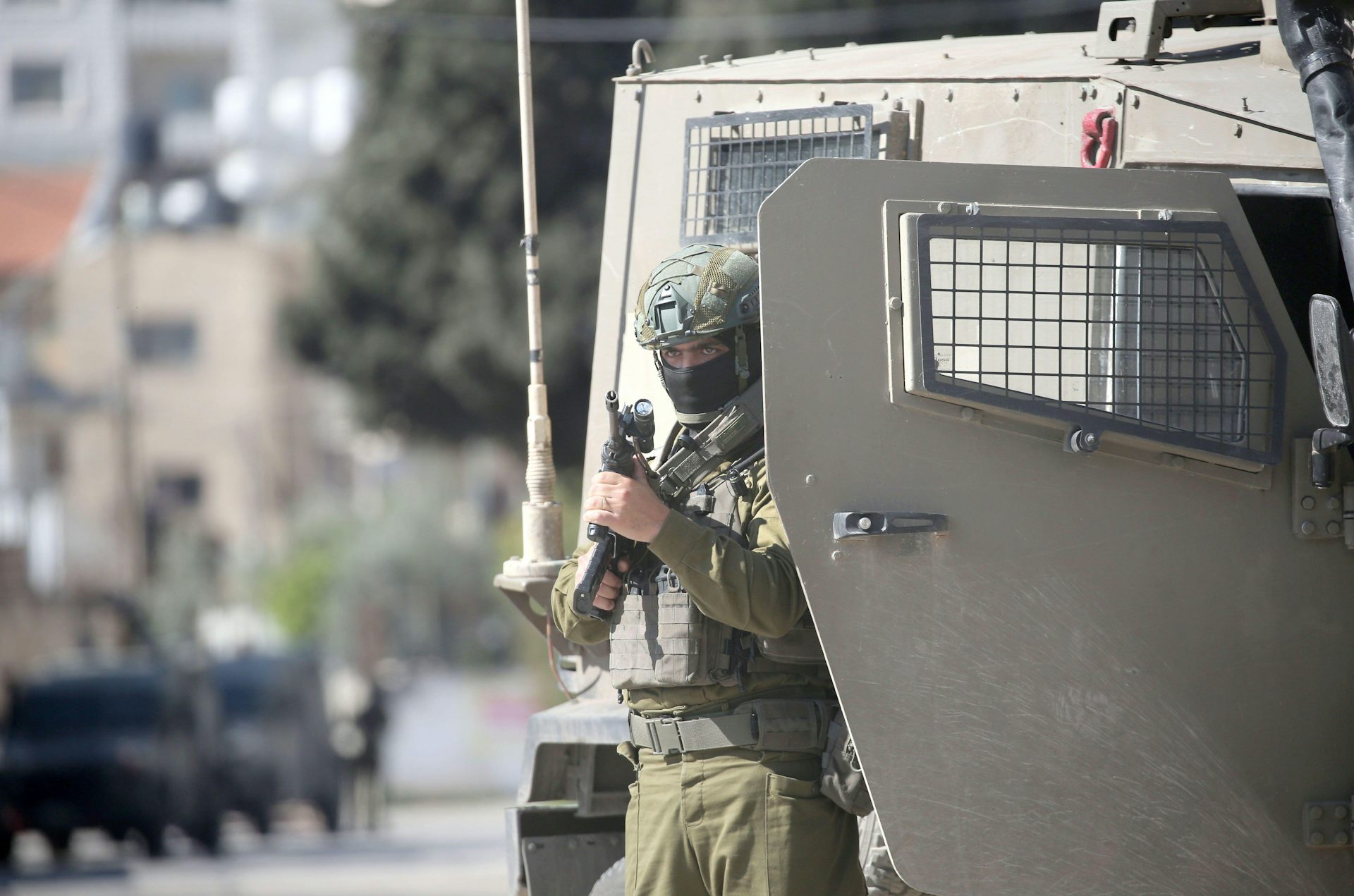
Como a história de Israel moldou a maneira como ele faz guerra
How Israel’s history has shaped the way it wages war
Hebrew studies expert Yaron Peleg tells The Conversation Weekly how Israel’s self‑image change from self‑reliance to aggressive militarism.
O especialista em estudos hebraicos Yaron Peleg conta ao The Conversation Weekly como a autoimagem de Israel mudou da autossuficiência para o militarismo agressivo.
A little after 2pm on April 8, the Israeli military hit more than 100 targets in Lebanon in just ten minutes. Israel called the attack Operation Eternal Darkness and said it struck Hezbollah command and control centres across Lebanon. The Lebanese government said at least 300 people were killed and 1,000 injured.
Pouco depois das 14h do dia 8 de abril, o exército israelense atingiu mais de 100 alvos no Líbano em apenas dez minutos. Israel chamou o ataque de Operação Escuridão Eterna e disse que atingiu centros de comando e controle do Hezbollah em todo o Líbano. O governo libanês disse que pelo menos 300 pessoas morreram e 1.000 ficaram feridas.
The scale of the attack on Lebanon was reminiscent of the early days of the Gaza war in 2023 when Israel retaliated for the October 7 attacks, which killed more more than 1,200 people, with waves of aerial bombardment of Gaza.
A escala do ataque ao Líbano lembra os primeiros dias da guerra de Gaza em 2023, quando Israel retaliou pelos ataques de 7 de outubro, que mataram mais de 1.200 pessoas, com ondas de bombardeio aéreo em Gaza.
Israel has a powerful and lethal army, and it’s been defending itself against attacks from Hamas, Hezbollah and Iran.
Israel tem um exército poderoso e letal, e tem se defendido de ataques do Hamas, Hezbollah e Irã.
But why has it chosen such brutal military aggression?
Mas por que escolheu tamanha agressão militar brutal?
One historian, Yaron Peleg, believes the answer to this question lies in the early days of Zionism in the 19th century when many Jews who arrived in Palestine were fleeing antisemitism in Europe. In defiance, they began a cultural revolution, emphasising military strength and honouring Biblical Jewish heroes.
Um historiador, Yaron Peleg, acredita que a resposta para esta pergunta reside nos primeiros dias do sionismo no século XIX, quando muitos judeus que chegaram à Palestina estavam fugindo do antissemitismo na Europa. Em desafio, eles iniciaram uma revolução cultural, enfatizando a força militar e homenageando heróis judeus bíblicos.
Peleg, who is a professor of modern Hebrew studies at the University of Cambridge in the UK and author of the book New Hebrews: Making National Culture in Zion, thinks Israel’s view of itself began to change in the wake of the Holocaust. “There started a really problematic combination of defiance, aggression, and a sense of victimhood and it’s a very explosive and lethal combination,” he says.
Peleg, que é professor de estudos hebraicos modernos na Universidade de Cambridge, no Reino Unido, e autor do livro New Hebrews: Making National Culture in Zion, pensa que a visão de Israel sobre si mesmo começou a mudar após o Holocausto. “Começou uma combinação realmente problemática de desafio, agressão e um senso de vitimização, e é uma combinação muito explosiva e letal”, diz ele.
In this week’s episode of The Conversation Weekly podcast, Peleg tracks how he sees Israel’s self‑image changed from self‑reliance to aggressive militarism, and how that history helps to explain the way it wages war today.
Neste episódio da The Conversation Weekly podcast, Peleg rastreia como ele vê a autoimagem de Israel mudar da autossuficiência para o militarismo agressivo, e como essa história ajuda a explicar a maneira como ele faz guerra hoje.
This episode of The Conversation Weekly was written and produced by Gemma Ware and Mend Mariwany. Mixing by Eleanor Brezzi and theme music by Neeta Sarl.
Este episódio da The Conversation Weekly foi escrito e produzido por Gemma Ware e Mend Mariwany. Mixagem por Eleanor Brezzi e música tema por Neeta Sarl.
Newsclips in this episode from Sky News.
Trechos de notícias neste episódio do Sky News.
Listen to The Conversation Weekly via any of the apps listed above, download it directly via our RSS feed or find out how else to listen here. A transcript of this episode is available via the Apple Podcasts or Spotify apps.
Ouça The Conversation Weekly por qualquer um dos aplicativos listados acima, baixe diretamente via nosso feed RSS ou descubra como ouvir de outras maneiras aqui. Uma transcrição deste episódio está disponível via Apple Podcasts ou Spotify.
Yaron Peleg does not work for, consult, own shares in or receive funding from any company or organisation that would benefit from this article, and has disclosed no relevant affiliations beyond their academic appointment.
Yaron Peleg não trabalha, não é consultor, não possui ações nem recebe financiamento de nenhuma empresa ou organização que se beneficiaria deste artigo, e não divulgou afiliações relevantes além de seu cargo acadêmico.
Read more
-

Por que os chimpanzés machos jogam pedras nas mesmas árvores por mais de uma década? Viajamos para a remota Guiné-Bissau para descobrir
Why do male chimpanzees throw rocks at the same trees for more than a decade? We travelled to remote Guinea-Bissau to find out