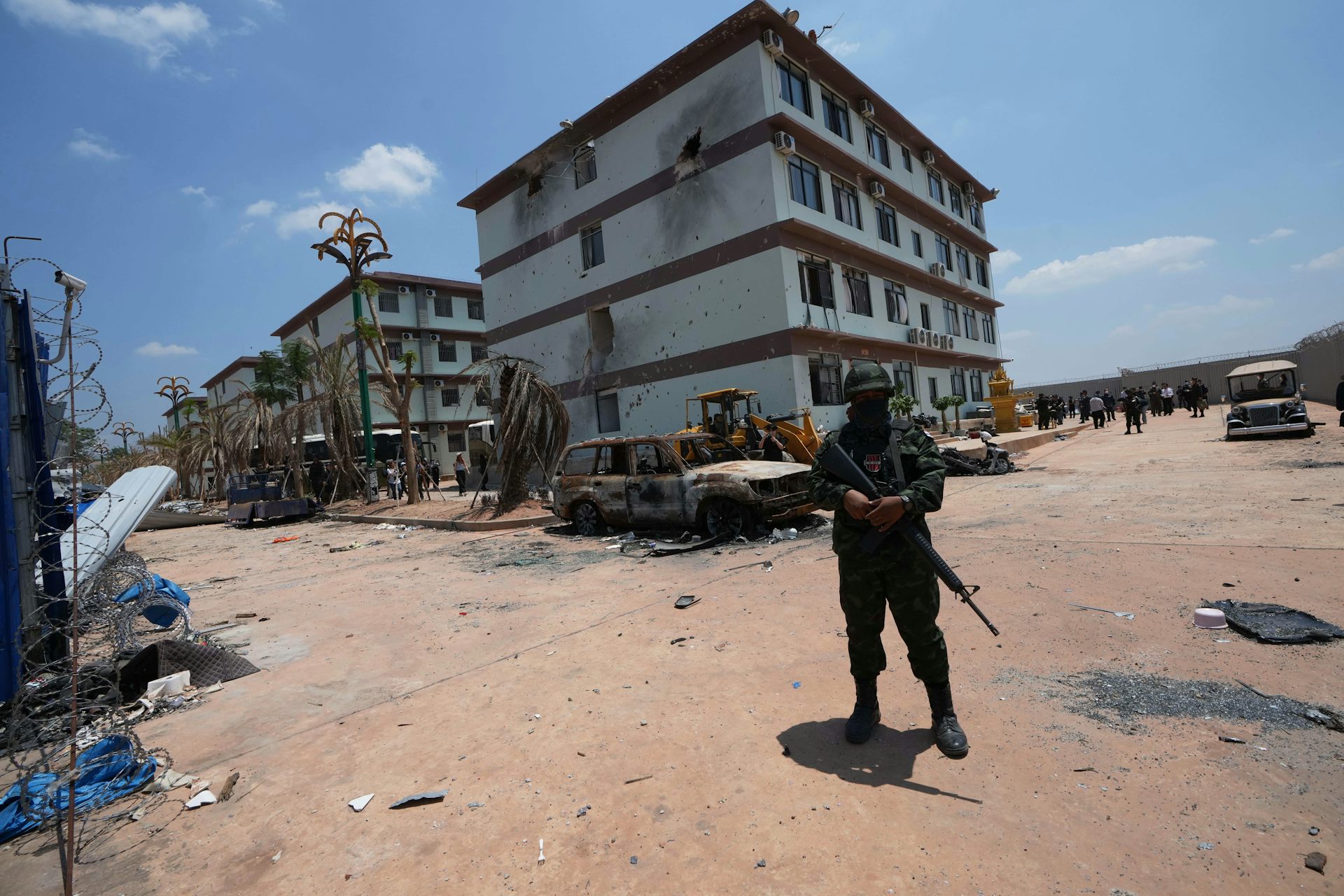
在东南亚的诈骗园区内:一名被贩卖的工人讲述了欺诈、胁迫和酷刑
Inside Southeast Asia’s scam compounds: A trafficked wo…
Not all victims of scam compounds are unwilling —and that’s what makes the system so hard to dismantle.
并非所有诈骗园区的受害者都是不情愿的——这也是让这个系统难以瓦解的原因。
I was recently in Phnom Penh, Cambodia, and approached a group of young men in front of the Indian embassy. I told them I was a University of Toronto researcher.
我最近在柬埔寨金边,在印度大使馆前遇到了一群年轻人。我告诉他们我是一名多伦多大学的研究人员。
I asked: “Are you from the scam compounds?” Scam compounds are industrial-scale complexes where trafficked workers are confined and forced to carry out online fraud.
我问:“你们是来自诈骗园区吗?”诈骗园区是工业规模的综合体,被贩运的工人被关押并在其中被迫进行网络诈骗。
They were. One man in his early 30s named Akshit told me his story.
他们是。一位名叫阿克希特(Akshit)的三十出头男子向我讲述了他的经历。
Akshit was not your typical human trafficking victim. His English is perfect, he is educated, and he has worked in banks and call centres. But he was trafficked. In 2024, a friend told him of a friend who knew about a job in Cambodia paying twice what he earned in India.
阿克希特不是典型的贩卖人口的受害者。他的英语完美,受过教育,曾在银行和呼叫中心工作。但他还是被贩运了。2024年,一位朋友告诉他,一位朋友知道柬埔寨有一份工作,薪水是他在印度收入的两倍。
After a quick interview, he paid US$500 to fly to Phnom Penh via Kuala Lumpur. The flight and his car ride to Sihanoukville, a coastal city in southwest Cambodia, were comfortable, and on arrival at an apartment block he was given a welcome bag and a nice room. It all seemed above board.
经过快速面试后,他支付了500美元飞往吉隆坡再到金边。飞行的过程和到柬埔寨西南部沿海城市西哈努克港的汽车旅程都很舒适,抵达公寓楼后,他收到了一个欢迎礼包和一间漂亮的房间。这一切看起来都很正常。
It was anything but. He was in a scam compound where hundreds of workers sat at computers and convinced Asians and westerners to invest in fake schemes or love interests. Workers were arranged in teams of eight, led by a team leader, with a manager overseeing several teams and a Chinese criminal syndicate above them. His recruiter had sold him for US$5,000.
事实并非如此。他身处一个诈骗园区,数百名工人坐在电脑前,说服亚洲人和西方人投资虚假的骗局或“爱情”。工人被分成八人一组,由组长带领,再由经理监督几组,而其上层则是中国犯罪集团。他的招募人员曾以5000美元的价格将他卖掉。
Labour violations
劳工侵权
Hundreds of thousands of people have been trafficked in Cambodia and Myanmar alone. Media coverage of scam compounds has often focused on the beatings, broken bones and workers screaming as they are tasered. These outrages are real, but they are only the most extreme form of abuse.
仅在柬埔寨和缅甸,就有数十万人被贩卖。媒体报道的诈骗园区经常关注殴打、骨折以及工人被电击时尖叫的场景。这些暴行是真实的,但它们只是最极端的虐待形式。
At the core of scam compounds is a system of paid but forced labour: 15-hour days, seven days a week, multiple chats open, texting victims in English and workers’ native languages.
诈骗园区的核心是一个有偿但强制的劳动系统:每周七天、每天十五小时,同时开启多个聊天窗口,用英语和工人母语给受害者发送短信。
Akshit worked in English and Hindi, targeting southern Indians. The chats started at 10:30 a.m. — latecomers were fined — and ended at 2 a.m.
阿克希特用英语和印地语工作,目标群体是南印度人。聊天从上午10:30开始——迟到者会被罚款——直到凌晨2点结束。
They followed a fluid but predictable script: a “developer” texts multiple clients. When they engage, he passes them on to a “chatter.” The chatter texts with the victim for three to four days, determining whether they’re interested in love or financial gain. He then passes them on to the “killer,” who seals the deal, instructing the victim on how to transfer the funds.
他们遵循的剧本是灵活但可预测的:“开发者”给多个客户发送短信。当客户感兴趣时,他会将他们转交给“聊天员”。聊天员会与受害者聊天三到四天,确定他们是对爱情感兴趣还是对金钱感兴趣。然后他会将他们转交给“杀手”,后者负责敲定交易,并指导受害者如何转账。
Akshit moved between the three roles.
阿克希特在这三个角色之间切换。
The original investment would be small — around $250 — and would build from there. Once the victim had transferred enough money, it would all go quiet. The amounts varied by victim, but large transfers — hundreds of thousands of dollars or more — were rare; it was usually a few thousand.
最初的投资额很小——大约250美元——然后会逐步增加。一旦受害者转账了足够的钱,一切就会安静下来。金额因受害者而异,但大额转账——数万美元甚至更多——很少见;通常只有几千美元。
The role of the pandemic
疫情的角色
Scam compounds took off in Cambodia during the COVID-19 pandemic, as closed casinos and apartment blocks in cities such as Sihanoukville and the border towns of Bavet (Vietnam) , Koh Kong and O’Smach (Thailand) were repurposed to house scam operations. They then spread to Myanmar (clustering along the border with Thailand) and Laos (especially the “Golden Triangle,” where Laos, Myanmar and Thailand meet) .
在新冠疫情期间,诈骗园区在柬埔寨兴起,关闭的赌场和像西哈努克市这样的城市,以及巴韦特(越南)、科空和奥斯马奇(泰国)等边境城镇的公寓楼被重新用作了诈骗运营场所。随后,这些园区蔓延到了缅甸(聚集在与泰国接壤的边境)和老挝(尤其是在老挝、缅甸和泰国交汇的“金三角”地区)。
Operations on this scale are recent, but the business model is far older: large gains based on low margins per transaction.
这种规模的运营是近期的现象,但其商业模式要古老得多:即通过低交易利润获取巨额收益。
Billions are siphoned from victims — American losses to cryptocurrency scams alone reached US$5.6 billion in 2023 — but spread across hundreds of compounds and hundreds of thousands of workers, the returns per operation are far less impressive.
数百万美元从受害者手中被吸走——仅美国人遭受的加密货币诈骗损失在2023年就达到了56亿美元——但这些资金分散在数百个园区和数十万名工人身上,每项运营的实际回报远没有那么惊人。
In Akshit’s team, everyone had a target of US$10,000 per month, for which they received $800; beyond that, there was a gradually increasing cut. But not everyone made the target.
在阿克什的团队里,每个人都有每月1万美元的目标,达到目标可以获得800美元;超出部分则有逐渐增加的提成。但并非所有人都达到了目标。
Payroll sheets Akshit showed me recorded a few payouts of more than US$5,000, but many were in the low hundreds, meaning they brought in only a few thousand dollars monthly. Those who failed to make the target got less, or no, pay. Those who refused to work were abused, threatened and, in some cases, tortured.
阿克什给我的工资单记录了几笔超过5000美元的支付,但许多金额仅在低百元范围,这意味着他们每月带回的钱只有几千美元。未能达到目标的人收入更少,甚至没有工资。那些拒绝工作的人则遭到虐待、威胁,在某些情况下甚至遭受了酷刑。
One night, Akshit was awoken by screams several doors down. A Pakistani national had refused to comply and instead pleaded for help in texts to those he was supposed to scam. A team leader reported him, and his supervisors and security personnel used electroshock batons on him.
一天晚上,阿克什被几扇门外传来的尖叫声惊醒。一名巴基斯坦籍男子拒绝配合,反而通过文字向那些本该诈骗的人乞求帮助。一名团队负责人向他报告了此事,他的主管和安保人员便对他使用了电击警棍。
Illusion of shutdowns
关闭的假象
A scam compound’s fixed costs are high once housing, food, security, transportation and team leaders’ and managers’ salaries are factored in. Forced labour makes the operation profitable. In its structural reliance on cheap labour, in fact, human trafficking in illegal scam compounds bears similarities to human trafficking in the legal fish processing or garments sectors.
一旦计算了住房、食物、安保、交通以及团队领导和经理的工资,诈骗窝点的固定成本就很高。强迫劳动使得这些运营有利可图。事实上,其结构上对廉价劳工的依赖,使得非法诈骗窝点的人口贩运与合法渔业加工或服装行业的贩运有相似之处。
The fact that so many victims come from wealthy western and East Asian countries explains the immense pressure on the Cambodian government. Hundreds of scam centres have closed since January 2026, and thousands of Chinese, South Asian, African and Indonesian workers were on the streets of Phnom Penh, struggling to get home.
如此多受害者来自富裕的西方和东亚国家,解释了柬埔寨政府所承受的巨大压力。自2026年1月以来,数百个诈骗中心已经关闭,成千上万的中国、南亚、非洲和印度尼西亚工人走在金边街头,努力想回家。
But appearances deceive. Akshit’s compound was raided only after the owners had been tipped off; they moved workers to a hotel. Investigative journalist Danielle Keeton-Olsen told me in an interview that many of those released were low-level workers. Several other sources confirmed this.
但外表具有欺骗性。阿克什特的窝点直到房主被通风报信后才遭到突袭;他们已经把工人转移到了酒店。调查记者丹妮尔·基顿-奥尔森在接受采访时告诉我,被释放的许多人都是低级别工人。其他几处消息来源也证实了这一点。
What’s more, as Nathan Paul Southern from the Eyewitness Project explained to me:
更重要的是,正如目击者项目(Eyewitness Project)的内森·保尔·南方向我解释的:
“There is a huge difference between being raided and being shut down. The majority of the Prince Group (compound) closures were not raids; they just ceased operations. The cops said you need to go but keep us paid. And the doors closed.”
“突袭和关闭之间有巨大的区别。普林斯集团(窝点)的大部分关闭都不是突袭;它们只是停止了运营。警察说你们需要离开,但要保证我们拿到工资。然后门就关上了。”
Much infrastructure remains, he noted, and some compounds are reportedly filling up again. The aggregate profits, generated on the back of cheap labour, are too large.
他指出,许多基础设施仍然存在,一些窝点据报道又开始人满为患。这些依靠廉价劳动力产生的总利润实在太大了。
Lucrative enterprise
利润丰厚的产业
The total annual revenue from scams in Cambodia was US$12.9 billion in 2023, about 40 per cent of the country’s GDP. Officials throughout Cambodia — police, border guards and civil servants — receive bribes to look the other way.
2023年,柬埔寨诈骗的总年收入达129亿美元,约占该国GDP的40%。柬埔寨各地的官员——警察、边防人员和公务员——都接受贿赂以视而不见。
Many powerful entities, including criminal organizations, businesses and politicians, have an interest in the system continuing. If scam compounds close in Cambodia, they will open elsewhere.
许多强大的实体,包括犯罪组织、企业和政客,都希望这个系统能够持续下去。如果柬埔寨的诈骗园区关闭,它们就会在别处重新开业。
There is also worker agency. Some do the work voluntarily; Akshit estimates 40 per cent in his compound were willing, earning around US$5,000 per month. The figure may be exaggerated, but some clearly have an interest in the system continuing.
还有工人主体性。有些人是自愿工作的;Akshit估计他园区有40%的人愿意工作,每月收入约5000美元。这个数字可能被夸大,但一些人显然有兴趣让这个系统持续下去。
Globally, there are millions desperate enough to take the risk. In one form or another, scam compounds — and the trafficking that sustains them — are here to stay.
在全球范围内,有数百万人足够绝望,愿意承担风险。无论以何种形式,诈骗园区——以及维持它们的贩运活动——都将是长期存在的。
Professor Randall Hansen receives funding from his Canada Research Chair in Global Migration
Randall Hansen教授获得了加拿大全球移民研究椅的资助