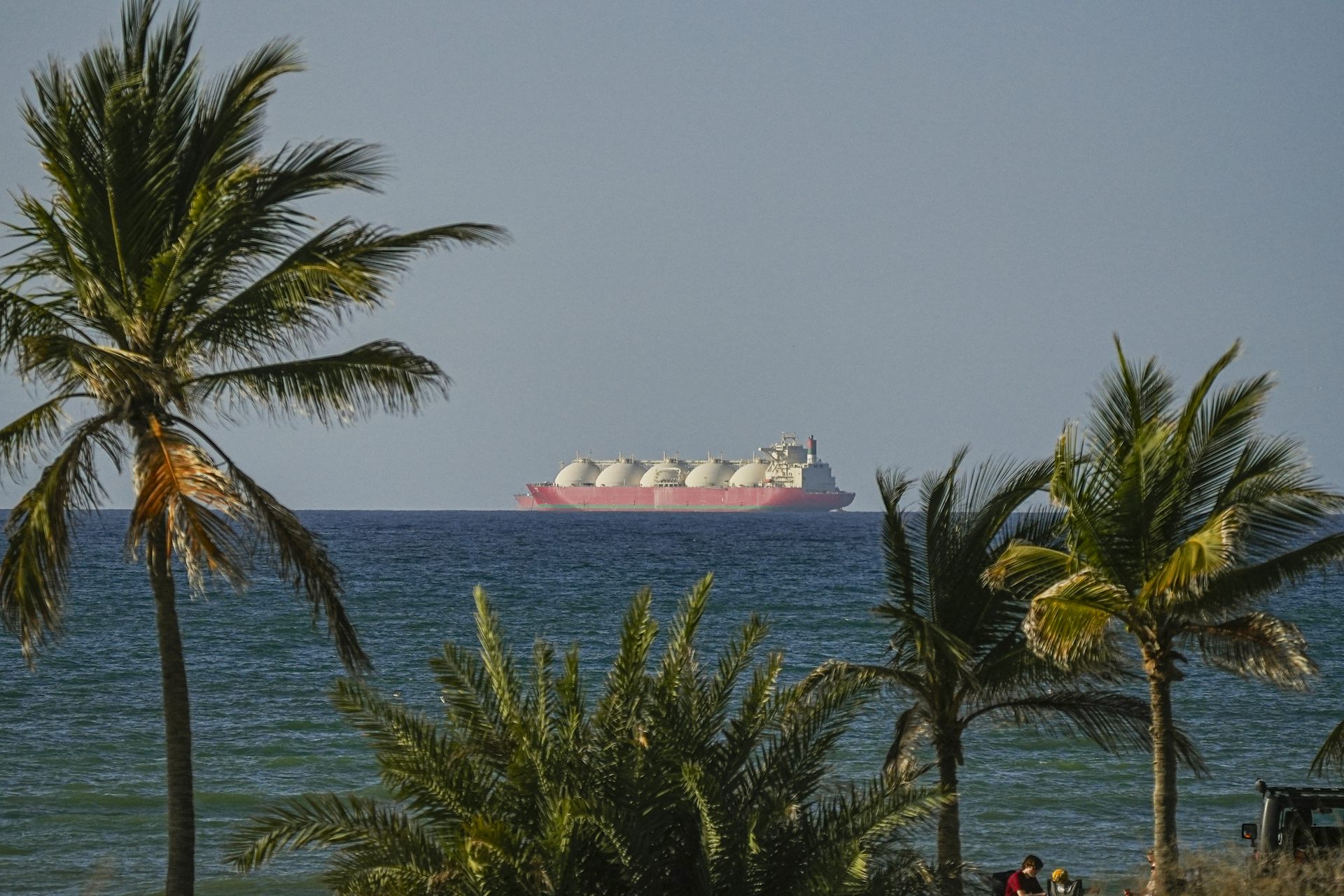
Estrecho de Ormuz: Por qué EE. UU. e Irán navegan en aguas legales muy diferentes
Strait of Hormuz: Why the US and Iran are sailing in very different legal waters
Tehran and Washington look to different rules to govern their conduct in the key choke point.
Teherán y Washington recurren a reglas diferentes para gobernar su conducta en el punto de estrangulamiento clave.
The Strait of Hormuz exists in the eye of the beholder.
El estrecho de Ormuz existe en el ojo del que mira.
While everyone agrees that, geographically speaking, it is a strait – a narrow sea passage connecting two places that ships want to go – its political and legal status is rather more complicated.
Si bien todos están de acuerdo en que, geográficamente hablando, es un estrecho – un paso marítimo angosto que conecta dos lugares por donde los barcos quieren pasar – su estatus político y legal es bastante más complicado.
The United States and Iran both eye the strait – a choke point through which 20% of the world’s oil passes – very differently. Washington sees the Strait of Hormuz as exclusively an international waterway, whereas Tehran sees it as part of it territorial waters.
Estados Unidos e Irán ven el estrecho – un punto de estrangulamiento por el que pasa el 20% del petróleo mundial – de manera muy diferente. Washington considera el Estrecho de Ormuz exclusivamente una vía marítima internacional, mientras que Teherán lo ve como parte de sus aguas territoriales.
It follows that Iran’s toll-charging of ships is seen by the U.S. as illegal. Similarly, U.S. President Donald Trump’s blockade of the passage is a “grave violation” of sovereignty to Iran.
Por lo tanto, el cobro de peajes de Irán a los barcos es visto por EE. UU. como ilegal. De manera similar, el bloqueo del paso por parte del presidente de EE. UU., Donald Trump, es una «grave violación» de la soberanía para Irán.
As an expert in the law of the sea, I know part of the problem is that the U.S. and Iran are living in two different worlds when it comes to the international laws governing the strait. Further complicating matters, both are in a different legal universe than most of the rest of the world.
Como experto en el derecho del mar, sé que parte del problema es que EE. UU. e Irán viven en dos mundos diferentes cuando se trata de las leyes internacionales que rigen el estrecho. Para complicar aún más las cosas, ambos están en un universo legal diferente al de la mayor parte del resto del mundo.
The law of the sea
El derecho del mar
The “law of the sea” is a network of international laws, customs and agreements that set out the foundation for rights of access and control in the ocean. The framework sits apart from the laws of warfare, which are also relevant to the Persian Gulf situation.
El «derecho del mar» es una red de leyes, costumbres y acuerdos internacionales que establecen los fundamentos de los derechos de acceso y control en el océano. Este marco se separa de las leyes de la guerra, que también son relevantes para la situación en el Golfo Pérsico.
The United Nations Convention on the Law of the Sea, or UNCLOS, is a major plank of the law of the sea. Completed in 1982 and in force since 1994, it aims to create a stable set of zones and places – like international straits – where everyone agrees on who can do what. It has been ratified by 171 countries and the European Union, but not Iran or the United States. Iran has signed it but has yet to ratify; the U.S. has done neither.
La Convención de las Naciones Unidas sobre el Derecho del Mar, o CONDESMAR, es un pilar fundamental del derecho del mar. Completada en 1982 y en vigor desde 1994, tiene como objetivo crear un conjunto estable de zonas y lugares —como los estrechos internacionales— donde todos acuerden quién puede hacer qué. Ha sido ratificada por 171 países y la Unión Europea, pero no por Irán ni por Estados Unidos. Irán la ha firmado pero aún no la ha ratificado; EE. UU. no ha hecho ninguna de las dos cosas.
This means that the rules which almost every country in the world has consented to can’t serve as a basis of agreement over how the U.S. and Iran should govern their actions in the strait during the current war.
Esto significa que las normas a las que casi todos los países del mundo han consentido no pueden servir como base de acuerdo sobre cómo EE. UU. e Irán deben regular sus acciones en el estrecho durante la guerra actual.
The view from Iran
La visión de Irán
Both Iran and the U.S. agree that under the law of the sea, the Strait of Hormuz is an international strait, but not on what kind of international strait it is. Moreover, they disagree on the relevant laws that exist, and how they apply.
Tanto Irán como EE. UU. están de acuerdo en que, según el derecho del mar, el estrecho de Ormuz es un estrecho internacional, pero no sobre qué tipo de estrecho internacional es. Además, no están de acuerdo sobre las leyes pertinentes que existen y cómo se aplican.
For Iran, the Strait of Hormuz is an international strait as set out under international law predating UNCLOS – notably the International Court of Justice’s ruling in the 1949 Corfu Channel case and the 1958 Territorial Seas Convention.
Para Irán, el estrecho de Ormuz es un estrecho internacional según el derecho internacional anterior a la CONDES – en particular, el fallo de la Corte Internacional de Justicia en el caso del Canal Corfu de 1949 y la Convención de Aguas Territoriales de 1958.
These older standards state that foreign ships have a right of “innocent passage” through international straits. Put in other terms, this means that if a ship is simply passing through, without doing anything else and without harming the security of the coastal countries, it must be allowed passage.
Estos estándares más antiguos establecen que los buques extranjeros tienen derecho de «paso inocente» a través de los estrechos internacionales. En otras palabras, esto significa que si un barco simplemente está pasando, sin hacer nada más y sin perjudicar la seguridad de los países costeros, debe tener permitido el paso.
This gives Iran – and Oman, the strait’s other bordering country – power to make and enforce some rules over passage, such as rules for safety and the environment. They also have wide discretion to decide if passage is “non-innocent” and therefore not allowed. But it does not give them the right to impede innocent passage.
Esto le da a Irán – y a Omán, el otro país ribereño del estrecho – el poder de crear y hacer cumplir ciertas reglas sobre el paso, como normas de seguridad y medio ambiente. También tienen amplia discreción para decidir si el paso es «no inocente» y, por lo tanto, no está permitido. Pero no les da derecho a impedir el paso inocente.
Contrary to the older standard, however, Tehran claims the right to “suspend” passage through its half of the strait, citing the waters as its territorial sea. This is a violation of the 1958 Territorial Seas Convention that Iran relies on for legal support, which says that when a territorial sea is also an international strait, innocent passage cannot be suspended.
Sin embargo, contrariamente al estándar anterior, Teherán reclama el derecho a «suspender» el paso por su mitad del estrecho, citando las aguas como su mar territorial. Esto es una violación de la Convención de Aguas Territoriales de 1958, en la que Irán se basa para su respaldo legal, la cual establece que cuando un mar territorial es también un estrecho internacional, el paso inocente no puede suspenderse.
The US interpretation
La interpretación de EE. UU.
For the U.S., the Strait of Hormuz is an international strait requiring “transit passage,” as per UNCLOS. Although the United States is not a member of UNCLOS, it argues that the agreement’s updated concept of an “international strait” should apply.
Para EE. UU., el Estrecho de Ormuz es un estrecho internacional que requiere «paso de tránsito», según el CONUS. Aunque Estados Unidos no es miembro del CONUS, argumenta que el concepto actualizado de «estrecho internacional» del acuerdo debe aplicarse.
Understanding a waterway as the newer type of “international strait,” which requires transit passage, shifts the balance against a coastal country’s control and toward free navigation.
Considerar una vía navegable como el nuevo tipo de «estrecho internacional», que requiere paso de tránsito, cambia el equilibrio en contra del control de un país costero y a favor de la navegación libre.
Under this standard, countries bordering straits – like Iran and Oman in the case of Hormuz – must also allow overflight and submarines below the surface. Passage must be allowed so long as it is “continuous and expeditious.”
Bajo este estándar, los países ribereños de los estrechos –como Irán y Omán en el caso de Ormuz– también deben permitir el sobrevuelo y los submarinos bajo la superficie. El paso debe permitirse siempre que sea «continuo y rápido.»
The U.S. has forcefully asserted this position at sea through regular “Freedom of Navigation” patrols through the Strait of Hormuz and other straits around the world. The patrols are a visible rejection of claims over the ocean that the U.S. deems illegal or excessive.
EE. UU. ha afirmado con fuerza esta posición en el mar mediante patrullas regulares de «Libertad de Navegación» a través del Estrecho de Ormuz y otros estrechos del mundo. Estas patrullas son un rechazo visible de las reclamaciones sobre los océanos que EE. UU. considera ilegales o excesivas.
The basic U.S. argument is supported by some leading legal scholars, such as James Kraska, a professor of international maritime law at the U.S. Naval War College, who decries the Iranian position as “lawfare” and argues that Iran must abide by the compromises made in UNCLOS.
El argumento básico de EE. UU. está respaldado por algunos destacados académicos legales, como James Kraska, profesor de derecho marítimo internacional en el U.S. Naval War College, quien denuncia la posición iraní como «guerra legal» y argumenta que Irán debe acatar los compromisos establecidos en el CONUS.
A ‘persistent objector’
Un ‘objetor persistente’
But the U.S. is a global outlier here, and one of only a handful of countries – alongside the United Kingdom, France, Australia, Thailand and Papua New Guinea – which argue that “transit passage” is required by custom.
Pero EE. UU. es un caso atípico mundial aquí, y uno de solo un puñado de países – junto con el Reino Unido, Francia, Australia, Tailandia y Papúa Nueva Guinea – que argumentan que el “pasaje de tránsito” es requerido por costumbre.
Custom, in this sense, is established if a practice at sea is seen as consistent and is backed by wide agreement over its legality. If something is seen as customary law, it applies to everyone. The only way to prevent a custom from applying to you is through the “persistent objection rule,” which gives a country an exemption to newly emerging standards if it has shown itself to be consistently against it.
La costumbre, en este sentido, se establece si una práctica en el mar se considera consistente y está respaldada por un amplio acuerdo sobre su legalidad. Si algo se considera derecho consuetudinario, se aplica a todos. La única forma de evitar que una costumbre se aplique a usted es mediante la “regla de objeción persistente”, que otorga a un país una exención de los estándares recién emergentes si ha demostrado estar consistentemente en contra de ellos.
Legal scholars are split on whether transit passage is customary law – although law of the sea specialists tend to say it is not.
Los académicos legales están divididos sobre si el pasaje de tránsito es derecho consuetudinario, aunque los especialistas en derecho marítimo tienden a decir que no lo es.
Tehran argues that even if transit passage were customary international law, Iran is a “persistent objector,” and therefore, the rule doesn’t apply to them.
Teherán argumenta que incluso si el pasaje de tránsito fuera derecho internacional consuetudinario, Irán es un “objetor persistente”, y por lo tanto, la regla no les aplica.
And it is true that Iran’s objection has been consistent. Both Iran and Oman argued in favor of innocent passage, and against transit passage, at the UNCLOS negotiations.
Y es cierto que la objeción de Irán ha sido constante. Tanto Irán como Omán defendieron el paso inocente y se opusieron al pasaje de tránsito en las negociaciones de la CONVEMAR.
Iran reaffirmed its perspective upon signing UNCLOS in 1982. Tehran argues that because transit passage is tied up in the compromises made by UNCLOS, only countries that ratify the treaty can claim the right to transit passage – and neither the U.S. nor Iran has ratified it.
Irán reafirmó su perspectiva al firmar la CONVEMAR en 1982. Teherán argumenta que debido a que el pasaje de tránsito está ligado a los compromisos realizados por la CONVEMAR, solo los países que ratifican el tratado pueden reclamar el derecho de pasaje de tránsito, y ni EE. UU. ni Irán lo han ratificado.
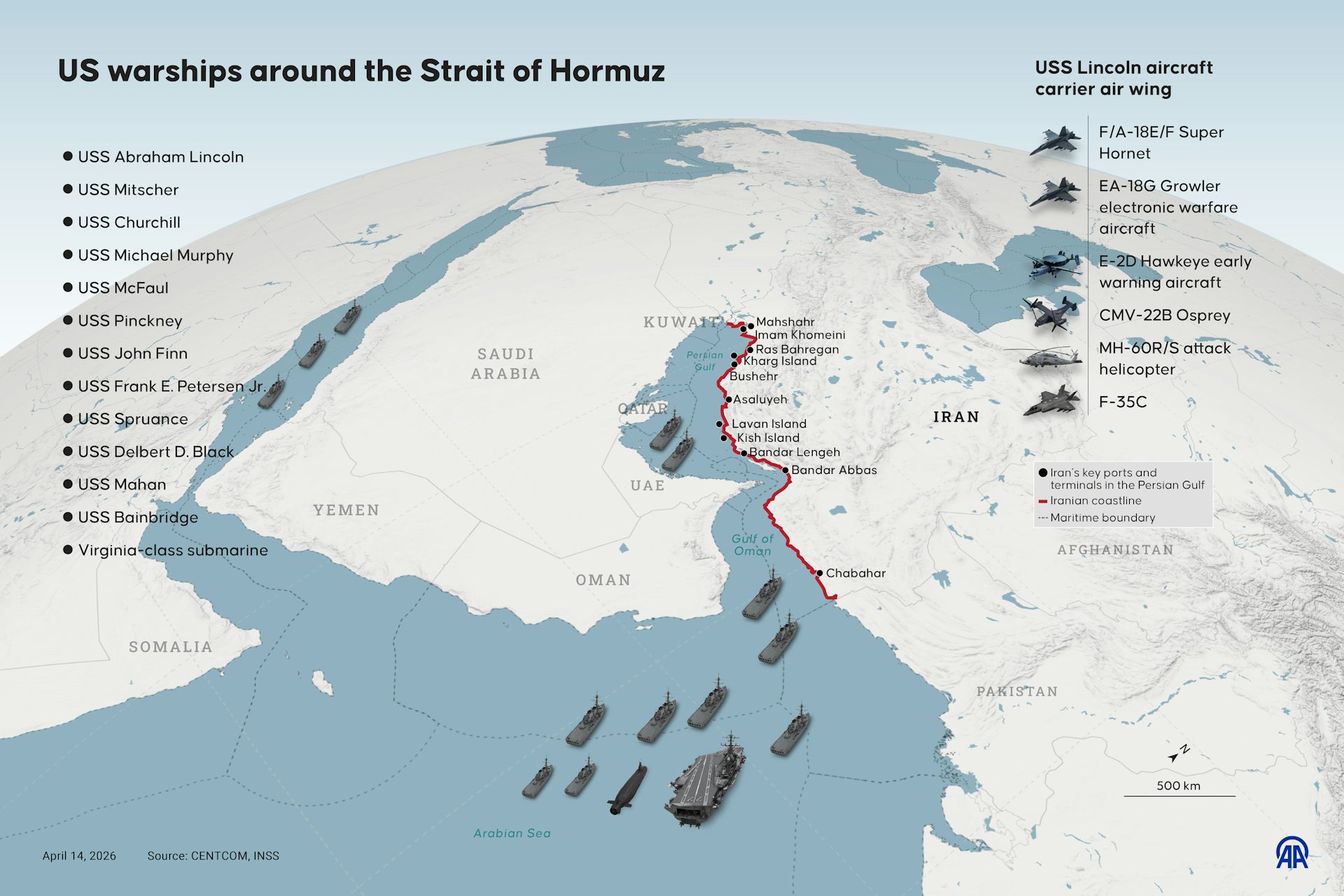
Navigating troubled waters
Navegando aguas turbulentas
The complex military situation and economic disruption are only part of the story of the Strait of Hormuz.
La compleja situación militar y la disrupción económica son solo una parte de la historia del Estrecho de Ormuz.
What lies beneath is a complicated legal situation. Not only do the U.S. and Iran disagree about the legal status of the strait, but the countries that flag oil tankers – and which are therefore responsible for them – must also navigate their own commitments and perspectives under the law of the sea.
Lo que yace debajo es una complicada situación legal. No solo EE. UU. e Irán discrepan sobre el estatus legal del estrecho, sino que los países que enarbolan los petroleros —y que por lo tanto son responsables de ellos— también deben navegar sus propios compromisos y perspectivas bajo el derecho del mar.
Every nation wants to avoid a legal precedent that is contrary to its long-term interests. But for international law to function – to reduce conflict and enable trade – what is needed is an agreement about what rules exist, and a shared commitment to abide by them.
Cada nación quiere evitar un precedente legal que sea contrario a sus intereses a largo plazo. Pero para que el derecho internacional funcione —para reducir conflictos y permitir el comercio— lo que se necesita es un acuerdo sobre qué reglas existen y un compromiso compartido de cumplirlas.
Only that would achieve a stable post-war status for the Strait of Hormuz. How we get there, however, requires navigating some very tricky waters.
Solo eso lograría un estatus estable posguerra para el Estrecho de Ormuz. Cómo llegar allí, sin embargo, requiere navegar aguas muy complicadas.
Elizabeth Mendenhall does not work for, consult, own shares in or receive funding from any company or organization that would benefit from this article, and has disclosed no relevant affiliations beyond their academic appointment.
Elizabeth Mendenhall no trabaja para, asesora, posee acciones de, ni recibe financiación de ninguna empresa u organización que se beneficiaría de este artículo, y no ha revelado afiliaciones relevantes más allá de su nombramiento académico.
Read more
-

El estudio más grande del mundo sobre perpetradores de abuso sexual infantil revela por qué abusan
World’s largest study of child sexual abuse perpetrators reveals why they abuse
-

De Fleabag a Vladimir: ¿por qué ha llegado a ser tan común romper la cuarta pared?
From Fleabag to Vladimir: why has breaking the fourth wall has become so common?