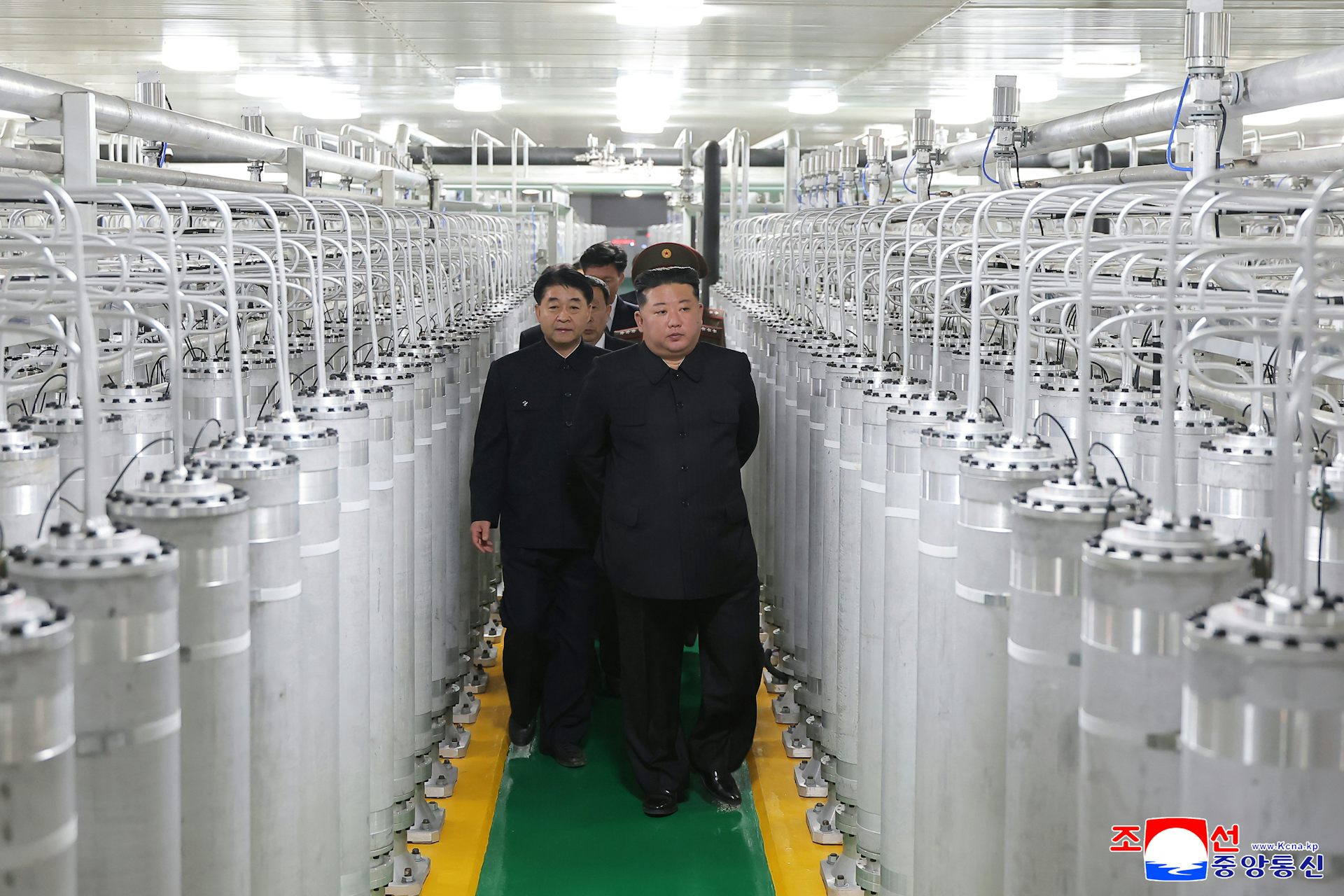
لقد فشلت الجهود الدولية لوقف برنامج الأسلحة النووية لكوريا الشمالية. وإليك ما سيأتي بعد ذلك
International efforts to end North Korea’s nuclear weapons program have failed. Here’s what comes next
Based on past performance, economic sanctions will never be strong enough to denuclearise North Korea. There’s a better way.
بناءً على الأداء السابق، لن تكون العقوبات الاقتصادية قوية بما يكفي لإزالة السلاح النووي عن كوريا الشمالية أبدًا. هناك طريقة أفضل.
The dust has now settled on the ostentatious summit between Chinese President Xi Jinping and North Korean leader Kim Jong Un in Pyongyang earlier this month. But perhaps the biggest takeaway was what was left unsaid.
لقد استقر الآن الغبار على القمة المبهرة بين الرئيس الصيني شي جين بينغ والزعيم الكوري الشمالي كيم جونغ أون في بيونغ يانغ في وقت سابق من هذا الشهر. ولكن ربما كان أهم ما يمكن استخلاصه هو ما لم يُقل.
Chinese readouts from the summit conspicuously excluded any mention of denuclearisation in North Korea (meaning North Korea giving up its nuclear weapons) . This signals a shift away from a decades-long policy goal of Beijing.
استبعدت البيانات الصينية الواردة من القمة بشكل واضح أي ذكر لنزع السلاح النووي في كوريا الشمالية (أي تنازل كوريا الشمالية عن أسلحتها النووية) . ويشير هذا إلى تحول بعيداً عن هدف سياسي استمر لعقود بالنسبة لبكين.
It’s the latest in a long list of setbacks for international efforts to denuclearise North Korea, and my soon-to-be-published research shows experts are widely concerned about the depth of the challenge.
إنها أحدث انتكاسة في قائمة طويلة من العقبات التي تواجه الجهود الدولية لنزع السلاح النووي عن كوريا الشمالية، ويُظهر بحثي الذي سيُنشر قريباً أن الخبراء قلقون للغاية بشأن عمق هذا التحدي.
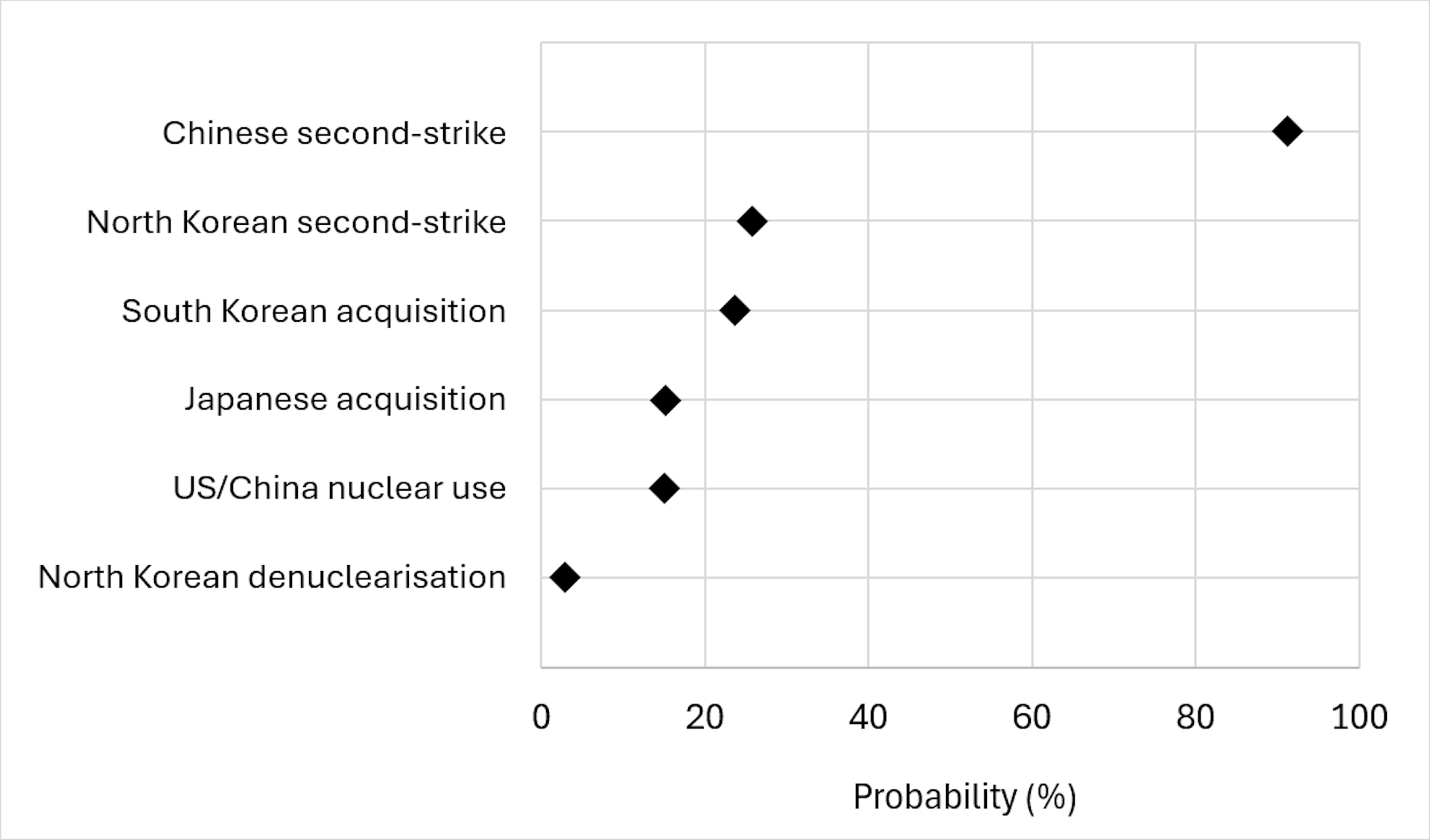
In early 2026 I ran a survey and focus groups involving over 70 international experts in nuclear weapons. I asked them to forecast the probability of six hypothetical nuclear scenarios occurring by 2035:
في أوائل عام 2026، أجريت استبياناً ومجموعات تركيز شملت أكثر من 70 خبيراً دولياً في الأسلحة النووية. وطلبت منهم التنبؤ باحتمالية وقوع ستة سيناريوهات نووية افتراضية بحلول عام 2035:
that China achieves a nuclear second-strike capability against the United States
أن تحقق الصين قدرة ضربة ثانية نووية ضد الولايات المتحدة
that North Korea achieves the same
أن تحقق كوريا الشمالية الشيء نفسه
that Japan acquires nuclear weapons
أن تقتني اليابان أسلحة نووية
that South Korea acquires nuclear weapons
أن تقتني كوريا الجنوبية أسلحة نووية
that North Korea gives up its nuclear weapons
أن تتخلى كوريا الشمالية عن أسلحتها النووية
that the United States or China uses a nuclear weapon.
أن تستخدم الولايات المتحدة أو الصين سلاحاً نووياً.
North Korean denuclearisation came in last, with experts assessing only a 3% probability by 2035.
جاء نزع السلاح النووي لكوريا الشمالية في المرتبة الأخيرة، حيث قدر الخبراء احتمال وقوعه بنسبة 3% فقط بحلول عام 2035.
After over 30 years, it seems the international mission to denuclearise North Korea has failed.
بعد أكثر من 30 عاماً، يبدو أن المهمة الدولية لنزع السلاح النووي عن كوريا الشمالية قد فشلت.
Why? And what does this mean for the region?
لماذا؟ وماذا يعني هذا للمنطقة؟
How did we get here?
كيف وصلنا إلى هنا؟
North Korea began pursuing nuclear weapons in earnest in the 1990s. This was driven by insecurity from the collapse of its superpower patron (the Soviet Union) . Another factor was the still-unresolved status of the Korean War, which ended without a peace treaty.
بدأت كوريا الشمالية في السعي الجاد نحو الأسلحة النووية في التسعينيات. وكان الدافع وراء ذلك هو الشعور بانعدم الأمن الناتج عن انهيار راعِها القوة العظمى (الاتحاد السوفيتي) . وعامل آخر كان الوضع غير المحسوم للحرب الكورية، التي انتهت دون معاهدة سلام.
International efforts to denuclearise North Korea initially focused on diplomatic negotiations. However, efforts broke down due to North Korean cheating on interim agreements and major North Korean provocations. This included it withdrawing from the nuclear non-proliferation treaty and a series of nuclear and missile tests.
ركزت الجهود الدولية لنزع الأسلحة النووية من كوريا الشمالية في البداية على المفاوضات الدبلوماسية. ومع ذلك، انهارت هذه الجهود بسبب غش كوريا الشمالية في الاتفاقيات المؤقتة والاستفزازات الكبرى التي قامت بها. وشمل ذلك انسحابها من معاهدة عدم انتشار الأسلحة النووية وسلسلة من التجارب النووية والصاروخية.
International denuclearisation efforts then shifted from carrots to sticks, primarily economic sanctions. The aim was to compel North Korea to renounce its nuclear weapons.
ثم تحولت جهود نزع السلاح الدولية من “الجزر” إلى “العصي”، وعلى رأسها العقوبات الاقتصادية. وكان الهدف هو إجبار كوريا الشمالية على التخلي عن أسلحتها النووية.
By the 2000s, even North Korea’s erstwhile supporters — Russia and China — got in on the act. They supported an oppressive regime of United Nations sanctions against North Korea’s nuclear weapons and missile programs.
بحلول العقد الأول من القرن الحادي والعشرين، حتى الداعمون السابقون لكوريا الشمالية — روسيا والصين — انخرطوا في هذا المسعى. ودعموا نظاماً قمعياً من عقوبات الأمم المتحدة ضد برامج الأسلحة النووية والصاروخية لكوريا الشمالية.
These efforts ultimately failed. Pyongyang now possesses a diversified missile arsenal theoretically capable of reaching the continental United States as well as an estimated 60 nuclear warheads with a scalable production capability.
في نهاية المطاف، فشلت هذه الجهود. وتمتلك بيونغ يانغ الآن ترسانة صواريخ متنوعة قادرة نظرياً على الوصول إلى الولايات المتحدة القارية، بالإضافة إلى ما يقدر بـ 60 رأساً نووياً بقدرة إنتاج قابلة للتوسع.
What went wrong?
ما الذي سار بشكل خاطئ؟
The full coercive potential of economic sanctions was never realised.
لم يتحقق الإمكانات القسرية الكاملة للعقوبات الاقتصادية قط.
By the late 2010s, Russia and China had withdrawn support for sanctions, using their veto in the Security Council to block new sanctions resolutions.
بحلول أواخر العقد الثاني من القرن الحادي والعشرين، سحبت روسيا والصين دعمها للعقوبات، مستخدمتين حق النقض (الفيتو) في مجلس الأمن لعرقلة قرارات عقوبات جديدة.
They also provided economic lifelines to North Korea through lax sanctions enforcement in the border region.
كما قدمتا شريان حياة اقتصادي لكوريا الشمالية من خلال التراخي في تطبيق العقوبات في المنطقة الحدودية.
Russia and China also used their positions on the UN sanctions monitoring committee to obstruct investigations into sanctions violations involving Chinese and Russian entities.
استغلت روسيا والصين أيضاً مواقعهما في لجنة مراقبة عقوبات الأمم المتحدة لعرقلة التحقيقات في انتهاكات العقوبات التي تورطت فيها كيانات صينية وروسية.
Russia even resorted to state-sponsored sanctions violations to procure North Korean arms and soldiers to bolster its position in Ukraine.
بل لجأت روسيا إلى انتهاكات للعقوبات برعاية الدولة لتوريد الأسلحة والجنود لكوريا الشمالية لدعم موقفها في أوكرانيا.
When UN sanctions lost their teeth, the US relied on autonomous sanctions to maintain economic pressure against North Korea. US autonomous sanctions cut off US market and financial system access for foreign entities that traded with North Korea or provided it financial services. But these measures, too, were neutered.
عندما فقدت عقوبات الأمم المتحدة قوتها، اعتمدت الولايات المتحدة على العقوبات الذاتية للحفاظ على الضغط الاقتصادي ضد كوريا الشمالية. قطعت العقوبات الأمريكية الذاتية وصول الكيانات الأجنبية التي تتاجر مع كوريا الشمالية أو تقدم لها خدمات مالية إلى السوق والنظام المالي الأمريكي. ولكن هذه الإجراءات أيضاً تم تحييدها.
The US avoided politically and economically challenging sanctions against Chinese targets. And it scaled back new sanctions designations to facilitate the first Trump administration’s ill-fated diplomatic outreach to Kim Jong Un.
تجنبت الولايات المتحدة فرض عقوبات سياسية واقتصادية صعبة على الأهداف الصينية. وخففت من تصنيف عقوبات جديدة لتسهيل التوجه الدبلوماسي المحفوف بالمخاطر للإدارة الأمريكية الأولى تجاه كيم جونغ أون.
These gaps were ruthlessly exploited by a sophisticated network of North Korean sanctions evaders. They were able to draw upon their merchant fleet, diplomatic corps, overseas workers, and state-sponsored hackers. This was how they moved sanctioned cash, crypto, and commodities despite sanctions.
تم استغلال هذه الثغرات بوحشية من قبل شبكة متطورة من المتهربين من العقوبات الكورية الشمالية. وقد تمكنوا من الاعتماد على أسطولهم التجاري، وبعثتهم الدبلوماسية، وعمالهم في الخارج، وقراصنة مدعومين من الدولة. وهكذا نقلوا الأموال والعقود والسلع الخاضعة للعقوبات بالرغم منها.
The result was a compromised international economic sanctions regime. North Korea was never pushed to the brink of economic ruin. It was never forced to consider seriously whether the possibility of foreign military intervention (without nuclear weapons to deter it) seemed preferable to the certainty of economic collapse.
وكانت النتيجة نظام عقوبات اقتصادي دولي ضعيفاً. لم يتم دفع كوريا الشمالية أبداً إلى حافة الانهيار الاقتصادي. ولم تُجبر قط على التفكير بجدية فيما إذا كانت إمكانية التدخل العسكري الأجنبي (دون أسلحة نووية لردعها) تبدو أفضل من اليقين بالانهيار الاقتصادي.
What’s next?
ما الخطوة التالية؟
Based on past performance, economic sanctions will never be strong enough to denuclearise North Korea.
بناءً على الأداء السابق، لن تكون العقوبات الاقتصادية قوية بما يكفي أبدًا لنزع السلاح النووي عن كوريا الشمالية.
Unconditional engagement is also not viable. The Kim regime has staked too much of its legitimacy on the nuclear enterprise.
كما أن الانخراط غير المشروط ليس خيارًا قابلاً للتطبيق أيضًا. لقد راهن نظام كيم بالكثير من شرعيته على المشروع النووي.
And the international interventions that toppled Libyan and Iranian leaders (two states that decided against nuclear weaponisation) likely only reinforced perceptions in Pyongyang that nuclear deterrents are crucial.
ومن المرجح أن التدخلات الدولية التي أطاحت بقادة ليبيا وإيران (دولتان قررتا عدم التسلح بالأسلحة النووية) لم تفعل سوى تعزيز التصورات في بيونغيانغ بأن الردع النووي أمر بالغ الأهمية.
Now, the only realistic path runs through radical political reform. That means regime change and/or reunification with the south.
الآن، يمر المسار الواقعي الوحيد من خلال الإصلاح السياسي الجذري. وهذا يعني تغيير النظام و/أو إعادة التوحيد مع الجنوب.
One expert told me:
قال لي خبير ما:
The only scenario I can imagine in which there are no North Korean nuclear weapons is a world in which there is no North Korea.
السيناريو الوحيد الذي يمكنني تخيله والذي لا توجد فيه أسلحة نووية كورية شمالية هو عالم لا وجود فيه لكوريا الشمالية.
International stakeholders have few good options for driving this; such demand must come from within.
لدى الأطراف الدولية المعنية خيارات قليلة لتحريك هذا الأمر؛ ويجب أن يأتي مثل هذا الطلب من الداخل.
Rather than directly denuclearising North Korea, our focus should now be on buying time while the regime’s vulnerabilities (on succession, elite cohesion, and ideology) fester. This could generate internal demand for radical political reform.
بدلاً من نزع السلاح النووي لكوريا الشمالية بشكل مباشر، يجب أن ينصب تركيزنا الآن على كسب الوقت بينما تتفاقم نقاط ضعف النظام (فيما يتعلق بالخلافة والتلاحم النخبوي والأيديولوجيا) . وقد يولد هذا طلبًا داخليًا للإصلاح السياسي الجذري.
Regional states should continue to support economic sanctions to slow North Korean nuclear weapons and missile development.
يجب على الدول الإقليمية مواصلة دعم العقوبات الاقتصادية لإبطاء تطوير الأسلحة الصاروخية والنووية الكورية الشمالية.
This would involve multilateral enforcement activities stopping North Korea from engaging in ship-to-ship transfers of sanctioned goods and remote IT work.
وسيتضمن ذلك أنشطة إنفاذ متعددة الأطراف لوقف كوريا الشمالية عن الانخراط في عمليات نقل البضائع الخاضعة للعقوبات بين السفن والعمل عن بعد في مجال تكنولوجيا المعلومات.
Regional states should publicly maintain a policy of denuclearisation. It is important to deny Pyongyang the propaganda coup of being able to say the international community tolerates its nuclear weapons.
يجب على الدول الإقليمية الحفاظ علنًا على سياسة نزع السلاح النووي. ومن المهم حرمان بيونغيانغ من ضربة الدعاية المتمثلة في قدرتها على القول بأن المجتمع الدولي يتسامح مع أسلحتها النووية.
And regional states should pursue counterforce options. In particular, ballistic missile defence would help reduce exposure to North Korean nuclear threats.
ويجب على الدول الإقليمية أيضًا متابعة خيارات الردع المضاد للقوة. وعلى وجه الخصوص، سيساعد الدفاع الصاروخي الباليستي في تقليل التعرض للتهديدات النووية الكورية الشمالية.
Christopher J. Watterson works at the United States Studies Centre, an independent research centre at the University of Sydney that receives grant funding from ANZ, Babcock, Bechtel, British High Commission in Australia, ConocoPhillips, Embassy of the Republic of Korea in Australia, HII Nuclear, Japan Foundation, Korea Foundation, Lockheed Martin Australia, McKinsey & Company, Microsoft, Minerals Council of Australia, National Endowment for Democracy, Northrop Grumman, Prospect Foundation, Queensland Investment Corporation, Raytheon Australia, Sasakawa Peace Foundation, Smith Richardson Foundation, Taiwan Economic and Cultural Office, Thales Australia, and the US Department of State. The author maintains academic freedom and the views expressed in this article are his own.
يعمل كريستوفر جيه. واتيرسون في مركز دراسات الولايات المتحدة، وهو مركز أبحاث مستقل في جامعة سيدني يتلقى تمويل منح من ANZ وBabcock وBechtel والمفوضية البريطانية في أستراليا وConocoPhillips وسفارة جمهورية كوريا في أستراليا وHII Nuclear ومؤسسة اليابان ومؤسسة كوريا ولوكهيد مارتن أستراليا وماكنزي وشركاه ومايكروسوفت ومجلس المعادن الأسترالي والمؤسسة الوطنية للديمقراطية ونورثروپ غرومان ومؤسسة بروسبكت ومؤسسة الاستثمار في كوينزلاند ورايثيون أستراليا ومؤسسة ساساكاوا للسلام ومؤسسة سميث ريتشاردسون ومكتب تايوان الاقتصادي والثقافي وثاليس أستراليا ووزارة الخارجية الأمريكية. ويحافظ المؤلف على حريته الأكاديمية، والآراء المعبر عنها في هذه المقالة هي آراؤه الخاصة.
Read more
-
يقول العلماء إن الجفاف قد يزيد من تفاقم مقاومة المضادات الحيوية
Drought could be making antibiotic resistance worse, scientists say
-
لماذا يستحضر رئيس بولندا تاريخ فترة الحرب في خلافه مع فولوديمير زيلينسكي
Why Poland’s president is invoking wartime history in a dispute with Volodymyr Zelensky