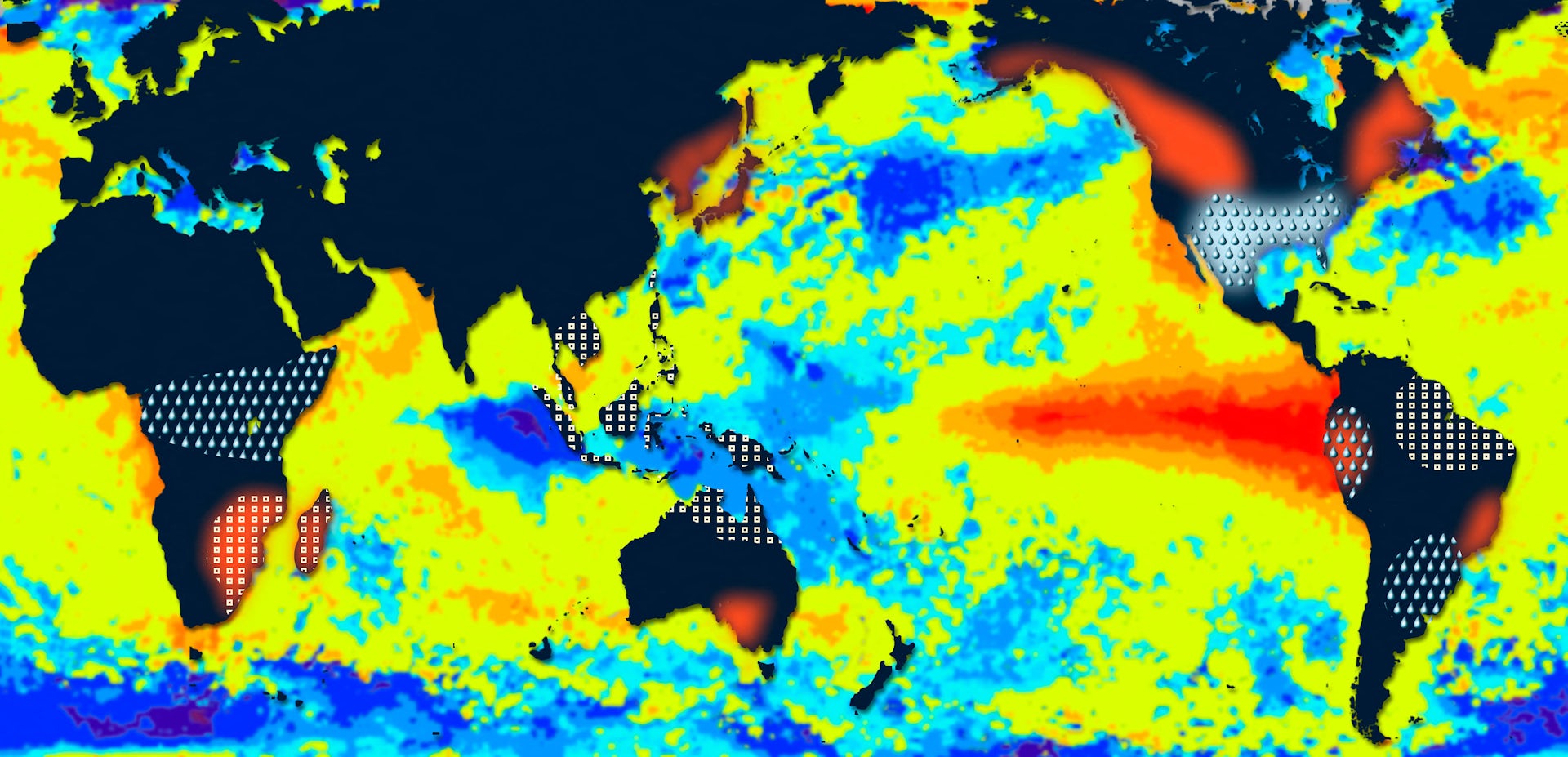
Como um El Niño se torna um super El Niño
How an El Niño becomes a super El Niño
Climate expert Ioana Colfescu talks to The Conversation Weekly podcast about predicting the impact of El Niño.
A especialista em clima Ioana Colfescu fala no podcast The Conversation Weekly sobre a previsão do impacto do El Niño.
El Niño has begun and forecasters predict a more than 60% chance that the naturally occurring phenomenon could become a very strong, or super El Niño later in 2026.
O El Niño começou e os meteorologistas preveem mais de 60% de chance de que o fenômeno natural possa se tornar um super El Niño muito forte no final de 2026.
El Niño begins with warmer water in the Pacific Ocean near the equator and can have a cascade of dramatic effects on the world’s weather.
O El Niño começa com águas mais quentes no Oceano Pacífico perto do equador e pode causar uma cascata de efeitos dramáticos no clima mundial.
But what chain of events has to happen for high temperatures in the Pacific to translate into severe floods, droughts and storms around the world? And what role does climate change play in El Niño?
Mas qual cadeia de eventos precisa acontecer para que as altas temperaturas no Pacífico se traduzam em inundações, secas e tempestades severas ao redor do mundo? E qual é o papel da mudança climática no El Niño?
In this episode of The Conversation Weekly podcast, Ioana Colfescu, an expert in climate and machine learning at the University of St Andrews and the University of Edinburgh, explains how El Niño works and what it could mean for the world.
Neste episódio do podcast The Conversation Weekly, Ioana Colfescu, especialista em clima e aprendizado de máquina na Universidade de St Andrews e na Universidade de Edimburgo, explica como funciona o El Niño e o que ele pode significar para o mundo.
In the early 1600s, fishermen in Peru and Ecuador noticed something unusual. Their nets were usually flush with anchovies which thrive in the cold waters of the Pacific Ocean. But every few years, the waters began to turn warmer, driving the anchovies away. They called this phenomenon El Niño, meaning little boy, or Christ child, because it tends to peak around Christmas time.
No início dos anos 1600, pescadores no Peru e no Equador notaram algo incomum. Suas redes geralmente estavam cheias de anchovas, que prosperam nas águas frias do Oceano Pacífico. Mas a cada poucos anos, as águas começavam a esquentar, afastando as anchovas. Eles chamaram esse fenômeno de El Niño, que significa menino pequeno ou Cristo criança, porque tende a atingir o pico por volta do Natal.
Centuries later, scientists would understand that this warmer water in the equatorial Pacific is part of a naturally occurring cycle and they would start trying to predict when the next one was coming and how bad it would be.
Séculos depois, os cientistas entenderiam que essa água mais quente no Pacífico equatorial faz parte de um ciclo natural e começariam a tentar prever quando o próximo ocorreria e quão grave ele seria.
“We have indicators that place this El Niño in a similar pattern or signs that other very large El Niños had,” says Colfescu. “But while we know it’s gonna be a big event in terms of temperature, this temperature index is not yet defined as a big event in terms of impact.”
“Temos indicadores que colocam este El Niño em um padrão semelhante ou sinais que outros El Niños muito grandes tiveram”, diz Colfescu. “Mas embora saibamos que será um grande evento em termos de temperatura, este índice de temperatura ainda não é definido como um grande evento em termos de impacto.”
The 2023-24 El Niño was one of the top five strongest ever recorded. While it dramatically affected some parts of the world, including severe flooding in Brazil, and also contributed to 2024 being the hottest year ever recorded, some of the expected effects did not materialise. Colfescu says that’s because El Niño’s “impacts are nuanced … and the response across the tropics, can be different to the one [outside the] tropics”.
O El Niño de 2023-24 foi um dos cinco mais fortes já registrados. Embora tenha afetado dramaticamente algumas partes do mundo, incluindo inundações severas no Brasil e também contribuído para que 2024 fosse o ano mais quente já registrado, alguns dos efeitos esperados não se materializaram. Colfescu diz que isso ocorre porque os “impactos do El Niño são complexos… e a resposta nos trópicos pode ser diferente daquela [fora dos] trópicos”.
Whatever severe weather conditions do happen, Colfescu says they’re likely to be “made much worse because the El Niño right now is overlapped on an already warm ocean because of climate change.”
Quaisquer condições climáticas severas que ocorram, Colfescu afirma que é provável que sejam “muito pioradas porque o El Niño agora está sobreposto em um oceano já quente por causa das mudanças climáticas.”
Listen to Colfescu explain the mechanisms behind El Niño on The Conversation Weekly podcast.
Ouça Colfescu explicar os mecanismos por trás do El Niño no podcast The Conversation Weekly.
This episode of The Conversation Weekly was written and produced by Gemma Ware and Mend Mariwany. Mixing by Eleanor Brezzi and theme music by Neeta Sarl.
Este episódio do The Conversation Weekly foi escrito e produzido por Gemma Ware e Mend Mariwany. Mixagem por Eleanor Brezzi e música tema por Neeta Sarl.
Newsclips in this episode from Al Jazeera English, KCRA 3, Bloomberg-News, CBC News and DW News.
Clipes de notícias neste episódio de Al Jazeera English, KCRA 3, Bloomberg-News, CBC News e DW News.
Listen to The Conversation Weekly via any of the apps listed above, download it directly via our RSS feed or find out how else to listen here. A transcript of this episode is available via the Apple Podcasts or Spotify apps.
Ouça o The Conversation Weekly em qualquer um dos aplicativos listados acima, baixe diretamente pelo nosso feed RSS ou descubra outras formas de ouvir aqui. Uma transcrição deste episódio está disponível nos aplicativos Apple Podcasts ou Spotify.
Ioana Colfescu is the Digital Atmosphere Programme Leader at the National Centre for Atmospheric Science, which has also provided her with research funding.
Ioana Colfescu é a Líder do Programa de Atmosfera Digital no National Centre for Atmospheric Science, que também lhe forneceu financiamento para pesquisa.
Read more
-

A extrema-direita está em ascensão na França, Alemanha e partes da Europa. O que isso significará para a Ucrânia?
The far right is surging in France, Germany and parts of Europe. What will this mean for Ukraine?
-
A cratera mais antiga da Terra realmente tem mais de 3 bilhões de anos, novo estudo confirma
Earth’s oldest crater really is over 3 billion years old, new study confirms