霍尔木兹海峡重新开放,但全球航运不会在数月内恢复正常
The Strait of Hormuz is reopening, but global shipping …
A peace deal has reopened the Strait of Hormuz, but insurance premiums, mine clearance and a container shortage across two continents suggest the disruption is far from over.
一项和平协议使霍尔木兹海峡重新开放,但保险费、排雷以及跨越两大洲的集装箱短缺表明,这种中断远未结束。
Iran and the United States are about to sign a peace deal that will reopen the Strait of Hormuz, the narrow waterway that carries about one-fifth of the world’s oil.
伊朗和美国即将签署一项和平协议,该协议将重新开放霍尔木兹海峡——这条承载着全球约五分之一石油的狭窄水道。
Oil prices reacted quickly to the announcement of the tentative deal, dropping from highs that had pushed gasoline prices toward record levels in North America.
油价迅速对初步协议的宣布做出了反应,从此前推高北美汽油价格至创纪录水平的高位回落。
The global supply chain, however, will take the better part of a year to recover, and the relief at the pumps may prove more gradual than the relief in oil markets.
然而,全球供应链的恢复需要至少一年时间,加油站的缓解程度可能比石油市场的缓解更为渐进。
The strait’s closure began on Feb. 28 after the U.S. and Israel launched joint strikes on Iran. Tehran responded by effectively shutting the strait to commercial traffic, attacking ships and laying sea mines.
该海峡的封锁始于2月28日,此前美国和以色列对伊朗发动了联合打击。德黑兰则通过攻击船只和布设海雷等方式,有效地切断了商业交通。
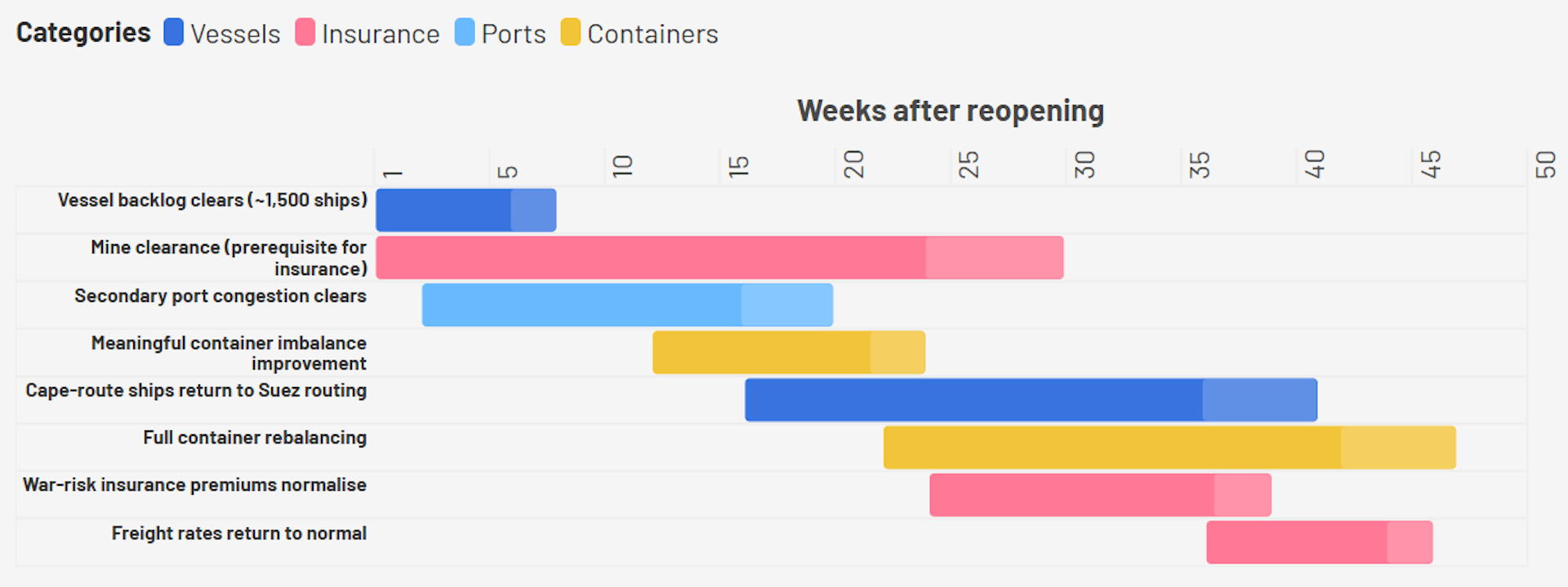
Traffic through the passage fell from about 100 vessels per day to roughly six at the height of the blockade, and more than 1,500 vessels were left waiting to pass through at one point. That backlog has caused a months-long global energy crisis.
在封锁的高峰期,该水道的船只流量从每天约100艘下降到大约6艘,一度有超过1,500艘船只滞留等待通过。这种积压造成了长达数月的全球能源危机。
Supply chains operate on a different timeline than politics. German shipping giant Hapag-Lloyd estimates it will take their firm at least six weeks to regain a fully normal network, assuming vessels can leave the Persian Gulf fairly soon after reopening.
供应链遵循的时间表与政治周期不同。德国航运巨头汉堡-罗伊德(Hapag-Lloyd)估计,假设船只在重新开放后很快离开波斯湾,其公司至少需要六周时间才能恢复完全正常的网络运转。
But that estimate may be too optimistic, since several of the prerequisites for normal traffic still aren’t in place and different accounts put different timelines on how long it will take for the backlog to clear and traffic to return to pre-conflict levels.
但这一估计可能过于乐观,因为正常交通的几个前提条件尚未到位,不同的报道对积压消退和交通恢复到战前水平所需的时间提出了不同的预测。
Insurance and mines slow the restart
保险和水雷减缓重启进程
The Strait of Hormuz was effectively closed by insurance companies before it was declared closed by the Iranian navy. War-risk insurance premiums surged from 0.25 per cent of vessel value before the conflict to between three and eight per cent, which could translate to up to US$8 million for a single tanker transit in insurance costs alone.
霍尔木兹海峡在伊朗海军宣布封锁之前,就已经被保险公司事实上封锁了。战争险保费从冲突前的船只价值0.25%飙升至3%至8%,仅保险成本一项,一次油轮过境的费用就可能高达800万美元。
Mines cannot be cleared overnight, and mine clearance is itself a prerequisite for insurers to lower premiums again. That alone could take up to six months, meaning the financial cost of transiting the strait may stay elevated.
水雷不可能在一夜之间清除,而排雷本身又是保险公司再次降低保费的前提条件。仅此一项就可能需要长达六个月的时间,这意味着穿越海峡的经济成本可能会维持在高位。
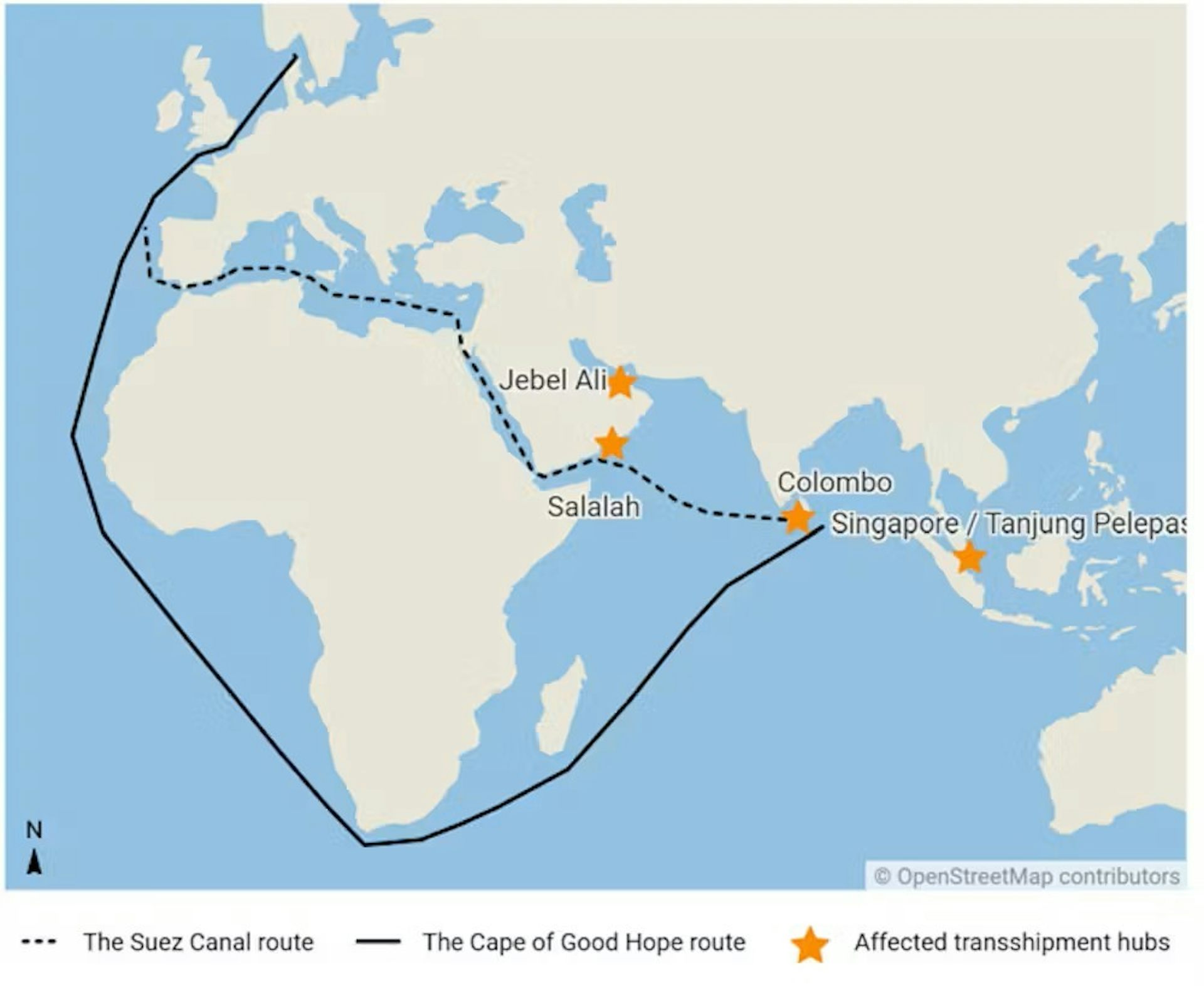
Once vessels do return, the congestion won’t disappear — it will move to other trans-shipment ports. The traffic released from the strait will need berths, cranes, labour and feeder connections at ports such like Jebel Ali, Colombo, Singapore and Tanjung Pelepas, where operations are already running at elevated capacity after absorbing diverted traffic during the closure.
一旦船只恢复通行,拥堵不会消失——它会转移到其他转运港口。从海峡释放出来的交通流量将需要在杰贝阿里、科伦坡、新加坡和丹绒霹雳等港口获得泊位、起重机、劳动力和支线连接,这些港口的运营在吸收了封锁期间分流的货物后,已经处于高负荷状态。
The sudden flood of new traffic at these ports will create further delays across the global container supply chain. Think of an accident on the highway: once it’s cleared, the traffic stacked up behind it disperses, but that dispersal itself can create new slowdowns at the next on-ramp or exit. In this scenario, the strait was the accident, and the ports are the on-ramps.
这些港口突然涌入的新流量将导致全球集装箱供应链出现进一步延误。可以想象高速公路上的事故:一旦清理完毕,堆积的交通会分散开来,但这种分散本身也可能在下一个匝道口或出口造成新的减速。在这种情景中,海峡就是事故现场,而港口就是匝道口。
No analyst has yet modelled the clearing of this secondary congestion, but drawing on port throughput data and the volume of traffic released from the strait, a reasonable estimate suggests a return to normal at global transshipment ports won’t be achieved until three to four months from now.
目前还没有分析师对这种二次拥堵的清除进行建模,但根据港口吞吐量数据和从海峡释放的流量,合理的估计表明,全球转运港口的恢复正常状态要等到三到四个月以后才能实现。
Diverted routes won’t simply snap back
绕行路线不会轻易恢复原状
The disruption also affected shipping routes themselves. Within hours of the U.S.-Israeli strikes in February, many vessels scheduled for Suez Canal routing were diverted around the Cape of Good Hope. By early March, all four of the world’s largest container carriers — Maersk, MSC, CMA CGM and Hapag-Lloyd — had suspended Hormuz transit.
此次中断也影响了航运路线本身。在二月美国和以色列的袭击发生数小时内,许多原定经苏伊士运河航行的船只被迫绕行好望角。到三月初,全球最大的四家集装箱运输公司——马士基(Maersk)、MSC、CMA CGM和赫伯罗特(Hapag-Lloyd)——均暂停了霍尔木兹海峡的过境。
De-escalation doesn’t mean these diverted shipments will simply snap back to the strait. Many shipping firms have already restructured schedules, contracts, vessel positioning and fuel procurement for the rest of 2026 around the Cape of Good Hope route. Unwinding those arrangements takes time.
局势缓和并不意味着这些绕行货物会简单地恢复到海峡。许多航运公司已经围绕好望角路线,重新调整了截至2026年底的时刻表、合同、船只定位和燃料采购计划。取消这些安排需要时间。
History suggests why changing routes is not an easy fix. After the last Houthi attack on shipping in September 2025 in the Bab el-Mandeb, a highly strategic maritime chokepoint connecting the Red Sea to the Gulf of Aden and the Indian Ocean, a formal ceasefire was declared on Nov. 11. Yet Suez Canal traffic remained 60 per cent below pre-crisis levels 100 days after that final attack. The same pattern could play out here.
历史表明,改变路线并非易事。在2025年9月胡塞武装对曼德海峡(Bab el-Mandeb)航运的最后一次袭击之后,该海峡——一个连接红海、亚丁湾和印度洋的高度战略性海上咽喉点——于11月11日宣布正式停火。然而,在这次最终袭击发生后的第100天,苏伊士运河的流量仍比危机前水平低了60%。同样的模式也可能在这里上演。
A container imbalance adds to the strain
集装箱失衡加剧了压力
Under normal conditions, container positioning runs on a tightly managed cycle: loaded containers move one way, and empty ones move back on a schedule that keeps equipment where it’s needed.
在正常情况下,集装箱的调配运行在一个严格管理的周期内:满载集装箱朝一个方向移动,空箱则按照时间表反向运回,从而确保设备处于所需位置。
The blockade broke this cycle, leaving loaded containers trapped inside the Persian Gulf, and empty containers at trans-shipment hubs like Colombo and European terminals. The cape route made it worse, adding still more empties in Europe.
这次封锁打破了这一周期,导致满载集装箱被困在波斯湾内,而空箱则积聚在科伦坡和欧洲等转运枢纽。好望角航线使情况更糟,又增加了更多欧洲的空箱。
That imbalance means Asia is scrambling to find empty containers to ship cargo, while European ports are drowning in empties awaiting shipments from Asia.
这种失衡意味着亚洲正在争抢寻找空集装箱来运输货物,而欧洲港口则积满了等待来自亚洲货物的空箱。
The containers trapped inside the Persian Gulf are only half of the story: an estimated two million shipping containers have been disrupted across the global network because of the blockade.
被困在波斯湾内的集装箱只是故事的一半:由于封锁,全球网络估计有两百万个集装箱受到影响。
The strait crisis didn’t land on a perfectly balanced system to begin with, so meaningful improvements are achievable three to five months from reopening, while a return to pre-crisis balance levels may take nine to 12 months.
海峡危机一开始就不是在一个完美平衡的系统上发生的,因此有意义的改善可以在重新开放后的三到五个月内实现,而恢复到危机前的平衡水平可能需要九到十二个月。
What comes next
下一步发展
Policymakers and logistics leaders shouldn’t assume the backlog will clear itself on a political timeline.
政策制定者和物流行业领导者不应假设积压量会按照政治时间表自行消退。
Insurance normalization lags behind the realities on the ground by months. Shipments that diverted to the Cape of Good Hope need to be redirected back to the Suez Canal-Red Sea route, a process the Bab el-Mandeb experience suggests will be slow and partial.
保险的正常化进程落后于实际情况数月。那些绕道好望角的货运,需要重新导向苏伊士运河-红海航线,而曼德海峡的经验表明,这一过程将是缓慢且不完整的。
Container imbalances need to be resolved and secondary congestion at trans-shipment hubs needs to clear. The strait may be open, but for a global supply chain already strained by the COVID-19 pandemic and now by months of blockade, the work of recovery has only just begun.
集装箱失衡问题需要解决,转运枢纽的次生拥堵也需要消退。尽管海峡可能开放,但对于一个已经因新冠疫情和数月封锁而承压的全球供应链而言,恢复工作才刚刚开始。
Anyone budgeting around an assumption that prices will normalize as soon as headlines about the ceasefire fade should expect a longer adjustment, measured in months rather than weeks.
任何基于“只要停火头条新闻淡化,价格就会正常化”这一假设进行预算的人,都应该预期更长时间的调整,其周期是以月而非周来衡量的。
Behrouz Bakhtiari does not work for, consult, own shares in or receive funding from any company or organisation that would benefit from this article, and has disclosed no relevant affiliations beyond their academic appointment.
Behrouz Bakhtiari不为任何可能从本文受益的公司或组织工作、提供咨询、拥有股份或获得资金,并且除了其学术职位外,未披露任何相关任职关系。