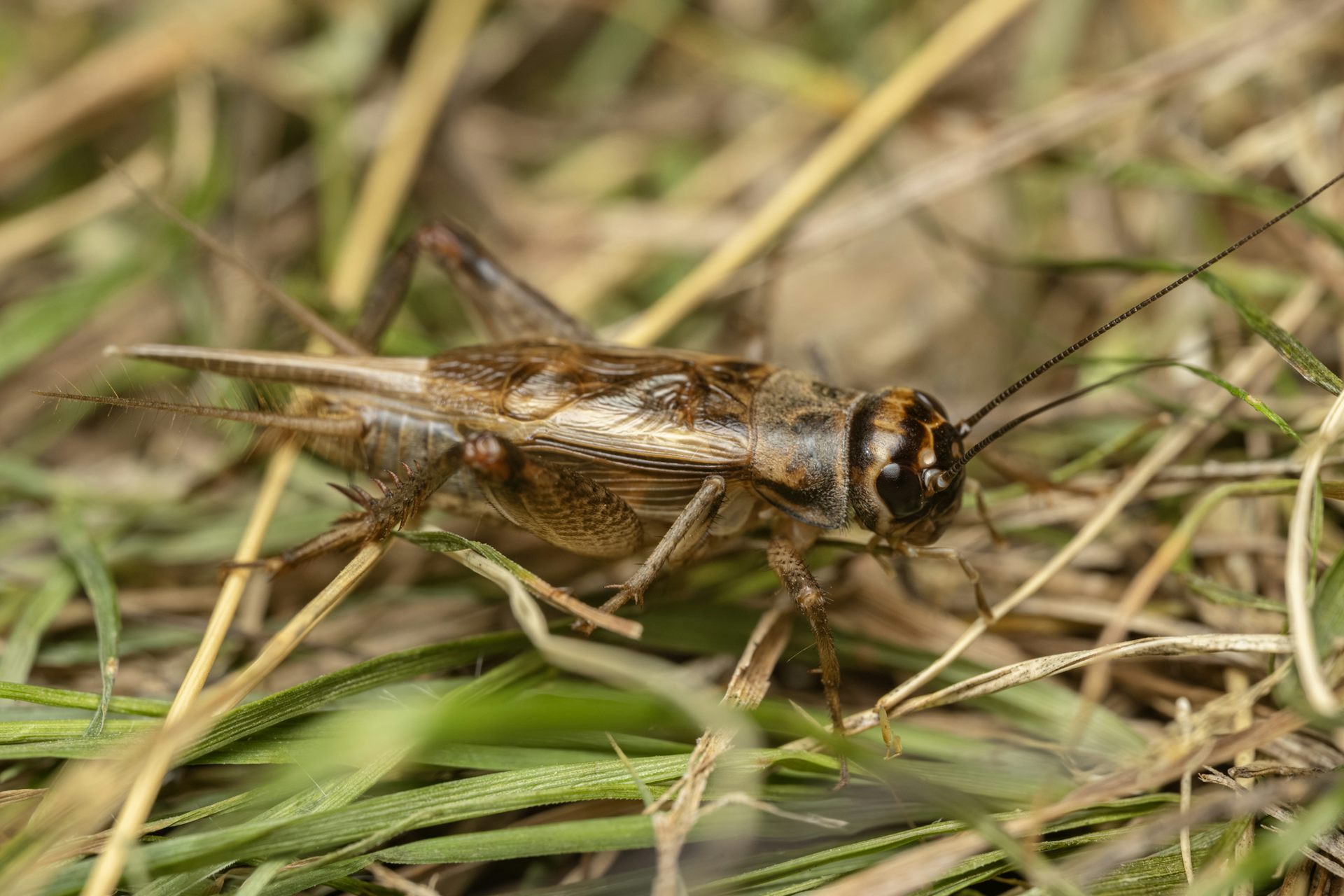
每年有3700亿只蟋蟀被饲养以供食物。科学家们发现它们可能感受疼痛。
370 billion crickets are farmed for food every year. Sc…
A new study supports a burgeoning challenge to the assumption that pain requires a brain anything like ours.
一项新的研究支持了对“疼痛需要像我们这样的大脑”这一假设的日益增长的挑战。
You’re cooking dinner, distracted, and your hand brushes a hot pan. Nerve signals race to your spinal cord and back to yank your arm away in a fraction of a second, with no thought required.
你正在做晚饭,心神不宁,手不小心碰到了热锅。神经信号奔向你的脊髓,然后瞬间将你的手臂猛地抽开,无需思考。
Then comes the pain. A sharp, spreading sting gives way to a pulsing ache, and you cradle your hand and run it under cold water until it subsides. That felt experience is distinct from the reflex that preceded it. While the reflex moved your body out of danger, pain drives you to protect the wound, recover, and learn to avoid similar mistakes in the future.
接着是疼痛。一阵尖锐的刺痛转变为一种搏动的酸痛,你捧着手,把它放在冷水下直到疼痛减轻。这种感受与先前的反射是不同的。虽然反射让你脱离了危险,但疼痛驱使你保护伤口、恢复,并学会在未来避免类似的错误。
We readily accept that other people feel pain by reading cues in their behaviour, like the inspection and nursing of an injury. We extend this to some animals too – a dog licking its paw or a cat favouring a limb rightly stir our sympathies. But what happens when we turn that lens on animals far less like us?
我们很容易接受通过观察他人的行为,比如检查和照料伤口,来判断他们是否感到疼痛。我们也把这种观念延伸到一些动物身上——狗舔爪子或猫偏爱某条肢体,这确实引起了我们的同情。但当我们把这种视角转向那些与我们差异更大的动物时,会发生什么?
In our new study, published in Proceedings of the Royal Society B, we searched for behavioural signs of pain in house crickets, one of the most widely farmed insects. After applying heat to an antenna, we found that crickets didn’t just reflexively flinch and recover. They nursed the harm, returning again and again to groom the affected site, much as we rub a burned hand.
在我们发表在《皇家学会学报B》上的新研究中,我们搜索了家蟋蟀——一种最广泛饲养的昆虫——的行为疼痛迹象。在给触角加热后,我们发现蟋蟀不仅仅是反射性地畏缩和恢复。它们会照料伤害,反复回到患处梳理,就像我们揉搓灼伤的手一样。
The frontiers of feeling
感觉的边界
French philosopher René Descartes considered animals unfeeling biological machines, and for centuries the circle of moral concern barely extended beyond our own species.
法国哲学家笛卡尔认为动物是无感的生物机器,几个世纪以来,道德关切的范围几乎只延伸到我们自己的物种。
But the boundaries have steadily crept outward. Recognition that mammals experience pain came first, followed by birds. Fish too, once assumed to lack the necessary brain structures, are now widely accepted as capable of pain-like states.
但这些界限却不断向外推进。首先是认识到哺乳动物会经历痛苦,然后是鸟类。鱼类也曾被认为缺乏必要的脑结构,但现在被广泛接受它们有能力体验类似痛苦的状态。
The leap into invertebrates has been greater and more contentious. Their nervous systems bear little resemblance to our own, so arguments from brain anatomy alone don’t carry us far. Instead, we look to behaviour. Does the animal respond to harm in ways that go beyond reflex, ways that are flexible, persistent, and sensitive to context?
进入无脊椎动物的飞跃更大,也更具争议。它们的神经系统与我们自身的系统几乎没有相似之处,因此仅凭大脑解剖学的论证并不能带我们走多远。相反,我们关注行为。动物是否以超越反射的方式、以灵活、持续和对环境敏感的方式对伤害做出反应?
Over the past decade, testable indicators for pain in non-humans have been developed and are increasingly accepted. These include learning from unpleasant events, trading off harms against rewards, and actively protecting the site of injury. Evidence meeting these criteria helped crabs and lobsters gain legal recognition as sentient under United Kingdom law in 2022.
在过去十年中,非人类痛苦的可检验指标已被开发出来并日益被接受。这些指标包括从不愉快的事件中学习、在风险与回报之间进行权衡,以及积极保护受伤部位。符合这些标准的证据帮助螃蟹和龙虾在2022年获得英国法律下的感知能力认可。
Among insects, the evidence has been accumulating fast. Yet most of this evidence comes from bees. Bumblebees weigh the risk of harm against the richness of a food reward, and groom the site of an injury. Honeybees learn to associate particular smells with harmful stimuli and avoid them.
在昆虫中,证据正在快速积累。然而,这些证据大多来自蜜蜂。熊蜂权衡伤害的风险与食物回报的丰富程度,并梳理受伤部位。蜜蜂学会将特定的气味与有害刺激联系起来并避免它们。
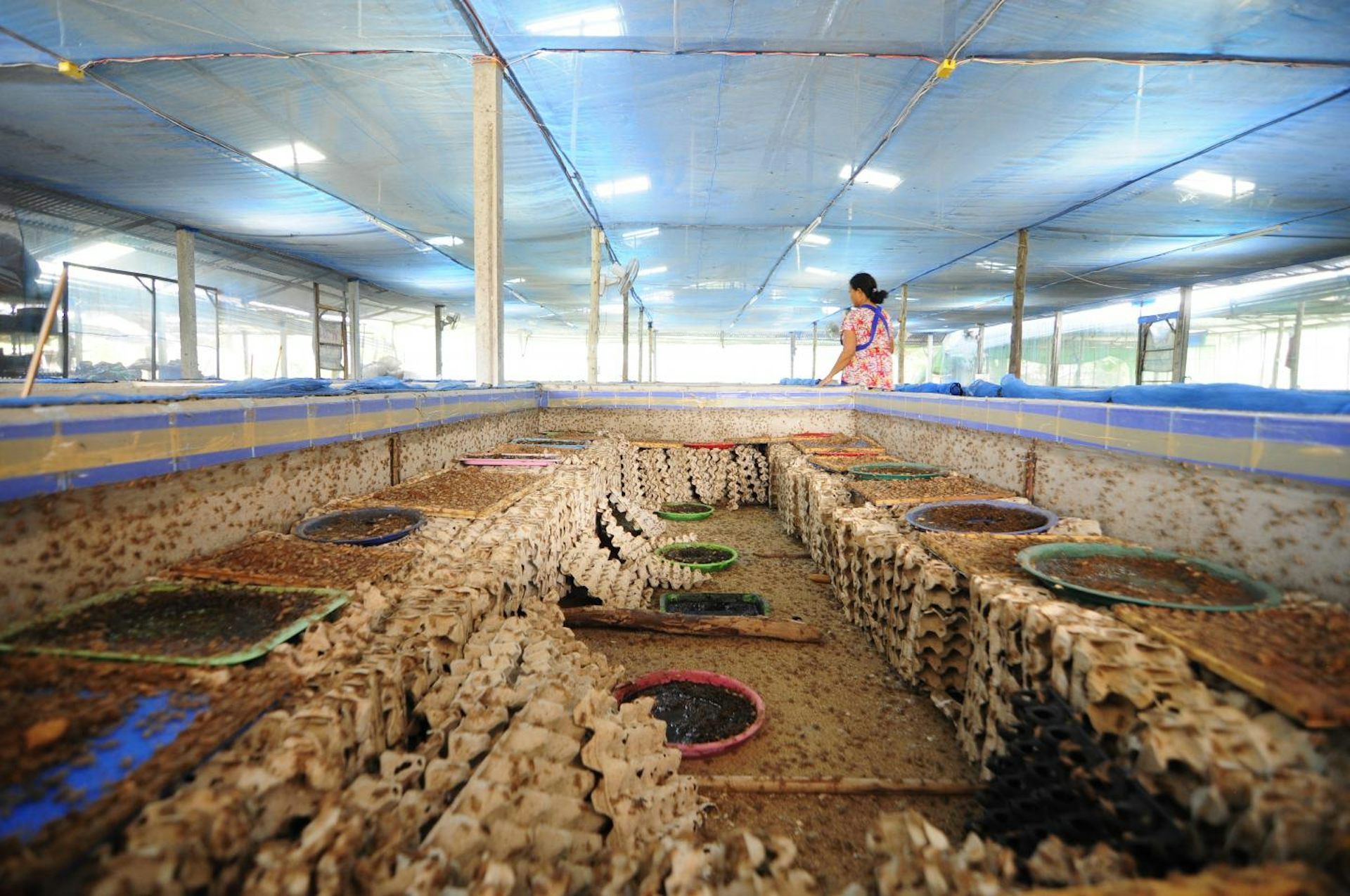
Far less attention has been paid to Orthoptera, the group that includes grasshoppers, locusts and crickets. That gap matters, because the house cricket (Acheta domesticus) is the world’s most widely farmed insect, with more than 370 billion reared annually.
对直翅目(Orthoptera)——包括蚱蜢、蝗虫和蟋蟀的群体——的关注要少得多。这个差距很重要,因为家蟋蟀(Acheta domesticus)是世界上最广泛饲养的昆虫,每年饲养超过3700亿只。
Do crickets feel pain?
蟋蟀会感到疼痛吗?
We tested 40 male and 40 female crickets, each experiencing three conditions in random order: a hot probe to a single antenna (65°C, to activate damage receptors but not cause lasting injury) , the same probe unheated, or no contact at all.
我们测试了40只雄性和40只雌性蟋蟀,它们以随机顺序经历了三种条件:用热探头接触单根触角(65°C,以激活损伤受体但不会造成持久伤害)、使用未加热的相同探头,或完全没有接触。
We filmed their behaviour for ten minutes. Observers scoring the footage did not know which treatment any animal had received.
我们拍摄了它们十分钟的行为。评分观察员不知道任何动物接受了哪种处理。
The results were clear. After the hot probe, crickets were more than twice as likely to groom the affected antenna compared to controls, and spent roughly four times longer doing so.
结果很明确。在热探头接触后,与对照组相比,蟋蟀梳理受损触角的可能性高出两倍多,并且花费了大约四倍的时间进行梳理。
Could this simply reflect general disturbance rather than targeted care? Unlikely: grooming was directed specifically at the heated side, not spread evenly across both antennae as it was after gentle touch or no contact.
这是否仅仅反映了普遍的干扰,而不是有针对性的照料?不太可能:梳理是专门针对被加热的一侧进行的,而不是像轻柔触摸或无接触时那样均匀地分布在两条触角上。
And the behaviour wasn’t a brief, reflexive reaction. It was elevated from the outset and tapered gradually over minutes, much like rubbing a burned hand as the felt sting slowly fades.
而且这种行为不是短暂的、反射性的反应。它从一开始就升高了,并在几分钟内逐渐减弱,就像摩擦灼伤的手一样,疼痛慢慢消退。
Small minds, big feelings
小小的头脑,巨大的感受
Subjective experience cannot be directly observed in any animal, not even humans.
主观体验无法在任何动物身上,甚至人类身上被直接观察到。
But we have shown crickets respond to harm in a way that satisfies a key criterion many scientists and philosophers use to infer pain: flexible, directed self-protection. Combined with the knowledge that crickets possess damage receptors, can learn to avoid harms, and respond less to injury under morphine, the weight of evidence for an inner life is growing.
但我们已经证明,蟋蟀对伤害的反应满足了许多科学家和哲学家用来推断痛苦的一个关键标准:灵活的、有方向的自我保护。结合蟋蟀拥有损伤受体、能够学习避免伤害,并在吗啡作用下对伤害的反应减弱的知识,关于内在生命的证据正日益增加。
The practical stakes are real. Hundreds of billions of farmed insects are slaughtered each year by freezing, boiling and baking. Pesticides kill trillions more, optimised for lethality with no consideration of potential suffering.
实际的风险是真实的。每年有数千亿的农场昆虫被通过冷冻、煮沸和烘烤而屠杀。杀虫剂杀死了数万亿的昆虫,它们被优化以达到致命效果,完全没有考虑到潜在的痛苦。
If we take a precautionary approach, credible evidence of suffering should motivate proportionate protections well before we are certain.
如果我们采取预防性的方法,那么可信的痛苦证据应该在我们确定之前就促使我们采取相称的保护措施。
Insects have been around for more than 400 million years and are far more behaviourally and cognitively sophisticated than once assumed. The question, then, may not be whether some insects feel, but why we ever assumed they couldn’t.
昆虫已经存在了超过四亿年,它们在行为和认知上比先前假设的要复杂得多。那么问题可能不在于一些昆虫是否感受痛苦,而在于我们为什么曾经假设它们感受不到。
Thomas White receives funding from The Australian Research Council, the Arthropoda Foundation, and The Australia and Pacific Science Foundation. He is a scientific advisor for the registered charity Invertebrates Australia.
托马斯·怀特从澳大利亚研究理事会、节肢动物基金会和澳大利亚及太平洋科学基金会获得资助。他担任注册慈善机构昆虫澳大利亚的科学顾问。
Kate Lynch receives funding from the Australian Research Council, the Arthropoda Foundation, and the Australia & Pacific Science Foundatio. She has previously received funding fromand the John Templeton Foundation.
凯特·林奇从澳大利亚研究理事会、节肢动物基金会和澳大利亚及太平洋科学基金会获得资助。她以前也从约翰·坦普尔顿基金会获得过资助。