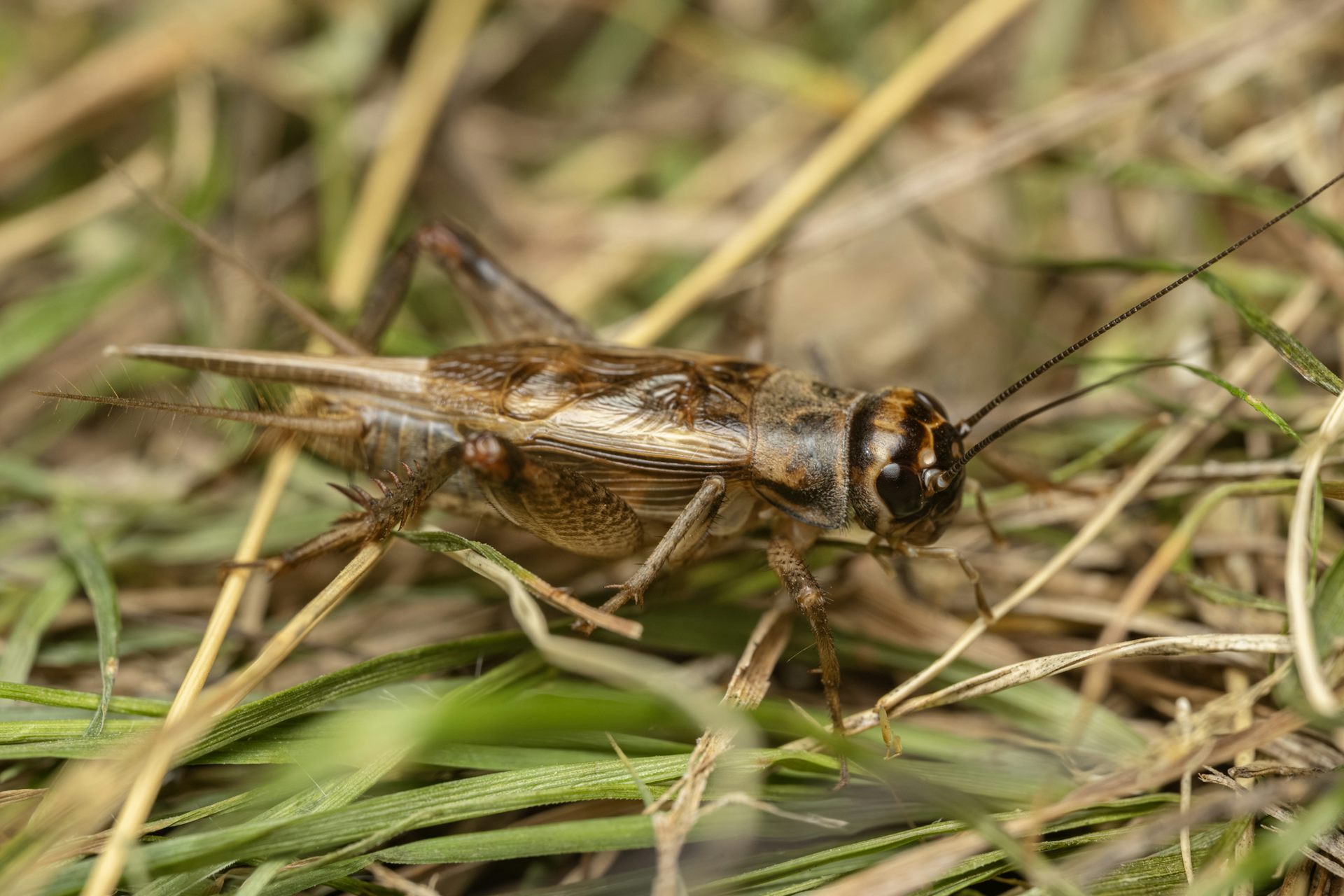
370 mil millones de grillos se crían para alimento cada año. Los científicos han descubierto que pueden sentir dolor
370 billion crickets are farmed for food every year. Scientists have discovered they may feel pain
A new study supports a burgeoning challenge to the assumption that pain requires a brain anything like ours.
Un nuevo estudio apoya un desafío creciente a la suposición de que el dolor requiere un cerebro como el nuestro.
You’re cooking dinner, distracted, and your hand brushes a hot pan. Nerve signals race to your spinal cord and back to yank your arm away in a fraction of a second, with no thought required.
Estás cocinando la cena, distraído, y tu mano roza una sartén caliente. Las señales nerviosas corren hacia tu médula espinal y de vuelta para arrancar tu brazo en una fracción de segundo, sin necesidad de pensar.
Then comes the pain. A sharp, spreading sting gives way to a pulsing ache, and you cradle your hand and run it under cold water until it subsides. That felt experience is distinct from the reflex that preceded it. While the reflex moved your body out of danger, pain drives you to protect the wound, recover, and learn to avoid similar mistakes in the future.
Luego viene el dolor. Una punzada aguda y expansiva da paso a una molestia palpitante, y acunades tu mano y la llevas bajo agua fría hasta que se calma. Esa experiencia sentida es distinta del reflejo que la precedió. Mientras el reflejo te sacó del peligro, el dolor te impulsa a proteger la herida, a recuperarte y a aprender a evitar errores similares en el futuro.
We readily accept that other people feel pain by reading cues in their behaviour, like the inspection and nursing of an injury. We extend this to some animals too – a dog licking its paw or a cat favouring a limb rightly stir our sympathies. But what happens when we turn that lens on animals far less like us?
Aceptamos fácilmente que otras personas sienten dolor leyendo señales en su comportamiento, como la inspección y el cuidado de una lesión. Extendemos esto a algunos animales también: un perro que lame su pata o un gato que favorece una extremidad realmente despiertan nuestras simpatías. ¿Pero qué sucede cuando ponemos esa lente en animales que son mucho menos como nosotros?
In our new study, published in Proceedings of the Royal Society B, we searched for behavioural signs of pain in house crickets, one of the most widely farmed insects. After applying heat to an antenna, we found that crickets didn’t just reflexively flinch and recover. They nursed the harm, returning again and again to groom the affected site, much as we rub a burned hand.
En nuestro nuevo estudio, publicado en los Proceedings of the Royal Society B, buscamos signos conductuales de dolor en los grillos domésticos, uno de los insectos más cultivados. Después de aplicar calor a una antena, descubrimos que los grillos no solo se sobresaltaron y se recuperaron por reflejo. Se cuidaron del daño, volviendo una y otra vez a acicalar el sitio afectado, tal como nosotros frotamos una mano quemada.
The frontiers of feeling
Las fronteras del sentimiento
French philosopher René Descartes considered animals unfeeling biological machines, and for centuries the circle of moral concern barely extended beyond our own species.
El filósofo francés René Descartes consideraba a los animales máquinas biológicas sin sentimiento, y durante siglos el círculo de preocupación moral apenas se extendió más allá de nuestra propia especie.
But the boundaries have steadily crept outward. Recognition that mammals experience pain came first, followed by birds. Fish too, once assumed to lack the necessary brain structures, are now widely accepted as capable of pain-like states.
Pero los límites se han extendido constantemente. El reconocimiento de que los mamíferos experimentan dolor fue lo primero, seguido por las aves. Incluso los peces, que una vez se asumió que carecían de las estructuras cerebrales necesarias, ahora son ampliamente aceptados como capaces de estados similares al dolor.
The leap into invertebrates has been greater and more contentious. Their nervous systems bear little resemblance to our own, so arguments from brain anatomy alone don’t carry us far. Instead, we look to behaviour. Does the animal respond to harm in ways that go beyond reflex, ways that are flexible, persistent, and sensitive to context?
El salto a los invertebrados ha sido mayor y más controvertido. Sus sistemas nerviosos no se parecen mucho a los nuestros, por lo que los argumentos basados únicamente en la anatomía cerebral no nos llevan muy lejos. En cambio, observamos el comportamiento. ¿El animal responde al daño de maneras que van más allá del reflejo, maneras que son flexibles, persistentes y sensibles al contexto?
Over the past decade, testable indicators for pain in non-humans have been developed and are increasingly accepted. These include learning from unpleasant events, trading off harms against rewards, and actively protecting the site of injury. Evidence meeting these criteria helped crabs and lobsters gain legal recognition as sentient under United Kingdom law in 2022.
Durante la última década, se han desarrollado indicadores comprobables del dolor en no humanos y son cada vez más aceptados. Estos incluyen aprender de eventos desagradables, intercambiar daños por recompensas y proteger activamente el lugar de la lesión. La evidencia que cumple estos criterios ayudó a que los cangrejos y langostas obtuvieran reconocimiento legal como seres sintientes bajo la ley del Reino Unido en 2022.
Among insects, the evidence has been accumulating fast. Yet most of this evidence comes from bees. Bumblebees weigh the risk of harm against the richness of a food reward, and groom the site of an injury. Honeybees learn to associate particular smells with harmful stimuli and avoid them.
Entre los insectos, la evidencia se ha estado acumulando rápidamente. Sin embargo, la mayor parte de esta evidencia proviene de las abejas. Las abejas melíferas sopesan el riesgo de daño frente a la riqueza de una recompensa alimentaria, y acicalan el lugar de una lesión. Las abejas obreras aprenden a asociar ciertos olores con estímulos dañinos y a evitarlos.
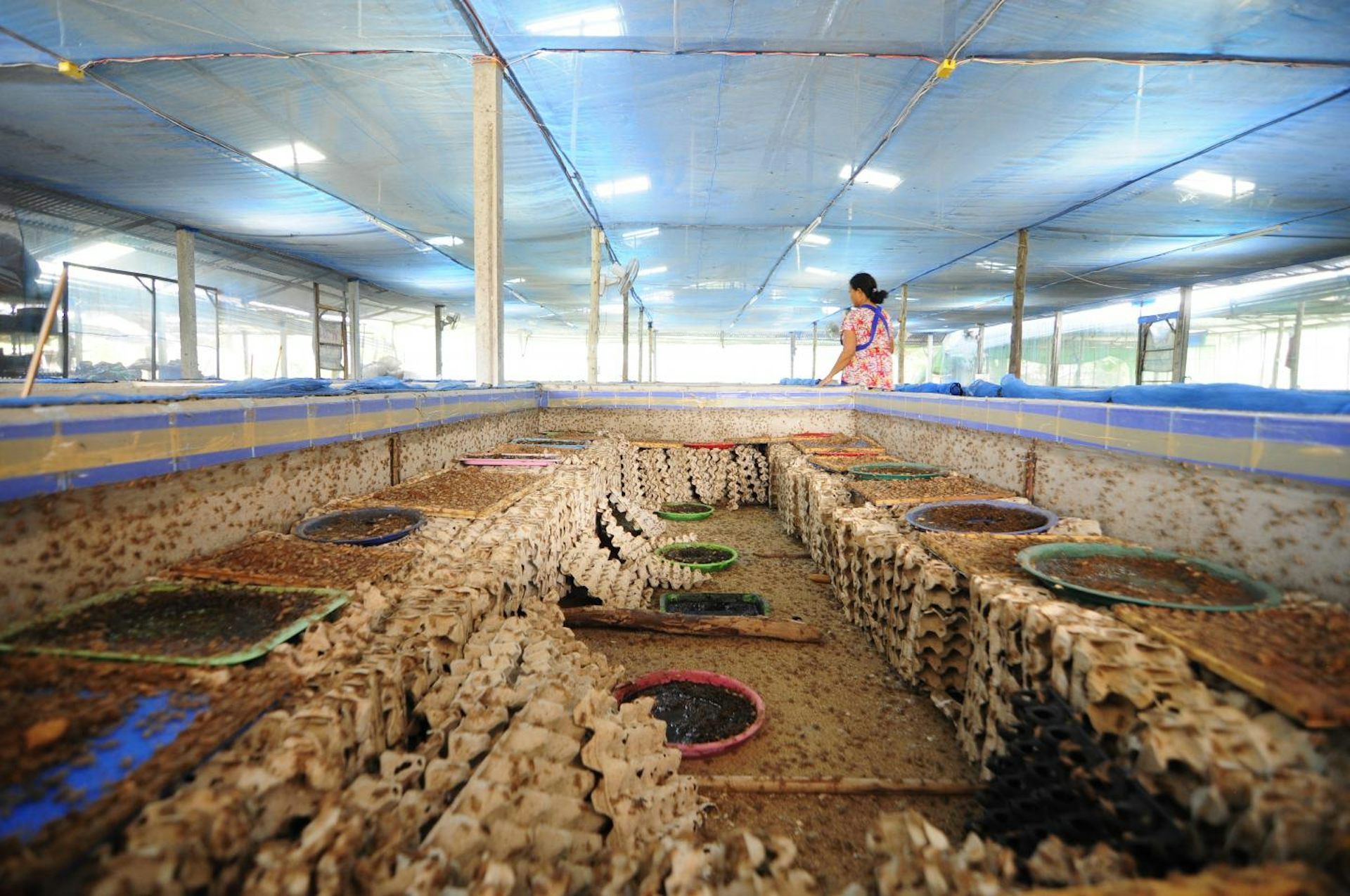
Far less attention has been paid to Orthoptera, the group that includes grasshoppers, locusts and crickets. That gap matters, because the house cricket (Acheta domesticus) is the world’s most widely farmed insect, with more than 370 billion reared annually.
Se ha prestado mucha menos atención a los Ortópteros, el grupo que incluye saltamontes, langostas y grillos. Esa brecha es importante, porque el grillo doméstico (Acheta domesticus) es el insecto más cultivado del mundo, con más de 370 mil millones criados anualmente.
Do crickets feel pain?
¿Sienten dolor los grillos?
We tested 40 male and 40 female crickets, each experiencing three conditions in random order: a hot probe to a single antenna (65°C, to activate damage receptors but not cause lasting injury) , the same probe unheated, or no contact at all.
Probamos 40 grillos machos y 40 hembras, cada uno experimentando tres condiciones en orden aleatorio: una sonda caliente en una sola antena (65°C, para activar los receptores de daño pero sin causar lesiones duraderas) , la misma sonda sin calentar, o ningún contacto en absoluto.
We filmed their behaviour for ten minutes. Observers scoring the footage did not know which treatment any animal had received.
Filmamos su comportamiento durante diez minutos. Los observadores que calificaron las imágenes no sabían qué tratamiento había recibido ningún animal.
The results were clear. After the hot probe, crickets were more than twice as likely to groom the affected antenna compared to controls, and spent roughly four times longer doing so.
Los resultados fueron claros. Después de la sonda caliente, los grillos fueron más de dos veces más propensos a acicalar la antena afectada en comparación con los controles, y pasaron aproximadamente cuatro veces más tiempo haciéndolo.
Could this simply reflect general disturbance rather than targeted care? Unlikely: grooming was directed specifically at the heated side, not spread evenly across both antennae as it was after gentle touch or no contact.
¿Podría esto simplemente reflejar una perturbación general en lugar de un cuidado dirigido? Improbable: el acicalamiento se dirigió específicamente al lado calentado, no se extendió uniformemente por ambas antenas como ocurrió después del tacto suave o la falta de contacto.
And the behaviour wasn’t a brief, reflexive reaction. It was elevated from the outset and tapered gradually over minutes, much like rubbing a burned hand as the felt sting slowly fades.
Y el comportamiento no fue una reacción breve y refleja. Se elevó desde el principio y se redujo gradualmente a lo largo de los minutos, muy parecido a frotar una mano quemada mientras la sensación se desvanece lentamente.
Small minds, big feelings
Mentes pequeñas, sentimientos grandes
Subjective experience cannot be directly observed in any animal, not even humans.
La experiencia subjetiva no se puede observar directamente en ningún animal, ni siquiera en los humanos.
But we have shown crickets respond to harm in a way that satisfies a key criterion many scientists and philosophers use to infer pain: flexible, directed self-protection. Combined with the knowledge that crickets possess damage receptors, can learn to avoid harms, and respond less to injury under morphine, the weight of evidence for an inner life is growing.
Pero hemos demostrado que los grillos responden al daño de una manera que satisface un criterio clave que muchos científicos y filósofos utilizan para inferir el dolor: la autoprotección flexible y dirigida. Combinado con el conocimiento de que los grillos poseen receptores de daño, pueden aprender a evitar daños y responder menos a las lesiones bajo morfina, el peso de la evidencia de una vida interior está creciendo.
The practical stakes are real. Hundreds of billions of farmed insects are slaughtered each year by freezing, boiling and baking. Pesticides kill trillions more, optimised for lethality with no consideration of potential suffering.
Las consecuencias prácticas son reales. Cada año se matan cientos de miles de millones de insectos de granja mediante congelación, ebullición y horneado. Los pesticidas matan billones más, optimizados para la letalidad sin considerar el sufrimiento potencial.
If we take a precautionary approach, credible evidence of suffering should motivate proportionate protections well before we are certain.
Si adoptamos un enfoque precautorio, la evidencia creíble del sufrimiento debe motivar protecciones proporcionales mucho antes de que seamos seguros.
Insects have been around for more than 400 million years and are far more behaviourally and cognitively sophisticated than once assumed. The question, then, may not be whether some insects feel, but why we ever assumed they couldn’t.
Los insectos han existido durante más de 400 millones de años y son mucho más sofisticados conductualmente y cognitivamente de lo que se asumía una vez. La pregunta, entonces, puede no ser si algunos insectos sienten, sino por qué asumimos que no podían.
Thomas White receives funding from The Australian Research Council, the Arthropoda Foundation, and The Australia and Pacific Science Foundation. He is a scientific advisor for the registered charity Invertebrates Australia.
Thomas White recibe financiación del Consejo de Investigación Australiano, la Fundación Arthropoda y la Fundación de Ciencia de Australia y el Pacífico. Es asesor científico de la organización benéfica registrada Invertebrates Australia.
Kate Lynch receives funding from the Australian Research Council, the Arthropoda Foundation, and the Australia & Pacific Science Foundatio. She has previously received funding fromand the John Templeton Foundation.
Kate Lynch recibe financiación del Consejo de Investigación Australiano, la Fundación Arthropoda y la Fundación de Ciencia de Australia y el Pacífico. Anteriormente ha recibido financiación de la Fundación John Templeton.
Read more
-

Cómo la música «pegadiza» está impulsada por patrones rítmicos
How ‘catchy’ music is driven by rhythmic patterns
-
Se ha confirmado el primer caso de gripe aviar H5N1 en Australia. ¿Qué significa esto?
The first case of H5N1 bird flu in Australia has been confirmed. What does this mean?