墨西哥湾流在一次古代寒潮期间突然向北移动——这对我们的未来是一个警示。
The Gulf Stream suddenly moved north during an ancient …
New evidence shows a major climate shift ‘within a lifetime’ 13,000 years ago.
新的证据显示,早在13,000年前,地球经历了一次“一代人时间内”发生的重大气候转变。
Around 13,000 years ago, as the world was emerging from the grip of the last ice age, much of the North Atlantic region plunged back into near-glacial conditions.
大约在13,000年前,随着世界摆脱末次冰期的影响,北大西洋的大部分地区又一次陷入了接近冰川的条件。
Sea ice expanded across the North Atlantic, reaching as far south as the Shetland Islands. Glaciers began to regrow in the Scottish Highlands, while winter temperatures across Europe and North America plummeted. Yet off the coast of Atlantic Canada, the ocean did the opposite.
北极海冰向外扩张,南达设得兰群岛。苏格兰高地开始重现冰川,而欧洲和北美洲的冬季气温急剧下降。然而,在加拿大大西洋沿岸,海洋却发生了相反的变化。
In our new study, published in the journal Nature Communications, we found evidence that waters off Nova Scotia, Canada, warmed as the Gulf Stream shifted hundreds of kilometres northward, while deep circulation also changed.
在我们发表于《自然通讯》(Nature Communications)的新研究中,我们发现有证据表明,随着墨西哥湾流向北移动了数百公里,加拿大新斯科舍省附近的洋水变暖,同时深层环流也发生了变化。
It is the first direct evidence that this vital current responded in such a way during a period of abrupt climate change that rearranged Atlantic Ocean circulation.
这是首个直接证据,表明在一次重新排列大西洋环流的剧烈气候变化时期,这条重要的洋流曾以这种方式作出反应。
The finding lends support to the climate models that predict a similar northward shift in the future if the Atlantic Meridional Overturning Circulation (Amoc) weakens – a trend that has probably already begun.
这一发现支持了气候模型,这些模型预测如果大西洋经向翻转环流(Amoc)减弱,未来可能会发生类似的向北位移——而这种趋势可能已经开始。
Why the Gulf Stream matters
墨西哥湾暖流为何重要
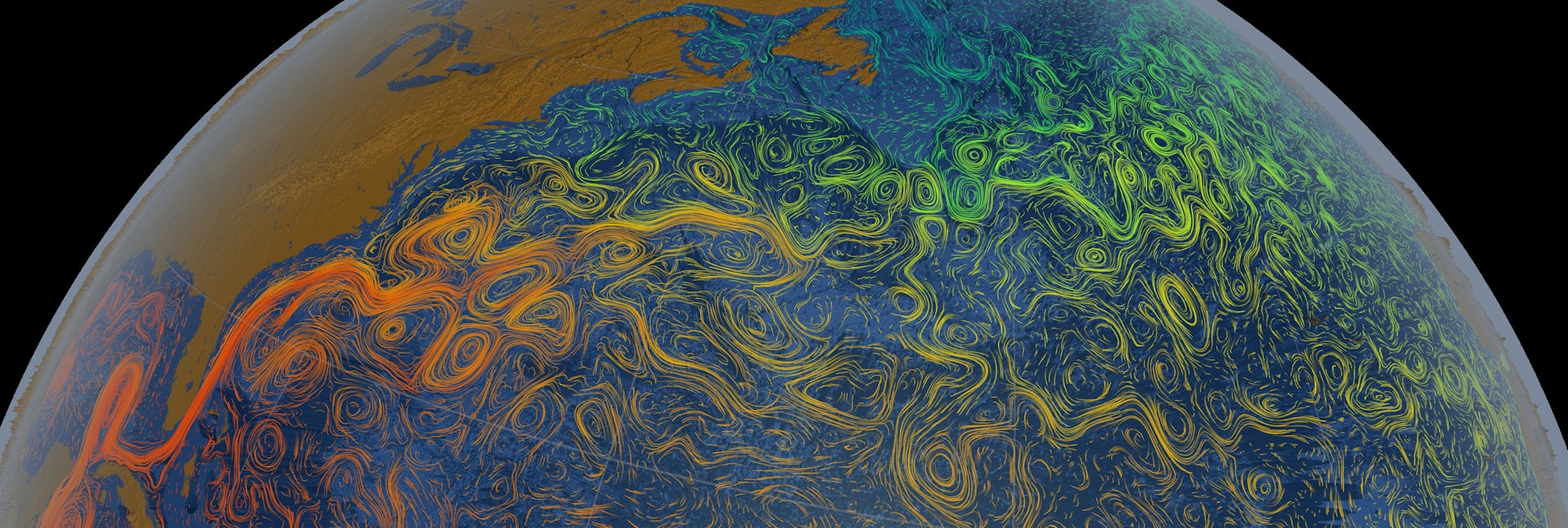
The Gulf Stream transports warm tropical waters northwards along the eastern coast of North America before turning north-east towards Europe. In doing so, it forms part of the Amoc, a vast system of ocean currents that redistributes heat, nutrients and carbon around the Atlantic Ocean. Consequently, the Amoc plays a major role in regulating the climate. In particular, the northern arm of the Gulf Stream helps keep western Europe much milder than other regions at similar latitudes.
墨西哥湾暖流将温暖的热带水向北输送到北美东海岸,然后转向东北方向进入欧洲。在此过程中,它构成了大西洋经向翻转环流(Amoc)的一部分,这是一个巨大的洋流系统,负责在大西洋周围重新分配热量、养分和碳。因此,大洋环流在调节气候方面发挥着主要作用。特别是,墨西哥湾暖流的北部分支有助于使西欧比其他纬度相似的地区更温和。
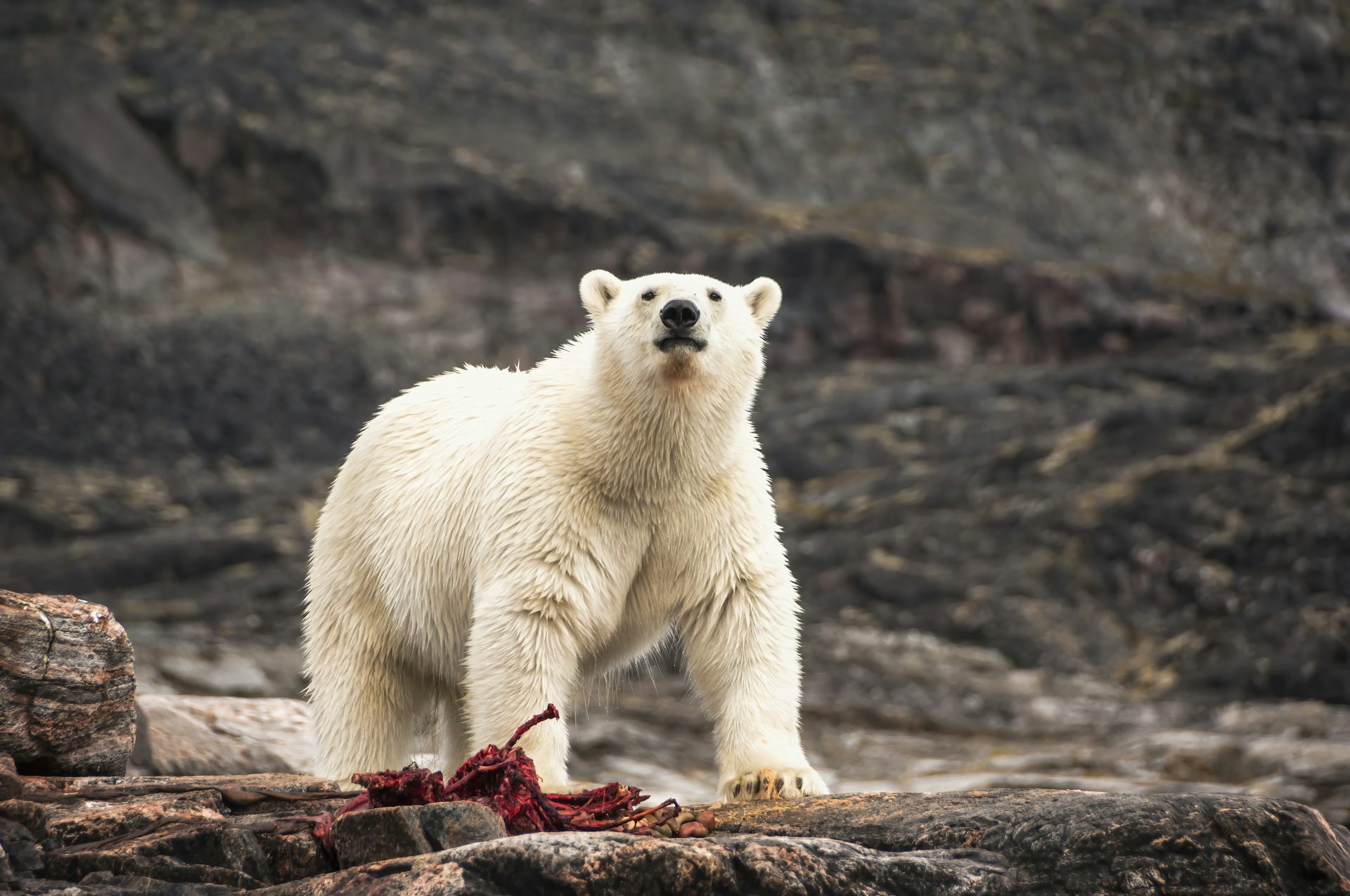
Scientists are increasingly concerned about the future of this circulation system. As the climate warms and extra freshwater (from melting ice) enters the North Atlantic, surface waters become less dense and therefore less able to sink. Most climate models project that these changes weaken the Amoc. Observations suggest that this weakening has already begun, but it is predicted to weaken much more as the 21st century progresses. However, direct evidence showing how the system responds to such major disruptions remains relatively limited.
科学家们对这一环流系统的未来越来越担忧。随着气候变暖和额外的淡水(来自融冰)进入北大西洋,表层水变得密度减小,因此下沉能力也随之降低。大多数气候模型预测,这些变化正在削弱大洋环流。观测表明,这种减弱已经开始,但预计随着21世纪的推进,它会进一步减弱。然而,关于该系统如何应对此类重大扰动的直接证据仍然相对有限。
To answer that question, paleoceanographers like us turn to the past.
为了回答这个问题,像我们这样的古海洋学家就将目光投向了过去。
A natural experiment from the end of the last ice age
末次冰期结束时的一次自然实验
The Younger Dryas was one of the most dramatic episodes of abrupt climate change in Earth’s recent history. As the planet emerged from the last ice age, warming trends across much of the North Atlantic region abruptly reversed. European summer temperatures declined by around 4°C–8°C in less than a century, while Greenland cooled by up to 10°C within just a few decades. The effects rippled far beyond the North Atlantic, weakening monsoon systems across Africa and Asia.
年轻干冷期是地球近期历史上一次最剧烈的气候突变事件。随着地球从上一个冰期中走出,北大西洋大部分地区的升温趋势突然逆转。欧洲夏季气温在不到一个世纪的时间内下降了约4°C至8°C,而格陵兰岛在短短几十年内冷却了高达10°C。这些影响远远超出了北大西洋范围,削弱了非洲和亚洲的季风系统。
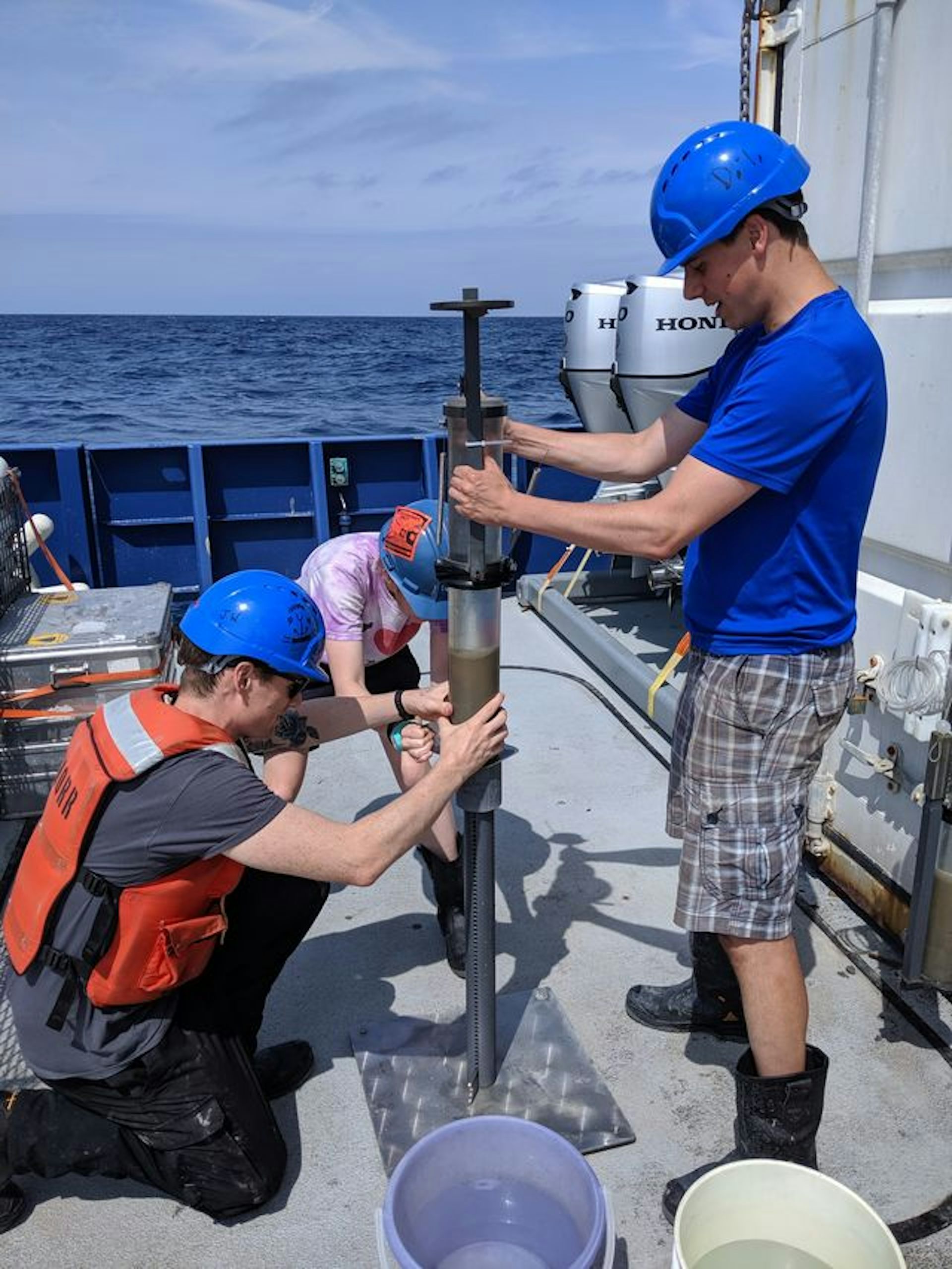
To understand how the ocean responded, we analysed sediment extracted from the seabed off Nova Scotia. Microscopic fossil shells and sediment grains preserved within this marine mud can reveal what the sea would have been like at the time it formed. We then reconstructed changes in both surface and deep Atlantic circulation before, during, and after the Younger Dryas.
为了了解海洋是如何做出反应的,我们分析了从新斯科舍省附近海床提取的沉积物。保存在这种海洋泥中的微观化石贝壳和沉积颗粒可以揭示该海域形成时的海水状况。然后,我们在年轻干冷期之前、期间和之后重建了大西洋表层和深层环流的变化。
An unexpected warming signal
意外的变暖信号
What we found surprised us. While Greenland and much of the subpolar North Atlantic cooled rapidly, waters off Atlantic Canada warmed instead, by as much as 4°C–5°C.
我们的发现令我们感到惊讶。虽然格陵兰岛和大部分亚极地北大西洋迅速冷却,但相反,大西洋加拿大沿岸的水域却升温了,增幅高达4°C至5°C。
The most likely explanation is that the Gulf Stream migrated northwards, bringing warm subtropical waters closer to the Canadian coastline.
最可能的解释是墨西哥湾流向北迁移了,将温暖的亚热带水域带得更靠近加拿大海岸线。
Previous climate-model simulations had predicted that a weakening of one of the Amoc’s deep currents could trigger exactly this response. Until now, however, there had been little direct geological evidence that it had happened before.
以前的气候模型模拟曾预测过,大西洋经向翻转环流(Amoc)深层洋流之一减弱,可能会引发正是这种反应。然而,直到现在,我们都没有直接的地质证据表明这种情况之前发生过。
Our study provides real-world evidence for a process that climate models have long proposed. That matters because it shows that large reorganisations of Atlantic circulation are not just theoretical possibilities – they have happened before.
我们的研究为气候模型长期提出的一个过程提供了现实世界的证据。这一点很重要,因为它表明大西洋环流的大规模重组并非仅仅是理论上的可能性——它以前已经发生过。
What can the past tell us about the future?
过去能告诉我们什么关于未来?
No past climate event is a perfect analogue for modern climate change. The Younger Dryas occurred under very different conditions from today. Massive ice sheets still covered much of Canada and Scandinavia, and the sea level was tens of metres lower than at present.
历史上没有任何一次气候事件可以完美地类比现代气候变化。年轻干寂期(Younger Dryas)发生时,条件与今天截然不同。当时巨大的冰盖仍覆盖着加拿大和斯堪的纳维亚的大部分地区,海平面也比现在低了数十米。
Nevertheless, the physical links connecting the different components of the North Atlantic circulation system are likely to be the same.
然而,连接北大西洋环流系统不同组成部分的物理联系可能仍然是相同的。
Our study does not suggest that the Amoc completely collapsed during the Younger Dryas, nor does it tell us whether such a collapse is likely in the future. Instead, it reveals a more nuanced picture in which various components of the North Atlantic circulation system changed in different ways. Rather than producing a uniform response, this reorganisation created a patchwork of warming and cooling across the North Atlantic.
我们的研究并未表明在年轻干寂期期间大西洋经向翻转环流(AMOC)完全崩溃,也未告诉我们未来是否可能发生此类崩溃。相反,它揭示了一个更细致入微的图景:北大西洋环流系统的各个组成部分以不同的方式发生了变化。这种重组并没有产生统一的响应,而是在整个北大西洋地区造成了暖化和冷却交错共存的“拼贴画”。
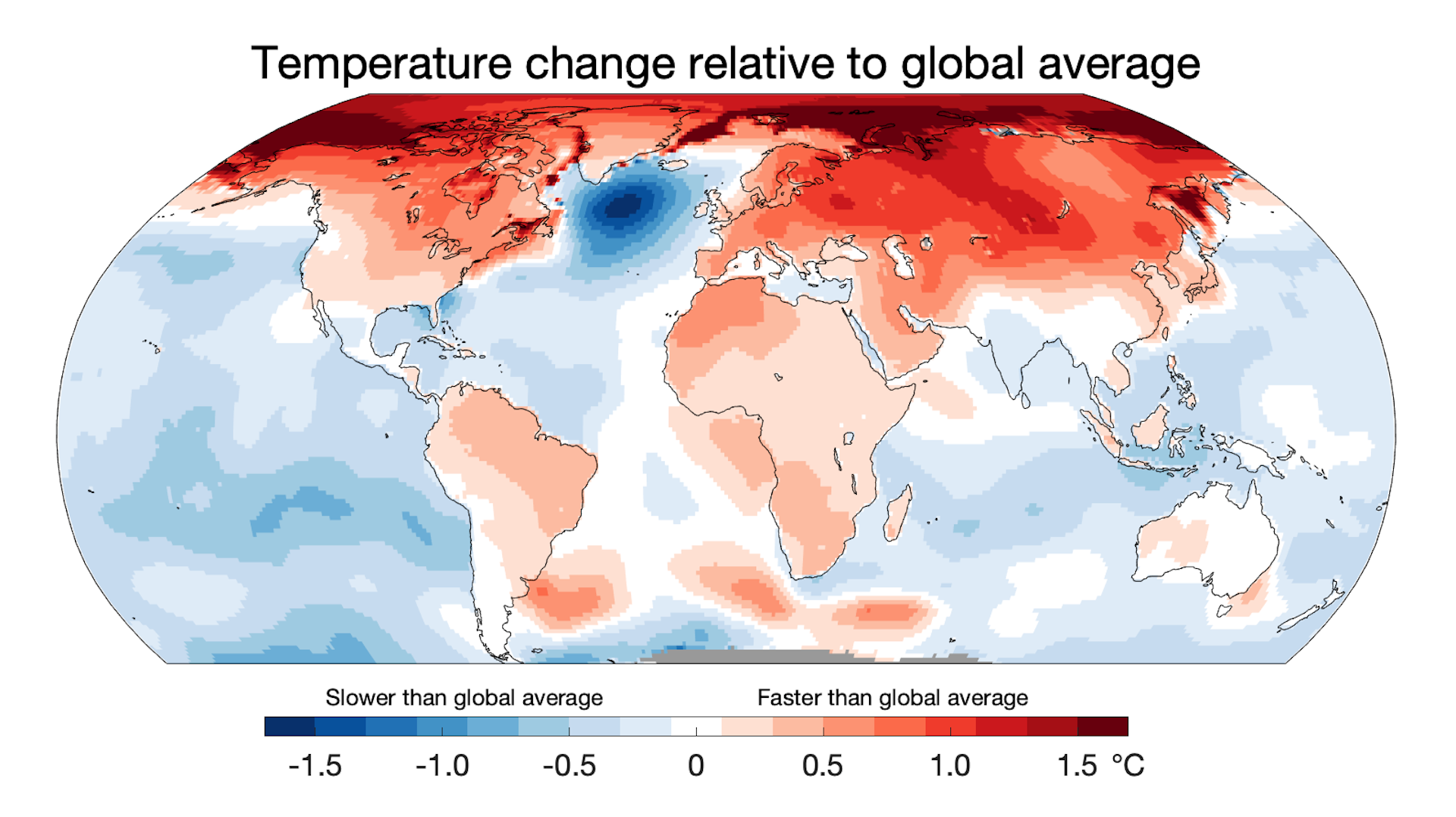
Similar patterns have also emerged over the last 150 years, with a relative “warming hole” developing in the ocean south of Greenland while regions closer to the Gulf Stream have warmed more rapidly. Our findings provide real-world evidence that these contrasting patterns are closely linked to changes in ocean circulation.
在过去的150年里也出现了类似的模式,格陵兰南部的大洋区域出现了一个相对的“变暖空洞”,而更靠近墨西哥湾流的地区则升温得更快。我们的研究结果提供了实证证据,表明这些对比鲜明的模式与海洋环流的变化密切相关。
Looking to the future, scientists are concerned that continued human-caused warming could trigger major changes in North Atlantic circulation, leading to shifts in ocean temperature patterns, which would disrupt weather and climate across the globe. Examining how the Atlantic behaved 13,000 years ago can help us recognise the warning signs of major changes before they happen again.
展望未来,科学家们担心持续的人为变暖可能会引发北大西洋环流的重大变化,导致海洋温度模式发生偏移,从而扰乱全球的天气和气候。研究13,000年前大西洋的行为,可以帮助我们识别出重大的变化警示信号,以便在它们再次发生之前做好准备。
Critically, our study suggests that such reorganisations can unfold over about a century, with individual components of the circulation changing within just a few decades – within a human lifetime.
关键的是,我们的研究表明,此类重组可能在约一个世纪内展开,环流的各个组成部分可能仅在几十年内发生变化——这在一个人的生命周期之内。
By showing how different parts of the Atlantic circulation interacted during a past episode of abrupt climate change, our findings provide an important benchmark for testing climate models. The deeper understanding we have gained into how the interconnected Atlantic system behaves will also help us with the very challenging task of developing early-warning systems for future circulation changes and potential climate tipping points.
通过展示大西洋环流在过去一次突然气候变化事件期间不同部分是如何相互作用的,我们的发现为测试气候模型提供了一个重要的基准。我们对互联的大西洋系统行为所获得的更深入理解,也将有助于我们完成一项极具挑战性的任务:开发未来环流变化和潜在气候临界点的预警系统。
Alice Carter-Champion receives funding from the Natural Environment Research Council (NERC) , the Royal Society’s project “Rethinking Palaeoclimate for Society” and the Leverhulme Trust.
Alice Carter-Champion 获得了自然环境研究理事会(NERC)、英国皇家学会“为社会重新思考古气候”项目以及莱弗勒姆信托基金的资助。
Fangjingcheng Zhu receives funding from the INSPIRE NERC Doctoral Training Partnership and NERC project ReconAMOC.
Fangjingcheng Zhu 获得了 INSPIRE NERC 博士培训伙伴关系和 NERC 项目 ReconAMOC 的资助。
Jack Wharton receives funding from the Natural Environmental Research Council (NERC) , the European Union’s Horizon Europe project EPOC, and the Advanced Research + Invention Agency (ARIA) project VERIFY.
Jack Wharton 获得了自然环境研究理事会(NERC)、欧盟地平线欧洲计划 EPOC 以及先进研究+发明机构 (ARIA) 项目 VERIFY 的资助。