A Corrente do Golfo moveu-se repentinamente para o norte durante um período de frio antigo – e é um aviso para o nosso futuro
The Gulf Stream suddenly moved north during an ancient cold snap – and it’s a warning for our future
New evidence shows a major climate shift ‘within a lifetime’ 13,000 years ago.
Novas evidências mostram uma grande mudança climática ‘dentro de uma vida’ há 13.000 anos.
Around 13,000 years ago, as the world was emerging from the grip of the last ice age, much of the North Atlantic region plunged back into near-glacial conditions.
Há cerca de 13.000 anos, à medida que o mundo emergia do domínio da última era glacial, grande parte da região do Atlântico Norte mergulhou novamente em condições quase glaciais.
Sea ice expanded across the North Atlantic, reaching as far south as the Shetland Islands. Glaciers began to regrow in the Scottish Highlands, while winter temperatures across Europe and North America plummeted. Yet off the coast of Atlantic Canada, the ocean did the opposite.
O gelo marinho se expandiu pelo Atlântico Norte, alcançando tão ao sul quanto as Ilhas Shetland. Os glaciares começaram a repovoar nas Terras Altas da Escócia, enquanto as temperaturas de inverno em toda a Europa e América do Norte caíram drasticamente. No entanto, na costa do Canadá Atlântico, o oceano fez o oposto.
In our new study, published in the journal Nature Communications, we found evidence that waters off Nova Scotia, Canada, warmed as the Gulf Stream shifted hundreds of kilometres northward, while deep circulation also changed.
Em nosso novo estudo, publicado na revista Nature Communications, encontramos evidências de que as águas perto de Nova Escócia, Canadá, aqueceram à medida que a Corrente do Golfo se deslocou centenas de quilômetros para o norte, enquanto a circulação profunda também mudou.
It is the first direct evidence that this vital current responded in such a way during a period of abrupt climate change that rearranged Atlantic Ocean circulation.
É a primeira evidência direta de que esta corrente vital respondeu dessa maneira durante um período de mudança climática abrupta que reorganizou a circulação do Oceano Atlântico.
The finding lends support to the climate models that predict a similar northward shift in the future if the Atlantic Meridional Overturning Circulation (Amoc) weakens – a trend that has probably already begun.
A descoberta apoia os modelos climáticos que preveem um deslocamento semelhante para o norte no futuro caso a Circulação Meridional de Retorno do Atlântico (AMOC) enfraqueça – uma tendência que provavelmente já começou.
Why the Gulf Stream matters
Por que a Corrente do Golfo é importante
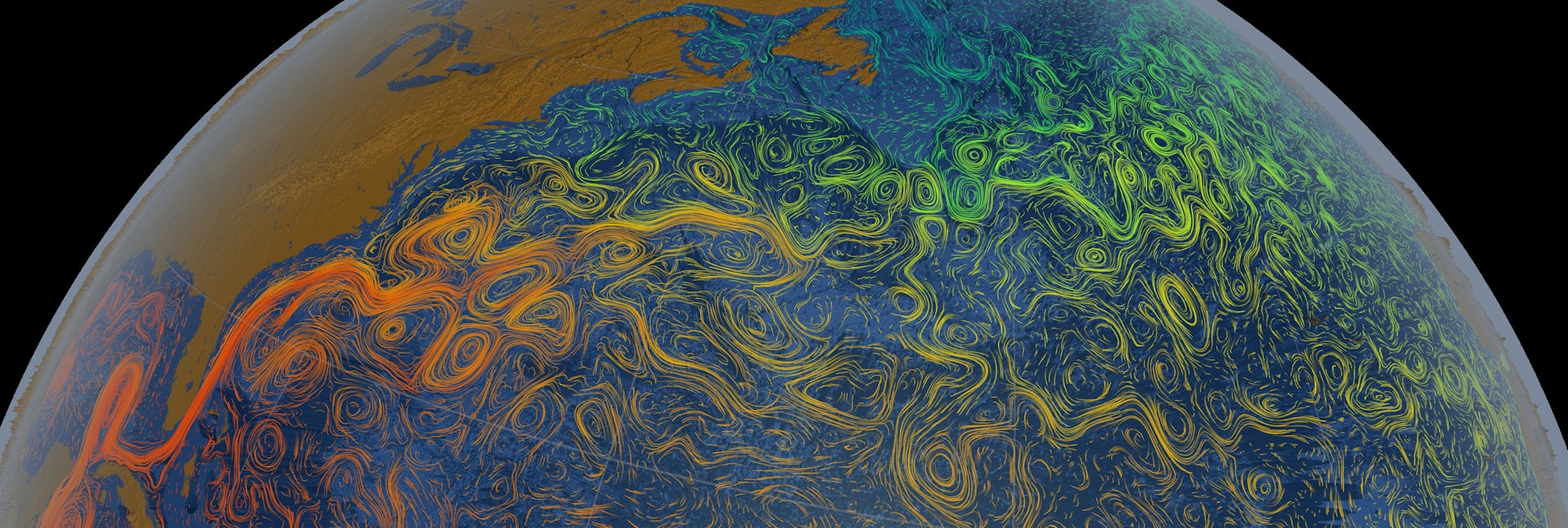
The Gulf Stream transports warm tropical waters northwards along the eastern coast of North America before turning north-east towards Europe. In doing so, it forms part of the Amoc, a vast system of ocean currents that redistributes heat, nutrients and carbon around the Atlantic Ocean. Consequently, the Amoc plays a major role in regulating the climate. In particular, the northern arm of the Gulf Stream helps keep western Europe much milder than other regions at similar latitudes.
A Corrente do Golfo transporta águas tropicais quentes para o norte ao longo da costa leste da América do Norte antes de virar nordeste em direção à Europa. Ao fazer isso, ela forma parte da AMOC (Circulação Meridional de Renascimento dos Atlânticos) , um vasto sistema de correntes oceânicas que redistribui calor, nutrientes e carbono pelo Oceano Atlântico. Consequentemente, a AMOC desempenha um papel importante na regulação do clima. Em particular, o braço norte da Corrente do Golfo ajuda a manter a Europa Ocidental muito mais amena do que outras regiões em latitudes semelhantes.

Scientists are increasingly concerned about the future of this circulation system. As the climate warms and extra freshwater (from melting ice) enters the North Atlantic, surface waters become less dense and therefore less able to sink. Most climate models project that these changes weaken the Amoc. Observations suggest that this weakening has already begun, but it is predicted to weaken much more as the 21st century progresses. However, direct evidence showing how the system responds to such major disruptions remains relatively limited.
Os cientistas estão cada vez mais preocupados com o futuro deste sistema de circulação. À medida que o clima aquece e água doce extra (do derretimento do gelo) entra no Atlântico Norte, as águas superficiais se tornam menos densas e, portanto, menos capazes de afundar. A maioria dos modelos climáticos projeta que essas mudanças enfraquecem a AMOC. As observações sugerem que esse enfraquecimento já começou, mas prevê-se que ele diminua muito mais à medida que o século XXI avança. No entanto, evidências diretas de como o sistema responde a grandes perturbações permanecem relativamente limitadas.
To answer that question, paleoceanographers like us turn to the past.
Para responder a essa pergunta, paleooceanógrafos como nós voltamos-nos ao passado.
A natural experiment from the end of the last ice age
Uma experiência natural do fim da última era glacial
The Younger Dryas was one of the most dramatic episodes of abrupt climate change in Earth’s recent history. As the planet emerged from the last ice age, warming trends across much of the North Atlantic region abruptly reversed. European summer temperatures declined by around 4°C–8°C in less than a century, while Greenland cooled by up to 10°C within just a few decades. The effects rippled far beyond the North Atlantic, weakening monsoon systems across Africa and Asia.
O Younger Dryas foi um dos episódios mais dramáticos de mudança climática abrupta na história recente da Terra. À medida que o planeta emergia do último período glacial, as tendências de aquecimento em grande parte da região do Atlântico Norte se revertem abruptamente. As temperaturas de verão europeias caíram em cerca de 4°C–8°C em menos de um século, enquanto a Groenlândia esfriou até 10°C em apenas algumas décadas. Os efeitos reverberaram muito além do Atlântico Norte, enfraquecendo os sistemas de monções pela África e Ásia.
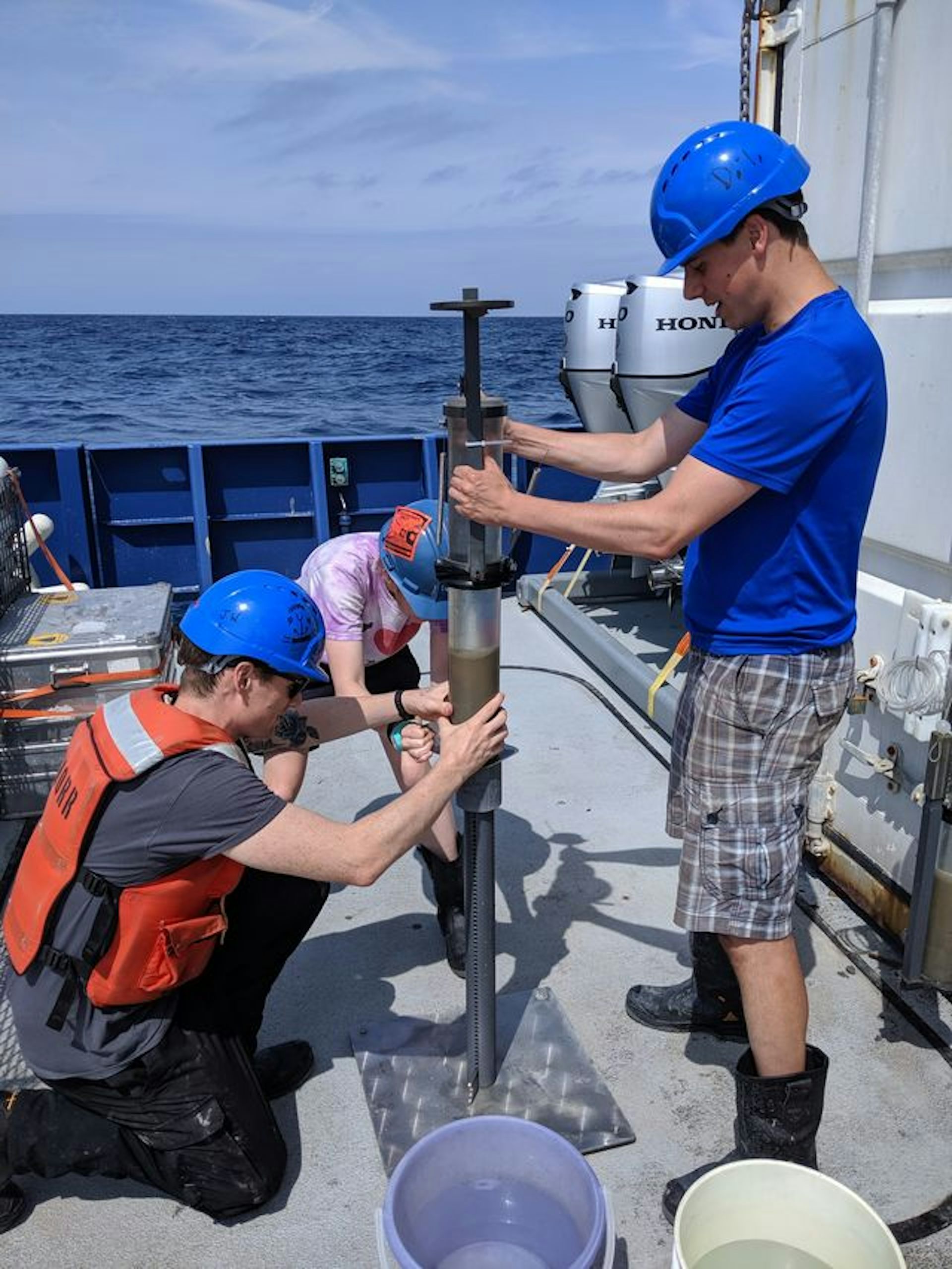
To understand how the ocean responded, we analysed sediment extracted from the seabed off Nova Scotia. Microscopic fossil shells and sediment grains preserved within this marine mud can reveal what the sea would have been like at the time it formed. We then reconstructed changes in both surface and deep Atlantic circulation before, during, and after the Younger Dryas.
Para entender como o oceano respondeu, analisamos sedimento extraído do fundo do mar de Nova Escócia. Conchas fósseis microscópicas e grãos de sedimento preservados nesta lama marinha podem revelar como era o mar no momento em que se formou. Em seguida, reconstruímos as mudanças tanto na circulação superficial quanto na profunda do Atlântico antes, durante e depois do Younger Dryas.
An unexpected warming signal
Um sinal de aquecimento inesperado
What we found surprised us. While Greenland and much of the subpolar North Atlantic cooled rapidly, waters off Atlantic Canada warmed instead, by as much as 4°C–5°C.
O que encontramos nos surpreendeu. Enquanto a Groenlândia e grande parte do Atlântico Norte subpolar esfriaram rapidamente, as águas ao largo do Canadá Atlântico aqueceram em vez disso, em até 4°C–5°C.
The most likely explanation is that the Gulf Stream migrated northwards, bringing warm subtropical waters closer to the Canadian coastline.
A explicação mais provável é que a Corrente do Golfo migrou para o norte, trazendo águas subtropicais quentes mais perto da costa canadense.
Previous climate-model simulations had predicted that a weakening of one of the Amoc’s deep currents could trigger exactly this response. Until now, however, there had been little direct geological evidence that it had happened before.
Simulações anteriores de modelos climáticos haviam previsto que um enfraquecimento de uma das correntes profundas da Amoc poderia desencadear exatamente essa resposta. Até agora, no entanto, havia pouca evidência geológica direta de que isso já tivesse acontecido antes.
Our study provides real-world evidence for a process that climate models have long proposed. That matters because it shows that large reorganisations of Atlantic circulation are not just theoretical possibilities – they have happened before.
Nosso estudo fornece evidências do mundo real para um processo que os modelos climáticos propuseram há muito tempo. Isso é importante porque mostra que grandes reorganizações da circulação atlântica não são apenas possibilidades teóricas – elas já aconteceram antes.
What can the past tell us about the future?
O que o passado pode nos dizer sobre o futuro?
No past climate event is a perfect analogue for modern climate change. The Younger Dryas occurred under very different conditions from today. Massive ice sheets still covered much of Canada and Scandinavia, and the sea level was tens of metres lower than at present.
Nenhum evento climático passado é um análogo perfeito para a mudança climática moderna. O Younger Dryas ocorreu sob condições muito diferentes das de hoje. Grandes camadas de gelo ainda cobriam grande parte do Canadá e da Escandinávia, e o nível do mar era dezenas de metros mais baixo do que no presente.
Nevertheless, the physical links connecting the different components of the North Atlantic circulation system are likely to be the same.
No entanto, os elos físicos que conectam os diferentes componentes do sistema de circulação do Atlântico Norte provavelmente serão os mesmos.
Our study does not suggest that the Amoc completely collapsed during the Younger Dryas, nor does it tell us whether such a collapse is likely in the future. Instead, it reveals a more nuanced picture in which various components of the North Atlantic circulation system changed in different ways. Rather than producing a uniform response, this reorganisation created a patchwork of warming and cooling across the North Atlantic.
Nosso estudo não sugere que a Amoc tenha colapsado completamente durante o Younger Dryas, nem nos diz se um colapso como esse é provável no futuro. Em vez disso, ele revela um quadro mais matizado em que vários componentes do sistema de circulação do Atlântico Norte mudaram de maneiras diferentes. Em vez de produzir uma resposta uniforme, essa reorganização criou um mosaico de aquecimento e resfriamento pelo Atlântico Norte.
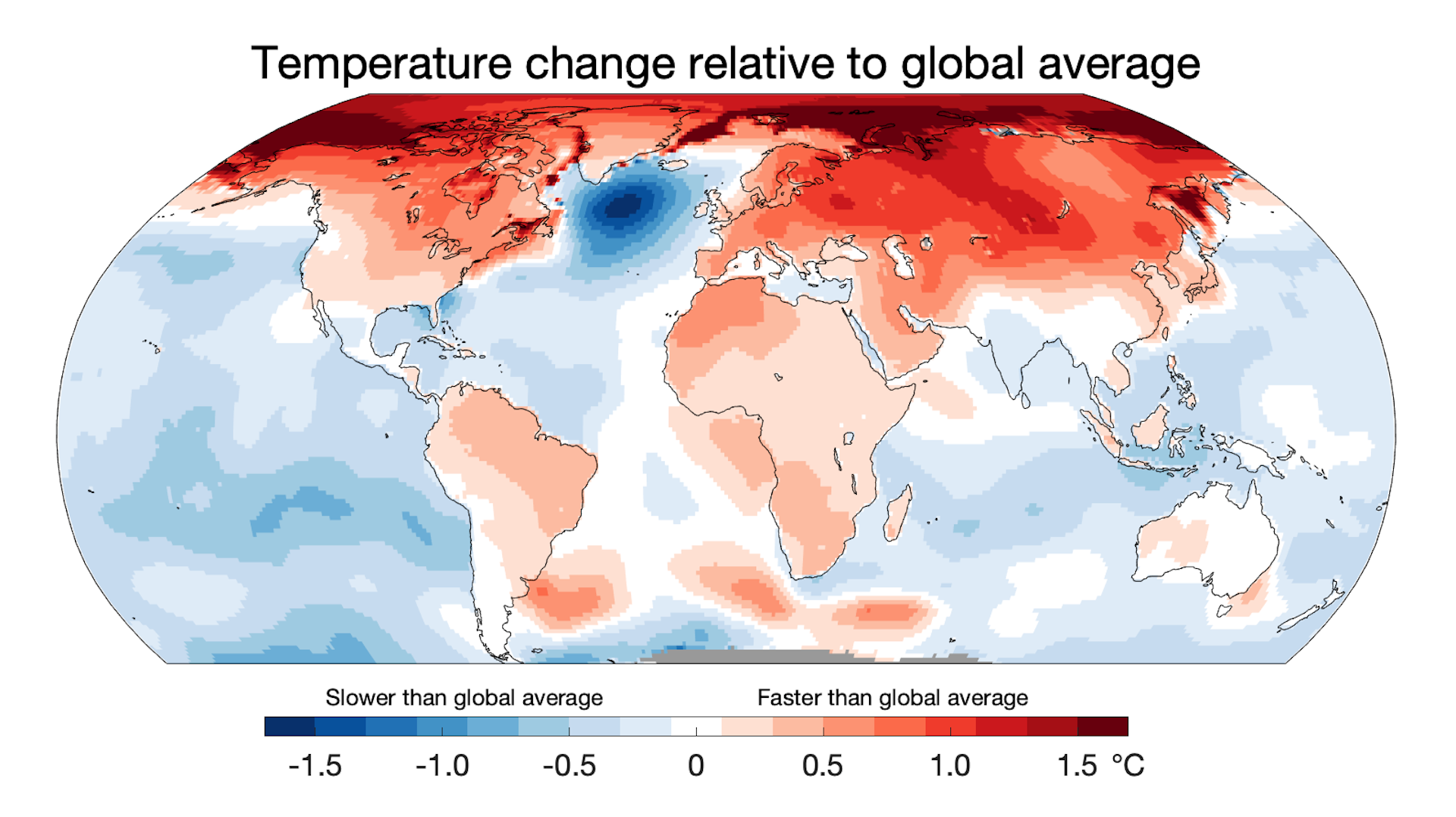
Similar patterns have also emerged over the last 150 years, with a relative “warming hole” developing in the ocean south of Greenland while regions closer to the Gulf Stream have warmed more rapidly. Our findings provide real-world evidence that these contrasting patterns are closely linked to changes in ocean circulation.
Padrões semelhantes também surgiram nos últimos 150 anos, com um relativo “buraco de aquecimento” se desenvolvendo no oceano ao sul da Groenlândia, enquanto regiões mais próximas da Corrente do Golfo aqueceram mais rapidamente. Nossas descobertas fornecem evidências do mundo real de que esses padrões contrastantes estão intimamente ligados às mudanças na circulação oceânica.
Looking to the future, scientists are concerned that continued human-caused warming could trigger major changes in North Atlantic circulation, leading to shifts in ocean temperature patterns, which would disrupt weather and climate across the globe. Examining how the Atlantic behaved 13,000 years ago can help us recognise the warning signs of major changes before they happen again.
Olhando para o futuro, os cientistas estão preocupados que o aquecimento contínuo causado pelo homem possa desencadear grandes mudanças na circulação do Atlântico Norte, levando a alterações nos padrões de temperatura oceânica, o que perturbaria o clima e o tempo em todo o globo. Examinar como o Atlântico se comportou há 13.000 anos pode ajudar-nos a reconhecer os sinais de alerta de grandes mudanças antes que elas aconteçam novamente.
Critically, our study suggests that such reorganisations can unfold over about a century, with individual components of the circulation changing within just a few decades – within a human lifetime.
Criticamente, nosso estudo sugere que tais reorganizações podem se desenrolar ao longo de cerca de um século, com componentes individuais da circulação mudando em apenas algumas décadas – dentro de uma vida humana.
By showing how different parts of the Atlantic circulation interacted during a past episode of abrupt climate change, our findings provide an important benchmark for testing climate models. The deeper understanding we have gained into how the interconnected Atlantic system behaves will also help us with the very challenging task of developing early-warning systems for future circulation changes and potential climate tipping points.
Ao mostrar como diferentes partes da circulação do Atlântico interagiram durante um episódio passado de mudança climática abrupta, nossas descobertas fornecem um importante parâmetro para testar modelos climáticos. O entendimento mais profundo que adquirimos sobre o comportamento do sistema interconectado atlântico também nos ajudará na tarefa muito desafiadora de desenvolver sistemas de alerta precoce para futuras mudanças de circulação e potenciais pontos de inflexão climática.
Alice Carter-Champion receives funding from the Natural Environment Research Council (NERC) , the Royal Society’s project “Rethinking Palaeoclimate for Society” and the Leverhulme Trust.
Alice Carter-Champion recebe financiamento do Natural Environment Research Council (NERC) , do projeto da Royal Society “Rethinking Palaeoclimate for Society” e do Leverhulme Trust.
Fangjingcheng Zhu receives funding from the INSPIRE NERC Doctoral Training Partnership and NERC project ReconAMOC.
Fangjingcheng Zhu recebe financiamento do INSPIRE NERC Doctoral Training Partnership e do projeto NERC ReconAMOC.
Jack Wharton receives funding from the Natural Environmental Research Council (NERC) , the European Union’s Horizon Europe project EPOC, and the Advanced Research + Invention Agency (ARIA) project VERIFY.
Jack Wharton recebe financiamento do Natural Environmental Research Council (NERC) , do projeto Horizonte Europa da União Europeia EPOC e do projeto Advanced Research + Invention Agency (ARIA) VERIFY.
Read more
-

Uma unidade de combate de elite de amantes gays – a Banda Sagrada Tebana na Grécia Antiga
An elite fighting unit of gay lovers – the Theban Sacred Band in ancient Greece