在一次不透明的峰会之后,中美两国希望再次合作。但这可能对世界来说不是个好消息。
After an opaque summit, China and the US want to work t…
This week’s summit has revived a 20-year-old idea of the ‘Group of Two’ superpowers working together with global benefits. But we’re now living in a different world.
本周的峰会重提了“双雄集团”超级大国携手共创全球利益的二十年前的设想。但我们现在生活在一个不同的世界。
Back in 2005, US economist Fred Bergsten coined the term “Group of 2” or “G2”, proposing a stronger partnership between what are now the world’s two largest economies – the United States and China.
早在2005年,美国经济学家弗雷德·伯格斯滕(Fred Bergsten)创造了“双边集团”(Group of 2)或“G2”一词,提议建立一个更紧密的伙伴关系,连接着目前世界两大经济体——美国和中国。
In the aftermath of the global financial crisis a few years later, economic cooperation between these two countries briefly seemed to attest to the success of efforts at integrating China into a liberal rules-based order.
在几年后全球金融危机之后,两国之间的经济合作曾短暂地让人相信,中国正在融入自由的基于规则的国际秩序的努力取得了成功。
To be sure, the ostensible G2 was not meant to replace the larger, formalised G20 group of major economies, so much as strengthen it. Underpinning the broader G20’s response to the global financial crisis, the US enacted an initial US$787 billion fiscal stimulus, while China provided its own US$586 billion stimulus. This helped avert a much larger global economic catastrophe.
诚然,所谓的G2并非旨在取代规模更大、更正式的G20主要经济体集团,而是旨在加强它。在G20应对全球金融危机的背景下,美国最初实施了7870亿美元的财政刺激计划,而中国则提供了5860亿美元的刺激计划。这帮助避免了更严重的全球经济灾难。
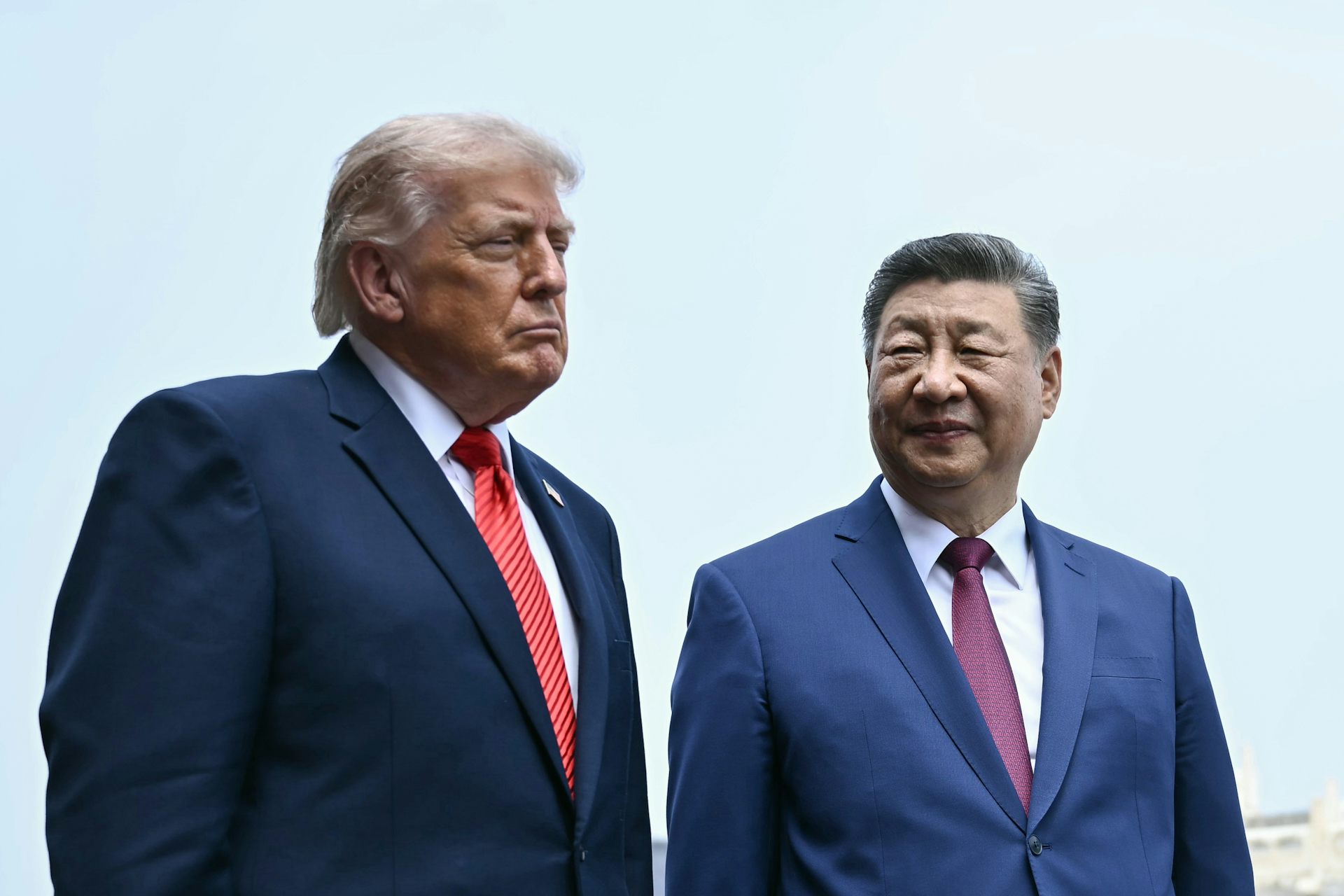
This week’s summit between US President Donald Trump and Chinese President Xi Jinping heralds a different sort of G2. On Friday, Trump claimed the countries had struck some “fantastic trade deals”. But anyone hoping for details of such deals – on tariffs, rare earths or Iran – was left disappointed on Friday afternoon.
本周美国总统唐纳德·特朗普和中国国家主席习近平之间的峰会预示着一种不同类型的G2。周五,特朗普声称两国达成了一些“非常棒的贸易协议”。但任何希望了解这些协议细节——无论是关税、稀土还是伊朗——的人,在周五下午都感到失望。
Whatever may have transpired, US–China cooperation no longer automatically implies positive spillover effects for the rest of the world. Instead, in 2026, the G2 appears, at best, to be a private bargain between two great powers, imposing hidden costs on those outside, looking in.
无论发生了什么,中美合作不再自动意味着对世界其他地区产生积极的溢出效应。相反,到了2026年,G2看起来充其量只是两个大国之间的私人交易,给外部观察者带来了隐性成本。
The Trump administration has ushered in a noticeable shift in how the US views its economic interests: no longer premised on shared liberal values, but on spheres of influence among great powers. The key question, therefore, is not whether the US and China can cooperate. It is what kind of order their cooperation will produce.
特朗普政府带来了美国看待其经济利益方式的明显转变:不再基于共同的自由价值观,而是基于大国之间的势力范围。因此,关键问题不是美国和中国是否能够合作。而是它们的合作将产生何种秩序。
West and East
西方与东方
An older economic contrast is useful here.
引入一个更早的经济对比在这里很有用。
In the wake of the second world war, the Western bloc (led across the US, the United Kingdom, and Western European states) was united by a shared commitment to a Keynesian global order (under the Bretton Woods system) that sought freer trade in goods while preserving national economic autonomy.
二战后,西方阵营(以美国、英国和西欧国家为首)因共同致力于建立凯恩斯主义的全球秩序(在布雷顿森林体系下)而团结一致,该秩序旨在促进商品自由贸易,同时维护国家经济自主权。
In contrast, the Eastern bloc (led by the Soviet Union) organised trade through what was called the Council for Mutual Economic Assistance (Comecon) , trading many goods between countries through planned barter arrangements, instead of for cash.
相比之下,东方阵营(以苏联为首)则通过所谓的共同经济援助委员会(Comecon)组织贸易,各国之间不是用现金交易,而是通过计划性的以物易物安排交易许多商品。
The irony for the present day is that the Trump–Xi agenda looks more like the old Eastern bloc’s approach.
当今的讽刺之处在于,特朗普和习近平的议程看起来更像是旧东方阵营的做法。
In this light, the clearest sign that a G2 may be working outside the G20 or larger rules-based order is not that Washington and Beijing are talking. It is the range of issues that may be managed, tying together such concerns as tariff relief, airplane orders, rare-earths access, chip restrictions, Taiwan and Iran.
从这个角度看,G2可能在G20或更大的基于规则的秩序之外运作的最明显迹象,并非华盛顿和北京正在对话。而是他们能够处理的议题范围,将关税减免、飞机订单、稀土获取、芯片限制、台湾和伊朗等问题联系在一起。
In each of these cases, it’s reasonable the two countries would want to coordinate their policies. But together, they point to a new global order where two superpowers increasingly call the shots in their own interests.
在这些情况下,两国希望协调政策是合理的。但总而言之,它们指向了一个新的全球秩序,在这个秩序中,两个超级大国正越来越多地按照自身利益来掌握主导权。
Chips and rare earths
芯片和稀土
Rare earths and advanced chips are the clearest example. Beijing wants access to the advanced semiconductors necessary to dominate the artificial intelligence race.
稀土和先进芯片是最明显的例子。北京希望获得主导人工智能竞赛所需的先进半导体。
Washington wants rare earths and critical minerals whose importance has become more acute as the conflict with Iran has strained US stocks of missiles, drones, air-defence systems and other high-end military technologies.
华盛顿需要稀土和关键矿物,由于与伊朗的冲突加剧了美国导弹、无人机、防空系统和其他高端军事技术的库存短缺,这些矿物的战略重要性变得更加突出。
If these are traded against one another, the summit is not about economic liberalisation. It is about whether strategic technologies remain national-security constraints or become bargaining chips in a bilateral deal.
如果这些东西相互交易,那么这次峰会就不是关于经济自由化的。而是关于战略技术是继续作为国家安全限制,还是成为双边协议中的筹码。
An entourage of executives
一批高管随行人员
The business delegations that have accompanied Trump on this trip point in the same direction.
随同特朗普此行的商业代表团指向同一个方向。
The presence of executives such as Nvidia’s Jensen Huang, Apple’s Tim Cook, Tesla and SpaceX’s Elon Musk (not to mention others from Qualcomm, Citigroup and Boeing) gave the summit the appearance of a commercial negotiation.
英伟达的黄仁勋、苹果的蒂姆·库克、特斯拉和SpaceX的埃隆·马斯克等高管的出席(更不用说高通、花旗集团和波音的代表了)让这次峰会看起来像是一场商业谈判。
Reported agreements on aircraft orders, agricultural purchases, investment forums and corporate access may all be presented as signs of economic normalisation.
关于飞机订单、农产品采购、投资论坛和企业准入的报道协议,都可能被呈现为经济正常化的迹象。
But the question is not only whether US firms gain market access. It is whether commercial wins help stabilise a great-power bargain whose geopolitical costs are borne elsewhere.
但问题不仅在于美国企业是否获得了市场准入。更在于商业上的胜利是否有助于稳定一项大国交易,而其地缘政治成本却由其他地方承担。
Any deal the countries eventually reach on tariffs will likely have the biggest market impacts. But the deal itself could matter less than the optics, allowing Trump to claim a business victory.
各国最终在关税上达成的任何协议,可能会产生最大的市场影响。但协议本身的重要性可能不如其表面效果,这使得特朗普可以宣称取得了一项商业胜利。
This might calm markets in the short term, but it highlights the potential for a retreat from rules-based multilateral liberalisation in the longer term.
这短期内可能会平息市场,但它突显了长期内可能从基于规则的多边自由化中退出的潜力。
A warning on Taiwan, near silence on Iran
关于台湾的警告,对伊朗近乎沉默
The question of Taiwan loomed large over this week’s summit. On Thursday, Xi gave an unusually direct warning to Trump, saying if the issue was not handled properly, the two countries could see “clashes and even conflicts”.
台湾问题在本周的峰会上占据了主导地位。周四,习近平对特朗普发出了异常直接的警告,说如果这个问题处理不当,两国可能会看到“冲突甚至对抗”。
In a larger sense, the danger is not necessarily a formal US concession on Taiwan. It is that Taiwan and other regional actors bear the external costs of a private bargain.
从更宏观的角度来看,危险不一定在于美国在台湾问题上的正式让步。而是台湾和其他区域行为体承担了私人交易的外部成本。
If Taiwan becomes one variable in a wider negotiation, the costs of US–China cooperation may fall on those not in the room.
如果台湾成为更广泛谈判的一个变量,中美合作的成本可能会落在圈外的人身上。
Iran and oil broaden the same logic. If Trump has pressed Xi to use China’s influence over Tehran, he is not simply asking for diplomatic help. He is treating Beijing as a co-hegemon in a great-power bargain based on order for some – the US and China – and exclusion for others.
伊朗和石油扩大了同样的逻辑。如果特朗普敦促习近平利用中国对德黑兰的影响力,他可不仅仅是在寻求外交帮助。他将北京视为一场大国交易中的共同霸权,这场交易为一些人(美国和中国)建立秩序,而为另一些人则带来排斥。
This kind of G2 can undermine the global public good. It will also test whether middle powers like Australia, Canada and European countries can keep their seat at the table where decisions are made or, as Canadian Prime Minister Mark Carney put it, risk being “on the menu”.
这种G2可能会损害全球公共利益。它也将考验澳大利亚、加拿大和欧洲国家等中等强国是否能保留其参与决策的席位,或者,正如加拿大总理马克·卡尼所说,面临“被摆上菜单”的风险。
Wesley Widmaier receives funding from the Australian Research Council.
Wesley Widmaier获得了澳大利亚研究理事会的资助。