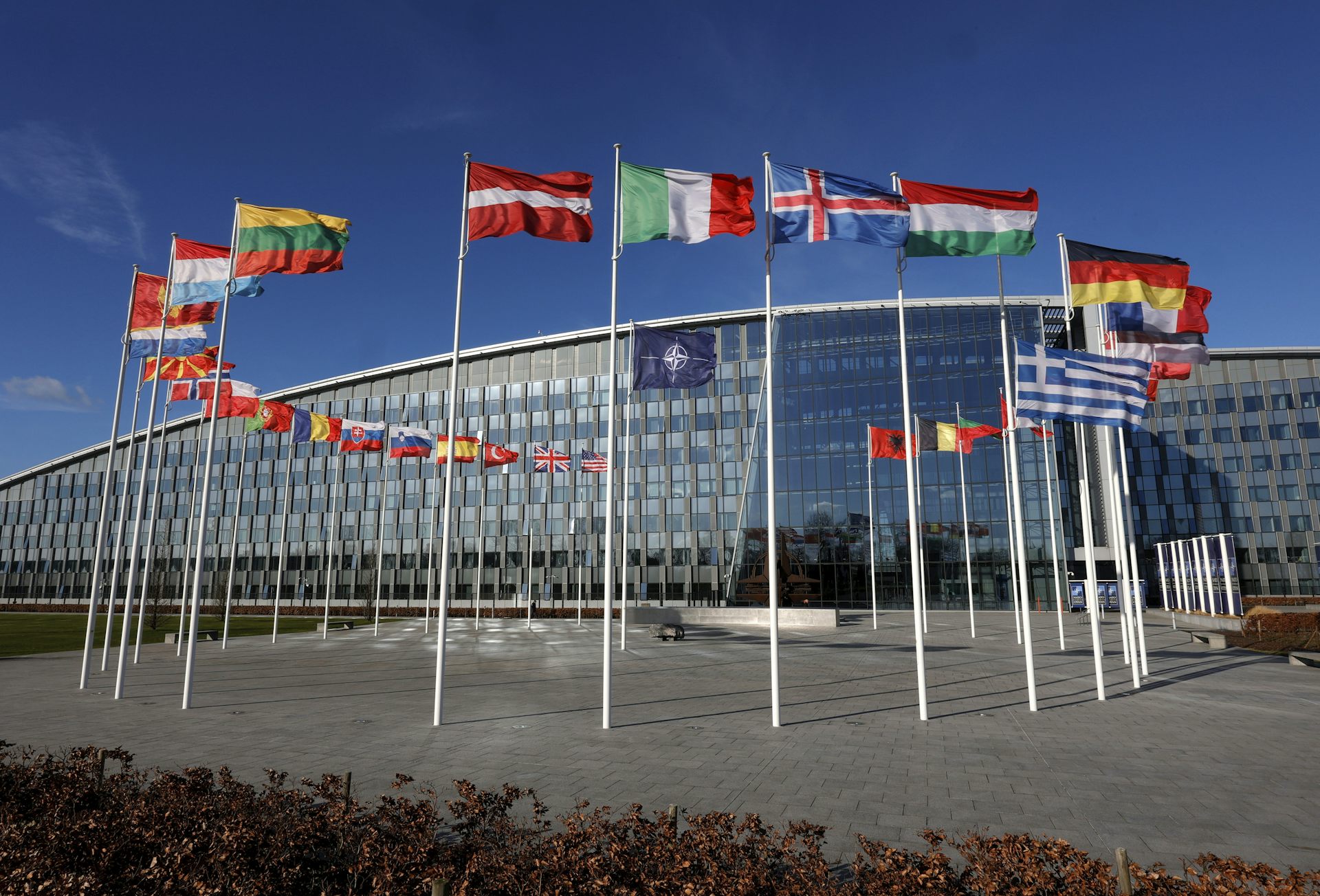
北约即使美国撤离,也能存活。但它会成为一个什么样的联盟?
NATO would survive a US withdrawal. But what kind of al…
The ‘new NATO’ is caught between competing visions and many unresolved questions.
“新北约”被夹在相互竞争的愿景和许多悬而未决的问题之间。
As NATO counts down to its annual summit in Turkey in July, the alliance is facing perhaps the biggest challenge in its history – what a potential future without the United States, or US security guarantees, would look like.
随着北约(NATO)每年在土耳其举行的峰会临近(七月),该联盟正面临其历史上最大的挑战——即一个没有美国,或没有美国安全保障的潜在未来会是什么样子。
In recent weeks, the Trump administration has taken a series of steps widely interpreted in European capitals as retaliation for allies’ reluctance to more strongly support the US position in the Iran war. It has announced the withdrawal of 5,000 troops out of Germany, halted the deployment of 4,000 troops to Poland and even reportedly considered moves to suspend Spain from the alliance.
近几周,特朗普政府采取了一系列举措,这些举措在欧洲各国首都被广泛解读为对盟国不愿更强烈支持美国在伊朗战争立场的一种报复。它宣布从德国撤走5000名部队,暂停向波兰部署4000名部队,甚至据报道考虑过暂停西班牙参与该联盟。
Europe was already uneasy about Washington’s broader strategic intentions. Increasingly, NATO allies are realising they can no longer depend on the United States for their security and will have to shoulder far greater responsibility themselves.
欧洲此前就已经对华盛顿更广泛的战略意图感到不安。越来越多的北约盟国意识到,它们不能再依赖美国来保障自身安全,而必须自己承担起更重大的责任。
NATO 3.0
北约3.0
US President Donald Trump’s narrow understanding of the value of alliances has long been known. Now, his vision for a new NATO is coming into view.
美国总统唐纳德·特朗普对联盟价值的狭隘理解早已为人所知。现在,他对新北约的设想也逐渐浮现。
At a NATO defence minister meeting in February, the US under secretary of defence for policy, Elbridge Colby, introduced the idea of “NATO 3.0”. This would entail Europeans assuming a much larger role in conventional deterrence. The US, meanwhile, would prioritise strategic competition with China and supporting European security more selectively and from greater distance.
在二月份的一次北约国防部长会议上,美国国防政策副部长埃尔布里奇·科尔比提出了“北约3.0”的概念。这将意味着欧洲人必须在常规威慑中扮演更重要的角色。与此同时,美国将优先考虑与中国的战略竞争,并更有选择性地、从更远的距离支持欧洲安全。
At the same time, the White House has reportedly been pushing to roll back decades of NATO’s mission expansion and keep Ukraine and NATO’s four Indo-Pacific partners (Japan, South Korea, Australia and New Zealand) out of the annual summit in July.
与此同时,据报道,白宫一直在推动撤销北约数十年来任务扩张的做法,并要求乌克兰和北约的四个印太伙伴(日本、韩国、澳大利亚和新西兰)排除在七月的年度峰会之外。
This reflects a broader transformation in US strategic thinking. NATO is no longer viewed as a political community and a pillar of the liberal international order. Increasingly, it is seen as a narrower military arrangement whose value depends on whether Europeans can shoulder more of the burden themselves and remain compliant with Trump’s agenda.
这反映了美国战略思维的更广泛转变。北约不再被视为一个政治共同体和自由国际秩序的支柱。它越来越多地被视为一个更狭隘的军事安排,其价值取决于欧洲人是否能够自己承担更多负担,并符合特朗普的议程。
In this new paradigm, the United States is not simply asking European allies to spend more. It is telling Europe to do more with less American hardware, a looser political alignment, and fewer guarantees.
在这种新范式下,美国不仅仅是要求欧洲盟友花更多的钱。它是在告诉欧洲,要用更少的美国军事装备、更宽松的政治联盟和更少的保证,做更多的事情。
Plus, there’s a deeper problem: the erosion of trust within the alliance and the assumptions that have underpinned NATO’s deterrence posture for decades.
此外,还有一个更深层次的问题:联盟内部信任的侵蚀,以及支撑北约数十年来威慑态势的假设基础。
The result is a “Europeanised NATO” emerging by necessity rather than design. What such an alliance would actually look like remains unclear.
其结果是出现了一个“欧洲化的北约”,这种转变是出于必要性而非设计。这样一个联盟实际会是什么样子,仍不清楚。
A focus on collective defence
侧重集体防御
One thing is certain: one single country won’t simply replace the United States as alliance leader. No European power possesses the capabilities, resources or political legitimacy to fill that role alone. Instead, leadership will likely come from the most capable states acting together.
这一点是肯定的:没有一个单独的国家能够简单地取代美国成为联盟领导者。没有欧洲任何一个国家拥有单独承担这一角色的能力、资源或政治合法性。相反,领导力可能会来自最有能力的国家们共同行动。
That trend is already visible in “Europe’s minilateral moment”. The E3 group (Britain, France and Germany) and newer E5 coalition (with Italy and Poland) , for example, have begun accelerating coordination among Europe’s leading military powers.
这一趋势已经在“欧洲最小化多边时刻”中显现出来。例如,E3集团(英国、法国和德国)和较新的E5联盟(包括意大利和波兰),已经开始加速欧洲主要军事大国之间的协调。
These arrangements are not alternatives to NATO. Rather, they may become the mechanisms through which a stronger European focus inside NATO is organised.
这些安排并非北约的替代品。相反,它们可能会成为组织北约内部更强欧洲关注度的机制。
But this is where the uncertainties begin. A more Europeanised NATO is far from guaranteed to become a more cohesive NATO. The alliance has long struggled with the strategic cacophony of its 32 members, driven by divergent threat perceptions, regional priorities and strategic cultures. As American leadership recedes, those differences may become even sharper and harder to manage.
但不确定性就从这里开始。一个更欧洲化的北约远不能保证成为一个更具凝聚力的北约。该联盟长期以来一直努力应对其32个成员国所带来的战略不和谐音,这些不和谐音源于不同的威胁认知、区域优先事项和战略文化。随着美国领导力的减弱,这些差异可能会变得更加尖锐和难以管理。
A more Europeanised alliance is, at least initially, likely to narrow its focus on collective defence and deterrence to counter Russia’s militarism and its ongoing war against Ukraine.
一个更欧洲化的联盟,至少最初,可能会将重点缩小到集体防御和威慑,以应对俄罗斯的军国主义及其对乌克兰的持续战争。
The broader agenda that expanded after the Cold War to include crisis management and cooperative security may increasingly become secondary. This included efforts to address global security challenges (such as supporting capacity building in countries affected by violent conflict) , counter-terrorism operations, and enhancing energy and maritime security.
冷战结束后扩大到包括危机管理和合作安全的更广泛议程,可能会日益变得次要。这包括应对全球安全挑战的努力(例如支持受暴力冲突影响国家的能力建设)、反恐行动以及加强能源和海上安全。
Yet, many NATO allies, particularly those on NATO’s southern flank, continue to argue that crisis management and cooperative security must remain core alliance functions. For countries facing instability across North Africa and the Middle East, migration pressures, terrorism and maritime insecurity, NATO cannot be concerned only with Russia.
然而,许多北约盟国,特别是那些位于北约南部边翼的国家,仍然坚持认为危机管理和合作安全必须保持联盟的核心职能。对于面临北非和中东地区不稳定、移民压力、恐怖主义和海上不安全的国家来说,北约不能只关注俄罗斯。
NATO’s cooperative security partnerships in the Indo-Pacific are also increasingly important, even though they are no longer openly supported by the US administration.
尽管这些伙伴关系不再得到美国政府的公开支持,但北约在印太地区的合作安全伙伴关系也越来越重要。
Cooperation with Japan, South Korea, Australia and New Zealand (known as the IP4) has emerged as perhaps NATO’s most promising cooperative-security framework, precisely because it strengthens the alliance’s core deterrence mission.
与日本、韩国、澳大利亚和新西兰(被称为IP4)的合作,已成为北约最有前景的合作安全框架,正是因为它加强了联盟的核心威慑使命。
Unlike many earlier partnership initiatives, this is tied directly to defence-industrial cooperation, technological resilience, security of supply chains for defence-critical materials, and strategic signalling.
与许多早期的伙伴倡议不同,这直接与国防工业合作、技术韧性、国防关键材料供应链安全和战略信号传递挂钩。
The new reality
新的现实
The “new NATO” is by no means a settled compact. It is an alliance caught between competing visions, profoundly uncertain political commitments from erstwhile supporters, and unresolved strategic questions.
“新北约”绝非一个板上钉钉的协定。它是一个被各种相互竞争的愿景、来自昔日支持者深感不确定的政治承诺,以及尚未解决的战略问题所困扰的联盟。
Europe is moving towards greater responsibility for its security, but without a clear consensus on what greater strategic autonomy ultimately means.
欧洲正朝着承担更多安全责任的方向发展,但对于“更大的战略自主权”最终意味着什么,尚未达成明确共识。
The central question facing NATO today is not whether the alliance survives. It almost certainly will in some form, as one should never underestimate the binding power of bureaucracies.
如今北约面临的核心问题,并非联盟是否能够存活。它几乎肯定会以某种形式存活下来,因为人们绝不能低估官僚机构的约束力。
The real question is what kind of alliance emerges and how credible it remains. Will it be a narrower military pact laser-focused on continental defence? Or a broader political-security community capable of managing the full spectrum of crises affecting Europe?
真正的问题是,将出现何种类型的联盟,以及它能保持多大的可信度。它会是一个专注于大陆防御的狭隘军事条约?还是一个能够管理影响欧洲全方位的危机、更广泛的政治安全共同体?
Gorana Grgić was previously a recipient of research and teaching funding from NATO.
戈拉娜·格吉奇曾获得北约的研究和教学资金支持。