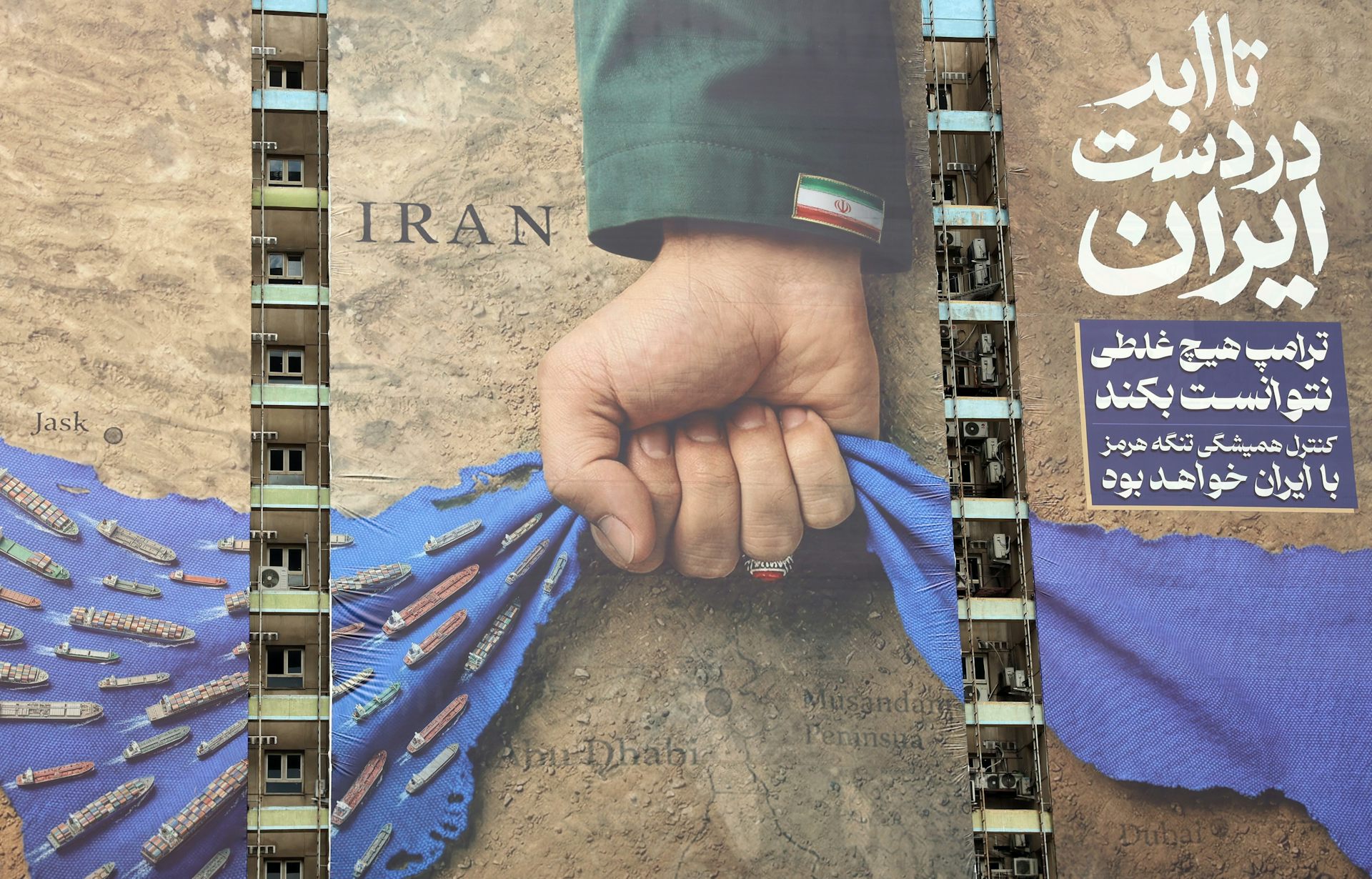
But the longer it continues the more damage it does to the whole world.
但它持续得越久,对全世界造成的损害就越大。
Let’s begin with a simple question that rarely gets a straight answer: what would victory over Iran actually look like? In Washington and Jerusalem, the answers tend to sound definitive: eliminate Iran’s nuclear capability, break its regional power, perhaps even force political change at the top. It’s the language of decisive war, the kind with a clear endpoint.
让我们从一个简单的问题开始,而这个问题很少能得到明确的答案:战胜伊朗到底会是什么样子?在华盛顿和耶路撒冷,答案往往听起来是肯定的:消除伊朗的核能力,打破其区域力量,甚至可能迫使其高层发生政治变动。这是决定性战争的语言,一种有明确终点的战争。
But shift the perspective to Tehran, and the definition changes completely. Victory, for Iran, is survival. That asymmetry shapes the entire conflict. In wars like this, the side that needs less to claim success often has the advantage – and, right now, Iran needs far less.
但如果将视角转向德黑兰,这个定义就完全改变了。对伊朗而言,胜利就是生存。这种不对称性塑造了整个冲突。在这样的战争中,那个需要更少就能宣称成功的方面往往占据优势——而目前,伊朗需要的远少得多。
There is no denying the military imbalance. The US and Israel can strike with extraordinary precision and reach. They have demonstrated that repeatedly – targeting infrastructure, leadership and strategic assets.
无法否认军事上的不平衡。美国和以色列可以进行超高精度的打击并达到远距离。他们已经反复证明了这一点——针对基础设施、领导层和战略资产。
But tactical success has yet to translate into political outcome. Iran’s state hasn’t fractured. Its governing system remains intact, and its networks – military, regional, ideological – continue to function. Even its most sensitive capabilities, including nuclear expertise, remain resilient.
但战术上的成功尚未转化为政治成果。伊朗的国家结构并未瓦解。其治理体系仍然完好,其网络——军事、区域、意识形态——持续运作。甚至包括核专业知识在内的最敏感能力,仍然具有韧性。
The deeper miscalculation lies in assuming Tehran is playing the same game as Washington. It isn’t. Iran is not trying to defeat the US or Israel outright. It is trying to outlast them, complicate their objectives and raise the cost of progress until it becomes unsustainable.
更深层次的误判在于假设德黑兰正在玩和华盛顿一样的游戏。它不是。伊朗并非试图彻底击败美国或以色列。它试图拖垮它们,使它们的目标复杂化,并提高实现目标成本,直到这种成本变得无法持续。
This logic is visible in how the conflict has unfolded. The battlefield extends beyond direct confrontation into shipping lanes, energy markets and regional alliances. Disruptions in the Strait of Hormuz are not incidental – they are pressure points with global consequences.
这种逻辑体现在冲突的展开方式上。战场已经超出了直接对抗的范围,延伸到了航运通道、能源市场和区域联盟。霍尔木兹海峡的干扰并非偶然——它们是具有全球后果的压力点。
Iran’s strategy is not about dominance but entanglement. It doesn’t need battlefield superiority if it can draw its adversaries into a conflict that is too costly to resolve and too complex to conclude.
伊朗的战略不是追求霸权,而是寻求纠缠。如果它能将对手拖入一场代价过高、过于复杂而无法结束的冲突,它就不需要战场上的优势。
When wars stall, the instinct is to escalate: more bombing, strikes on energy infrastructure, even, in extremis, “boots on the ground”. The assumption is that more force will finally produce a different outcome.
当战争陷入僵局时,本能的反应就是升级:更多的轰炸、对能源基础设施的打击,甚至在极端情况下,也要“地面部队介入”。这种假设是,更多的武力最终会产生不同的结果。
But Iran is not a passive target. It has already shown a willingness to retaliate across the region, including against Saudi Arabia, the United Arab Emirates, Qatar, Kuwait, Bahrain, Oman, as well as targets in Jordan and Iraq. Strikes on Iran’s energy systems would not stay contained – they would invite retaliation against these same states, widening the conflict.
但伊朗不是一个被动的目标。它已经表现出愿意在整个地区进行报复的意愿,包括针对沙特阿拉伯、阿拉伯联合酋长国、卡塔尔、科威特、巴林、阿曼,以及约旦和伊拉克的目标。对伊朗能源系统的打击不会局限于此——它们会招致对这些国家本身的报复,从而扩大冲突。
There is another constraint: American is estimated to have already used up around 45% to 50% of key missile stockpiles, including roughly 30% of its Tomahawk missile inventory. So the stark reality is that escalation is no longer just about willingness, but capacity — and in any wider war, the question may not be how far the US can go, but how much it has left.
还有一个约束:据估计,美国已经消耗了大约45%到50%的关键导弹库存,包括大约30%的“战斧”导弹库存。因此,残酷的现实是,升级不再仅仅关乎意愿,更关乎能力——在任何更广泛的战争中,问题可能不是美国能走多远,而是它还剩下多少。
The consequences would also extend beyond the battlefield. Iran’s response would be sustained attacks on neighbouring countries, on their power, fuel, and water systems, rendering parts of the region increasingly unlivable as temperatures soar over summer. Huge numbers of people would be forced to leave, risking another large-scale displacement crisis.
后果也会超出战场。伊朗的反应将是对邻国持续的攻击,针对其电力、燃料和水系统,使得该地区的部分地区在夏季气温飙升时变得越来越难以居住。大量人口将被迫流离,面临又一场大规模的流离失所危机。
Even then, the core reality remains unchanged. Iran is built for endurance – any ground campaign would likely become prolonged and attritional. More importantly, escalation misses the point – the problem is not a lack of force, but the absence of a political objective that force can realistically achieve.
即便如此,核心的现实仍然没有改变。伊朗是为持久战而生的——任何地面战役都可能变得旷日持久且消耗巨大。更重要的是,升级忽略了重点——问题不在于缺乏武力,而在于缺乏武力能够现实达成的政治目标。
Compounding the problem is a quieter but equally significant reality; the US and Israel do not appear to be fully aligned in their end goals. Israel’s posture suggests a pursuit of maximal outcomes – deep, possibly irreversible weakening of Iran’s system, if not outright regime collapse. The US, by contrast, appears to oscillate between coercion, containment and negotiation.
使问题更复杂的,是一个更安静但同样重要的现实;美国和以色列在最终目标上似乎并未完全一致。以色列的姿态表明了追求最大化成果——对伊朗体系进行深刻、甚至可能是不可逆转的削弱,如果不能实现彻底的政权崩溃。相比之下,美国则似乎在胁迫、遏制和谈判之间摇摆不定。
These are not just differences in emphasis – they are differences in strategy. Wars fought without a shared definition of victory rarely produce victory at all. What they produce instead is sustained military activity without strategic convergence – constant movement, but little progress toward resolution.
这不仅仅是侧重点的差异——它们是战略上的差异。没有共同胜利定义而打的战争,很少能真正达成胜利。它们反而产生的是缺乏战略趋同的持续军事行动——持续的行动,但解决进展甚微。
No conclusion in sight
缺乏明确的结局
At some point, it becomes necessary to describe things as they are. This is no longer a war moving toward a decisive conclusion. It is a conflict settling into a pattern – strikes followed by pauses, ceasefires that hold just long enough to prevent collapse, and negotiations that advance just enough to avoid failure.
到了某个时候,有必要描述事物本来的面貌。这不再是一场走向决定性结论的战争。它正在形成一种模式的冲突——停火后是暂停,休战期只维持足够防止崩溃的时间,以及谈判只推进到足以避免失败的程度。
And those ceasefires tell their own story. Their repeated extension reflects not progress, but constraint. Washington, under Donald Trump, has strong incentives to keep talks alive, avoid deeper escalation, and end the war sooner rather than later. The alternatives – regional war or global economic shock – are far harder to manage. That dynamic gives Tehran leverage. It does not need to concede quickly when delay itself strengthens its position.
而这些休战期本身讲述着一个故事。它们反复的延长反映的不是进展,而是制约。在唐纳德·特朗普的领导下,华盛顿有强烈的动机维持对话,避免更深层次的升级,并尽快结束战争。替代方案——区域战争或全球经济冲击——要难于管理得多。这种动态赋予了德黑兰筹码。当拖延本身就能增强其地位时,它无需迅速让步。
Time, in this sense, is not neutral. The longer the conflict drags on, the more it intersects with the most sensitive pressure points of the global economy. Energy markets are stressed, with supply routes under strain and reserves tightening. Industries that depend on stable fuel flows – aviation, shipping, manufacturing – are increasingly exposed.
从这个意义上说,时间并非中立。冲突持续得越久,就越会与全球经济最敏感的压力点交叉。能源市场承受着压力,供应路线紧张,储备收紧。依赖稳定燃料流动的行业——航空、航运、制造业——正面临越来越大的风险。
What began as a regional conflict has morphed into systemic risk. Even limited disruption can ripple outward, affecting prices, supply chains and political stability. The longer the stalemate persists, the greater the cumulative strain and the closer it edges toward a broader economic shock.
最初作为区域冲突的事态,已经演变成了系统性风险。即使是有限的干扰,也可能波及外部,影响价格、供应链和政治稳定。僵局持续得越久,累积的压力就越大,越接近更广泛的经济冲击。
Who really holds the advantage?
谁真正占据了优势?
In purely military terms, the answer is obvious: the US and Israel retain overwhelming superiority. But wars are not decided by capability alone. They are decided by how goals, costs, and time interact.
从纯粹的军事角度来看,答案显而易见:美国和以色列仍然保持着压倒性的优势。但战争并非仅由能力决定。它们取决于目标、成本和时间如何相互作用。
In that equation, Iran’s position is stronger than it appears. It has set a lower threshold for success, demonstrated a higher tolerance for prolonged pressure, and shown an ability to impose costs beyond the battlefield. Most importantly, it does not need to win. It only needs to prevent its adversaries from achieving their aims. So far, it has done exactly that.
在这个等式中,伊朗的地位比表面上看起来更强。它设定了较低的成功门槛,展现了对长期压力的更高耐受性,并展示了在战场之外施加成本的能力。最重要的是,它不需要取胜。它只需要阻止对手实现其目标。到目前为止,它做到了这一点。
Which brings us back to the original question: can the US and Israel win this war? If winning means forcing Iran into submission or fundamentally reshaping its strategic posture, the answer is increasingly difficult to avoid – they cannot.
这使我们回到了最初的问题:美国和以色列能否赢得这场战争?如果胜利意味着迫使伊朗屈服或从根本上重塑其战略态势,那么答案越来越难以避免——他们做不到。
What they can do is continue. Manage the conflict, contain its spread and shape its margins. But that is not victory. It is endurance.
他们能做的只是继续。管理冲突,遏制其蔓延并塑造其边界。但这并非胜利。这是持久力。
The real danger is not defeat, but the persistence of a belief that just a little more pressure, a little more escalation, or a little more time will produce a different result. If that belief is wrong, then this is not a war on the verge of being won. It is a war that cannot be won at all. A forever war.
真正的危险不是失败,而是坚持一种信念——认为再一点压力、再一点升级或再一点时间就会产生不同的结果。如果这种信念是错误的,那么这不是一场即将胜利的战争。这是一场根本无法取胜的战争。一场无休止的战争。
The authors do not work for, consult, own shares in or receive funding from any company or organisation that would benefit from this article, and have disclosed no relevant affiliations beyond their academic appointment.
作者不为任何从本文中受益的公司或组织工作、提供咨询、拥有股份或接受资金,并且除了其学术任职之外,没有披露任何相关的隶属关系。