Climate expert Ioana Colfescu talks to The Conversation Weekly podcast about predicting the impact of El Niño.
气候专家伊奥安娜·科尔费斯库在《The Conversation Weekly》播客中谈论了预测厄尔尼诺影响的问题。
El Niño has begun and forecasters predict a more than 60% chance that the naturally occurring phenomenon could become a very strong, or super El Niño later in 2026.
厄尔尼诺已经开始,预测者预计这种自然现象在2026年晚些时候有超过60%的几率发展成非常强甚至超级厄尔尼诺。
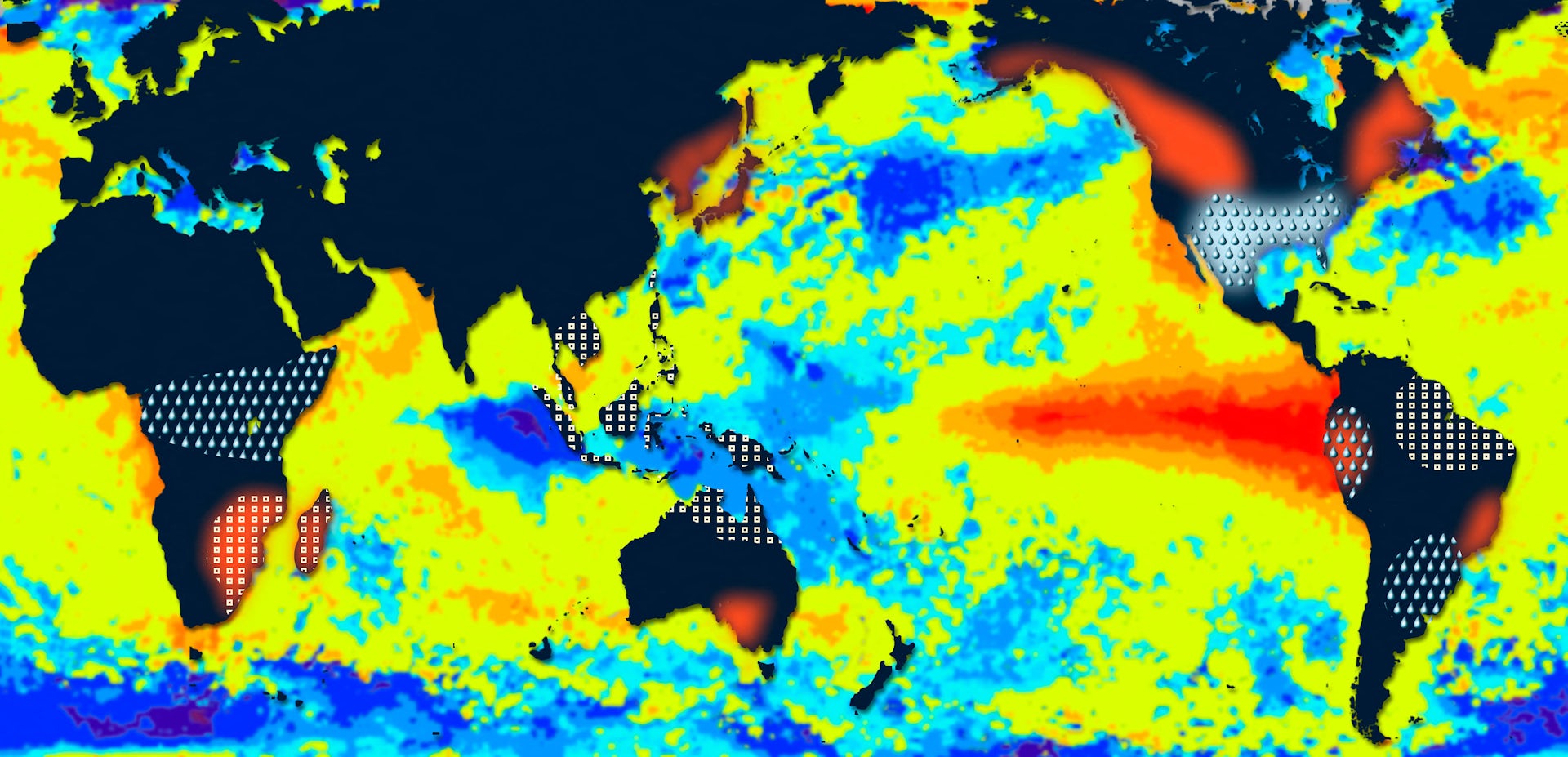
El Niño begins with warmer water in the Pacific Ocean near the equator and can have a cascade of dramatic effects on the world’s weather.
厄尔尼诺始于赤道太平洋附近水温升高,并可能对全球天气产生一系列剧烈影响。
But what chain of events has to happen for high temperatures in the Pacific to translate into severe floods, droughts and storms around the world? And what role does climate change play in El Niño?
但太平洋的高温要转化为全球范围内的严重洪水、干旱和风暴,需要发生哪些连锁事件?气候变化在厄尔尼诺中扮演了什么角色?
In this episode of The Conversation Weekly podcast, Ioana Colfescu, an expert in climate and machine learning at the University of St Andrews and the University of Edinburgh, explains how El Niño works and what it could mean for the world.
在本期《对话周报》播客节目中,来自圣安德鲁斯大学和爱丁堡大学的气候学和机器学习专家伊奥娜·科尔费斯库(Ioana Colfescu)解释了厄尔尼诺的运作机制及其对世界可能意味着什么。
In the early 1600s, fishermen in Peru and Ecuador noticed something unusual. Their nets were usually flush with anchovies which thrive in the cold waters of the Pacific Ocean. But every few years, the waters began to turn warmer, driving the anchovies away. They called this phenomenon El Niño, meaning little boy, or Christ child, because it tends to peak around Christmas time.
早在17世纪初,秘鲁和厄瓜多尔的渔民注意到了一些反常现象。他们的渔网通常能捕到大量在太平洋寒冷水域生存的小鱼。但每隔几年,海水就会开始变暖,把小鱼赶走。他们将这种现象称为“厄尔尼诺”(El Niño),意为“小男孩”或“基督之子”,因为它往往在圣诞节前后达到高峰。
Centuries later, scientists would understand that this warmer water in the equatorial Pacific is part of a naturally occurring cycle and they would start trying to predict when the next one was coming and how bad it would be.
几个世纪后,科学家们意识到赤道太平洋的这些暖水是一个自然循环的一部分,并开始尝试预测下一次何时到来以及会有多严重。
“We have indicators that place this El Niño in a similar pattern or signs that other very large El Niños had,” says Colfescu. “But while we know it’s gonna be a big event in terms of temperature, this temperature index is not yet defined as a big event in terms of impact.”
科尔费斯库说:“我们有指标表明这次厄尔尼诺遵循了相似的模式,或者与历史上其他非常大的厄尔尼诺现象类似。”“但虽然我们知道从温度上看这将是一个重大事件,但这个温度指数尚未定义为影响上的重大事件。”
The 2023-24 El Niño was one of the top five strongest ever recorded. While it dramatically affected some parts of the world, including severe flooding in Brazil, and also contributed to 2024 being the hottest year ever recorded, some of the expected effects did not materialise. Colfescu says that’s because El Niño’s “impacts are nuanced … and the response across the tropics, can be different to the one [outside the] tropics”.
2023-24年的厄尔尼诺是有记录以来最强的五大之一。虽然它极大地影响了世界的一些地区,包括巴西的严重洪水,并促成了2024年成为有记录以来最热的一年,但一些预期的影响并未实现。科尔费斯库说,这是因为厄尔尼诺的影响是“微妙的……而热带地区的响应可能与[非]热带地区不同”。
Whatever severe weather conditions do happen, Colfescu says they’re likely to be “made much worse because the El Niño right now is overlapped on an already warm ocean because of climate change.”
无论发生何种极端天气状况,科尔费斯库表示,它们很可能会“变得更糟,因为现在的厄尔尼诺叠加在气候变化导致的本已温暖的海洋之上。”
Listen to Colfescu explain the mechanisms behind El Niño on The Conversation Weekly podcast.
收听科尔费斯库在《对话周报》播客节目中解释厄尔尼诺背后的机制。
This episode of The Conversation Weekly was written and produced by Gemma Ware and Mend Mariwany. Mixing by Eleanor Brezzi and theme music by Neeta Sarl.
本期《对话周报》由Gemma Ware和Mend Mariwany撰写和制作。混音由Eleanor Brezzi负责,主题音乐由Neeta Sarl提供。
Newsclips in this episode from Al Jazeera English, KCRA 3, Bloomberg-News, CBC News and DW News.
本期节目的新闻片段来自半岛电视台英语、KCRA 3、彭博社新闻、CBC News和DW News。
Listen to The Conversation Weekly via any of the apps listed above, download it directly via our RSS feed or find out how else to listen here. A transcript of this episode is available via the Apple Podcasts or Spotify apps.
可通过上述任何应用程序收听《对话周报》,或通过我们的RSS源直接下载,或点击此处了解其他收听方式。本集节目可在苹果播客或Spotify应用上获取文字记录。
Ioana Colfescu is the Digital Atmosphere Programme Leader at the National Centre for Atmospheric Science, which has also provided her with research funding.
伊奥娜·科尔费斯库是国家大气科学中心的数字大气项目负责人,该中心也为她提供了研究资金。