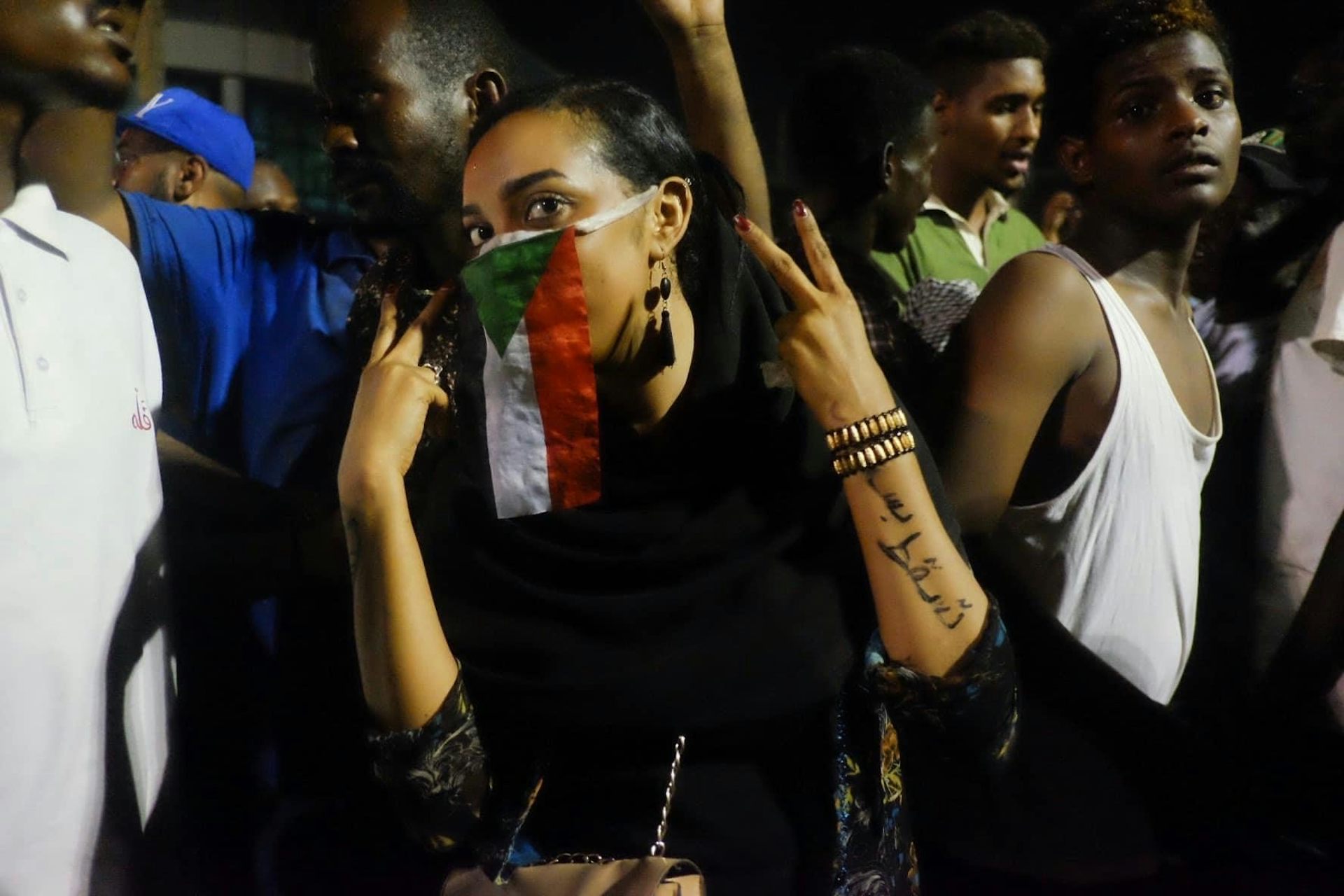
Os ritmos que derrubaram Bashir: como a música do Sudão moldou uma revolução
The rhythms that broke Bashir: how Sudan’s music shaped a revolution
Music created the networks, identities and spaces of trust that made collective political action possible in Sudan’s 2019 revolution.
A música criou as redes, identidades e espaços de confiança que tornaram possível a ação política coletiva na revolução do Sudão em 2019.
The revolution in Sudan in 2019 has been eclipsed by the war between the Sudanese Armed Forces and the Rapid Support Forces, which began in April 2023.
A revolução no Sudão em 2019 foi ofuscada pela guerra entre as Forças Armadas Sudanesas e as Forças de Apoio Rápido, que começou em abril de 2023.
But the events of 2019 demand greater attention as they hold lessons for a post-war Sudan.
Mas os eventos de 2019 exigem maior atenção, pois contêm lições para um Sudão pós-guerra.
Music was central to the protests in 2019. The camp outside military headquarters in Khartoum, where demonstrators gathered for weeks to demand civilian rule, became known as Sudan’s largest ever arts festival.
A música foi central nos protestos de 2019. O acampamento fora do quartel-general militar em Cartum, onde manifestantes se reuniram por semanas para exigir o governo civil, tornou-se conhecido como o maior festival de artes da história do Sudão.
My research on resistance movements has led me to believe that music is not only a cosmetic accessory to protests. In Sudan, it was an integral part of the revolutionary movement that ousted the Omar al-Bashir regime. For decades, music helped cultivate anti-government sentiment and forge the networks and communities that would sustain the revolution in 2019.
Minha pesquisa sobre movimentos de resistência me levou a acreditar que a música não é apenas um acessório cosmético para protestos. No Sudão, foi uma parte integral do movimento revolucionário que depôs o regime de Omar al-Bashir. Por décadas, a música ajudou a cultivar sentimentos anti-governo e forjar as redes e comunidades que sustentariam a revolução em 2019.
I’ve explored this idea in a recent paper, drawing on interviews with protesters and musicians.
Explorei essa ideia em um artigo recente, com base em entrevistas com manifestantes e músicos.
Sudanese music and resistance
Música sudanesa e resistência
Music in Sudan has historically been intertwined with popular resistance. First against colonial rulers and then – following independence in 1956 – against post-colonial despots. The patriotic anthems of the 60s and 70s expressed the sentiment that Sudan was being built by the people, not the government.
A música no Sudão esteve historicamente entrelaçada com a resistência popular. Primeiro contra os governantes coloniais e depois – após a independência em 1956 – contra os déspotas pós-coloniais. Os hinos patrióticos dos anos 60 e 70 expressaram o sentimento de que o Sudão estava sendo construído pelo povo, e não pelo governo.
As one music fan who was a young teenager in the early 1970s said:
Como um fã de música que era um adolescente na década de 1970:
There were different ideas, of course, about what sounded good, but if you were making music, you were against the government, that was for sure.
Havia diferentes ideias, é claro, sobre o que soava bem, mas se você estivesse fazendo música, você era contra o governo, isso era certo.
One after the other, however, authoritarian regimes sought to crush all creativity – and especially music – through censorship laws and the systematic intimidation of artists.
No entanto, os regimes autoritários buscaram, sucessivamente, esmagar toda a criatividade – e especialmente a música – por meio de leis de censura e da intimidação sistemática dos artistas.
Gigs had to be held as private events in people’s homes and even these were regularly broken up by a morality monitoring unit. Many popular musicians left for careers abroad.
Os shows tinham que ser realizados como eventos privados nas casas das pessoas, e até estes eram regularmente interrompidos por uma unidade de monitoramento moral. Muitos músicos populares foram para carreiras no exterior.
But underground music scenes kept anti-government sentiment alive.
Mas as cenas musicais underground mantiveram vivo o sentimento anti-governo.
My research shows that the exodus of musicians, producers and fans under the Bashir regime did not weaken popular resistance. Instead, this displacement helped build strong transnational social networks, enabling musicians to record music outside Sudan. This was then distributed back to communities inside the borders. Later, these same social networks supported the 2019 revolution.
Minha pesquisa mostra que o êxodo de músicos, produtores e fãs sob o regime Bashir não enfraqueceu a resistência popular. Pelo contrário, esse deslocamento ajudou a construir fortes redes sociais transnacionais, permitindo que os músicos gravassem músicas fora do Sudão. Isso foi então distribuído de volta às comunidades dentro das fronteiras. Mais tarde, essas mesmas redes sociais apoiaram a revolução de 2019.
Throughout recent history and across various genres and scenes, music has helped the Sudanese imagine alternatives to authoritarian rule and build the relationships needed for collective action.
Ao longo da história recente e em vários gêneros e cenas, a música ajudou os sudaneses a imaginar alternativas ao domínio autoritário e a construir os relacionamentos necessários para a ação coletiva.
Given the close historical ties between resistance movements and music scenes, examining the music of the revolution provides insight into the values, identities and visions of democratic change that shaped Sudan’s revolutionary movement.
Dadas as fortes ligações históricas entre movimentos de resistência e cenas musicais, examinar a música da revolução oferece insights sobre os valores, identidades e visões de mudança democrática que moldaram o movimento revolucionário do Sudão.
Music, gender and class
Música, gênero e classe
In my paper I analyse the most prominent revolution songs – collected in a shareable YouTube playlist – to explore what protesters’ choices reveal about the movement itself. The songs point to a growing openness towards gender and class.
Em meu artigo, analiso as canções revolucionárias mais proeminentes – coletadas em uma playlist compartilhável do YouTube – para explorar o que as escolhas dos manifestantes revelam sobre o movimento em si. As músicas apontam para uma crescente abertura em relação ao gênero e à classe social.
At the 2019 protests, the revolutionaries honoured a canon of anti-oppression anthems. These included traditional Sudanese staples, hip-hop classics and contemporary pop sing-a-longs.
Nos protestos de 2019, os revolucionários homenagearam um cânone de hinos antiopressão. Estes incluíram clássicos sudaneses tradicionais, sucessos do hip-hop e canções pop contemporâneas para cantar junto.
Not all revolutionary anthems are lyrically political, however, and there are gendered reasons for this.
No entanto, nem todos os hinos revolucionários são lírica e politicamente engajados, e há razões de gênero para isso.
In Sudan’s decades of patriarchal autocracy, speaking openly about politics through song lyrics was often far riskier for women than for men. As a result, women-led genres, such as tumtum and aghani albanat, typically centred on romance and everyday life, accompanied by handclapping and rhythms played on the doolka drum. Among highbrow creatives, these vocal and percussive genres are considered artistically subordinate to male-dominated genres. These include haqeeba, which features instrumental accompaniment on the more technically demanding oud.
Nas décadas de autocracia patriarcal no Sudão, falar abertamente sobre política através das letras das músicas era frequentemente muito mais arriscado para as mulheres do que para os homens. Como resultado, gêneros liderados por mulheres, como tumtum e aghani albanat, tipicamente se concentravam em romance e vida cotidiana, acompanhados de palmas e ritmos tocados no tambor doolka. Entre os artistas eruditos, esses gêneros vocais e percussivos são considerados artisticamente subordinados aos gêneros dominados por homens. Estes incluem o haqeeba, que apresenta acompanhamento instrumental no mais exigente alaúde (oud) .
However, tumtum and aghani albanat were popular with protesters in 2019. This was not because their lyrics were directly political (they were not) . Rather, they represented the defiance of women who continued to create and perform music despite decades of state restrictions on women’s artistry.
No entanto, tumtum e aghani albanat foram populares entre os manifestantes em 2019. Isso não foi porque suas letras eram diretamente políticas (não eram) . Pelo contrário, elas representaram a resistência das mulheres que continuaram a criar e apresentar música apesar de décadas de restrições estatais à arte feminina.
Despite their lyrical playfulness and political neutrality, Sudanese society celebrated these genres in the revolution. This sends a powerful political message about a rising cultural openness towards feminine creativity, which had been inhibited by the state.
Apesar de seu jogo lírico e neutralidade política, a sociedade sudanesa celebrou esses gêneros na revolução. Isso envia uma poderosa mensagem política sobre uma crescente abertura cultural em relação à criatividade feminina, que havia sido inibida pelo estado.
Zenig is a new Sudanese genre of music. It emerged in the early 2010s from the poor and peripheral neighbourhoods in Khartoum. It takes its rhythmic base from tumtum, and mixes this with retro keyboards, low-fi synths and improvised vocals. It is fundamentally a Khartoumian invention, and is deliberately defiant of conservative gender and class hierarchies.
Zenig é um novo gênero musical sudanês. Surgiu no início dos anos 2010 nos bairros pobres e periféricos de Cartum. Ele tira sua base rítmica do tumtum e mistura-a com teclados retrô, sintetizadores low-fi e vocais improvisados. É fundamentalmente uma invenção cartumiana e é deliberadamente desafiador das hierarquias conservadoras de gênero e classe.
Zenig contributed to the cacophony of sounds during the 2019 sit-in. One protester remembered “its fast-paced rhythmic style worked well in energising crowds”. The most likely place to hear Zenig at the sit-in was in intimate circles and small stages where friends could dance together. Before the revolution, Zenig was known in Khartoum as the music of poor outcasts.
Zenig contribuiu para a cacofonia de sons durante o acampamento de 2019. Um manifestante recordou: “seu estilo rítmico acelerado funcionou bem para energizar as multidões”. O local mais provável para ouvir Zenig no acampamento era em círculos íntimos e pequenos palcos onde os amigos podiam dançar juntos. Antes da revolução, Zenig era conhecido em Cartum como a música dos marginalizados pobres.
The significance
A importância
By elevating female leadership in the music of the revolution, Sudanese revolutionaries deliberatively negotiated what an alternative ideal Sudanese society would be like; one with more empowerment for women, as both creative and political forerunners.
Ao elevar a liderança feminina na música da revolução, os revolucionários sudaneses negociaram deliberadamente como seria uma sociedade sudanesa ideal e alternativa; uma com mais empoderamento para as mulheres, tanto como pioneiras criativas quanto políticas.
The inclusion of genres like Zenig at the 2019 sit-in demonstrates that Sudan’s revolution was not only about changing the regime.
A inclusão de gêneros como Zenig no protesto de 2019 demonstra que a revolução do Sudão não se tratava apenas de mudar o regime.
For many young Sudanese, it was also an expression of yearning for broader societal change and an upending of societal power relations.
Para muitos jovens sudaneses, foi também uma expressão de anseio por mudanças sociais mais amplas e um desmantelamento das relações de poder na sociedade.
The revolution in 2019 was a unique time for openness, experimentation and future-making facilitated by music.
A revolução em 2019 foi um momento único para a abertura, experimentação e construção do futuro facilitados pela música.
Music and rebuilding
Música e reconstrução
The war has prevented Sudanese civilians from continuing these important social negotiations.
A guerra impediu que os civis sudaneses continuassem estas importantes negociações sociais.
The resistance movement and its musicians have been displaced within Sudan and to regional hubs like Cairo (Egypt) and Nairobi (Kenya) . Many have tragically lost their lives. Some have remained in Khartoum and continue to make hopeful music against the odds.
O movimento de resistência e seus músicos foram deslocados dentro do Sudão e para centros regionais como Cairo (Egito) e Nairobi (Quênia) . Muitos perderam suas vidas tragicamente. Alguns permaneceram em Cartum e continuam a fazer música esperançosa contra todas as probabilidades.
Even as Sudan’s future remains uncertain, music will be surely be central in the rebuilding of civilian lives that will come.
Mesmo que o futuro do Sudão permaneça incerto, a música certamente será central na reconstrução das vidas civis que virão.
Cathy Wilcock receives funding from ESRC (UK) and has received funding from the NWO (The Netherlands) .
Cathy Wilcock recebe financiamento do ESRC (Reino Unido) e recebeu financiamento do NWO (Países Baixos) .
Read more
-
Para a diáspora iraniana, um dilema na Copa do Mundo: apoiar a seleção nacional ou protestar – ou os dois?
For Iran’s diaspora, a tough World Cup call: To support the national team or protest – or both?
-
Muito quente, muito úmido: por que a onda de calor prolongada na Índia e no Paquistão é tão perigosa
Too hot, too humid: why the sustained heatwave in India and Pakistan is so dangerous