
Jeff Bezos diz que poesia sem rima é fácil – mas não é tão simples
Jeff Bezos says poetry without rhyming is easy – but it’s not that simple
Contrary to popular belief, poetry doesn’t have to rhyme – and rhyme is not a marker of quality, or ease. Some of the world’s most famous poetry proves it.
Contrariamente ao senso comum, poesia não precisa rimar – e rima não é um marcador de qualidade, nem de facilidade. Algumas das poesias mais famosas do mundo provam isso.
When Jeff Bezos defended major layoffs at The Washington Post last week, he reached for poetry. Pressed on why he would not simply subsidise the paper, he argued payment was a “signal” of relevance: “If people won’t pay for our product, we’re not doing, it’s not a good enough product […] It would be like poetry without rhyming. It’s too easy.”
Quando Jeff Bezos defendeu as demissões em massa no The Washington Post na semana passada, ele recorreu à poesia. Questionado sobre por que não simplesmente subsidiar o jornal, ele argumentou que o pagamento era um “sinal” de relevância: “Se as pessoas não pagam pelo nosso produto, não estamos fazendo, não é um produto bom o suficiente […] Seria como poesia sem rima. É muito fácil.”
The analogy was mocked almost immediately. A former Washington Post literary critic imagined Poetry magazine rejecting T.S. Eliot’s The Waste Land for insufficient rhyme. Others responded in the form the occasion seemed to invite:
A analogia foi ridicularizada quase imediatamente. Um ex-crítico literário do Washington Post imaginou a revista Poetry rejeitando The Waste Land de T.S. Eliot por rima insuficiente. Outros responderam na forma que a ocasião parecia convidar:
Roses are red Violets are blue Bezos sucks And his takes do too.
Rosas são vermelhas Violetas são azuis Bezos é um lixo E suas opiniões também.
But the mockery missed the more interesting point. Bezos was not really talking about rhyme. He was talking about constraint: the idea that without some external pressure – rhyme in poetry, profitability in journalism – the work becomes too easy, too loose, too self-satisfied.
Mas a zombaria perdeu o ponto mais interessante. Bezos não estava realmente falando sobre rima. Ele estava falando sobre restrição: a ideia de que sem alguma pressão externa – rima na poesia, lucratividade no jornalismo – o trabalho se torna muito fácil, muito solto, muito auto-satisfeito.
Poetry was never identical with rhyme
Poesia nunca foi idêntica à rima
Rhyme is one of the most recognisable features of English verse. It gives pleasure because it returns: a sound goes out and comes back altered. Because it is so easy to hear, rhyme can look like proof of effort. We hear the rule. We hear the poem obeying it. That is exactly why it becomes such a tempting stand-in for seriousness.
A rima é uma das características mais reconhecíveis do verso inglês. Ela proporciona prazer porque retorna: um som sai e volta alterado. Por ser tão fácil de ouvir, a rima pode parecer prova de esforço. Ouvimos a regra. Ouvimos o poema obedecendo a ela. É exatamente por isso que ela se torna um substituto tão tentador para a seriedade.
In Middle English, “rime” could mean not only rhyme, but metre or verse more generally; so the terms blurred early on. But poetry was never identical with rhyme.
No Inglês Médio, “rime” podia significar não apenas rima, mas métrica ou verso de forma mais geral; assim, os termos se confundiram logo no início. Mas a poesia nunca foi idêntica à rima.
Old English verse, including Beowulf, was organised by patterns of stressed syllables, pauses within the line (caesura) and alliteration, rather than rhyme. Rhyme became increasingly important in English later, especially under French influence after the Norman Conquest. Because it is memorable, teachable and easy to hear, it gradually came to stand in for poetry itself.
O verso do Inglês Antigo, incluindo Beowulf, era organizado por padrões de sílabas tônicas, pausas dentro da linha (caesura) e aliteração, em vez de rima. A rima se tornou cada vez mais importante no Inglês mais tarde, especialmente sob influência francesa após a Conquista Normanda. Por ser memorável, ensinável e fácil de ouvir, ela gradualmente passou a substituir a própria poesia.
But rhyme is not poetry. Nor is end rhyme the only way poetry makes pattern or music. Some of the most important poetry in English does not rely on it at all.
Mas rima não é poesia. Nem a rima final é a única maneira pela qual a poesia cria padrão ou música. Algumas das poesias mais importantes em inglês não dependem dela de forma alguma.
Why rhyme isn’t necessary
Por que a rima não é necessária
John Milton wrote Paradise Lost without rhyme, and defended the decision explicitly, arguing rhyme was “no necessary adjunct or true ornament of poem or good verse”.
John Milton escreveu Paradise Lost sem rima e defendeu a decisão explicitamente, argumentando que a rima era “nenhum adjunto necessário ou verdadeiro ornamento de poema ou bom verso”.
What matters here is not mere hostility to rhyme, but the sense that rhyme can tempt a poet into polish before thought has finished its work. He goes further, dismissing rhyme as the “jingling sound of like endings” and even as the “troublesome and modern bondage of riming”.
O que importa aqui não é mera hostilidade à rima, mas a sensação de que a rima pode tentar um poeta a um polimento antes que o pensamento tenha terminado seu trabalho. Ele vai mais longe, desconsiderando a rima como o “som tilintante de finais semelhantes” e até mesmo como o “vínculo problemático e moderno da rima”.
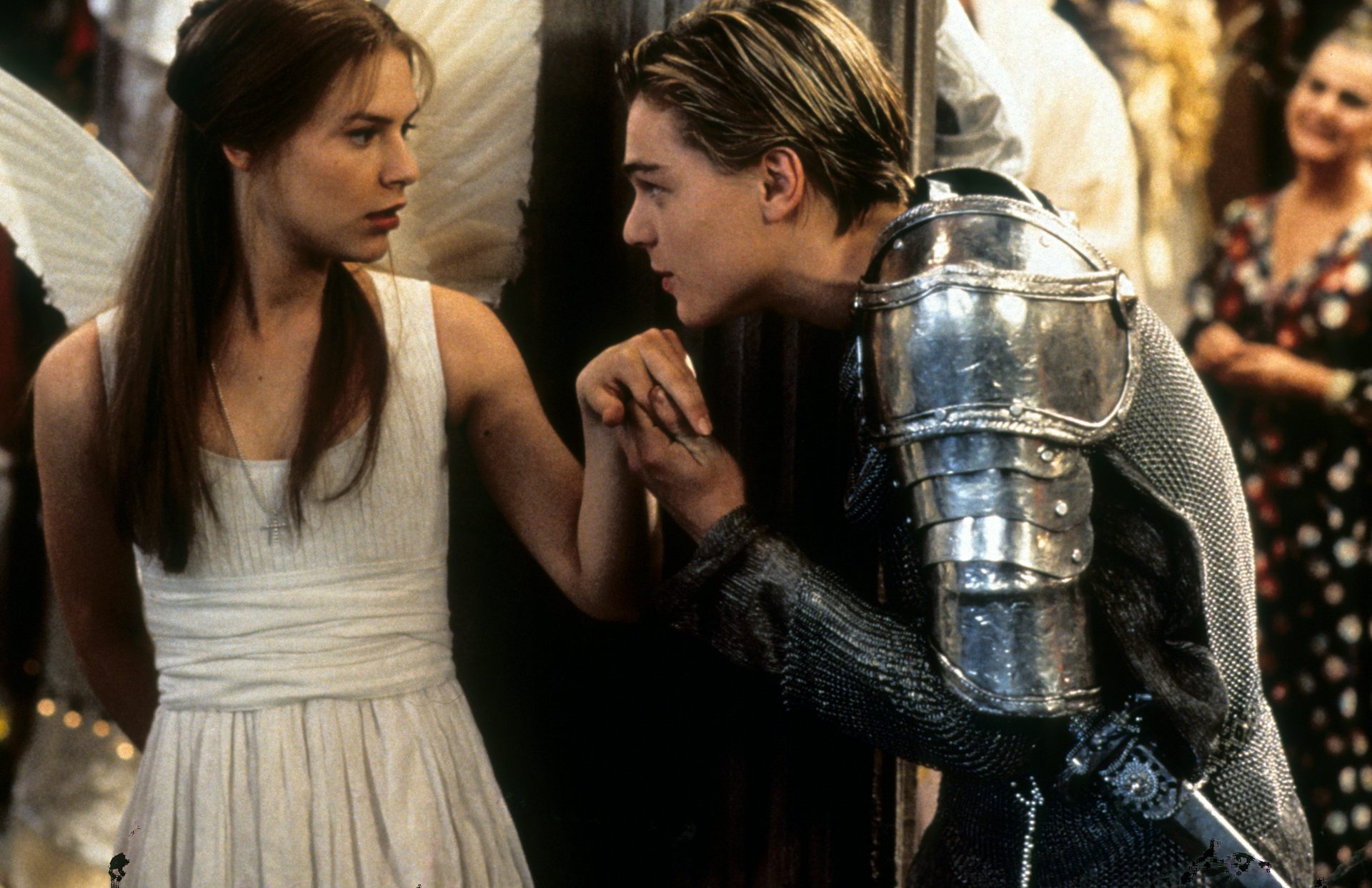
Shakespeare’s drama offers the clearest proof: it is built largely in blank verse, where the line is shaped by rhythm and the movement of the sentence rather than rhyme, as when Romeo first sees Juliet:
O drama de Shakespeare oferece a prova mais clara: ele é construído em grande parte em verso branco, onde a linha é moldada pelo ritmo e pelo movimento da frase em vez da rima, como quando Romeu vê Julieta pela primeira vez:
But soft, what light through yonder window breaks? It is the East, and Juliet is the sun. Arise, fair sun, and kill the envious moon.
But soft, what light through yonder window breaks? It is the East, and Juliet is the sun. Arise, fair sun, and kill the envious moon.
But at its best, rhyme surprises
Mas, no seu melhor, a rima surpreende
Much modern poetry also does without regular rhyme. Free verse is poetry that does not rely on regular rhyme or a fixed metre – a regular pattern of stressed and unstressed syllables – and it has always suffered from its name. “Free” makes it sound as though the poet has simply slipped the leash of form.
Muitas poesias modernas também fazem sem rima regular. O verso livre é a poesia que não depende de rima regular ou de um metro fixo – um padrão regular de sílabas tônicas e átonas – e sempre sofreu por causa do seu nome. “Livre” faz parecer que o poeta simplesmente soltou as rédeas da forma.
But, as T.S. Eliot wrote in Reflections on Vers Libre, there is “no freedom in art”: removing rhyme does not remove structure, but throws other patterns into relief. Rhythm, word order, line, repetition and the movement of thought become more exposed. Free verse is not failed rhymed verse. Its discipline is simply less immediately audible.
Mas, como T.S. Eliot escreveu em Reflections on Vers Libre, não há “liberdade na arte”: remover a rima não remove a estrutura, mas destaca outros padrões. O ritmo, a ordem das palavras, a linha, a repetição e o movimento do pensamento tornam-se mais expostos. O verso livre não é verso rimado fracassado. Sua disciplina é simplesmente menos audível imediatamente.
At its best, rhyme is a genuine source of pleasure and ingenuity. It does more than repeat: it surprises. Lord Byron’s Don Juan is full of rhymes that arrive not as dutiful closure, but as comic swerves or little flashes of intelligence.
No seu melhor, a rima é uma fonte genuína de prazer e engenho. Ela faz mais do que repetir: ela surpreende. O Don Juan de Lord Byron está cheio de rimas que chegam não como um fechamento deveras, mas como desvios cômicos ou pequenos lampejos de inteligência.
Byron addresses the “lords of ladies intellectual” and snaps the stanza shut with “have they not hen-peck’d you all?”. Emily Dickinson, in another key, makes the point just as sharply: in “Because I could not stop for Death”, the poem’s slant rhymes show that rhyme does not have to mean tidy closure; it can work through near-match, disturbance and eerie precision instead.
Byron aborda os “senhores intelectuais das damas” e fecha a estrofe com “não os têm enfeitado todos?”. Emily Dickinson, em outra chave, aponta o mesmo com igual nitidez: em “Because I could not stop for Death”, as rimas imperfeitas do poema mostram que a rima não precisa significar um fechamento arrumado; ela pode funcionar através de semelhanças próximas, perturbação e uma precisão sinistra.
Eminem’s famous answer to the claim that nothing rhymes with “orange” works by stretching sound across syllables and making the ear hear a likeness it did not expect: “four-inch” and “door hinge”.
A famosa resposta de Eminem à alegação de que nada rima com “orange” funciona esticando o som por sílabas e fazendo o ouvido ouvir uma semelhança que ele não esperava: “four-inch” e “door hinge”.
That is one of rhyme’s oldest pleasures: not just recurrence, but discovery. Rhyme can be brilliant in exactly this way. It can also be merely mechanical. Bad rhyme is easy. Good rhyme is not. Its presence alone proves less than Bezos thinks.
Esse é um dos prazeres mais antigos da rima: não apenas a recorrência, mas a descoberta. A rima pode ser brilhante exatamente dessa maneira. Ela também pode ser meramente mecânica. Uma rima ruim é fácil. Uma rima boa não é. Sua mera presença prova menos do que Bezos pensa.
Rhyme is audible. Profit is measurable. Both look objective, but neither proves very much. A poem can rhyme and still fail; a newspaper can make money and still be trivial. The mistake is to confuse what is easiest to hear or count with what matters most.
A rima é audível. O lucro é mensurável. Ambos parecem objetivos, mas nenhum prova muito. Um poema pode rimar e ainda assim falhar; um jornal pode ganhar dinheiro e ainda assim ser trivial. O erro é confundir o que é mais fácil de ouvir ou contar com o que é mais importante.
Bronwyn Lea does not work for, consult, own shares in or receive funding from any company or organisation that would benefit from this article, and has disclosed no relevant affiliations beyond their academic appointment.
Bronwyn Lea não trabalha, não é consultora, não possui ações nem recebe financiamento de nenhuma empresa ou organização que se beneficiaria deste artigo, e não divulgou afiliações relevantes além de seu cargo acadêmico.
Read more
-
O que é ‘autonomia estratégica’ – e por que todos estão de repente buscando isso?
What is ‘strategic autonomy’ – and why is everyone suddenly reaching for it?
-

O que é a 25ª Emenda e ela poderia ser usada para remover Trump do cargo?
What is the 25th Amendment and could it be used to remove Trump from office?