A biologia sintética prometeu reescrever a vida – com a morte de seu pioneiro, J. Craig Venter, quão perto estão os cientistas?
Synthetic biology promised to rewrite life – with the death of its pioneer, J. Craig Venter, how close are scientists?
Advances in genetic engineering have enabled researchers to seek ways to program new life. But has synthetic biology actually changed medicine and the environment, nearly two decades on?
Os avanços na engenharia genética permitiram que pesquisadores buscassem maneiras de programar novas formas de vida. Mas a biologia sintética realmente mudou a medicina e o meio ambiente, quase duas décadas depois?
When scientist J. Craig Venter and his team announced in 2010 that they had created the first cell controlled by a fully synthetic genome, it marked a turning point in how scientists think about life.
Quando o cientista J. Craig Venter e sua equipe anunciaram em 2010 que haviam criado a primeira célula controlada por um genoma totalmente sintético, isso marcou um ponto de virada na forma como os cientistas pensam sobre a vida.
For the first time, DNA – the molecule that carries the instructions for life – had been written on a computer, assembled in a laboratory and used to control a living cell. The achievement suggested something profound: Life might not only be understood but designed.
Pela primeira vez, o DNA – a molécula que carrega as instruções para a vida – foi escrito em um computador, montado em um laboratório e usado para controlar uma célula viva. A conquista sugeriu algo profundo: a vida pode não apenas ser compreendida, mas projetada.
A biologist widely recognized for his groundbreaking contributions to genomics, including leading efforts to sequence the first draft of the human genome, Venter and his team’s successful creation of the first synthetic bacterial cell is considered pivotal to the field of synthetic biology.
Um biólogo amplamente reconhecido por suas contribuições pioneiras à genômica, incluindo a liderança de esforços para sequenciar o primeiro rascunho do genoma humano, a criação bem-sucedida da primeira célula bacteriana sintética por Venter e sua equipe é considerada fundamental para o campo da biologia sintética.
By combining biology and engineering, synthetic biology seeks to design and build new biological systems or redesign existing ones for useful purposes. Rather than only observing how life works, scientists use tools such as DNA synthesis and genetic engineering to “program” cells to perform specific tasks, such as producing vaccines, developing sustainable fuels or detecting environmental toxins.
Ao combinar biologia e engenharia, a biologia sintética busca projetar e construir novos sistemas biológicos ou redesenhar os existentes para fins úteis. Em vez de apenas observar como a vida funciona, os cientistas usam ferramentas como síntese de DNA e engenharia genética para “programar” células para realizar tarefas específicas, como produzir vacinas, desenvolver combustíveis sustentáveis ou detectar toxinas ambientais.
But how far has the field gone since Venter’s original synthetic bacterial cell?
Mas quão longe o campo avançou desde a célula bacteriana sintética original de Venter?
As a biochemist who uses genomics in my teaching and research, I am interested in understanding what this shift in biology means and how far it has actually taken scientific innovation. Following Venter’s death on April 29, 2026, it is worth revisiting that moment and asking whether synthetic biology has delivered on its promise.
Como bioquímico que usa genômica em meu ensino e pesquisa, estou interessado em entender o que essa mudança na biologia significa e quão longe ela realmente levou a inovação científica. Após a morte de Venter em 29 de abril de 2026, vale a pena revisitar aquele momento e perguntar se a biologia sintética cumpriu sua promessa.
What is synthetic biology?
O que é biologia sintética?
For much of the 20th century, biology focused on decoding life.
Durante grande parte do século XX, a biologia concentrou-se em decodificar a vida.
The discovery of DNA’s structure in 1953 revealed how genetic information is stored. Decades later, the Human Genome Project that Venter helped accelerate mapped the full set of human genes.
A descoberta da estrutura do DNA em 1953 revelou como a informação genética é armazenada. Décadas depois, o Projeto Genoma Humano, que Venter ajudou a acelerar, mapeou o conjunto completo de genes humanos.
But Venter and others pushed the field further: If DNA could be read like code, could it also be written?
Mas Venter e outros levaram o campo mais longe: Se o DNA podia ser lido como código, ele também poderia ser escrito?
This idea underpins synthetic biology, which aims to design and construct biological systems rather than simply study them. Instead of modifying one gene at a time, researchers began exploring whether entire genomes could be built and inserted into cells.
Essa ideia sustenta a biologia sintética, que visa projetar e construir sistemas biológicos em vez de apenas estudá-los. Em vez de modificar um gene de cada vez, os pesquisadores começaram a explorar se genomas inteiros poderiam ser construídos e inseridos em células.
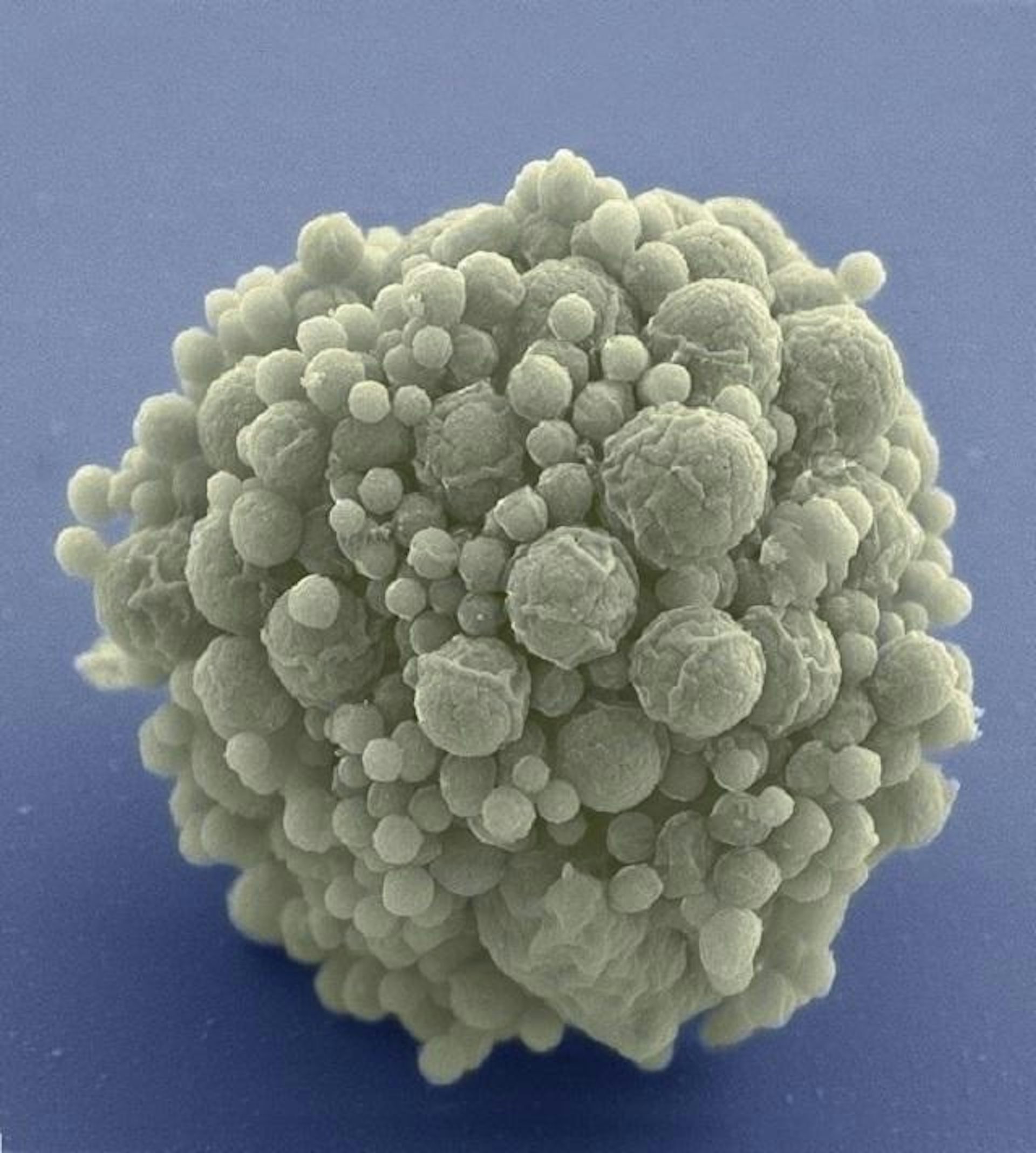
In 2010, Venter’s team demonstrated that this was possible. They constructed a bacterial genome and used it to take control of a living cell. While the cell itself was not built entirely from scratch, their work showed that the instructions for life could be engineered.
Em 2010, a equipe de Venter demonstrou que isso era possível. Eles construíram um genoma bacteriano e o usaram para assumir o controle de uma célula viva. Embora a própria célula não tenha sido construída inteiramente do zero, o trabalho deles mostrou que as instruções para a vida poderiam ser projetadas.
In other words, synthetic biologists were moving from reading life to rewriting it entirely.
Em outras palavras, os biólogos sintéticos estavam passando de ler a vida para reescrevê-la por completo.
Big promises and bold expectations
Grandes promessas e expectativas ousadas
Synthetic biology has already led to a range of promising outcomes across medicine, energy and environmental science.
A biologia sintética já levou a uma série de resultados promissores em medicina, energia e ciência ambiental.
Researchers have engineered microbes to produce lifesaving drugs such as artemisinin, an antimalarial compound, and to manufacture sustainable biofuels that could reduce reliance on fossil fuels. In addition, researchers are using synthetic biology to design organisms capable of detecting and breaking down environmental pollutants, offering new tools for bioremediation.
Pesquisadores projetaram micróbios para produzir medicamentos que salvam vidas, como a artemisinina, um composto antimalárico, e para fabricar biocombustíveis sustentáveis que poderiam reduzir a dependência de combustíveis fósseis. Além disso, os pesquisadores estão usando a biologia sintética para projetar organismos capazes de detectar e decompor poluentes ambientais, oferecendo novas ferramentas para a biorremediação.
At the heart of these ideas was a powerful analogy: If biology could be treated like software, then designing organisms might one day resemble writing code.
No cerne dessas ideias havia uma poderosa analogia: se a biologia pudesse ser tratada como software, então projetar organismos poderia um dia se assemelhar a escrever código.
This vision attracted significant investment and policy attention. The U.S. Government Accountability Office has highlighted synthetic biology’s potential to address challenges in multiple industries while also raising important ethical and safety considerations. For example, synthetic biology techniques could be used to develop biological weapons and could unintentionally harm ecosystems and human health.
Essa visão atraiu investimento e atenção política significativos. O Escritório de Contabilidade do Governo dos EUA (U.S. Government Accountability Office) destacou o potencial da biologia sintética para resolver desafios em múltiplas indústrias, ao mesmo tempo que levanta importantes considerações éticas e de segurança. Por exemplo, técnicas de biologia sintética poderiam ser usadas para desenvolver armas biológicas e poderiam prejudicar acidentalmente ecossistemas e a saúde humana.
Progress slower than expected
Progresso mais lento que o esperado
Despite this progress, synthetic biology has not fully realized its early ambitions. One major reason is the complexity of living systems.
Apesar desse progresso, a biologia sintética não realizou totalmente suas ambições iniciais. Uma razão principal é a complexidade dos sistemas vivos.
Early approaches to synthetic biology treated cells as modular systems, where components could be predictably exchanged. In practice, biological systems are highly interconnected. Gene interactions are difficult to predict, and results observed in controlled laboratory conditions do not always scale to real-world environments.
As abordagens iniciais para a biologia sintética trataram as células como sistemas modulares, onde os componentes poderiam ser trocados de forma previsível. Na prática, os sistemas biológicos são altamente interconectados. As interações genéticas são difíceis de prever, e os resultados observados em condições laboratoriais controladas nem sempre se aplicam a ambientes do mundo real.
This challenge has been particularly evident in areas such as biofuels, where translating laboratory successes into industrial-scale production has proved difficult.
Esse desafio tem sido particularmente evidente em áreas como biocombustíveis, onde traduzir sucessos de laboratório para a produção em escala industrial provou ser difícil.
There are also more fundamental limitations. Scientists still cannot construct a fully living organism from nonliving components alone. Even Venter’s synthetic cell depended on an existing biological system to function.
Existem também limitações mais fundamentais. Os cientistas ainda não conseguem construir um organismo totalmente vivo apenas a partir de componentes não vivos. Até mesmo a célula sintética de Venter dependeu de um sistema biológico existente para funcionar.
As a result, the goal of creating life entirely from scratch remains out of reach for now.
Como resultado, o objetivo de criar vida inteiramente do zero permanece fora de alcance por enquanto.
New questions and emerging risks
Novas questões e riscos emergentes
As technology has advanced, it has also raised new ethical and security concerns. The same tools used to design beneficial organisms could potentially be misused.
À medida que a tecnologia avançou, ela também levantou novas preocupações éticas e de segurança. As mesmas ferramentas usadas para projetar organismos benéficos poderiam ser potencialmente mal utilizadas.
Synthetic biology is widely recognized as a dual-use field, where advances in gene editing, DNA synthesis and bioengineering may enable not only medical and environmental innovations but also the creation or modification of harmful organisms.
A biologia sintética é amplamente reconhecida como um campo de uso duplo, onde avanços na edição genética, síntese de DNA e bioengenharia podem possibilitar não apenas inovações médicas e ambientais, mas também a criação ou modificação de organismos nocivos.
The increasing accessibility of these technologies further lowers barriers to misuse, making biosecurity threats more distributed and difficult to control. At the same time, governance frameworks often struggle to keep pace with rapid technological developments, leaving gaps in oversight and international coordination.
A crescente acessibilidade dessas tecnologias diminui ainda mais as barreiras para o uso indevido, tornando as ameaças de biosegurança mais distribuídas e difíceis de controlar. Ao mesmo tempo, os quadros de governança muitas vezes lutam para acompanhar os rápidos desenvolvimentos tecnológicos, deixando lacunas na supervisão e na coordenação internacional.
Beyond immediate risks, broader questions remain about how far humans should go in redesigning life and what unintended consequences such changes could have for ecosystems. Engineered organisms may introduce risks such as genetic contamination and ecosystem disruption, which would harm biodiversity and ecosystem services.
Além dos riscos imediatos, permanecem questões mais amplas sobre até que ponto os humanos devem ir ao redesenhar a vida e quais consequências não intencionais tais mudanças poderiam ter para os ecossistemas. Organismos geneticamente modificados podem introduzir riscos como contaminação genética e perturbação ecossistêmica, o que prejudicaria a biodiversidade e os serviços ecossistêmicos.
These concerns are likely to become more pressing as the technology behind synthetic biology continues to develop, particularly as emerging tools such as artificial intelligence accelerate the design of new biological systems.
Essas preocupações provavelmente se tornarão mais urgentes à medida que a tecnologia por trás da biologia sintética continuar a se desenvolver, particularmente à medida que ferramentas emergentes como a inteligência artificial aceleram o projeto de novos sistemas biológicos.
Venter’s legacy
O legado de Venter
The implications of the idea that life could be engineered rather than just observed is still unfolding.
As implicações da ideia de que a vida poderia ser projetada em vez de apenas observada ainda estão se desenrolando.
Synthetic biology has not yet delivered a world of fully programmable organisms solving global challenges. But it has changed expectations, both within science and beyond, about what might be possible in biological design.
A biologia sintética ainda não entregou um mundo de organismos totalmente programáveis que resolvam desafios globais. Mas mudou as expectativas, tanto dentro quanto fora da ciência, sobre o que pode ser possível no design biológico.
In that sense, the impact of synthetic biology is already clear: It has altered not just how scientists study life but how society imagines its future.
Nesse sentido, o impacto da biologia sintética já é claro: alterou não apenas a forma como os cientistas estudam a vida, mas como a sociedade imagina seu futuro.
Venter’s legacy includes the questions he made unavoidable: how far scientists should go in designing life, who gets to decide, and what responsibilities come with that power. The answers remain unsettled. But the trajectory seems to be that science is learning, cautiously and imperfectly, to author life.
O legado de Venter inclui as perguntas que ele tornou inevitáveis: até que ponto os cientistas devem ir ao projetar a vida, quem tem o direito de decidir e quais responsabilidades vêm com esse poder. As respostas permanecem incertas. Mas a trajetória parece ser que a ciência está aprendendo, cautelosa e imperfeitamente, a dar origem à vida.
André O. Hudson receives funding from the National Institutes of Health and the National Science Foundation
André O. Hudson recebe financiamento dos National Institutes of Health e da National Science Foundation
Read more
-
Os distúrbios de Belfast mostram o poder das mídias sociais à medida que visões de extrema-direita sobre imigração entram na corrente principal
Belfast unrest shows the power of social media as far‑right views on immigration enter the mainstream
-
Arsenal pode estar falhando novamente na Premier League inglesa. Aqui estão 4 ajustes psicológicos
Arsenal might be choking again in England’s Premier League. Here are 4 psychological fixes